
This lesson explores how various road surfaces impact your moped or scooter's stability and traction. By learning to recognize these hazards, you will be better prepared to adjust your riding style and pass the risk assessment sections of the Italian Patente AM theory exam.
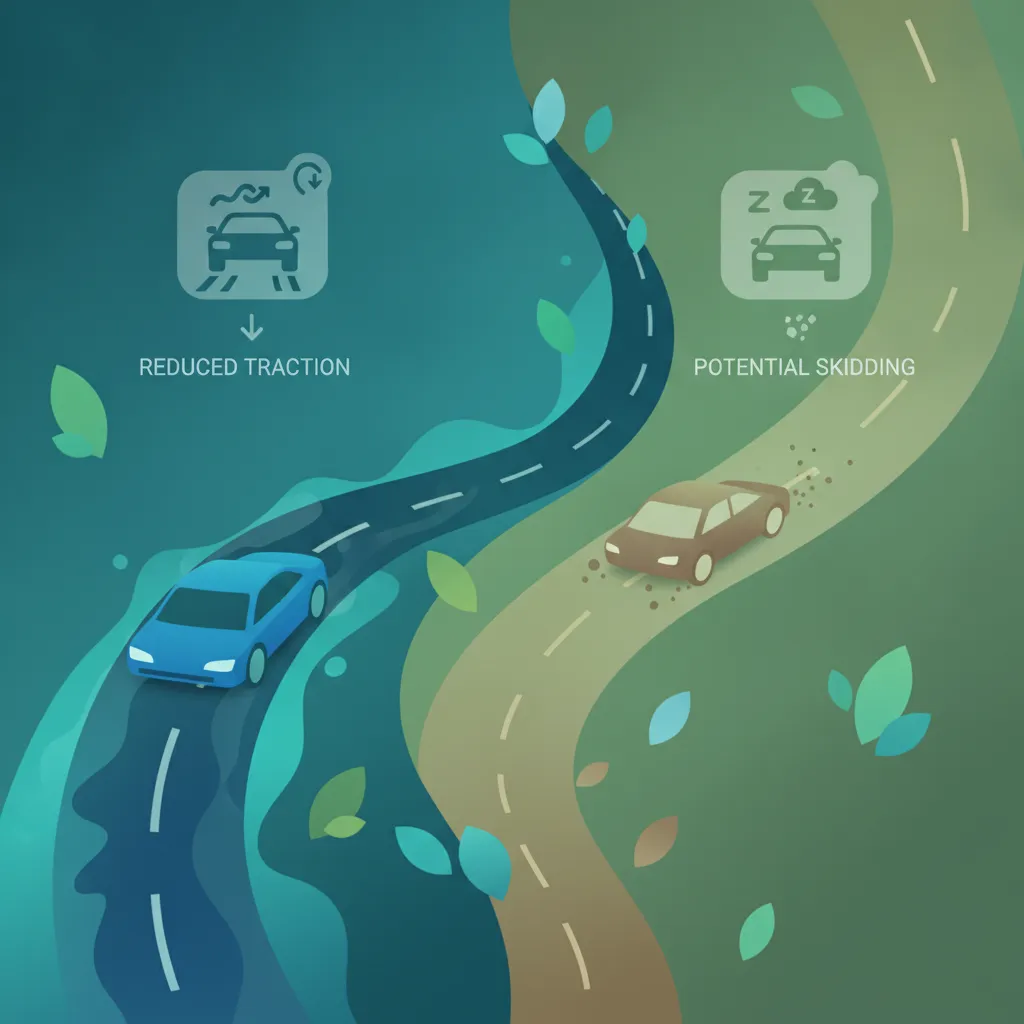
Lesson content overview
Navigating the roads safely with your Patente AM vehicle requires more than just understanding traffic signs and rules; it demands a keen awareness of the road surface beneath your tyres. The type and condition of the road surface profoundly affect your vehicle's traction, influencing everything from braking distances to cornering stability and acceleration. This lesson explores various road surface types, the unique risks they present, and the essential adaptations riders must make to maintain control and ensure safety, especially under Italian traffic law, the Codice della Strada.
At the heart of vehicle control is the interaction between your tyres and the road surface, governed by principles of friction and traction. Understanding these concepts is fundamental to safe riding.
The ratio of the frictional force between a tyre and the road surface to the normal force pressing the tyre onto the surface. It quantifies the amount of grip available.
The friction coefficient (µ) is a dimensionless value that indicates how "sticky" or "slippery" a surface is. A high friction coefficient means more grip, while a low coefficient means less. This value varies significantly depending on the road material, its condition (e.g., wet, dry, icy), and even the type of tyre.
The ability of a tyre to maintain contact with the road surface without slipping, allowing for effective acceleration, braking, and cornering.
Traction is the direct outcome of the friction coefficient. When a tyre has good traction, it can efficiently transmit forces from the engine to the road for acceleration, absorb braking forces to slow down, and withstand lateral forces during turns. When traction is reduced, the tyre begins to slip, leading to a loss of control. Riders must constantly assess potential traction and adjust their riding style accordingly.
Traction loss can manifest in two primary forms, both critical for Patente AM riders to understand:
Both types of slip are dangerous, especially for lightweight Patente AM vehicles, which can be more susceptible to instability compared to heavier vehicles. Anticipation and smooth control inputs are key to preventing them.
Different materials are used to construct roads, and each comes with its own set of characteristics that affect traction and rider safety. Riders must learn to identify these surfaces visually and understand their inherent risks.
Most roads are constructed from asphalt (bitumen) or concrete. These surfaces generally provide high levels of friction when dry, offering excellent grip for acceleration, braking, and cornering. However, their characteristics change dramatically when wet, significantly reducing the friction coefficient. Over time, asphalt can also become polished and smoother due to wear, or it can develop cracks and potholes, creating additional hazards.
Gravel consists of loose stone aggregates, offering variable and often significantly lower friction compared to paved surfaces. Riding on gravel requires a different approach due to the instability it presents.
Sand, whether from beaches, desert areas, or construction sites, presents one of the most challenging low-grip surfaces. Fine sand particles offer very little friction, making control extremely difficult.
Metal tram tracks (and railway crossings) are a particularly hazardous road surface element, especially for two-wheeled vehicles. These grooved metal sections intersect the road and offer a very low-friction interface, particularly when wet. Similarly, metal manhole covers and drain grates can be extremely slippery.
Legal Requirement (Codice della Strada): When crossing metal tram tracks, riders are legally obliged to use only the front wheel brake (supported wheel braking) and reduce speed. Using the rear brake can lead to the rear wheel locking, causing a skid and loss of control, which can be extremely dangerous.
Cobblestones, often found in historic city centers, present an uneven surface with variable traction. Each stone can offer slightly different grip, and the gaps between them can affect stability.
Painted road markings (e.g., lane lines, pedestrian crossings, arrow symbols) are common features. While generally safe when dry, the paint often contains compounds that make them extremely slippery when wet.
Adapting your riding style to different road surfaces involves specific adjustments to your speed, braking, and steering.
The most critical adjustment a rider can make is to adapt their speed to the prevailing road surface conditions. The lower the available traction, the lower your speed should be.
As highlighted for tram tracks, supported wheel braking—using only the front wheel for deceleration—is a crucial technique in specific low-traction scenarios.
A braking technique that primarily or exclusively uses the front wheel brake to decelerate the vehicle, maintaining steering control, particularly on surfaces where rear wheel braking could cause dangerous skidding.
Anticipate: Identify the low-traction surface (e.g., tram tracks) well in advance.
Reduce Speed: Before reaching the hazard, gently reduce your speed using both brakes if safe to do so.
Disengage Rear Brake: As you enter the low-traction zone, release the rear brake.
Apply Front Brake Gently: Apply the front brake smoothly and progressively. Avoid harsh application that could cause the front wheel to lock.
Maintain Straight Line: Keep the handlebars straight and avoid sudden steering inputs while braking.
On low-traction surfaces, every input must be smooth and gradual.
Your ability to detect changes in road surface conditions is heavily influenced by visibility and environmental factors.
Poor lighting, such as at dusk, night, or in tunnels, makes it harder to identify subtle changes in road surface texture or potential hazards like oil spills or wet painted markings.
Weather conditions, particularly rain, significantly impact road surface friction.
"Wet Road Reflex": Develop a habit of automatically reducing your speed, increasing your following distance, and making smoother inputs whenever the road surface is wet, regardless of the surface type.
The Codice della Strada places a strong emphasis on adapting driving behavior to road conditions, directly impacting how Patente AM riders must interact with different surfaces.
| Surface | Legal Requirement | Reason |
|---|---|---|
| Metal tram tracks | Front-wheel braking only and significantly decreased speed. This is a specific mandate under Article 2, paragraph 1, clause 6 of the Codice della Strada. | Prevents the locking of the steering wheel and loss of control. |
| Gravel paths | Reduced speed and careful braking. Article 5 of the Codice della Strada generally requires adapting speed to road conditions. | Lower friction, increased risk of sliding and loss of control. |
| Sand-covered roads | Significantly reduced speed and avoid sudden maneuvers. Covered under general obligation to adapt speed to conditions (Article 5). | Very low grip makes sudden movements dangerous and unpredictable. |
| Painted road markings (wet) | Caution, avoid abrupt braking or cornering. While not a specific article for painted markings, general rules on adapting speed and driving prudently apply, especially considering the reduced friction in wet conditions. | Paint becomes extremely slippery when wet, increasing risk of skidding. |
| Wet or Icy Roads | Significantly reduced speed and increased following distance. Often subject to specific temporary speed limits or road closures in extreme conditions. General principles of Article 5 apply stringently. | Reduced friction dramatically increases stopping distances and risk of slip. |
Understanding common mistakes can help Patente AM riders avoid them:
Successfully navigating varying road surfaces is a critical skill for every Patente AM rider. It involves a combination of constant observation, anticipatory riding, and precise vehicle control.
This lesson teaches Patente AM riders to recognize various road surface types and understand how each affects traction. The friction coefficient determines grip availability, and traction loss occurs either through dynamic slip (during acceleration/braking) or lateral slip (during cornering). Key techniques include adapting speed to surface conditions, using supported wheel braking on tram tracks as legally required, and executing all inputs smoothly. Riders must remain vigilant for environmental factors like rain and poor lighting that further reduce grip, and always scan ahead to anticipate surface changes such as gravel, sand, or metal tracks.
A short set of high-value points that capture the most important learning from this lesson.
The friction coefficient determines available traction; lower grip surfaces require proportionally lower speeds to maintain control.
Each road surface type (gravel, sand, metal tracks, wet paint) presents unique hazards requiring specific rider adaptations.
Front-wheel braking only is mandatory on metal tram tracks to prevent rear wheel lock-up and loss of steering control.
All control inputs must be smooth and gradual on low-grip surfaces; sudden steering, braking, or acceleration easily causes traction loss.
Environmental factors like rain, poor lighting, and loose debris significantly reduce surface grip and require heightened vigilance.
Explore all units and lessons included in this driving theory course.
On tram tracks: front brake only, approach at shallow angle, maintain straight line - this is a legal requirement under Codice della Strada.
Adapt speed to conditions: the lower the traction, the lower your speed must be to prevent dynamic or lateral slip.
Wet painted road markings become extremely slippery, drastically reducing grip during braking or cornering.
Dynamic slip occurs during acceleration or braking; lateral slip occurs during cornering - both are caused by exceeding available grip.
Always scan ahead for surface changes (gravel patches, sand, metal grates) to anticipate and prepare for hazards.
Using the rear brake on metal tram tracks, which causes rear wheel lock-up and loss of control.
Maintaining normal speed on gravel or sand, where stopping distances increase dramatically and sliding is likely.
Attempting to brake or turn sharply on wet painted road markings, which offer minimal grip when wet.
Failing to reduce speed in poor visibility conditions when approaching potentially hazardous surfaces.
Making sudden steering inputs on low-traction surfaces instead of keeping movements smooth and gradual.
Lesson content overview
A short set of high-value points that capture the most important learning from this lesson.
The friction coefficient determines available traction; lower grip surfaces require proportionally lower speeds to maintain control.
Each road surface type (gravel, sand, metal tracks, wet paint) presents unique hazards requiring specific rider adaptations.
Front-wheel braking only is mandatory on metal tram tracks to prevent rear wheel lock-up and loss of steering control.
All control inputs must be smooth and gradual on low-grip surfaces; sudden steering, braking, or acceleration easily causes traction loss.
Environmental factors like rain, poor lighting, and loose debris significantly reduce surface grip and require heightened vigilance.
Explore all units and lessons included in this driving theory course.
On tram tracks: front brake only, approach at shallow angle, maintain straight line - this is a legal requirement under Codice della Strada.
Adapt speed to conditions: the lower the traction, the lower your speed must be to prevent dynamic or lateral slip.
Wet painted road markings become extremely slippery, drastically reducing grip during braking or cornering.
Dynamic slip occurs during acceleration or braking; lateral slip occurs during cornering - both are caused by exceeding available grip.
Always scan ahead for surface changes (gravel patches, sand, metal grates) to anticipate and prepare for hazards.
Using the rear brake on metal tram tracks, which causes rear wheel lock-up and loss of control.
Maintaining normal speed on gravel or sand, where stopping distances increase dramatically and sliding is likely.
Attempting to brake or turn sharply on wet painted road markings, which offer minimal grip when wet.
Failing to reduce speed in poor visibility conditions when approaching potentially hazardous surfaces.
Making sudden steering inputs on low-traction surfaces instead of keeping movements smooth and gradual.
Explore search topics learners often look for when studying Road Surface Types and Associated Risks. These topics reflect common questions about road rules, driving situations, safety guidance, and lesson level theory preparation for learners in Italy.
Browse additional driving theory lessons that cover connected traffic rules, road signs, and common driving situations related to this topic. Improve your understanding of how different rules interact across everyday traffic scenarios.
Learn to identify and manage risks from various road surfaces like gravel, sand, and wet paint. Understand traction loss and how to adapt speed and control techniques for safer riding in Italy.

This lesson teaches riders how to maintain a safe following distance using the two-second rule, which accounts for reaction time and braking distance. It covers grip management, explaining how tire condition and road surfaces like wet asphalt affect traction. Mastering these concepts is essential for anticipating hazards and preventing rear-end collisions.
This lesson teaches drivers how to adapt their technique for various adverse weather conditions. It explains the risks of reduced grip and visibility in rain, fog, snow, and ice, and the need to significantly increase following distances and reduce speed. The content covers how to avoid and correct skids, the proper use of lights in poor visibility, and the legal requirements for winter tyres or snow chains in certain areas.

This lesson introduces the philosophy and techniques of defensive driving, a proactive approach focused on anticipating and mitigating potential hazards. It teaches drivers to maintain constant situational awareness by scanning the road ahead, behind, and to the sides. The content covers how to manage the space around the vehicle, identify potential escape routes, and predict the actions of other road users to prevent dangerous situations from developing.
This lesson provides critical guidance on how to safely share the road with vulnerable users, including pedestrians, cyclists, motorcyclists, and children. It highlights the importance of increased awareness in specific areas like school zones and crosswalks. The content teaches techniques for maintaining a safe lateral distance when overtaking, checking blind spots thoroughly, and anticipating the often unpredictable movements of these users.
This lesson focuses on how to adapt riding techniques to maintain traction on compromised surfaces. It identifies common hazards such as wet leaves, manhole covers, gravel, and painted lines that can reduce the tyre's grip. Learners will understand how to use smooth and gentle throttle, brake, and steering inputs to prevent traction loss and maintain control in these challenging situations.
This lesson details correct braking techniques, emphasizing progressive application of both front and rear brakes for optimal stopping power. It explains the function of ABS in preventing wheel lock-up on slippery surfaces like wet roads or gravel. You will learn how different surfaces affect braking distance and how to adjust braking force to maintain control.
This lesson explains how to execute left turns, right turns, and U-turns safely while maintaining correct lane discipline. It covers interpreting road markings and arrows, selecting the proper vehicle position, and using signals in a timely manner. Performing shoulder checks to monitor blind spots before and during a turn is a key focus for preventing collisions.
This lesson provides essential rules and techniques for driving on Italian motorways (autostrade) and major extra-urban roads. It explains how to safely merge onto the motorway from an entry ramp, the strict lane discipline required (drive right, overtake left), and how to exit correctly. The content also covers speed regulations, maintaining a safe following distance at high speed, and procedures for using service areas and handling emergencies.

This lesson focuses on the unique characteristics and challenges of driving on rural and mountain roads. It covers how to safely navigate sharp curves, steep inclines, and narrow lanes with limited visibility, often requiring the use of the horn to signal presence. The content also prepares drivers for potential hazards such as slow-moving agricultural vehicles, unexpected animal crossings, and variable road surface quality.

This lesson provides an in-depth focus on sharing the road with the most vulnerable users. It teaches drivers to be acutely aware of pedestrians at crossings, cyclists filtering through traffic, and motorcyclists who may be in blind spots. The lesson emphasizes the importance of leaving extra space, signaling intentions clearly, and exercising extreme caution at junctions, where the majority of serious incidents occur.
Understand the specific Italian legal requirements, like mandatory front-wheel braking on tram tracks, and general obligations to adapt speed and control to hazardous road surfaces.

This lesson is dedicated to fostering awareness and safe interaction with vulnerable road users commonly found in cities. It details the legal priority of pedestrians at crossings and the importance of giving ample space to cyclists. Additionally, it covers the specific hazards associated with tram tracks and the need to be vigilant around public transport vehicles like buses and taxis.

This lesson details the correct procedures for interacting with public transport and school buses. It explains the rules for dedicated bus lanes, the absolute priority of trams, and the legal requirement to yield to buses pulling out from a stop. The content also covers the specific laws requiring drivers to stop when a school bus is loading or unloading passengers, to ensure child safety.
This lesson provides an in-depth focus on sharing the road with the most vulnerable users. It teaches drivers to be acutely aware of pedestrians at crossings, cyclists filtering through traffic, and motorcyclists who may be in blind spots. The lesson emphasizes the importance of leaving extra space, signaling intentions clearly, and exercising extreme caution at junctions, where the majority of serious incidents occur.

This lesson clarifies the special priority rules for emergency vehicles and public transport. It explains the legal obligation to safely pull over and clear a path for any vehicle with active sirens and flashing lights. The content also details the absolute right-of-way that trams have in most situations and the requirement to yield to public buses signaling to pull out from a stop.
This lesson details the specific rules and safety considerations for driving through the extensive tunnels and high viaducts common in Italy. It covers pre-entry checks, maintaining a safe following distance, and the correct procedures to follow in case of a breakdown or fire inside a tunnel. The lesson also addresses the hazard of strong crosswinds on exposed viaducts and how to maintain vehicle control.
This lesson focuses on how to adapt riding techniques to maintain traction on compromised surfaces. It identifies common hazards such as wet leaves, manhole covers, gravel, and painted lines that can reduce the tyre's grip. Learners will understand how to use smooth and gentle throttle, brake, and steering inputs to prevent traction loss and maintain control in these challenging situations.

This lesson provides a comprehensive overview of the essential documentation required for both the driver and the vehicle. It covers the driver's license (patente), CQC card, vehicle registration (carta di circolazione), insurance certificate, and transport-specific documents like the cargo manifest. Learners will understand the importance of ensuring all documents are valid and readily available for inspection by authorities to avoid legal penalties and operational delays.
This lesson explains the concept of 'Zone a Traffico Limitato' (ZTL), common in Italian city centers, which restricts vehicle access at certain times. It covers how to identify ZTL boundaries, understand the operating hours, and the procedures for obtaining permits for commercial deliveries. The lesson also touches on environmental zones that may restrict access based on a vehicle's emission standards.
This lesson teaches drivers how to adapt their technique for various adverse weather conditions. It explains the risks of reduced grip and visibility in rain, fog, snow, and ice, and the need to significantly increase following distances and reduce speed. The content covers how to avoid and correct skids, the proper use of lights in poor visibility, and the legal requirements for winter tyres or snow chains in certain areas.
This lesson details the essential protective equipment required for legal and safe moped operation in Italy. It covers legal standards for helmets, the benefits of wearing protective gloves and boots, and the importance of high-visibility clothing. You will also learn the correct use of your vehicle's lighting system for visibility during both day and night.
Find clear answers to common questions learners have about Road Surface Types and Associated Risks. Learn how the lesson is structured, which driving theory objectives it supports, and how it fits into the overall learning path of units and curriculum progression in Italy. These explanations help you understand key concepts, lesson flow, and exam focused study goals.
Tram tracks are made of smooth metal and often sit slightly above or below the road level. When wet, they offer almost zero friction, which can cause a moped's wheels to slide out instantly if you cross them at a shallow angle.
You must significantly reduce your speed before reaching the loose surface. Avoid sudden braking or sharp steering inputs, as these actions are likely to break your tire's grip and cause a fall.
Yes, the Italian Patente AM theory test includes questions about how different road surfaces like mud, sand, and wet asphalt affect stopping distances and the risk of skidding.
Always attempt to cross the tracks at a 90-degree angle if possible. This minimizes the time your tires spend on the slippery metal surface and reduces the risk of the tire getting stuck in the groove.
Start searching now to pinpoint exactly which Italian driving theory topics, road signs, or traffic rules you need to master. Use our advanced filters to build a custom practice session and ensure you're fully prepared for every aspect of your official driving licence exam.