
This lesson details the critical systems connecting a tractor unit to a trailer, focusing on air brakes and electrical interfaces. You will learn the correct protocols for connecting service and emergency lines to ensure your heavy vehicle setup is roadworthy and compliant with Italian regulations.

Lesson content overview
Connecting a trailer to a heavy goods vehicle is a fundamental operation for professional drivers. This process goes beyond mere mechanical coupling, requiring careful attention to the vital air brake systems and electrical connections that ensure the trailer's safe and legal operation. This lesson, part of the Italian Goods Vehicle License Theory Course, details how the braking, lighting, and Anti-lock Braking System (ABS) of a trailer are powered and controlled by the towing tractor unit. Understanding these connections is paramount for road safety and compliance with the Italian Codice della Strada.
The efficient and safe operation of a heavy goods vehicle combination, consisting of a tractor and a trailer, relies entirely on the seamless integration of their respective systems. The trailer's braking, lighting, and ABS functions are not independent; they must receive power and control signals directly from the tractor. This intricate interdependence is established through specific air lines and multi-pin electrical connectors. Proper connection ensures that the trailer responds correctly to all driver inputs, from routine service braking to emergency stops and signaling intentions to other road users. Any failure in these connections can severely compromise safety, lead to legal penalties, and result in vehicle inspection failures.
Trailer brake systems primarily operate using compressed air, which is supplied from the tractor unit. Two distinct air lines facilitate this critical function, each serving a unique purpose in controlling the trailer’s brakes. These tubular connections transmit compressed air, ensuring that the trailer can decelerate and stop in conjunction with the tractor, or be safely parked independently. Incorrect pressure or improper connection of these lines can lead to insufficient braking force or even complete brake failure, posing a significant hazard.
The service air line, easily identifiable by its yellow color, is responsible for conveying compressed air from the tractor’s primary brake system to the trailer for normal, everyday braking. When the driver presses the foot brake in the tractor, air pressure is sent through this yellow line to activate the trailer’s service brakes, causing the trailer to decelerate in sync with the towing vehicle.
An air line that supplies compressed air from the tractor's main brake system to the trailer's service brakes, enabling normal deceleration.
This line is crucial for coordinated braking, ensuring the entire vehicle combination slows down effectively. It must be connected before the parking air line to prevent unintended activation of the trailer's parking brake during the coupling process. After connection, it is essential to verify that the air pressure within this line is within the specified operating range, typically between 5 and 7 bar, to guarantee adequate braking performance. Failing to check this pressure can result in critically insufficient braking force, especially under heavy loads.
Distinct from the service line, the parking (emergency) air line, marked by its red color, supplies air to the trailer’s parking brake system. This line allows the driver to engage or release the trailer’s parking brake, which acts independently of the tractor’s service brakes. Its primary function is to secure the trailer safely when it is stationary, preventing unintended movement or "creep."
An air line that supplies compressed air to the trailer’s parking brake system, used for independently securing the trailer when stationary.
This red line should always be connected after the yellow service line. This sequence is vital because connecting the red line first could inadvertently activate the trailer's parking brake, locking the wheels while the driver is still attempting to complete the coupling procedure. Similarly, it is absolutely critical to disconnect the red line before the vehicle begins to move. Forgetting to do so will cause the trailer's parking brake to remain engaged, leading to brake drag, excessive wear, increased fuel consumption, and potential overheating of the brake components, which could result in brake failure or a loss of control.
The use of distinct colors – yellow for service and red for parking/emergency – is an international standard designed to prevent confusion and enhance safety during the coupling process. This clear color coding allows drivers to quickly and accurately identify each line, minimizing the risk of incorrect connections. Red is universally associated with emergency or stop functions, while yellow often signifies caution or general service. Understanding this simple convention is a foundational aspect of safe trailer operation.
Always remember: Yellow first for service, then Red for parking. This sequence ensures the trailer's brakes are ready for normal operation before the parking brake can be engaged or released properly.
Beyond air brakes, trailers require electrical power and signal transmission from the tractor unit for their lighting systems and, increasingly, for advanced safety features like ABS. This electrical link is established through a multi-pin electrical connector, which ensures the trailer is visible, communicates the driver's intentions, and maintains stability during braking.
A multi-pin electrical connector is a crucial component that transmits various electrical signals and power from the tractor to the trailer. These connectors come in different configurations, commonly with 7 or 13 pins, each serving a specific set of functions, from basic lighting to complex data communication for ABS. Proper connection of this unit is non-negotiable for road safety and legal compliance, ensuring that all mandatory illumination and signaling functions are operational.
The 7-pin connector is a standard type commonly used for lighter trailers or older heavy vehicles, particularly those operating under categories like C1/E without the requirement for advanced ABS communication. This connector primarily transfers power for essential trailer lighting and illumination functions, including:
While adequate for basic lighting, the 7-pin connector lacks the necessary pins for transmitting data related to advanced systems like ABS. Using a 7-pin connector on a trailer that requires ABS functionality would render the ABS inoperative, compromising safety.
For higher categories of heavy goods vehicles, such as C/E, and for any trailer equipped with an Anti-lock Braking System (ABS), a 13-pin connector is generally required. This connector provides all the functions of a 7-pin connector but includes additional pins specifically for power supply and data transmission for the trailer's ABS.
An electrical connector with 13 pins, used for transferring electrical signals and power for trailer lighting, illumination, turn signals, brake lights, and critically, ABS communication from the tractor to the trailer.
The 13-pin connector is essential for integrating the trailer's ABS with the tractor's system, ensuring that the entire vehicle combination maintains stability and steerability during sudden or emergency braking maneuvers. Failure to use a 13-pin connector when an ABS-equipped trailer demands it will result in the loss of ABS functionality on the trailer, which is both dangerous and illegal. Always verify pin compatibility before coupling.
The order in which air lines and electrical connectors are attached is not arbitrary; it is a prescribed sequence designed to maximize safety and prevent accidents. Following this procedure meticulously prevents accidental brake activation, ensures air pressure is correctly established, and guarantees all lights are functional before the vehicle is set in motion.
The correct sequence for connecting a trailer to a tractor unit is as follows:
Connect the Service Air Line (Yellow): This is the first step. Securely attach the yellow hose from the tractor to the corresponding yellow coupling on the trailer. After connection, allow the air system to pressurize and check for any audible air leaks. This ensures the trailer's normal braking system is ready to receive air pressure.
Connect the Parking (Emergency) Air Line (Red): Once the service line is connected and checked, attach the red hose from the tractor to the red coupling on the trailer. This supplies air to release or engage the trailer's parking brake.
Connect the Multi-Pin Electrical Connector: After both air lines are securely connected and checked for leaks, plug in the multi-pin electrical connector (either 7-pin or 13-pin, depending on the trailer's requirements) to link the tractor's electrical system with the trailer's. This supplies power for lighting and ABS communication.
Verify Air Pressure and Lighting: Before moving, verify that the air pressure in the trailer's braking system is stable and within the safe operating range. Then, turn on the tractor's illumination switch and systematically check all trailer lights: position lights, side marker lights, brake lights, turn signals (left and right), and reversing lights. For ABS-equipped trailers, confirm that the ABS indicator light on the tractor's dashboard illuminates and then extinguishes, indicating a successful system check.
Release the Parking (Emergency) Brake: Only after all previous steps are completed and verified should the trailer's parking brake be released. This is typically done via a control in the tractor cabin, which allows air from the red line to disengage the trailer brakes.
Thorough pre-departure checks are mandatory and non-negotiable. They ensure the safety and reliability of the trailer’s brake and lighting systems. Drivers must perform a visual and manual inspection of all couplings and connections. Listen for any hissing sounds indicative of air leaks from the lines, and visually inspect electrical connectors for corrosion or damage. Any anomaly must be rectified before the vehicle is set in motion. Failure to complete these checks can lead to serious safety implications and legal repercussions under the Codice della Strada.
The trailer lighting system is paramount for road safety, ensuring that the trailer is visible to other road users, especially in low light or adverse weather conditions, and effectively communicates the driver's intentions. This system is powered via the multi-pin electrical connector from the tractor.
The arrangement of lights on a trailer, including position lights, stop lights, turn signals, and marker lights, powered through the electrical connection to the tractor.
The components of a standard trailer lighting system include:
All these lights must be fully functional before departure and throughout the journey. The driver must engage the tractor’s illumination switch to supply power to the trailer lights and perform a walk-around check to confirm every light is working correctly. Ignoring this check, especially at night or in poor visibility, is a significant safety hazard and a legal violation. Mud, ice, or damage can obscure lights, rendering them ineffective; therefore, they must be cleaned and maintained.
The Anti-lock Braking System (ABS) on a trailer is a critical safety feature that prevents the trailer's wheels from locking up during emergency braking. By modulating brake pressure rapidly, ABS allows the wheels to continue rotating, maintaining traction and enabling the driver to steer the vehicle combination even under heavy braking. This significantly enhances vehicle stability and control, reducing the risk of jack-knifing or loss of control, particularly on slippery surfaces.
For trailer ABS to function correctly, it typically requires a 13-pin electrical connector for both power supply and the transmission of data between the trailer's ABS control unit and the tractor's brake system. If the tractor unit is equipped with ABS, Italian regulations mandate that any trailer towed must also have compatible ABS circuitry, and this system must be fully operational.
Upon connecting an ABS-equipped trailer with a 13-pin connector, the driver should observe the ABS warning light on the tractor's dashboard. This light should typically illuminate briefly upon connection or ignition, then extinguish, signaling that the ABS system has performed a self-check and is ready for operation. If the light remains on or flashes, it indicates a fault in the ABS system that must be rectified before departure.
Compliance with specific rules and regulations is not just a matter of safety; it is a legal requirement enforced by the Italian Codice della Strada and other relevant European directives. Adhering to these rules prevents accidents, ensures roadworthiness, and avoids penalties.
Here are key mandatory rules pertaining to trailer connections:
Failure to adhere to these mandatory rules can result in severe legal penalties, including fines, points on your license, vehicle impoundment, and significantly increases the risk of accidents.
Despite clear guidelines, drivers can sometimes make errors or encounter problems during trailer connection. Awareness of these common violations and edge cases is crucial for preventing them:
The operating environment and specific conditions can influence how trailer connections need to be managed and checked.
Successfully and safely operating a heavy goods vehicle with a trailer requires a thorough understanding and diligent application of connection procedures. The two distinct air lines and the multi-pin electrical connector form the backbone of this critical link.
Mastering these procedures and adhering to the associated regulations is not merely a theoretical exercise; it is an essential part of a professional driver's responsibility to ensure the safety of themselves, their vehicle, and all other road users.
Safe trailer operation depends on correctly connecting two distinct air brake lines and a multi-pin electrical connector from the tractor unit. The yellow service air line controls normal braking while the red parking line secures the trailer when stationary; connecting yellow first is essential to prevent wheel locking during coupling. The electrical connector (7-pin for basic lighting, 13-pin for ABS-equipped trailers) powers the trailer's lighting system and enables anti-lock braking data communication. Before departure, drivers must verify air pressure within specification, check all lights via the illumination switch, confirm ABS indicator light behavior, and release the parking brake only after all verifications are complete. These procedures are mandatory under Italian Codice della Strada regulations and form a core part of heavy goods vehicle theory for C, C1, C1E, and CE licenses.
A short set of high-value points that capture the most important learning from this lesson.
Trailers receive braking and electrical power exclusively through connections to the tractor unit; there is no independent operation
The yellow service air line must always be connected before the red parking (emergency) air line to prevent wheel locking during coupling
7-pin connectors provide basic lighting only, while 13-pin connectors are required for ABS-equipped trailers to enable data communication
The mandatory connection sequence is: yellow service line → red parking line → electrical connector → verify systems → release parking brake
All trailer lights must be activated via the tractor's illumination switch and checked before every departure
Explore all units and lessons included in this driving theory course.
Yellow air line = service braking (normal deceleration); Red air line = parking/emergency brake (independent securing when stationary)
13-pin connector is mandatory for C/E and C1/E categories with ABS trailers; using a 7-pin connector there disables ABS functionality
Air pressure in the service line must be verified within the 5–7 bar operating range before departure
Disconnect or release the red parking line before moving; otherwise brake drag, overheating, and excessive wear will occur
After connecting an ABS trailer, the dashboard ABS warning light should illuminate briefly then extinguish to confirm proper system communication
Connecting the red parking line before the yellow service line locks the trailer wheels during coupling and complicates the procedure
Forgetting to disconnect the parking brake line before driving causes constant brake drag, heat buildup, and increased fuel consumption
Using a 7-pin connector on an ABS-equipped trailer renders the anti-lock braking system inoperative, which is both dangerous and illegal
Failing to check air pressure after connecting the service line can result in severely reduced trailer braking force, especially under heavy loads
Neglecting to verify all trailer lights (position, stop, turn, reversing) before departure creates serious visibility and communication hazards
Lesson content overview
A short set of high-value points that capture the most important learning from this lesson.
Trailers receive braking and electrical power exclusively through connections to the tractor unit; there is no independent operation
The yellow service air line must always be connected before the red parking (emergency) air line to prevent wheel locking during coupling
7-pin connectors provide basic lighting only, while 13-pin connectors are required for ABS-equipped trailers to enable data communication
The mandatory connection sequence is: yellow service line → red parking line → electrical connector → verify systems → release parking brake
All trailer lights must be activated via the tractor's illumination switch and checked before every departure
Explore all units and lessons included in this driving theory course.
Yellow air line = service braking (normal deceleration); Red air line = parking/emergency brake (independent securing when stationary)
13-pin connector is mandatory for C/E and C1/E categories with ABS trailers; using a 7-pin connector there disables ABS functionality
Air pressure in the service line must be verified within the 5–7 bar operating range before departure
Disconnect or release the red parking line before moving; otherwise brake drag, overheating, and excessive wear will occur
After connecting an ABS trailer, the dashboard ABS warning light should illuminate briefly then extinguish to confirm proper system communication
Connecting the red parking line before the yellow service line locks the trailer wheels during coupling and complicates the procedure
Forgetting to disconnect the parking brake line before driving causes constant brake drag, heat buildup, and increased fuel consumption
Using a 7-pin connector on an ABS-equipped trailer renders the anti-lock braking system inoperative, which is both dangerous and illegal
Failing to check air pressure after connecting the service line can result in severely reduced trailer braking force, especially under heavy loads
Neglecting to verify all trailer lights (position, stop, turn, reversing) before departure creates serious visibility and communication hazards
Explore search topics learners often look for when studying Trailer Brake Systems and Electrical Connections. These topics reflect common questions about road rules, driving situations, safety guidance, and lesson level theory preparation for learners in Italy.
Browse additional driving theory lessons that cover connected traffic rules, road signs, and common driving situations related to this topic. Improve your understanding of how different rules interact across everyday traffic scenarios.
Understand the critical yellow (service) and red (parking) air lines and multi-pin electrical connectors for trailers. Learn the correct connection sequence and pre-drive checks required for Italian driving theory.
This lesson provides a detailed, safety-focused procedure for detaching a tractor from a semitrailer. It covers selecting a suitable, firm, and level location, correctly deploying the trailer's landing gear to support its weight, and disconnecting the air and electrical lines in the proper order. Following these systematic steps is essential to prevent the trailer from tipping over or rolling away, ensuring the safety of the driver and anyone nearby.
This lesson provides a step-by-step guide to the critical process of safely connecting a tractor unit to a semitrailer. It details the function of the fifth wheel and kingpin, explaining how to align the vehicle, make the connection, and verify that the locking mechanism is securely engaged. The equally important procedure for safe uncoupling is also covered, emphasizing checks to ensure the trailer is stable and secure before driving away.
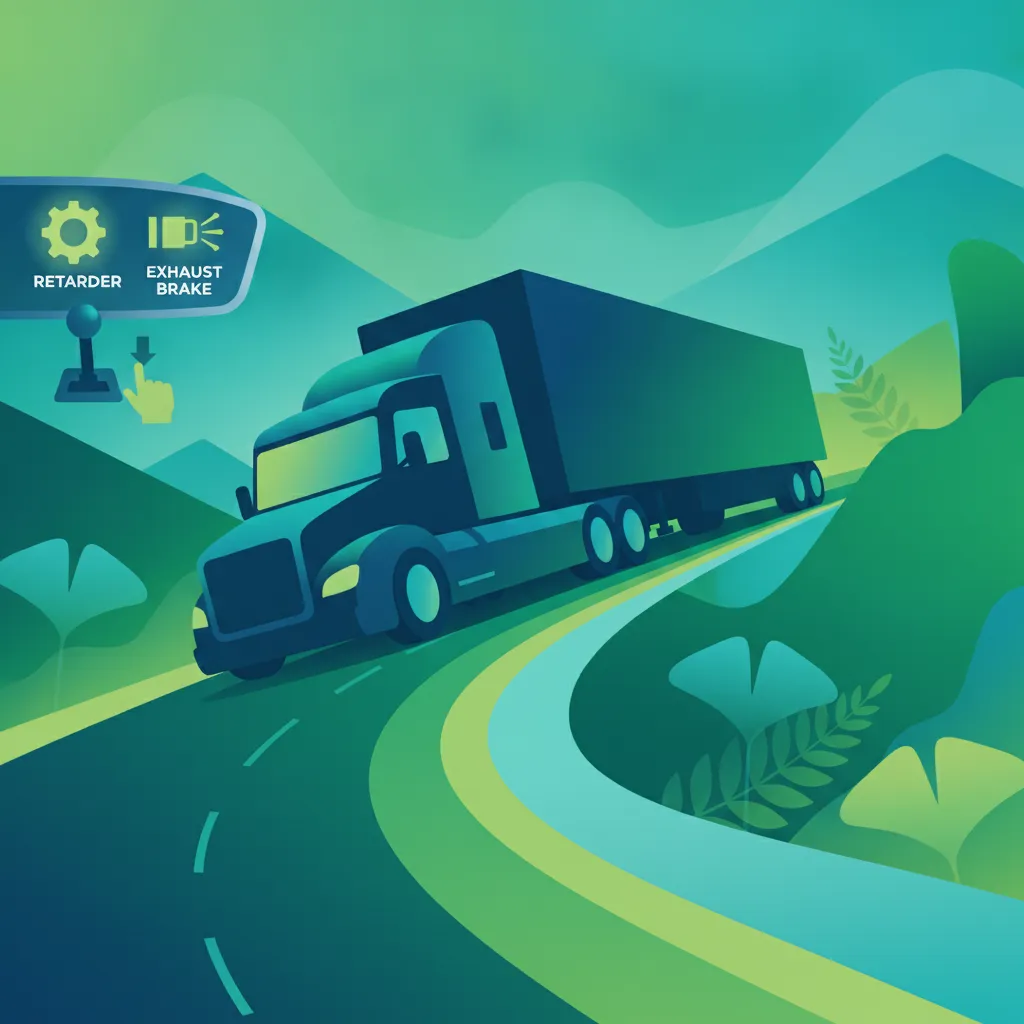
This lesson focuses on auxiliary or 'endurance' braking systems designed to manage vehicle speed on long downgrades, reducing the risk of service brake overheating. It explains the operating principles of engine brakes (compression release brakes), hydrodynamic retarders, and exhaust brakes. Learners will understand when and how to use these powerful tools to maintain a safe, controlled speed and preserve the service brakes for when they are most needed.

This lesson introduces the common types of trailers and semitrailers, explaining the key differences between them. It covers semitrailers that connect via a fifth wheel and full trailers that use a drawbar coupling, detailing the advantages and typical uses for each configuration. Learners will be able to identify various trailer designs, such as flatbeds, tankers, and refrigerated units, and understand their specific operational considerations.

This lesson introduces the three distinct categories of braking systems on a heavy vehicle. It explains the role of the service brake for normal stopping, the parking brake for securing the vehicle when stationary, and endurance brakes for sustained speed control. Understanding the purpose and correct application of each system is fundamental to safe and efficient vehicle operation, as well as minimizing wear on the primary service brakes.

This lesson covers three critical risks associated with heavy vehicle braking systems. It explains 'brake lag' in air brake systems, the delay between pedal application and brake activation, and 'brake fade', the loss of braking efficiency due to overheating. Learners will be taught to recognize the warning signs and, more importantly, to use correct driving techniques, such as utilizing endurance brakes, to prevent these potentially catastrophic failures.

This lesson provides a comprehensive overview of the essential documentation required for both the driver and the vehicle. It covers the driver's license (patente), CQC card, vehicle registration (carta di circolazione), insurance certificate, and transport-specific documents like the cargo manifest. Learners will understand the importance of ensuring all documents are valid and readily available for inspection by authorities to avoid legal penalties and operational delays.

This lesson provides a step-by-step guide for managing a vehicle breakdown safely. It reinforces the procedure for stopping on the hard shoulder, activating hazard lights, and placing a warning triangle at the correct distance. The lesson emphasizes the importance of wearing high-visibility clothing, exiting the vehicle from the side away from traffic, and waiting in a safe location before contacting a roadside assistance service.

This lesson explains the principles of safe load management to maintain vehicle stability and comply with legal requirements. It covers how to properly distribute and secure cargo inside the vehicle, the rules for using roof racks, and the specific signaling required for loads that project beyond the vehicle's rear. The content also provides a basic introduction to the rules and safety considerations when towing a small trailer.
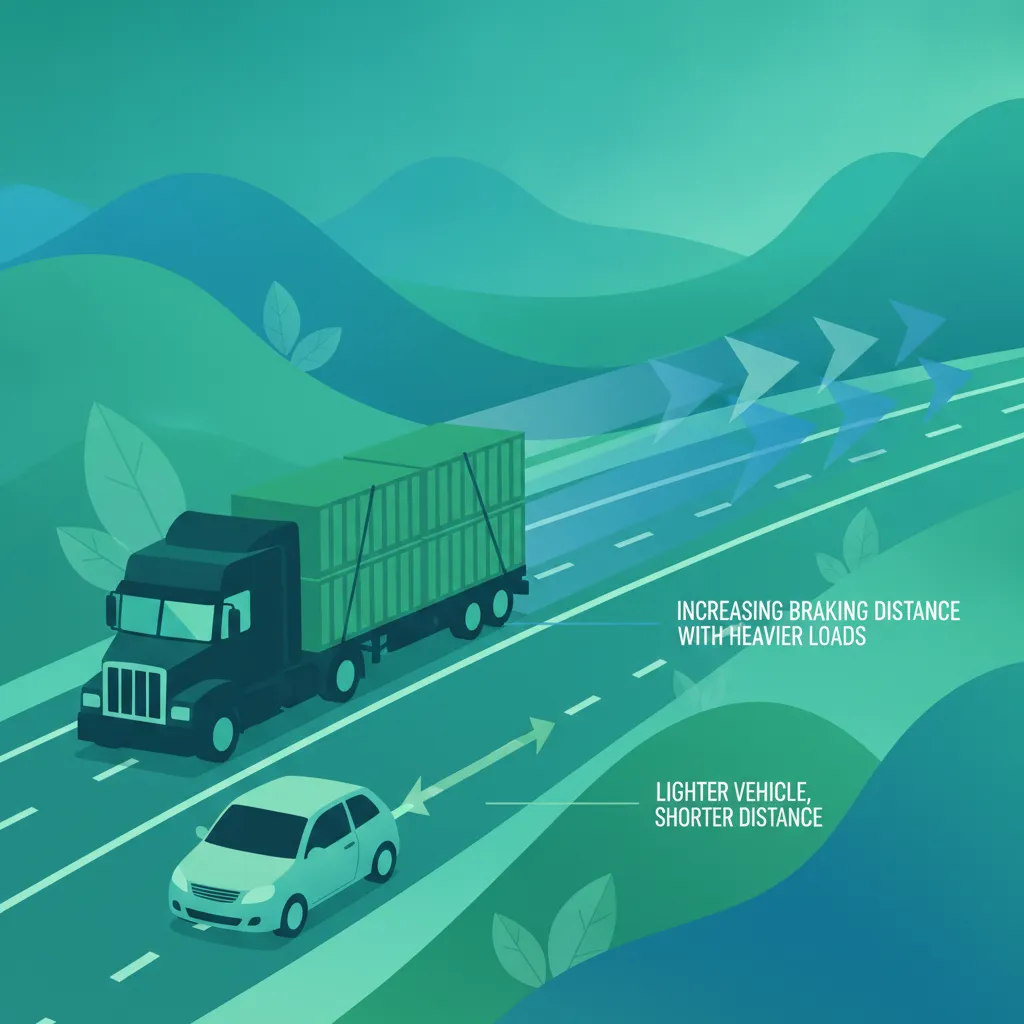
This lesson explores the critical physics behind stopping a heavy vehicle. It breaks down the components of total stopping distance—thinking distance and braking distance—and explains how this is significantly increased by vehicle mass and speed. Learners will understand the necessity of maintaining a much greater following distance than a car to allow enough space to stop safely in all conditions.
Explore the mandatory regulations for connecting trailer air lines and electrical systems in Italy. Learn about compliance for lighting, ABS, and the consequences of incorrect procedures for C and CE license holders.
This lesson covers the complete set of lighting, reflective equipment, and protective guards mandated for heavy vehicles. It explains the function of each light, from headlights to side markers, and the importance of keeping them clean and operational to ensure the vehicle is visible to others. The lesson also details the legal requirements and safety purpose of side guards and rear underrun protection, which are designed to protect vulnerable road users in a collision.

This lesson provides a comprehensive guide to a vehicle's lighting systems and their correct use according to the Codice della Strada. It explains the functions of low beams, high beams, fog lights, and daytime running lights, detailing when each should be used to ensure visibility for the driver and by other road users. Proper use of lighting is critical for safety during night driving and in conditions of poor visibility.
This lesson provides a comprehensive overview of the essential documentation required for both the driver and the vehicle. It covers the driver's license (patente), CQC card, vehicle registration (carta di circolazione), insurance certificate, and transport-specific documents like the cargo manifest. Learners will understand the importance of ensuring all documents are valid and readily available for inspection by authorities to avoid legal penalties and operational delays.
This lesson provides a step-by-step guide to the critical process of safely connecting a tractor unit to a semitrailer. It details the function of the fifth wheel and kingpin, explaining how to align the vehicle, make the connection, and verify that the locking mechanism is securely engaged. The equally important procedure for safe uncoupling is also covered, emphasizing checks to ensure the trailer is stable and secure before driving away.
This lesson provides a detailed, safety-focused procedure for detaching a tractor from a semitrailer. It covers selecting a suitable, firm, and level location, correctly deploying the trailer's landing gear to support its weight, and disconnecting the air and electrical lines in the proper order. Following these systematic steps is essential to prevent the trailer from tipping over or rolling away, ensuring the safety of the driver and anyone nearby.
This lesson covers three critical risks associated with heavy vehicle braking systems. It explains 'brake lag' in air brake systems, the delay between pedal application and brake activation, and 'brake fade', the loss of braking efficiency due to overheating. Learners will be taught to recognize the warning signs and, more importantly, to use correct driving techniques, such as utilizing endurance brakes, to prevent these potentially catastrophic failures.

This lesson outlines the correct protocols for stopping to make a delivery in a public area. It covers the legal use of designated loading bays, the importance of making the vehicle highly visible with hazard lights, and ensuring that the parking brake is securely applied. The lesson stresses the need to conduct loading and unloading activities efficiently and safely, without causing undue obstruction or danger to other road users and pedestrians.
This lesson explains the principles of safe load management to maintain vehicle stability and comply with legal requirements. It covers how to properly distribute and secure cargo inside the vehicle, the rules for using roof racks, and the specific signaling required for loads that project beyond the vehicle's rear. The content also provides a basic introduction to the rules and safety considerations when towing a small trailer.
This lesson introduces the common types of trailers and semitrailers, explaining the key differences between them. It covers semitrailers that connect via a fifth wheel and full trailers that use a drawbar coupling, detailing the advantages and typical uses for each configuration. Learners will be able to identify various trailer designs, such as flatbeds, tankers, and refrigerated units, and understand their specific operational considerations.

This lesson delves into the specific articles of the Italian Codice della Strada that apply to heavy goods vehicles. It outlines the core legal and professional obligations of a driver, including the heightened duty of care owed to other road users and the responsibility for the vehicle's roadworthiness and load. Learners will understand the legal consequences of non-compliance, such as fines and sanctions, reinforcing the importance of adhering to all traffic regulations.
Find clear answers to common questions learners have about Trailer Brake Systems and Electrical Connections. Learn how the lesson is structured, which driving theory objectives it supports, and how it fits into the overall learning path of units and curriculum progression in Italy. These explanations help you understand key concepts, lesson flow, and exam focused study goals.
Connecting lines in the incorrect sequence can lead to loss of control over the trailer brakes. Always follow the manufacturer's specified order to ensure the emergency brake system is pressurized and operational before finalizing the service line.
The multi-pin connector provides the necessary electrical supply for the trailer's lighting system, including brake lights, indicators, and often the ABS control unit, ensuring visibility and system synchronization with the tractor.
In the official Italian theory exam, you may face scenarios where incorrect coupling leads to failed inspections or safety risks. Understanding the technical synergy of air and electricity is crucial for selecting the correct answers.
Yes, in the context of the Italian Codice della Strada, the red emergency line and yellow service line represent standard color coding to prevent errors, which is a frequent topic in professional license theory tests.
Start searching now to pinpoint exactly which Italian driving theory topics, road signs, or traffic rules you need to master. Use our advanced filters to build a custom practice session and ensure you're fully prepared for every aspect of your official driving licence exam.