
This lesson guides you through the technical and safety-critical steps of uncoupling a semitrailer from your tractor unit. As part of our professional C and CE course, this module ensures you understand how to prevent dangerous incidents during disconnection, a key topic for both the official Italian theory exam and your future daily operations.
Lesson content overview
Detaching a tractor unit from a semitrailer is a routine operation in commercial driving, yet it demands meticulous attention to safety. For drivers operating heavy goods vehicles, particularly those preparing for the Italian Goods Vehicle License Theory Course (C, C1, C1E, CE), understanding the precise, safety-focused procedure for uncoupling is paramount. This lesson outlines the systematic steps required to safely detach a semitrailer, ensuring the stability of the trailer, the integrity of the vehicle's systems, and the safety of the driver and others in the vicinity.
Proper uncoupling prevents common incidents such as trailer rollaway, unexpected drops, or damage to vital connections. Each step, from selecting the right location to performing the final safety check, is designed to mitigate risks and comply with stringent road safety regulations, including those outlined in the Italian Codice della Strada.
The foundation of a secure uncoupling procedure begins with choosing an appropriate location. A poorly chosen spot can lead to instability, damage, or even accidents. Therefore, the first critical step is to identify a suitable area.
Always select a firm, level surface for uncoupling. Uneven or soft ground can compromise the stability of the trailer once it is detached from the tractor unit. Soft surfaces, such as gravel or unpaved areas, may allow the landing gear to sink, leading to an unstable trailer that could tip over. Inclined surfaces, even slight ones, significantly increase the risk of the trailer rolling away after uncoupling, especially if wheel chocks are not used.
Before parking, visually inspect the ground for any dips, potholes, soft spots, or significant slopes. Ensure there is adequate clearance around the entire vehicle combination to perform the uncoupling procedure safely, allowing room for the driver to move freely and for other vehicles or personnel to pass at a safe distance.
Beyond the ground conditions, consider the surrounding environment. The chosen location should provide ample space for the tractor unit to manoeuvre away from the detached trailer without obstruction. This includes clearance from other parked vehicles, buildings, fences, or any other potential obstacles. Good visibility, both for the driver performing the uncoupling and for others in the area, is also essential. Avoid areas with limited light or blind spots if possible. If operating in low visibility conditions, additional lighting and warning signals become even more critical.
Always prioritize locations that minimize potential hazards. If a perfectly level and firm surface is unavailable, assess the risks carefully and implement additional safety measures, such as placing wheel chocks, before proceeding.
Once a safe location has been identified and the vehicle combination is positioned, a series of preparatory steps must be taken to ensure the trailer is ready to be safely disconnected. These steps involve securing the vehicle and initiating the support system for the trailer.
Before beginning any uncoupling operations, the tractor unit's parking brake must be fully engaged. This ensures the entire combination remains stationary. Next, the trailer's parking brake system must be activated. This typically involves pulling the trailer's parking brake valve, which will lock the trailer's wheels independently. This critical step ensures that the trailer cannot move once it is separated from the tractor's air supply.
A control valve on the trailer, or sometimes in the tractor cab, that isolates the trailer's service brakes and applies them as parking brakes, preventing unintended movement.
The landing gear forms the stable base for the semitrailer once it is uncoupled. The process of deploying and locking it is fundamental to preventing the trailer from dropping or becoming unstable.
The landing gear consists of mechanical support legs on the trailer chassis that can be extended downwards. These legs are designed to bear the trailer’s entire weight when it is stationary and disconnected from the tractor. Most modern trailers feature telescopic landing gear, which can be manually cranked down, though some advanced systems may use hydraulic or electric power.
It is imperative that the landing gear is fully lowered until the feet make solid contact with the ground and begin to lift the front of the trailer slightly. This slight lift helps relieve pressure on the fifth wheel coupling, making it easier to release the mechanical connection later. Crucially, the landing gear must be securely locked in its fully extended position. Failing to lock the gear can lead to it retracting unexpectedly, causing the trailer to drop, potentially damaging the trailer or posing a severe safety risk.
Never attempt to uncouple the tractor unit if the landing gear is not fully extended and locked. This is a common cause of accidents and damage to equipment.
Following a precise sequence is vital when uncoupling to maintain safety and prevent damage. This systematic approach ensures that all mechanical, pneumatic, and electrical connections are disengaged in the correct order.
Secure the Vehicle Combination: Engage the tractor's parking brake and activate the trailer's parking brake (pull the trailer brake valve) to ensure the entire unit is stationary.
Position and Deploy Landing Gear: Carefully lower the trailer's landing gear until its feet are firmly on the ground and begin to support the trailer's weight, lifting the front slightly. Ensure the landing gear is fully extended and securely locked.
Close Trailer Parking Brake Valve: Ensure the trailer's parking brake valve is fully closed. This prevents the trailer's brakes from releasing when the air lines are disconnected.
Disconnect Air Brake Lines: Locate the red (emergency/supply) and yellow (service) air lines. Close any shut-off valves on the tractor's lines if present, then disconnect them from the trailer. Hang them on their designated dummy couplings or storage points on the tractor.
Disconnect Electrical Connectors: Unplug all electrical connectors (e.g., 7-pin, 15-pin, ABS/EBS cables) from the trailer. Stow them safely on the tractor to prevent damage.
Release the Coupling Device (Fifth Wheel): Pull the fifth wheel release handle to unlock the coupling jaws. Visually confirm that the locking mechanism is fully disengaged.
Move Tractor Unit Forward: Slowly and carefully drive the tractor unit forward a short distance (approximately 0.5-1 metre) to pull the fifth wheel clear of the trailer's kingpin. Be extremely cautious to ensure the trailer remains stable and does not move.
Perform a Final Safety Check: Stop the tractor and perform a comprehensive visual check of the detached trailer. Confirm it is stable, the landing gear is firmly planted and locked, all lines are disconnected and stowed, and there is no residual movement.
Drive Away (Optional): Once the final safety check is complete and the area is clear, the tractor unit can be driven away from the trailer.
The pneumatic and electrical connections between the tractor and trailer are vital for safe operation. Disconnecting them in the correct order is a critical safety measure.
The air brake system relies on compressed air from the tractor to operate the trailer's brakes. There are typically two main air lines: the red line (supply or emergency) which continuously supplies air to the trailer's air tanks, and the yellow line (service or control) which transmits braking pressure from the tractor to the trailer's service brakes.
Before disconnecting these lines, it is crucial to activate the trailer's parking brake. This ensures that the trailer's brakes remain applied independently. Once the parking brake is set, disconnect the red (supply) line first, followed by the yellow (service) line. This sequence prevents the uncontrolled release of air pressure and ensures the trailer's brakes remain engaged. Many modern trailers also have a manual shut-off valve on the trailer's air tanks which, if present, should be closed before disconnecting the air lines. After disconnection, secure the air lines in their dummy couplings on the tractor to prevent contamination and damage.
The electrical connections power the trailer's lighting, indicators, ABS/EBS systems, and sometimes auxiliary functions. These must only be disconnected after the air lines have been separated. This order is specified in regulations to prevent potential issues such as short circuits or accidental activation of trailer systems due to stray air pressure or moisture entering connectors.
Carefully unplug all electrical connectors (e.g., 7-pin, 15-pin, or ISO type plugs). Store them securely in their designated receptacles on the tractor to protect them from dirt, moisture, and damage.
The fifth wheel is the mechanical coupling that securely locks the tractor to the trailer's kingpin. Releasing this device is a straightforward but critical step in the uncoupling process.
The fifth wheel, also known as the kingpin coupling, consists of a heavy, plate-like structure mounted on the tractor's chassis. It features a jaw mechanism that locks around the trailer's kingpin – a robust pin protruding from the underside of the trailer. When coupled, this mechanism creates a strong, articulated connection, allowing the tractor to pull and steer the trailer.
To release the fifth wheel, the driver must pull the release handle, which is typically located beneath the fifth wheel assembly on either side of the tractor. Pulling this handle fully open retracts the locking jaws, freeing the kingpin.
After pulling the handle, it is essential to visually confirm that the locking jaws have fully opened and are no longer engaging the kingpin. Sometimes, due to tension or dirt, the jaws may not fully retract. If this occurs, a slight forward and backward movement of the tractor (with extreme caution and minimal movement) can help relieve pressure and allow the jaws to open completely. Never attempt to force the tractor away if the fifth wheel is not fully released, as this can cause severe damage to both the tractor and the trailer.
The final safety check is a non-negotiable step that consolidates all preceding safety measures. It ensures that no critical detail has been overlooked before the tractor unit moves away from the trailer.
After all connections have been disconnected and the fifth wheel released, the driver must perform a thorough visual inspection of the detached trailer. This check includes:
Walk around the trailer to conduct this final check. A 360-degree inspection helps ensure nothing is missed and confirms the trailer is safe to be left unattended.
Once the final safety check confirms everything is secure, slowly and carefully drive the tractor unit forward, ensuring it clears the trailer's kingpin and landing gear. Maintain a low speed and be prepared to stop immediately if any unexpected movement from the trailer is observed or if any snagging occurs. After clearing the trailer, the tractor unit can then proceed with its next task.
The Italian Codice della Strada (Road Code) contains specific regulations governing the operation and maintenance of heavy goods vehicles, including procedures for coupling and uncoupling trailers. Adherence to these rules is mandatory for all drivers.
The general principles related to uncoupling and safety measures are typically found within Article 73 of the Codice della Strada, which pertains to the "characteristics of trailers and semi-trailers." While specific paragraph numbers may vary with updates, the core requirements remain consistent:
Failing to comply with these regulations can result in fines, penalties, and potentially dangerous situations on the road or in loading areas. Understanding and strictly following these rules is a fundamental aspect of the Italian Goods Vehicle License Theory Course.
Despite clear procedures, common mistakes can occur during uncoupling, leading to dangerous situations or equipment damage. Awareness of these pitfalls is key to prevention.
Uncoupling procedures must be adapted to various environmental and operational contexts to maintain safety.
Understanding the "why" behind each step enhances a driver's ability to react safely and effectively, even in unexpected situations.
The entire uncoupling process hinges on principles of physics. When coupled, the tractor's fifth wheel supports a significant portion of the trailer's weight. Upon uncoupling, this weight must be transferred safely and completely to the landing gear. Proper deployment ensures the trailer's centre of gravity remains within its base of support, preventing it from tipping over. Neglecting this leads to instability, where the forces of gravity can cause the trailer to drop or roll.
Following a prescribed sequence of actions reduces cognitive load and minimizes the likelihood of human error. Each step in the uncoupling procedure acts as a control measure against specific risks:
This systematic approach is a core element of risk management in commercial driving, transforming a potentially hazardous operation into a controlled and predictable routine.
The uncoupling of a semitrailer is a procedure that, while seemingly simple, carries significant safety implications if not executed flawlessly. Mastery of this process is a hallmark of a professional heavy goods vehicle driver. By consistently adhering to the systematic steps—from selecting a safe, level location and properly deploying the landing gear, to disconnecting air and electrical lines in the correct sequence, and performing a thorough final safety check—drivers can ensure the stability and safety of the trailer.
Understanding and applying the principles of the Italian Codice della Strada, particularly Article 73, along with practical considerations for varying conditions, forms the bedrock of responsible operation. Diligence in these procedures not only prevents accidents and equipment damage but also reinforces a culture of safety essential for all professional drivers.
Safe semitrailer uncoupling requires selecting a firm, level location and deploying the landing gear fully before any disconnection begins. The correct sequence involves engaging both parking brakes, lowering and locking the landing gear, then disconnecting air lines (supply first, then service) before electrical connectors. After releasing the fifth wheel and driving the tractor forward approximately half a metre, a comprehensive visual inspection confirms the trailer is stable, all lines are stowed, and the landing gear is firmly planted. These procedures align with Codice della Strada Article 73 and are essential knowledge for both the Italian theory exam and professional heavy vehicle operation.
A short set of high-value points that capture the most important learning from this lesson.
Always select a firm, level surface for uncoupling to prevent trailer instability or rollaway after detachment.
The landing gear must be fully lowered and securely locked before any other disconnection steps are taken.
Disconnect air brake lines (red supply first, then yellow service) before disconnecting any electrical connections.
After all disconnections, perform a thorough 360-degree visual safety check to confirm trailer stability and secure connections.
The uncoupling sequence follows specific safety logic: secure brakes, deploy landing gear, disconnect lines in order, release coupling, then verify.
Explore all units and lessons included in this driving theory course.
Air lines must always be disconnected before electrical connectors to prevent moisture ingress and system damage.
The trailer parking brake valve must be closed before disconnecting air lines, otherwise the trailer may roll freely.
The fifth wheel release handle must be fully pulled and jaws visually confirmed open before moving the tractor.
Codice della Strada Article 73 mandates specific uncoupling requirements including landing gear deployment and disconnection sequence.
Use wheel chocks on any incline and additional safety measures in poor visibility or adverse weather conditions.
Uncoupling on an incline without wheel chocks, allowing the detached trailer to roll away.
Moving the tractor forward before confirming the landing gear is fully extended and locked, risking sudden trailer drop.
Disconnecting electrical lines before air brake lines, which can cause moisture damage and system malfunctions.
Neglecting the final safety check, overlooking partially engaged connections or unstable landing gear.
Attempting to uncouple with faulty or damaged landing gear, creating a severe stability hazard.
Lesson content overview
A short set of high-value points that capture the most important learning from this lesson.
Always select a firm, level surface for uncoupling to prevent trailer instability or rollaway after detachment.
The landing gear must be fully lowered and securely locked before any other disconnection steps are taken.
Disconnect air brake lines (red supply first, then yellow service) before disconnecting any electrical connections.
After all disconnections, perform a thorough 360-degree visual safety check to confirm trailer stability and secure connections.
The uncoupling sequence follows specific safety logic: secure brakes, deploy landing gear, disconnect lines in order, release coupling, then verify.
Explore all units and lessons included in this driving theory course.
Air lines must always be disconnected before electrical connectors to prevent moisture ingress and system damage.
The trailer parking brake valve must be closed before disconnecting air lines, otherwise the trailer may roll freely.
The fifth wheel release handle must be fully pulled and jaws visually confirmed open before moving the tractor.
Codice della Strada Article 73 mandates specific uncoupling requirements including landing gear deployment and disconnection sequence.
Use wheel chocks on any incline and additional safety measures in poor visibility or adverse weather conditions.
Uncoupling on an incline without wheel chocks, allowing the detached trailer to roll away.
Moving the tractor forward before confirming the landing gear is fully extended and locked, risking sudden trailer drop.
Disconnecting electrical lines before air brake lines, which can cause moisture damage and system malfunctions.
Neglecting the final safety check, overlooking partially engaged connections or unstable landing gear.
Attempting to uncouple with faulty or damaged landing gear, creating a severe stability hazard.
Explore search topics learners often look for when studying Uncoupling and Safety Measures. These topics reflect common questions about road rules, driving situations, safety guidance, and lesson level theory preparation for learners in Italy.
Browse additional driving theory lessons that cover connected traffic rules, road signs, and common driving situations related to this topic. Improve your understanding of how different rules interact across everyday traffic scenarios.
Learn essential theory for maneuvering heavy vehicles in varied Italian road conditions, including urban deliveries, ZTL zones, rural routes, and mountain passes. Understand safe practices beyond basic coupling.

This lesson provides specialized instruction for driving in mountainous terrain. It teaches drivers how to select the correct gear for both climbing steep inclines to prevent engine strain and descending to maintain control without overheating the brakes. Techniques for navigating sharp hairpin bends, using passing places on narrow roads, and anticipating the effects of altitude on vehicle performance are also covered.

This lesson focuses on the unique characteristics and challenges of driving on rural and mountain roads. It covers how to safely navigate sharp curves, steep inclines, and narrow lanes with limited visibility, often requiring the use of the horn to signal presence. The content also prepares drivers for potential hazards such as slow-moving agricultural vehicles, unexpected animal crossings, and variable road surface quality.

This lesson focuses on the specific regulations and techniques for operating a heavy vehicle on high-speed motorways. It covers mandatory lane discipline for trucks, the rules governing overtaking other heavy vehicles, and the specific speed limits that apply. Best practices for merging onto and exiting the motorway, maintaining safe following distances, and using the hard shoulder only in genuine emergencies are also detailed.

This lesson provides an in-depth focus on sharing the road with the most vulnerable users. It teaches drivers to be acutely aware of pedestrians at crossings, cyclists filtering through traffic, and motorcyclists who may be in blind spots. The lesson emphasizes the importance of leaving extra space, signaling intentions clearly, and exercising extreme caution at junctions, where the majority of serious incidents occur.

This lesson addresses the increased complexity of overtaking in urban environments with dense traffic and frequent intersections. It stresses the importance of thorough observation, including mirror and blind spot checks, to ensure a safe gap is available. The content covers judging speed differentials and the necessity of clear signalling to execute the maneuver without causing conflict with other road users.

This lesson addresses the critical responsibility of protecting vulnerable road users, such as pedestrians, cyclists, and motorcyclists, who are most at risk in a collision with a heavy vehicle. It teaches drivers to be hyper-aware in urban settings, to anticipate the unpredictable movements of VRUs, and to provide ample space, especially when turning at junctions. A key focus is on scanning for VRUs in blind spots before moving off or making any maneuver.

This lesson provides essential rules and techniques for driving on Italian motorways (autostrade) and major extra-urban roads. It explains how to safely merge onto the motorway from an entry ramp, the strict lane discipline required (drive right, overtake left), and how to exit correctly. The content also covers speed regulations, maintaining a safe following distance at high speed, and procedures for using service areas and handling emergencies.

This lesson focuses on the principle of 'appropriate speed' in urban environments, which often means driving slower than the legal maximum. It explains how to assess the environment for potential hazards—such as schools, parked cars, and busy intersections—and adjust speed accordingly to allow for adequate reaction time. Maintaining a safe, consistent speed reduces the need for harsh braking and contributes to a safer environment for everyone.

This lesson focuses on the unique demands of mountain riding, from handling steep inclines and declines to understanding the impact of altitude on the motorcycle's engine performance. It covers the effective use of engine braking on descents to prevent brake overheating. The content also prepares riders for the rapidly changing weather conditions, such as wind and fog, that are common at higher elevations.

This lesson provides a step-by-step guide for managing a vehicle breakdown safely. It reinforces the procedure for stopping on the hard shoulder, activating hazard lights, and placing a warning triangle at the correct distance. The lesson emphasizes the importance of wearing high-visibility clothing, exiting the vehicle from the side away from traffic, and waiting in a safe location before contacting a roadside assistance service.
Explore the critical physics and Italian regulations behind maintaining trailer stability during coupling and uncoupling. Essential theory for CE license holders, focusing on preventing tip-overs and rollaways.
This lesson provides a step-by-step guide to the critical process of safely connecting a tractor unit to a semitrailer. It details the function of the fifth wheel and kingpin, explaining how to align the vehicle, make the connection, and verify that the locking mechanism is securely engaged. The equally important procedure for safe uncoupling is also covered, emphasizing checks to ensure the trailer is stable and secure before driving away.

This lesson introduces the common types of trailers and semitrailers, explaining the key differences between them. It covers semitrailers that connect via a fifth wheel and full trailers that use a drawbar coupling, detailing the advantages and typical uses for each configuration. Learners will be able to identify various trailer designs, such as flatbeds, tankers, and refrigerated units, and understand their specific operational considerations.

This lesson outlines the correct protocols for stopping to make a delivery in a public area. It covers the legal use of designated loading bays, the importance of making the vehicle highly visible with hazard lights, and ensuring that the parking brake is securely applied. The lesson stresses the need to conduct loading and unloading activities efficiently and safely, without causing undue obstruction or danger to other road users and pedestrians.

This lesson explains the principles of safe load management to maintain vehicle stability and comply with legal requirements. It covers how to properly distribute and secure cargo inside the vehicle, the rules for using roof racks, and the specific signaling required for loads that project beyond the vehicle's rear. The content also provides a basic introduction to the rules and safety considerations when towing a small trailer.

This lesson focuses on a key dynamic behavior of articulated vehicles known as 'off-tracking' or 'cut-in'. It explains why, during a turn, the trailer's wheels follow a path inside that of the tractor's wheels, which requires the driver to make wider turns to avoid hitting curbs, signs, or other vehicles. Understanding and anticipating off-tracking is a fundamental skill for safely maneuvering a combination vehicle, especially in tight spaces.

This lesson explains how the braking, lighting, and ABS systems of a trailer are powered and controlled by the tractor unit. It details the purpose of the red (emergency) and yellow (service) air lines and the multi-pin electrical connector, providing a clear procedure for connecting them in the correct sequence. Learners will understand the importance of these connections for safe braking and legal lighting operation.
This lesson provides a step-by-step guide for managing a vehicle breakdown safely. It reinforces the procedure for stopping on the hard shoulder, activating hazard lights, and placing a warning triangle at the correct distance. The lesson emphasizes the importance of wearing high-visibility clothing, exiting the vehicle from the side away from traffic, and waiting in a safe location before contacting a roadside assistance service.

This lesson bridges the gap between general traffic laws and their specific application to heavy goods vehicles. It examines how rules regarding speed limits, lane discipline, overtaking, and priority are modified or have special considerations for trucks due to their size, weight, and reduced maneuverability. Drivers will learn to correctly interpret road signs and signals within the context of operating a large vehicle, ensuring safe and compliant integration with other traffic.
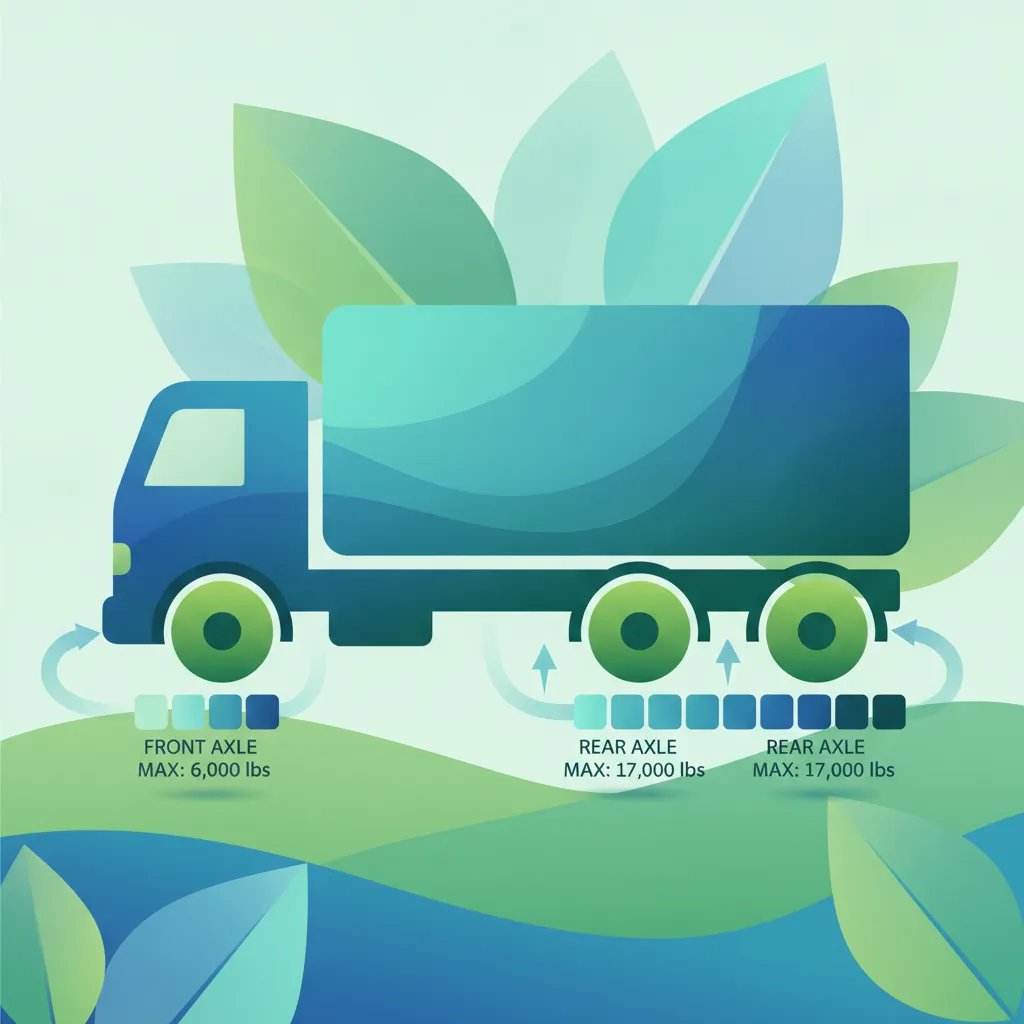
This lesson details the legal restrictions on the weight that can be supported by a single axle or a group of axles. It explains the importance of distributing the load correctly across the vehicle's length to prevent exceeding these limits, which can cause significant road damage and compromise vehicle safety. Learners will understand the relationship between load placement, axle pressure, and overall stability, particularly during braking and cornering.

This lesson vividly illustrates the dangers of a load that moves during transit. It explains how a sudden load shift during braking can increase stopping distance or cause a jack-knife, while a shift during cornering can easily lead to a rollover. By understanding these dynamic forces, learners will appreciate the absolute necessity of ensuring every piece of cargo is properly and robustly secured before starting a journey.
Find clear answers to common questions learners have about Uncoupling and Safety Measures. Learn how the lesson is structured, which driving theory objectives it supports, and how it fits into the overall learning path of units and curriculum progression in Italy. These explanations help you understand key concepts, lesson flow, and exam focused study goals.
Disconnecting the service lines in the incorrect order can lead to unexpected brake release or trailer movement. You must always secure the trailer with the parking brake before disconnecting the air supply to ensure it remains stationary.
If landing gear is not properly deployed on firm ground, the trailer can tip or collapse, causing significant structural damage to the trailer, cargo, and potential injury to the driver or bystanders.
Yes, the theory exam for C and CE categories includes questions on professional vehicle operation, including the legal and mechanical requirements for safely managing articulated combinations during coupling and uncoupling.
The surface must not only be level but also firm enough to support the weight of the trailer and the landing gear. Soft ground like mud or loose gravel is dangerous as the landing gear can sink, causing the trailer to tilt.
Start searching now to pinpoint exactly which Italian driving theory topics, road signs, or traffic rules you need to master. Use our advanced filters to build a custom practice session and ensure you're fully prepared for every aspect of your official driving licence exam.