
This lesson provides a complete guide to parking and stopping regulations in Italian urban areas, helping you understand where and how you are legally allowed to leave your vehicle. You will learn to identify different parking markings, operate the parking disc, and recognize no-parking zones to ensure you pass your Patente B exam with confidence.

Lesson content overview
Driving in Italian urban areas requires a clear understanding of local parking regulations. These rules are designed not only to manage limited curb space and ensure traffic flow but also to enhance safety for all road users. For anyone preparing for their Italian Patente B theory test or driving in Italy, mastering these regulations is crucial to avoid fines, vehicle towing, and contributing to urban congestion.
This comprehensive guide will explain the meaning of different colored parking lines, the correct use of the parking disc (disco orario), and how to operate pay-and-display machines. We will also cover how to identify no-parking zones and reserved spaces to ensure you park legally and responsibly.
Road markings, particularly the color of lines painted on the pavement, are the primary visual cues for understanding parking regulations in Italian urban areas. Each color signifies a different type of parking regime, informing drivers whether parking is permitted, requires payment, or is strictly prohibited.
Blue lines typically indicate areas where parking is either paid or free but time-limited. These zones are prevalent in city centers and commercial areas where parking demand is high. When you see blue lines, always look for supplementary signs that clarify the specific rules.
If a blue line is present with a sign indicating a fee (e.g., "Europarking" or a sign displaying a price per hour), it signifies a paid parking zone. Drivers must purchase a ticket from a nearby pay-and-display machine and display it clearly on their vehicle's dashboard.
Conversely, if a blue line is accompanied by a supplementary sign featuring a clock or the text "disco orario," it indicates a time-limited free parking zone. In these areas, parking is free, but you must use a parking disc (disco orario) to indicate your arrival time, and your stay is limited to a specific duration. Failing to display the disc or overstaying the time limit can result in a fine.
White lines generally denote areas where parking is free and unrestricted, meaning you can park without paying or needing a parking disc. These zones are more commonly found in residential areas or less congested parts of a city.
However, it is vital to remember that white lines do not automatically guarantee indefinite or unrestricted parking. Always check for any supplementary signs that might impose limitations, such as time restrictions (e.g., "No Parking between 22:00 and 06:00") or other specific conditions. For instance, a white line might be accompanied by a sign stating "parking allowed for residents only."
Yellow lines are used to mark parking spaces reserved for specific categories of users or purposes. These zones are strictly regulated, and unauthorized parking can lead to significant fines and immediate vehicle towing.
Common uses for yellow-lined spaces include:
Parking in a yellow-lined zone without the proper authorization or exceeding the specified time limit for loading can lead to severe penalties.
Red lines are used to indicate areas where stopping or parking is strictly prohibited. These markings are crucial for maintaining traffic flow, ensuring emergency access, and preserving visibility, particularly near intersections, pedestrian crossings, or bus stops.
It is important to differentiate between "No Stopping" and "No Parking," as defined by accompanying signs. While both are highly restrictive, they have slightly different implications, which we will explore in detail in a later section.
Beyond understanding line markings, Italian urban parking often requires the use of specific tools to comply with regulations. Drivers must be familiar with both the traditional parking disc and modern pay-and-display machines.
The Parking Disc (Disco Orario) is an hourglass-shaped device used to indicate your arrival time in time-limited free parking zones. These zones are typically identified by blue lines combined with a supplementary sign featuring a clock symbol or the words "disco orario." The purpose of the disc is to ensure fair turnover of parking spaces, preventing drivers from occupying valuable spots indefinitely.
Set the Time of Arrival: Upon parking, rotate the disc's dial to indicate the next full or half-hour following your actual arrival time. For example, if you arrive at 09:15, set the disc to 09:30. If you arrive at 09:40, set it to 10:00. This is the official start of your allowed parking duration.
Display Clearly: Place the disco orario on the dashboard, typically in the lower corner of the windshield, ensuring it is clearly visible from outside the vehicle. The time you set must be easily legible to parking enforcement officers.
Respect the Time Limit: Be mindful of the maximum allowed parking duration indicated on the supplementary sign (e.g., "Max 2 ore"). You must move your vehicle before this time limit expires. Resetting the disc without moving the vehicle is considered a violation.
Common misunderstandings include setting the disc to the exact minute of arrival or failing to display it prominently. Both can lead to fines for non-compliance.
In paid parking zones (marked with blue lines and payment-required signs), you must purchase a parking ticket from a pay-and-display machine. These machines are usually located on the pavement near the parking bays. The revenue generated from these machines helps municipalities fund parking enforcement and urban infrastructure.
Park Your Vehicle: Position your vehicle legally within the marked blue lines.
Locate the Machine: Find the nearest pay-and-display machine.
Select Duration and Pay: Follow the on-screen instructions to select your desired parking duration. Machines typically accept coins (Euros) and often credit/debit cards. Some cities also offer mobile app payment options.
Collect and Display Ticket: Once payment is made, the machine will issue a ticket. Take this ticket and place it inside your vehicle, face-up on the dashboard, ensuring the expiry time is clearly visible through the front windshield.
Monitor Expiry Time: You must return to your vehicle and either depart or purchase a new ticket before your current ticket expires. Parking with an expired ticket is considered a violation.
Forgetting to display the ticket or using a ticket purchased for a different zone or time are common errors that can result in fines. If a machine is out of order, you generally cannot park there or must seek an alternative payment method if available (e.g., another machine nearby or a mobile app).
In Italy, it is crucial to understand the distinct difference between No-Stopping (Divieto di Fermata) and No-Parking (Divieto di Sosta) zones. Both prohibit leaving your vehicle for extended periods, but "No-Stopping" is significantly more restrictive.
A No-Stopping (Divieto di Fermata) zone is the most restrictive type of prohibition. It means that you may not halt your vehicle for any reason, even for a brief moment, unless forced to by traffic or an emergency. This includes stopping to drop off or pick up passengers or goods. These zones are marked by a specific sign and often accompanied by a red line on the road.
You will typically find Divieto di Fermata signs in areas where any stop could severely impede traffic flow, create a hazard, or obstruct visibility, such as:
The only exception to stopping in a Divieto di Fermata zone is if it is beyond your control, such as being stuck in a traffic jam or needing to stop due to a mechanical breakdown.
A No-Parking (Divieto di Sosta) zone prohibits parking, but it does allow for brief temporary stops for specific purposes. This means you can stop your vehicle momentarily to allow passengers to get in or out, or to load/unload goods, as long as the vehicle remains attended and the stop is genuinely brief. You cannot, however, leave the vehicle unattended for any period.
These zones are marked by the Divieto di Sosta sign and may also have red lines. They are common in areas where prolonged parking would cause obstruction but where quick stops are necessary or tolerable, such as:
The core difference lies in the word "stop." In a Divieto di Fermata zone, you cannot stop. In a Divieto di Sosta zone, you can stop briefly, but you cannot park (leave the vehicle unattended). Always pay meticulous attention to the specific sign, as the penalties for violating a Divieto di Fermata are often more severe due to the increased safety risk.
Beyond general parking rules, many urban areas in Italy designate specific parking bays for particular users or functions. These reserved spaces are marked with yellow lines and accompanying supplementary signs, ensuring they serve their intended purpose.
Loading and Unloading Zones (Aree di Carico/Scarico) are allocated for the temporary stopping of vehicles to load or unload goods. These are crucial for commercial businesses and deliveries in urban environments. They are typically marked with yellow lines and a sign indicating "Carico/Scarico" (Loading/Unloading).
While these zones permit stopping, they usually have strict time limits, often ranging from 15 to 30 minutes, to ensure turnover and prevent prolonged obstruction. The exact time limit will be displayed on the supplementary sign. Drivers must ensure they are actively loading or unloading and depart once the task is complete or the time limit expires. Misuse for personal, extended parking will result in fines.
Disabled Parking (Parcheggio Disabili) spaces are exclusively reserved for vehicles displaying a valid disabled permit. These spaces are typically marked with yellow lines and the International Symbol of Access (a person in a wheelchair). The purpose is to provide essential accessibility for individuals with mobility impairments.
Parking in a disabled spot without a valid, clearly displayed permit is a serious violation. This not only incurs significant fines but also demonstrates a lack of consideration for those who genuinely need these accessible spaces. In many cases, unauthorized vehicles in disabled parking bays are subject to immediate towing. Drivers with valid permits may usually park for an unrestricted time, unless otherwise indicated by a supplementary panel.
Failing to comply with urban parking regulations is a common cause of fines for drivers in Italy. Understanding typical violations can help you avoid costly mistakes.
Urban parking is not always straightforward, and various external factors can influence the application and interpretation of regulations. Being aware of these conditional variations is essential for safe and legal parking.
Adverse weather conditions can significantly impact the visibility of road markings and signs. Heavy rain, snow, or dense fog can obscure painted lines, making it difficult to discern if a zone is white, blue, or yellow. Drivers must exercise extra caution in such conditions, and if in doubt, it is safer to avoid parking until the regulations can be clearly understood. Snowfall, in particular, can completely cover line markings, requiring drivers to rely solely on vertical signs.
Urban areas frequently host special events, markets, construction work, or parades. During such times, temporary signs may be erected that override existing permanent parking regulations. These temporary signs often indicate "No Parking" for specific dates and times, or designate areas for authorized vehicles only. Drivers must always check for these temporary notices, as failing to obey them can lead to immediate towing and fines, even if the permanent markings suggest otherwise.
Some parking zones or areas may have restrictions based on the type or size of the vehicle. For instance, specific bays might be reserved for motorcycles, or larger vehicles like those with trailers may be prohibited from certain loading zones due to space constraints or maneuvering difficulties. Always look for supplementary panels that specify "except motorcycles," "maximum length," or similar restrictions.
When parking, especially near crosswalks, bus stops, or bicycle lanes, drivers must be mindful of vulnerable road users. Even if parking is technically permitted, positioning your vehicle in a way that obstructs sightlines for pedestrians or cyclists, or impedes their safe passage, can be hazardous and potentially lead to further penalties. Proper positioning is crucial to maintain safety for all.
Understanding and respecting urban parking regulations extends far beyond simply avoiding fines. These rules are foundational to maintaining order, safety, and efficiency in busy city environments.
Adhering to these regulations demonstrates responsible driving behavior, contributes to a safer community, and ensures urban spaces function efficiently for all.
Mastering urban parking regulations is an indispensable skill for any Patente B driver in Italy. A clear understanding of road markings and associated signs is your primary guide.
By diligently applying these principles, you can navigate urban parking with confidence, ensuring compliance with the Codice della Strada and contributing to safer, more efficient Italian cities.
This lesson covers the essential parking regulations for Italian urban areas as required for the Patente B theory test. The primary visual cues are colored road markings: blue lines indicate paid or time-limited free parking (often requiring a disco orario), white lines generally indicate free parking, yellow lines mark reserved spaces for specific users like disabled drivers or loading zones, and red lines prohibit any stopping or parking. A critical distinction exists between Divieto di Fermata (no stopping allowed under any circumstances) and Divieto di Sosta (no parking but brief attended stops permitted for passenger exchange or loading). Proper use of the parking disc involves setting it to the next full or half hour after arrival, while pay-and-display zones require purchasing a ticket for the intended duration and displaying it visibly on the dashboard. Always read supplementary signs alongside line markings, as they specify exact conditions, time limits, and exceptions that override the general meaning of the line color.
A short set of high-value points that capture the most important learning from this lesson.
Blue lines indicate paid parking or time-limited free zones requiring a disco orario, white lines indicate free parking, yellow lines mark reserved spaces, and red lines prohibit stopping or parking.
The parking disc (disco orario) must be set to the next full or half hour after arrival and displayed clearly on the dashboard.
Divieto di Fermata prohibits any stopping, while Divieto di Sosta allows brief attended stops but prohibits leaving the vehicle unattended.
Supplementary signs always take precedence over line colors alone, specifying time limits, payment requirements, or user restrictions.
Reserved yellow-lined spaces (disabled parking, loading zones) require specific authorization and may have time limits even when stopping is permitted.
Explore all units and lessons included in this driving theory course.
In Disco Orario zones, arrive at 09:15 = set disc to 09:30; arrive at 09:40 = set disc to 10:00.
White lines mean free parking but always check for supplementary signs imposing restrictions like resident-only or overnight limits.
In a Divieto di Sosta zone, you may stop briefly to load/unload but must stay with your vehicle.
Parking in a disabled space without a valid permit risks immediate towing, not just a fine.
Temporary event signs override permanent markings, so always scan for temporary notices.
Setting the disco orario to the exact arrival time instead of the next full or half hour.
Parking in a blue-line zone without paying or displaying a ticket because the lines are blue (blue can mean time-limited free zones with disc, not just paid zones).
Confusing Divieto di Fermata with Divieto di Sosta and attempting a quick passenger drop-off in a no-stopping zone.
Leaving an attended vehicle briefly in a No-Parking zone, not realizing that even a momentary unattended stop constitutes parking.
Relying only on line color without reading supplementary signs that modify the rules, such as time restrictions or resident-only conditions.
Lesson content overview
A short set of high-value points that capture the most important learning from this lesson.
Blue lines indicate paid parking or time-limited free zones requiring a disco orario, white lines indicate free parking, yellow lines mark reserved spaces, and red lines prohibit stopping or parking.
The parking disc (disco orario) must be set to the next full or half hour after arrival and displayed clearly on the dashboard.
Divieto di Fermata prohibits any stopping, while Divieto di Sosta allows brief attended stops but prohibits leaving the vehicle unattended.
Supplementary signs always take precedence over line colors alone, specifying time limits, payment requirements, or user restrictions.
Reserved yellow-lined spaces (disabled parking, loading zones) require specific authorization and may have time limits even when stopping is permitted.
Explore all units and lessons included in this driving theory course.
In Disco Orario zones, arrive at 09:15 = set disc to 09:30; arrive at 09:40 = set disc to 10:00.
White lines mean free parking but always check for supplementary signs imposing restrictions like resident-only or overnight limits.
In a Divieto di Sosta zone, you may stop briefly to load/unload but must stay with your vehicle.
Parking in a disabled space without a valid permit risks immediate towing, not just a fine.
Temporary event signs override permanent markings, so always scan for temporary notices.
Setting the disco orario to the exact arrival time instead of the next full or half hour.
Parking in a blue-line zone without paying or displaying a ticket because the lines are blue (blue can mean time-limited free zones with disc, not just paid zones).
Confusing Divieto di Fermata with Divieto di Sosta and attempting a quick passenger drop-off in a no-stopping zone.
Leaving an attended vehicle briefly in a No-Parking zone, not realizing that even a momentary unattended stop constitutes parking.
Relying only on line color without reading supplementary signs that modify the rules, such as time restrictions or resident-only conditions.
Explore search topics learners often look for when studying Parking Regulations in Urban Areas. These topics reflect common questions about road rules, driving situations, safety guidance, and lesson level theory preparation for learners in Italy.
Browse additional driving theory lessons that cover connected traffic rules, road signs, and common driving situations related to this topic. Improve your understanding of how different rules interact across everyday traffic scenarios.
Understand the rules for specific parking zones in Italian cities. Learn about reserved areas, loading/unloading bays, and disabled parking regulations to avoid fines and ensure accessibility.
This lesson explains the concept of 'Zone a Traffico Limitato' (ZTL), common in Italian city centers, which restricts vehicle access at certain times. It covers how to identify ZTL boundaries, understand the operating hours, and the procedures for obtaining permits for commercial deliveries. The lesson also touches on environmental zones that may restrict access based on a vehicle's emission standards.
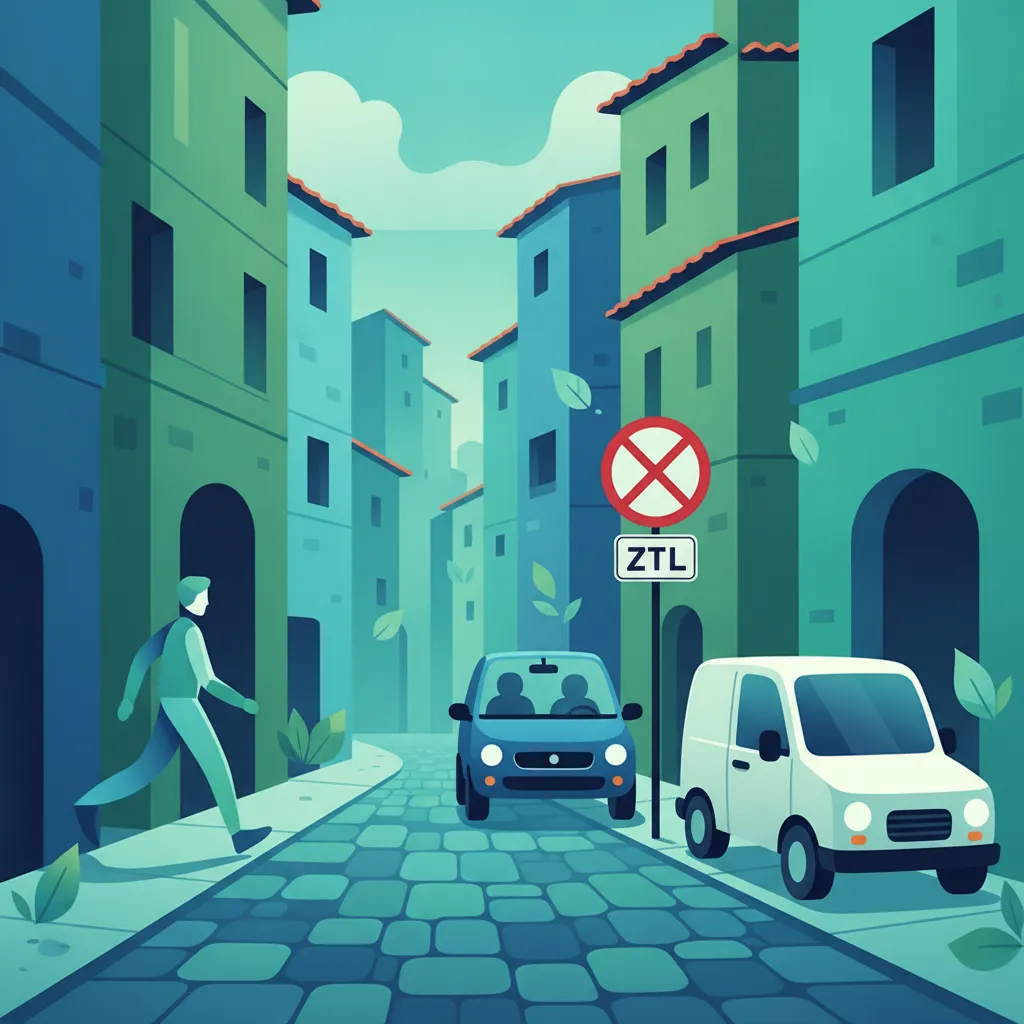
This lesson explains the rules for special urban traffic situations common in Italy. It provides a detailed explanation of Limited Traffic Zones (ZTL), including how to recognize the signage and understand the access restrictions to avoid fines. The content also offers guidance on navigating the narrow and complex streets of historic centers and safely maneuvering around frequently stopping delivery vehicles.

This lesson outlines the correct protocols for stopping to make a delivery in a public area. It covers the legal use of designated loading bays, the importance of making the vehicle highly visible with hazard lights, and ensuring that the parking brake is securely applied. The lesson stresses the need to conduct loading and unloading activities efficiently and safely, without causing undue obstruction or danger to other road users and pedestrians.

This lesson focuses on the principle of 'appropriate speed' in urban environments, which often means driving slower than the legal maximum. It explains how to assess the environment for potential hazards—such as schools, parked cars, and busy intersections—and adjust speed accordingly to allow for adequate reaction time. Maintaining a safe, consistent speed reduces the need for harsh braking and contributes to a safer environment for everyone.
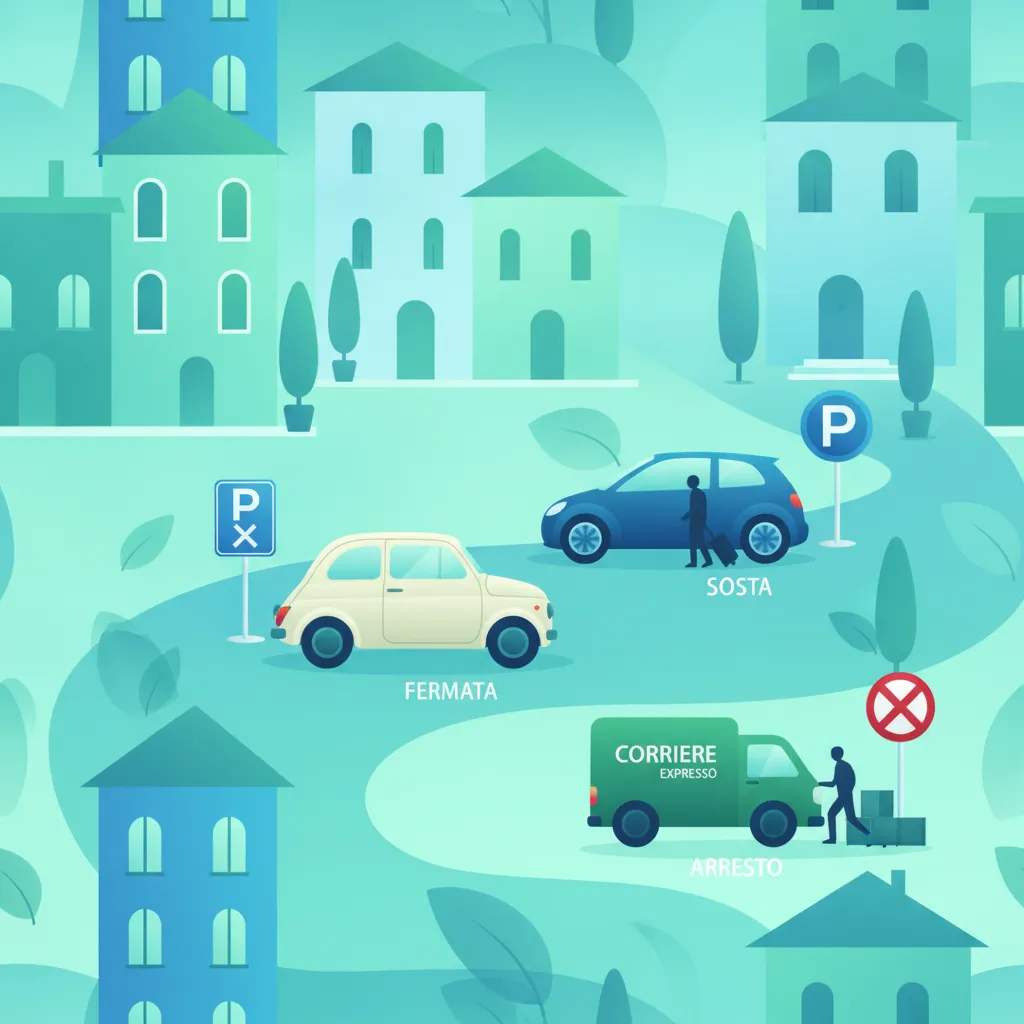
This lesson explains the important legal distinctions between three types of vehicle halts in Italy: 'fermata' (a brief stop for passengers/cargo without the driver leaving), 'sosta' (parking, where the driver may leave), and 'arresto' (a stop due to traffic or signals). Understanding these definitions is essential for knowing where and when it is legal to stop or park your vehicle without causing an obstruction or incurring a fine.
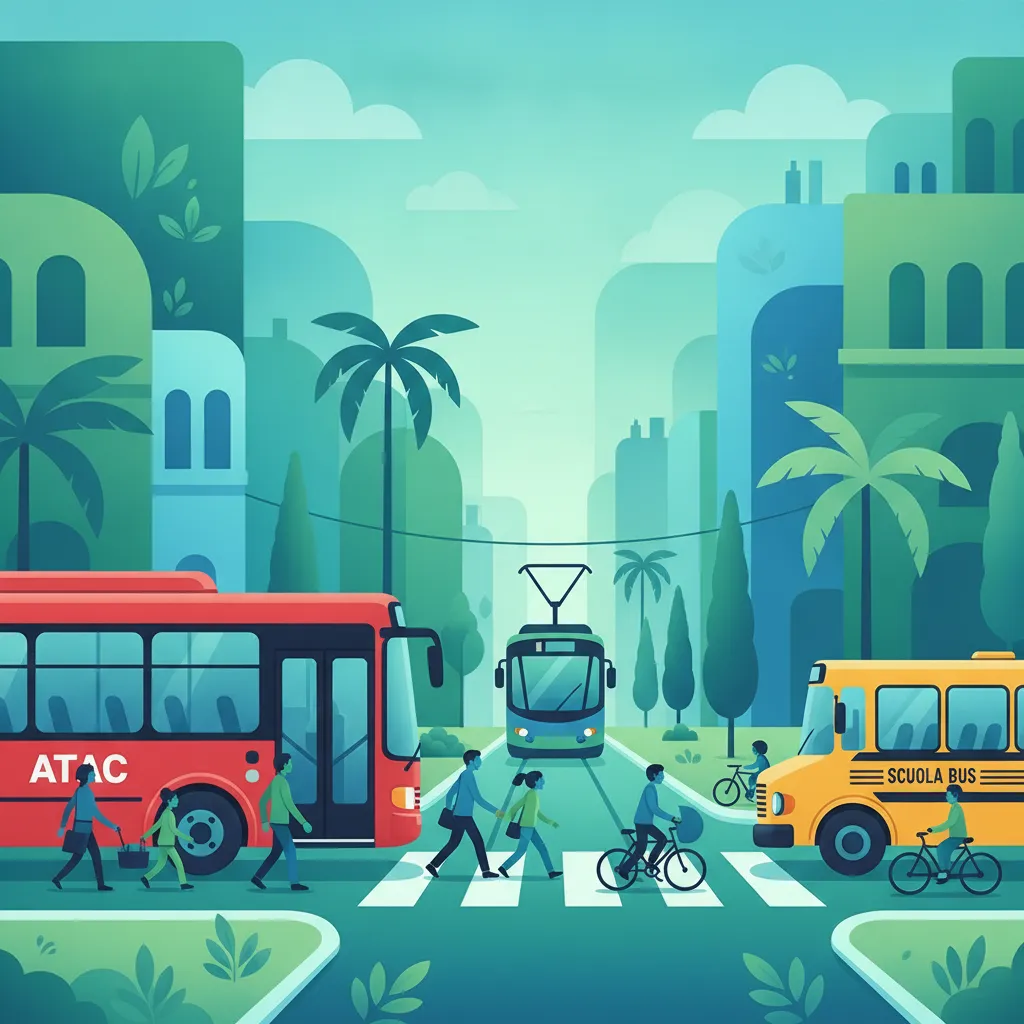
This lesson details the correct procedures for interacting with public transport and school buses. It explains the rules for dedicated bus lanes, the absolute priority of trams, and the legal requirement to yield to buses pulling out from a stop. The content also covers the specific laws requiring drivers to stop when a school bus is loading or unloading passengers, to ensure child safety.
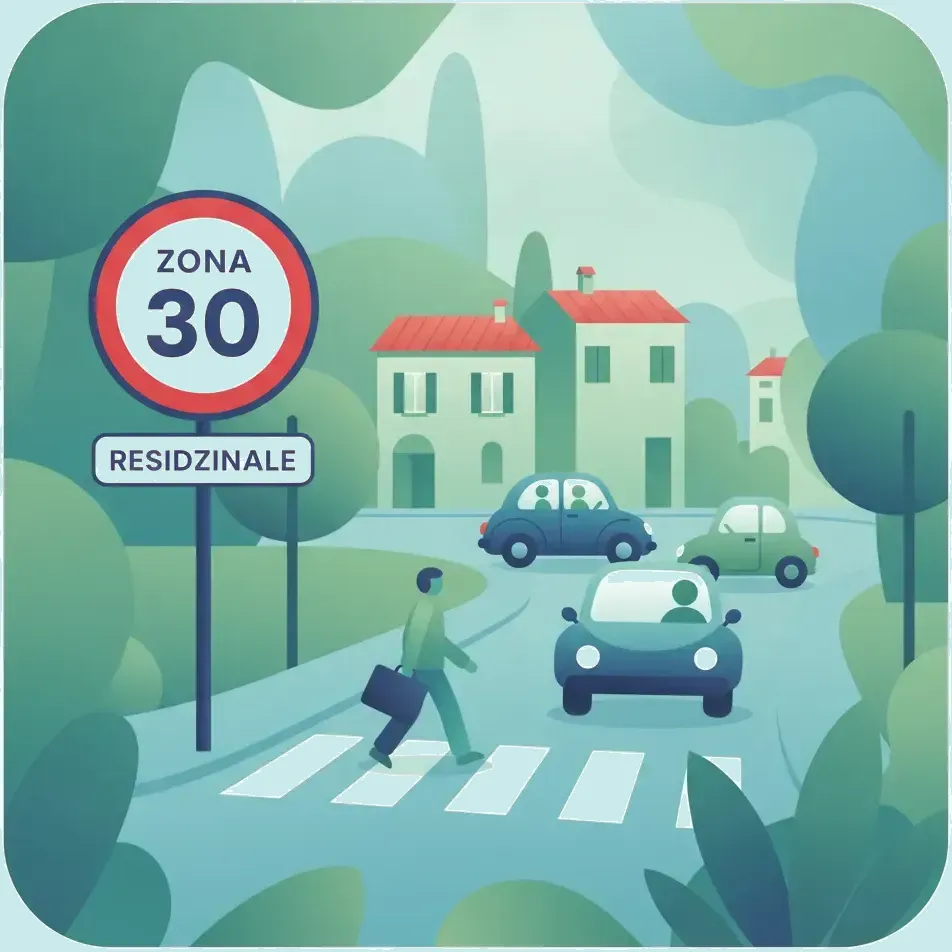
This lesson focuses on the specific signage and regulations for low-speed zones, such as "Zone 30" areas common in Italian towns. You will learn to recognize the signs that indicate reduced speed limits in residential areas, school zones, and other pedestrian-heavy environments. The content also explains various traffic calming measures and the priority rules that apply within these designated zones.

This lesson focuses on the importance of meticulous pre-journey planning for urban deliveries. It teaches drivers how to use maps and digital tools to plan routes that avoid physical restrictions (low bridges, narrow streets), legal restrictions (ZTLs, weight limits), and temporary disruptions. Effective route planning saves time, reduces stress, and ensures that all deliveries can be made legally and safely.
This lesson explains the principles of maintaining proper lane discipline and strategic positioning in an urban context. It covers how to adapt your position within the lane to enhance visibility, avoid road surface hazards, and prepare for turns or lane changes. The content also provides awareness of specific urban features like restricted traffic zones (ZTL) and how to navigate them legally and safely.

This lesson covers the specific environment of logistics hubs and distribution centers. It explains common site layouts, traffic flow systems, and the safety protocols drivers must follow when on private property. Key skills addressed include safely maneuvering in busy yards, reversing accurately into loading bays, and communicating effectively with warehouse staff to ensure a safe and efficient loading or unloading process.
Learn about common parking violations in Italy, such as misinterpreting colored lines or ignoring signs. Understand the difference between 'no stopping' and 'no parking' to prevent fines and towing.
This lesson explains the important legal distinctions between three types of vehicle halts in Italy: 'fermata' (a brief stop for passengers/cargo without the driver leaving), 'sosta' (parking, where the driver may leave), and 'arresto' (a stop due to traffic or signals). Understanding these definitions is essential for knowing where and when it is legal to stop or park your vehicle without causing an obstruction or incurring a fine.

This lesson provides a comprehensive review of the legal consequences for violating traffic laws in Italy. It reinforces the workings of the points system, explaining how different offenses lead to deductions and how a total loss of points results in license revocation. The content also covers the scale of monetary fines for various infractions and the conditions under which a driver's license may be temporarily suspended.
This lesson provides a clear overview of the legal consequences for failing to comply with road transport regulations in Italy. It covers the system of fines for common offenses like speeding, overloading, and violations of driving hours. The lesson also explains the penalty point system that can lead to license suspension and touches upon the responsibilities and potential liability of the transport company.
This lesson outlines the correct protocols for stopping to make a delivery in a public area. It covers the legal use of designated loading bays, the importance of making the vehicle highly visible with hazard lights, and ensuring that the parking brake is securely applied. The lesson stresses the need to conduct loading and unloading activities efficiently and safely, without causing undue obstruction or danger to other road users and pedestrians.

This lesson addresses the significant risk posed by parked vehicles, particularly the hazard of drivers opening their doors into traffic. You will learn to maintain a safe lateral distance when passing parked cars and to actively scan for signs of occupancy. This proactive approach helps prevent dangerous "dooring" incidents and ensures safe passage in urban environments.
This lesson focuses on the principle of 'appropriate speed' in urban environments, which often means driving slower than the legal maximum. It explains how to assess the environment for potential hazards—such as schools, parked cars, and busy intersections—and adjust speed accordingly to allow for adequate reaction time. Maintaining a safe, consistent speed reduces the need for harsh braking and contributes to a safer environment for everyone.
This lesson explains the concept of 'Zone a Traffico Limitato' (ZTL), common in Italian city centers, which restricts vehicle access at certain times. It covers how to identify ZTL boundaries, understand the operating hours, and the procedures for obtaining permits for commercial deliveries. The lesson also touches on environmental zones that may restrict access based on a vehicle's emission standards.

This lesson provides a clear overview of the legal penalties for traffic violations in Italy. It explains the structure of fines and the penalty point system that can lead to license suspension or revocation. The content also touches on more severe consequences, including criminal liability for incidents causing injury, to emphasize the importance of lawful riding.
This lesson explains the rules for special urban traffic situations common in Italy. It provides a detailed explanation of Limited Traffic Zones (ZTL), including how to recognize the signage and understand the access restrictions to avoid fines. The content also offers guidance on navigating the narrow and complex streets of historic centers and safely maneuvering around frequently stopping delivery vehicles.
This lesson focuses on regulatory signs, which impose legal obligations and prohibitions on drivers. It explains the meaning of critical signs such as 'Stop', 'Yield' (dare la precedenza), and various speed limit signs. The content also covers signs that prohibit certain actions like overtaking, parking, or entry, as well as those that mandate a specific direction of travel or lane usage.
Find clear answers to common questions learners have about Parking Regulations in Urban Areas. Learn how the lesson is structured, which driving theory objectives it supports, and how it fits into the overall learning path of units and curriculum progression in Italy. These explanations help you understand key concepts, lesson flow, and exam focused study goals.
White lines generally indicate free parking zones, although time limits may apply if a sign indicates it. Blue lines indicate paid parking, which requires payment via a machine or app. Yellow lines are reserved for specific users, such as residents, disabled persons, or public transport vehicles, and parking there without permission is prohibited.
The parking disc must be used in zones marked with signs indicating a maximum permitted parking duration. You must set the arrow on the disc to the time of your arrival; failure to display it or displaying it incorrectly can result in a fine for exceeding the allowed stay.
No, you must not park within 15 meters of a bus or tram stop sign unless specific road markings indicate otherwise. Parking in these areas is a common cause of fines and creates significant traffic hazards for public transport users.
Fermata is a temporary stop for passengers to enter or exit, or for short unloading, with the driver staying in the vehicle. Sosta is parking, where the vehicle is stationary for a longer period and the driver may leave the vehicle; this is subject to stricter regulations.
Start searching now to pinpoint exactly which Italian driving theory topics, road signs, or traffic rules you need to master. Use our advanced filters to build a custom practice session and ensure you're fully prepared for every aspect of your official driving licence exam.