
This lesson focuses on the critical skill of overtaking, a common area of difficulty in the Polish Category B theory exam. We'll break down the legal requirements for passing other vehicles safely, ensuring you understand when and how to overtake according to Polish traffic law. This knowledge is vital for both your exam success and for maintaining safety on the road.
Lesson content overview
Overtaking, also known as passing, is a fundamental maneuver in driving that allows a vehicle to move past another slower-moving vehicle in the same direction. While seemingly straightforward, executing an overtake safely and legally requires a comprehensive understanding of Polish road traffic regulations, road markings, signs, and situational awareness. This lesson provides a detailed guide to the legal framework governing overtaking in Poland, essential for both road safety and success in the Polish Category B driving theory exam.
Mastery of these rules is paramount for maintaining safe traffic flow, preventing dangerous collisions, and ensuring you adhere to the law. Before delving into the specifics, it's important to have a foundational understanding of basic traffic signs, road markings, vehicle control, and the hierarchy of traffic rules, as these concepts underpin all safe driving practices, including overtaking.
The ability to overtake effectively and safely hinges on a few core principles that prioritize the well-being of all road users. These principles guide the specific rules and regulations outlined in the Polish Highway Code (Kodeks Drogowy).
Every overtaking maneuver must strictly adhere to a safety-first principle. This means that an overtake should only be initiated if it can be completed without endangering the overtaking driver, the vehicle being overtaken, or any other road users, including oncoming traffic, pedestrians, and cyclists. This principle underpins all legal restrictions and requirements.
For traffic to flow smoothly and safely, all road users must be able to anticipate the actions of others. Clear road markings and signs serve as universal cues, dictating where overtaking is permitted or prohibited, thereby enhancing predictability. Drivers are expected to communicate their intentions, primarily through turn signals, to ensure other road users are aware of their planned maneuver.
The type of longitudinal line painted on the road surface is a primary indicator of whether overtaking is legally permitted. These markings provide a clear, visual cue that drivers must interpret correctly. Failing to do so can lead to dangerous situations and legal penalties.
Before initiating any overtaking maneuver, a driver must ensure there is an unobstructed view of the road ahead, stretching far enough to safely complete the maneuver. This required sight distance varies significantly with vehicle speed and road conditions, and its absence is an absolute prohibition, regardless of other markings.
Beyond sight distance, the intended overtaking lane must be clear of any obstacles, including other vehicles, pedestrians, cyclists, or road hazards. Drivers must thoroughly check their mirrors and blind spots and anticipate the movements of other road users to ensure the path is clear throughout the entire overtaking process.
An overtaking maneuver requires an appropriate speed differential between the overtaking vehicle and the overtaken vehicle. The overtaking speed must be sufficient to complete the maneuver efficiently, allowing a safe return to the original lane before encountering oncoming traffic, all while adhering to the posted speed limits. Excessive speed is illegal, and insufficient speed can prolong the maneuver, making it hazardous.
The performance characteristics of a vehicle, such as those with trailers, heavy loads, or operating in reduced traction conditions (e.g., wet or icy roads), significantly affect overtaking feasibility. These factors increase acceleration time and braking distances, necessitating greater caution and often imposing additional legal restrictions on overtaking.
Road markings are an essential part of the Polish Road Traffic Act, providing immediate visual guidance for drivers. Understanding them correctly is critical for safe and legal overtaking.
A solid single white line (sign P-1b) running along the length of the road indicates that crossing it is prohibited for any vehicle. This applies to both overtaking and changing lanes across this line. Drivers must remain in their lane and not cross over a solid line to pass another vehicle. It typically marks hazardous sections, blind spots, or areas where opposing traffic flows closely.
A broken single white line (sign P-1a) indicates that crossing is permitted, provided it is safe to do so. This is the most common marking allowing overtaking. However, permission to cross a broken line does not automatically mean overtaking is safe or legal; all other conditions, such as sight distance and the absence of prohibition signs, must still be met.
A double solid white line (sign P-2) is a critical marking that absolutely prohibits overtaking for traffic in both directions. Neither line of the double solid marking may be crossed. This marking is used in areas of particularly high risk, such as before sharp curves, hill crests, or other locations where there is extremely limited visibility of oncoming traffic. It ensures strict separation of opposing traffic flows.
This marking (sign P-3) consists of one solid line parallel to one broken line. Its meaning is specific to the direction of travel. Drivers on the side of the broken line are permitted to cross the marking to overtake, provided it is safe. Conversely, drivers on the side of the solid line are prohibited from crossing it. This clever marking allows for conditional overtaking based on the visibility and safety context relevant to each direction of traffic. For example, on a two-lane road with a solid line on your side and a broken line on the opposite side, only the opposite traffic may overtake.
Beyond road markings, specific regulatory signs explicitly prohibit overtaking, regardless of the road lines. These signs must always be obeyed as they override any permissive markings.
The "No Overtaking" sign (B-25, often referred to as A-4 in the blueprint description) is a red circular sign with a black car attempting to overtake another black car, crossed by a red diagonal line. This sign strictly forbids overtaking for all vehicles, typically placed in zones where environmental factors (like sharp curves, narrow roads, or high traffic density) make overtaking inherently unsafe. Drivers must obey this sign even if the road markings would otherwise permit overtaking.
This sign (B-26, previously mentioned as A-6) is similar to the general no overtaking sign but specifically depicts a car with a trailer. It prohibits only vehicles towing trailers from overtaking other multi-track vehicles. Trailers significantly increase vehicle length, weight, and braking distance, making overtaking riskier and slower. This restriction is often found on steep ascents, winding roads, or where quick acceleration is necessary.
The "No Overtaking for Heavy Vehicles" sign (B-27, previously A-7) typically shows a truck attempting to overtake a car, with a red diagonal line through it. This sign restricts overtaking for heavy goods vehicles (generally those over 3.5 tonnes permissible gross weight). Heavy vehicles have slower acceleration and longer stopping distances, and their larger size can obstruct visibility for other drivers during an overtake. This sign is commonly placed on roads unsuitable for such maneuvers by heavier vehicles.
Sufficient sight distance is one of the most critical prerequisites for safe overtaking. It refers to the minimum unobstructed view of the road ahead required to perform the maneuver safely, without encountering any unforeseen hazards, especially oncoming traffic.
Before initiating an overtake, a driver must assess both front visibility (the ability to see the road ahead of the vehicle being overtaken) and rear visibility (the ability to see any approaching traffic in the opposite lane). Road geometry, such as curves, hill crests, and junctions, significantly reduces visibility. It's not enough to simply see the road; you must be able to see far enough to determine if the path will remain clear throughout the entire maneuver.
The Polish Highway Code (Kodeks Drogowy) stipulates minimum sight-distance values that vary with the speed limit of the road. These values ensure that a driver has ample time to accelerate, complete the lane change, overtake, and return to the original lane before any hazard, particularly an oncoming vehicle, becomes a threat. For example, the required sight distance will be much longer on a road with an 80 km/h speed limit than on a 50 km/h urban road.
A common mistake is assuming visibility is adequate just because the road appears straight. Drivers must consider all factors that could reduce visibility, such as subtle rises in the road, wide curves, or adverse weather conditions.
A systematic approach to overtaking ensures safety and compliance with regulations. Follow these steps for a controlled and legal maneuver:
Check Road Markings and Signs: Before anything else, verify that road markings (e.g., a broken line on your side) and any regulatory signs (e.g., no "No Overtaking" sign) permit the maneuver.
Assess Sight Distance and Road Geometry: Ensure you have an unobstructed view of the road ahead, confirming the required sight distance for your speed. Look for curves, hill crests, or junctions that might reduce visibility.
Check Mirrors and Blind Spots: Scan your rear-view and side mirrors, and check your blind spots to ensure no vehicle is already overtaking you or attempting to move into the adjacent lane.
Signal Intent: Activate your turn signal well in advance to indicate your intention to move into the overtaking lane. This warns other drivers of your maneuver.
Accelerate Safely: Increase your speed to quickly and decisively move past the vehicle ahead. The speed differential should be sufficient to minimize the time spent in the opposing lane or adjacent lane.
Change to the Overtaking Lane: Smoothly move into the adjacent lane, maintaining a safe distance from the vehicle you are about to overtake. Do not cut in front of it too sharply.
Complete the Overtake: Drive past the slower vehicle, ensuring you maintain a safe lateral distance. Do not return to your original lane until you can see the front of the overtaken vehicle in your rear-view mirror, indicating a sufficient gap.
Return to the Original Lane: Signal your intention to return to your lane. Once a safe gap exists behind the overtaken vehicle, smoothly steer back into your original lane. Deactivate your turn signal.
Maintaining proper lane discipline is crucial during an overtaking maneuver to prevent side-on collisions and ensure predictability for other road users.
When executing an overtake, your vehicle must remain within the limits of the chosen overtaking lane. Avoid encroaching on the lane of the vehicle being overtaken or drifting too close to the opposite curb or shoulder. Staying centered in your lane minimizes risk and clearly communicates your path.
Crossing a solid line is always prohibited, as previously discussed. If you are overtaking on a road with a broken line, you are permitted to cross it, but only if it is safe and legal to do so. On multi-lane roads, even with broken lines between lanes, you must use turn signals when changing lanes, including for overtaking.
Certain vehicles, due to their size, weight, or configuration, face additional legal constraints on overtaking. Drivers of these vehicles must be especially aware of their limitations.
Vehicles towing trailers (sign B-26 applies) often have slower acceleration and longer braking distances. They are frequently prohibited from overtaking on roads with solid lines, where visibility is compromised, or where the "No Overtaking for Vehicles with Trailers" sign is posted. These restrictions are in place to mitigate the increased risks associated with trailers during high-speed maneuvers.
Heavy goods vehicles (over 3.5 tonnes, as indicated by sign B-27) are typically restricted from overtaking on specific road sections, such as steep ascents, long tunnels, or highly congested multi-lane roads. Their slower acceleration and reduced maneuverability can create hazards, especially on roads with limited capacity.
While buses and minibuses generally follow standard overtaking rules, they may have dedicated lanes in some urban areas which must be respected. In other situations, their size and passenger load may necessitate a more cautious approach to overtaking.
Beyond specific signs and markings, the Polish Highway Code identifies several general situations where overtaking is strictly forbidden due to inherent dangers, regardless of other conditions.
Overtaking is generally prohibited within the entire area of a crossroads or intersection, and for at least 30 metres before it. This rule is crucial for preventing collisions at points where traffic streams merge, diverge, and cross. Drivers must be prepared for unexpected movements from other vehicles or pedestrians.
It is strictly forbidden to overtake within 30 metres of a marked pedestrian crossing. This rule protects vulnerable road users. Overtaking near a crossing can obscure a pedestrian from view, or prevent the overtaking driver from stopping in time if a pedestrian enters the crossing. You must also yield to pedestrians already on the crossing.
No overtaking is permitted for at least 30 metres before and after a railroad crossing. This area is inherently dangerous due to the potential for trains and the need for drivers to focus on checking for approaching trains, rather than on overtaking maneuvers.
Overtaking is forbidden on curves and hill crests where visibility is limited, often indicated by specific warning signs like "Utrudniona widoczność" (limited visibility). These locations prevent drivers from seeing oncoming traffic or hazards in time, making overtaking extremely dangerous and prone to head-on collisions.
While not always explicitly marked with a "No Overtaking" sign, local prohibitions may apply in school zones during specific hours or in dense residential areas. These areas demand heightened caution, and drivers should generally avoid overtaking due to the increased presence of pedestrians and children.
Overtaking is prohibited while actively merging onto an expressway or motorway. The merging process itself requires drivers to adjust their speed and position to safely integrate into the flow of traffic without creating additional hazards by attempting to overtake another vehicle in the acceleration lane.
When an emergency vehicle with activated blue lights and siren is approaching from behind, overtaking is strictly prohibited. Drivers must yield to emergency vehicles and move aside to allow them clear passage. Overtaking in this situation could impede their progress or create a dangerous situation.
Understanding common overtaking violations can help drivers avoid dangerous situations and legal penalties.
Why Wrong: A solid line explicitly prohibits crossing. Attempting to overtake across it, especially on a narrow road that often has limited sight distance, is highly dangerous. Correct Behavior: Remain behind the vehicle until a safe overtaking spot appears with appropriate markings. Consequence: Significant fine, penalty points, and a high risk of head-on collision.
Why Wrong: Limited forward sight may completely conceal oncoming traffic. This is a primary cause of severe accidents. Correct Behavior: Wait until the curve opens up and visibility meets the minimum required distance for your speed. Consequence: Potential head-on collision, severe injuries or fatalities, and legal liability.
Why Wrong: Temporary signs supersede permanent markings for safety, especially in dynamic roadwork environments. Correct Behavior: Treat the entire section as a no-overtaking zone until the sign is no longer present. Consequence: Fine, increased hazard for road workers and other drivers.
Why Wrong: Specific restrictions for vehicles with trailers override general broken-line permissions. Trailers increase stopping distance and reduce acceleration. Correct Behavior: Adhere to the sign and wait for a permissible section, if any. Consequence: Fine, higher risk due to altered vehicle dynamics, potential for loss of control.
Why Wrong: Returning too early can force the overtaken vehicle to brake sharply, creating a dangerous situation and increasing the risk of a rear-end collision. Correct Behavior: Stay in the overtaking lane until you can see the overtaken vehicle clearly in your rear-view mirror, indicating a safe gap. Consequence: Rear-end collision, penalty points, and potential insurance claims.
Overtaking rules are not static; they must be interpreted and applied dynamically based on prevailing conditions.
Understanding the underlying reasons for overtaking rules reinforces safe driving practices.
Adequate sight distance combined with a sufficient speed differential between vehicles ensures that the overtaking vehicle can complete the maneuver before encountering any hazard, such as an oncoming vehicle. This is a direct application of physics: the faster you go, the more distance you cover per second, and the more distance you need to react and stop.
The average human reaction time (approximately one second) dictates that additional clearance is needed. Overtaking maneuvers must account for this by providing a generous safety margin, allowing time for perception, decision, and execution.
Heavier vehicles require longer distances to stop or accelerate. Attempting to overtake without considering these dynamics significantly increases the risk of collisions, especially rear-end impacts or head-on crashes if the maneuver is rushed.
Clear and consistent road markings reduce driver uncertainty and cognitive load. This allows for quicker and more accurate decision-making, which is crucial in high-stress situations like overtaking.
Many overtaking rules, such as those regarding solid lines and intersections, are based on statistical evidence showing that head-on collisions are most common in areas where illegal overtaking was attempted. Laws are designed to mitigate these proven risks.
Here are key terms related to overtaking in Poland, important for understanding the regulations and passing your driving theory exam:
Let's look at a few practical examples to solidify your understanding of overtaking rules in various contexts.
Setting: You are driving on a rural road with a speed limit of 80 km/h. The road has a broken white line on your side, and visibility ahead is excellent, extending for over 400 metres. You are approaching a slower vehicle. Rule Application: Overtaking is permitted due to the broken line and ample sight distance. Correct Behavior: Check mirrors and blind spots, signal your intention, accelerate decisively into the left lane, pass the vehicle, and return to your lane once you can see the overtaken vehicle in your rear-view mirror, signaling again. Incorrect Behavior: Attempting to overtake with less than the required sight distance (e.g., 200m) at 80 km/h, risking a head-on collision with an unseen oncoming vehicle.
Setting: You are on an urban street with a 50 km/h speed limit. You see a pedestrian crossing ahead, clearly marked with stripes and a sign. There is a "No Overtaking" sign (B-25) positioned 20 metres before the crossing, and a vehicle ahead of you is driving slowly. Rule Application: Overtaking is strictly prohibited within 30 metres of a pedestrian crossing and where a "No Overtaking" sign is posted. Correct Behavior: Maintain your position behind the slower vehicle, reducing speed as you approach the crossing, and prepare to stop if pedestrians are present or about to cross. Incorrect Behavior: Accelerating and attempting to pass the vehicle just before the pedestrian crossing. This endangers pedestrians and is a serious traffic violation.
Setting: You are on a three-lane motorway, driving in the middle lane at 120 km/h. There is a slower vehicle in front of you in the middle lane. The left lane is clear. Rule Application: Overtaking on Polish motorways is generally permitted only on the left side. You must use your turn signals for all lane changes. Correct Behavior: Check your left mirror and blind spot, signal left, smoothly move into the left-most lane, accelerate to pass the vehicle, and once safely clear, signal right and return to the middle lane. Incorrect Behavior: Overtaking the vehicle on its right side by moving into the right-most lane. This is illegal and highly dangerous, disrupting motorway traffic flow.
Setting: You are driving on a rural road with a broken line, but dense fog has reduced visibility to approximately 30 metres. Ahead, you see a slight hill crest. Rule Application: Even though a broken line is present, severely reduced visibility due to fog (below required sight distance for your speed) makes overtaking prohibited. Hill crests further limit visibility. Correct Behavior: Reduce your speed significantly, activate fog lights if necessary, increase your following distance, and absolutely do not attempt to overtake. Wait for visibility to improve significantly. Incorrect Behavior: Assuming the broken line grants permission and attempting to overtake, leading to a high risk of a head-on collision with an unseen oncoming vehicle.
Successfully and safely navigating overtaking situations in Poland requires a thorough understanding of the legal framework and sound judgment.
The legal framework for overtaking is defined by a combination of road markings, prohibition signs, and specific distance requirements outlined in the Polish Highway Code. Line types are fundamental: a solid single line prohibits crossing, a broken single line permits crossing if safe, a double solid line strictly forbids crossing for all, and a solid-broken combination line allows crossing only for traffic on the side of the broken line.
Prohibition signs like the "No Overtaking" sign (B-25) or those for specific vehicles (B-26 for trailers, B-27 for heavy vehicles) always override road markings. These signs are placed where hazards are prevalent and demand strict compliance.
Crucially, sufficient sight distance is non-negotiable. Before any overtake, you must ensure an unobstructed view of the road ahead, adequate for your speed, allowing for safe completion of the maneuver. This distance increases with speed and is significantly affected by environmental factors.
The overtaking procedure involves a series of mandatory steps: checking markings and signs, assessing sight distance, checking mirrors and blind spots, signaling intent, accelerating, changing lanes, completing the pass while maintaining a safe distance, and finally, returning to your original lane only when a safe gap is established behind the overtaken vehicle.
Several overarching restrictions mean overtaking is strictly forbidden in inherently dangerous locations: within 30 metres of intersections, pedestrian crossings, and railroad crossings; on curves or hill crests with limited visibility; in active merging zones; and when yielding to emergency vehicles.
Vehicle-specific rules apply to vehicles with trailers or heavy loads, often imposing additional prohibitions due to their altered dynamics. Furthermore, environmental adjustments are vital; reduced visibility from rain, fog, or night driving, or reduced traction from slippery surfaces, necessitates greater caution, reduced speed, and longer required sight distances. When passing vulnerable road users like cyclists or motorcyclists, a minimum lateral clearance of 1.5 metres is legally required.
Violating these rules carries significant consequences, including fines, penalty points, and a dramatically increased risk of serious accidents, particularly head-on collisions. Mastering these principles not only helps you pass your Polish Category B theory exam but, more importantly, ensures your safety and the safety of others on the road.
This lesson builds upon your knowledge of Traffic Signs and Road Markings and Speed Management and Stopping Distances, and forms a crucial foundation for subsequent topics such as Overtaking Cyclists and Motorcyclists Safely and Changing Lanes Safely in Urban Traffic.
This lesson covers the legal framework for overtaking in Poland, including the four main road line types (solid single, broken single, double solid, and solid-broken combination), three key prohibition signs (B-25 general no overtaking, B-26 for vehicles with trailers, B-27 for heavy goods vehicles), and mandatory sight distance requirements that vary with speed. Overtaking is absolutely prohibited within 30 metres of intersections, pedestrian crossings, and railroad crossings, as well as on blind curves and hill crests regardless of markings. The step-by-step procedure emphasizes checking markings and signs, assessing visibility, using mirrors and signals, accelerating decisively, and returning to lane only after establishing a safe gap behind the overtaken vehicle.
A short set of high-value points that capture the most important learning from this lesson.
Regulatory prohibition signs (B-25, B-26, B-27) always override road markings, even permissive broken lines.
A solid single line prohibits any crossing; a broken single line permits crossing only when safe; a double solid line absolutely forbids crossing for all traffic.
Overtaking is strictly forbidden within 30 metres before intersections, pedestrian crossings, and railroad crossings.
Sufficient sight distance is a non-negotiable prerequisite that must be adequate for your speed, regardless of road markings.
When overtaking cyclists or motorcyclists, a minimum lateral distance of 1.5 metres must be maintained.
Explore all units and lessons included in this driving theory course.
A solid-broken combination line (P-3) allows crossing only for traffic on the side of the broken line; the side with the solid line may never cross.
The sight distance requirement increases with vehicle speed and is significantly reduced by fog, rain, curves, and hill crests.
Vehicles with trailers (sign B-26) and heavy vehicles over 3.5 tonnes (sign B-27) face additional overtaking restrictions due to longer braking and acceleration distances.
Never return to your original lane after overtaking until you can see the overtaken vehicle in your rear-view mirror, indicating a safe gap.
Temporary signs in roadwork zones always take precedence over permanent road markings.
Assuming a broken line automatically means overtaking is permitted, without checking for sight distance adequacy or prohibition signs.
Returning to the original lane too early after overtaking, forcing the overtaken vehicle to brake sharply.
Attempting to overtake on curves, hill crests, or in fog without considering that reduced visibility invalidates the broken line permission.
Ignoring temporary 'No Overtaking' signs during roadworks, treating permanent markings as superseding them.
Overtaking on the right side of another vehicle on a motorway, which is illegal in Poland where only left-side overtaking is permitted.
Lesson content overview
A short set of high-value points that capture the most important learning from this lesson.
Regulatory prohibition signs (B-25, B-26, B-27) always override road markings, even permissive broken lines.
A solid single line prohibits any crossing; a broken single line permits crossing only when safe; a double solid line absolutely forbids crossing for all traffic.
Overtaking is strictly forbidden within 30 metres before intersections, pedestrian crossings, and railroad crossings.
Sufficient sight distance is a non-negotiable prerequisite that must be adequate for your speed, regardless of road markings.
When overtaking cyclists or motorcyclists, a minimum lateral distance of 1.5 metres must be maintained.
Explore all units and lessons included in this driving theory course.
A solid-broken combination line (P-3) allows crossing only for traffic on the side of the broken line; the side with the solid line may never cross.
The sight distance requirement increases with vehicle speed and is significantly reduced by fog, rain, curves, and hill crests.
Vehicles with trailers (sign B-26) and heavy vehicles over 3.5 tonnes (sign B-27) face additional overtaking restrictions due to longer braking and acceleration distances.
Never return to your original lane after overtaking until you can see the overtaken vehicle in your rear-view mirror, indicating a safe gap.
Temporary signs in roadwork zones always take precedence over permanent road markings.
Assuming a broken line automatically means overtaking is permitted, without checking for sight distance adequacy or prohibition signs.
Returning to the original lane too early after overtaking, forcing the overtaken vehicle to brake sharply.
Attempting to overtake on curves, hill crests, or in fog without considering that reduced visibility invalidates the broken line permission.
Ignoring temporary 'No Overtaking' signs during roadworks, treating permanent markings as superseding them.
Overtaking on the right side of another vehicle on a motorway, which is illegal in Poland where only left-side overtaking is permitted.
Explore search topics learners often look for when studying Legal Overtaking Situations and Restrictions. These topics reflect common questions about road rules, driving situations, safety guidance, and lesson level theory preparation for learners in Poland.
Browse additional driving theory lessons that cover connected traffic rules, road signs, and common driving situations related to this topic. Improve your understanding of how different rules interact across everyday traffic scenarios.
Understand Polish driving theory rules for overtaking during adverse weather, poor visibility, and night conditions. Learn how road conditions affect passing legality and safety.
This lesson provides essential guidance for driving in fog, one of the most dangerous conditions. It instructs on the correct use of low-beam headlights and fog lights to maximize visibility without causing glare. The core advice is to significantly reduce speed and use the edge of the road or markings as a guide.

This lesson teaches the crucial concept that drivers must always adapt their speed to the current conditions. It explains how factors like rain, fog, ice, heavy traffic, and poor visibility reduce safety margins and require a lower speed than the posted limit. This principle of defensive driving is essential for preventing accidents in challenging situations.

This lesson addresses the challenges of driving after dark. It covers the correct use of high and low beam headlights to see and be seen, and techniques to avoid being dazzled by oncoming traffic. The content also touches on the increased risk of fatigue and reduced ability to judge speed and distance at night.

This lesson focuses on the specific challenges of driving in rainy conditions. It explains the phenomenon of hydroplaning, where tires lose contact with the road surface, and how to prevent it by reducing speed. The importance of good tire condition, effective windscreen wipers, and extending following distances is also covered in detail.

This lesson explores the unique characteristics of driving on rural roads. It highlights potential hazards such as sharp, unbanked curves, poor road surfaces, and limited visibility due to hills and vegetation. The content teaches drivers to anticipate these conditions and adjust their speed and position to navigate safely.
This lesson details the rules and best practices for driving on Poland's fastest roads. It covers the higher speed limits, the strict lane discipline of keeping right except to overtake, and prohibitions on stopping. The aim is to ensure drivers can handle the demands of sustained high-speed travel safely and efficiently.

This lesson defines what constitutes a 'built-up area' in Poland, marked by specific informational signs. It explains the default speed limit of 50 km/h that applies within these zones unless otherwise indicated. The content highlights the need for increased vigilance due to higher traffic density and the frequent presence of pedestrians.
This lesson details the specific driving adjustments needed for adverse weather. It focuses on how rain, snow, and ice affect vehicle dynamics and driver perception. Learners will study techniques to prevent hydroplaning, use winter tires effectively, and increase following distances on slippery surfaces while using safety systems like fog lights.

This lesson addresses environmental factors that impact rider visibility, such as low light, night conditions, fog, and glare from headlights. Learners will explore strategies for riding safely in reduced visibility, including the use of reflective gear, proper headlamp settings, and appropriate eye protection. The content also covers hazard detection techniques in adverse weather and how to adjust speed to maintain safety, enhancing rider safety across all conditions.

This lesson addresses the critical importance of the driver's physical and mental state. It details the dangers of driving under the influence of alcohol or drugs, explaining the legal blood alcohol concentration limit in Poland. The content also covers the subtle but significant risks of fatigue and distractions, advocating for full attentiveness behind the wheel.
Learn the Polish traffic laws that strictly prohibit overtaking at intersections, pedestrian crossings, railroad crossings, and other high-risk locations. Essential theory for safe driving.

This lesson addresses advanced scenarios, including multi-lane intersections and interactions with vulnerable road users. It reinforces the legal obligation to give absolute priority to pedestrians at marked crossings (zebra crossings). The content also covers navigating around traffic islands and using dedicated turning lanes in complex urban environments.
This lesson provides strategies for safely navigating the numerous intersections typical of urban environments. It reinforces the application of priority rules in situations with limited visibility and high traffic volume. Techniques for making turns in narrow streets and being aware of pedestrians and cyclists at junctions are central to the instruction.
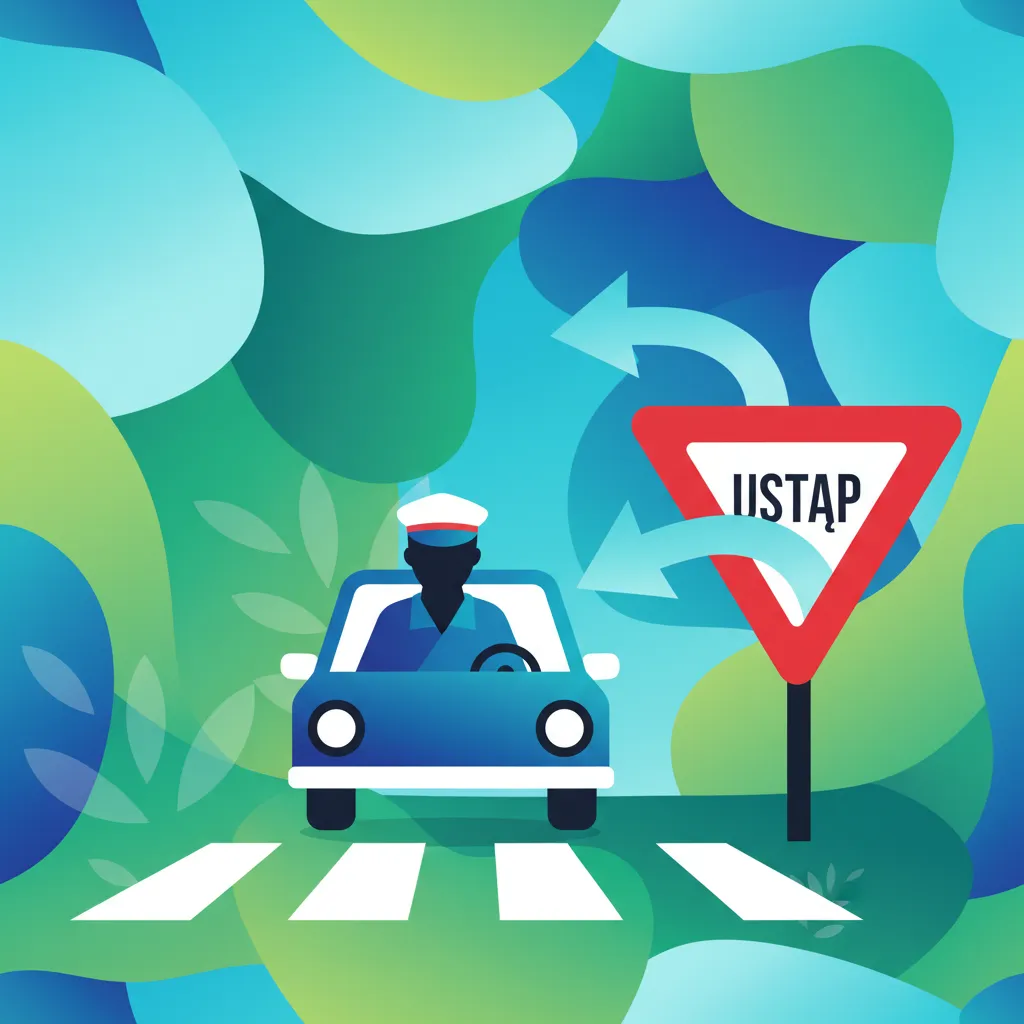
This lesson focuses on navigating intersections that are not controlled by traffic signals. It covers the interpretation of the 'Yield' sign (ustąp pierwszeństwa) and the application of the 'priority to the right' rule at junctions of equal roads. Safe decision-making and proper observation techniques are emphasized for these common scenarios.
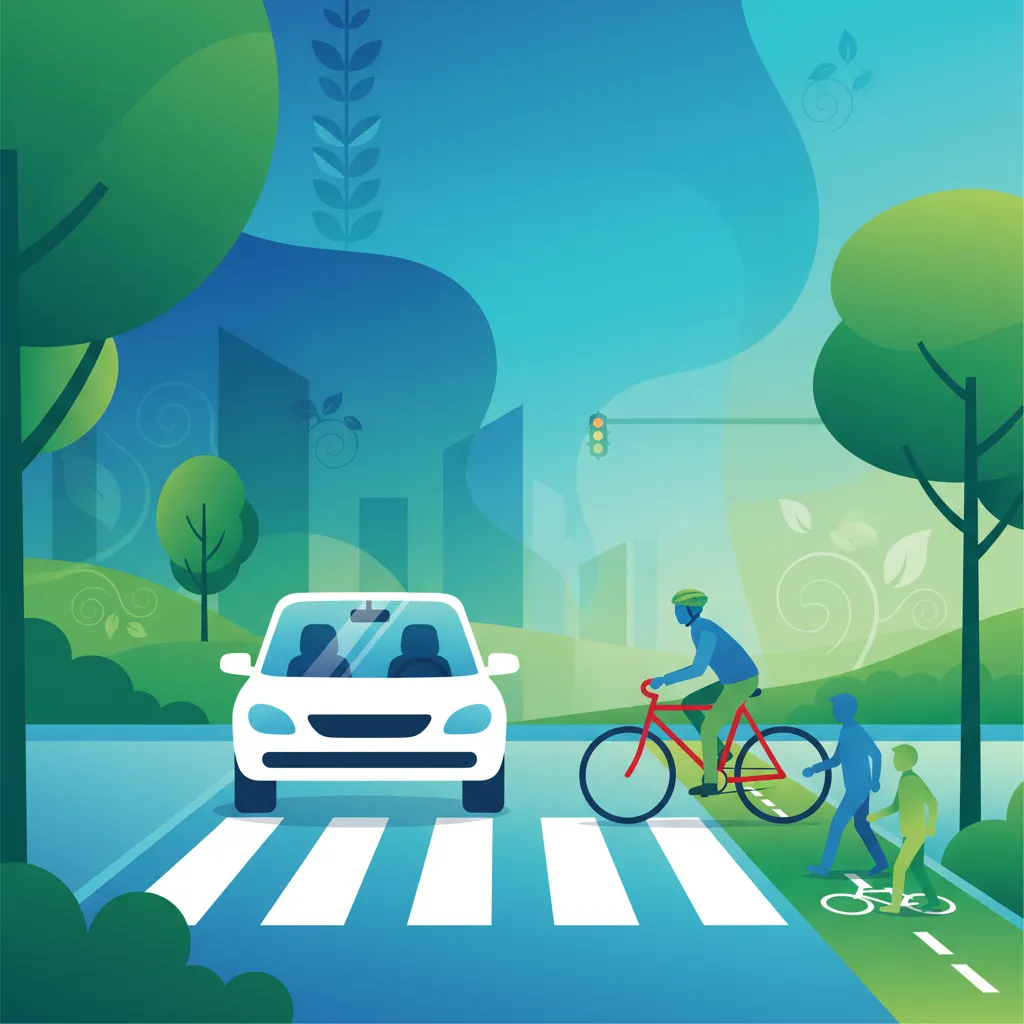
This lesson focuses on safe coexistence with cyclists and pedestrians, who are prevalent in urban areas. It covers the rules for driving alongside dedicated bicycle lanes and the legal requirement to yield to pedestrians at marked crossings. The content stresses the importance of constant awareness, especially when turning at intersections, to prevent conflicts with vulnerable road users.
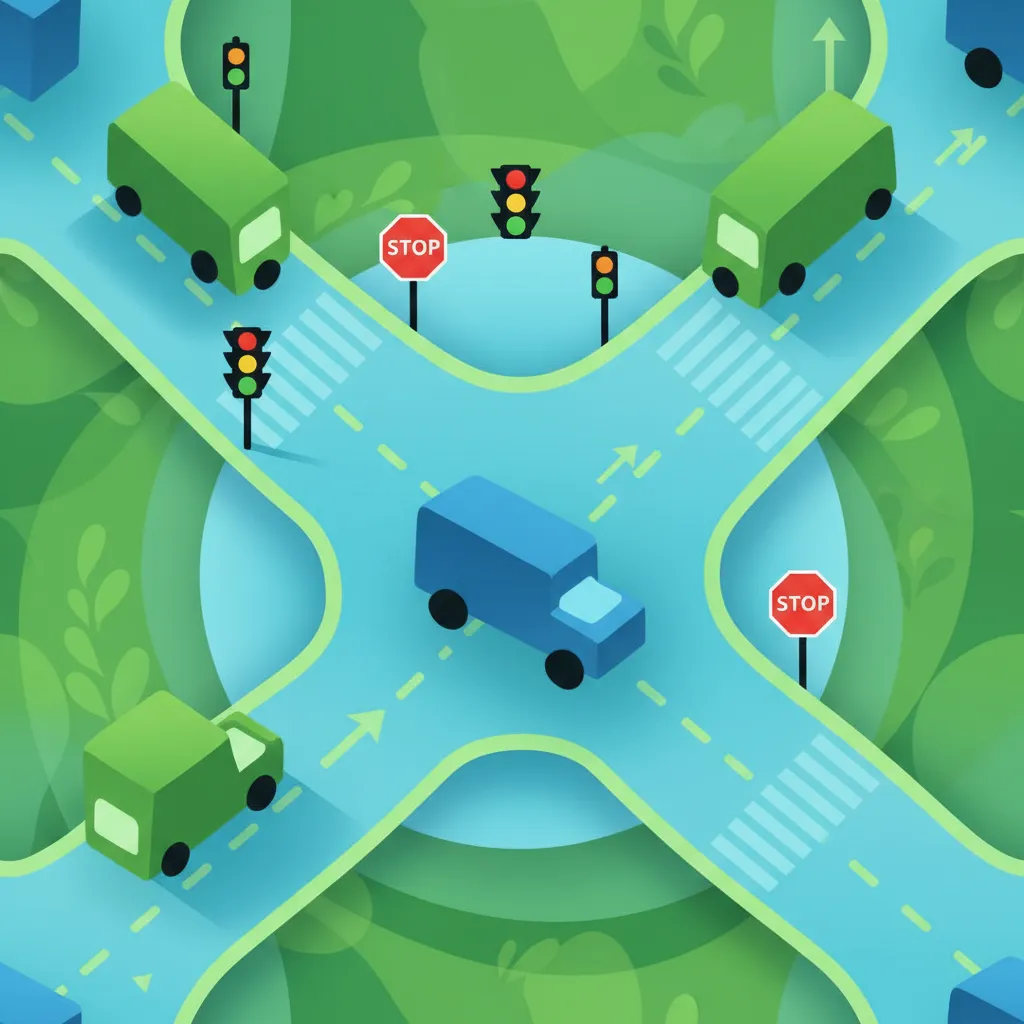
This lesson provides a comprehensive breakdown of the right-of-way rules that govern intersections. It explains the clear directives given by traffic lights, stop signs, and yield signs, and clarifies the procedures at unmarked or uncontrolled intersections, where the 'priority to the right' rule often applies. Learners will understand the legal hierarchy of these rules to make correct, safe, and predictable decisions when navigating through any junction, reducing the risk of conflict with other traffic.
In this lesson, learners examine the specific actions required at stop signs and give-way intersections under Polish traffic regulations. The content explains the legal requirement for a full stop before the stop line, incorporating a visual scan of all directions before proceeding. It also covers the give-way protocol, where riders must yield to traffic already in the intersection or on the main road, emphasizing the need for correct positioning and observation.
This lesson provides a detailed breakdown of traffic light operations in Poland. It explains the sequence of red, amber, and green lights, and the specific rules for turning when a green arrow signal is displayed. The meaning of a flashing amber light and the rules for pedestrian crossings at signalized intersections are also covered.

This lesson focuses on the rules of lane usage for maintaining safe and efficient traffic flow. It covers the meaning of different lane markings, such as solid versus broken lines, and the general principle of keeping to the rightmost lane unless overtaking. Proper lane discipline is crucial for predictability and preventing conflicts on multi-lane roads.
This lesson details the rules and best practices for driving on Poland's fastest roads. It covers the higher speed limits, the strict lane discipline of keeping right except to overtake, and prohibitions on stopping. The aim is to ensure drivers can handle the demands of sustained high-speed travel safely and efficiently.
This lesson focuses on areas with high pedestrian activity, requiring special caution. It covers the rules for 'living zones' (strefa zamieszkania), where pedestrians have priority and the speed limit is 20 km/h. The content also addresses regulations for school zones and other designated pedestrian areas to ensure the safety of the most vulnerable road users.
Find clear answers to common questions learners have about Legal Overtaking Situations and Restrictions. Learn how the lesson is structured, which driving theory objectives it supports, and how it fits into the overall learning path of units and curriculum progression in Poland. These explanations help you understand key concepts, lesson flow, and exam focused study goals.
In Poland, a single solid white line typically means you should not cross it into the lane for oncoming traffic. A double solid white line is a stricter prohibition – you must never cross it. Both indicate that overtaking is forbidden in that section of the road.
Yes, Poland uses specific prohibition signs to indicate no-passing zones. You'll encounter signs like 'Zakaz wyprzedzania' (No overtaking) which apply to all vehicles, or variations that might apply only to certain types of vehicles. Always look for these signs as they override general rules.
The most critical factor is visibility and ensuring you have a clear, unobstructed path ahead. You must be able to see far enough down the road to complete the overtake safely without endangering yourself or oncoming traffic. Lack of sufficient sight distance is a primary reason overtaking is prohibited and is dangerous.
Overtaking trams depends on the situation. If the tram is at a designated stop, you must stop. If it's moving and there's a solid line, you cannot overtake. Generally, if you can overtake without crossing a solid line and it's safe, it might be permissible, but always prioritize safety and check specific local regulations if unsure.
The Category B theory test in Poland includes questions that present scenarios with specific road markings, signs, and traffic conditions, asking you to determine if overtaking is legally permitted and safe. You'll need to interpret visual cues and apply the rules accurately.
Build custom practice sessions tailored precisely to your needs. Focus on areas requiring improvement, review specific Polish road signs, or master complex traffic rules to ensure full preparation for your official driving license exam.