
Logo
Polish Driving Theory Courses

Lesson 2 of the Priority, Intersection, and Roundabout Navigation for Trucks unit

Polish Driving Theory C: Approaching and Crossing Roundabouts with Heavy Vehicles

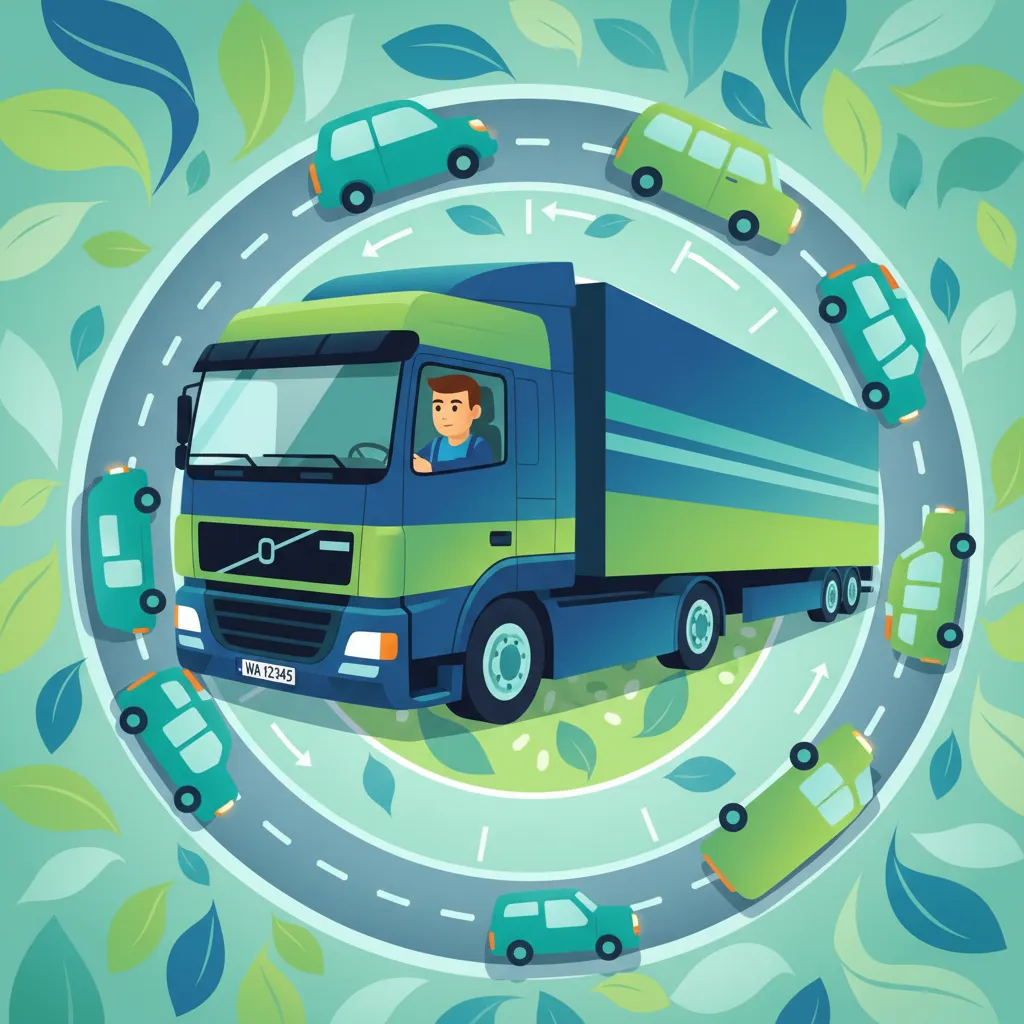
Navigating roundabouts in a heavy goods vehicle requires specific skills and awareness due to their size and handling characteristics. This lesson focuses on the unique challenges HGVs face, detailing correct procedures for approaching, selecting lanes, and safely yielding to traffic within the roundabout. Building upon your foundational knowledge of Polish traffic laws, this lesson will equip you to handle these complex junctions confidently.
roundaboutsheavy vehiclesCategory CPolish driving theorypriority rules
Polish Driving Theory C: Approaching and Crossing Roundabouts with Heavy Vehicles

Lesson content overview

Polish Driving Theory C

Approaching and Crossing Roundabouts with Heavy Vehicles in Poland

Navigating roundabouts requires precision and careful judgment for all drivers, but for those operating heavy goods vehicles (HGVs) in Poland, the challenges are significantly amplified. The sheer size, weight, and unique dynamics of Category C vehicles demand specific procedures and a deep understanding of traffic regulations to ensure safety and efficiency. This lesson delves into the critical aspects of approaching, entering, traversing, and exiting roundabouts safely and legally with an HGV.

Understanding Roundabouts: Unique Challenges for Heavy Goods Vehicles

Roundabouts are engineered to maintain a continuous flow of traffic, but they become complex intersections for large vehicles. The primary difficulties for HGV drivers stem from their vehicle's physical characteristics, which include:

  • Large Turning Radius: HGVs, especially those with trailers, require a much wider arc to turn compared to passenger cars. This necessitates careful planning to avoid encroaching on adjacent lanes or mounting curbs.
  • Off-Tracking: This phenomenon occurs when the rear wheels of a vehicle, particularly a trailer, follow a shorter path than the front wheels during a turn. If not accounted for, off-tracking can cause the trailer to cut inwards, striking curbs or other vehicles.
  • Momentum and Braking Distance: Due to their considerable weight, HGVs carry significantly more kinetic energy. This means they require longer distances to brake and slow down, making precise speed management crucial before entering a roundabout.
  • Blind Spots: The elevated driving position and large body of an HGV create extensive blind spots, particularly along the sides and directly behind the vehicle. These blind spots can obscure smaller vehicles, motorcyclists, or vulnerable road users within or approaching the roundabout.
  • Load Distribution: The way cargo is distributed affects the vehicle's center of gravity and overall stability, particularly during turns. An improperly loaded HGV can become unstable, increasing the risk of sway or even rollover.

Mastery of these challenges is not just about avoiding collisions; it's also about preventing damage to the road infrastructure and ensuring compliance with Polish traffic laws, which are designed to standardize behavior and enhance predictability for all road users.

Essential Principles for HGV Roundabout Navigation

Successful navigation of roundabouts by heavy vehicles relies on adherence to several core principles that mitigate risks associated with vehicle dynamics and traffic flow.

Lane Discipline and Proper Positioning at Roundabouts

Lane discipline is paramount for HGVs at roundabouts. It involves selecting the correct approach lane well in advance based on your intended exit. Once inside the roundabout, maintaining that lane is critical to prevent dangerous lane changes within the circulating flow, which are a common cause of side-swipe collisions. Drivers must position the truck in the proper lane before entry and maintain that position until the exit point. This minimizes confusion for other drivers and ensures a predictable path.

Yielding to Circulating Traffic for Smooth Flow

The fundamental rule at almost all Polish roundabouts is to yield (ustąpić pierwszeństwa) to vehicles already circulating within the roundabout. This principle ensures a smooth and continuous flow of traffic and prevents entering vehicles from forcing circulating traffic to stop abruptly. An HGV driver must assess the traffic situation, considering the vehicle's significant braking distance, and be prepared to come to a complete stop if a safe gap for entry cannot be guaranteed. Proceeding safely means waiting for a clear opportunity that does not disrupt or endanger other road users.

Compensating for Off-Tracking: Avoiding Encroachment

Off-tracking is a physical reality for any articulated vehicle turning. For HGVs, especially those with long trailers, the rear wheels will inevitably follow a path tighter than the front wheels. Effective off-tracking compensation means the driver must anticipate this deviation and adjust the steering input and turning arc accordingly. This typically involves starting the turn slightly earlier and maintaining a wider path to ensure the trailer remains within its intended lane and does not encroach on adjacent lanes, mount curbs, or collide with roadside objects. Failure to do so can lead to severe incidents.

Managing Speed for Safe Control and Stopping Distance

Approaching a roundabout at an appropriate speed is crucial for HGV drivers. Speed management involves reducing the vehicle's speed sufficiently before entry to allow for full control and to ensure a safe stopping distance if yielding is required. For Category C vehicles, a recommended approach speed is typically 15–20 km/h or less, depending on the roundabout's design, visibility, and road conditions. This provides adequate reaction time to assess circulating traffic and to brake safely without forcing an emergency stop. High speeds increase kinetic energy, significantly extending the braking distance and making precise maneuvering difficult.

Awareness of Load Distribution for Vehicle Stability

The way cargo is loaded and secured within an HGV critically impacts its stability, particularly during turning maneuvers like those at a roundabout. Proper load distribution ensures that the vehicle's center of gravity remains stable, preventing dangerous weight shifts. Uneven or unsecured loads can cause the vehicle to pull to one side, increase the risk of over-steer or under-steer, or even lead to a rollover, especially on roundabouts with significant banking or during abrupt steering inputs. Drivers must always be aware of their cargo's placement and its potential effect on vehicle dynamics.

Detailed Procedures for Approaching and Entering Roundabouts

The approach to a roundabout for an HGV driver is a systematic process of observation, planning, and execution, all while maintaining full control of the vehicle.

Early Observation and Planning: Interpreting Road Signs

Before even reaching the roundabout, an HGV driver must actively observe and interpret all relevant road signs and markings. This early observation allows for proper planning of the approach. Key signs include:

This sign, often accompanied by others indicating lane usage or restrictions, dictates the immediate driving strategy. Drivers must identify their intended exit early to determine the correct lane. This is particularly important for multi-lane roundabouts where lane choices are dictated by destination.

Lane Selection for Heavy Vehicles

Choosing the correct lane before entering a roundabout is fundamental, especially for multi-lane configurations.

  • Single-lane Roundabouts: While there's only one circulating lane, the driver must still position the HGV to facilitate the widest possible turning arc without encroaching on the central island or opposite curbs. The decision here relies on managing the vehicle's physical dimensions.
  • Multi-lane Roundabouts: In Poland, generally, the rightmost lane is used for the first or second exit (if the second exit is before the 12 o'clock position), and inner lanes are for exits further around the roundabout. However, always defer to specific lane markings and signage. An HGV intending to exit at the third off-ramp on a two-lane roundabout should, unless otherwise indicated by road markings or signs, position itself in the outer lane before entry, allowing for the maximum turning radius. This is a common point of confusion, as some general rules for passenger cars might suggest an inner lane for later exits. However, an HGV's off-tracking makes using inner lanes problematic for anything other than very wide, dedicated HGV inner lanes, which are rare. It is generally safer for HGVs to use outer lanes, even for later exits, if space allows, carefully managing off-tracking and indicating intentions clearly.

Tip

Always prioritize visible lane markings and directional arrows on the road surface or overhead signs. If in doubt, choose the lane that provides the most space for your vehicle's turning radius, typically the outermost lane, and be prepared to take an extra loop if necessary, rather than risking a dangerous maneuver.

Speed Management and Braking Distance

As an HGV approaches a roundabout, reducing speed gradually and smoothly is essential. This allows the driver ample time to:

  • Assess the volume and speed of circulating traffic.
  • Confirm the chosen lane.
  • React to unforeseen hazards.

The recommended approach speed for Category C vehicles is significantly lower than for passenger cars, typically around 15–20 km/h, but this can be much lower in adverse conditions or with a particularly heavy or unstable load. Drivers must calculate stopping distance based on factors such as vehicle weight, load, road condition (dry, wet, icy), and weather. On a wet surface, for instance, the required stopping distance can increase dramatically, necessitating an even lower approach speed.

Yielding and Right-of-Way Rules (Polish Context)

In Poland, vehicles entering a roundabout must yield (ustąpić pierwszeństwa) to those already circulating within it. This rule is enshrined in Article 15 of the Polish Road Traffic Act (Prawo o ruchu drogowym).

This means that if there is insufficient gap in the circulating traffic, an HGV must come to a complete stop at the stop line or yield line before entering. The driver must assess the speed and proximity of circulating vehicles, factoring in the HGV's slower acceleration and longer stopping distance. It is crucial never to assume right-of-way or attempt to force entry, as this can lead to severe collisions, particularly side-impacts with other vehicles already in the roundabout.

Once the HGV has safely entered the roundabout, the focus shifts to precise steering and continuous observation to navigate the circular path.

Off-Tracking and Turning Arc Compensation: A Critical Skill

The concept of off-tracking is perhaps the most critical element for HGV drivers in roundabouts. As the tractor unit turns, the trailer follows a tighter path. To prevent the trailer from encroaching on the central island, mounting a curb, or cutting into an adjacent lane (if multi-lane), the driver must compensate. This typically involves:

HGV Off-Tracking Compensation Technique

  1. Wider Entry: Position the HGV slightly wider on entry than a car would, preparing for the trailer's inward swing.

  2. Early Steering Input: Initiate the turn slightly earlier than you would in a smaller vehicle. This creates a larger initial arc for the tractor, giving the trailer more room to follow.

  3. Constant Mirror Checks: Continuously monitor both side mirrors to track the position of your trailer relative to curbs, other vehicles, and lane markings. Pay particular attention to the inner rear wheels.

  4. Controlled Speed: Maintain a very low and consistent speed within the roundabout. This provides maximum control and allows for small steering corrections without sudden movements.

Ignoring off-tracking is a common mistake that leads to collisions or vehicle damage. Article 21 §1 of the Polish Road Traffic Act, which mandates maintaining a safe distance from road edges and other vehicles, indirectly covers the implications of off-tracking.

Maintaining Lane Discipline within the Roundabout

Having chosen the correct lane for entry, the HGV driver must maintain that lane throughout the roundabout. Changing lanes within the roundabout is generally discouraged and can be extremely dangerous for an HGV due to its size, blind spots, and the dynamic nature of circulating traffic. If an HGV finds itself in the wrong lane for its intended exit, it is safer to continue around the roundabout for an extra loop (if possible and safe) to reposition correctly, rather than attempting a last-minute lane change.

Load Distribution and Vehicle Stability

The center of gravity of an HGV, influenced by its load distribution, plays a significant role in its stability during turns.

  • Longitudinal Distribution: Load placed too far forward or backward can shift weight significantly, affecting steering and braking.
  • Lateral Distribution: Uneven loading side-to-side can cause the vehicle to lean excessively, increasing the risk of rollover on a banked turn.

Regulations on cargo securing (Rozporządzenie Ministra Infrastruktury w sprawie przewozu rzeczy) require even load distribution and proper securing. A sudden shift in an unsecured or poorly distributed load during a roundabout maneuver can unpredictably alter the vehicle's balance, potentially leading to a loss of control. Drivers must ensure cargo is securely tied down and evenly spread to maintain optimal stability.

Exiting the Roundabout Safely with an HGV

Exiting a roundabout safely requires clear communication of intent and careful execution.

Signaling Intentions and Final Checks

As the HGV approaches its intended exit, the driver must signal early and clearly using the turn indicator. This informs other road users, especially those behind and those waiting to enter, of the HGV's imminent departure. Before and during the exit, conduct thorough mirror checks to ensure no smaller vehicles, motorcyclists, or cyclists are in your blind spots, especially on the side of the intended exit. The exit path itself must be wide enough to accommodate the HGV's turning radius without encroachment.

Special Considerations for HGV Drivers at Roundabouts

HGV drivers must adapt their approach and technique based on various environmental and vehicle-specific factors.

Adverse Weather and Visibility Conditions

Wet, icy, or snowy conditions significantly increase braking distances (by up to 50% or more) and reduce tire grip. In such conditions, approach speeds must be reduced by at least 30%, sometimes more, to maintain a safe stopping distance and prevent skidding. Reduced visibility due to fog, heavy rain, or darkness also necessitates lower speeds, increased observation, and the correct use of vehicle lighting. At night, lane markings might be less visible, requiring even greater reliance on road signs and careful judgment.

Vulnerable Road Users

Roundabouts are often shared with pedestrians, cyclists, and motorcyclists, who are particularly vulnerable due to an HGV's size and blind spots. Before entering and throughout the roundabout, HGV drivers must perform extensive mirror checks and be aware of their vehicle's large blind spot zones. Always assume vulnerable road users may be present, even if not immediately visible. Yielding to pedestrians crossing at designated points is mandatory, and extra caution must be exercised when turning right across a cycle lane or pedestrian crossing.

Vehicle Condition and Load Variations

The state of the HGV and its cargo can profoundly affect roundabout navigation.

  • Overloaded Vehicles: An overloaded HGV will have greater momentum, longer stopping distances, and reduced maneuverability. It must approach roundabouts at a significantly lower speed than a lightly loaded vehicle.
  • Different Trailer Types: A double-trailer articulation, for example, will have a different and often larger off-track radius than a single trailer. Drivers must anticipate this increased turning path.
  • Brake Condition: Worn brakes or systems with brake fade will diminish braking efficiency, requiring an even greater margin for stopping.

Common Mistakes and Violations at HGV Roundabouts

Understanding frequent errors helps drivers avoid them. Common violations and dangerous practices for HGVs at roundabouts include:

  1. Entering without yielding: Forcing circulating traffic to brake sharply or swerve, leading to potential rear-end or side-impact collisions.
  2. Late lane selection: Attempting to change lanes inside the roundabout, creating severe conflict and side-impact risks with other vehicles.
  3. Excessive speed: Inability to stop safely, overshooting the entry point, or losing control within the roundabout.
  4. Ignoring off-tracking: The trailer striking inner curbs, central islands, road signs, or other vehicles, causing damage or loss of control.
  5. Uneven or unsecured load: Cargo shifting during the turn, causing vehicle instability or trailer sway, potentially striking other road users.
  6. Driving at normal speed in adverse weather: Leading to dangerously extended braking distances and increased risk of skidding.
  7. Misreading signage: Entering the wrong lane and attempting an illegal reversal or unsafe maneuver to correct.
  8. Insufficient mirror checks: Not seeing vulnerable road users or smaller vehicles in blind spots, leading to collisions upon entry or exit.

Polish traffic law, primarily the Road Traffic Act (Prawo o ruchu drogowym) and related ministerial regulations, governs roundabout navigation. Key provisions relevant to HGVs include:

  • Yielding: Article 15 generally mandates yielding to traffic already in the roundabout.
  • Lane Usage: Regulations on road signs and markings (Rozporządzenie w sprawie znaków i sygnałów drogowych) dictate lane selection, which must be adhered to.
  • Speed Adaptation: Article 7 §2 requires drivers to adjust their speed to road conditions, vehicle state, and load, directly impacting safe approach speeds at roundabouts.
  • Safe Distance: Article 21 §1 requires maintaining a safe distance from other traffic and road edges, which is critical for off-tracking management.
  • Load Securing: The Rozporządzenie Ministra Infrastruktury w sprawie przewozu rzeczy specifies requirements for cargo securing and distribution to prevent shifts and maintain vehicle stability.

Adhering to these regulations is not just a matter of avoiding fines but is fundamental to safe HGV operation on Polish roads.


Essential Vocabulary

Final Concept Summary: Mastering HGV Roundabout Navigation

Effective HGV roundabout navigation hinges on a comprehensive understanding of vehicle dynamics, legal requirements, and situational awareness. Drivers must always:

  • Understand and Apply Yield Rules: Always give way to circulating traffic and enter only when a safe and sufficient gap is available, accounting for the HGV's size and acceleration.
  • Master Lane Discipline: Select the correct approach lane based on signage and your intended exit before entering the roundabout, and maintain that lane throughout.
  • Compensate for Off-Tracking: Actively manage the trailer's path to prevent it from encroaching on curbs or adjacent lanes. This requires precise steering and a slightly wider turning arc.
  • Manage Speed: Approach roundabouts at a speed that allows for full control, safe braking, and ample reaction time, adjusting significantly for load and adverse conditions.
  • Ensure Load Stability: Confirm that cargo is properly secured and evenly distributed to prevent weight shifts that could destabilize the vehicle during turns.
  • Maintain Situational Awareness: Constantly check mirrors for vulnerable road users and other vehicles, especially in blind spots.
  • Communicate Clearly: Use turn signals effectively to indicate your intentions for entering and exiting the roundabout.

By diligently applying these principles, Category C drivers can navigate roundabouts safely, efficiently, and in full compliance with Polish traffic regulations, reducing accident risk and promoting smoother traffic flow for everyone.

Learn more with these articles

Check out these practice sets

Lesson recap

Quick summary before you move on

Fast revision

This lesson covers the unique challenges HGV drivers face navigating Polish roundabouts, emphasizing that large vehicle dynamics—particularly off-tracking and extended braking distances—require specialized techniques not needed by passenger car drivers. Key procedures include selecting the correct approach lane based on intended exit before entry, yielding to all circulating traffic, and compensating for off-tracking by using a wider turning arc with earlier steering input. Speed management is critical; Category C vehicles should approach at 15–20 km/h or lower, adjusting significantly for load and weather conditions. The lesson also addresses load distribution stability, blind spot awareness for vulnerable road users, and the importance of absolute lane discipline once inside the roundabout. Mastery of these principles ensures safe, compliant passage through roundabouts for Polish Category C drivers.


Core takeaways

Main ideas from this lesson

A short set of high-value points that capture the most important learning from this lesson.

HGVs require a much wider turning arc than passenger cars due to their large turning radius and off-tracking, making early lane selection critical before roundabout entry.

Off-tracking means the trailer follows a tighter path than the tractor unit during turns, so drivers must start turning slightly earlier and maintain a wider path to avoid curbs or adjacent lanes.

Yielding to circulating traffic is mandatory under Polish law, and HGV drivers must account for their longer braking distances when assessing safe gaps.

Lane discipline is absolute: once an HGV enters in a chosen lane, it must maintain that lane throughout the roundabout to avoid dangerous lane changes.

Approach speed for HGVs at roundabouts should typically be 15–20 km/h or lower, adjusted further for adverse weather, heavy loads, or reduced visibility.

Remember this

Details worth keeping in mind

Point 1

Off-tracking compensation: position wider on entry, initiate steering earlier, monitor mirrors continuously, maintain controlled low speed throughout.

Point 2

HGVs should generally use outer lanes even for later exits if inner lanes risk dangerous off-tracking encroachment, prioritizing safe space over shortest path.

Point 3

Load distribution and securing directly affects vehicle stability during turns; uneven or unsecured cargo can cause dangerous weight shifts or sway.

Point 4

Always yield to pedestrians at designated crossings and perform extensive mirror checks for vulnerable road users in HGV blind spots.

Point 5

If in the wrong lane upon approach, continue around for an extra loop rather than attempting a last-minute lane change within the roundabout.

Watch for this

Frequent learner mistakes

Entering a roundabout without yielding to circulating traffic, forcing other vehicles to brake sharply and risking side-impact collisions.

Selecting the wrong lane too late and attempting to change lanes within the roundabout, which is extremely dangerous for large vehicles.

Approaching at speeds too high for the vehicle's weight and braking capacity, resulting in inability to stop safely.

Failing to compensate for off-tracking, causing the trailer to strike curbs, central islands, road signs, or other vehicles.

Driving at normal approach speeds in adverse weather conditions without accounting for dramatically increased braking distances on wet or icy surfaces.

Search topics related to Approaching and Crossing Roundabouts with Heavy Vehicles

Explore search topics learners often look for when studying Approaching and Crossing Roundabouts with Heavy Vehicles. These topics reflect common questions about road rules, driving situations, safety guidance, and lesson level theory preparation for learners in Poland.

how to drive a truck on a roundabout PolandPolish theory test roundabout rules for trucksCategory C HGV roundabout approachroundabout lane selection for lorries Polandoff tracking when turning in a roundaboutpriority rules on Polish roundabouts for HGVssafe HGV roundabout driving techniquestheory exam questions roundabout trucks C category

Related driving theory lessons for Approaching and Crossing Roundabouts with Heavy Vehicles

Browse additional driving theory lessons that cover connected traffic rules, road signs, and common driving situations related to this topic. Improve your understanding of how different rules interact across everyday traffic scenarios.

Advanced Roundabout Navigation for Heavy Goods Vehicles

Explore advanced techniques for HGV drivers navigating complex roundabouts in Poland. This lesson covers multi-lane strategies, managing off-tracking in tight turns, and understanding priority nuances specific to heavy vehicles.
roundaboutsheavy vehiclesadvanced navigationPolish driving theorypriority ruleslane selectionoff-tracking
Roundabouts (rondo) and Entry Rules lesson image

Roundabouts (rondo) and Entry Rules

This lesson explains the specific rules for navigating roundabouts, a common feature on Polish roads. It emphasizes the primary rule of yielding to traffic already circulating within the roundabout before entering. The content also covers correct lane positioning for different exits and the proper use of indicators when exiting.
Polish Driving Theory BPriority Rules and Intersections
View lesson
Intersections and Complex Junctions in Various Settings lesson image

Intersections and Complex Junctions in Various Settings

In this lesson, learners investigate complex junctions and intersections found across urban, rural, and highway environments, focusing on multi-lane configurations, traffic light coordination, and roundabout navigation. The content emphasizes priority rules, blind-spot assessment when merging, and safe lane selection for turning maneuvers. Learners will also consider interactions with cyclists and pedestrians, and the importance of adjusting approach speed for safe navigation.
Polish Motorcycle Theory ASafe Riding in Different Traffic Environments
View lesson
Right-of-Way Rules at Intersections lesson image

Right-of-Way Rules at Intersections

This lesson provides a comprehensive breakdown of the right-of-way rules that govern intersections. It explains the clear directives given by traffic lights, stop signs, and yield signs, and clarifies the procedures at unmarked or uncontrolled intersections, where the 'priority to the right' rule often applies. Learners will understand the legal hierarchy of these rules to make correct, safe, and predictable decisions when navigating through any junction, reducing the risk of conflict with other traffic.

Polish Driving Theory CPriority, Intersection, and Roundabout Navigation for Trucks
View lesson
Complex Junctions and Pedestrian Crossings lesson image

Complex Junctions and Pedestrian Crossings

This lesson addresses advanced scenarios, including multi-lane intersections and interactions with vulnerable road users. It reinforces the legal obligation to give absolute priority to pedestrians at marked crossings (zebra crossings). The content also covers navigating around traffic islands and using dedicated turning lanes in complex urban environments.
Polish Driving Theory BPriority Rules and Intersections
View lesson
Roundabout Navigation for Motorcyclists lesson image

Roundabout Navigation for Motorcyclists

This lesson focuses on the proper techniques for negotiating roundabouts, which are common in Polish urban environments. Learners will learn the correct approach to entering a roundabout, yielding to circulating traffic, selecting the appropriate lane, and signaling intentions when exiting. The lesson also discusses speed adaptation for safe circulation and blind-spot checks before changing lanes within the roundabout, ensuring smooth and legal navigation.
Polish Motorcycle Theory APriority Rules and Intersection Navigation
View lesson
Maneuvering at Intersections and Small Junctions lesson image

Maneuvering at Intersections and Small Junctions

This lesson provides strategies for safely navigating the numerous intersections typical of urban environments. It reinforces the application of priority rules in situations with limited visibility and high traffic volume. Techniques for making turns in narrow streets and being aware of pedestrians and cyclists at junctions are central to the instruction.
Polish Driving Theory BUrban and Residential Driving
View lesson
Priority Rules at Intersections, Roundabouts, and Pedestrian Crossings lesson image

Priority Rules at Intersections, Roundabouts, and Pedestrian Crossings

This lesson explores the priority hierarchy for buses at different intersections, roundabouts, and pedestrian crossings. Learners will understand how traffic signals and signs affect their approach and how to safely navigate roundabouts with correct lane discipline. Special attention is given to yielding to pedestrians, especially near bus stops.
Polish Driving Theory DTraffic Rules & Priority for Buses
View lesson
Managing Traffic Flow in Urban Constrained Environments lesson image

Managing Traffic Flow in Urban Constrained Environments

This lesson equips drivers with the skills to operate a large vehicle within the challenging confines of an urban environment. It addresses how to navigate narrow streets, deal with traffic calming measures, and manage frequent stop-and-go situations while being vigilant for pedestrians and other road users. The content also emphasizes the importance of meticulous route planning to avoid unsuitable roads and the use of anticipation to maintain smooth progress and minimize disruption in congested areas.
Polish Driving Theory CPriority, Intersection, and Roundabout Navigation for Trucks
View lesson
Uncontrolled Intersections and Yield Signs lesson image

Uncontrolled Intersections and Yield Signs

This lesson focuses on navigating intersections that are not controlled by traffic signals. It covers the interpretation of the 'Yield' sign (ustąp pierwszeństwa) and the application of the 'priority to the right' rule at junctions of equal roads. Safe decision-making and proper observation techniques are emphasized for these common scenarios.
Polish Driving Theory BPriority Rules and Intersections
View lesson
Agricultural Vehicles and Slow-Moving Traffic lesson image

Agricultural Vehicles and Slow-Moving Traffic

This lesson addresses encounters with slow-moving vehicles, such as tractors, which are common on rural roads. It teaches drivers to be patient, maintain a safe following distance, and only overtake when it is absolutely safe and legal to do so. Recognizing the large size and limited maneuverability of such vehicles is crucial for avoiding accidents.

Polish Driving Theory BRural Roads and Expressways
View lesson

Common Mistakes in HGV Roundabout Navigation and Safety

Learn about typical errors and critical safety considerations for HGV drivers at roundabouts in Poland. This lesson focuses on preventing collisions, understanding blind spots, and ensuring compliance with legal requirements.

roundaboutsheavy vehiclesdriving safetycommon mistakesPolish driving theoryblind spotstraffic law
Roundabouts (rondo) and Entry Rules lesson image

Roundabouts (rondo) and Entry Rules

This lesson explains the specific rules for navigating roundabouts, a common feature on Polish roads. It emphasizes the primary rule of yielding to traffic already circulating within the roundabout before entering. The content also covers correct lane positioning for different exits and the proper use of indicators when exiting.

Polish Driving Theory BPriority Rules and Intersections
View lesson
Roundabout Navigation for Motorcyclists lesson image

Roundabout Navigation for Motorcyclists

This lesson focuses on the proper techniques for negotiating roundabouts, which are common in Polish urban environments. Learners will learn the correct approach to entering a roundabout, yielding to circulating traffic, selecting the appropriate lane, and signaling intentions when exiting. The lesson also discusses speed adaptation for safe circulation and blind-spot checks before changing lanes within the roundabout, ensuring smooth and legal navigation.

Polish Motorcycle Theory APriority Rules and Intersection Navigation
View lesson
Right-of-Way Rules at Intersections lesson image

Right-of-Way Rules at Intersections

This lesson provides a comprehensive breakdown of the right-of-way rules that govern intersections. It explains the clear directives given by traffic lights, stop signs, and yield signs, and clarifies the procedures at unmarked or uncontrolled intersections, where the 'priority to the right' rule often applies. Learners will understand the legal hierarchy of these rules to make correct, safe, and predictable decisions when navigating through any junction, reducing the risk of conflict with other traffic.

Polish Driving Theory CPriority, Intersection, and Roundabout Navigation for Trucks
View lesson
Reversing, Yard Maneuvers, and Blind Spot Management lesson image

Reversing, Yard Maneuvers, and Blind Spot Management

This lesson addresses the high-risk maneuver of reversing a large truck. It provides systematic techniques for using mirrors and, if available, cameras to monitor the vehicle's path, while strongly emphasizing the importance of managing extensive blind spots. Learners will study procedures for maneuvering within tight spaces like loading docks and yards, including the proper use of a spotter (banksman) to ensure the area is clear and to provide guidance, minimizing the risk of collisions.
Polish Driving Theory CDriving Maneuvers and Vehicle Dynamics
View lesson
Emergency Lanes, Breakdown Procedures, and Triangle Use lesson image

Emergency Lanes, Breakdown Procedures, and Triangle Use

This lesson prepares drivers for the event of a vehicle breakdown on a motorway or expressway. It details the correct procedure: pulling over to the emergency lane, activating hazard lights, and placing the warning triangle at the legally required distance. The importance of wearing a reflective vest when outside the vehicle is also a key safety point.

Polish Driving Theory BRural Roads and Expressways
View lesson
Agricultural Vehicles and Slow-Moving Traffic lesson image

Agricultural Vehicles and Slow-Moving Traffic

This lesson addresses encounters with slow-moving vehicles, such as tractors, which are common on rural roads. It teaches drivers to be patient, maintain a safe following distance, and only overtake when it is absolutely safe and legal to do so. Recognizing the large size and limited maneuverability of such vehicles is crucial for avoiding accidents.
Polish Driving Theory BRural Roads and Expressways
View lesson
Overtaking and Lane Discipline for Trucks lesson image

Overtaking and Lane Discipline for Trucks

This lesson details the specific protocols for overtaking and changing lanes in a heavy goods vehicle. It explains the importance of calculating sufficient space and speed differential before committing to a pass, while constantly being aware of the large blind spots around the truck. The content also covers procedures for safely merging onto highways and maintaining correct lane positioning to facilitate smooth and predictable traffic flow for all road users.
Polish Driving Theory CDriving Maneuvers and Vehicle Dynamics
View lesson
Overtaking Cyclists and Motorcyclists Safely lesson image

Overtaking Cyclists and Motorcyclists Safely

This lesson is dedicated to the safe overtaking of two-wheeled vehicles. It explains the legal requirement to leave a sufficient lateral distance (at least 1 meter) when passing cyclists. The content highlights the vulnerability of these road users and the need for patience, reduced speed, and careful judgment.
Polish Driving Theory BOvertaking, Merging and Lane Changes
View lesson
Interaction with Vulnerable Road Users (Pedestrians, Cyclists) lesson image

Interaction with Vulnerable Road Users (Pedestrians, Cyclists)

This lesson highlights the professional driver's heightened responsibility to protect vulnerable road users. It focuses on the significant blind spots around a large truck, particularly during turns in urban areas where pedestrians and cyclists are common. The content teaches strategies for anticipating the unpredictable movements of these users, providing ample space when passing, and using warning signals to communicate intentions clearly, fostering a culture of shared road safety.

Polish Driving Theory CPriority, Intersection, and Roundabout Navigation for Trucks
View lesson
Managing Traffic Flow in Urban Constrained Environments lesson image

Managing Traffic Flow in Urban Constrained Environments

This lesson equips drivers with the skills to operate a large vehicle within the challenging confines of an urban environment. It addresses how to navigate narrow streets, deal with traffic calming measures, and manage frequent stop-and-go situations while being vigilant for pedestrians and other road users. The content also emphasizes the importance of meticulous route planning to avoid unsuitable roads and the use of anticipation to maintain smooth progress and minimize disruption in congested areas.

Polish Driving Theory CPriority, Intersection, and Roundabout Navigation for Trucks
View lesson

Frequently asked questions about Approaching and Crossing Roundabouts with Heavy Vehicles

Find clear answers to common questions learners have about Approaching and Crossing Roundabouts with Heavy Vehicles. Learn how the lesson is structured, which driving theory objectives it supports, and how it fits into the overall learning path of units and curriculum progression in Poland. These explanations help you understand key concepts, lesson flow, and exam focused study goals.

What is the main difference for HGVs when approaching a roundabout compared to a car?

The primary difference for HGVs is their significantly larger turning radius and the resulting 'off-tracking.' This means the rear wheels follow a tighter path than the front wheels. Drivers must plan their lane selection and path through the roundabout much earlier and with greater precision to avoid mounting curbs, hitting signage, or encroaching on other lanes or vehicles.

Which lane should I choose when approaching a roundabout in an HGV in Poland?

In Poland, as with most countries, you should choose your lane based on your intended exit. For left or straight exits, you typically use the left lane. For right turns, you use the right lane. Always check Polish signage and road markings, as specific lanes may be designated for certain directions, especially on larger or more complex roundabouts. For HGVs, always favour lanes that offer more space for your vehicle.

How do I yield to traffic already on the roundabout with a heavy vehicle?

You must always yield to traffic already circulating on the roundabout. When approaching, slow down sufficiently to observe the traffic flow. Be prepared to stop if necessary. Because of your vehicle's size and braking distance, it's crucial to leave ample space between yourself and the vehicle ahead when waiting to enter, and to ensure there is a large enough gap to enter safely without forcing other vehicles to brake suddenly.

What are the risks of 'off-tracking' for HGVs on roundabouts?

Off-tracking is when the rear wheels follow a path inside the turn made by the front wheels. On a roundabout, this can cause the rear of your HGV to hit the kerb, road furniture, or even other vehicles if you haven't allowed enough clearance. This is why careful lane selection and understanding your vehicle's dimensions are critical; you must anticipate where the rear of your trailer will go.

Are there specific Polish road signs related to roundabouts for HGVs?

While there are no signs exclusively for HGVs on roundabouts, you must pay close attention to standard signs indicating roundabouts (circular traffic ahead), priority (give way or stop signs at entry points), and any signs related to vehicle dimensions or weight restrictions that might affect your route or approach. Always be aware of any supplementary plates.

Refine Your Polish Driving Theory Knowledge with Targeted Practice

Build custom practice sessions tailored precisely to your needs. Focus on areas requiring improvement, review specific Polish road signs, or master complex traffic rules to ensure full preparation for your official driving license exam.

Find Polish Theory Practice Sets

Continue your Polish driving theory learning journey

Polish road signsPolish article topicsSearch Polish road signsPolish driving theory homePolish road sign categoriesPolish driving theory topicsSearch Polish theory articlesPolish driving theory coursesPolish Driving Theory D coursePolish Driving Theory C coursePolish Driving Theory B coursePolish driving theory articlesPolish driving theory practicePolish practice set categoriesPolish Motorcycle Theory A coursePolish driving licence proceduresSearch Polish driving theory practicePolish driving theory terminology A–ZPolish driving theory terms and glossaryPolish Driving Theory - Category T courseParking and Maneuvering unit in Polish Driving Theory BRural Roads and Expressways unit in Polish Driving Theory BVehicle Controls and Operation unit in Polish Driving Theory BVehicle Characteristics & Systems unit in Polish Driving Theory DDriver Position, Visibility & Mirrors unit in Polish Driving Theory DLicence Requirements & Legal Framework unit in Polish Driving Theory DMotorcycle Licensing and Legal Framework unit in Polish Motorcycle Theory ASpeed Management, Braking, and Stopping Distances unit in Polish Driving Theory CPractical Scenarios and Decision-Making unit in Polish Driving Theory - Category TLegal Foundations and Licence Requirements unit in Polish Driving Theory - Category TRight-of-Way Rules at Intersections lesson in Priority, Intersection, and Roundabout Navigation for TrucksMerging onto Motorways and Highway Entry Protocols lesson in Priority, Intersection, and Roundabout Navigation for TrucksManaging Traffic Flow in Urban Constrained Environments lesson in Priority, Intersection, and Roundabout Navigation for TrucksApproaching and Crossing Roundabouts with Heavy Vehicles lesson in Priority, Intersection, and Roundabout Navigation for TrucksInteraction with Vulnerable Road Users (Pedestrians, Cyclists) lesson in Priority, Intersection, and Roundabout Navigation for Trucks