
As a driver of agricultural vehicles, safely navigating mixed traffic is crucial. This lesson focuses on how your tractor interacts with cars, trucks, cyclists, and pedestrians on Polish roads. We'll cover right-of-way at junctions, safe overtaking, and communicating your intentions, building on your understanding of general road rules and tractor operation.
Lesson content overview
Operating an agricultural tractor (Category T vehicle) on public roads requires a thorough understanding of how to interact safely and legally with other road users. Due to their size, limited speed, and often restricted maneuverability, tractors present unique considerations in mixed traffic environments. This lesson provides essential knowledge for Category T drivers to navigate safely alongside cars, trucks, cyclists, and pedestrians, adhering to Polish traffic law (Prawo o ruchu drogowym).
This comprehensive guide focuses on fundamental principles like right-of-way rules at intersections, appropriate signaling, crucial blind spot awareness, and specific conduct required in areas with vulnerable road users such as schools and villages. Mastering these interactions is vital not only for preventing collisions but also for fulfilling legal obligations and ensuring the safety of everyone sharing the road.
Effective interaction with other road users hinges on a few core principles that ensure predictability, safety, and compliance with traffic regulations. For Category T drivers, these principles are particularly critical given the unique characteristics of agricultural vehicles.
The right-of-way ( pierwszeństwo przejazdu) system legally dictates which road user has priority to proceed in a given situation, preventing traffic deadlocks and coordinating movement. As a tractor driver, you must always yield to higher-priority users, such as pedestrians on marked crosswalks, vehicles with a green traffic light, or those on a main road at uncontrolled intersections. Understanding and respecting this hierarchy is fundamental to preventing collisions and maintaining smooth traffic flow.
Effective communication is paramount on the road. Predictable signaling involves using both audible (horn) and visual cues (turn signals, hand signals) to clearly announce your intentions to other drivers and road users. This allows others to anticipate your movements, reducing surprise and potential conflict points. Failure to signal or signaling incorrectly can lead to dangerous situations, including rear-end collisions or side impacts during turns or lane changes.
Blind spots are areas around your vehicle that cannot be seen directly or through standard mirrors. Due to their size and design, tractors, especially when towing trailers, have larger and more numerous blind spots than passenger cars. Identifying and actively mitigating these zones through extra checks and proper mirror adjustments is crucial. Before changing lanes, turning, or backing up, a tractor driver must perform thorough checks to avoid collisions with vehicles or vulnerable users hidden from view.
Adjusting your speed based on your vehicle's class, load, road type, visibility, and the presence of vulnerable users is a critical safety measure. Tractors, by their nature, have longer stopping distances and slower acceleration compared to other vehicles. Therefore, it is essential to maintain a speed that allows you to stop safely within the visible distance and to negotiate maneuvers without sudden, unpredictable actions. Exceeding appropriate speed limits significantly increases stopping distance and reduces reaction time, making accidents more likely.
Cyclists and pedestrians are highly vulnerable in a crash due to their lack of protective structures. As a Category T driver, recognizing this vulnerability requires you to exercise extra caution and maintain larger safety margins around them. This means giving wider berth to cyclists when passing and stopping fully for pedestrians at crossings, allowing them ample time to cross safely. Heightened vigilance is always necessary when vulnerable users are nearby.
Certain areas, such as school zones, residential areas, and villages, demand special behavioral rules due to a higher likelihood of encountering children and less predictable movements from local residents. In these zones, you must reduce your speed, increase vigilance, and be prepared for sudden pedestrian or cyclist entry onto the road. Observing specific speed limits and mandatory stop signs in these areas is crucial for protecting the most vulnerable members of the community.
Intersections are common points of conflict on the road, where the application of right-of-way rules is paramount for safe passage. A Category T driver must be fully aware of the varying rules depending on the type of intersection.
Intersections can be categorized by how priority is managed:
Common Mistakes: Assuming that because a tractor is large or moves slowly, it automatically has priority, or failing to identify the main road at an uncontrolled intersection.
Pedestrians are the most vulnerable road users, and their safety is a primary concern. Polish traffic law grants pedestrians significant priority, especially at designated crossings.
Always maintain a clear view of the crosswalk area, especially for children who might dart out unexpectedly. Never roll through a crosswalk without confirming it is clear.
Example: Approaching a zebra crossing in a village, you spot a person waiting to cross. You must slow down, stop completely before the white line, and allow them to cross safely before proceeding.
Interacting safely with cyclists and pedestrians requires specific attention and adherence to rules designed to protect these vulnerable groups.
Cyclists share the road space and require extra consideration from Category T drivers. Tractors must adapt their driving to ensure the safety of those on two wheels.
Common Mistakes: Passing a cyclist too closely, honking aggressively, or overtaking on the right without sufficient clearance.
While yielding to pedestrians is a general rule, certain zones demand even greater vigilance due to the higher presence and often less predictable behavior of pedestrians.
Tractors, by their design, often operate at lower speeds than other vehicles, leading to situations where they are both overtaken and, occasionally, need to overtake slower vehicles.
While tractors generally move slower, there might be instances on rural roads where you need to overtake another slow-moving vehicle or farm machinery. Overtaking must always be performed with extreme caution and in full compliance with regulations.
Assess Legality: Ensure you are in a legal overtaking zone, indicated by broken white lines. Overtaking is prohibited on solid white lines, curves, hills, and intersections unless otherwise signed.
Check Visibility: For Category T vehicles, you must have a clear, unobstructed view of the road ahead for a minimum of 70 metres (Art. 37-1 of Prawo o ruchu drogowym). This is crucial for detecting oncoming traffic and ensuring you can complete the maneuver safely.
Signal Intentions: Activate your left turn indicator well in advance (at least 5 seconds before the maneuver) to signal your intention to overtake.
Check Mirrors and Blind Spots: Thoroughly check your side mirrors and perform a shoulder check to confirm no other vehicle is attempting to overtake you or is in your blind spot.
Execute Smoothly: Increase your speed, move into the left lane, and pass the slower vehicle safely. Do not accelerate excessively or brake suddenly during the maneuver.
Return to Lane: Once you can see the overtaken vehicle completely in your right mirror, signal right and return to your original lane, maintaining a safe distance.
Never attempt to overtake on a blind curve or crest, or if there is any doubt about the clear sight distance. The slower acceleration of a tractor means the maneuver will take longer, increasing risk.
Given their speed, tractors are frequently overtaken by cars and trucks. When being overtaken, your primary responsibility is to facilitate a safe pass for the other vehicle.
Clear communication and heightened awareness are indispensable for safe driving, especially when operating a Category T vehicle.
Proper signaling is a legal requirement and a critical safety measure. It allows other road users to understand your planned actions, enabling them to react accordingly.
Even if you believe no one else is around, make it a habit to signal. This ensures your actions are predictable to any unseen or approaching vehicles.
The larger dimensions of tractors and attached trailers significantly increase the size and complexity of blind spots. Proactively managing these areas is vital to prevent collisions.
Safe interaction is not static; it must adapt to various environmental conditions, road types, and the specific state of your Category T vehicle.
Adhering to specific articles of Polish traffic law (Prawo o ruchu drogowym) is non-negotiable for Category T drivers. Here are some key regulations governing interaction with other road users:
Many accidents and traffic offenses involving Category T vehicles stem from predictable errors. Being aware of these common pitfalls can significantly enhance your safety and compliance.
Safe interaction with other road users is paramount for Category T drivers. Due to the unique characteristics of agricultural vehicles – their size, weight, slower speeds, and larger blind spots – a heightened sense of awareness, responsibility, and adherence to specific traffic laws is required.
Remember these essential points:
By consistently applying these principles, Category T drivers can significantly reduce the risk of accidents, ensure smooth traffic flow, and contribute to a safer road environment for all.
This lesson covers the essential rules for Category T drivers interacting safely with other road users in Poland, focusing on right-of-way hierarchy, signaling requirements, and blind spot management. Key regulations include a mandatory 1.5 metres lateral clearance when overtaking cyclists and a 70 metres minimum visibility distance for overtaking maneuvers. Tractors must adhere to specific speed limits (10 km/h in built-up areas, 40 km/h outside, 20 km/h in school zones) and yield unconditionally to pedestrians at crosswalks. The lesson emphasises that agricultural vehicles require heightened awareness due to their size, slower speeds, and extended blind spots, making proactive communication and defensive driving critical for safety.
A short set of high-value points that capture the most important learning from this lesson.
Tractors must yield to pedestrians at marked crosswalks and always stop fully before the white line if a pedestrian is crossing or about to enter.
When overtaking cyclists, maintain a minimum lateral clearance of 1.5 metres and always pass on the left side of the cyclist.
Category T vehicles require a minimum 70 metres clear visibility before initiating any overtaking maneuver.
Turn indicators must be activated at least 5 seconds before a turn or lane change and remain on until the maneuver is complete.
School zones require reducing speed to 20 km/h within 150 metres of the sign due to unpredictable child behaviour.
Explore all units and lessons included in this driving theory course.
Speed limits for tractors: maximum 10 km/h within built-up areas, 40 km/h outside built-up areas.
Hazard warning lights must only be used when stationary due to breakdown or emergency, never while driving.
At uncontrolled intersections, yield to vehicles from the right, but vehicles on a designated main road always have priority regardless of position.
Tractors with trailers have significantly extended blind spots requiring mandatory shoulder checks before lane changes or turns.
A loaded tractor or one towing a trailer has longer stopping distances and reduced maneuverability, requiring increased safety margins.
Failing to yield to pedestrians at unmarked crosswalks when turning at intersections, assuming priority applies only at zebra crossings.
Attempting to overtake without the required 70 metres visibility, particularly on curves or hills where the tractor's slower acceleration makes the maneuver dangerously prolonged.
Using hazard warning lights while the vehicle is moving, which confuses other drivers about whether the tractor is stopping or continuing.
Passing cyclists too closely with less than the required 1.5 metres lateral clearance, risking side-collisions or causing the cyclist to lose balance.
Exceeding the 20 km/h speed limit in school zones, dramatically increasing stopping distance and endangerment of children.
Lesson content overview
A short set of high-value points that capture the most important learning from this lesson.
Tractors must yield to pedestrians at marked crosswalks and always stop fully before the white line if a pedestrian is crossing or about to enter.
When overtaking cyclists, maintain a minimum lateral clearance of 1.5 metres and always pass on the left side of the cyclist.
Category T vehicles require a minimum 70 metres clear visibility before initiating any overtaking maneuver.
Turn indicators must be activated at least 5 seconds before a turn or lane change and remain on until the maneuver is complete.
School zones require reducing speed to 20 km/h within 150 metres of the sign due to unpredictable child behaviour.
Explore all units and lessons included in this driving theory course.
Speed limits for tractors: maximum 10 km/h within built-up areas, 40 km/h outside built-up areas.
Hazard warning lights must only be used when stationary due to breakdown or emergency, never while driving.
At uncontrolled intersections, yield to vehicles from the right, but vehicles on a designated main road always have priority regardless of position.
Tractors with trailers have significantly extended blind spots requiring mandatory shoulder checks before lane changes or turns.
A loaded tractor or one towing a trailer has longer stopping distances and reduced maneuverability, requiring increased safety margins.
Failing to yield to pedestrians at unmarked crosswalks when turning at intersections, assuming priority applies only at zebra crossings.
Attempting to overtake without the required 70 metres visibility, particularly on curves or hills where the tractor's slower acceleration makes the maneuver dangerously prolonged.
Using hazard warning lights while the vehicle is moving, which confuses other drivers about whether the tractor is stopping or continuing.
Passing cyclists too closely with less than the required 1.5 metres lateral clearance, risking side-collisions or causing the cyclist to lose balance.
Exceeding the 20 km/h speed limit in school zones, dramatically increasing stopping distance and endangerment of children.
Explore search topics learners often look for when studying Interaction with Cars, Trucks, Cyclists, and Pedestrians. These topics reflect common questions about road rules, driving situations, safety guidance, and lesson level theory preparation for learners in Poland.
Browse additional driving theory lessons that cover connected traffic rules, road signs, and common driving situations related to this topic. Improve your understanding of how different rules interact across everyday traffic scenarios.
Learn essential Polish driving theory on safely interacting with pedestrians and cyclists as a Category T tractor driver. Understand right-of-way, safe passing distances, and specific precautions for vulnerable road users.
This lesson examines the responsibilities of motorcyclists when approaching pedestrian crossings and interacting with cyclists, emphasizing the marked right-of-way for pedestrians at zebra crossings. Learners will study how to determine safe passing distances, adjust speed, and use visual cues such as eye contact to ensure pedestrians have cleared the crossing. The content also covers interactions with cyclists sharing the road, highlighting the need for anticipation and adequate passing gaps.
This lesson highlights the professional driver's heightened responsibility to protect vulnerable road users. It focuses on the significant blind spots around a large truck, particularly during turns in urban areas where pedestrians and cyclists are common. The content teaches strategies for anticipating the unpredictable movements of these users, providing ample space when passing, and using warning signals to communicate intentions clearly, fostering a culture of shared road safety.
In this lesson, learners study warning signs that alert drivers to potential hazards, focusing on those that are particularly relevant to motorcyclists. The content includes signs indicating curves, slippery surfaces, animal crossings, tram tracks, and construction zones, each requiring specific riding adjustments. The lesson teaches riders how to interpret these signs to anticipate hazards, adjust speed appropriately, and maintain a safe distance from potential dangers.
This lesson prepares drivers for the event of a vehicle breakdown on a motorway or expressway. It details the correct procedure: pulling over to the emergency lane, activating hazard lights, and placing the warning triangle at the legally required distance. The importance of wearing a reflective vest when outside the vehicle is also a key safety point.
This lesson outlines strategies for planning escape routes and adopting protective positioning to avoid potential collisions. Learners will study the concept of a defensive riding line that maximizes visibility and provides an optimal safety corridor. The content emphasizes maintaining adequate distance buffers, choosing lanes that reduce exposure to hazards, and preparing for emergency maneuvers such as swift swerves, allowing riders to react quickly in critical situations.
This lesson focuses on safe coexistence with cyclists and pedestrians, who are prevalent in urban areas. It covers the rules for driving alongside dedicated bicycle lanes and the legal requirement to yield to pedestrians at marked crossings. The content stresses the importance of constant awareness, especially when turning at intersections, to prevent conflicts with vulnerable road users.
This lesson introduces defensive driving principles for rural settings, teaching learners how to continually scan the environment and anticipate potential hazards. It discusses the unique challenges posed by slow-moving agricultural traffic, field entrances, and unpredictable farm equipment maneuvers. The lesson emphasizes proactive decision-making and early brake application to avoid collisions in mixed traffic.
In this lesson, learners explore riding on rural and countryside roads, where road markings may be sparse and surface conditions varied. The content covers safe overtaking in single-lane sections, interaction with agricultural vehicles and animals, and the handling of gravel or uneven surfaces. Learners will also study the importance of anticipating curves and adjusting speed to light conditions, equipping them with the skills needed for safe countryside travel.
This lesson focuses on the unique demands of urban riding within Polish cities, addressing traffic lights, pedestrian zones, one-way streets, and the presence of tram tracks. Learners will study safe lane positioning on narrow roads, blind-spot management, and how to share the road with buses and cyclists. The content also covers strategies for navigating stop-and-go traffic, anticipating signal changes, and maintaining visibility in dense urban environments.
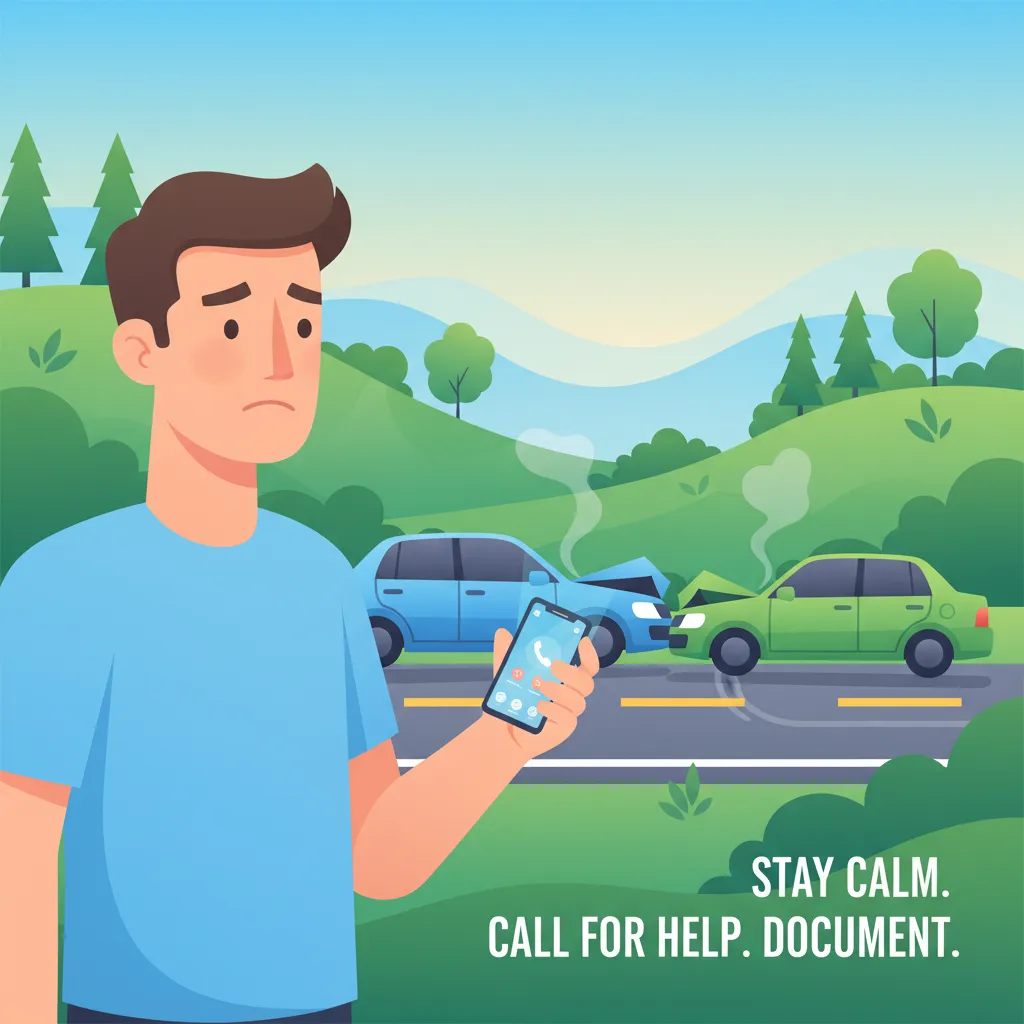
This lesson provides a clear, procedural guide for the moments following a road accident. It prioritizes safety, instructing on how to secure the scene with a warning triangle and hazard lights to prevent further incidents. The lesson also covers assessing for injuries and when it is necessary to call emergency services.
Master Category T driving theory for navigating Polish intersections and safe overtaking maneuvers. This lesson covers right-of-way, signaling, blind spots, and specific rules for tractors in mixed traffic environments.
This lesson details the legal framework for overtaking in Poland. It explains how to interpret road markings, such as solid and double solid lines, and prohibition signs that forbid passing. The content emphasizes the critical need for sufficient sight distance and a clear path before initiating an overtaking maneuver to ensure safety.
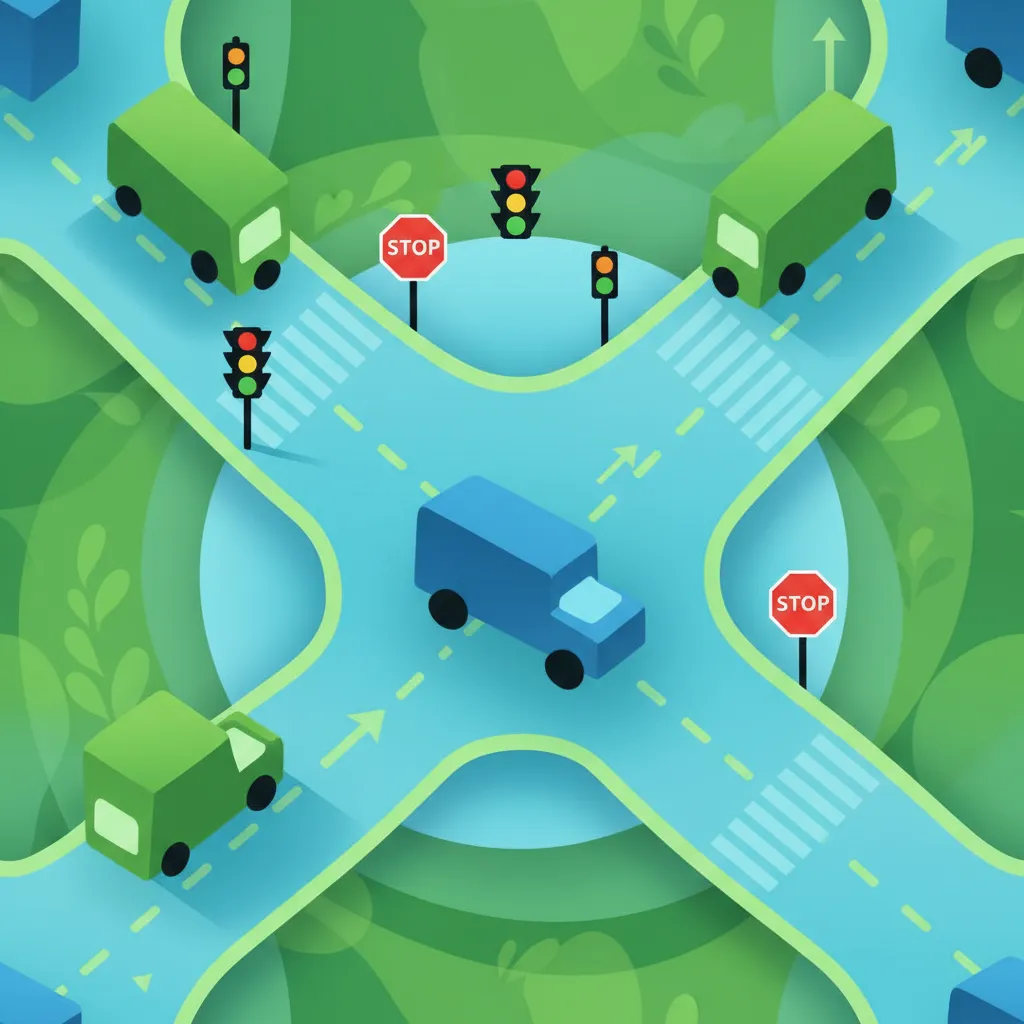
This lesson provides a comprehensive breakdown of the right-of-way rules that govern intersections. It explains the clear directives given by traffic lights, stop signs, and yield signs, and clarifies the procedures at unmarked or uncontrolled intersections, where the 'priority to the right' rule often applies. Learners will understand the legal hierarchy of these rules to make correct, safe, and predictable decisions when navigating through any junction, reducing the risk of conflict with other traffic.
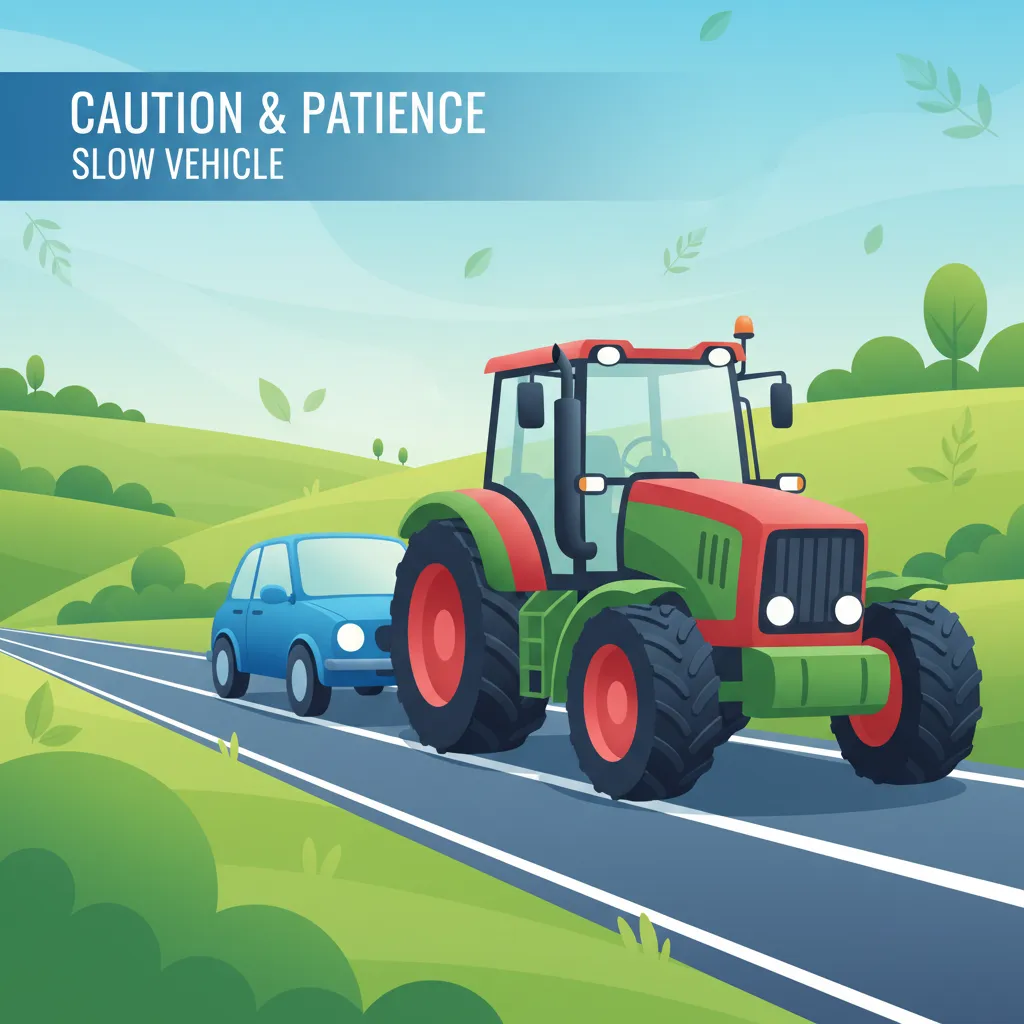
This lesson addresses encounters with slow-moving vehicles, such as tractors, which are common on rural roads. It teaches drivers to be patient, maintain a safe following distance, and only overtake when it is absolutely safe and legal to do so. Recognizing the large size and limited maneuverability of such vehicles is crucial for avoiding accidents.
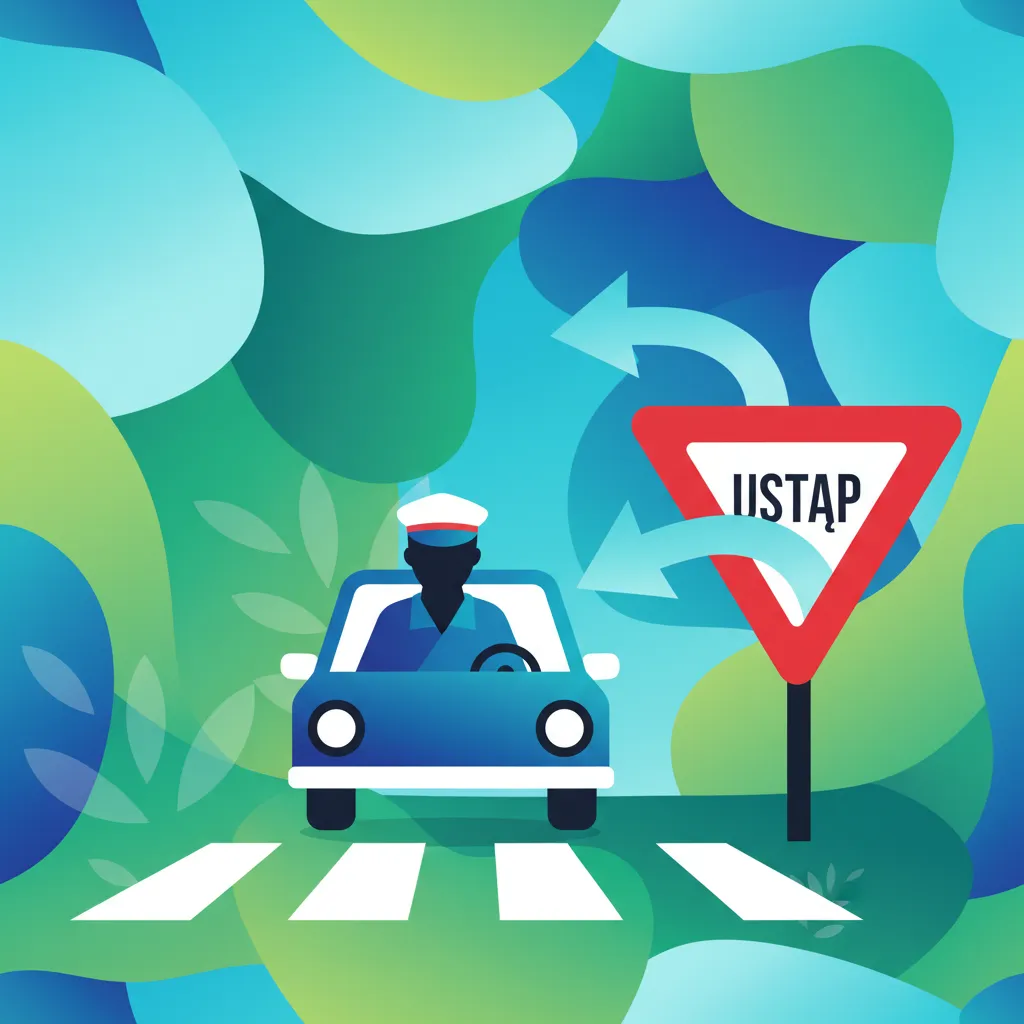
This lesson focuses on navigating intersections that are not controlled by traffic signals. It covers the interpretation of the 'Yield' sign (ustąp pierwszeństwa) and the application of the 'priority to the right' rule at junctions of equal roads. Safe decision-making and proper observation techniques are emphasized for these common scenarios.
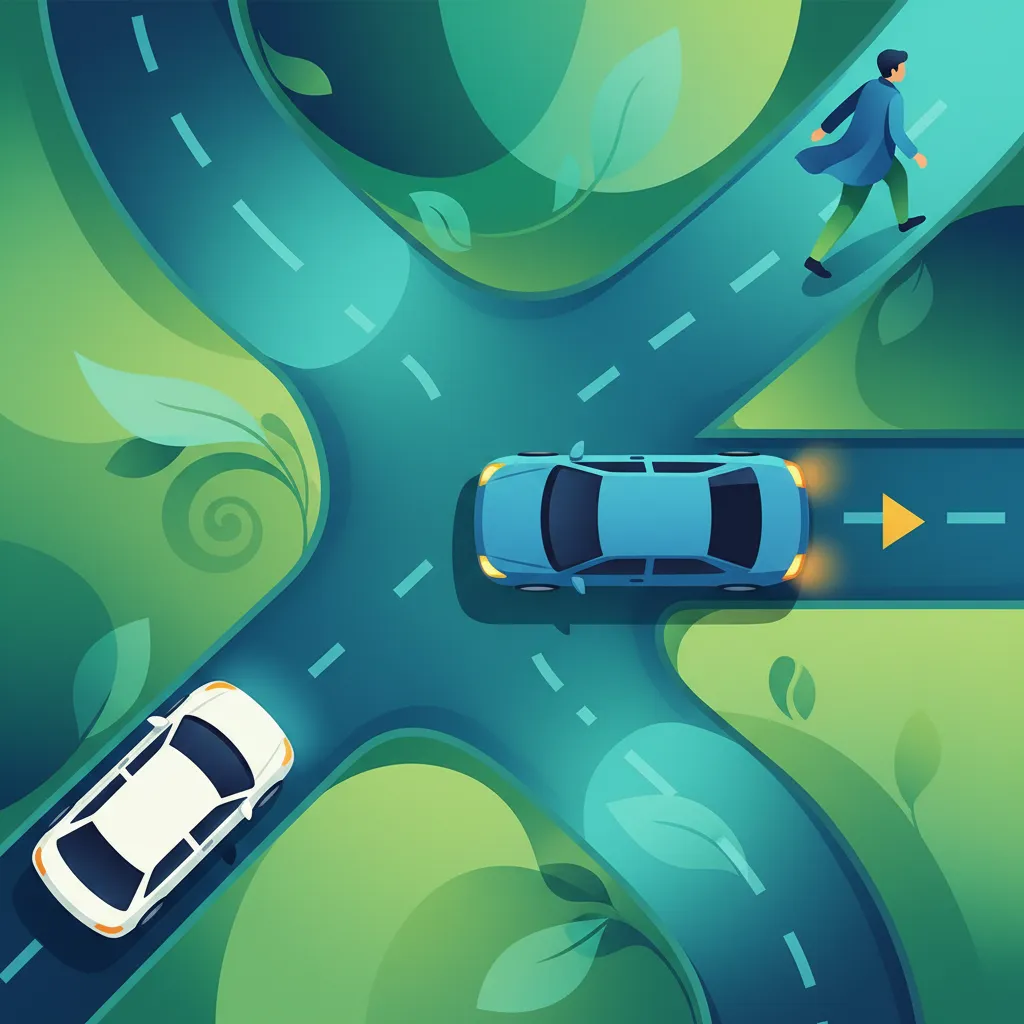
This lesson provides strategies for safely navigating the numerous intersections typical of urban environments. It reinforces the application of priority rules in situations with limited visibility and high traffic volume. Techniques for making turns in narrow streets and being aware of pedestrians and cyclists at junctions are central to the instruction.
This lesson details the specific protocols for overtaking and changing lanes in a heavy goods vehicle. It explains the importance of calculating sufficient space and speed differential before committing to a pass, while constantly being aware of the large blind spots around the truck. The content also covers procedures for safely merging onto highways and maintaining correct lane positioning to facilitate smooth and predictable traffic flow for all road users.
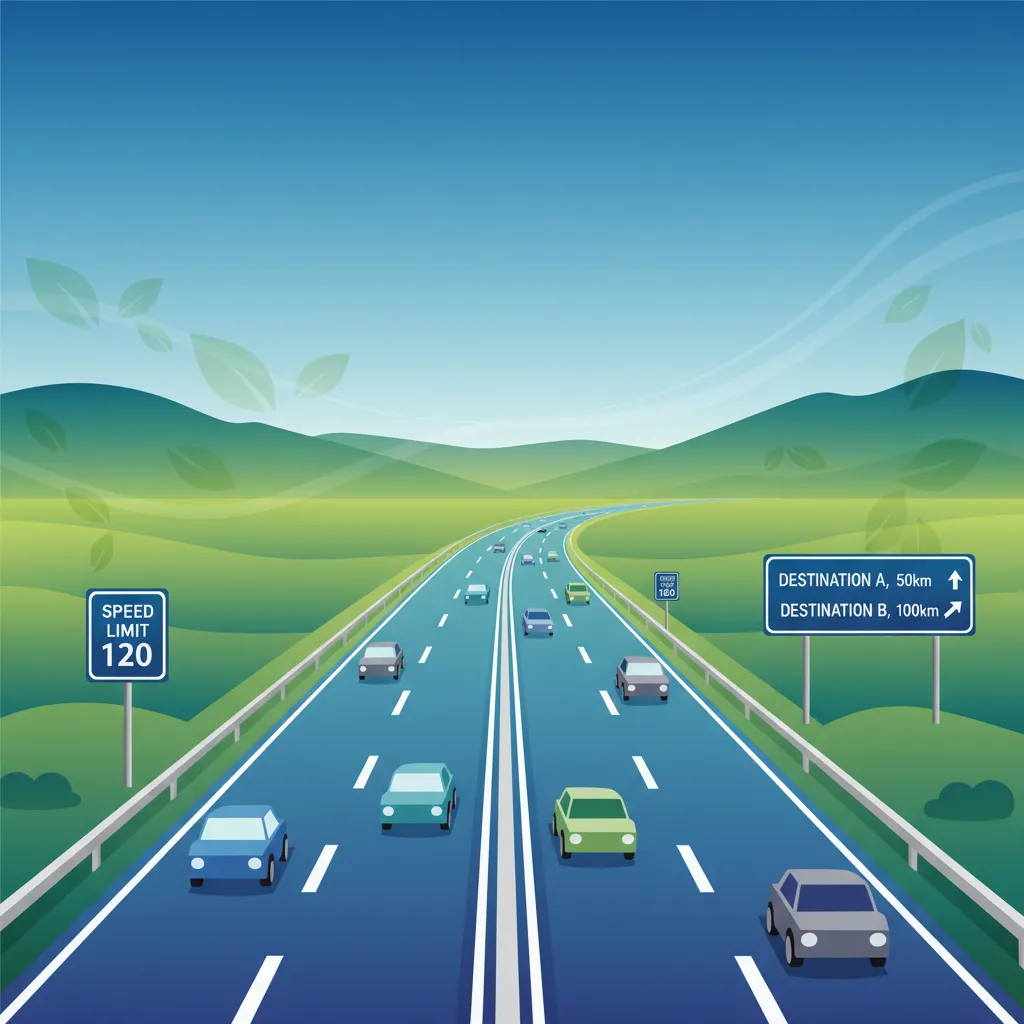
This lesson details the rules and best practices for driving on Poland's fastest roads. It covers the higher speed limits, the strict lane discipline of keeping right except to overtake, and prohibitions on stopping. The aim is to ensure drivers can handle the demands of sustained high-speed travel safely and efficiently.
This lesson teaches fundamental maneuvering skills essential for everyday driving. It provides a step-by-step guide to reversing in a straight line and around a corner, emphasizing constant observation. The lesson also details the procedure for a three-point turn, a necessary skill for changing direction on a narrow road safely and efficiently.
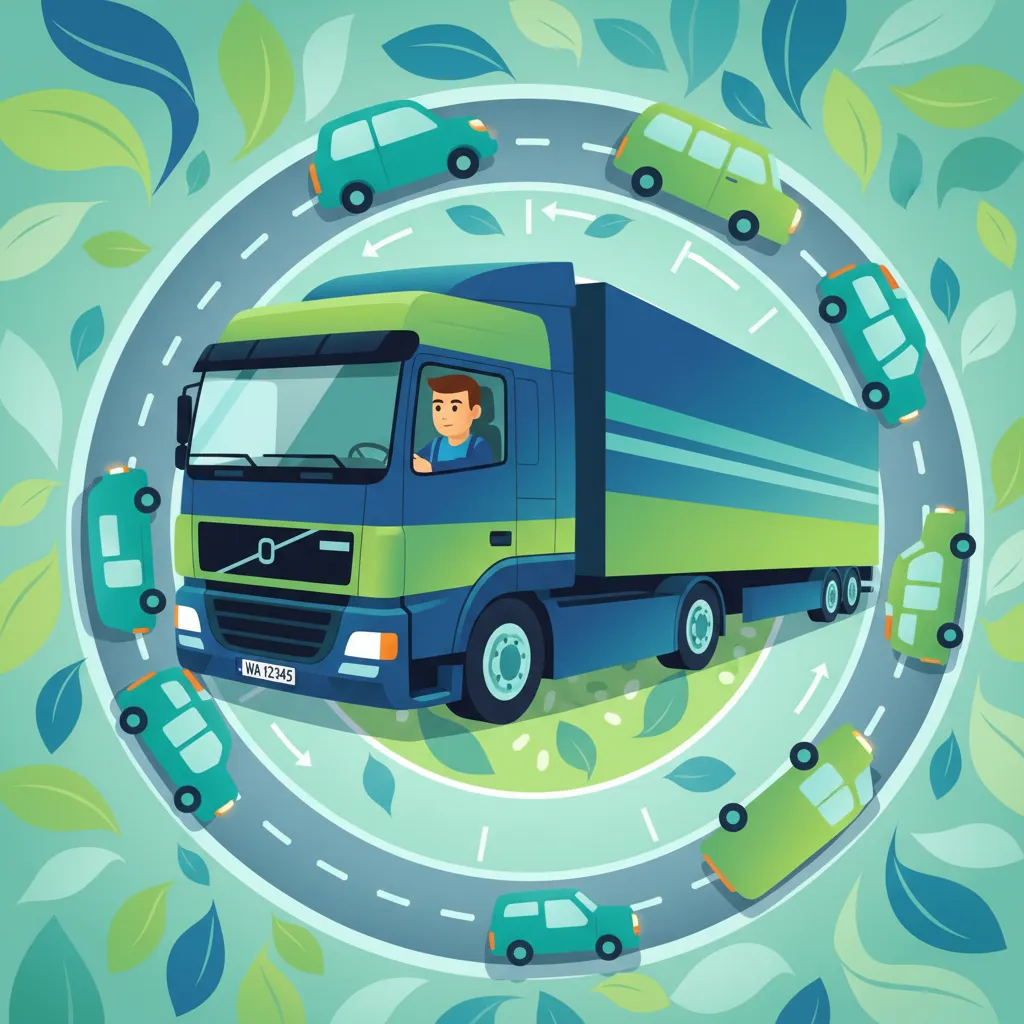
This lesson focuses on the specific challenges HGVs face when navigating roundabouts. It details the correct procedure for approach, including selecting the appropriate lane based on the intended exit and yielding to traffic already circulating. The content emphasizes the need to account for the vehicle's large turning radius and off-tracking to avoid encroaching on adjacent lanes or mounting curbs, ensuring a smooth and safe passage through the roundabout.
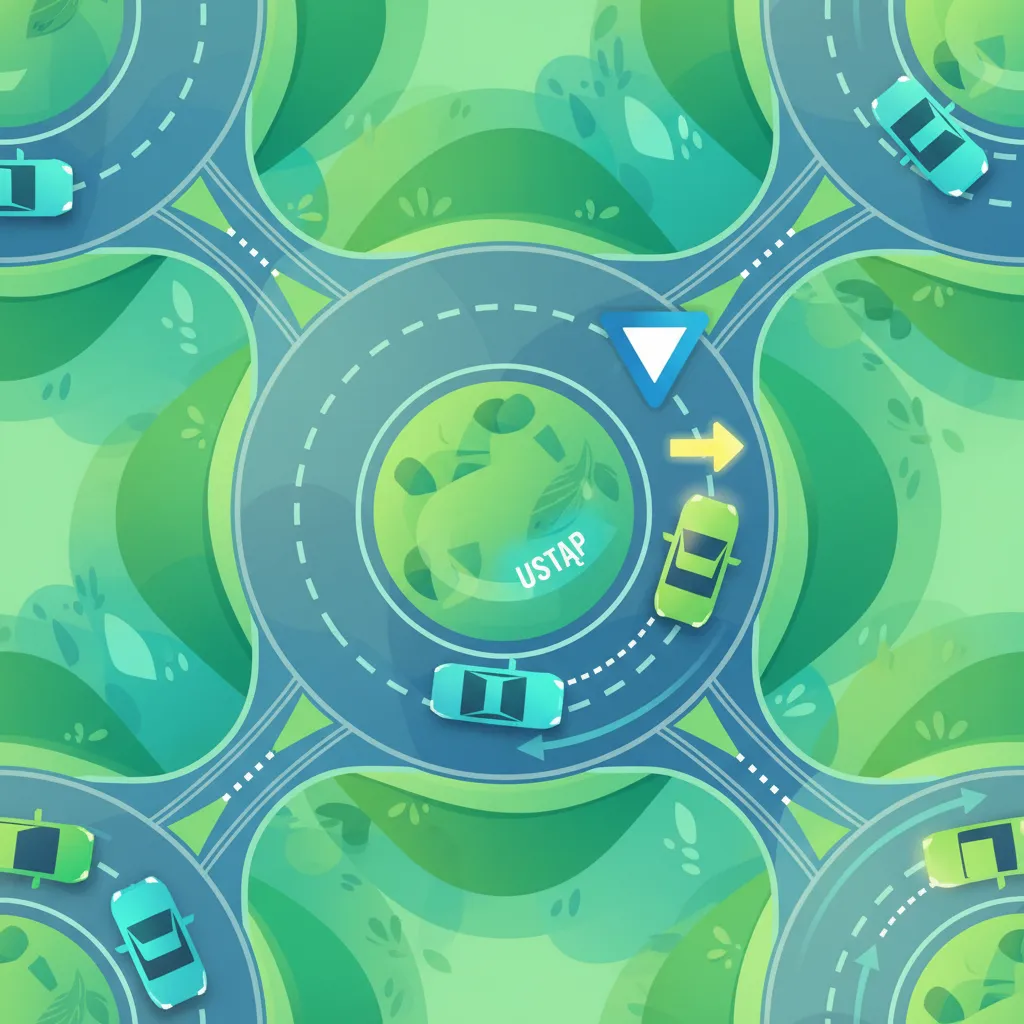
This lesson explains the specific rules for navigating roundabouts, a common feature on Polish roads. It emphasizes the primary rule of yielding to traffic already circulating within the roundabout before entering. The content also covers correct lane positioning for different exits and the proper use of indicators when exiting.
Find clear answers to common questions learners have about Interaction with Cars, Trucks, Cyclists, and Pedestrians. Learn how the lesson is structured, which driving theory objectives it supports, and how it fits into the overall learning path of units and curriculum progression in Poland. These explanations help you understand key concepts, lesson flow, and exam focused study goals.
In Poland, general right-of-way rules apply. If you are on a road with a yield sign or if another vehicle is on a road with a stop sign or a give way marking, you must yield. At uncontrolled intersections, the vehicle coming from the right generally has priority, but always be cautious and make eye contact if possible. Tractors, being slow-moving, must be particularly attentive to faster traffic.
Drivers of cars and other faster vehicles must overtake tractors only when it is safe and permissible. They must maintain a safe distance and ensure there are no oncoming vehicles or other hazards. Tractor drivers should cooperate by maintaining a steady speed and, if possible and safe, by signaling their intention to turn or move aside to allow overtaking.
Cyclists are vulnerable road users. Tractor drivers must give them ample space, especially when overtaking or passing. Be aware that cyclists may swerve unexpectedly due to road conditions. Always signal your intentions clearly and ensure you have adequate clearance before passing, maintaining a safe lateral distance of at least 1 meter, and more on higher speed roads.
Near schools, villages, or areas with high pedestrian traffic, tractor drivers must exercise extreme caution. Reduce speed significantly, be prepared to stop suddenly, and be highly vigilant for children who may not be aware of the dangers of large vehicles. Use your lights to increase visibility and be aware of reduced visibility around bends and junctions.
Blind spots on tractors can be very large, especially with wide implements attached. Before moving, changing lanes, or turning, it is crucial to check all mirrors and physically turn your head to look for other road users, particularly cyclists and smaller vehicles that may be hidden. Always signal your intentions well in advance to give others time to react.
Build custom practice sessions tailored precisely to your needs. Focus on areas requiring improvement, review specific Polish road signs, or master complex traffic rules to ensure full preparation for your official driving license exam.