
This lesson dives into the fundamental legal obligations and responsibilities for motorcyclists operating in Poland under Category A. You'll learn about crucial requirements like helmet use, vehicle inspections, valid insurance, and registration. Understanding these rules is vital not only for passing your Polish theory exam but also for ensuring safe, lawful riding on Polish roads. This knowledge forms a critical foundation within the Motorcycle Licensing and Legal Framework unit, preparing you for real-world scenarios and interactions with law enforcement.
Lesson content overview
Riding a motorcycle in Poland offers a unique sense of freedom and excitement, but it also comes with significant legal responsibilities. As a prospective motorcyclist preparing for the Polish Category A theory exam, understanding these obligations is not merely about passing a test; it is fundamental to ensuring your safety, the safety of others, and avoiding serious legal consequences. This comprehensive guide details the core legal requirements for motorcyclists operating on Polish public roads, covering everything from mandatory equipment and essential documentation to the penalty system for traffic offences and the procedures following an accident.
Adherence to the Prawo o ruchu drogowym (Road Traffic Act) is the cornerstone of safe and lawful riding. This lesson will equip you with the knowledge needed to navigate the legal landscape confidently, ensuring that every ride is both enjoyable and fully compliant with national standards.
Legal compliance forms the bedrock of road safety and operational efficiency within the Polish traffic system. For motorcyclists, failing to adhere to statutory duties can lead to severe administrative and even criminal penalties, including substantial fines, demerit points, licence suspension, and personal liability for damages. Beyond the legal ramifications, non-compliance significantly escalates the risk of accidents and serious injury for the rider and other road users.
The legal framework is meticulously designed to ensure all vehicles on the road are roadworthy, operators are qualified, and accountability is clearly established in unforeseen circumstances. By understanding and respecting these regulations, riders contribute to a predictable and safer road environment for everyone. This chapter will delve into these critical aspects, linking each obligation back to its underlying purpose—safety, accountability, and order.
Operating a motorcycle on Polish roads requires specific protective gear for the rider and passenger, alongside adherence to strict vehicle equipment standards. These regulations are paramount for mitigating injury severity and enhancing visibility.
The most critical piece of protective equipment for any motorcyclist or passenger is a certified helmet. Polish law mandates that both the rider and any passenger must wear a protective helmet that conforms to the PN-EN 1078 standard, or an equivalent international standard, at all times while the motorcycle is in motion. This helmet must be properly fastened and in good condition.
A protective headgear designed to absorb impact and protect the wearer's head in an accident. In Poland, it must meet PN-EN 1078 or equivalent standards and be securely fastened.
There are various types of helmets, including full-face, open-face, and modular designs, all of which are acceptable as long as they meet the required safety standards. The practical implication is clear: a helmet is mandatory for every journey, irrespective of the distance, speed, or type of road. Even a short trip across a parking lot or through a quiet residential area necessitates helmet use. Ignoring this rule, as stipulated in Article 45 of the Road Traffic Act, can result in a significant fine.
Common Misunderstanding: Some riders mistakenly believe that helmets are optional for very short trips or in low-traffic areas. This is incorrect; helmet use is mandatory at all times while riding on any public road.
Beyond personal protective gear, the motorcycle itself must be equipped to ensure maximum visibility and safety. Functional lighting is not just a recommendation; it's a legal obligation. All motorcycles must have their low-beam headlights on at all times, regardless of daylight conditions. This "lights-on" rule significantly enhances the motorcycle's conspicuity to other road users, reducing the risk of collisions.
In conditions of reduced visibility, such as heavy rain, fog, or at night, the proper functioning of all lights—headlights, tail lights, and indicators—becomes even more critical. Reflective devices on the motorcycle and the rider's gear further contribute to being seen, particularly during night-time riding.
Every motorcycle operating on Polish roads must be officially registered in the national vehicle register and display valid registration plates. These plates serve as a unique identifier for the vehicle and its owner, crucial for enforcement, accident investigation, and general traffic management.
Official identifier of a vehicle with a unique alphanumeric number, displayed on the front and rear (for motorcycles, typically only rear). Must be legible and illuminated at night.
The registration plates must be clearly visible, clean, and correctly illuminated at night. Obscuring a plate, even partially, is a violation. In Poland, motorcycles are typically required to display a single registration plate at the rear. Failure to display plates correctly can lead to fines and potentially even vehicle impoundment.
Possessing the correct documentation is as crucial as having the right equipment. These documents verify the motorcycle's legal status and the rider's authorization to operate it.
The official entry of your motorcycle into the national vehicle register is a fundamental legal requirement. This process assigns a unique registration number, which is then displayed on your registration plate(s). For a newly purchased bike, this registration must typically be completed within 30 days.
Temporary foreign registration is permitted for tourists, but generally for a limited period (e.g., 30 days), and it must still be displayed alongside any national plates.
Mandatory third-party liability insurance in Poland, covering damages caused to other parties (persons or property) in a traffic accident.
Riding a motorcycle in Poland without valid Compulsory Third-Party Liability Insurance (OC) is a serious offence. This insurance is mandatory and provides a vital safety net, guaranteeing compensation for victims of accidents caused by the rider. It protects other road users from financial hardship resulting from your actions, and it protects you from potentially crippling personal liability.
You must always carry proof of your current OC insurance certificate (or its digital equivalent) and be able to present it upon request by law enforcement. Riding without OC can lead to heavy fines and even licence suspension. It is important not to confuse OC with optional comprehensive insurance (AC) or personal injury insurance (Ubezpieczenie NRU), neither of which fulfills the mandatory OC requirement.
All motorcycles in Poland must undergo periodic technical inspections (badanie techniczne) to ensure they meet essential technical safety and emission standards. This inspection verifies the roadworthiness of critical components such as brakes, lights, tires, and exhaust systems.
For new motorcycles, the initial inspection is valid for three years. Subsequent inspections are generally required every two years. An inspection sticker (naklejka badania technicznego) indicating the validity period must be affixed to the rear registration plate and be clearly visible.
A periodic official verification that a motorcycle meets technical safety and emission standards, crucial for roadworthiness.
Riding a motorcycle with an expired technical inspection certificate is illegal and can result in fines and the prohibition from road use until a valid inspection is obtained. This measure is crucial for preventing accidents caused by mechanical failures.
Holding a valid driving licence that corresponds to the category of motorcycle you are operating is a fundamental legal obligation. In Poland, motorcycle licences are categorized to match specific vehicle types based on engine capacity, power output, and the rider's age and experience.
The highest motorcycle licence category in Poland, permitting the holder to operate any motorcycle. Sub-categories A1 and A2 have specific power and engine capacity limits.
The main categories include:
Minimum age requirements apply for each category (e.g., 24 years for unrestricted A, or 20 years if already holding A2 for at least two years). You must present your licence upon request by law enforcement. Operating a motorcycle that exceeds the limits of your licence category is a serious offence, punishable by fines and potential licence suspension. It is crucial to be aware of the specific conditions and endorsements applicable to your licence.
The Polish penalty system for traffic offences is designed to enforce road safety through a structured regime of monetary fines, demerit points, and potential licence suspension. This system provides a clear framework for deterrence and accountability.
Monetary fines are the most common form of penalty for traffic infractions. The amount of the fine (mandat) varies significantly depending on the severity and nature of the offence. Minor violations, such as forgetting to wear a helmet, will incur a lower fine than more serious infractions like dangerous overtaking or speeding. Fines are issued directly by police officers or other authorized enforcement agencies.
In addition to fines, many traffic offences result in the allocation of demerit points (punkty karne) to the driver's record. These points are recorded in the Central Register of Drivers (CEPiK). The number of points allocated depends on the severity of the offence, with more dangerous actions accumulating higher points.
Points added to a driver’s record for traffic offences in Poland. Accumulating 24 points (or 20 for new drivers) within a two-year period typically leads to licence suspension.
There is a cumulative threshold for demerit points. For experienced drivers, accumulating 24 points within a two-year period generally triggers mandatory remedial training (kurs reedukacyjny) or, in severe cases, licence withdrawal. For new drivers (typically within the first year of holding a licence), this threshold is often lower (e.g., 20 points). It's important to note that demerit points usually remain on your record for two years from the date of the offence unless a remedial course is successfully completed.
Keeping track of your demerit points is crucial. Regularly checking your status in the CEPiK system can help you avoid exceeding the threshold and facing licence suspension.
Licence suspension (zatrzymanie prawa jazdy) is a more severe penalty, reserved for serious traffic violations or the accumulation of too many demerit points. Reasons for suspension can include:
Suspensions can be temporary, ranging from a few months to several years, or in extreme cases, permanent. A suspended licence means you are legally prohibited from operating any motor vehicle for the specified period. Driving with a suspended licence is a criminal offence with very severe consequences.
Knowing your obligations following a motorcycle accident and how to interact with law enforcement is critical. Correct procedures protect all parties involved and ensure proper documentation for insurance and legal processes.
In the unfortunate event of an accident, Polish law dictates several immediate obligations for all drivers, including motorcyclists:
Stop Immediately: You must stop your vehicle safely at the scene of the accident.
Secure the Scene: Use hazard warning lights and place a warning triangle (if available and safe) to alert other drivers. Do not move the vehicles unless absolutely necessary for safety or to clear traffic, and only after taking clear photographs.
Render Assistance: Check for injuries to yourself and others. Provide first aid if you are trained and it is safe to do so. Call emergency services (112) immediately if there are injuries.
Exchange Information: With the other parties involved, exchange contact details, vehicle registration numbers, and insurance information.
Preserve Evidence: Take photos of the scene, vehicle damage, road conditions, and any relevant signs or markings. Note witness contact details if available.
While minor incidents with only property damage and no injuries can sometimes be resolved by exchanging insurance details, a police report (zgłoszenie zdarzenia drogowego) is mandatory in specific circumstances:
If any of these conditions are met, you must notify the police (or emergency services if there are injuries) immediately or as soon as practically possible, typically within 24 hours for serious incidents. Failure to stop or report an accident can lead to severe penalties, including criminal charges for hit-and-run and increased civil liability.
A formal document filed with the police after a traffic incident, mandatory in cases involving injuries, significant material damage, or disputed liability.
During a traffic stop or accident investigation, you are legally obliged to cooperate with police officers. This includes providing your driving licence, vehicle registration document (dowód rejestracyjny), and proof of valid OC insurance upon request. Be polite and clear in your communication. If you believe you are being unfairly treated or wrongly accused, you have the right to challenge a fine or appeal a decision through legal channels, but this should be done formally rather than through on-the-spot confrontation.
Legal obligations and rider responsibilities can vary based on specific environmental conditions, road types, and the state of your vehicle or yourself as a rider. Understanding these nuances is key to comprehensive compliance.
Motorcyclists must exercise particular care when interacting with vulnerable road users (VRUs) such as pedestrians, cyclists, and small children. Polish law emphasizes the protection of VRUs, and motorcyclists must maintain safe distances, respect right-of-way rules, and anticipate their movements. Violations endangering VRUs typically attract higher penalties.
Night riding imposes stricter lighting requirements. Headlights must be fully operational and on from half an hour after sunset until half an hour before sunrise. Ensure all your motorcycle's lights (headlight, tail light, licence plate light) are clean, functional, and correctly aimed to provide adequate visibility without dazzling oncoming traffic.
Learner riders (those holding a learner's permit or undergoing training) face additional restrictions. They must typically display an "L" plate on their motorcycle, adhere to specific speed limits, and may be restricted from certain types of roads or required to ride under the supervision of an instructor. Non-compliance with these specific learner regulations will trigger additional penalties.
Every legal obligation discussed has a direct link to enhancing road safety and promoting orderly traffic flow. Understanding the reasoning behind these rules can foster a greater sense of responsibility and compliance.
Statistical evidence consistently demonstrates a strong correlation between helmet use and reduced head trauma mortality rates among motorcyclists. Data from Polish traffic safety reports, consistent with international findings, indicates that proper helmet usage can reduce fatal head injuries by a significant margin (e.g., 60%) and overall fatality rates for motorcyclists by a substantial percentage (e.g., 30%). This makes helmet enforcement a critical public health measure.
Mandatory OC insurance provides a crucial financial safety net. In the event of an accident where a motorcyclist is at fault, the insurance guarantees that victims receive compensation for damages to their property or injuries they sustain. This prevents prolonged legal battles and protects the responsible rider from potentially crippling personal bankruptcy. It ensures that justice can be served promptly and efficiently for all parties.
Periodic technical inspections are a proactive measure to prevent accidents caused by mechanical failures. By regularly verifying that vehicle components like brakes, tires, lights, and steering meet safety standards, inspections detect and rectify issues before they become critical. This enhances the overall safety of the vehicle, contributing to a safer environment for all road users.
The structured penalty system, encompassing fines, demerit points, and licence suspension, serves as a powerful deterrent. The threat of accumulating demerit points, which can lead to the loss of driving privileges, leverages a psychological principle known as loss aversion. Riders are motivated to avoid points to preserve their licence status, thereby encouraging safer and more responsible riding behavior. This system creates clear consequences for non-compliance, fostering a culture of adherence to traffic laws.
Mastering the legal obligations and rider responsibilities is an indispensable part of preparing for the Polish Category A motorcycle theory exam. It transcends mere rote memorization; it's about internalizing a set of principles that safeguard lives and maintain order on the road. From consistently wearing a certified helmet and ensuring your motorcycle is roadworthy and insured, to understanding the consequences of traffic offences and knowing the correct procedures after an accident, every aspect plays a vital role.
By diligently adhering to these regulations, you not only avoid penalties but also significantly contribute to a safer, more predictable, and enjoyable riding experience for yourself and everyone else on Polish roads. This lesson has provided a comprehensive overview, forming a robust foundation for your journey as a responsible and legally compliant motorcyclist.
This lesson covers the essential legal obligations for Polish Category A motorcyclists, starting with mandatory protective equipment—particularly helmets meeting PN-EN 1078 standards that must be worn at all times—and vehicle safety requirements including functioning lights and valid registration plates. Key documentation requirements include official vehicle registration (completed within 30 days of purchase), valid OC third-party liability insurance, and periodic technical inspections (badanie techniczne) every 3 years initially, then every 2 years. The lesson details the penalty system with specific demerit point thresholds (24 for experienced drivers, 20 for new drivers) and explains when police reporting is mandatory after accidents. Understanding these obligations is crucial for both passing the theory exam and ensuring safe, lawful riding in Poland.
A short set of high-value points that capture the most important learning from this lesson.
Wearing a certified helmet meeting PN-EN 1078 is mandatory at all times on public roads for both rider and passenger, regardless of trip distance or traffic conditions.
Valid OC (Ubezpieczenie Odpowiedzialności Cywilnej) third-party liability insurance is a legal requirement that must always be carried and cannot be replaced by optional comprehensive (AC) or personal injury insurance.
Technical inspections (badanie techniczne) are required every 3 years for new motorcycles and every 2 years thereafter; an inspection sticker must be affixed to the rear registration plate.
The penalty system uses demerit points (punkty karne) recorded in CEPiK, with 24 points triggering remedial training or suspension for experienced drivers and 20 points for new drivers within a two-year period.
A police report (zgłoszenie zdarzenia drogowego) is mandatory when accidents involve injuries, significant material damage, disputed liability, unidentified parties, or public property damage.
Explore all units and lessons included in this driving theory course.
Motorcycle helmets must meet PN-EN 1078 or equivalent standards and be properly fastened; full-face, open-face, and modular designs are all acceptable.
OC insurance protects both other road users from financial hardship and riders from potentially crippling personal liability for damages they cause.
Demerit points remain on record for two years from the offence date unless a remedial course (kurs reedukacyjny) is successfully completed.
Driving licence categories A1 (up to 125 cm³/11 kW), A2 (up to 35 kW), and Full A (unrestricted) have specific power and capacity limits that must not be exceeded.
After an accident, you must stop safely, secure the scene with hazard lights and warning triangle, render assistance, exchange information, and preserve evidence through photographs.
Believing helmets are optional for very short trips or in low-traffic areas; they are mandatory for every journey on any public road.
Confusing mandatory OC insurance with optional comprehensive (AC) insurance or personal injury insurance (Ubezpieczenie NRU); only OC satisfies the legal requirement.
Assuming minor property-damage-only accidents do not require police notification when liability is disputed or damage is significant.
Failing to check demerit point status regularly, risking unexpected licence suspension upon reaching the threshold.
Operating a motorcycle without valid registration plates displayed or with plates that are obscured, dirty, or improperly illuminated.
Lesson content overview
A short set of high-value points that capture the most important learning from this lesson.
Wearing a certified helmet meeting PN-EN 1078 is mandatory at all times on public roads for both rider and passenger, regardless of trip distance or traffic conditions.
Valid OC (Ubezpieczenie Odpowiedzialności Cywilnej) third-party liability insurance is a legal requirement that must always be carried and cannot be replaced by optional comprehensive (AC) or personal injury insurance.
Technical inspections (badanie techniczne) are required every 3 years for new motorcycles and every 2 years thereafter; an inspection sticker must be affixed to the rear registration plate.
The penalty system uses demerit points (punkty karne) recorded in CEPiK, with 24 points triggering remedial training or suspension for experienced drivers and 20 points for new drivers within a two-year period.
A police report (zgłoszenie zdarzenia drogowego) is mandatory when accidents involve injuries, significant material damage, disputed liability, unidentified parties, or public property damage.
Explore all units and lessons included in this driving theory course.
Motorcycle helmets must meet PN-EN 1078 or equivalent standards and be properly fastened; full-face, open-face, and modular designs are all acceptable.
OC insurance protects both other road users from financial hardship and riders from potentially crippling personal liability for damages they cause.
Demerit points remain on record for two years from the offence date unless a remedial course (kurs reedukacyjny) is successfully completed.
Driving licence categories A1 (up to 125 cm³/11 kW), A2 (up to 35 kW), and Full A (unrestricted) have specific power and capacity limits that must not be exceeded.
After an accident, you must stop safely, secure the scene with hazard lights and warning triangle, render assistance, exchange information, and preserve evidence through photographs.
Believing helmets are optional for very short trips or in low-traffic areas; they are mandatory for every journey on any public road.
Confusing mandatory OC insurance with optional comprehensive (AC) insurance or personal injury insurance (Ubezpieczenie NRU); only OC satisfies the legal requirement.
Assuming minor property-damage-only accidents do not require police notification when liability is disputed or damage is significant.
Failing to check demerit point status regularly, risking unexpected licence suspension upon reaching the threshold.
Operating a motorcycle without valid registration plates displayed or with plates that are obscured, dirty, or improperly illuminated.
Explore search topics learners often look for when studying Legal Obligations and Rider Responsibilities. These topics reflect common questions about road rules, driving situations, safety guidance, and lesson level theory preparation for learners in Poland.
Browse additional driving theory lessons that cover connected traffic rules, road signs, and common driving situations related to this topic. Improve your understanding of how different rules interact across everyday traffic scenarios.
Understand the consequences of traffic offences in Poland for motorcyclists. This lesson details fines, demerit points accumulation, and licence suspension procedures, crucial for Category A theory compliance.

This lesson delineates each motorcycle licence category defined in Polish law, explaining the technical specifications of vehicles allowed under AM, A1, A2, and A. It clarifies the age limits and competency criteria required for each category, highlighting how riders can progress from a light two-wheel vehicle to high-performance motorcycles. The content also outlines the mandatory training modules that must be completed to obtain each licence tier, ensuring learners understand the legal framework governing their riding privileges.
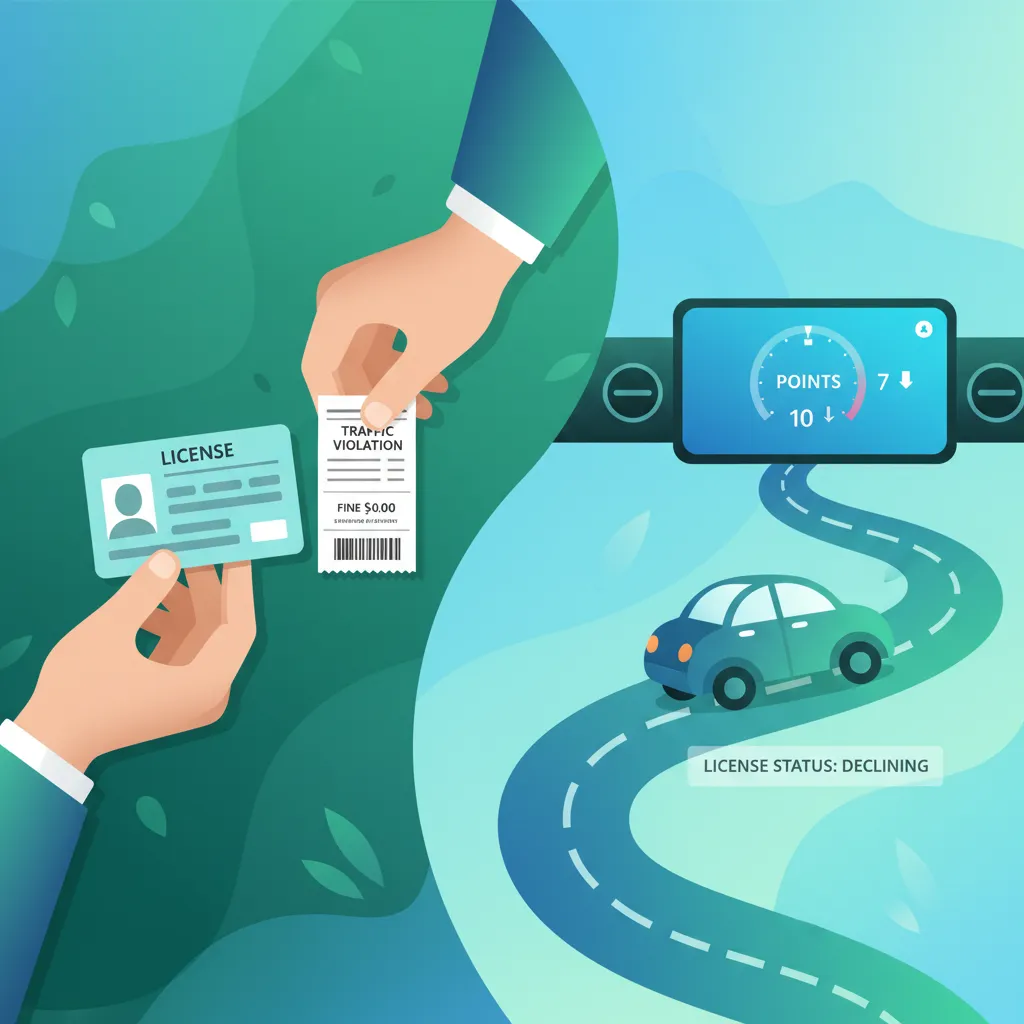
This lesson details the Polish traffic penalty system, explaining how violations result in fines and the accumulation of demerit points (punkty karne). It covers the point thresholds that can lead to licence suspension and the legal responsibilities of a driver involved in a traffic offense. Understanding this system is crucial for maintaining a clean driving record and promoting lawful behavior on the road.
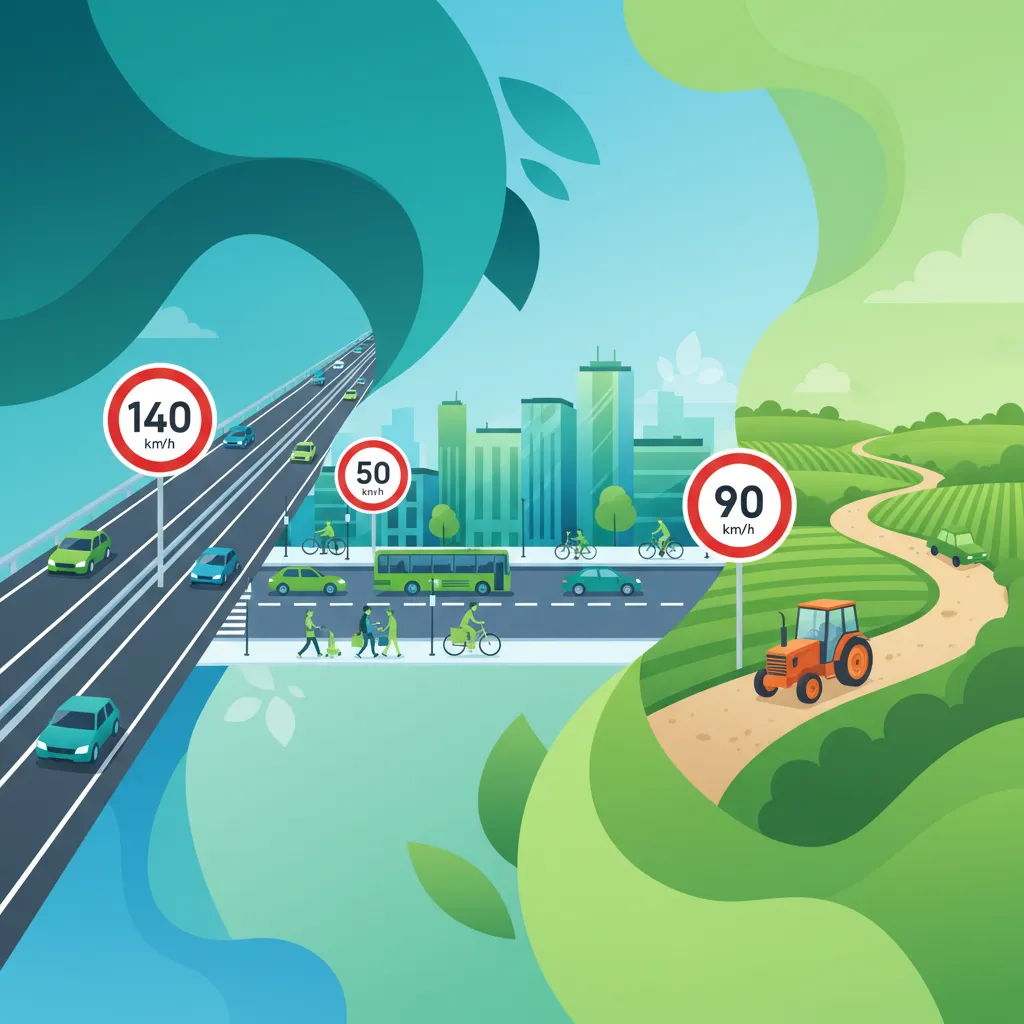
This lesson provides a comprehensive overview of the statutory speed limits applicable to different categories of Polish roads, including urban areas, residential zones, rural roads, highways, and motorways. Learners will examine the visual cues of speed limit signs and learn how speed limit transitions affect rider behavior. The content also covers how enforcement mechanisms impact compliance and the importance of real-time speed adaptation to remain within legal thresholds.

In this lesson, learners explore the administrative aspects of obtaining and maintaining a motorcycle licence, including the necessary documentation such as identity proof, medical certificates, and training completion records. It explains the steps for submitting an application, understanding fee structures, and the typical processing timeline administered by Polish licensing authorities. The lesson also covers renewal procedures and best practices for ensuring procedural compliance throughout the licence lifecycle.

This lesson provides a detailed overview of the examination process required to obtain a motorcycle licence in Poland, describing the format of the theoretical test, pass criteria, and the structure of the practical riding assessment. It highlights the importance of familiarity with official question banks, registration steps, and the procedural rules governing test day conduct. Learners will also be guided on effective preparation strategies, including the use of mock exams and targeted review of knowledge gaps to ensure comprehensive readiness.
This lesson defines the scope of vehicles permitted under a Category B licence, primarily passenger cars up to 3,500 kg maximum permissible mass. It clarifies the rules on seating capacity and the regulations for towing trailers, distinguishing between a standard B licence and a B+E entitlement. Understanding these classifications ensures drivers operate vehicles legally and safely.

This lesson examines the variety of pavement markings that define lane structures, traffic flow, and special zones on Polish roads. Learners will study solid and broken lines, lane division markings, and the distinct symbols for bicycle lanes, bus lanes, and tram tracks, all of which affect motorcyclist positioning. The lesson also addresses surface texture indicators that signal changing road conditions, enabling riders to maintain correct lane discipline.
This lesson provides a detailed overview of Polish driving licence classifications, focusing on the privileges and limitations of Category B. It clarifies the minimum age requirement, the necessity of a medical certificate, and the process of enrolling in a driving school. The content outlines the steps to pass both the theory and practical exams to obtain a full licence, ensuring candidates understand all prerequisites.
This lesson examines the family of regulatory signs that dictate mandatory actions and prohibitions on Polish roads, emphasizing how each sign influences motorcyclist behaviour. Learners will explore the stop, give way, speed limit, and no overtaking signs, understanding the legal obligations they impose. The lesson also highlights signs that specifically affect motorcycles, such as lane restrictions, ensuring riders recognize and obey regulations unique to two-wheel traffic.
This lesson examines the specific rules and etiquette for riding on Polish motorways and high-speed highways, focusing on proper lane positioning, entry via acceleration lanes, and maintaining appropriate following distances. Learners will study overtaking protocols at high speeds, proper use of deceleration lanes for exits, and techniques for aerodynamic positioning. The content also covers safe lane changes and emergency lane usage to ensure efficient travel.
Learn about essential motorcycle legal requirements in Poland, including mandatory insurance (OC), technical inspections, registration, and protective gear. Essential knowledge for Category A theory and safe riding.
This lesson delineates each motorcycle licence category defined in Polish law, explaining the technical specifications of vehicles allowed under AM, A1, A2, and A. It clarifies the age limits and competency criteria required for each category, highlighting how riders can progress from a light two-wheel vehicle to high-performance motorcycles. The content also outlines the mandatory training modules that must be completed to obtain each licence tier, ensuring learners understand the legal framework governing their riding privileges.
In this lesson, learners explore the administrative aspects of obtaining and maintaining a motorcycle licence, including the necessary documentation such as identity proof, medical certificates, and training completion records. It explains the steps for submitting an application, understanding fee structures, and the typical processing timeline administered by Polish licensing authorities. The lesson also covers renewal procedures and best practices for ensuring procedural compliance throughout the licence lifecycle.
This lesson provides a detailed overview of the examination process required to obtain a motorcycle licence in Poland, describing the format of the theoretical test, pass criteria, and the structure of the practical riding assessment. It highlights the importance of familiarity with official question banks, registration steps, and the procedural rules governing test day conduct. Learners will also be guided on effective preparation strategies, including the use of mock exams and targeted review of knowledge gaps to ensure comprehensive readiness.

This lesson details the documentation required for a Category B licence application and vehicle operation. It explains the function of the vehicle registration certificate (dowód rejestracyjny), the mandatory civil liability insurance (OC), and the certificate of technical inspection. Learners will understand the verification process and the importance of keeping these documents current and accessible.
This lesson examines the family of regulatory signs that dictate mandatory actions and prohibitions on Polish roads, emphasizing how each sign influences motorcyclist behaviour. Learners will explore the stop, give way, speed limit, and no overtaking signs, understanding the legal obligations they impose. The lesson also highlights signs that specifically affect motorcycles, such as lane restrictions, ensuring riders recognize and obey regulations unique to two-wheel traffic.

In this lesson, learners explore the complexities of winter riding, including snow-covered roads, ice patches, and the impact of low temperatures on both the rider and the motorcycle. The content addresses the use of ABS and traction control on slippery surfaces and the need for appropriate tyre pressure. Learners will also learn about appropriate clothing layers, frostbite prevention, and how to adjust riding technique for safe cornering and braking on ice.
This lesson provides a comprehensive overview of the statutory speed limits applicable to different categories of Polish roads, including urban areas, residential zones, rural roads, highways, and motorways. Learners will examine the visual cues of speed limit signs and learn how speed limit transitions affect rider behavior. The content also covers how enforcement mechanisms impact compliance and the importance of real-time speed adaptation to remain within legal thresholds.
This lesson examines the variety of pavement markings that define lane structures, traffic flow, and special zones on Polish roads. Learners will study solid and broken lines, lane division markings, and the distinct symbols for bicycle lanes, bus lanes, and tram tracks, all of which affect motorcyclist positioning. The lesson also addresses surface texture indicators that signal changing road conditions, enabling riders to maintain correct lane discipline.
In this lesson, learners focus on the essential maintenance tasks required to keep a motorcycle in optimal condition across seasonal changes. The content outlines a comprehensive pre-ride checklist that includes tyre pressure verification, brake fluid inspection, battery performance checks, and chain lubrication. Learners will also study the selection of appropriate seasonal tyres and oil viscosity adjustments, helping prevent mechanical failures and enhance rider safety.

This lesson focuses on the unique demands of urban riding within Polish cities, addressing traffic lights, pedestrian zones, one-way streets, and the presence of tram tracks. Learners will study safe lane positioning on narrow roads, blind-spot management, and how to share the road with buses and cyclists. The content also covers strategies for navigating stop-and-go traffic, anticipating signal changes, and maintaining visibility in dense urban environments.
Find clear answers to common questions learners have about Legal Obligations and Rider Responsibilities. Learn how the lesson is structured, which driving theory objectives it supports, and how it fits into the overall learning path of units and curriculum progression in Poland. These explanations help you understand key concepts, lesson flow, and exam focused study goals.
In Poland, you must always carry your valid driving licence, vehicle registration certificate (dowód rejestracyjny), and proof of mandatory third-party liability insurance (OC). It's crucial for Category A riders to have these readily available during any traffic stop.
Yes, Polish law requires motorcyclists and their passengers to wear approved protective helmets that meet specific safety standards. While not all helmets are explicitly marked with a standard, they must provide adequate protection. It's advisable to choose helmets approved by ECE R 22.05 or similar international safety standards.
Riding without valid third-party liability insurance (OC) in Poland is a serious offence, incurring significant fines imposed by the Ubezpieczeniowy Fundusz Gwarancyjny (Insurance Guarantee Fund). The fines increase based on the duration of non-compliance and can be very substantial for Category A motorcycles.
Demerit points are accumulated for specific traffic offences in Poland. If you exceed 24 demerit points within a certain period (or 20 points for new drivers within one year of receiving their first licence), your Category A driving licence may be revoked, requiring you to retake theory and practical exams.
If no one is injured and the damage is minor, you should secure the scene, exchange contact and insurance details with the other party, and fill out a collision statement (oświadczenie o zdarzeniu drogowym). Police intervention is not always mandatory but recommended if there is a dispute or significant damage.
Build custom practice sessions tailored precisely to your needs. Focus on areas requiring improvement, review specific Polish road signs, or master complex traffic rules to ensure full preparation for your official driving license exam.