
Welcome to the lesson on Legal Speed Limits across Road Types, a key component of your Category A motorcycle theory preparation in Poland. This lesson will help you understand the specific speed restrictions on various Polish roads, ensuring you ride safely and pass your theory exam. We'll cover everything from urban zones to motorways, preparing you for real-world conditions and exam scenarios.
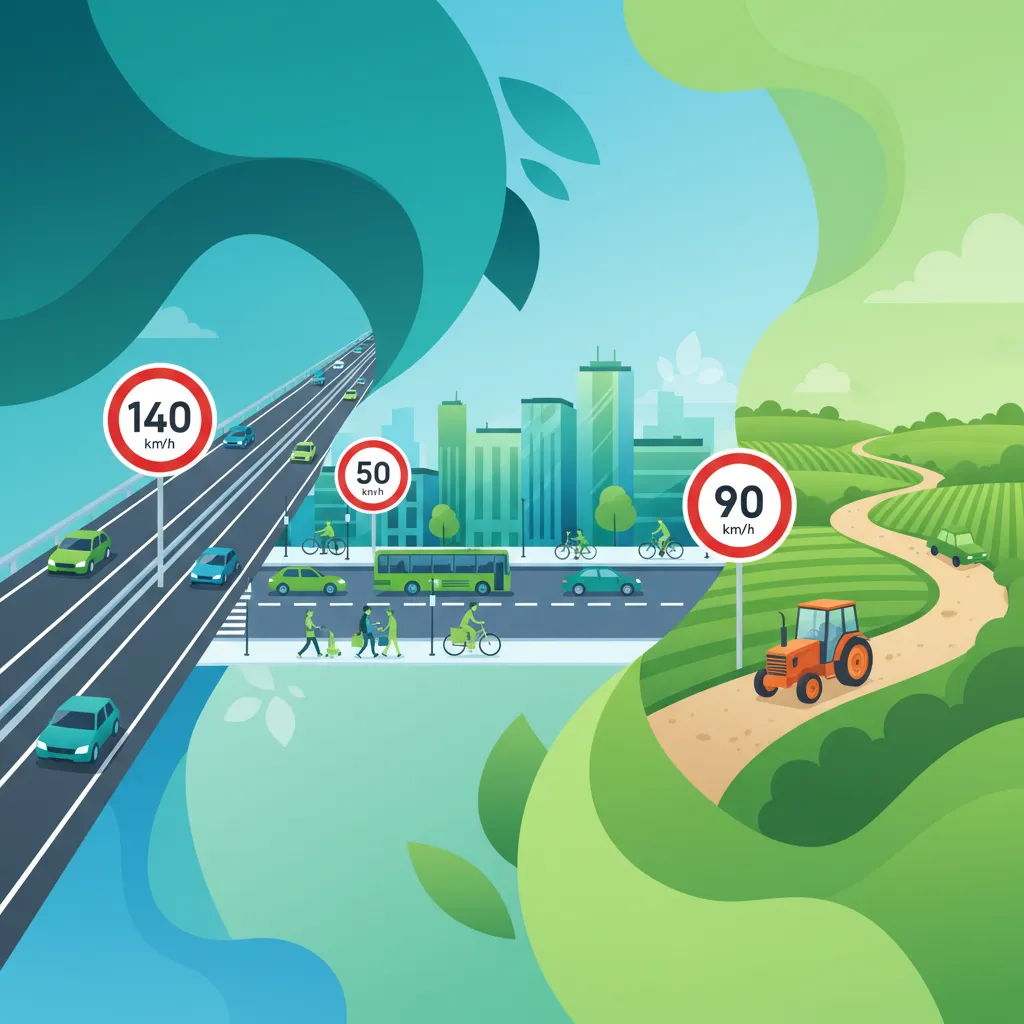
Lesson content overview
Navigating the diverse road network of Poland as a motorcyclist requires a thorough understanding of legal speed limits. These regulations are not merely bureaucratic rules; they are fundamental safety instruments designed to manage kinetic energy, reduce the severity of accidents, and ensure orderly traffic flow for all road users. For Category A license candidates, mastering these limits is crucial for exam success and, more importantly, for safe and compliant riding on Polish roads. This comprehensive lesson delves into the statutory speed limits across various road types, the visual cues of speed limit signs, and the critical importance of adapting your speed to remain within legal and safe thresholds.
Speed limits define the maximum permissible velocity under specific road conditions. These limits are set based on engineering assessments that consider road geometry, traffic density, and surrounding land use. They serve as a cornerstone of the Polish road traffic code (Prawo o ruchu drogowym), providing mandatory standards for all vehicles, including motorcycles.
For motorcyclists, adherence to speed limits is particularly vital. Motorcycles, lacking the protective enclosure of cars, are inherently more vulnerable in collisions. Reducing speed directly lowers kinetic energy, which, according to the formula E = ½ mv², increases quadratically with velocity. This means even a small increase in speed results in a significantly higher potential for severe injury in an accident. Lower speeds also shorten stopping distances, offering more reaction time to hazards and mitigating the consequences of a loss of control, especially on two-wheel vehicles sensitive to speed-related instability.
In Poland, speed limits operate on a two-tiered system:
Beyond permanent specific limits, temporary speed limits are often implemented. These apply only for a limited period, typically due to road works, special events, or hazardous conditions, and are indicated by distinct temporary signs, often with a yellow background. It is imperative to observe these limits while the temporary signs are in place, as they protect workers and account for altered road geometry. Once removed, the default or previously posted permanent limits resume.
Speed limits in Poland vary significantly depending on whether you are riding in a built-up area, a residential zone, or on different types of rural roads, expressways, and motorways. Understanding these distinctions is fundamental.
A built-up area (or Obszar Zabudowany) is an officially designated urban zone, typically marked by specific road signs upon entry and exit. Within these areas, the default speed limit is 50 km/h for all vehicles, including motorcycles. This limit applies unless permanent or temporary signs specify a lower speed.
It's common to find reduced urban limits, such as 30 km/h or 40 km/h, where signs specify. These are often seen near schools, hospitals, or in particularly dense residential streets to enhance safety for pedestrians and other vulnerable road users. Always obey the posted value, as it supersedes the general 50 km/h built-up area limit. A common misunderstanding is assuming the default 50 km/h applies even when a lower specific sign is present or neglecting that the default applies even if an "Obszar Zabudowany" sign is absent after already being within urban limits.
A residential zone (Strefa Zamieszkania) is a special area designated to prioritize pedestrians and cyclists. These zones are clearly marked by a specific sign. Within a residential zone, the mandatory speed limit for all vehicles, including motorcycles, is 20 km/h. This low limit is enforced to maximize safety for vulnerable road users, particularly children at play, and to ensure drivers are highly attentive to their surroundings.
It is a significant offense to exceed this 20 km/h limit, as these areas often have unmarked speed bumps, shared spaces, and children who might step into the road unexpectedly. Confusion with general urban limits or assuming this limit only applies to cars is a common mistake that must be avoided.
Outside built-up areas, speed limits vary depending on the type and design of the road. These Drogi Poza Obszarem Zabudowanym typically allow for higher speeds, but precise limits are tied to road classification.
On single carriageway roads (type C) – roads with a single lane or multiple lanes but no physical separation between opposing traffic flows – the default speed limit for motorcycles is 90 km/h. These are common country roads often connecting towns and villages.
Dual carriageway roads (type D) are roads with at least two lanes in each direction separated by a central reservation or barrier. On these roads, the default speed limit for motorcycles is 100 km/h. These roads offer improved safety due to the separation of traffic flows but still require vigilance for junctions and slower vehicles.
It's crucial not to assume the same default applies to all rural roads. Identifying whether a road is a single or dual carriageway (often indicated by road numbers, signs, or simply observation of the road layout) is key to determining the correct default speed limit.
Poland's high-speed road network includes expressways and motorways, designed for efficient long-distance travel.
S roads): These are high-capacity roads with limited access, designed for higher speeds. The default speed limit for motorcycles on expressways is 120 km/h.A roads): These are controlled-access highways with the highest design speed. The default speed limit for motorcycles on motorways is also 120 km/h.While expressways and motorways are designed for higher speeds, it's common to encounter adjusted limits, especially in construction zones or areas with specific hazards. These will be clearly marked by temporary signs that override the default 120 km/h. Confusion between expressways and motorways for speed limits is less common as the default for motorcycles is identical.
Speed limit signs are critical visual cues that inform riders of the maximum permissible speed. Recognizing and understanding these signs is a fundamental skill for compliance and safety.
Permanent speed limits are indicated by circular signs with a white background, a thick red border, and a black number indicating the maximum speed in kilometers per hour. For example:
These signs are typically placed at the beginning of a speed zone and remain in effect until another speed limit sign is encountered, an "end of speed limit" sign is passed, or the road conditions (like entering/exiting a built-up area) dictate a change. A common misunderstanding is believing a sign only applies to the lane it directly precedes, rather than the entire road segment.
Temporary work zone signs are easily identifiable by their yellow background with a black border and black numerical speed limit. These signs indicate a reduced speed limit that is only valid for the duration of the road works or specific temporary conditions. It is crucial to respect these, as construction zones often involve narrow lanes, uneven surfaces, and workers near the road.
It's also important to distinguish mandatory speed limit signs from advisory speed signs. Advisory signs, often yellow or black-on-white, recommend a safe speed for specific conditions (e.g., a sharp curve) but are not legally binding in the same way regulatory speed limits are. However, ignoring advisory speeds can still be dangerous.
A speed limit transition refers to the procedural requirement for motorcyclists to adjust their speed when moving from one speed zone to another. This is not merely about staying within the law but also about ensuring a smooth, predictable change in vehicle dynamics, which is especially important on a motorcycle.
When entering a zone with a lower speed limit, you must reduce your speed before crossing the invisible line where the new limit becomes effective. This means anticipating the sign and beginning to decelerate early enough to meet the new limit at the precise point of transition. Sudden or late braking can be hazardous, especially for following traffic, and can still result in a speed violation if caught by enforcement cameras positioned at the transition point.
Conversely, when moving into a higher-limit zone (e.g., exiting a built-up area onto a rural road), you are allowed to accelerate after entering the new zone. Always ensure your acceleration is smooth and controlled, scanning ahead for potential hazards.
Effective speed limit transition behavior relies on anticipation. Riders should:
Adherence to speed limits on Polish roads is strictly enforced through various mechanisms, and violations can lead to significant consequences, including fines, penalty points, and even license suspension.
The Polish road traffic code establishes a clear penalty system for speed limit violations. Penalties escalate with the degree to which the speed limit is exceeded.
While legal speed limits define the maximum permissible speed, they do not always represent the safest speed. A responsible motorcyclist constantly adjusts their speed not just to legal requirements but also to prevailing road and environmental conditions. This is a core principle of adaptive speed management.
Adverse weather significantly impacts a motorcycle's handling and a rider's visibility.
In areas with high pedestrian or cyclist traffic, such as residential streets, market areas, or near parks, even if the posted speed limit is relatively high (e.g., 50 km/h in a built-up area), riders are expected to modestly reduce their speed. This allows for increased reaction time, safer overtaking of cyclists, and better protection for those more vulnerable than vehicles. Special zones like school zones often have temporary or permanent reduced limits (e.g., 30 km/h) which always override the general area limit to protect children.
The Polish Road Traffic Act (Prawo o ruchu drogowym) explicitly outlines regulations concerning speed limits. While the specific articles are subject to amendment, the core principles remain constant.
S) and motorways (A).Understanding common pitfalls can help motorcyclists avoid costly penalties and dangerous situations.
30 km/h sign in a work zone applies only to cars. Motorcycles are subject to the same temporary limits.
100 km/h sign appears on a dual carriageway.
70 km/h on a curve) as optional when it might actually be a mandatory temporary limit.
Strefa Zamieszkania and riding at 30 km/h.
Strefa Zamieszkania signs and immediately reduce your speed to 20 km/h. These zones are critical for pedestrian safety.S roads): Default 120 km/h.A roads): Default 120 km/h.To solidify your understanding of Polish speed limits and related road safety principles, explore these additional resources:
This lesson covers Poland's statutory speed limits for motorcyclists across all road types, from 20 km/h in residential zones to 120 km/h on motorways and expressways. It explains how to interpret permanent speed limit signs (white with red border) versus temporary signs (yellow background), and emphasizes that deceleration must occur before entering a new speed zone. The content also addresses kinetic energy physics, enforcement mechanisms including fixed cameras and police patrols, and the escalating penalty system including penalty points. Understanding these limits and transitions is essential for both passing the Polish Category A theory exam and safe real-world riding.
A short set of high-value points that capture the most important learning from this lesson.
Speed limits in Poland vary by road type: 20 km/h in residential zones, 50 km/h in built-up areas, 90 km/h on rural single carriageways, 100 km/h on dual carriageways, and 120 km/h on motorways and expressways.
Speed limit signs with a white background and red border are permanent regulations; yellow-background signs indicate temporary limits in construction zones.
When entering a lower speed zone, you must reduce speed BEFORE crossing the transition point, not after.
Kinetic energy increases quadratically with velocity (E = ½mv²), meaning small speed increases create disproportionately higher collision forces and longer stopping distances.
Even within legal speed limits, motorcyclists must adapt speed to weather, visibility, road surface, and pedestrian activity for safety.
Explore all units and lessons included in this driving theory course.
Residential zones (Strefa Zamieszkania) always require 20 km/h and pedestrians have priority over vehicles.
Default limits apply only when no specific sign overrides them; always obey the posted value.
Expressways (S roads) and motorways (A roads) share the same 120 km/h default limit for motorcycles.
Exceeding the speed limit by more than 30 km/h typically incurs 8 penalty points under Polish law.
Advisory speed signs (often yellow or black-on-white) recommend safe speeds but are not legally binding like mandatory regulatory signs.
Decelerating after crossing a new speed limit zone instead of before, which still results in a violation.
Assuming a temporary yellow construction zone sign does not apply to motorcycles—it applies to all vehicles.
Confusing advisory speed signs (recommendations) with mandatory regulatory signs (legal requirements).
Maintaining highway speeds after a sign reduces the limit to 100 km/h on a dual carriageway.
Riding at the full legal limit in poor weather conditions such as heavy rain, fog, or icy surfaces without reducing speed.
Lesson content overview
A short set of high-value points that capture the most important learning from this lesson.
Speed limits in Poland vary by road type: 20 km/h in residential zones, 50 km/h in built-up areas, 90 km/h on rural single carriageways, 100 km/h on dual carriageways, and 120 km/h on motorways and expressways.
Speed limit signs with a white background and red border are permanent regulations; yellow-background signs indicate temporary limits in construction zones.
When entering a lower speed zone, you must reduce speed BEFORE crossing the transition point, not after.
Kinetic energy increases quadratically with velocity (E = ½mv²), meaning small speed increases create disproportionately higher collision forces and longer stopping distances.
Even within legal speed limits, motorcyclists must adapt speed to weather, visibility, road surface, and pedestrian activity for safety.
Explore all units and lessons included in this driving theory course.
Residential zones (Strefa Zamieszkania) always require 20 km/h and pedestrians have priority over vehicles.
Default limits apply only when no specific sign overrides them; always obey the posted value.
Expressways (S roads) and motorways (A roads) share the same 120 km/h default limit for motorcycles.
Exceeding the speed limit by more than 30 km/h typically incurs 8 penalty points under Polish law.
Advisory speed signs (often yellow or black-on-white) recommend safe speeds but are not legally binding like mandatory regulatory signs.
Decelerating after crossing a new speed limit zone instead of before, which still results in a violation.
Assuming a temporary yellow construction zone sign does not apply to motorcycles—it applies to all vehicles.
Confusing advisory speed signs (recommendations) with mandatory regulatory signs (legal requirements).
Maintaining highway speeds after a sign reduces the limit to 100 km/h on a dual carriageway.
Riding at the full legal limit in poor weather conditions such as heavy rain, fog, or icy surfaces without reducing speed.
Explore search topics learners often look for when studying Legal Speed Limits across Road Types. These topics reflect common questions about road rules, driving situations, safety guidance, and lesson level theory preparation for learners in Poland.
Browse additional driving theory lessons that cover connected traffic rules, road signs, and common driving situations related to this topic. Improve your understanding of how different rules interact across everyday traffic scenarios.
Understand the specific legal speed limits for motorcycles on rural single and dual carriageways, expressways, and motorways across Poland. Learn how these limits are signed and enforced to ensure compliance and safe travel.
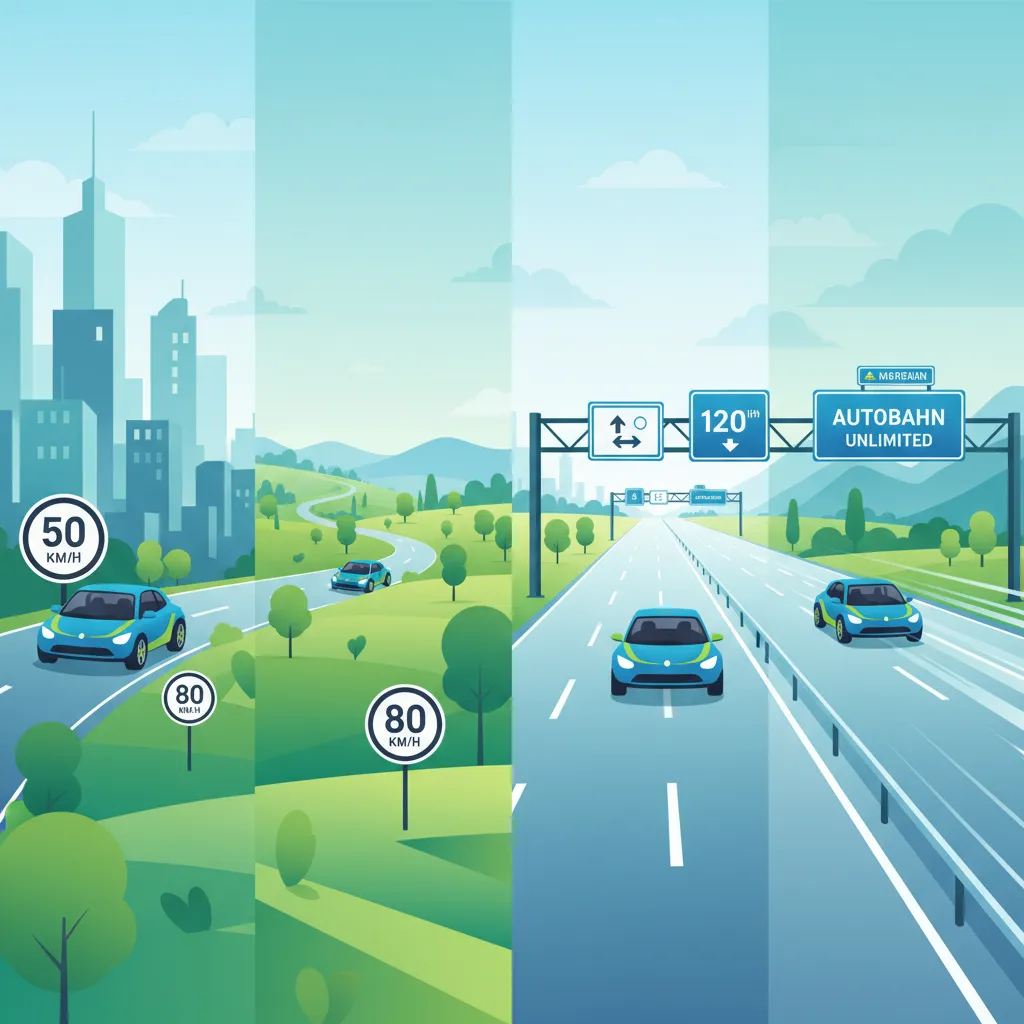
This lesson details the statutory speed limits for different road environments in Poland. It covers the 50 km/h limit in built-up areas (obszar zabudowany), as well as the higher limits for rural roads, expressways, and motorways. Understanding these default limits is fundamental for legal and safe driving across the country.
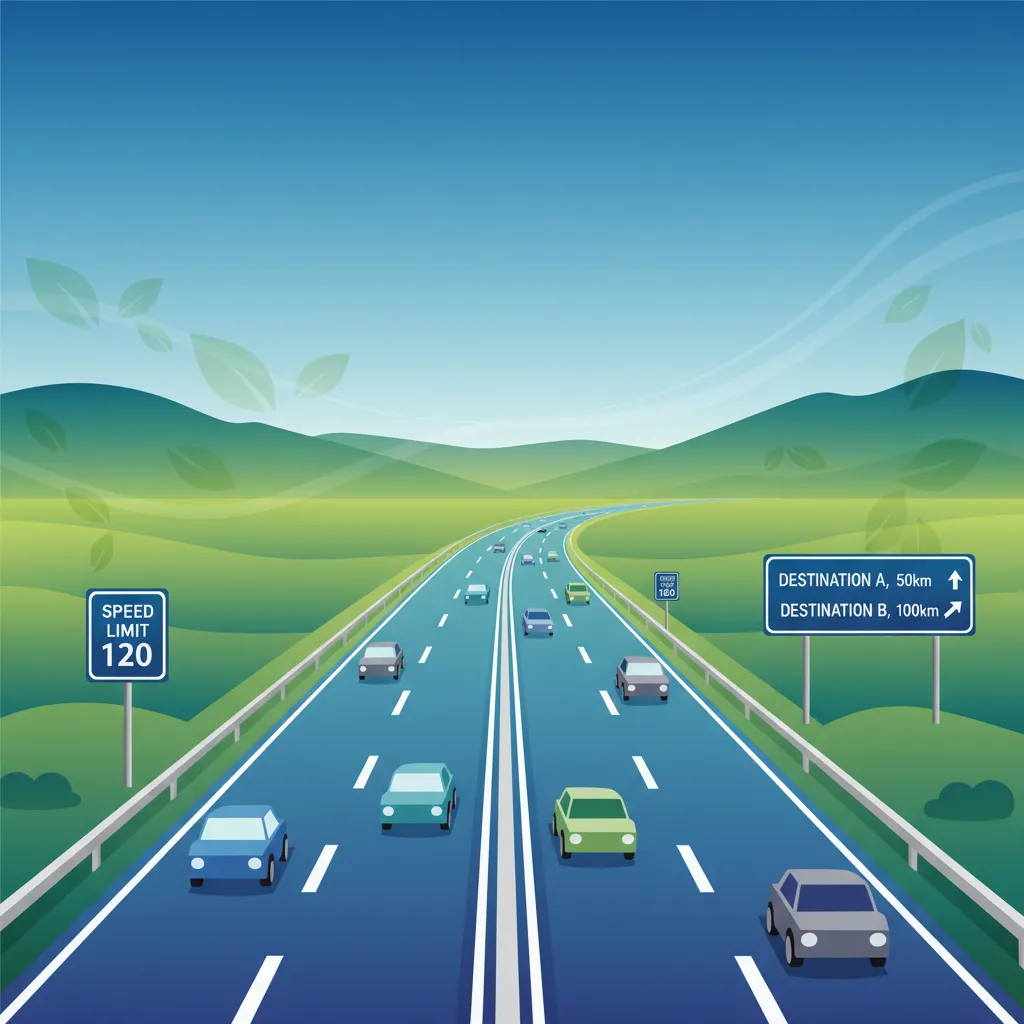
This lesson details the rules and best practices for driving on Poland's fastest roads. It covers the higher speed limits, the strict lane discipline of keeping right except to overtake, and prohibitions on stopping. The aim is to ensure drivers can handle the demands of sustained high-speed travel safely and efficiently.
This lesson examines the specific rules and etiquette for riding on Polish motorways and high-speed highways, focusing on proper lane positioning, entry via acceleration lanes, and maintaining appropriate following distances. Learners will study overtaking protocols at high speeds, proper use of deceleration lanes for exits, and techniques for aerodynamic positioning. The content also covers safe lane changes and emergency lane usage to ensure efficient travel.
This lesson examines the family of regulatory signs that dictate mandatory actions and prohibitions on Polish roads, emphasizing how each sign influences motorcyclist behaviour. Learners will explore the stop, give way, speed limit, and no overtaking signs, understanding the legal obligations they impose. The lesson also highlights signs that specifically affect motorcycles, such as lane restrictions, ensuring riders recognize and obey regulations unique to two-wheel traffic.
This lesson outlines the statutory speed limits that professional drivers of Category C vehicles must adhere to on Polish roads. It clearly distinguishes the maximum permitted speeds in built-up areas, on single carriageways, and on motorways. The content also explains how to interpret road signs that may indicate temporary or vehicle-specific speed restrictions, ensuring drivers remain compliant with the law and avoid penalties from speed enforcement measures.

In this lesson, learners explore riding on rural and countryside roads, where road markings may be sparse and surface conditions varied. The content covers safe overtaking in single-lane sections, interaction with agricultural vehicles and animals, and the handling of gravel or uneven surfaces. Learners will also study the importance of anticipating curves and adjusting speed to light conditions, equipping them with the skills needed for safe countryside travel.
This lesson introduces the fundamental principles of right-of-way on Polish roads, explaining how priority road signs determine the flow of traffic at intersections. Learners will explore the hierarchy of vehicle classes and the specific obligations that arise when approaching a yield line or a give-way sign. The content details the legal precedence of main road traffic over secondary road traffic, helping riders safely navigate intersections and avoid right-of-way infractions.

This lesson examines the variety of pavement markings that define lane structures, traffic flow, and special zones on Polish roads. Learners will study solid and broken lines, lane division markings, and the distinct symbols for bicycle lanes, bus lanes, and tram tracks, all of which affect motorcyclist positioning. The lesson also addresses surface texture indicators that signal changing road conditions, enabling riders to maintain correct lane discipline.
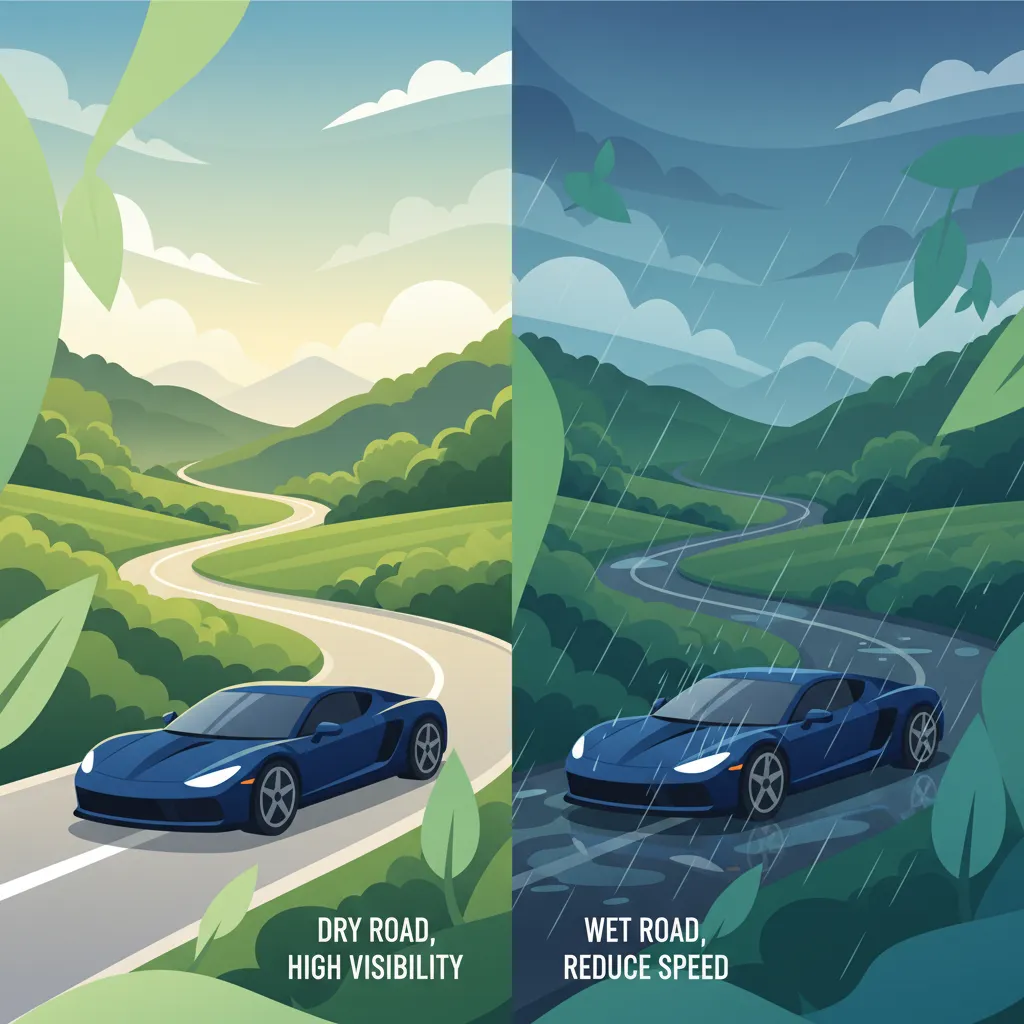
In this lesson, learners examine how environmental conditions such as rain, wind, ice, and reduced visibility necessitate adjustments in riding speed. The content provides guidelines for assessing road surfaces, judging appropriate cornering speeds, and reducing speed proactively in adverse weather. Learners will understand the impact of temperature on tyre performance and the need to increase safety margins, mastering adaptive speed management to maintain control.

This lesson focuses on informational signs that provide drivers with essential data for navigation and travel planning. Learners will explore signs indicating distances, highway exits, service areas, and speed zone changes, learning how these signs impact route selection and riding strategy. The lesson also addresses the interpretation of direction arrows and road number signs, enabling riders to integrate sign information into effective journey planning and maintain situational awareness.
Learn how to safely transition between different speed zones in Poland and understand the common enforcement methods and penalties for exceeding speed limits. Essential knowledge for Polish motorcyclists.
This lesson details the rules and best practices for driving on Poland's fastest roads. It covers the higher speed limits, the strict lane discipline of keeping right except to overtake, and prohibitions on stopping. The aim is to ensure drivers can handle the demands of sustained high-speed travel safely and efficiently.

This lesson teaches the crucial concept that drivers must always adapt their speed to the current conditions. It explains how factors like rain, fog, ice, heavy traffic, and poor visibility reduce safety margins and require a lower speed than the posted limit. This principle of defensive driving is essential for preventing accidents in challenging situations.
This lesson details the statutory speed limits for different road environments in Poland. It covers the 50 km/h limit in built-up areas (obszar zabudowany), as well as the higher limits for rural roads, expressways, and motorways. Understanding these default limits is fundamental for legal and safe driving across the country.
This lesson provides a focused guide on the techniques for entering and exiting high-speed roads. It explains the purpose of acceleration lanes for getting up to speed and deceleration lanes for slowing down safely away from the main traffic flow. Correct observation, signaling, and speed adjustment are emphasized for seamless transitions.
This lesson details the speed limits applicable to buses in Poland across urban, rural, and motorway settings. It emphasizes how vehicle size and passenger load influence safe operating speeds and required stopping distances. The content also covers speed-control device usage and practical techniques for maintaining consistent speed while ensuring passenger comfort.
This lesson outlines the statutory speed limits that professional drivers of Category C vehicles must adhere to on Polish roads. It clearly distinguishes the maximum permitted speeds in built-up areas, on single carriageways, and on motorways. The content also explains how to interpret road signs that may indicate temporary or vehicle-specific speed restrictions, ensuring drivers remain compliant with the law and avoid penalties from speed enforcement measures.

This lesson defines what constitutes a 'built-up area' in Poland, marked by specific informational signs. It explains the default speed limit of 50 km/h that applies within these zones unless otherwise indicated. The content highlights the need for increased vigilance due to higher traffic density and the frequent presence of pedestrians.
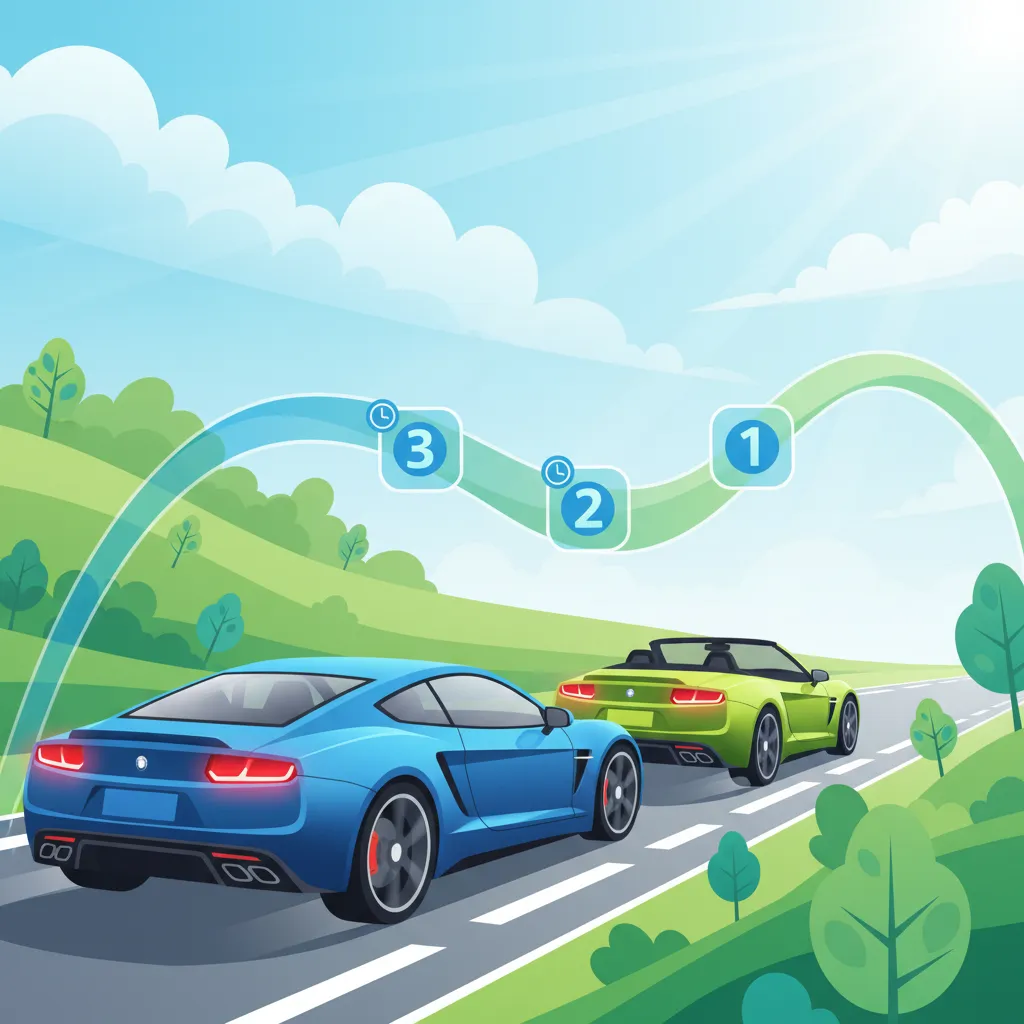
This lesson provides practical methods for maintaining a safe buffer zone behind the vehicle in front. It explains the 'two-second rule' as a minimum following distance in good conditions and how to increase it to three or more seconds in adverse weather. This skill is critical for allowing enough time to react and brake safely to avoid rear-end collisions.
In this lesson, learners examine how environmental conditions such as rain, wind, ice, and reduced visibility necessitate adjustments in riding speed. The content provides guidelines for assessing road surfaces, judging appropriate cornering speeds, and reducing speed proactively in adverse weather. Learners will understand the impact of temperature on tyre performance and the need to increase safety margins, mastering adaptive speed management to maintain control.
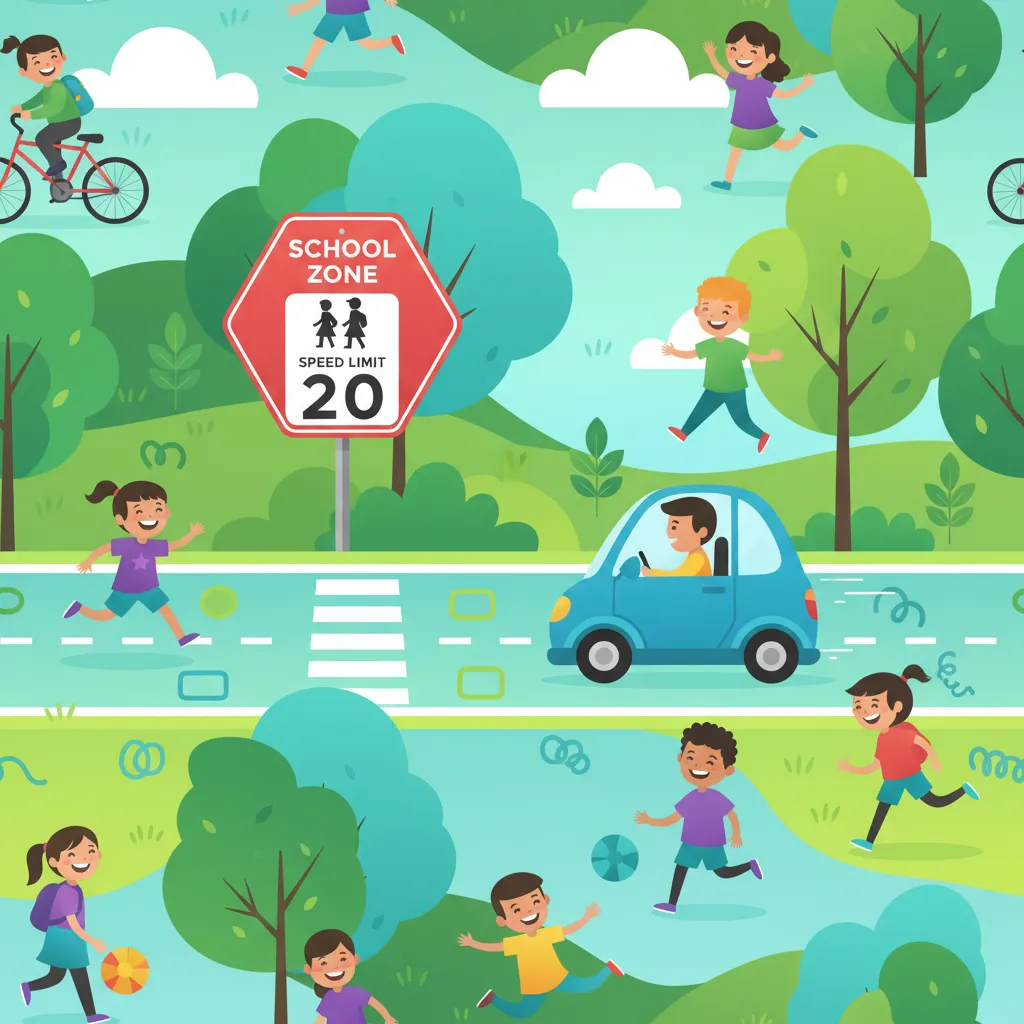
This lesson focuses on areas with high pedestrian activity, requiring special caution. It covers the rules for 'living zones' (strefa zamieszkania), where pedestrians have priority and the speed limit is 20 km/h. The content also addresses regulations for school zones and other designated pedestrian areas to ensure the safety of the most vulnerable road users.
Find clear answers to common questions learners have about Legal Speed Limits across Road Types. Learn how the lesson is structured, which driving theory objectives it supports, and how it fits into the overall learning path of units and curriculum progression in Poland. These explanations help you understand key concepts, lesson flow, and exam focused study goals.
In Polish urban areas, the general speed limit for motorcycles is 50 km/h. However, this can be further reduced during specific hours (e.g., 20 km/h between 5:00 and 23:00 in residential zones) or by specific traffic signs indicating lower limits. Always look for signs that may modify the standard urban speed limit.
Yes, for motorcycles, the maximum speed limit on rural roads outside built-up areas is typically 90 km/h. This is lower than for passenger cars, which can often go up to 120 km/h on these roads. Always be aware of the specific speed limit for your vehicle category.
For motorcycles (Category A), the speed limit on motorways (autostrady) in Poland is 140 km/h, and on expressways (drogi ekspresowe) it is 120 km/h. Ensure you are familiar with these distinctions as they are common in theory exam questions.
Speed limit changes are indicated by specific traffic signs. You'll see signs showing the new maximum speed allowed. After passing a 'zone' sign (like a residential zone or speed limit zone), the new limit applies until you encounter a sign cancelling that limit or indicating a new one. Always be observant of signage.
Your reaction time (the time it takes to perceive a hazard and decide to brake) and braking distance both increase significantly with speed. Higher speeds mean much longer stopping distances, making it harder to avoid collisions. Understanding this relationship is vital for safe riding and is a frequent topic in the Polish theory exam.
Build custom practice sessions tailored precisely to your needs. Focus on areas requiring improvement, review specific Polish road signs, or master complex traffic rules to ensure full preparation for your official driving license exam.