
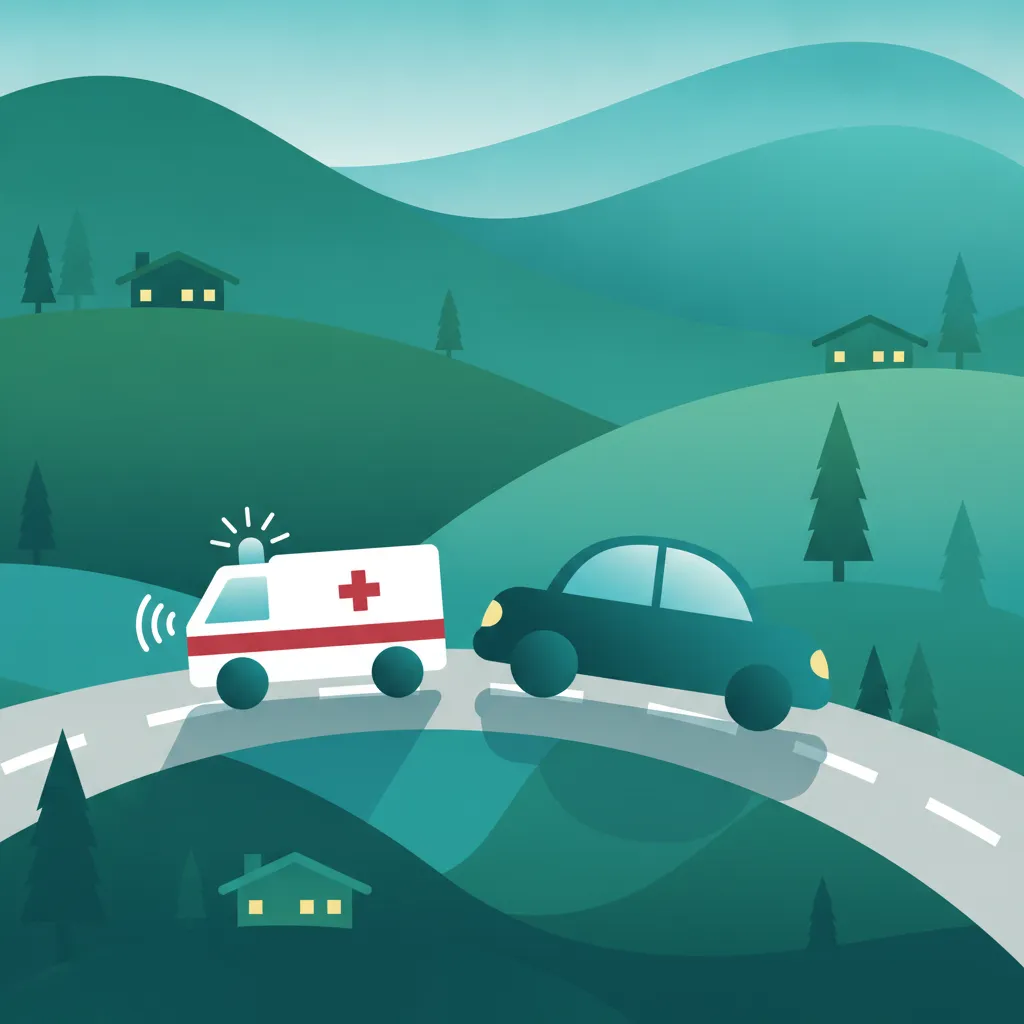
In Switzerland, drivers must yield immediate priority to emergency vehicles like police, ambulances, fire trucks, and customs vehicles when they are using both blue flashing lights (Blaulicht) and the alternating horn (Wechselklanghorn). Understanding these rules is vital for ensuring emergency responders can reach incidents without delay and is a key component of the Swiss driving theory exam. This page clarifies your responsibilities and how to react safely in various traffic situations.
Theory topic content overview
Read the full theory topic guide for Emergency Vehicle Priority with structured, easy-to-scan content built for learners in Switzerland. This detailed section explains the exact rule, meaning, traffic context, comparison points, and exam logic behind this Swiss driving theory topic so you can study faster, understand the concept more clearly, and avoid common interpretation mistakes on the theory test.
In Switzerland, the immediate and safe yielding to emergency vehicles is not only a matter of road safety but a strict legal requirement. Understanding the specific signals and correct actions is fundamental for all drivers and a frequently tested topic in the Swiss driving theory exam. This page will guide you through the precise rules for giving emergency vehicle priority in Switzerland.
Emergency vehicle priority refers to the legal obligation for all road users to immediately give way to designated emergency vehicles that are on an urgent mission. In Switzerland, these Vortrittsberechtigte Fahrzeuge (priority-entitled vehicles) include:
Polizei)Sanität)Feuerwehr)Zoll)Crucially, these vehicles are only granted special priority rights when they clearly signal their urgent mission by using both Blaulicht (blue flashing lights) and Wechselklanghorn (alternating horn or siren). This dual signal is the definitive indication that you must yield the path.
The purpose of these rules is to ensure that emergency services can reach incidents without delay, saving lives and mitigating damage.
The swift passage of emergency vehicles can be the difference between life and death. Your actions as a driver directly impact the effectiveness of emergency responders.
Blaulicht and Wechselklanghorn. Failure to do so can result in significant fines and legal consequences.Rettungsgasse (rescue corridor), are common in the Swiss driving theory exam. Precision in understanding these rules is key to passing.When you perceive an emergency vehicle approaching with both blue lights and siren, your primary goal is to clear the path safely and without creating additional hazards.
Autobahnen): You must form a Rettungsgasse (rescue corridor) between the far-left lane and the lane immediately to its right. This is a mandatory formation in Switzerland whenever traffic slows or stops.Blaulicht and Wechselklanghorn have priority even if you have a green light. Wait until they have passed before proceeding, even if this means holding up other traffic.Trottoir), but you must do so with utmost caution, ensuring no pedestrians or other obstacles are present (Art. 16 Abs. 2 VRV).The way you react to emergency vehicles depends on specific conditions and signals:
Blaulicht (blue light) and Wechselklanghorn (siren) grants full priority. Without the Wechselklanghorn, the blue light alone does not automatically grant the emergency vehicle full priority to disregard all traffic rules, unless they are not significantly deviating from traffic rules and not claiming special priority (Art. 16 Abs. 4 VRV). This is a critical distinction in Switzerland.Rettungsgasse on motorways.Understanding the nuances of emergency vehicle priority in Switzerland is essential to avoid mistakes.
Blaulicht only vs. Blaulicht + Wechselklanghorn: This is the most common point of confusion. In Switzerland, emergency vehicles typically only have full priority (allowing them to deviate significantly from traffic rules) when both blue lights and siren are active. If only the Blaulicht is used, especially at night, it might signal an urgent mission but not necessarily an immediate claim to absolute priority over all other rules, particularly if the vehicle isn't substantially deviating from normal traffic rules. Always remain vigilant, but be aware of this specific distinction.Rettungsgasse vs. Emergency Lane: The Rettungsgasse (rescue corridor) is a dynamic space created between lanes on motorways or multi-lane roads in slow or stopped traffic for emergency vehicles. It is not the hard shoulder or emergency lane, which is typically for breakdowns or designated access.Let's look at how these rules apply in practice:
Rettungsgasse. If you are in the far-left lane, move as far left as possible. If you are in the right lane, move as far right as possible. This creates a clear lane for emergency vehicles between the two lanes.Fussgängerstreifen) where pedestrians are waiting. Before you can stop, you hear an ambulance with Blaulicht and Wechselklanghorn behind you. Your priority is to clear the way for the ambulance. Ensure the pedestrians are aware and safe, and move to the side. The ambulance will also take necessary precautions around pedestrians.Learners often struggle with these aspects of emergency vehicle priority:
Wechselklanghorn: Focusing only on blue lights and not the crucial combination of both signals for full priority.Rettungsgasse: Failing to form the rescue corridor on motorways, which is a significant obstruction.The rules for giving priority to emergency vehicles are deeply embedded in Swiss traffic law and practical driving. The terms Blaulicht and Wechselklanghorn are official designations, central to understanding when full priority must be granted. The Rettungsgasse is a specific and mandatory manoeuvre on Swiss motorways, vital for rapid emergency response during congestion.
The inclusion of Zoll (customs) vehicles among those granted priority is a specific aspect of Swiss law that drivers should be aware of. Always remember that even if you're directed by a traffic light or sign, the immediate passage of an emergency vehicle with Blaulicht and Wechselklanghorn takes precedence.
When faced with an emergency vehicle in Switzerland:
Blaulicht and listen for the Wechselklanghorn.Rettungsgasse: On congested motorways, this is your immediate responsibility.By mastering these rules, you contribute to a safer road environment for everyone and demonstrate your readiness for the Swiss driving licence theory exam.
In Switzerland, drivers must immediately yield to emergency vehicles (police, ambulance, fire, customs) only when both Blaulicht and Wechselklanghorn are active—this dual signal combination is the definitive trigger for full priority rights under Article 16 VRV. On motorways, forming a Rettungsgasse between the far-left lane and adjacent lane is mandatory whenever traffic congestion occurs, and this manoeuvre is frequently tested in the Swiss theory exam. Even at green traffic lights or regulated intersections, you must stop safely and allow emergency vehicles to pass first. The critical distinction to remember is that blue lights alone do not automatically grant absolute priority unless the Wechselklanghorn is also sounding.
A short set of high-value points that capture the most important ideas from this theory explanation.
Emergency vehicles in Switzerland only have full priority when using both Blaulicht (blue flashing lights) AND Wechselklanghorn (alternating horn) together.
Priority-entitled vehicles include police, ambulance, fire brigade, and customs (Zoll) when on urgent missions.
On motorways and multi-lane roads, you must form a Rettungsgasse (rescue corridor) between the far-left lane and the lane next to it whenever traffic slows or stops.
You must yield to emergency vehicles even at green traffic lights—stop safely and wait until they have passed.
Moving carefully onto the pavement is permitted only when absolutely necessary and with extreme caution to avoid pedestrians.
Full priority requires BOTH Blaulicht AND Wechselklanghorn; blue lights alone do not automatically grant absolute priority.
Amber warning lights (used by breakdown services) do NOT grant emergency vehicle priority.
Rettungsgasse is created between lanes, NOT on the hard shoulder or emergency lane.
The legal basis is Article 16 VRV (Verkehrsregelnverordnung)—failure to yield is a legal violation.
Customs (Zoll) vehicles are specifically included as priority-entitled emergency vehicles in Swiss law.
Assuming any blue flashing light means immediate absolute priority, without listening for the Wechselklanghorn.
Braking suddenly or swerving without checking mirrors, which creates additional hazards for other road users.
Forgetting to form a Rettungsgasse on motorways when traffic slows, blocking emergency vehicle access.
Proceeding through a green intersection when an emergency vehicle is approaching from another direction.
Delaying reaction time by waiting to see exactly where the emergency vehicle is going before taking action.
Start with a short, direct summary of Emergency Vehicle Priority before reading the full explanation below.
When an emergency vehicle in Switzerland approaches with both blue flashing lights (Blaulicht) and the alternating horn (Wechselklanghorn), all road users must immediately give way. This means slowing down, moving to the side of the road, or stopping if necessary to create a clear path. Always signal your intentions and act cautiously to ensure emergency responders can pass safely, even at traffic lights or regulated intersections.
Review the most important terms, rule signals, and traffic concepts linked to Emergency Vehicle Priority.
Explore related theory topic pages connected to Emergency Vehicle Priority and continue with the next useful rule explanation.
See the common search queries learners use when trying to understand Emergency Vehicle Priority in Switzerland.

Continue your preparation by exploring specific Swiss traffic rules, road signs, and essential driving concepts. Strengthen your knowledge of official legislation and practical application to ensure complete readiness for your driving licence theory examination.
Explore Swiss Driving Theory TopicsTheory topic content overview
A short set of high-value points that capture the most important ideas from this theory explanation.
Emergency vehicles in Switzerland only have full priority when using both Blaulicht (blue flashing lights) AND Wechselklanghorn (alternating horn) together.
Priority-entitled vehicles include police, ambulance, fire brigade, and customs (Zoll) when on urgent missions.
On motorways and multi-lane roads, you must form a Rettungsgasse (rescue corridor) between the far-left lane and the lane next to it whenever traffic slows or stops.
You must yield to emergency vehicles even at green traffic lights—stop safely and wait until they have passed.
Moving carefully onto the pavement is permitted only when absolutely necessary and with extreme caution to avoid pedestrians.
Full priority requires BOTH Blaulicht AND Wechselklanghorn; blue lights alone do not automatically grant absolute priority.
Amber warning lights (used by breakdown services) do NOT grant emergency vehicle priority.
Rettungsgasse is created between lanes, NOT on the hard shoulder or emergency lane.
The legal basis is Article 16 VRV (Verkehrsregelnverordnung)—failure to yield is a legal violation.
Customs (Zoll) vehicles are specifically included as priority-entitled emergency vehicles in Swiss law.
Assuming any blue flashing light means immediate absolute priority, without listening for the Wechselklanghorn.
Braking suddenly or swerving without checking mirrors, which creates additional hazards for other road users.
Forgetting to form a Rettungsgasse on motorways when traffic slows, blocking emergency vehicle access.
Proceeding through a green intersection when an emergency vehicle is approaching from another direction.
Delaying reaction time by waiting to see exactly where the emergency vehicle is going before taking action.
Start with a short, direct summary of Emergency Vehicle Priority before reading the full explanation below.
When an emergency vehicle in Switzerland approaches with both blue flashing lights (Blaulicht) and the alternating horn (Wechselklanghorn), all road users must immediately give way. This means slowing down, moving to the side of the road, or stopping if necessary to create a clear path. Always signal your intentions and act cautiously to ensure emergency responders can pass safely, even at traffic lights or regulated intersections.
Review the most important terms, rule signals, and traffic concepts linked to Emergency Vehicle Priority.
Explore related theory topic pages connected to Emergency Vehicle Priority and continue with the next useful rule explanation.
See the common search queries learners use when trying to understand Emergency Vehicle Priority in Switzerland.
Continue your preparation by exploring specific Swiss traffic rules, road signs, and essential driving concepts. Strengthen your knowledge of official legislation and practical application to ensure complete readiness for your driving licence theory examination.
Explore Swiss Driving Theory TopicsUse this exam-focused revision tip to understand how Emergency Vehicle Priority is likely to appear in theory questions for learners in Switzerland. This section helps you identify the most testable part of the rule, avoid common traps, and remember the concept more effectively during Swiss driving theory exam preparation.
Pay close attention to the specific signals required for priority in Switzerland: it's not just blue lights, but the combination of 'Blaulicht' and 'Wechselklanghorn'. Also, remember the importance of forming a 'Rettungsgasse' on motorways. Exam questions often test these precise details and your reaction in specific scenarios, such as at intersections or in heavy traffic.
Read direct answers to the most common learner questions about Emergency Vehicle Priority in Switzerland. This FAQ focuses on rule confusion, practical meaning, comparison with similar concepts, and the exact uncertainties that appear most often in Swiss driving theory revision and exam preparation.
In Switzerland, emergency vehicles with priority are generally police, ambulance (Sanität), fire brigade (Feuerwehr), and customs (Zoll) vehicles when they are using both blue flashing lights (Blaulicht) and the alternating horn (Wechselklanghorn).
For full priority rights, Swiss emergency vehicles must use both blue flashing lights (Blaulicht) and an alternating horn (Wechselklanghorn). The blue light alone may be used at night for urgent drives that do not significantly deviate from traffic rules.
You must immediately give way, slow down, move to the side of the road, or stop if necessary, creating a clear and safe path. Even at traffic lights or intersections, you must allow them to pass. On motorways, you should form a rescue corridor (Rettungsgasse).
A 'Rettungsgasse' (rescue corridor) is an emergency lane created by drivers on multi-lane motorways or dual carriageways during slow-moving traffic or a jam. It is formed between the far-left lane and the lane immediately to its right, allowing emergency vehicles to pass through quickly. It should be formed as early as possible, ideally before traffic comes to a standstill.
Yes, obstructing an emergency vehicle that is performing an urgent duty and using its signals can result in a fine or other penalties under Swiss traffic law, as it endangers emergency response and violates Article 16 of the Road Traffic Rules Ordinance (VRV).
Yes, emergency vehicles using both blue lights and the alternating horn have priority over all other road users, even when traffic is regulated by traffic lights. You must allow them to pass safely, regardless of your signal.
Pinpoint specific Swiss traffic rules, road signs, or driving situations you need to master. Use the practice search to start a focused revision session now and build confidence for your official driving theory exam.