
Pedestrians are among the most vulnerable road users. In Switzerland, specific traffic rules grant them priority in various situations to ensure their safety. This page explains your duties as a driver at pedestrian crossings, intersections, and other areas, clarifying when you must stop and yield according to Swiss legislation.
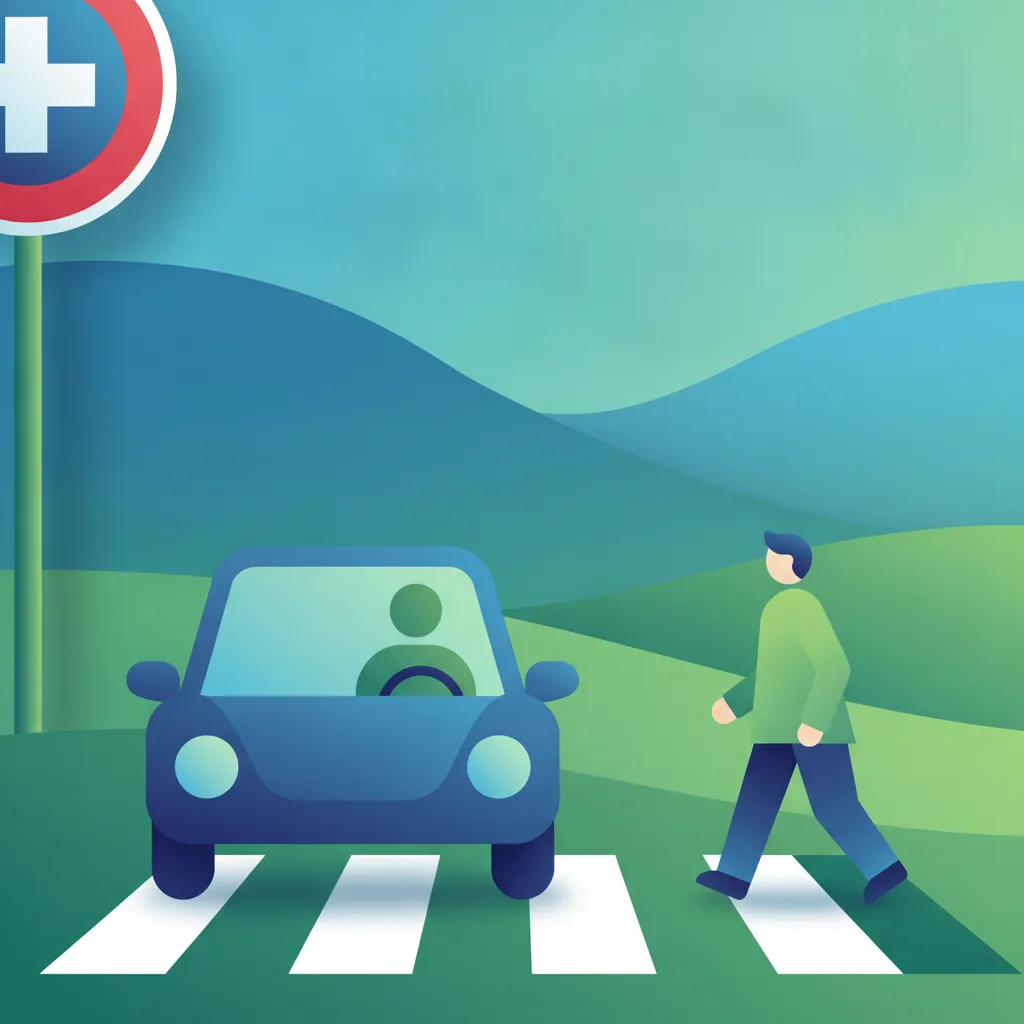
Theory topic content overview
Read the full theory topic guide for Pedestrian Priority Rules with structured, easy-to-scan content built for learners in Switzerland. This detailed section explains the exact rule, meaning, traffic context, comparison points, and exam logic behind this Swiss driving theory topic so you can study faster, understand the concept more clearly, and avoid common interpretation mistakes on the theory test.
Pedestrian priority, known in Switzerland as Vortritt Fussgänger, defines specific situations where drivers are legally obliged to yield to pedestrians. This fundamental principle of Swiss traffic law (Strassenverkehrsgesetz SVG) is designed to protect pedestrians, who are among the most vulnerable road users. As a driver in Switzerland, correctly understanding and applying these rules is not only critical for safety but also a frequently tested area in the theory exam.
The importance of pedestrian priority stems from several key factors:
Theorieprüfung) frequently includes questions and scenarios testing a candidate's understanding of pedestrian priority, particularly at crossings and intersections.Swiss traffic law (Verkehrsregelnverordnung VRV) outlines precise conditions for pedestrian priority:
Fussgängerstreifen)This is the most common and crucial scenario. According to Art. 33 Abs. 2 SVG and Art. 6 Abs. 1 VRV, drivers approaching a marked pedestrian crossing must:
Vortritt gewähren) to any pedestrian who is:
Key Detail for Switzerland: It's not just about pedestrians on the crossing; the clear intention to cross is equally important. This requires active observation and anticipation from the driver. You cannot simply drive through, expecting pedestrians to wait if their intention is clear.
Verzweigungen)Even without a marked Fussgängerstreifen, drivers turning at an intersection must yield to pedestrians. Art. 6 Abs. 2 VRV states that turning vehicles must grant priority to pedestrians (or users of vehicle-like devices like e-scooters) who are crossing the road the vehicle is turning into.
Haltestellen öffentlicher Verkehrsmittel): Art. 33 Abs. 3 SVG requires drivers to be considerate of people getting on and off public transport. While not always strict priority, it implies slowing down and yielding if necessary to ensure their safety.Trottoirs): If a vehicle must use a pavement (e.g., entering a driveway), Art. 28 Abs. 2 VRV mandates extreme caution towards pedestrians and users of vehicle-like devices, and drivers must yield priority to them.Sorgfaltspflicht) remains paramount.Fussgängerstreifen or when a vehicle is turning at an intersection. In other unmarked areas, pedestrians must wait for a safe gap in traffic.Fussgängerstreifen: You are driving in a Swiss town and see a person standing at the edge of a zebra crossing, looking in your direction. Even if they haven't stepped onto the crossing, their clear intention means you must slow down, be prepared to stop, and allow them to cross before proceeding.Verzweigung: You're making a left turn at an intersection. As you begin your turn, a pedestrian starts crossing the street you are entering, from your right. You must stop, even if it means holding up traffic behind you, to let the pedestrian complete their crossing safely.Learners often make these mistakes regarding pedestrian priority in the Swiss theory test and during practical driving:
Fussgängerstreifen if they intend to cross.klar ersichtliche Absicht (clearly apparent intention) of a pedestrian to cross. Look for head turns, body language, or a step towards the curb.Fussgängerstreifen markings.The legal framework for pedestrian priority in Switzerland is firmly established in the Strassenverkehrsgesetz (SVG) and Verkehrsregelnverordnung (VRV). Specifically:
Art. 33 SVG (Pflichten gegenüber Fussgängern): Outlines general duties towards pedestrians, emphasizing cautious driving before pedestrian crossings and allowing them to cross appropriately.Art. 6 VRV (Verhalten gegenüber Fussgängern und Benützern von fahrzeugähnlichen Geräten): Provides detailed rules for yielding at Fussgängerstreifen and for turning vehicles at Verzweigungen. This article also includes rules for users of vehicle-like devices (e.g., e-scooters), giving them similar priority rights to pedestrians in these situations.Art. 28 Abs. 2 VRV (Benützung des Trottoirs): Specifies caution and yielding to pedestrians if driving on a pavement.The emphasis in Swiss driving education is on proactive, defensive driving, always prioritising the safety of vulnerable road users. This proactive approach is fundamental to passing the theory test and becoming a safe driver in Switzerland.
Always treat pedestrians as vulnerable and unpredictable. When approaching any Fussgängerstreifen or turning at a Verzweigung, your default mindset should be to anticipate pedestrian movement and be prepared to stop. Their safety and your legal obligations (Art. 33 SVG and Art. 6 VRV) take precedence. Maintain a safe speed, scan continuously for pedestrians, and clearly signal your intentions to other road users, especially in bustling Swiss urban environments.
In Switzerland, drivers must yield to pedestrians at marked Fussgängerstreifen when the pedestrian is on the crossing or clearly intends to cross, and must always yield to pedestrians crossing the road being turned into at intersections regardless of markings. The key distinction is between clear intention to cross versus casual presence near a crossing. Swiss traffic law (Art. 33 SVG and Art. 6 VRV) places the primary duty on drivers to observe, anticipate, and be prepared to stop, with the most common learner error being the assumption that pedestrians will wait rather than the driver yielding.
A short set of high-value points that capture the most important ideas from this theory explanation.
Pedestrians have priority at marked Fussgängerstreifen when they are on the crossing OR when their clear intention to cross is apparent (looking at the crossing, stepping forward)
Turning vehicles must always yield to pedestrians crossing the road they are turning into, even without marked Fussgängerstreifen markings
At traffic lights with a green arrow, turning vehicles have right-of-way over pedestrians, but extreme caution is still required
Pedestrians do not have automatic priority everywhere; they only have priority at designated crossings or when vehicles are turning into their path
Swiss law (Art. 33 SVG and Art. 6 VRV) places the primary duty on drivers to anticipate pedestrian movement and be prepared to stop
Clear intention to cross is equally important as being on the crossing—a pedestrian waiting at the curb who looks toward the crossing or steps forward has priority
Turning vehicles must yield to pedestrians crossing the road being entered, regardless of whether a marked crossing exists
At uncontrolled Fussgängerstreifen, the driver must slow down significantly and be prepared to stop before proceeding
Pedestrians at traffic lights must obey the signals; drivers only yield when the pedestrian has a green light
Art. 33 Abs. 3 SVG requires extra caution near bus stops when people are alighting from public transport
Assuming pedestrians will wait for the vehicle to pass instead of preparing to yield when their crossing intention is clear
Failing to recognise the clearly apparent intention of a pedestrian (e.g., head turns, body language, stepping toward the curb)
Approaching crossings too fast, leaving insufficient distance to brake safely if a pedestrian steps out
Forgetting that turning vehicles must yield to pedestrians crossing the road they are turning into, even at unmarked intersections
Waving a pedestrian through before fully stopping and ensuring no other traffic or danger exists
Start with a short, direct summary of Pedestrian Priority Rules before reading the full explanation below.
In Switzerland, drivers must yield to pedestrians at designated pedestrian crossings (zebra crossings) when they are on the crossing or clearly intend to cross. Drivers also have a duty to yield to pedestrians crossing the road they are turning into at intersections, even without explicit markings. Always approach areas with pedestrians cautiously, ready to slow down or stop, as their safety takes precedence.
Review the most important terms, rule signals, and traffic concepts linked to Pedestrian Priority Rules.
Explore related theory topic pages connected to Pedestrian Priority Rules and continue with the next useful rule explanation.
See the common search queries learners use when trying to understand Pedestrian Priority Rules in Switzerland.

Continue your preparation by exploring specific Swiss traffic rules, road signs, and essential driving concepts. Strengthen your knowledge of official legislation and practical application to ensure complete readiness for your driving licence theory examination.
Explore Swiss Driving Theory TopicsTheory topic content overview
A short set of high-value points that capture the most important ideas from this theory explanation.
Pedestrians have priority at marked Fussgängerstreifen when they are on the crossing OR when their clear intention to cross is apparent (looking at the crossing, stepping forward)
Turning vehicles must always yield to pedestrians crossing the road they are turning into, even without marked Fussgängerstreifen markings
At traffic lights with a green arrow, turning vehicles have right-of-way over pedestrians, but extreme caution is still required
Pedestrians do not have automatic priority everywhere; they only have priority at designated crossings or when vehicles are turning into their path
Swiss law (Art. 33 SVG and Art. 6 VRV) places the primary duty on drivers to anticipate pedestrian movement and be prepared to stop
Clear intention to cross is equally important as being on the crossing—a pedestrian waiting at the curb who looks toward the crossing or steps forward has priority
Turning vehicles must yield to pedestrians crossing the road being entered, regardless of whether a marked crossing exists
At uncontrolled Fussgängerstreifen, the driver must slow down significantly and be prepared to stop before proceeding
Pedestrians at traffic lights must obey the signals; drivers only yield when the pedestrian has a green light
Art. 33 Abs. 3 SVG requires extra caution near bus stops when people are alighting from public transport
Assuming pedestrians will wait for the vehicle to pass instead of preparing to yield when their crossing intention is clear
Failing to recognise the clearly apparent intention of a pedestrian (e.g., head turns, body language, stepping toward the curb)
Approaching crossings too fast, leaving insufficient distance to brake safely if a pedestrian steps out
Forgetting that turning vehicles must yield to pedestrians crossing the road they are turning into, even at unmarked intersections
Waving a pedestrian through before fully stopping and ensuring no other traffic or danger exists
Start with a short, direct summary of Pedestrian Priority Rules before reading the full explanation below.
In Switzerland, drivers must yield to pedestrians at designated pedestrian crossings (zebra crossings) when they are on the crossing or clearly intend to cross. Drivers also have a duty to yield to pedestrians crossing the road they are turning into at intersections, even without explicit markings. Always approach areas with pedestrians cautiously, ready to slow down or stop, as their safety takes precedence.
Review the most important terms, rule signals, and traffic concepts linked to Pedestrian Priority Rules.
Explore related theory topic pages connected to Pedestrian Priority Rules and continue with the next useful rule explanation.
See the common search queries learners use when trying to understand Pedestrian Priority Rules in Switzerland.
Continue your preparation by exploring specific Swiss traffic rules, road signs, and essential driving concepts. Strengthen your knowledge of official legislation and practical application to ensure complete readiness for your driving licence theory examination.
Explore Swiss Driving Theory TopicsUse this exam-focused revision tip to understand how Pedestrian Priority Rules is likely to appear in theory questions for learners in Switzerland. This section helps you identify the most testable part of the rule, avoid common traps, and remember the concept more effectively during Swiss driving theory exam preparation.
In the Swiss theory exam, pay close attention to visual cues in images showing pedestrian behavior. Look for pedestrians *approaching* a crossing, *waiting* at the curb, or *already on* the crossing. The most common mistake is assuming pedestrians will wait for you; instead, always prepare to yield when their intention to cross is clear.
Read direct answers to the most common learner questions about Pedestrian Priority Rules in Switzerland. This FAQ focuses on rule confusion, practical meaning, comparison with similar concepts, and the exact uncertainties that appear most often in Swiss driving theory revision and exam preparation.
Pedestrian priority means that drivers must stop and allow pedestrians to cross the road safely in specific situations, such as at marked crossings or when turning into a street a pedestrian is already crossing, as mandated by Swiss traffic law.
You must yield to pedestrians at a zebra crossing (Fussgängerstreifen) if they are already on the crossing or are waiting at the edge and clearly intend to cross. You should slow down early and be prepared to stop.
Yes, when turning at an intersection in Switzerland, drivers must yield to pedestrians who are crossing the road you are turning into, even if there isn't a marked pedestrian crossing, unless traffic lights specifically indicate otherwise.
Pedestrian priority is a legal obligation to yield right-of-way in specific situations. General caution is a continuous duty to drive safely and be aware of vulnerable road users, even when they don't have explicit priority.
Even if a pedestrian steps into the road unexpectedly, drivers in Switzerland are still expected to react defensively and do everything possible to prevent an accident, as pedestrians are considered vulnerable. Maintain a safe speed and anticipate potential hazards.
While the priority rules remain the same, drivers are legally required to show extra consideration towards particularly vulnerable road users, such as children, the elderly, or those with disabilities, and anticipate their unpredictable behaviour.
Yes, failing to yield to a pedestrian with priority is a serious traffic violation in Switzerland and can result in fines, demerit points, or even license withdrawal, depending on the severity of the infringement, as outlined in the Road Traffic Act (SVG) and Road Traffic Rules Ordinance (VRV).
Pinpoint specific Swiss traffic rules, road signs, or driving situations you need to master. Use the practice search to start a focused revision session now and build confidence for your official driving theory exam.