
Delve into the core principles of Swiss driving theory, covering all essential traffic legislation, road signs, and practical concepts required for the official Swiss driving licence test. Gain a solid understanding of priority rules, speed limits, specific motorway regulations, and safe driving practices across Switzerland's diverse road conditions. This hub clarifies complex topics, preparing you thoroughly for success.
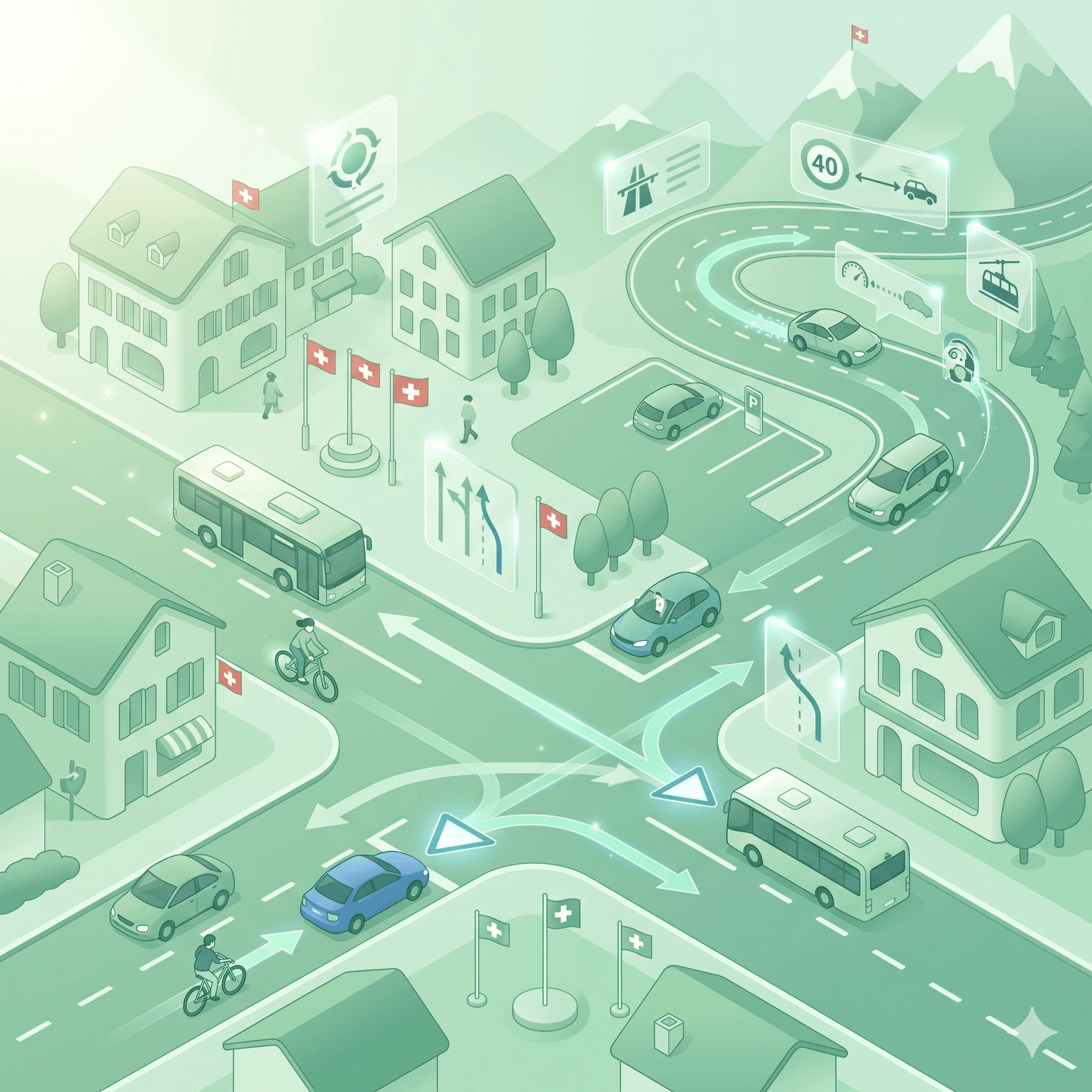
Our structured subject directory allows you to focus on critical areas like official traffic rules, hazard perception, and complex priority situations. Navigate through specific topics to build a robust understanding of Swiss road signs and safety standards.
12 topics
7 topics
7 topics
5 topics
3 topics
3 topics
2 topics
1 topic
1 topic
1 topic
1 topic
1 topic
Easily find and study essential Swiss driving theory topics, from road signs to traffic rules, to prepare effectively for your exam. Browse subjects or use search to clarify specific concepts and boost your exam study.
Filter by category
12 theory topics found

Right of way, known as 'Vortritt' in Switzerland, defines which road user has priority to proceed first when their paths intersect or conflict. These rules are essential for maintaining traffic flow, preventing accidents, and ensuring predictable behavior on Swiss roads. Correctly identifying priority depends on traffic signs, road markings, traffic signals, and general legal principles such as 'Rechtsvortritt'.
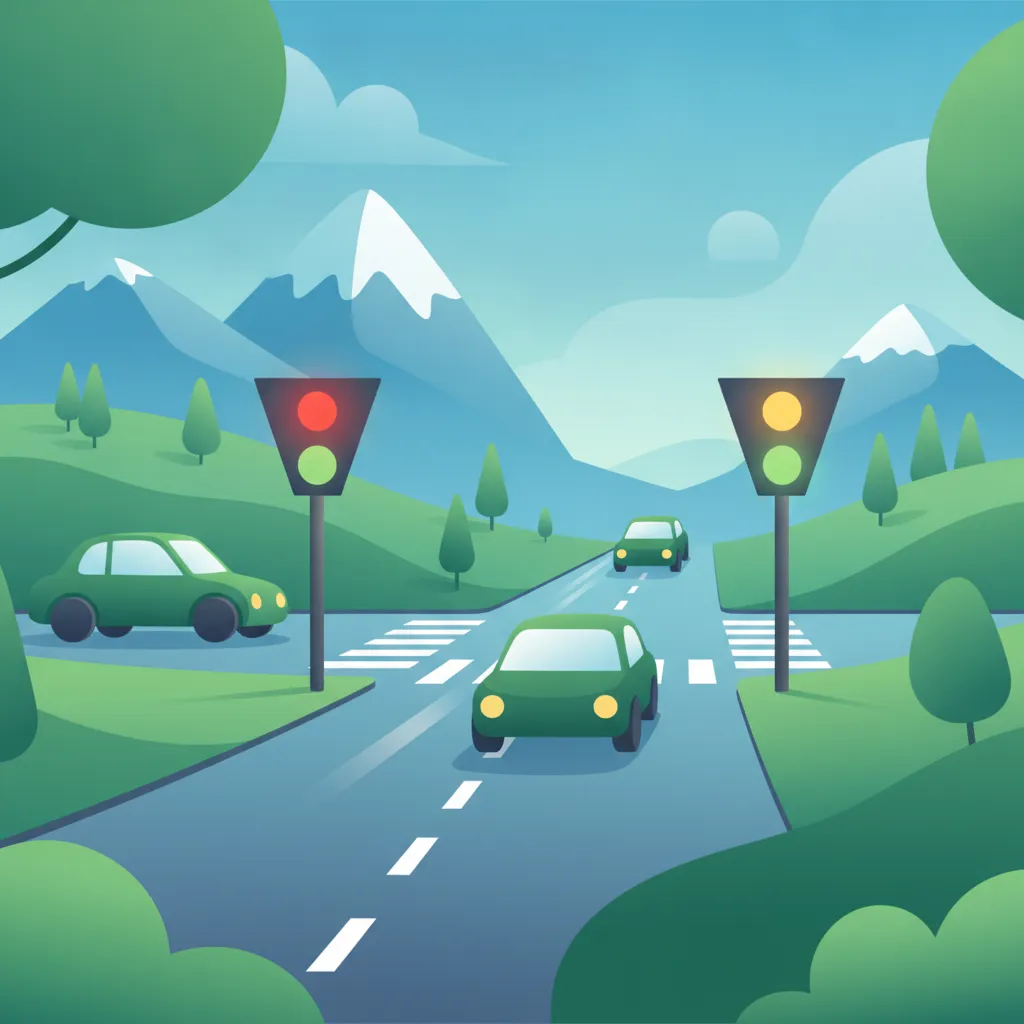
Traffic lights are essential for managing vehicle and pedestrian movement at intersections across Switzerland. They override all other priority rules, making their correct interpretation critical for safe driving. This page explains the specific meanings of red, yellow, and green signals, including special arrows and pedestrian signals, to ensure you know exactly how to react.
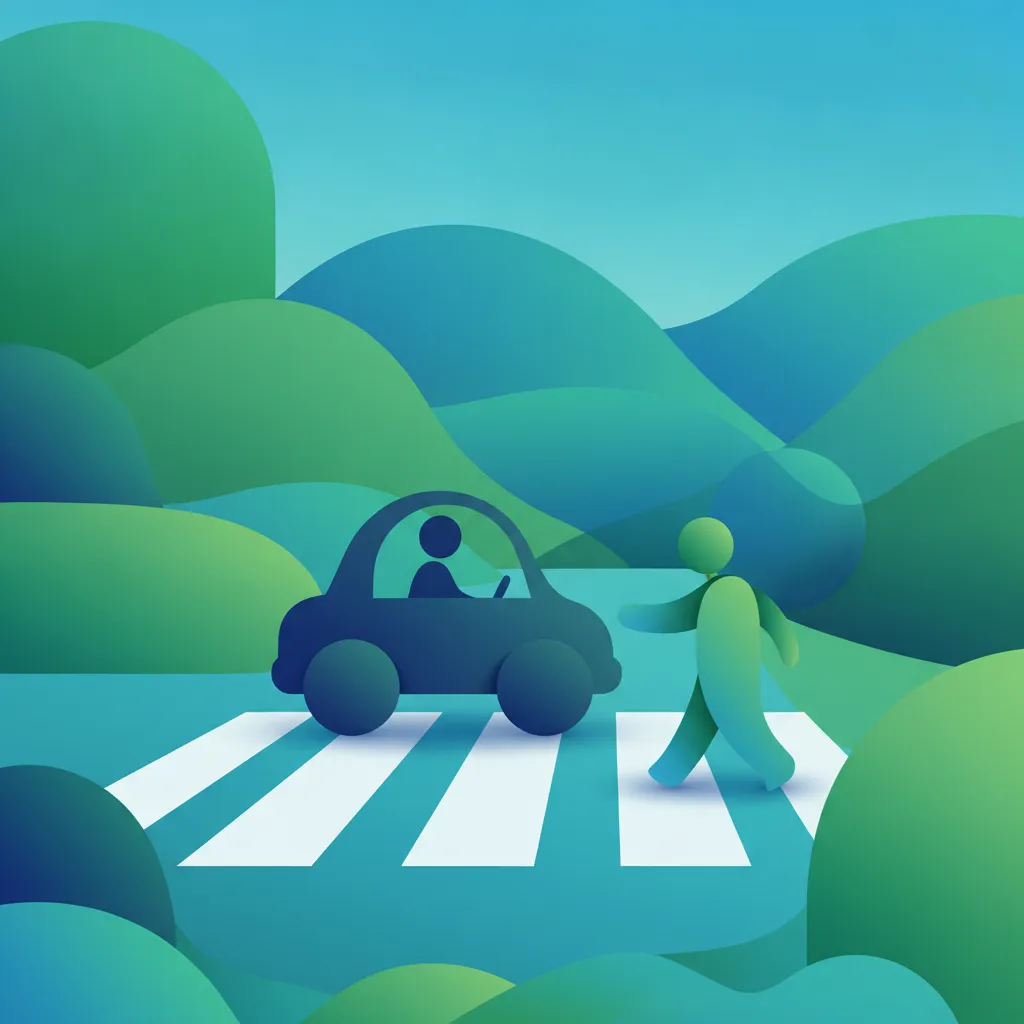
In Switzerland, pedestrian crossings (Fussgängerstreifen) are clearly marked areas designed to provide safe passage for pedestrians. As a driver, your primary responsibility is to ensure the safety of vulnerable road users by understanding and strictly adhering to priority rules. This means being vigilant, adjusting your speed, and always being prepared to stop for pedestrians.
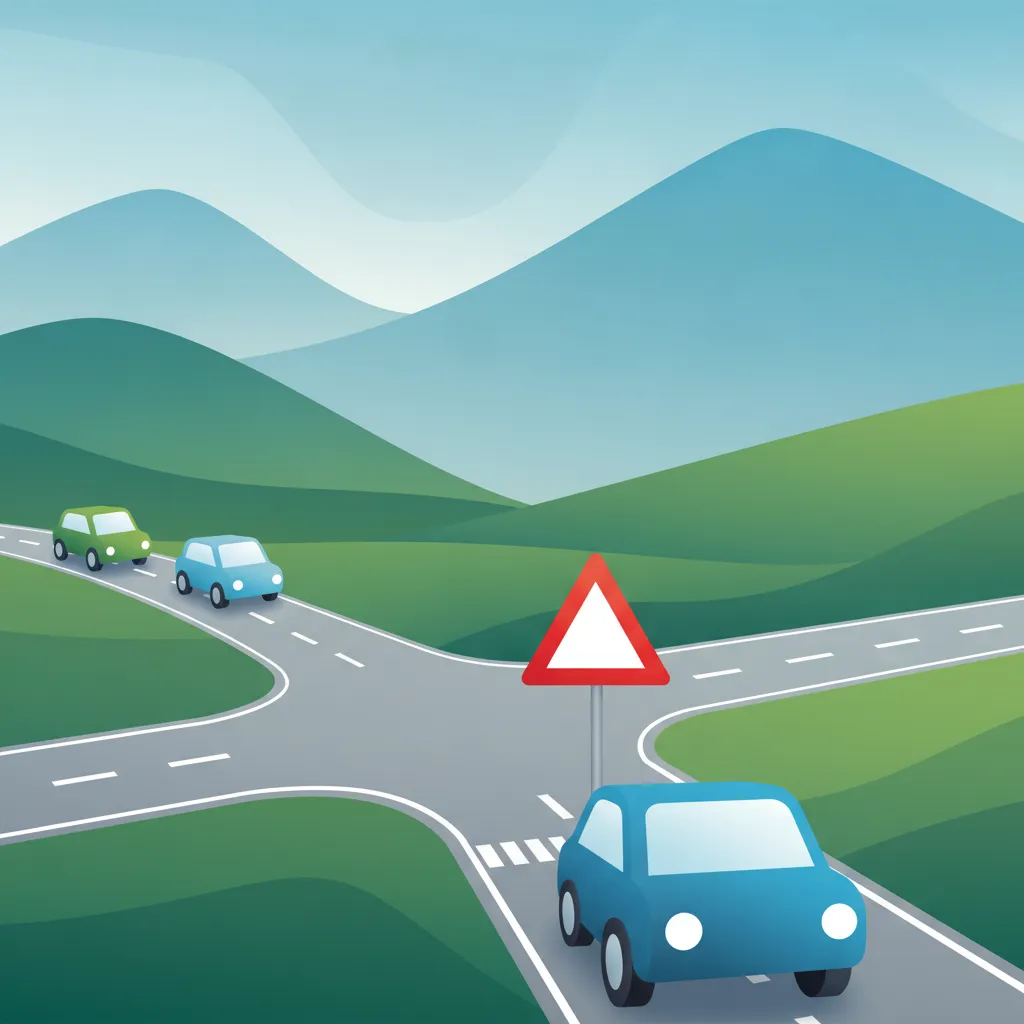
The Give Way sign (official Swiss Signal 3.01: Vortritt gewähren, céder le passage, dare precedenza) is a fundamental instruction for managing priority at intersections. Unlike a Stop sign, it does not always require a complete stop, but demands careful observation to ensure you yield to all traffic on the priority road. Mastering this rule is essential for safe driving and passing your Swiss theory exam.
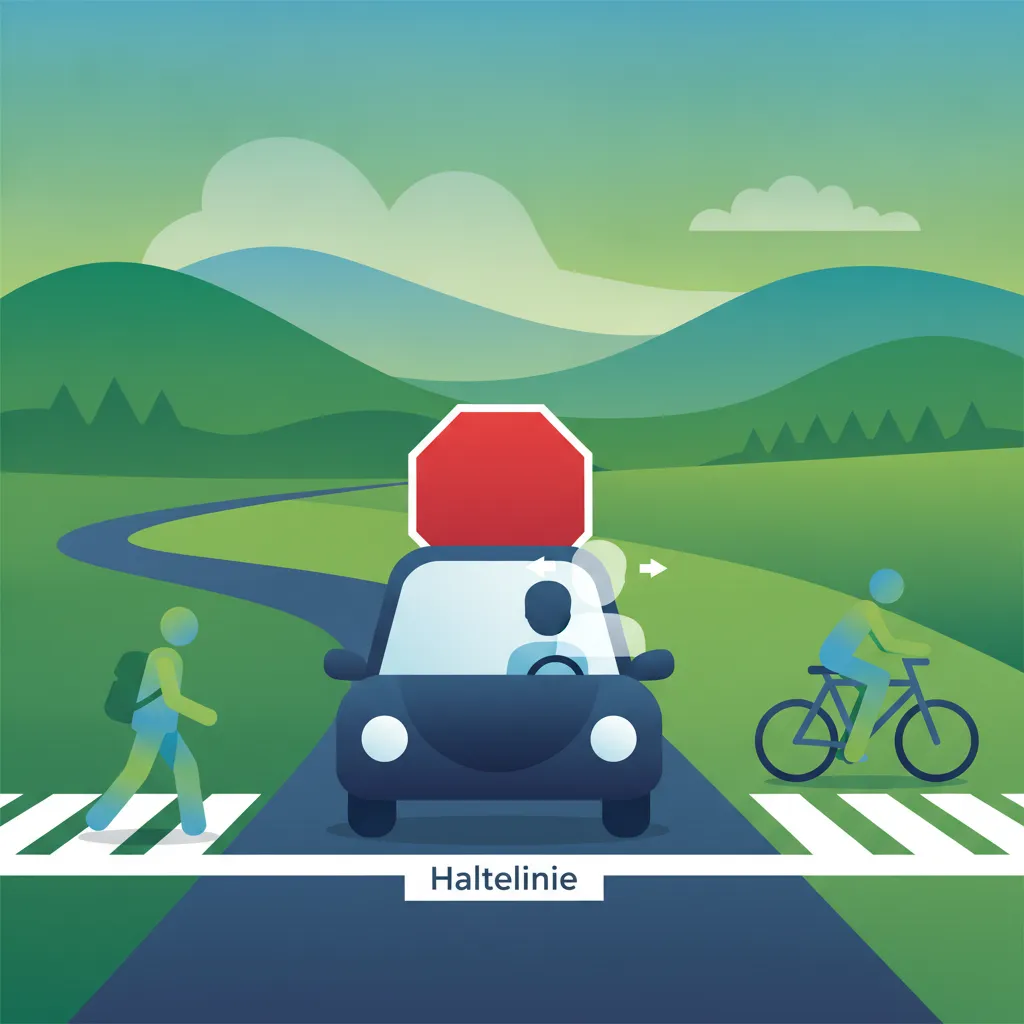
A 'Stop' sign (known as 'Signal Stop', sign 3.01, in Swiss traffic law) is one of the most critical regulatory signs, commanding drivers to bring their vehicle to a full and complete stop. Unlike a 'Kein Vortritt' (Give Way) sign, the stop sign demands an absolute halt, regardless of whether other traffic is visible. This page explains where to stop, how to assess traffic safely, and why strict adherence is vital for road safety and passing your Swiss driving theory exam.
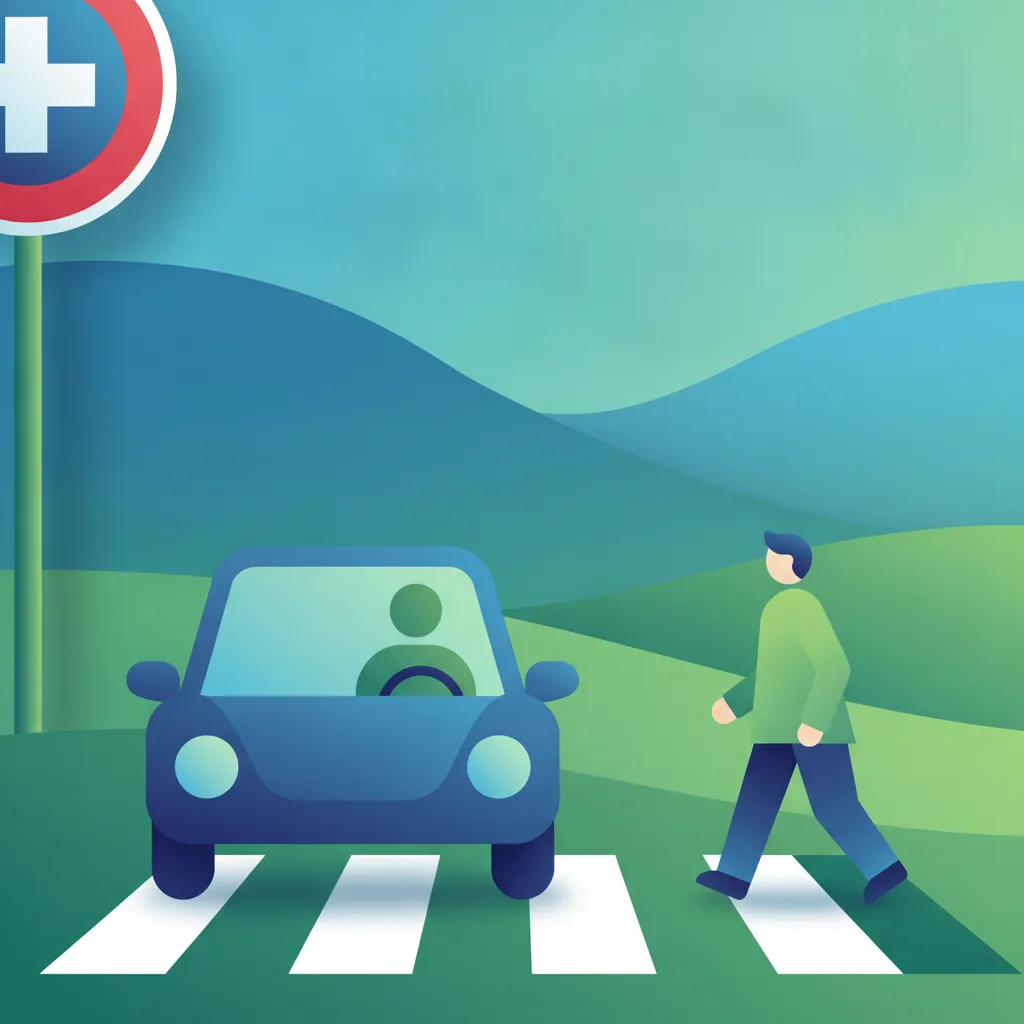
Pedestrians are among the most vulnerable road users. In Switzerland, specific traffic rules grant them priority in various situations to ensure their safety. This page explains your duties as a driver at pedestrian crossings, intersections, and other areas, clarifying when you must stop and yield according to Swiss legislation.
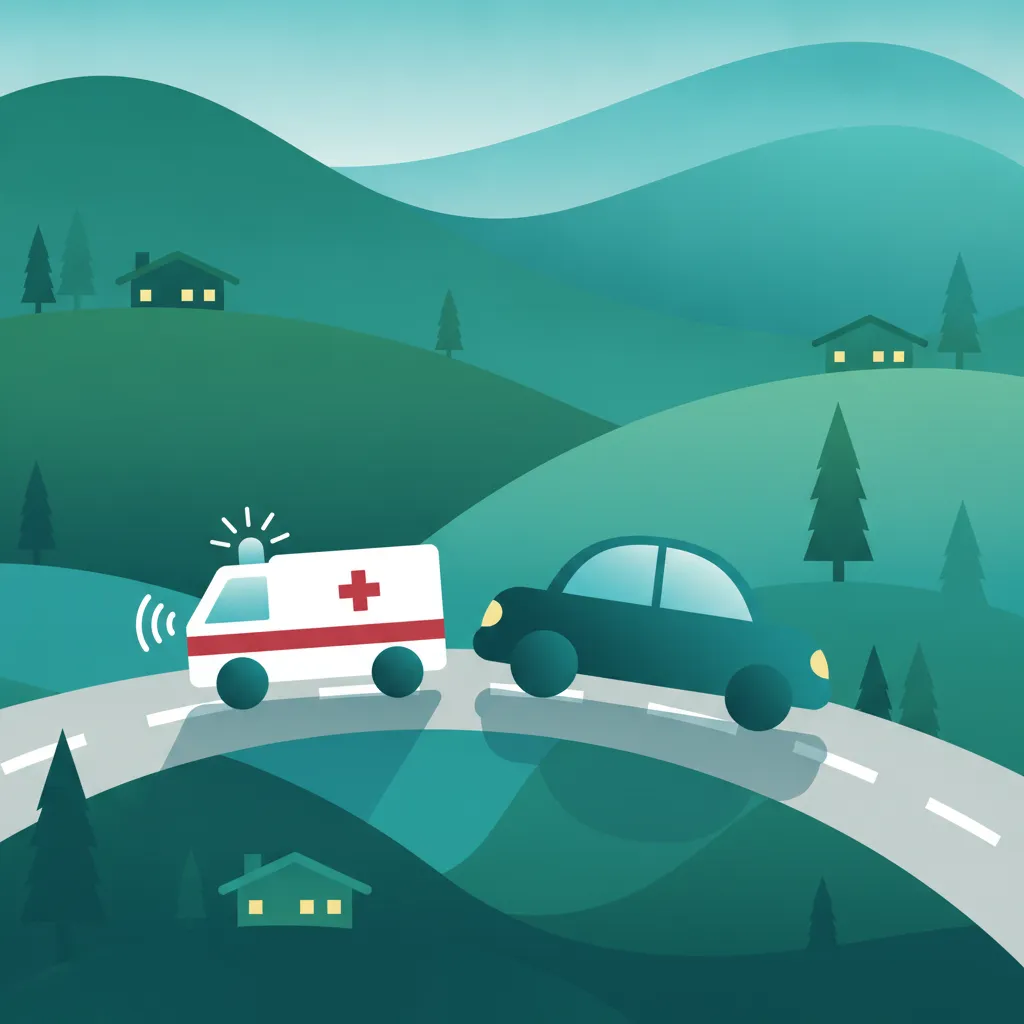
In Switzerland, drivers must yield immediate priority to emergency vehicles like police, ambulances, fire trucks, and customs vehicles when they are using both blue flashing lights (Blaulicht) and the alternating horn (Wechselklanghorn). Understanding these rules is vital for ensuring emergency responders can reach incidents without delay and is a key component of the Swiss driving theory exam. This page clarifies your responsibilities and how to react safely in various traffic situations.
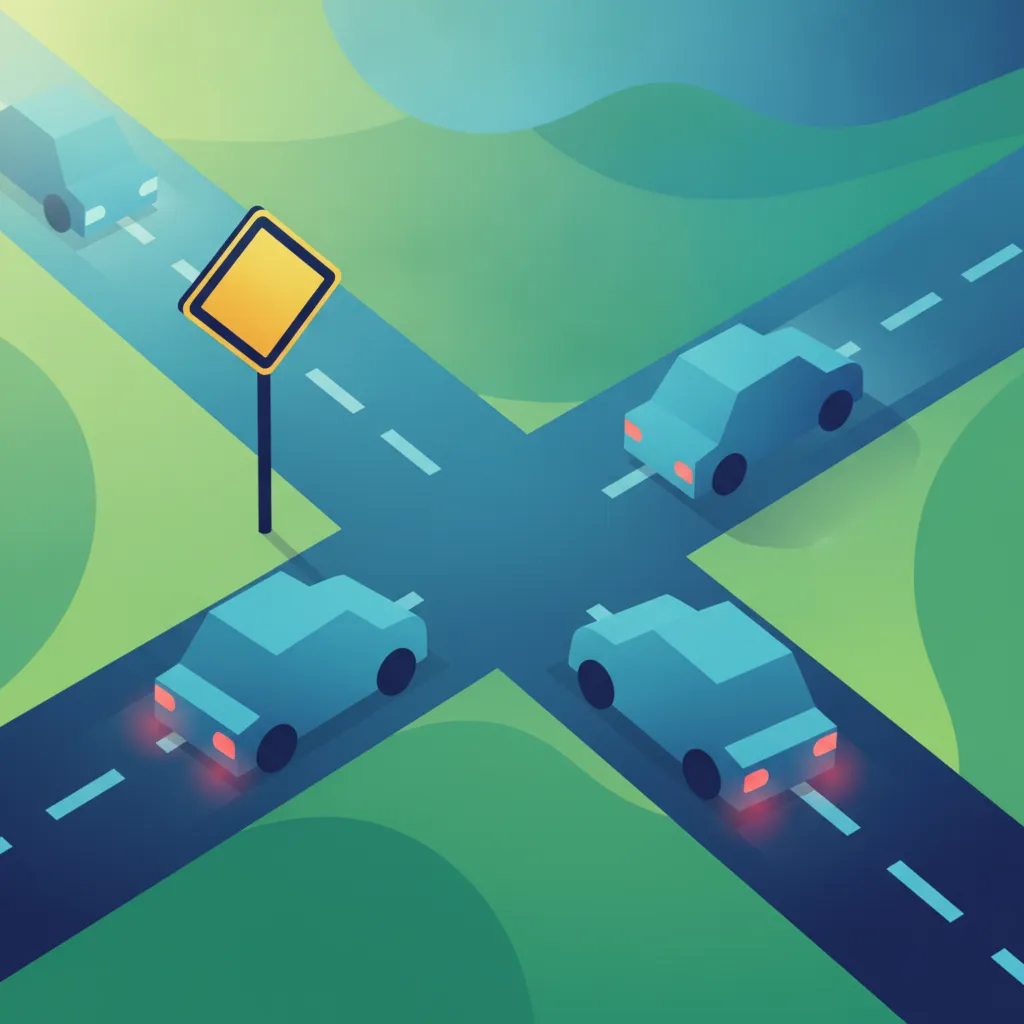
A priority road, known as 'Hauptstrasse' in Switzerland, is designed to ensure continuous traffic flow by granting precedence to vehicles traveling on it. This page explains how to identify these roads through specific signage and details the crucial rules drivers must follow when encountering them, especially at intersections. Mastering these rules is key to safe driving and correctly answering theory questions.
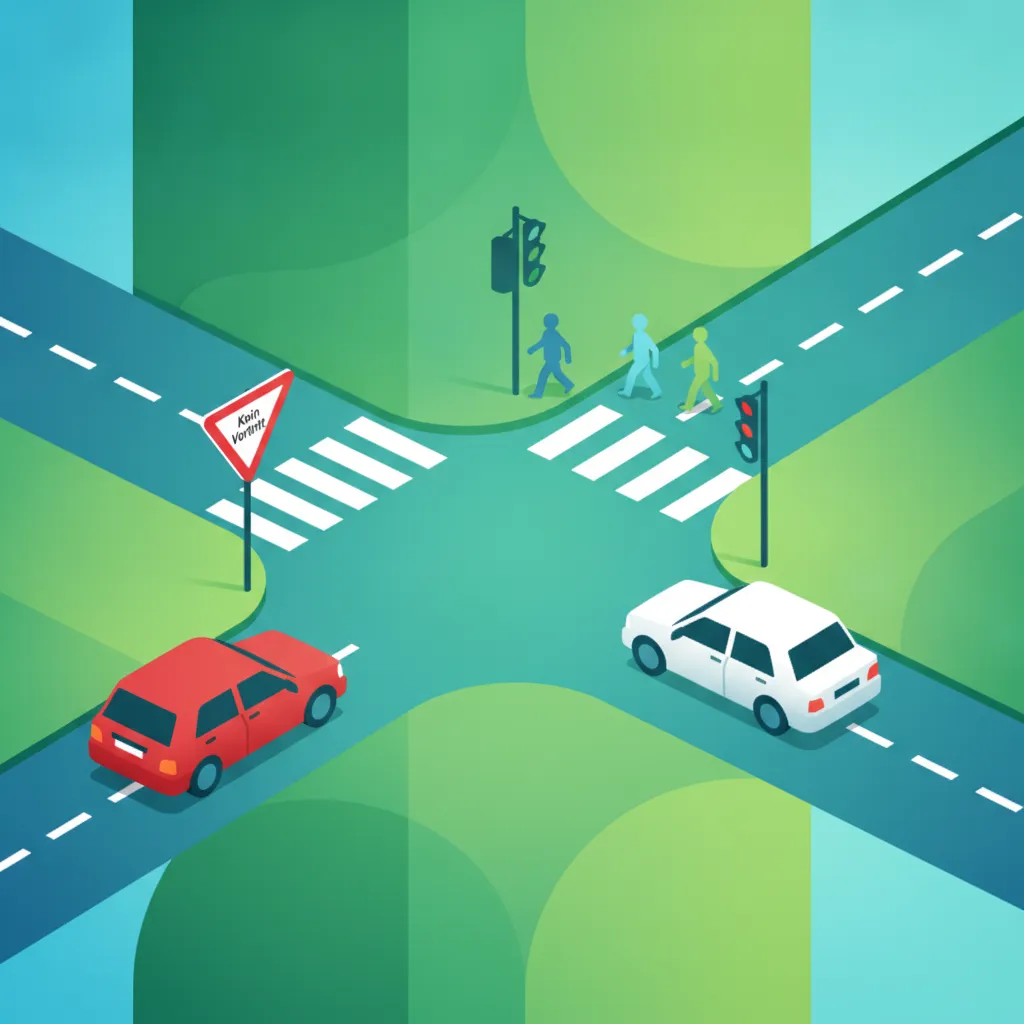
Giving way means allowing other road users to proceed first to ensure a smooth and safe flow of traffic. In Switzerland, specific rules and signs govern when and where you must yield. This page clarifies these essential "Vortrittsregeln" to help you navigate intersections, roundabouts, and pedestrian crossings correctly and confidently.
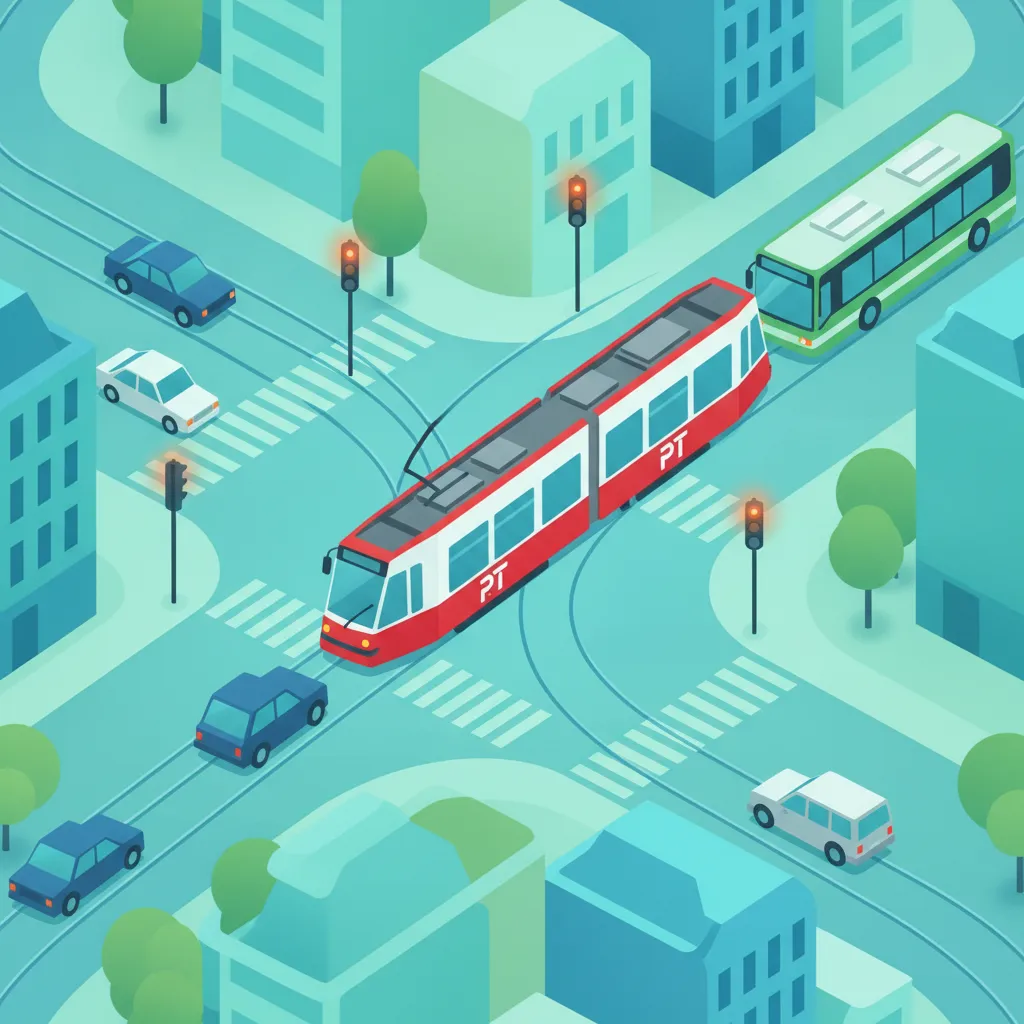
In Switzerland's urban environments, trams and certain public transport vehicles often have special priority. This is due to their fixed routes, size, and limited ability to maneuver or stop quickly. Knowing when and how to yield to them is essential for preventing accidents, maintaining traffic flow, and passing your Swiss driving theory exam.
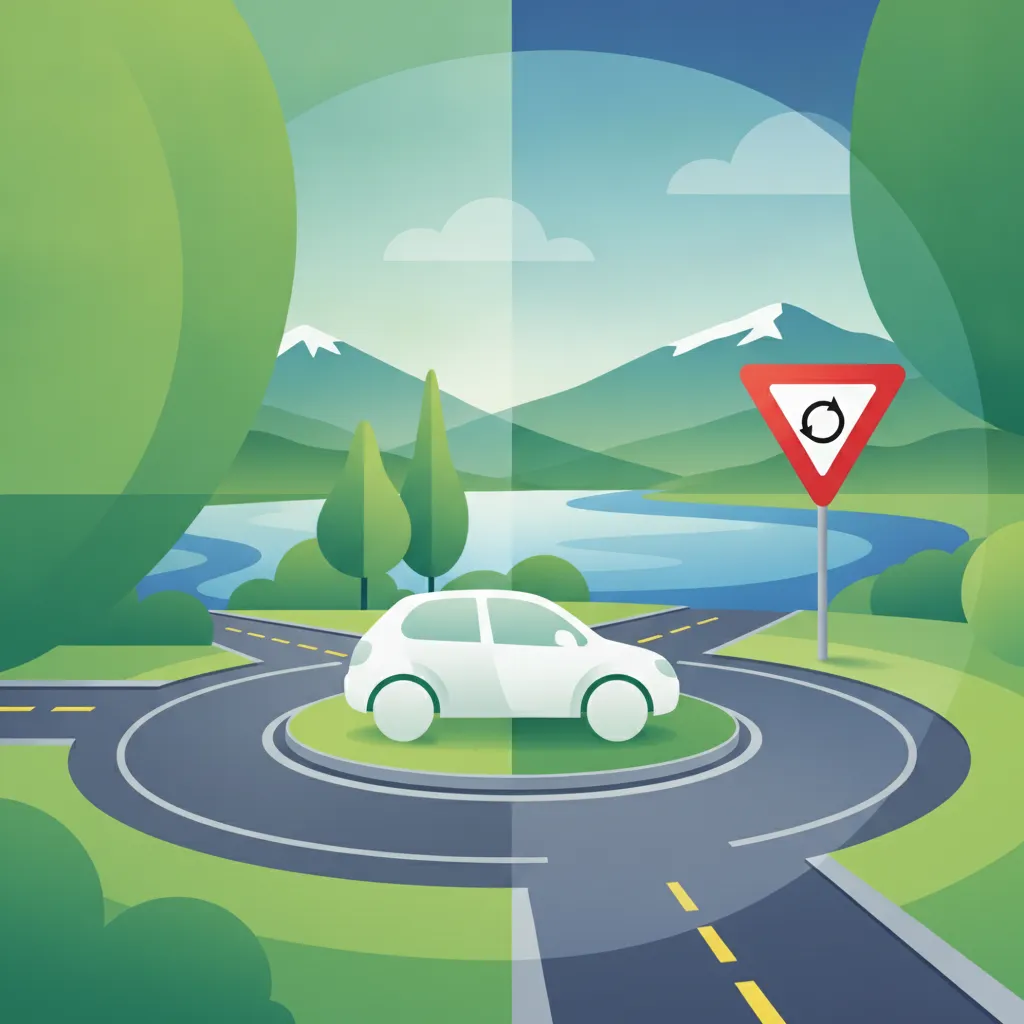
In Switzerland, roundabouts (or 'Kreisel') are designed to keep traffic flowing smoothly and reduce collision points compared to traditional intersections. The fundamental rule is that vehicles already circulating within the roundabout have priority. This page details how to safely approach, enter, circulate, and exit, respecting all priority rules as per Swiss traffic regulations and common practice.
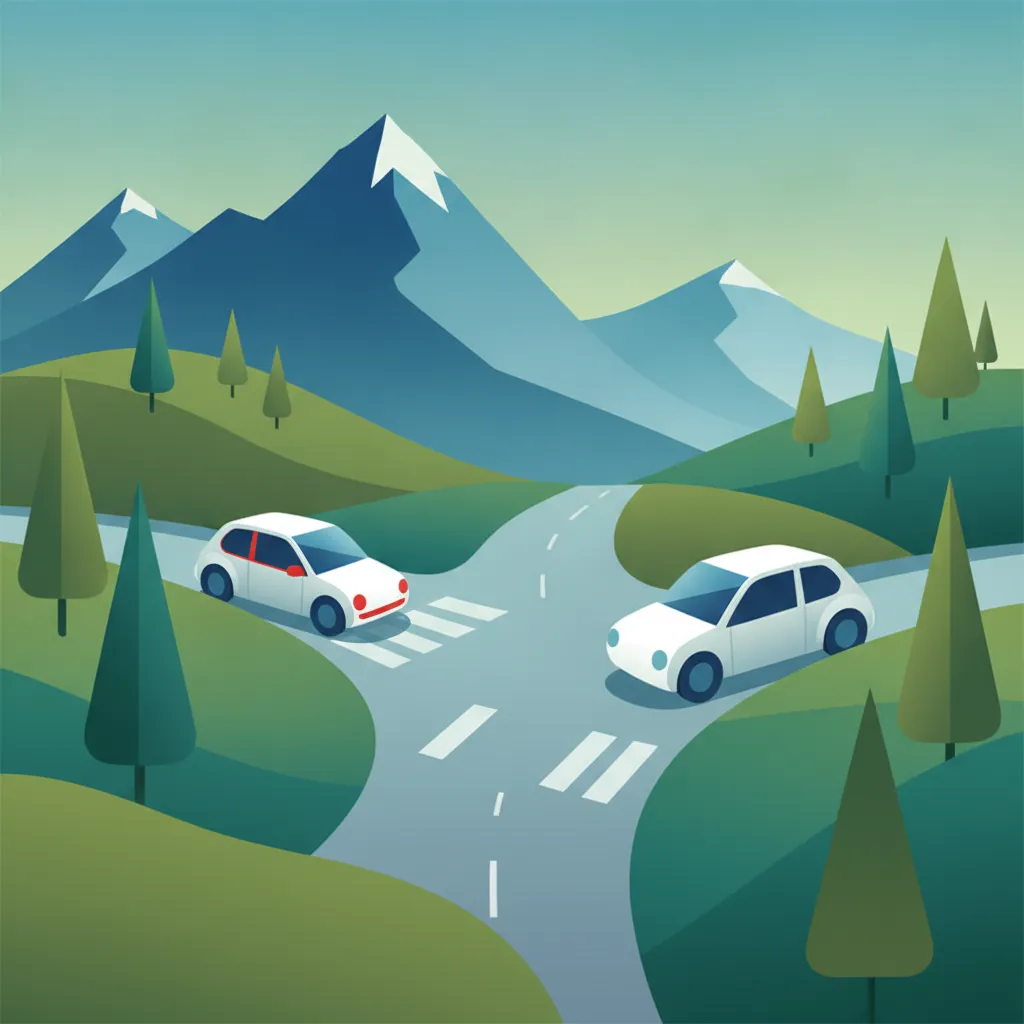
In Switzerland, not all intersections are regulated by traffic lights, stop signs, or 'give way' signs. At these uncontrolled intersections, drivers must apply general right-of-way rules and exercise caution. The primary principle is 'priority to the right,' but safe driving also requires careful observation, anticipation, and adapting to visibility conditions. This guide clarifies how to navigate these situations correctly.
Continue your learning journey by exploring more detailed articles on specific Swiss traffic regulations, hazard perception, or vehicle mechanics. Broaden your understanding with our expert guides to confidently pass your driving theory exam and become a proficient driver.
Explore Swiss Driving Theory Articles