
This lesson provides a foundational overview of the German heavy vehicle license categories C1, C1E, C, and CE. Understanding these classifications is essential for recognizing which vehicles you are legally permitted to operate and for identifying the corresponding requirements in your theory exam.

Lesson content overview
Welcome to the German Heavy Vehicle Driving License Theory – C1, C1E, C, CE course. This foundational lesson provides a comprehensive overview of the specific German driving licence categories C1, C1E, C, and CE. Understanding these classifications is crucial for anyone aspiring to operate heavy goods vehicles legally and safely within Germany, laying the groundwork for all subsequent learning modules.
Operating heavy vehicles requires a distinct set of skills and knowledge compared to passenger cars. The German legal framework, primarily outlined in the Fahrerlaubnis-Verordnung (FeV - Driving Licence Ordinance), categorizes these licences based on the vehicle's maximum permissible mass (MPM) and whether it involves a trailer. This ensures that drivers possess the appropriate qualifications for the specific type and weight of vehicle they intend to control.
The German heavy vehicle licence system is built upon several core principles designed to ensure road safety and protect infrastructure. At its heart lies the concept of Maximum Permissible Mass (MPM), which dictates the highest mass a vehicle or vehicle combination is legally allowed to have, including its own weight and any cargo. This definition is critical, as it directly determines which licence category is required.
Another fundamental distinction is between a rigid vehicle and a combination vehicle. A rigid vehicle is a single, self-contained unit, such as a truck without a trailer. A combination vehicle, on the other hand, consists of a towing unit (the rigid vehicle) coupled with one or more trailers or semitrailers. The complexity and mass of these combinations necessitate different licence categories, reflecting the increased skill and training required for their safe operation.
The legal classifications also consider the diverse professional contexts in which heavy vehicles are used, ranging from local deliveries with lighter trucks to long-distance international freight with the largest articulated vehicles. Consequently, driver qualification requirements, including age and prior driving experience, vary across categories to match the demands of each vehicle class. This structured approach underpins all aspects of heavy vehicle operation in Germany, from vehicle construction and braking systems to load securing and professional obligations.
Licence Category C1 in Germany grants permission to drive rigid vehicles with a Maximum Permissible Mass (MPM) ranging between 3,500 kg (3.5 tonnes) and 7,500 kg (7.5 tonnes). This category specifically pertains to single vehicles that are not towing heavy trailers. It is designed for drivers who need to operate medium-weight trucks, often used for tasks such as local deliveries, moving services, or specialized transport where a full-sized heavy goods vehicle is not required.
Holders of a Category C1 licence are permitted to tow a trailer, but its Maximum Permissible Mass (MPM) must not exceed 750 kg. This limitation ensures that any towed element remains light, minimizing the additional complexity and mass on the driver and the vehicle system. Exceeding this trailer weight limit would necessitate a different licence category, such as C1E.
A frequent misunderstanding among drivers is confusing the C1 category with the unrestricted Category C. While C1 has a clear upper mass limit of 7,500 kg for the rigid vehicle, Category C allows for rigid vehicles with an MPM exceeding 3,500 kg without an upper limit. This distinction is vital for legal compliance and safety.
Always verify the Maximum Permissible Mass (MPM) of the vehicle you intend to drive and any trailer you plan to tow. This information is typically found in the vehicle's registration documents.
For instance, a 5-tonne cargo van used by a logistics company for regional freight distribution, or a 7.5-tonne furniture removal truck, would typically fall under Category C1. Such vehicles are common for urban and inter-city transport routes where agility and moderate carrying capacity are key. Understanding C1 is also a prerequisite for understanding the C1E category, which builds upon these fundamental rigid vehicle limitations by allowing heavier trailers.
Licence Category C1E allows drivers to operate vehicle combinations where the towing vehicle falls under Category C1, and the trailer's Maximum Permissible Mass (MPM) exceeds 750 kg. Crucially, the total Maximum Permissible Mass (MPM) of the entire combination (towing vehicle + trailer) must not exceed 12,000 kg (12 tonnes). This category is specifically designed for situations where a medium-weight truck needs to haul a substantial trailer, expanding its load-carrying capacity beyond what C1 permits alone.
The C1E licence is particularly valuable for operators who need greater flexibility in transport tasks, such as tradespeople hauling heavy equipment, or smaller haulage companies transporting specific goods that require both a truck and a significant trailer. It allows for increased load capacity without requiring the full heavy goods vehicle licence (Category CE), which covers much larger and heavier combinations.
The primary rule for C1E is the strict 12,000 kg total combination MPM limit. While the trailer's MPM must exceed 750 kg, its individual weight, along with the towing vehicle's weight, must ensure the combined total stays within this threshold. This is a common point of misunderstanding, as some drivers mistakenly believe C1E permits unlimited trailer mass as long as the towing vehicle is C1. However, all components of the combination are subject to the overarching 12-tonne limit.
Consider an example: a 5-tonne rigid truck (Category C1 vehicle) pulling a 6-tonne trailer. The combined MPM is 11 tonnes, which falls within the 12-tonne limit for Category C1E. This combination would be permissible for a driver holding a C1E licence. Conversely, if the same 5-tonne truck were to pull an 8-tonne trailer, the total combination mass would be 13 tonnes, exceeding the C1E limit and requiring a higher category licence (CE). Proper calculation of total mass, including the vehicle's unladen weight, fuel, driver, and cargo, is essential for C1E drivers.
Licence Category C permits the driving of rigid vehicles with a Maximum Permissible Mass (MPM) exceeding 3,500 kg (3.5 tonnes), with no upper mass limit for the rigid vehicle itself. This category represents the entry point into operating what are commonly known as "heavy goods vehicles" or "heavy trucks." Unlike C1, which has a 7,500 kg ceiling, Category C allows for the operation of the largest single rigid trucks on German roads.
This licence is essential for professional drivers involved in various sectors, from construction (e.g., operating dump trucks) to municipal services (e.g., refuse collection vehicles) and long-distance freight distribution with single-unit trucks. It signifies a higher level of qualification due to the increased dimensions, mass, and complexity of these vehicles.
Similar to C1, Category C allows the towing of a trailer, but its Maximum Permissible Mass (MPM) must not exceed 750 kg. This means that while the rigid vehicle itself can be very heavy, any attached trailer must be relatively light. If a heavier trailer is required, the driver would need the Category CE licence.
Do not confuse the permission to drive heavy rigid vehicles with the permission to tow heavy trailers. Category C specifically limits trailers to an MPM of 750 kg; anything heavier requires a CE licence.
A common example of a Category C vehicle is a 20-tonne dump truck used on a construction site, or a 26-tonne refrigerated truck making long-haul deliveries as a single unit. These vehicles are substantial in size and weight, demanding advanced driving skills and an in-depth understanding of vehicle dynamics, braking systems, and load distribution principles. Category C forms the foundation for the ultimate heavy vehicle licence, CE, by covering the towing unit component of the largest vehicle combinations.
Licence Category CE is the highest level of heavy vehicle driving licence in Germany. It permits the operation of combination vehicles where the towing vehicle falls under Category C, and the trailer's Maximum Permissible Mass (MPM) exceeds 750 kg. Crucially, there is no upper limit on the total combination mass. This means that drivers with a CE licence are qualified to operate the largest and heaviest truck-and-trailer combinations permissible on German and European roads.
This licence is indispensable for professional drivers engaged in international freight, container transport, heavy haulage, and intermodal logistics. It covers everything from articulated lorries (tractor-semitrailer combinations) to road trains (trucks with multiple trailers), which are central to the global supply chain. The demands on a CE driver are significant, requiring comprehensive knowledge of complex coupling mechanisms, advanced braking systems for multiple units, and intricate load securing techniques.
With no upper limit on total combination MPM (as long as individual vehicle limits are respected), CE drivers have the broadest scope for heavy transport. The primary condition is that the trailer's MPM must be greater than 750 kg, necessitating specialized training beyond what Category C provides for rigid vehicles. It's important to remember that the CE licence is always issued in conjunction with Category C; one cannot obtain CE without first qualifying for C.
An illustrative example is a 25-tonne tractor unit pulling a 30-tonne container semitrailer, resulting in a gross combination weight of 55 tonnes or more, depending on axle configurations and specific regulations. Such operations are a daily sight on Autobahnen and require exceptional skill in maneuvering, turning, and reversing these massive vehicles. Understanding the interaction between the towing vehicle and the trailer, including how they behave under braking and acceleration, is paramount for safety.
Holding the appropriate licence category is not merely a bureaucratic requirement; it is a fundamental legal obligation under German traffic law, primarily governed by the Fahrerlaubnis-Verordnung (FeV) and the Straßenverkehrs-Ordnung (StVO). These regulations are designed to ensure that every driver operating a heavy vehicle possesses the necessary training, skills, and experience to do so safely.
Failure to hold the correct licence category for the vehicle or combination being driven constitutes a serious offence, often treated as "driving without a valid driving licence" or "driving despite a driving prohibition." The consequences can be severe, ranging from substantial fines and penalty points to the revocation of driving privileges. In cases involving accidents, the legal repercussions can escalate significantly, potentially leading to criminal charges and considerable civil liability for damages. This rigorous legal framework underscores the professional responsibility incumbent upon all heavy vehicle drivers.
The rationale behind these strict rules is rooted in public safety and infrastructure protection. Heavy vehicles, due to their size, weight, and momentum, pose a much greater risk in the event of an accident than lighter vehicles. They also exert considerable stress on road surfaces, bridges, and tunnels. Therefore, ensuring drivers are adequately qualified directly contributes to reducing accident frequency and severity, while also preserving the quality of road infrastructure. Regular checks of licence validity and vehicle compliance are routine by traffic police and transport authorities throughout Germany.
Even experienced drivers can sometimes fall prey to common misunderstandings or unintentionally commit violations regarding heavy vehicle licence categories and regulations. Awareness of these pitfalls is key to maintaining legal compliance and ensuring road safety.
The operation of heavy vehicles, and indeed the necessity for specific licence categories, is profoundly influenced by various contextual factors. These factors can significantly impact vehicle handling, safety, and legal compliance, establishing clear cause-and-effect relationships that drivers must understand.
Understanding the specific terminology associated with heavy vehicle licences and operations is vital for all aspiring and current professional drivers in Germany.
These scenarios illustrate how different German heavy vehicle licence categories apply in real-world transport situations, highlighting the importance of correct classification.
Scenario 1: Regional Parcel Delivery A driver with a German Category C1 licence is hired to transport parcels for a regional logistics company. The company provides a 4.8-tonne cargo van, which has an MPM of 7,000 kg. The driver loads 1.5 tonnes of parcels. The total mass (vehicle + load) is 6.3 tonnes, which is below the 7,500 kg limit for Category C1. No trailer is involved. This operation is permissible for the C1 licence holder.
Scenario 2: Building Materials Transport with Trailer A construction company requires a driver to transport building materials. They have a 6-tonne rigid truck (Category C1 vehicle) and need to tow a trailer with heavy machinery weighing 4.5 tonnes (trailer MPM). The combined MPM of the truck and trailer is 10.5 tonnes. The driver holds a Category C1 licence. Since the trailer's MPM exceeds 750 kg and the total combination MPM (10.5 tonnes) exceeds the 7,500 kg limit of C1 (for a single rigid vehicle), a Category C1E licence is required. Driving this combination with only a C1 licence would be illegal.
Scenario 3: Long-Haul Freight with Articulated Lorry A professional freight driver is tasked with transporting a full container load across Germany using a 20-tonne tractor unit and a 25-tonne container semitrailer. The total combination mass is 45 tonnes. This driver must hold a Category CE licence, which permits the operation of heavy combination vehicles with no upper mass limit (provided individual vehicle limits are respected). Operating this vehicle combination legally and safely on the Autobahn with a CE licence demonstrates full compliance with German heavy vehicle regulations.
A thorough understanding of German heavy vehicle driving licence categories C1, C1E, C, and CE is fundamental for any driver aspiring to operate trucks and their combinations. Each category is meticulously defined by the Maximum Permissible Mass (MPM) of the vehicle or combination, distinguishing between rigid vehicles and various trailer setups.
These classifications are not arbitrary; they are the bedrock of road safety and legal accountability in heavy vehicle transport. They ensure that drivers receive appropriate training for the specific challenges associated with different vehicle sizes, weights, and complexities. Compliance with these regulations is mandatory, and violations carry significant legal consequences. Beyond mere legality, a deep understanding of these categories, coupled with insights into load distribution, braking systems, and situational awareness, is crucial for safe and efficient operation of heavy vehicles on German roads.
This lesson establishes the foundational framework for German heavy vehicle licensing by defining four categories (C1, C1E, C, CE) based on Maximum Permissible Mass and vehicle type. C1 and C cover rigid vehicles with different weight ceilings (7,500 kg vs unlimited), while C1E and CE extend these by permitting heavier trailers within specific combination limits. Understanding the rigid versus combination distinction, along with the exact weight thresholds (3,500 kg, 7,500 kg, 12,000 kg), is essential for both legal compliance and passing the theory exam. The critical errors to avoid are confusing category limits, underestimating trailer mass, and misclassifying tractor units with attached trailers as rigid vehicles.
A short set of high-value points that capture the most important learning from this lesson.
Maximum Permissible Mass (MPM) is the primary factor determining which license category is required for any heavy vehicle or combination.
Category C1 covers rigid vehicles between 3,500 kg and 7,500 kg, while Category C has no upper limit for rigid vehicles over 3,500 kg.
C1E permits combinations with a total MPM up to 12,000 kg, where the towing vehicle is C1-compliant and the trailer exceeds 750 kg.
Category CE allows operation of the heaviest combinations with no upper limit on total mass, but requires the towing vehicle to be Category C.
A tractor unit (Sattelzugmaschine) becomes a combination vehicle when a semitrailer is attached, changing the applicable license category.
Explore all units and lessons included in this driving theory course.
Category C1: rigid vehicles 3,500–7,500 kg, trailers up to 750 kg only.
Category C1E: C1 towing vehicle + trailer over 750 kg, combined total must not exceed 12,000 kg.
Category C: rigid vehicles over 3,500 kg with no upper limit, trailers limited to 750 kg.
Category CE: Category C vehicle pulling trailer over 750 kg, with no upper limit on total combination mass.
Trailer MPM must always be verified from registration documents; visual assessment alone is unreliable.
Assuming any small trailer falls under the 750 kg limit without checking its actual Maximum Permissible Mass from official documents.
Believing C1E permits unlimited trailer weight as long as the towing vehicle is C1, forgetting the 12,000 kg total combination limit.
Confusing Category C (unlimited rigid vehicles) with Category C1 (capped at 7,500 kg) when determining which license is needed.
Operating a tractor unit with an attached semitrailer under a rigid vehicle license, not recognizing it has become a combination vehicle.
Overlooking permanently attached equipment (cranes, platforms) when calculating vehicle mass and determining license requirements.
Lesson content overview
A short set of high-value points that capture the most important learning from this lesson.
Maximum Permissible Mass (MPM) is the primary factor determining which license category is required for any heavy vehicle or combination.
Category C1 covers rigid vehicles between 3,500 kg and 7,500 kg, while Category C has no upper limit for rigid vehicles over 3,500 kg.
C1E permits combinations with a total MPM up to 12,000 kg, where the towing vehicle is C1-compliant and the trailer exceeds 750 kg.
Category CE allows operation of the heaviest combinations with no upper limit on total mass, but requires the towing vehicle to be Category C.
A tractor unit (Sattelzugmaschine) becomes a combination vehicle when a semitrailer is attached, changing the applicable license category.
Explore all units and lessons included in this driving theory course.
Category C1: rigid vehicles 3,500–7,500 kg, trailers up to 750 kg only.
Category C1E: C1 towing vehicle + trailer over 750 kg, combined total must not exceed 12,000 kg.
Category C: rigid vehicles over 3,500 kg with no upper limit, trailers limited to 750 kg.
Category CE: Category C vehicle pulling trailer over 750 kg, with no upper limit on total combination mass.
Trailer MPM must always be verified from registration documents; visual assessment alone is unreliable.
Assuming any small trailer falls under the 750 kg limit without checking its actual Maximum Permissible Mass from official documents.
Believing C1E permits unlimited trailer weight as long as the towing vehicle is C1, forgetting the 12,000 kg total combination limit.
Confusing Category C (unlimited rigid vehicles) with Category C1 (capped at 7,500 kg) when determining which license is needed.
Operating a tractor unit with an attached semitrailer under a rigid vehicle license, not recognizing it has become a combination vehicle.
Overlooking permanently attached equipment (cranes, platforms) when calculating vehicle mass and determining license requirements.
Explore search topics learners often look for when studying Overview of Licence Categories C1, C1E, C, CE. These topics reflect common questions about road rules, driving situations, safety guidance, and lesson level theory preparation for learners in Germany.
Browse additional driving theory lessons that cover connected traffic rules, road signs, and common driving situations related to this topic. Improve your understanding of how different rules interact across everyday traffic scenarios.
Understand the specific German driving licence categories C1, C1E, C, and CE. This lesson details vehicle weight limits, definitions for rigid trucks versus combinations, and the necessary driver qualifications for each category.
This lesson defines the specific vehicle types covered by the German Category B license, focusing on passenger cars and light commercial vehicles. It details the regulations concerning maximum permissible gross vehicle weight and the legal limits for towing trailers. You will learn to identify which vehicles fall under this category according to German and EU standards to ensure full compliance.

This lesson covers the dimensional limits for heavy vehicles, focusing on height, width, and length restrictions. It explains how to interpret clearance signage for bridges, tunnels, and overhead obstacles, and discusses the implications for route planning. The content also addresses the importance of understanding turning radii and swept paths to avoid collisions.
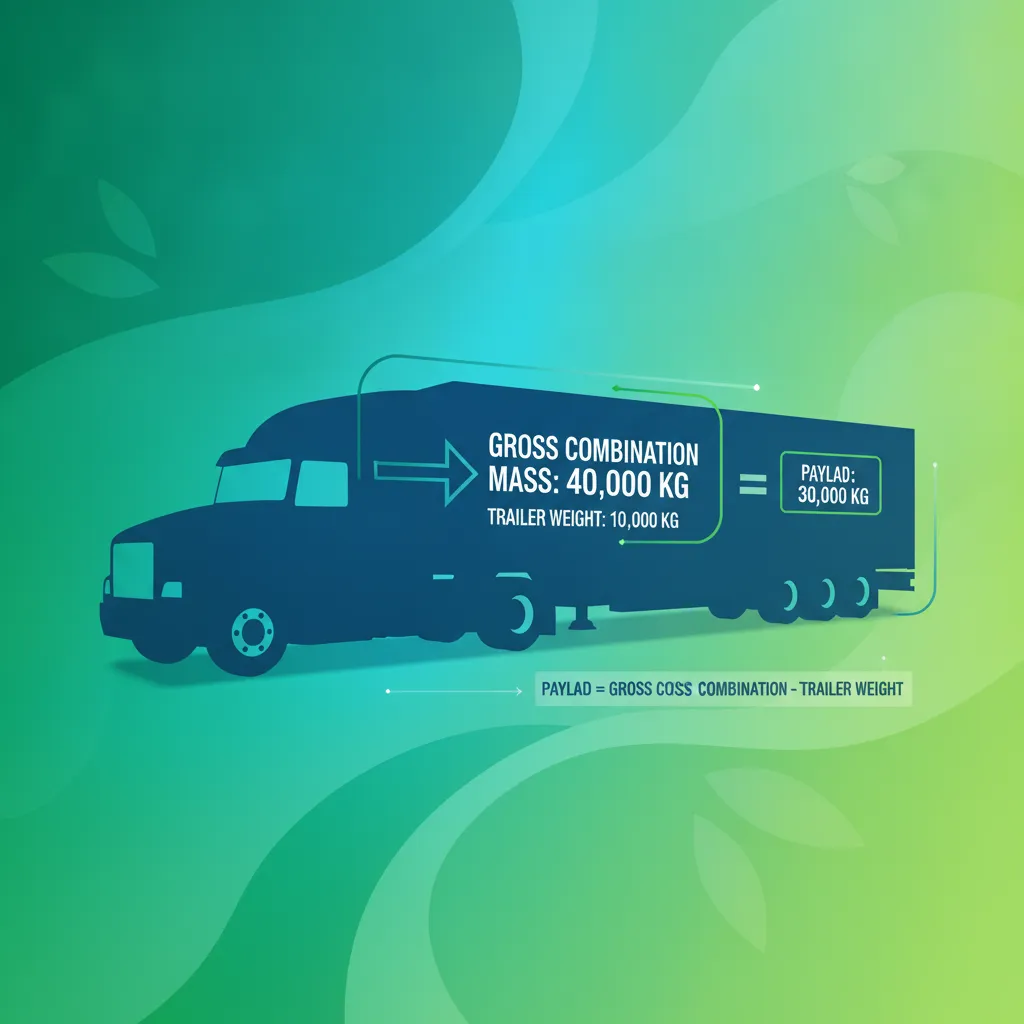
This lesson teaches how to calculate the payload and gross combination mass (GCM) for vehicle combinations. It explains the difference between vehicle mass and payload, and introduces the concept of tongue load and its impact on handling and braking. The content provides practical examples and calculation formulas for determining permissible loads for safe operation.
This lesson provides a detailed breakdown of the German licence categories D1, D1E, D, and DE. It explains the legal definitions, including permissible vehicle dimensions, passenger capacity, and rules for operating vehicle combinations. Key regulations from the Straßenverkehrs-Ordnung (StVO) pertaining to passenger transport are examined to provide a solid legal foundation for professional driving.

This lesson focuses on the importance of thorough route planning for heavy vehicles, taking into account dimensional and weight limits. It discusses how to use mapping tools and road signage to identify bridges, tunnels, and roads with restrictions. The content also covers how to plan alternative routes to avoid impassable areas.
This lesson focuses on the distribution of loads across axle groups and the legal limits for axle loads. It explains the importance of correct weight distribution to avoid axle overloading, which can lead to road damage and safety hazards. The content also covers methods for measuring axle loads and the legal requirements for maintaining proper axle load limits.

This lesson explores the legal framework governing heavy vehicle operation in Germany, focusing on the Straßenverkehrs-Ordnung (StVO) and specific commercial transport regulations. It details the professional duty of care required from drivers, including responsibilities for vehicle inspection and documentation. You will understand the enforcement mechanisms and potential penalties for non-compliance.
This lesson contrasts the dynamic and operational characteristics of heavy vehicles with those of passenger cars. It explains how greater mass and inertia influence braking distance, turning radius, and vehicle stability. The content also addresses visibility challenges, the impact of load on handling, and the necessity for different driving strategies.

This lesson explains the concepts of permissible total mass and actual mass, as well as the risks and legal consequences of overloading. It discusses how exceeding mass limits can lead to fines, increased stopping distances, and a higher risk of instability. Additionally, the content highlights the impact of overloading on vehicle wear and legal liabilities.

This lesson covers the general permissions and limitations that come with holding a German Category B driving license. It clarifies the conditions for license eligibility, including medical fitness and mandatory vehicle insurance coverage. The content also addresses potential restrictions, the process for obtaining special permits, and the circumstances that can lead to a temporary or permanent driving ban.
Explore the key distinctions between heavy vehicle licence categories (C1, C1E, C, CE) and standard passenger car licences in Germany. This lesson covers the unique legal framework and responsibilities associated with professional driving.
This lesson contrasts the dynamic and operational characteristics of heavy vehicles with those of passenger cars. It explains how greater mass and inertia influence braking distance, turning radius, and vehicle stability. The content also addresses visibility challenges, the impact of load on handling, and the necessity for different driving strategies.
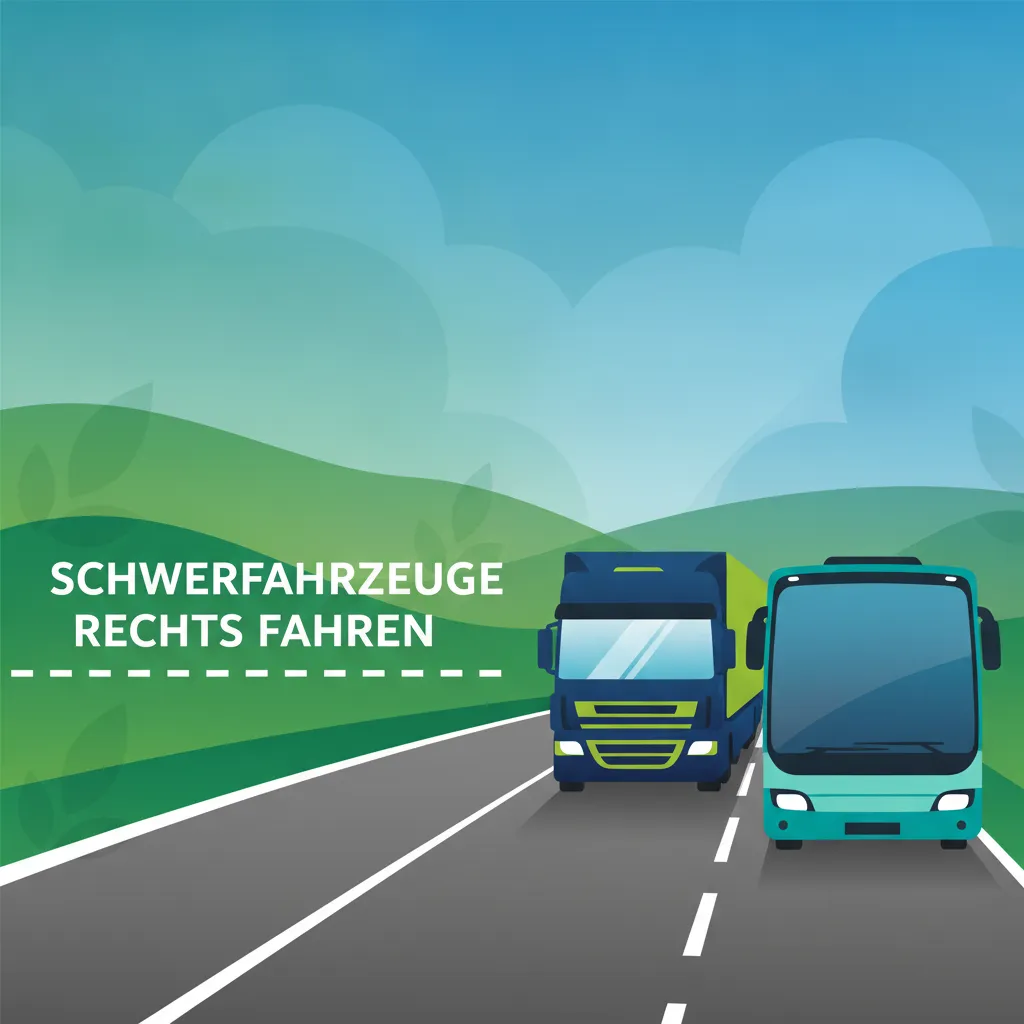
This lesson explains the specific regulations for operating heavy vehicles on Autobahnen, including speed limits, lane discipline, and overtaking rules. It discusses the use of dedicated truck lanes and the importance of maintaining appropriate following distances. The content also covers procedures for merging and exiting high-speed roads safely.
This lesson defines the specific vehicle types covered by the German Category B license, focusing on passenger cars and light commercial vehicles. It details the regulations concerning maximum permissible gross vehicle weight and the legal limits for towing trailers. You will learn to identify which vehicles fall under this category according to German and EU standards to ensure full compliance.
This lesson covers the dimensional limits for heavy vehicles, focusing on height, width, and length restrictions. It explains how to interpret clearance signage for bridges, tunnels, and overhead obstacles, and discusses the implications for route planning. The content also addresses the importance of understanding turning radii and swept paths to avoid collisions.

This lesson provides instruction on the rules and best practices for operating a large passenger vehicle on the Autobahn. It covers the principles of strict lane discipline, regulations for minimum speed, and correct procedures for overtaking and merging. The importance of maintaining significantly increased following distances at high speeds and planning for exits well in advance is a key focus.
This lesson provides a detailed breakdown of the German licence categories D1, D1E, D, and DE. It explains the legal definitions, including permissible vehicle dimensions, passenger capacity, and rules for operating vehicle combinations. Key regulations from the Straßenverkehrs-Ordnung (StVO) pertaining to passenger transport are examined to provide a solid legal foundation for professional driving.
This lesson explores the legal framework governing heavy vehicle operation in Germany, focusing on the Straßenverkehrs-Ordnung (StVO) and specific commercial transport regulations. It details the professional duty of care required from drivers, including responsibilities for vehicle inspection and documentation. You will understand the enforcement mechanisms and potential penalties for non-compliance.
This lesson focuses on the importance of thorough route planning for heavy vehicles, taking into account dimensional and weight limits. It discusses how to use mapping tools and road signage to identify bridges, tunnels, and roads with restrictions. The content also covers how to plan alternative routes to avoid impassable areas.

This lesson provides a detailed overview of the legal framework governing the AM licence in Germany. It explains the classification of vehicles like mopeds and scooters based on engine displacement, power output, and weight. Learners will understand the official age requirements, licensing procedures, and fundamental StVO regulations.
This lesson explains the concepts of permissible total mass and actual mass, as well as the risks and legal consequences of overloading. It discusses how exceeding mass limits can lead to fines, increased stopping distances, and a higher risk of instability. Additionally, the content highlights the impact of overloading on vehicle wear and legal liabilities.
Find clear answers to common questions learners have about Overview of Licence Categories C1, C1E, C, CE. Learn how the lesson is structured, which driving theory objectives it supports, and how it fits into the overall learning path of units and curriculum progression in Germany. These explanations help you understand key concepts, lesson flow, and exam focused study goals.
Category C covers heavy goods vehicles with a permissible total mass exceeding 3,500 kg, whereas category C1 is restricted to vehicles between 3,500 kg and 7,500 kg.
Yes, adding the letter E to your category (e.g., C1E or CE) indicates that you are authorized to operate combinations where the trailer or semi-trailer exceeds the basic mass limits of the rigid vehicle category.
The classification is based on the German driver licensing regulations (FeV). While the mass limits define the category, the practical application regarding professional qualification might require additional driver certification.
Yes, the theory exam frequently tests your ability to identify the correct license category based on the vehicle's permissible total mass and the presence of a trailer.
Begin your targeted revision now. Use our practice search to quickly find specific German driving theory questions. Filter by StVO rules, road signs, or hazard perception to create your focused study plan. Master challenging areas and prepare confidently for your theoretical driving test.