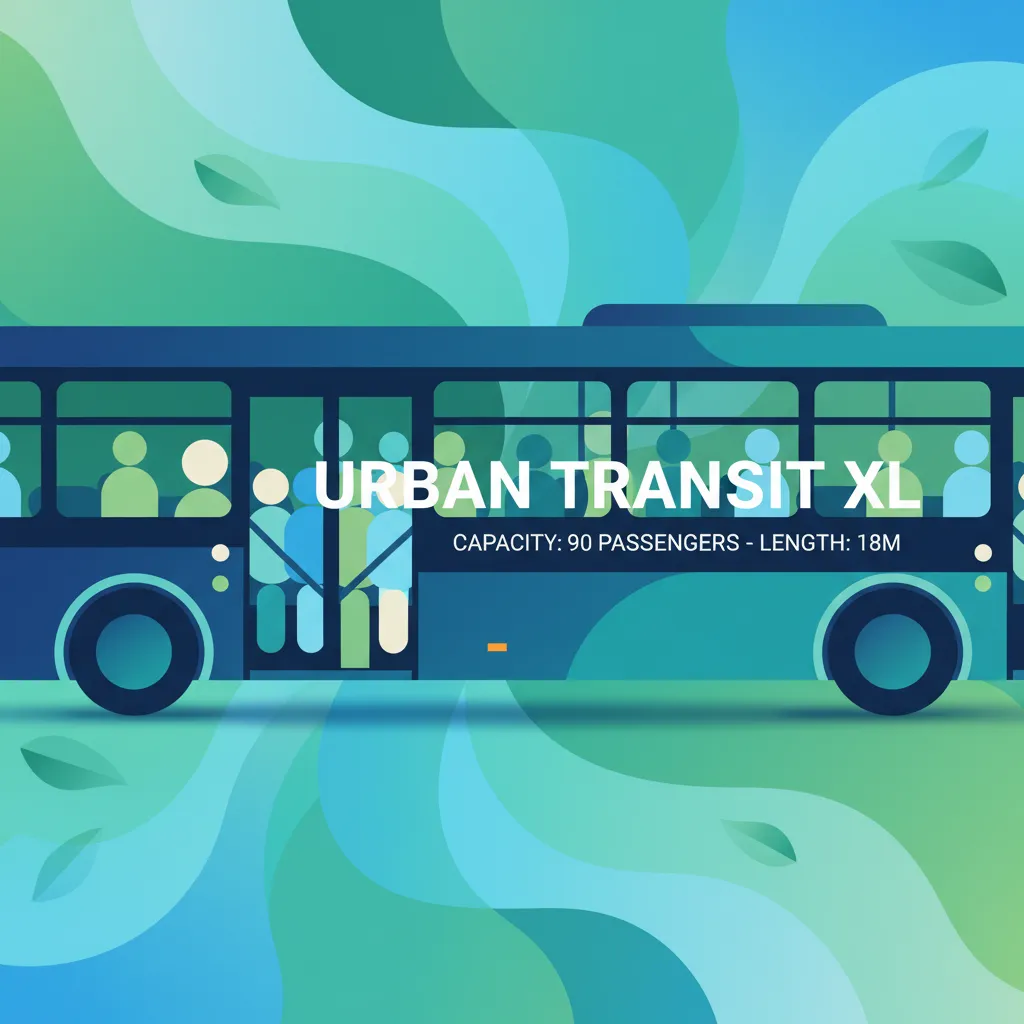
Welcome to the 'Vehicle Characteristics & Systems' unit! This lesson focuses on understanding the specific types of buses you'll be driving, their physical dimensions, and how passenger capacity and weight distribution impact safe operation. This knowledge is crucial for navigating Polish roads and passing your Category D theory exam.
Lesson content overview
Operating a bus safely and efficiently requires a deep understanding of its physical characteristics, legal classification, and operational limits. This lesson, part of the Polish Category D Driving Licence Theory Course for Bus Drivers, delves into the essential aspects of bus classification, key dimensional parameters, and crucial passenger capacity calculations. Mastering these concepts is fundamental for ensuring compliance with Polish road law, maintaining vehicle stability, and guaranteeing the safety and comfort of all passengers.
The physical attributes of a bus, from its overall length to its weight distribution, directly influence where it can legally operate, how it maneuvers in traffic, and the maximum load it can safely carry. Misinterpreting these factors can lead to serious consequences, including traffic violations, accidents, and even structural damage to roads or urban infrastructure. Therefore, aspiring professional drivers must grasp these core principles to make informed decisions on the road.
Buses are not a single, uniform type of vehicle. They are categorized based on their size, passenger capacity, and structural design, which directly impacts the type of driving licence required to operate them and the routes they can legally traverse. Polish law, aligned with European Union regulations, defines specific classes that professional drivers must distinguish.
In Poland, a Category D driving licence is required for operating any vehicle designed and constructed for the carriage of more than eight passengers in addition to the driver. This category encompasses a wide range of buses, from standard city buses to large articulated coaches. It is the primary licence for professional bus drivers.
Conversely, the Category D1 driving licence is a more restricted category. It permits the operation of vehicles designed and constructed for the carriage of not more than sixteen passengers in addition to the driver, with a maximum overall length not exceeding 8 metres. This licence is typically for smaller passenger transport, often referred to as minibuses.
Understanding the distinction between these two categories is the first step in ensuring legal compliance and matching your qualification to the vehicle you intend to drive. Driving a bus that falls under Category D with only a D1 licence is a serious violation.
A standard bus, often referred to as a rigid bus, is a single-frame vehicle without any articulation joint. These are the most common type of bus found in urban, inter-urban, and coach services. They are characterized by their robust, unitary construction.
The typical overall length for a standard rigid bus is up to 12 metres. They generally accommodate between 30 and 55 seated passengers, though designs vary. Their maneuverability is influenced by their wheelbase, which is the distance between the front and rear axles.
Standard buses are a workhorse of public transport due to their balance of capacity and maneuverability, making them suitable for a wide range of routes, including many city streets and highways.
Articulated buses are distinct for their two-section design, connected by a flexible, pivoting joint. This unique construction allows for a significantly greater passenger capacity while maintaining a degree of maneuverability comparable to, or sometimes even better than, a rigid bus in tight urban environments.
Their overall length can be substantially longer than standard buses, typically up to 25 metres. They are commonly designed to carry 90 to 120 passengers, including both seated and standing. The flexible joint enables the bus to 'bend' around corners, effectively reducing the turning circle required for such a long vehicle.
Articulated buses are primarily used on high-demand urban routes where passenger volume necessitates increased capacity. Their extended length does, however, require careful consideration when navigating narrow streets, complex intersections, and certain roundabouts.
Minibuses represent the smallest class of vehicles under the Category D licensing framework. As defined, they have an overall length not exceeding 8 metres and can carry up to 16 passengers in addition to the driver.
Minibuses are typically used for specific services such as shuttle routes, school transport, or private hire where large capacities are not needed but more than 8 passengers must be transported. They offer greater maneuverability and lower operational costs compared to full-sized buses. Drivers of minibuses must hold a Category D1 licence.
Understanding the physical dimensions of a bus is not merely a technical detail; it is crucial for safe driving, route planning, and adherence to traffic laws. Every aspect of a bus's size, from its length to its turning circle, has direct implications for its operation on public roads. Polish and EU regulations impose strict limits on these dimensions to ensure road compatibility, protect infrastructure, and enhance safety.
The overall length (L) of a bus is measured from the foremost point of the front bumper to the rearmost point of the rear bumper. This measurement includes any permanently attached equipment.
Specific maximum length limits apply based on the bus classification:
These limits are critical for route planning. A bus exceeding 12 metres (and not articulated) would be non-compliant, and certain urban routes, particularly in historic districts, may have signage restricting vehicles above a specific length, often 10 or 12 metres. Drivers must be aware of these restrictions and plan their routes accordingly to avoid blockages or damage.
The overall width (W) of a bus is the maximum dimension across the vehicle, usually measured across the widest point, excluding side mirrors, marker lights, and other small, non-structural components that can be folded or are outside the main body. For most road-legal vehicles, including buses, the maximum width is 2.55 metres.
The overall height (H) is measured from the ground to the highest point of the vehicle, including any fixed roof-mounted equipment like air conditioning units or luggage racks. For most buses, the maximum legal height is 4 metres. This dimension is paramount when approaching bridges, underpasses, tunnels, and low-hanging overhead obstacles such as wires or tree branches.
The wheelbase (WB) is the distance between the centre of the front axle and the centre of the rear axle. For articulated buses, it refers to the distance between axles within each section, or sometimes to the pivot point of the articulation.
A longer wheelbase generally provides a smoother ride and better high-speed stability. However, it also increases the vehicle's turning radius. This is a critical factor for drivers to consider when making turns, especially in confined spaces or navigating complex intersections. An articulated bus, despite its greater overall length, often has a more favorable effective turning capability due to its flexible joint, although the overall sweep of the vehicle in a turn remains significant.
The turning circle (TC) is the minimum diameter of the circle a vehicle can turn within. It is typically measured at the outermost wheel path (or sometimes the furthest point of the vehicle's body). A smaller turning circle indicates greater maneuverability.
Specific turning circle requirements are set to ensure that buses can negotiate standard road infrastructure:
Understanding your bus's turning circle is crucial for:
Passenger capacity is one of the most critical operational parameters for a bus. It directly affects the vehicle's safety, stability, braking performance, and compliance with legal weight limits. Professional drivers must understand how total capacity is determined and diligently manage passenger loads to prevent dangerous overloading.
Seating capacity (S) refers to the number of fixed seats installed in the vehicle. This is a straightforward count and is typically displayed prominently within the bus.
Standing capacity (ST), however, is more complex to determine. It is calculated based on the usable floor area available for standing passengers and the legally required space per standing person. In most European regulations, including Polish law, approximately 0.25 square metres (0.25 m²) of floor area is allocated per standing passenger.
The total passenger capacity (TC) is the sum of the seating capacity and the standing capacity (TC = S + ST). This number represents the absolute maximum number of occupants, excluding the driver, that the bus is legally permitted to carry. This total capacity is usually prominently displayed inside the bus, along with the number of seats and standees.
The Gross Vehicle Mass (GVM) is the maximum permissible total mass of the vehicle when fully loaded. This includes the empty weight of the vehicle, the weight of the driver, all passengers, their luggage, and all fluids (fuel, oil, etc.). Exceeding the GVM is illegal and extremely dangerous.
To calculate GVM, manufacturers use an average passenger weight. While this can vary, a commonly accepted average for a passenger is 75 kilograms (kg). Therefore, the weight contributed by passengers is estimated by multiplying the total passenger capacity by 75 kg.
GVM = Empty Vehicle Mass + Driver's Weight + (Total Passengers × Average Passenger Weight) + Luggage Weight + Fuel/Fluid Weight
Overloading a bus beyond its GVM has severe consequences:
Beyond the overall Gross Vehicle Mass (GVM), the way that weight is distributed across the vehicle's axles is equally critical. Improper weight distribution can compromise stability, increase wear and tear on specific components, and lead to serious safety issues, even if the total GVM is within limits.
Weight distribution refers to how the total mass of the vehicle, passengers, and cargo is allocated across the front, rear, and any intermediate axles. A balanced distribution ensures that each axle bears an appropriate load, maintaining optimal vehicle performance and safety.
Key factors influencing weight distribution include:
An imbalance, such as overloading the rear axle, can reduce steering response by lifting the front axle slightly, increase braking distances, and put excessive strain on rear tyres and suspension. Conversely, an overloaded front axle can make steering heavy and compromise front brake performance.
Polish regulations, in line with EU directives, set specific maximum permissible loads for individual axles. These axle load limits are designed to:
Typical axle load limits for buses include:
Drivers are responsible for ensuring that their vehicle's axle loads are within legal limits at all times. This often means encouraging passengers to distribute themselves evenly or carefully planning the placement of heavy luggage. Many modern buses are equipped with axle load indicators to assist drivers in monitoring this crucial parameter.
The operation of buses in Poland is governed by a robust legal framework derived from both national Polish legislation and broader European Union directives. These regulations are designed to standardize safety, environmental protection, and operational efficiency across member states.
The primary national legal act governing road traffic in Poland is the Ustawa Prawo o ruchu drogowym (Road Traffic Act). This act, along with implementing ordinances such as the Rozporządzenie Ministra Infrastruktury (Regulation of the Minister of Infrastructure), specifies the maximum permissible dimensions, weights, and technical conditions for vehicles, including buses. These regulations cover:
EU regulations, such as Directive 2009/16/EC on roadworthiness checks for commercial vehicles and Regulation (EC) No 3830/2004 concerning harmonized conditions for road transport, provide the overarching framework within which Polish law is developed. These directives ensure that buses operated across Europe adhere to common safety and technical standards.
Violating dimension, capacity, or weight regulations carries significant penalties under Polish law. These can include:
Understanding the theoretical aspects of bus classification, dimensions, and capacity is only half the battle. Professional drivers must translate this knowledge into practical, safe operational decisions every day. This involves careful route planning, adapting to dynamic driving conditions, and maintaining awareness of other road users.
Before embarking on any route, especially an unfamiliar one, drivers or dispatchers must consider the bus's dimensions.
The operational characteristics of a bus change significantly depending on external factors and its load state:
A bus's significant dimensions create unique challenges when interacting with other road users, especially vulnerable ones:
This lesson has provided a comprehensive overview of bus classification, dimensions, and capacity, vital knowledge for any professional operating vehicles in the Polish Category D driving licence class.
By internalizing these principles, professional bus drivers can ensure compliance, enhance safety for themselves and their passengers, and contribute to the smooth flow of road traffic in Poland.
This lesson covers the essential knowledge for Polish Category D bus drivers, distinguishing between licence categories (D for standard buses over 8 passengers, D1 for minibuses up to 16 passengers and 8 metres), bus types (rigid up to 12m, articulated up to 25m, minibuses up to 8m), and key dimensional parameters affecting route planning and maneuverability. It explains how to calculate passenger capacity by combining seating and standing areas, and how Gross Vehicle Mass and axle load limits must be respected to maintain vehicle stability and legal compliance. Understanding these physical characteristics and regulatory limits is critical for safe operation and passing theory exams.
A short set of high-value points that capture the most important learning from this lesson.
Category D licence covers buses for more than 8 passengers, while Category D1 is restricted to minibuses up to 16 passengers with maximum length of 8 metres.
Standard rigid buses are limited to 12 metres overall length, while articulated buses can reach up to 25 metres due to their two-section design.
The turning circle determines a bus's ability to navigate intersections and roundabouts, with articulated buses achieving tighter effective turns than their length suggests.
Passenger capacity combines fixed seating capacity with standing capacity calculated at approximately 0.25 m² per standing passenger.
Gross Vehicle Mass (GVM) includes the empty vehicle, driver, all passengers (averaging 75 kg each), luggage, and fuel, and must never be exceeded.
Explore all units and lessons included in this driving theory course.
Standard rigid bus maximum length: 12m; articulated bus maximum length: 25m; minibus (D1) maximum length: 8m.
Maximum width for buses is 2.55m; maximum height is 4m, requiring vigilance at bridges, tunnels, and underpasses.
Axle load limits typically cap the front steering axle at 8 tonnes and rear drive axle at 10 tonnes in Poland.
GVM formula: Empty Vehicle Mass + Driver (75kg) + (Total Passengers × 75kg) + Luggage + Fuel.
Articulated buses achieve tighter turning circles than rigid buses of similar overall length due to their flexible joint, despite being up to 25 metres long.
Confusing Category D and D1 licence requirements, leading to operating a vehicle without the correct licence classification.
Underestimating the turning radius of articulated buses and taking corners too tightly, risking off-tracking damage.
Failing to account for roof-mounted equipment when judging height clearance at bridges or tunnels.
Miscalculating passenger capacity by forgetting that standing area is also included in total capacity, not just seats.
Assuming an empty bus handles the same as a fully loaded one, when in reality braking distances and stability differ significantly.
Lesson content overview
A short set of high-value points that capture the most important learning from this lesson.
Category D licence covers buses for more than 8 passengers, while Category D1 is restricted to minibuses up to 16 passengers with maximum length of 8 metres.
Standard rigid buses are limited to 12 metres overall length, while articulated buses can reach up to 25 metres due to their two-section design.
The turning circle determines a bus's ability to navigate intersections and roundabouts, with articulated buses achieving tighter effective turns than their length suggests.
Passenger capacity combines fixed seating capacity with standing capacity calculated at approximately 0.25 m² per standing passenger.
Gross Vehicle Mass (GVM) includes the empty vehicle, driver, all passengers (averaging 75 kg each), luggage, and fuel, and must never be exceeded.
Explore all units and lessons included in this driving theory course.
Standard rigid bus maximum length: 12m; articulated bus maximum length: 25m; minibus (D1) maximum length: 8m.
Maximum width for buses is 2.55m; maximum height is 4m, requiring vigilance at bridges, tunnels, and underpasses.
Axle load limits typically cap the front steering axle at 8 tonnes and rear drive axle at 10 tonnes in Poland.
GVM formula: Empty Vehicle Mass + Driver (75kg) + (Total Passengers × 75kg) + Luggage + Fuel.
Articulated buses achieve tighter turning circles than rigid buses of similar overall length due to their flexible joint, despite being up to 25 metres long.
Confusing Category D and D1 licence requirements, leading to operating a vehicle without the correct licence classification.
Underestimating the turning radius of articulated buses and taking corners too tightly, risking off-tracking damage.
Failing to account for roof-mounted equipment when judging height clearance at bridges or tunnels.
Miscalculating passenger capacity by forgetting that standing area is also included in total capacity, not just seats.
Assuming an empty bus handles the same as a fully loaded one, when in reality braking distances and stability differ significantly.
Explore search topics learners often look for when studying Bus Classification, Dimensions, and Capacity. These topics reflect common questions about road rules, driving situations, safety guidance, and lesson level theory preparation for learners in Poland.
Browse additional driving theory lessons that cover connected traffic rules, road signs, and common driving situations related to this topic. Improve your understanding of how different rules interact across everyday traffic scenarios.
Understand the critical Polish and EU regulations on bus dimensions, Gross Vehicle Mass (GVM), and axle load limits. Learn how these factors impact safe operation and maneuverability in traffic.
This lesson details the speed limits applicable to buses in Poland across urban, rural, and motorway settings. It emphasizes how vehicle size and passenger load influence safe operating speeds and required stopping distances. The content also covers speed-control device usage and practical techniques for maintaining consistent speed while ensuring passenger comfort.
This lesson defines the scope of vehicles permitted under a Category B licence, primarily passenger cars up to 3,500 kg maximum permissible mass. It clarifies the rules on seating capacity and the regulations for towing trailers, distinguishing between a standard B licence and a B+E entitlement. Understanding these classifications ensures drivers operate vehicles legally and safely.

This lesson provides a detailed breakdown of vehicle classifications relevant to the Category C licence. It explains the concept of 'dopuszczalna masa całkowita' (permissible total weight) and how it defines a vehicle's category. Learners will identify different truck types, such as rigid vehicles, based on their axle configurations and understand the specific roadworthiness and registration requirements for each class, ensuring correct vehicle operation under the law.
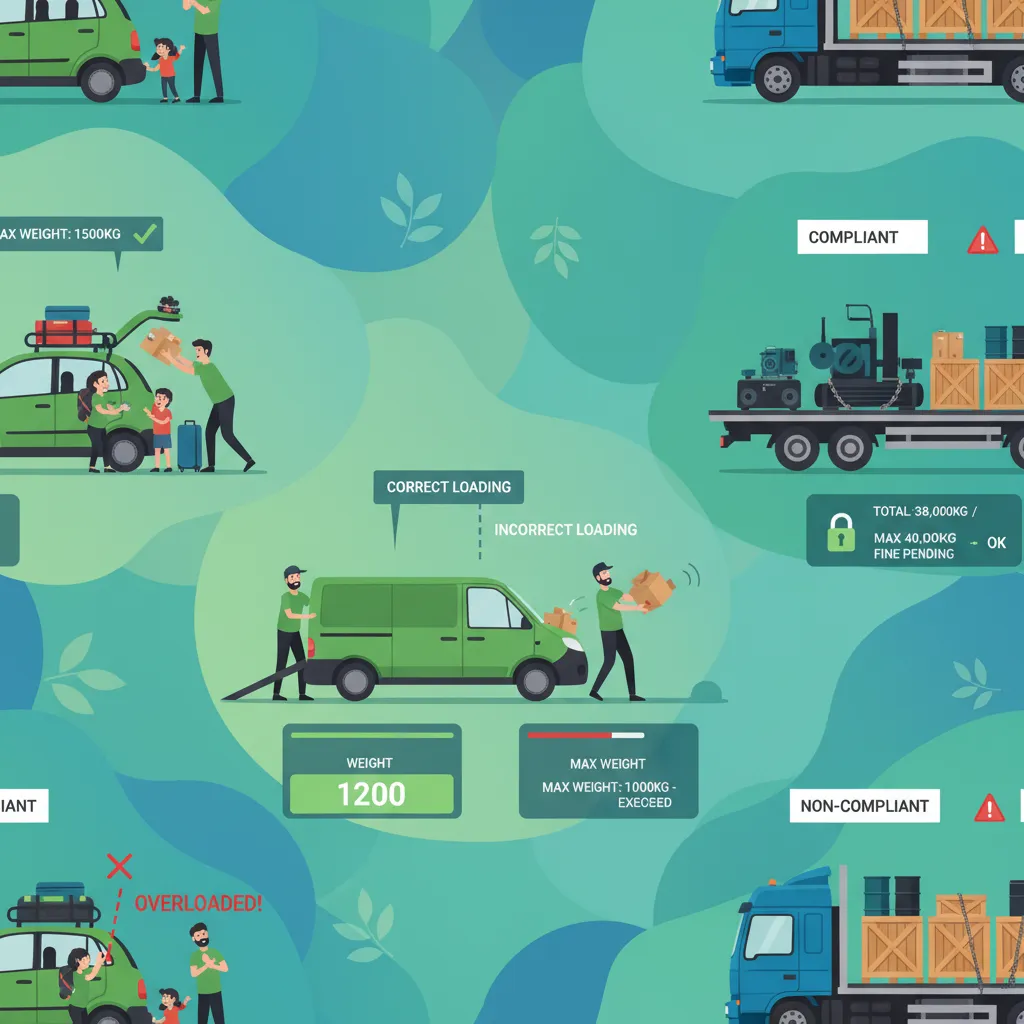
This lesson introduces the legal framework governing vehicle and axle weight limits in Poland and the EU. Learners will understand how to determine a vehicle's maximum permissible payload and interpret official load charts and documentation. The content covers the importance of correct weight distribution to avoid exceeding individual axle limits and explains the serious legal and safety consequences of operating an overloaded vehicle.
This lesson outlines the statutory speed limits that professional drivers of Category C vehicles must adhere to on Polish roads. It clearly distinguishes the maximum permitted speeds in built-up areas, on single carriageways, and on motorways. The content also explains how to interpret road signs that may indicate temporary or vehicle-specific speed restrictions, ensuring drivers remain compliant with the law and avoid penalties from speed enforcement measures.

This lesson provides an overview of powertrain technologies in modern buses, including diesel, hybrid, and electric systems. It covers the function of engines and transmissions and their impact on acceleration and fuel economy. Emphasis is placed on understanding emissions standards like Euro 6 and the principles of efficient power management.

This lesson focuses on how different passenger loads alter a vehicle's dynamics. It explains the shift in the center of gravity and its effect on suspension, acceleration, and braking. Learners will study techniques to anticipate and compensate for these handling changes, ensuring speed and cornering are adjusted for passenger comfort and safety.
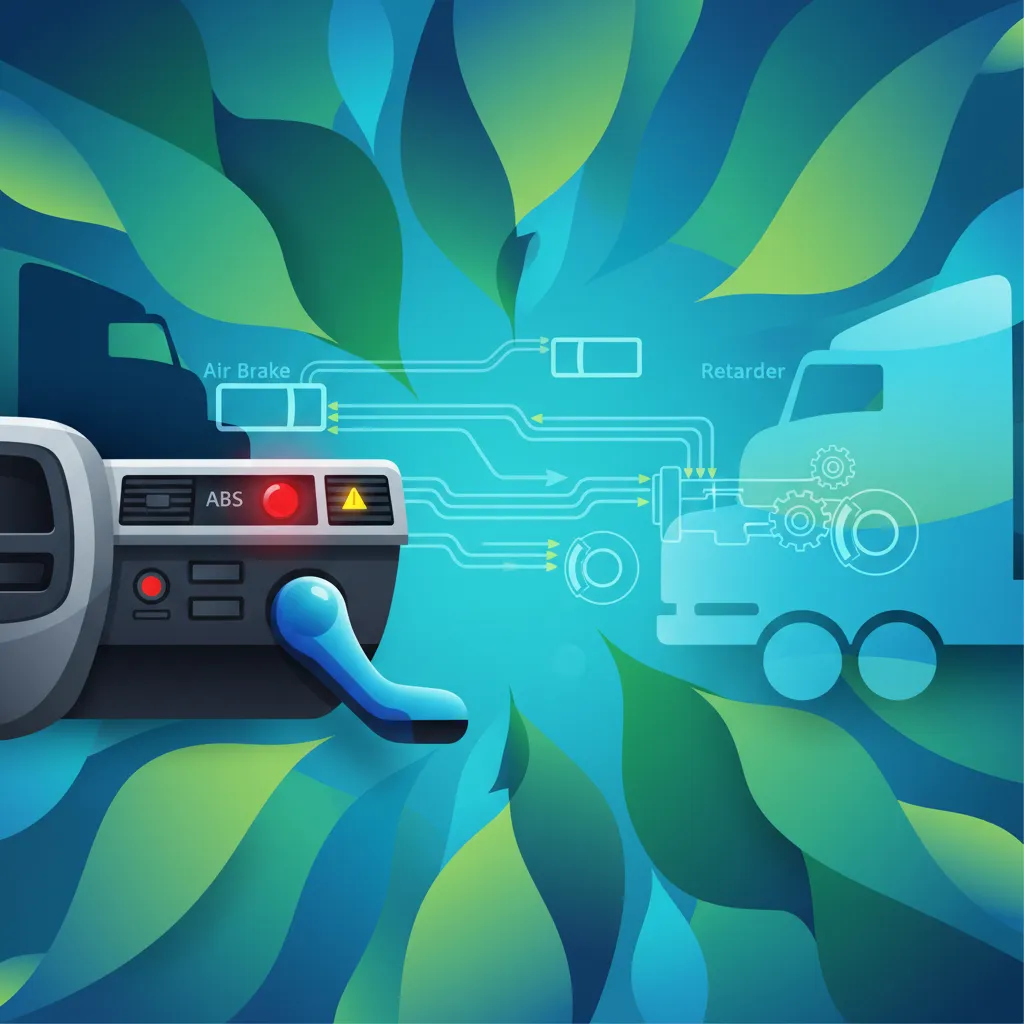
This lesson covers the braking mechanisms specific to large passenger vehicles, focusing on air brake systems and retarders. Learners will understand the components and operation of service and parking brakes, as well as the function of ABS and ESC. It also addresses strategies for emergency braking and the importance of regular maintenance for optimal performance.

This lesson examines the signs that convey dimensional and weight restrictions, which are vital for safe tractor and trailer operation. It outlines how to read width, height, and weight limit signs and the legal implications of exceeding these limits. The lesson provides guidance on planning loads to comply with bridge and road classification restrictions found across Polish rural networks.

This lesson details the exact requirements to qualify for a Category D driving licence. It covers the minimum age, the mandatory medical examinations for health fitness, and the hierarchy of prerequisite licences like Category B and C. You will also learn about the accredited training process and the necessary documentation for certification.
Explore the distinctions between standard, articulated buses, and minibuses, focusing on passenger capacity calculations and how dimensions affect turning circles and urban navigation for Category D drivers in Poland.
This lesson details the speed limits applicable to buses in Poland across urban, rural, and motorway settings. It emphasizes how vehicle size and passenger load influence safe operating speeds and required stopping distances. The content also covers speed-control device usage and practical techniques for maintaining consistent speed while ensuring passenger comfort.
This lesson provides an overview of powertrain technologies in modern buses, including diesel, hybrid, and electric systems. It covers the function of engines and transmissions and their impact on acceleration and fuel economy. Emphasis is placed on understanding emissions standards like Euro 6 and the principles of efficient power management.

This lesson focuses on the practical considerations of cornering large buses, particularly articulated models. It examines turning radius, the effect of the articulation joint, and the importance of maintaining appropriate speed for passenger stability. The content also outlines lane positioning strategies for intersections to avoid over-steering or under-steering.
This lesson focuses on how different passenger loads alter a vehicle's dynamics. It explains the shift in the center of gravity and its effect on suspension, acceleration, and braking. Learners will study techniques to anticipate and compensate for these handling changes, ensuring speed and cornering are adjusted for passenger comfort and safety.

This lesson teaches the fundamentals of safely reversing a bus using mirrors, cameras, and alarms. It covers low-speed control essential for depot navigation, where precise steering is required to avoid collisions. Specific techniques for handling articulated buses and coordinating with ground staff are also discussed to ensure safe maneuvers.
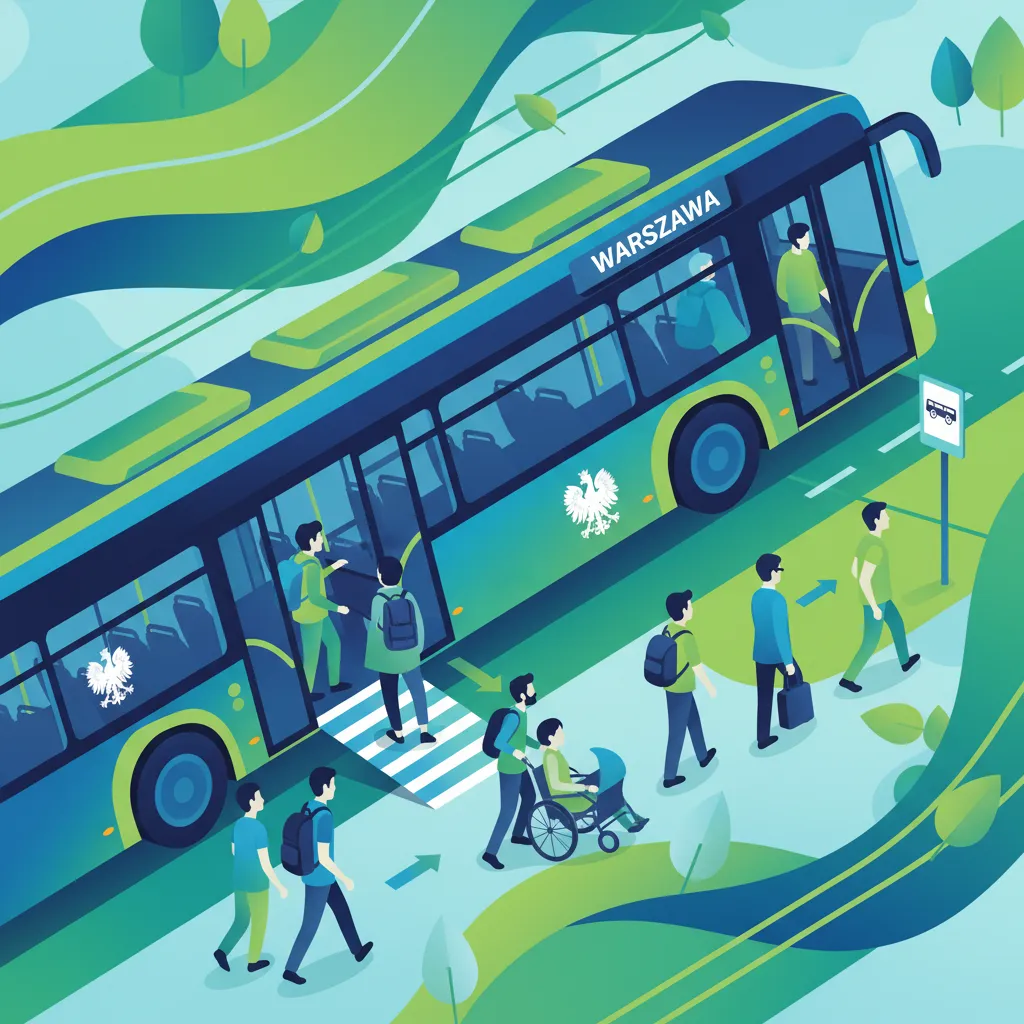
This lesson focuses on the key provisions of the Polish road traffic act relevant to public transport. It explains the legal classification of buses, mandatory safety equipment, and the hierarchy of road users. Learners will understand the specific obligations of bus drivers, potential penalties for non-compliance, and the required operational documentation.
This lesson covers the braking mechanisms specific to large passenger vehicles, focusing on air brake systems and retarders. Learners will understand the components and operation of service and parking brakes, as well as the function of ABS and ESC. It also addresses strategies for emergency braking and the importance of regular maintenance for optimal performance.
This lesson provides a step-by-step process for safe passenger boarding and alighting, emphasizing clear communication and the correct use of wheelchair ramps. Learners will study the legal requirements for assisting passengers with reduced mobility, including securing wheelchairs. The content also covers time management at stops and safety checks before departure.
This lesson defines the scope of vehicles permitted under a Category B licence, primarily passenger cars up to 3,500 kg maximum permissible mass. It clarifies the rules on seating capacity and the regulations for towing trailers, distinguishing between a standard B licence and a B+E entitlement. Understanding these classifications ensures drivers operate vehicles legally and safely.

This lesson outlines the precise steps for approaching a bus stop, ensuring correct positioning and safe deceleration. Learners will study the procedural aspects of door operation and managing passenger movement to prevent accidents. It also addresses coordination with traffic signals and pedestrians to maintain safety and schedule reliability.
Find clear answers to common questions learners have about Bus Classification, Dimensions, and Capacity. Learn how the lesson is structured, which driving theory objectives it supports, and how it fits into the overall learning path of units and curriculum progression in Poland. These explanations help you understand key concepts, lesson flow, and exam focused study goals.
Category D in Poland covers buses designed for transporting more than 9 people (including the driver). This generally includes standard rigid buses, articulated buses (with a joint between sections), and minibuses, though specific classifications may depend on seating capacity and vehicle design.
The turning circle is crucial because buses, especially articulated ones, have a much larger turning radius than cars. Understanding your bus's turning circle helps you safely navigate intersections, roundabouts, and tight urban streets in Poland, preventing collisions with curbs, other vehicles, or obstacles.
Passenger capacity dictates the maximum number of people a bus is legally allowed to carry. Exceeding this limit can compromise safety, affect braking and handling due to increased weight, and lead to fines. Proper weight distribution, considering seated and standing passengers, is vital for stability.
The wheelbase (distance between front and rear axles) influences the turning radius and maneuverability. Overhang (the part of the body extending beyond the axles) affects departure and approach angles, especially important when navigating inclines or uneven surfaces, and contributes to the vehicle's overall length.
Yes, Poland, like other EU countries, adheres to regulations regarding maximum vehicle dimensions (length, width, height) for road transport. These are important for registration, operation on public roads, and ensuring compatibility with infrastructure like bridges and tunnels.
Build custom practice sessions tailored precisely to your needs. Focus on areas requiring improvement, review specific Polish road signs, or master complex traffic rules to ensure full preparation for your official driving license exam.