
This lesson delves into the complexities of maneuvering large buses, focusing on turning radius, vehicle articulation, and safe cornering with passengers. Understanding these dynamics is crucial for navigating urban environments and passing your Polish Category D driving theory exam. You'll learn essential techniques to ensure passenger comfort and safety while maintaining control of your vehicle.

Lesson content overview
Operating a large bus, especially an articulated model, requires a deep understanding of vehicle dynamics, spatial awareness, and passenger safety. Cornering effectively involves more than just turning the steering wheel; it demands precise calculations of turning radius, anticipating the movement of the vehicle's articulation joint, and managing speed to ensure passenger stability. This lesson delves into the critical principles and practical techniques for safe and efficient cornering maneuvers for professional bus drivers in Poland.
The sheer size and unique characteristics of buses significantly impact how they navigate turns compared to smaller vehicles. Factors such as wheelbase, overall length, and the presence of an articulation joint mean drivers must adopt specialized techniques to prevent accidents, ensure smooth journeys, and comply with traffic regulations.
The Minimum Turning Circle (MTC) represents the smallest circular path a bus can achieve when its steering wheels are turned to their maximum angle. This measurement is crucial as it defines the absolute geometric limits for any turning maneuver. It is typically measured from the outer edge of the outer front wheel, but sometimes also referred to the outer rear wheel or vehicle body, depending on the specific standard or context.
For bus drivers, understanding the MTC of their specific vehicle is paramount for planning routes and navigating intersections. The MTC dictates the minimum road space required, influencing which lanes can be used and how tight a turn can safely be executed. It’s important to note that a bus’s static MTC (measured unloaded on a level surface) may differ from its dynamic MTC, which accounts for factors like vehicle load, tire deformation, and road conditions, potentially requiring even more space. Polish traffic regulations implicitly require drivers to be aware of their vehicle's dimensions and capabilities to remain within lane limits during turns.
Articulated buses, often referred to as "bendy buses," feature a flexible articulation joint that connects two or more sections of the vehicle. This joint allows the bus to bend, making it more maneuverable than a rigid bus of equivalent length. However, it also introduces a unique challenge: the vehicle swing-out. As the front section turns, the rear section follows a wider, offset path. This phenomenon is known as articulation geometry.
Drivers of articulated buses must constantly anticipate this swing-out, especially when making sharp turns or navigating roundabouts. Failure to account for the wider path of the rear section can lead to the bus encroaching onto adjacent lanes, hitting curbs, poles, or even colliding with other vehicles or pedestrians. Polish law mandates that drivers must control their vehicle to prevent such encroachments.
When a bus turns, passengers experience a sideways force known as Lateral Passenger Acceleration (LPA). This acceleration is calculated using the formula ( a = v^2 / r ), where v is the vehicle's speed and r is the turning radius. Higher speeds or tighter turns result in greater LPA, which can cause discomfort, loss of balance, or even injury, particularly for standing passengers.
To ensure passenger comfort and safety, drivers must keep LPA within acceptable limits. Generally, a lateral acceleration of 0.2 g (where 'g' is the acceleration due to gravity) is considered the comfort threshold for seated passengers, while standing passengers are more susceptible to lower forces. Exceeding this can lead to passengers being thrown sideways, losing their grip, or colliding with other passengers or vehicle structures. Therefore, adjusting speed to the curvature of the road is not merely a matter of vehicle control but a direct responsibility for passenger well-being.
Correct lane positioning is crucial for large vehicles like buses to execute turns safely and efficiently, without encroaching on other lanes, sidewalks, or road furniture. Unlike smaller vehicles that can often stay centered in their lane, buses frequently require offset positioning. This means shifting the vehicle slightly towards the inner edge of the lane before initiating a turn.
For a right-hand turn, the bus might position closer to the centerline of its original lane or even slightly into an adjacent left lane (if permitted by markings and traffic conditions) to allow the long body and rear wheels to clear the corner without cutting it too sharply. Similarly, for a left-hand turn, a driver might initially position closer to the right side of their lane to allow the front of the bus to swing wide without crossing into oncoming traffic prematurely.
The goal is to ensure the entire footprint of the bus, including its rear overhang and articulation swing, remains within the designated carriageway throughout the maneuver. Polish traffic law (Article 48 of the Road Traffic Act) requires drivers to stay within their lane and the carriageway, and improper positioning can lead to traffic violations and hazards.
The speed-radius relationship is a fundamental principle in vehicle dynamics, stating that the required turning force (and thus lateral acceleration) increases quadratically with speed and inversely with the turning radius. This means even a small increase in speed on a tight curve significantly elevates the lateral forces acting on the vehicle and its passengers.
Drivers must constantly evaluate the radius of an upcoming curve and adjust their speed accordingly. Slower speeds are mandatory for tighter curves to keep LPA within safe limits and prevent loss of control or potential rollover, especially given a bus's high center of gravity. This dynamic adaptation of speed is a core responsibility under Polish Road Traffic Act, Article 5, which states that drivers must adjust speed to road conditions to ensure safety.
Remember the relationship: if you double your speed on the same curve, the lateral forces on your bus and passengers quadruple. Always reduce speed well in advance of a turn.
Operating a bus in Poland involves adherence to specific legal provisions designed to ensure road safety and passenger well-being. These regulations provide a clear framework for how turns must be executed, particularly for large public transport vehicles.
Article 48 of the Polish Road Traffic Act (Prawo o ruchu drogowym) is particularly relevant to bus cornering. It states that vehicles must stay within the carriageway limits unless road markings or signs explicitly permit otherwise. For large vehicles, this often means that drivers must carefully plan their turns to ensure that no part of the bus, including the rear section of an articulated vehicle, crosses into an adjacent lane (unless designated for turns), onto the sidewalk, or into oncoming traffic.
While D-1 is about priority, the principle of maintaining lane discipline applies at all intersections, regardless of priority. The bus driver still needs to manage their vehicle's footprint carefully.
Violating this article can lead to fines and, more importantly, create hazardous situations for other road users. Drivers must anticipate the swept path of their entire vehicle and take preparatory actions, such as offset positioning, to comply.
While Polish law does not specify exact LPA thresholds, the general duty of care for public transport drivers is enshrined in various regulations. Article 3 and Article 5 of the Polish Road Traffic Act oblige drivers to "adjust speed to road conditions" and "observe road safety conditions," which directly includes passenger stability and comfort.
This means drivers are legally responsible for preventing sudden, jarring movements during turns that could injure passengers. This responsibility is heightened when transporting standing passengers, who are more vulnerable to lateral forces. Therefore, the driver must proactively reduce speed to a level that guarantees a smooth and stable turn, even if the posted speed limit for the road is higher. This is a crucial aspect of professional bus driving.
Never assume the posted speed limit is safe for a turn, especially with passengers on board or in adverse conditions. Always prioritize passenger comfort and safety by adapting your speed.
Specific lane arrow markings and traffic signs at intersections provide critical guidance for bus drivers. These markings often dictate permitted turning directions from specific lanes. Drivers must always obey these instructions. Attempting to turn from a lane not designated for that maneuver can lead to insufficient space, conflicts with other traffic streams, and traffic violations.
In some cases, specific signs or markings may allow large vehicles to temporarily use more than one lane to complete a turn, especially in complex or tight intersections. However, such allowances are rare and must be clearly indicated. Without explicit permission, the default rule is to stay within your designated lane and carriageway.
While not directly a turning regulation, the EU Working Time Directive is indirectly critical. Driver fatigue significantly impairs judgment, reaction time, and spatial awareness—all essential for accurately assessing turning radii and executing complex maneuvers. A fatigued driver is more likely to misjudge speed, articulation swing, or lane positioning, increasing the risk of accidents. Adhering to rest periods and avoiding driving while tired is therefore a fundamental safety measure for all aspects of bus operation, including cornering.
Beyond the legal framework and theoretical understanding, real-world bus cornering demands constant vigilance and adaptability. Drivers must apply their knowledge to a dynamic environment, considering various factors that influence safe turning.
Many accidents during turns stem from predictable errors. One common mistake is late turn initiation, where the driver starts steering too late, causing the rear of the bus to swing wide into adjacent lanes or over the curb. Another is excessive speed on tight curves, leading to high LPA and potential loss of control or passenger injury. Incorrect lane positioning before the turn, failing to use offset positioning, is also a frequent cause of insufficient clearance.
Drivers must also guard against ignoring load influence. A fully loaded bus will behave differently from an empty one, potentially increasing the dynamic turning radius due to tire deformation and weight distribution. Finally, failure to use mirrors during a turn is a critical oversight. The driver must constantly check side mirrors to monitor the rear section's swing path and ensure no vehicles, pedestrians, or obstacles are in the blind spot.
Road and weather conditions significantly impact the safe turning speed and required turning radius.
The number and distribution of passengers aboard a bus directly influence its dynamic turning characteristics. A heavy passenger load, especially if unevenly distributed, can alter the bus's center of gravity and increase the effective turning radius. This is because the added weight causes greater tire deformation and shifts the vehicle's mass, making it feel "heavier" and less responsive. Drivers must therefore anticipate a larger dynamic turning radius and adjust their speed and lane positioning accordingly when the bus is full. Ignoring this can lead to underestimation of required space and dangerous encroachments.
Effective use of mirrors is non-negotiable during any turning maneuver, especially for large and articulated buses. The extensive blind spots around such vehicles mean that a driver cannot rely solely on direct vision. Before and throughout a turn, drivers must:
Initial Check: Before initiating the turn, check all mirrors (side, overhead, and articulation joint mirrors if equipped) to confirm the path is clear.
Continuous Monitoring: As the bus turns, constantly monitor the side mirrors to track the swing-out path of the rear section. This is critical for articulated buses to ensure the rear clears curbs, poles, or other vehicles.
Blind Spot Awareness: Be particularly vigilant for cyclists, pedestrians, or smaller vehicles that might enter blind spots during the turn. Early signaling and a slower approach give others more time to react.
The paramount responsibility of a bus driver is the safety and comfort of their passengers. This is particularly evident during turns, where inappropriate driving can have immediate and negative consequences.
The critical lateral acceleration at which a high-centre-of-gravity vehicle, such as a bus, may tip over. For most buses, this threshold is generally around 0.4 g, but it can be lower under adverse conditions or with unstable loads. Exceeding this is extremely dangerous.
Applying these concepts in real-world scenarios is essential for safe bus operation.
Setting: You are driving a 18-meter articulated bus on a two-lane city street, approaching a busy intersection. You need to make a left turn onto another two-lane street. Conditions are dry, traffic is moderate.
Decision Point: How do you position the bus and manage speed to ensure the entire vehicle clears the turn without encroaching on oncoming traffic or the sidewalk?
Correct Behavior: You would approach the intersection in the left-most lane, but position the bus slightly towards the right edge of that lane (offset positioning). As you initiate the turn, you would reduce your speed to approximately 15-20 km/h, well before the apex of the turn, keeping the Lateral Passenger Acceleration (LPA) low. You would begin steering earlier than a car driver, allowing the front section to swing wide while constantly checking your left and articulation mirrors to monitor the rear section's swing path, ensuring it stays within the new lane. This prevents the rear from cutting the corner too tightly or crossing into the opposite carriageway.
Incorrect Behavior: Remaining centered in the left lane, turning at a higher speed (e.g., 30 km/h), and steering late would result in the front wheels cutting sharply and the rear section of the articulated bus swinging wide into the path of oncoming vehicles or onto the pedestrian crossing, creating a serious collision risk and violating Polish Road Traffic Act Article 48.
Setting: You are driving a standard rigid bus (12 meters long) with a full standing load of passengers. You are approaching a multi-lane roundabout in wet conditions, needing to take the first right exit.
Decision Point: How do you adjust your speed and lane choice given the heavy load and wet conditions to maintain stability and passenger comfort?
Correct Behavior: You would significantly reduce your speed to around 10 km/h before entering the roundabout due to the wet conditions and heavy load. You would select the outermost lane, signaling your intent to turn right well in advance. Throughout the roundabout, you would maintain a consistent, low speed, using smooth steering inputs. You would constantly check your right mirror to ensure the bus clears the curb and any other vehicles in adjacent lanes before smoothly exiting the roundabout. The increased dynamic turning radius due to the load necessitates careful planning.
Incorrect Behavior: Maintaining a speed of 25 km/h, especially if attempting to use an inner lane, would increase LPA significantly. This would cause passengers to be thrown sideways, potentially injuring them, and risking a skid or loss of control on the wet surface. The bus might also clip the inner island due to underestimating the dynamic turning radius with a heavy load.
Setting: You are on a single-lane suburban road with a moderate right-hand curve. Midway through the curve, you encounter a temporary, unexpected obstacle (e.g., a parked service vehicle slightly obstructing the lane).
Decision Point: How do you react safely to maintain control, avoid the obstacle, and ensure passenger stability?
Correct Behavior: Immediately and gently reduce speed using controlled braking. Assess if there is sufficient space to maneuver around the obstacle while maintaining the bus's path within the lane and ensuring the articulation (if applicable) clears. If space is extremely tight, it may be safer to stop, assess, and wait for the obstacle to move or for a clear path. Always prioritize slowing down and maintaining control over swerving, as sudden evasive maneuvers at speed increase LPA drastically. Your decision should always be to avoid high lateral forces.
Incorrect Behavior: Swerving suddenly to avoid the obstacle without significantly reducing speed would drastically increase lateral acceleration, risking passenger injury, loss of control, and a potential collision with the obstacle or an oncoming vehicle.
Mastering the art of bus cornering, especially for articulated vehicles, is a critical skill for professional drivers. It involves a continuous cycle of observation, prediction, and precise control:
By consistently applying these principles, bus drivers ensure not only their own safety but also the comfort and well-being of all passengers, contributing to a smooth and reliable public transport service.
This lesson covers the critical dynamics of turning large buses, particularly articulated models, for Polish Category D drivers. Key concepts include Minimum Turning Circle (MTC), which defines geometric limits, and Lateral Passenger Acceleration (LPA), governed by the speed-radius relationship. Effective cornering requires offset lane positioning to accommodate vehicle swing-out, continuous mirror monitoring for blind spots, and speed adaptation well below posted limits when carrying passengers or navigating tight curves. Polish traffic law obliges drivers to keep their entire vehicle within carriageway limits while ensuring passenger comfort and stability, particularly for standing passengers who are more vulnerable to lateral forces.
A short set of high-value points that capture the most important learning from this lesson.
The Minimum Turning Circle (MTC) defines the absolute geometric limits for any bus turning maneuver, accounting for vehicle length and wheelbase.
Lateral Passenger Acceleration (LPA) increases quadratically with speed (a = v²/r), meaning doubling your speed quadruples the sideways force on passengers.
Articulated buses require offset lane positioning before turns to accommodate the rear section's wider swing-out path.
Speed must be adjusted proactively to road curvature and conditions, not just to posted limits, especially when passengers are standing.
Polish law requires drivers to keep their entire vehicle, including articulated rear sections, within carriageway limits during turns.
Explore all units and lessons included in this driving theory course.
The static MTC may differ from dynamic MTC under load; loaded buses require more space to turn.
Vehicle swing-out on articulated buses means the rear section follows a wider path than the front, potentially crossing adjacent lanes.
A lateral acceleration of 0.2g is the comfort threshold for seated passengers; standing passengers are more vulnerable.
Article 48 of the Polish Road Traffic Act mandates staying within carriageway limits during turns.
Blind spots on large buses require continuous mirror monitoring throughout any turning maneuver.
Initiating turns too late, causing the rear of the bus to swing wide into adjacent lanes or onto sidewalks.
Exceeding safe speed on tight curves, resulting in excessive LPA that can injure passengers or cause loss of control.
Failing to use offset positioning, leaving insufficient clearance for the vehicle's rear when turning.
Ignoring how heavy passenger loads increase the dynamic turning radius and reduce responsiveness.
Neglecting mirror checks during turns, missing cyclists, pedestrians, or vehicles in the rear section's swing path.
Lesson content overview
A short set of high-value points that capture the most important learning from this lesson.
The Minimum Turning Circle (MTC) defines the absolute geometric limits for any bus turning maneuver, accounting for vehicle length and wheelbase.
Lateral Passenger Acceleration (LPA) increases quadratically with speed (a = v²/r), meaning doubling your speed quadruples the sideways force on passengers.
Articulated buses require offset lane positioning before turns to accommodate the rear section's wider swing-out path.
Speed must be adjusted proactively to road curvature and conditions, not just to posted limits, especially when passengers are standing.
Polish law requires drivers to keep their entire vehicle, including articulated rear sections, within carriageway limits during turns.
Explore all units and lessons included in this driving theory course.
The static MTC may differ from dynamic MTC under load; loaded buses require more space to turn.
Vehicle swing-out on articulated buses means the rear section follows a wider path than the front, potentially crossing adjacent lanes.
A lateral acceleration of 0.2g is the comfort threshold for seated passengers; standing passengers are more vulnerable.
Article 48 of the Polish Road Traffic Act mandates staying within carriageway limits during turns.
Blind spots on large buses require continuous mirror monitoring throughout any turning maneuver.
Initiating turns too late, causing the rear of the bus to swing wide into adjacent lanes or onto sidewalks.
Exceeding safe speed on tight curves, resulting in excessive LPA that can injure passengers or cause loss of control.
Failing to use offset positioning, leaving insufficient clearance for the vehicle's rear when turning.
Ignoring how heavy passenger loads increase the dynamic turning radius and reduce responsiveness.
Neglecting mirror checks during turns, missing cyclists, pedestrians, or vehicles in the rear section's swing path.
Explore search topics learners often look for when studying Turning Radius, Articulation, and Cornering with Passengers. These topics reflect common questions about road rules, driving situations, safety guidance, and lesson level theory preparation for learners in Poland.
Browse additional driving theory lessons that cover connected traffic rules, road signs, and common driving situations related to this topic. Improve your understanding of how different rules interact across everyday traffic scenarios.
Explore the physics behind bus turning radius and articulation, including how speed and curve affect lateral passenger acceleration. Essential theory for safe bus maneuvering in Poland.

This lesson focuses on how different passenger loads alter a vehicle's dynamics. It explains the shift in the center of gravity and its effect on suspension, acceleration, and braking. Learners will study techniques to anticipate and compensate for these handling changes, ensuring speed and cornering are adjusted for passenger comfort and safety.

This lesson teaches techniques for delivering a comfortable ride by managing acceleration and braking to minimize sudden movements. It emphasizes progressive braking and gentle throttle application, especially with standing passengers. The content also discusses how vehicle suspension and speed modulation contribute to overall passenger comfort and satisfaction.
This lesson introduces the various classes of passenger vehicles under Category D, detailing differences between standard, articulated, and minibuses. It covers key dimensional parameters like length, wheelbase, and turning circle that affect urban navigation. Learners will also understand passenger capacity calculations and weight distribution for safe, compliant operation.

This lesson teaches the fundamentals of safely reversing a bus using mirrors, cameras, and alarms. It covers low-speed control essential for depot navigation, where precise steering is required to avoid collisions. Specific techniques for handling articulated buses and coordinating with ground staff are also discussed to ensure safe maneuvers.

This lesson covers the braking mechanisms specific to large passenger vehicles, focusing on air brake systems and retarders. Learners will understand the components and operation of service and parking brakes, as well as the function of ABS and ESC. It also addresses strategies for emergency braking and the importance of regular maintenance for optimal performance.
This lesson details the speed limits applicable to buses in Poland across urban, rural, and motorway settings. It emphasizes how vehicle size and passenger load influence safe operating speeds and required stopping distances. The content also covers speed-control device usage and practical techniques for maintaining consistent speed while ensuring passenger comfort.

This lesson introduces defensive driving strategies tailored for bus operation, emphasizing hazard perception and risk management. Learners will study techniques for continuous situational awareness and maintaining safe following distances for adequate reaction time. The content covers emergency maneuvers and interaction with vulnerable road users to reduce accident likelihood.

This lesson explores the dynamic relationship between cargo weight and a vehicle's performance. It explains how increased mass raises kinetic energy, significantly lengthening braking distances and requiring earlier, more gradual brake application. Learners will also analyze how a heavy or poorly distributed load alters the vehicle's handling characteristics, particularly during cornering, and understand the necessity of adjusting speed and driving style to compensate for these effects.
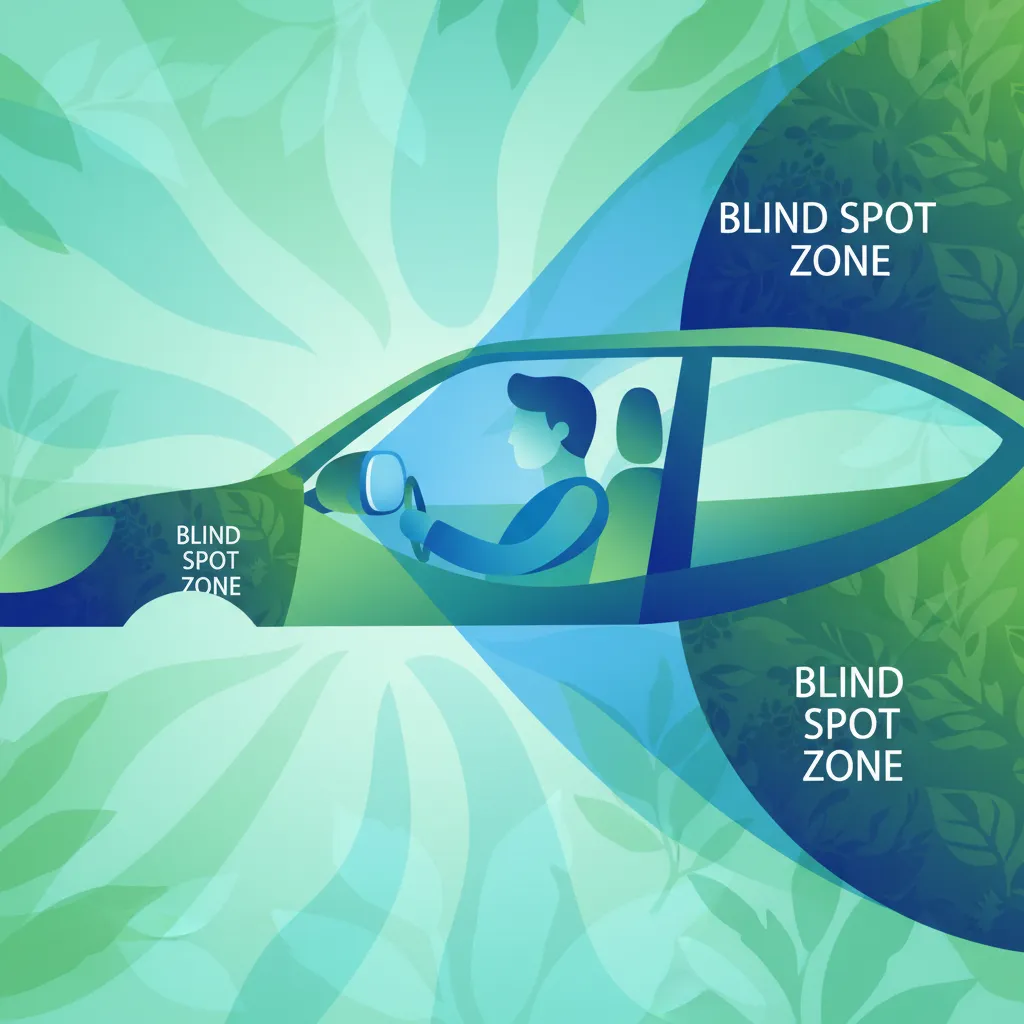
This lesson details the precise adjustment of interior and exterior mirrors to compensate for a bus's large blind spots. Learners will understand how to achieve maximum coverage of rear and side zones through proper mirror setup. It also addresses how passenger load and lighting conditions affect visibility and provides guidelines for maintaining clear sightlines.

This lesson explains the critical concept of off-tracking, where the rear wheels follow a shorter path than the front wheels during a turn. Learners will understand how to calculate the required space for a turn and position the vehicle correctly before entering a corner to avoid striking curbs, signs, or other vehicles. The content provides practical strategies for safely navigating intersections and roundabouts by anticipating the vehicle's sweep path and maintaining adequate clearance.
Analyze real-world bus cornering scenarios, focusing on correct lane positioning and avoiding common mistakes. Learn practical application of Polish traffic laws for safe bus maneuvering.
This lesson teaches the fundamentals of safely reversing a bus using mirrors, cameras, and alarms. It covers low-speed control essential for depot navigation, where precise steering is required to avoid collisions. Specific techniques for handling articulated buses and coordinating with ground staff are also discussed to ensure safe maneuvers.
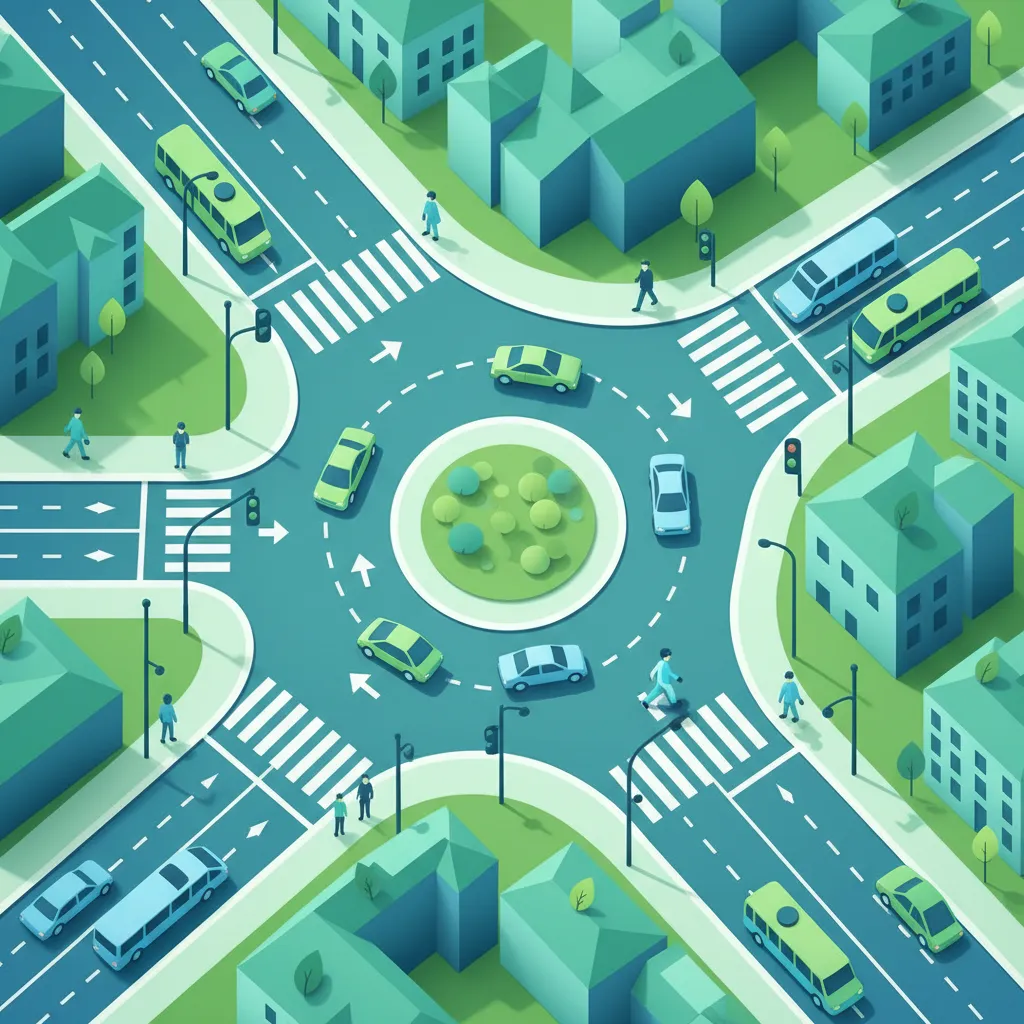
This lesson explores the priority hierarchy for buses at different intersections, roundabouts, and pedestrian crossings. Learners will understand how traffic signals and signs affect their approach and how to safely navigate roundabouts with correct lane discipline. Special attention is given to yielding to pedestrians, especially near bus stops.
This lesson introduces defensive driving strategies tailored for bus operation, emphasizing hazard perception and risk management. Learners will study techniques for continuous situational awareness and maintaining safe following distances for adequate reaction time. The content covers emergency maneuvers and interaction with vulnerable road users to reduce accident likelihood.

This lesson outlines the precise steps for approaching a bus stop, ensuring correct positioning and safe deceleration. Learners will study the procedural aspects of door operation and managing passenger movement to prevent accidents. It also addresses coordination with traffic signals and pedestrians to maintain safety and schedule reliability.
This lesson details the precise adjustment of interior and exterior mirrors to compensate for a bus's large blind spots. Learners will understand how to achieve maximum coverage of rear and side zones through proper mirror setup. It also addresses how passenger load and lighting conditions affect visibility and provides guidelines for maintaining clear sightlines.
This lesson explains the critical concept of off-tracking, where the rear wheels follow a shorter path than the front wheels during a turn. Learners will understand how to calculate the required space for a turn and position the vehicle correctly before entering a corner to avoid striking curbs, signs, or other vehicles. The content provides practical strategies for safely navigating intersections and roundabouts by anticipating the vehicle's sweep path and maintaining adequate clearance.

This lesson teaches learners to identify and understand road signs that govern bus movement, including dedicated bus lane (buspas) signs. It explains the visual characteristics, legal standing, and consequences of non-compliance. The content also covers how to adapt to temporary restrictions in construction zones while maintaining schedule and safety.
This lesson details the speed limits applicable to buses in Poland across urban, rural, and motorway settings. It emphasizes how vehicle size and passenger load influence safe operating speeds and required stopping distances. The content also covers speed-control device usage and practical techniques for maintaining consistent speed while ensuring passenger comfort.

This lesson explains the ideal seating position for operating a bus, focusing on adjustable features that ensure proper reach to pedals and the steering wheel. It covers ergonomic principles such as lumbar support and control layout to minimize distraction. The goal is to establish a comfortable and safe posture that reduces physical strain during extended driving periods.

This lesson focuses on the specific challenges HGVs face when navigating roundabouts. It details the correct procedure for approach, including selecting the appropriate lane based on the intended exit and yielding to traffic already circulating. The content emphasizes the need to account for the vehicle's large turning radius and off-tracking to avoid encroaching on adjacent lanes or mounting curbs, ensuring a smooth and safe passage through the roundabout.
Find clear answers to common questions learners have about Turning Radius, Articulation, and Cornering with Passengers. Learn how the lesson is structured, which driving theory objectives it supports, and how it fits into the overall learning path of units and curriculum progression in Poland. These explanations help you understand key concepts, lesson flow, and exam focused study goals.
The swept path refers to the total area a vehicle occupies during a turn, including the path of the front and rear wheels. For buses, especially articulated ones, the rear wheels cut a tighter path than the front. Understanding this is crucial in Poland to avoid hitting curbs, traffic islands, or other vehicles, especially in urban intersections and tight spots, ensuring compliance with road rules and preventing accidents.
When turning an articulated bus, the articulation joint requires careful consideration. You must anticipate its movement and allow sufficient space for the rear section to follow. Over-steering or turning too sharply can cause the rear part to swing out excessively or cut in too much. Gradual steering and observation of your mirrors are key to guiding the joint safely through the turn without encroaching on other lanes or obstacles.
Maintaining passenger comfort during cornering involves smooth and controlled driving. This means approaching turns at an appropriate, reduced speed, braking gently before the turn, and applying consistent, gradual steering input. Avoid sudden acceleration or deceleration mid-turn. Polish regulations and best practices emphasize anticipating road conditions and executing maneuvers smoothly to prevent passengers from being thrown around.
While there aren't signs specifically *for* bus turning radius, Polish road signage includes general warning signs for sharp bends (A-1, A-2) and narrow roads (A-13, A-14) that bus drivers must heed. Additionally, signs indicating bus lanes or restricted access zones might imply challenging turning scenarios due to limited space. Always pay attention to vehicle size restrictions and local conditions.
Build custom practice sessions tailored precisely to your needs. Focus on areas requiring improvement, review specific Polish road signs, or master complex traffic rules to ensure full preparation for your official driving license exam.