
This lesson teaches you how to position your motorcycle strategically to maximise your visibility to other road users and maintain a safe space cushion. Mastering these techniques is vital for your Swiss A and A1 theory exam and ensures you stay safe in diverse Swiss traffic environments. You will learn to identify potential hazards early by choosing the correct lane placement and effectively managing your surroundings.

Lesson content overview
Strategic road positioning is fundamental for motorcycle safety, particularly in the diverse and often challenging traffic environments of Switzerland. As a motorcyclist, your ability to see hazards and, critically, your visibility to other road users directly depends on where you choose to place your machine within your lane. This lesson, designed for the Swiss Motorcycle Licence Theory Course for Categories A and A1, will detail how conscious lane placement enhances safety, reduces accident risk, and ensures compliance with Swiss traffic regulations.
The road is a dynamic environment, and as a motorcyclist, you are among its most vulnerable users. Unlike car drivers, motorcyclists lack the protective shell of a vehicle, making foresight and defensive riding paramount. Your lane position is not merely about staying between the lines; it's a proactive safety measure. By intelligently choosing your lane position, you actively manage risks, increase your reaction time, and communicate your intentions to other drivers. This goes beyond simple adherence to rules; it's about anticipating potential conflicts and creating a safety buffer around yourself.
Proper positioning serves two main purposes:
Understanding and applying strategic lane placement is a continuous process that evolves with traffic conditions, road geometry, and environmental factors. It builds upon foundational knowledge of motorcycle dynamics and handling, particularly concepts related to balance and counter-steering, which allow for precise control over your machine.
Effective road positioning is guided by several interlinked principles, each contributing to a safer riding experience. Mastering these principles allows motorcyclists to navigate Swiss roads with greater confidence and significantly reduce risk.
Visibility is the cornerstone of defensive riding. It refers to the mutual ability of all road users to see each other clearly, unimpeded by obstructions. For a motorcyclist, this involves both your ability to scan the environment for potential dangers (forward, peripheral, and rearward visibility) and the critical need for other drivers to easily spot you.
Practical application means consciously choosing positions that place you in the direct line of sight of other drivers, especially through their mirrors and direct glances. Avoid riding directly behind large vehicles or too close to the curb, as these positions often hide you from view. For instance, when approaching an intersection, a more central lane position ensures drivers on crossing roads can see you from a wider angle. Swiss road law, specifically Article 18 of the StVO (Swiss Traffic Regulations), implicitly supports this by obliging road users to act with due regard for others and avoid obstructing sight lines.
Blind spots are areas around a vehicle that the driver cannot see, even with properly adjusted mirrors, without physically turning their head. For motorcyclists, these zones, especially around larger vehicles like trucks, buses, and cars, represent significant hazards. Being caught in a blind spot for even a moment can lead to a collision if the other driver changes lanes or turns.
The strategy of blind spot management involves deliberately positioning your motorcycle to avoid these danger zones. This means:
By maintaining awareness of where other drivers might not see you, you can proactively adjust your position. For example, when preparing to overtake a vehicle, ensure you are visible in their rearview mirror before moving into their peripheral vision, then quickly but safely complete the maneuver. Article 2 of the StVO, which mandates that all road users avoid endangering others, reinforces the importance of this proactive safety measure.
A safety cushion, or space buffer, is the critical area around your motorcycle that you deliberately keep clear of other vehicles and obstacles. This buffer, both lateral (side-to-side) and longitudinal (front-to-back), provides invaluable reaction time and allows for escape routes in emergencies.
Longitudinal Buffer: This is the distance between your motorcycle and the vehicle in front. The universally recommended minimum is the "2-second rule" – you should be able to count two seconds from when the vehicle ahead passes a fixed point until you pass the same point. This distance allows for sufficient braking time and helps you see over or around the vehicle ahead. In adverse conditions (rain, fog, heavy load), this buffer should be increased significantly. Swiss StVO Article 13 mandates a safe following distance.
Lateral Buffer: This refers to the side-to-side distance between your motorcycle and adjacent vehicles, parked cars, road barriers, or other hazards. A minimum lateral gap of at least 1 meter is generally recommended, especially when overtaking or riding alongside parked cars. This buffer protects you from sudden lane deviations, opening car doors, or pedestrians stepping into the road.
Maintaining a generous space cushion is not just a recommendation; it's a vital safety strategy that allows you to respond effectively to sudden changes in traffic, road conditions, or other unexpected events.
Lane selection involves choosing the most advantageous position within a traffic lane, or even which lane to use on a multi-lane road, based on prevailing conditions. For motorcyclists, the lane is typically divided into three imaginary sections: left, center, and right.
While Swiss StVO Article 13 generally states that the rightmost lane is for overtaking, motorcyclists typically have the flexibility to use any part of their lane as long as it's safe. It's a common misunderstanding to assume that riding on the outer edge is always safer; often, it does the opposite by making the motorcycle less visible.
Dynamic positioning is the continuous and conscious adjustment of your lane position in response to evolving traffic situations, road geometry, and environmental factors. It's about being proactive, not reactive, and constantly assessing the safest place for your motorcycle.
This involves:
Treating your lane position as static is a dangerous mistake. An agile approach to positioning, constantly scanning and adjusting, is crucial for maintaining safety and preventing collisions. For instance, when riding through a series of turns on a rural road, your line choice and associated lane position should change continuously to optimize your view and prepare for the next turn.
Adhering to Swiss traffic regulations (Strassenverkehrsordnung – StVO) is not only a legal obligation but also forms the foundation of safe road positioning. While the StVO does not specifically dictate 'lane positioning' for motorcycles in granular detail, several articles imply or mandate principles that directly relate to it:
It is essential to be familiar with the specifics of the Swiss StVO. While these principles are general, the exact numerical requirements for distances and specific interpretations may be subject to periodic updates or regional variations. Always consult the latest official regulations.
Even experienced riders can fall into common traps regarding lane positioning. Awareness of these mistakes and their consequences is the first step toward correcting them.
Effective road positioning is not a one-size-fits-all strategy. It requires continuous adaptation based on a multitude of external factors.
When riding in alpine environments, always anticipate potential hazards such as falling rocks, animals, and sudden weather changes. Adjusting your lane position to maximize your line of sight through blind corners is crucial for safety.
Understanding the principles is one thing; applying them in real-world situations is another. Here are some common scenarios for Swiss roads:
Scenario 1: Passing a Parked Car on an Urban Street
Scenario 2: Riding on a Multi-Lane Motorway
Scenario 3: Navigating a Roundabout for a Left Exit
Mastering road positioning is a critical skill for every motorcyclist in Switzerland. It's a proactive, dynamic process that intertwines with observation, anticipation, and adherence to traffic laws.
By consistently applying these principles, you will significantly enhance your safety, reduce the risk of collisions, and become a more skilled and confident rider on Swiss roads, from bustling urban centers to challenging alpine passes.
This lesson covers the essential skill of road positioning for motorcyclists in Switzerland, emphasizing that lane placement is a proactive safety measure rather than merely staying between the lines. The core principles focus on the 'see and be seen' philosophy, which requires choosing positions that maximize both your view of hazards and your visibility to other road users. Key techniques include maintaining a minimum 2-second longitudinal buffer and at least 1-meter lateral clearance, actively managing blind spots, and continuously adjusting position dynamically based on traffic, weather, and road conditions. The lesson also addresses Swiss-specific regulations through StVO articles and provides practical scenarios illustrating correct and incorrect positioning behaviors at intersections, on motorways, and in urban environments.
A short set of high-value points that capture the most important learning from this lesson.
Strategic lane positioning serves two core purposes: maximizing your own visibility and ensuring other road users can see you clearly.
A safety cushion must be maintained both longitudinally (minimum 2-second following distance) and laterally (minimum 1 meter from adjacent vehicles or obstacles).
Never linger in another vehicle's blind spot; assume you are invisible until you confirm you are visible in their mirrors.
Ride centrally within your lane as the default position, shifting only for specific maneuvers like approaching intersections or passing parked cars.
Dynamic positioning means continuously adjusting your lane position in response to traffic flow, road geometry, weather, and hazards.
Explore all units and lessons included in this driving theory course.
The 'see and be seen' principle is the foundation of defensive motorcycle riding and directly relates to StVO Article 2's duty of care.
Adverse conditions (rain, fog, snow, night riding) require significantly larger safety buffers and more conservative positioning.
Hugging the lane edge drastically reduces your visibility to drivers at intersections and limits your escape routes.
When overtaking, move decisively and maintain at least 1 meter lateral clearance as specified by StVO Article 20.
At roundabouts, position yourself in the lane that aligns with your intended exit to remain visible to circulating traffic.
Hugging the curb or lane edge to stay out of traffic actually increases danger by reducing visibility and placing you in others' blind spots.
Riding alongside vehicles for extended periods, especially trucks, leaves you vulnerable if they change lanes without seeing you.
Maintaining a static lane position in dynamic traffic environments rather than continuously scanning and adjusting.
Cutting corners at intersections reduces your line of sight through the turn and can place you in conflict with crossing traffic.
Following too closely behind the vehicle ahead limits your reaction time and forward visibility, increasing rear-end collision risk.
Lesson content overview
A short set of high-value points that capture the most important learning from this lesson.
Strategic lane positioning serves two core purposes: maximizing your own visibility and ensuring other road users can see you clearly.
A safety cushion must be maintained both longitudinally (minimum 2-second following distance) and laterally (minimum 1 meter from adjacent vehicles or obstacles).
Never linger in another vehicle's blind spot; assume you are invisible until you confirm you are visible in their mirrors.
Ride centrally within your lane as the default position, shifting only for specific maneuvers like approaching intersections or passing parked cars.
Dynamic positioning means continuously adjusting your lane position in response to traffic flow, road geometry, weather, and hazards.
Explore all units and lessons included in this driving theory course.
The 'see and be seen' principle is the foundation of defensive motorcycle riding and directly relates to StVO Article 2's duty of care.
Adverse conditions (rain, fog, snow, night riding) require significantly larger safety buffers and more conservative positioning.
Hugging the lane edge drastically reduces your visibility to drivers at intersections and limits your escape routes.
When overtaking, move decisively and maintain at least 1 meter lateral clearance as specified by StVO Article 20.
At roundabouts, position yourself in the lane that aligns with your intended exit to remain visible to circulating traffic.
Hugging the curb or lane edge to stay out of traffic actually increases danger by reducing visibility and placing you in others' blind spots.
Riding alongside vehicles for extended periods, especially trucks, leaves you vulnerable if they change lanes without seeing you.
Maintaining a static lane position in dynamic traffic environments rather than continuously scanning and adjusting.
Cutting corners at intersections reduces your line of sight through the turn and can place you in conflict with crossing traffic.
Following too closely behind the vehicle ahead limits your reaction time and forward visibility, increasing rear-end collision risk.
Explore search topics learners often look for when studying Road Positioning: Lane Placement and Visibility in Swiss Traffic. These topics reflect common questions about road rules, driving situations, safety guidance, and lesson level theory preparation for learners in Switzerland.
Browse additional driving theory lessons that cover connected traffic rules, road signs, and common driving situations related to this topic. Improve your understanding of how different rules interact across everyday traffic scenarios.
Explore challenging road situations and how to apply advanced lane positioning techniques for maximum visibility and safety in Swiss traffic. Learn to navigate complex intersections, motorways, and adverse conditions.
This lesson focuses on maintaining proper vehicle positioning within the lane, aligning correctly, and respecting road markings. You will understand how correct positioning contributes to safe overtaking and smooth turning. The content also discusses adjustments required in different scenarios, such as narrow roads and multi-lane highways, to maintain optimal lane discipline.

This lesson explains the strategic importance of road positioning. It details how to select a lane position that makes you most visible to drivers ahead and behind, and helps you avoid the blind spots of larger vehicles. Proper positioning also allows for an escape route and a better line of sight through turns.
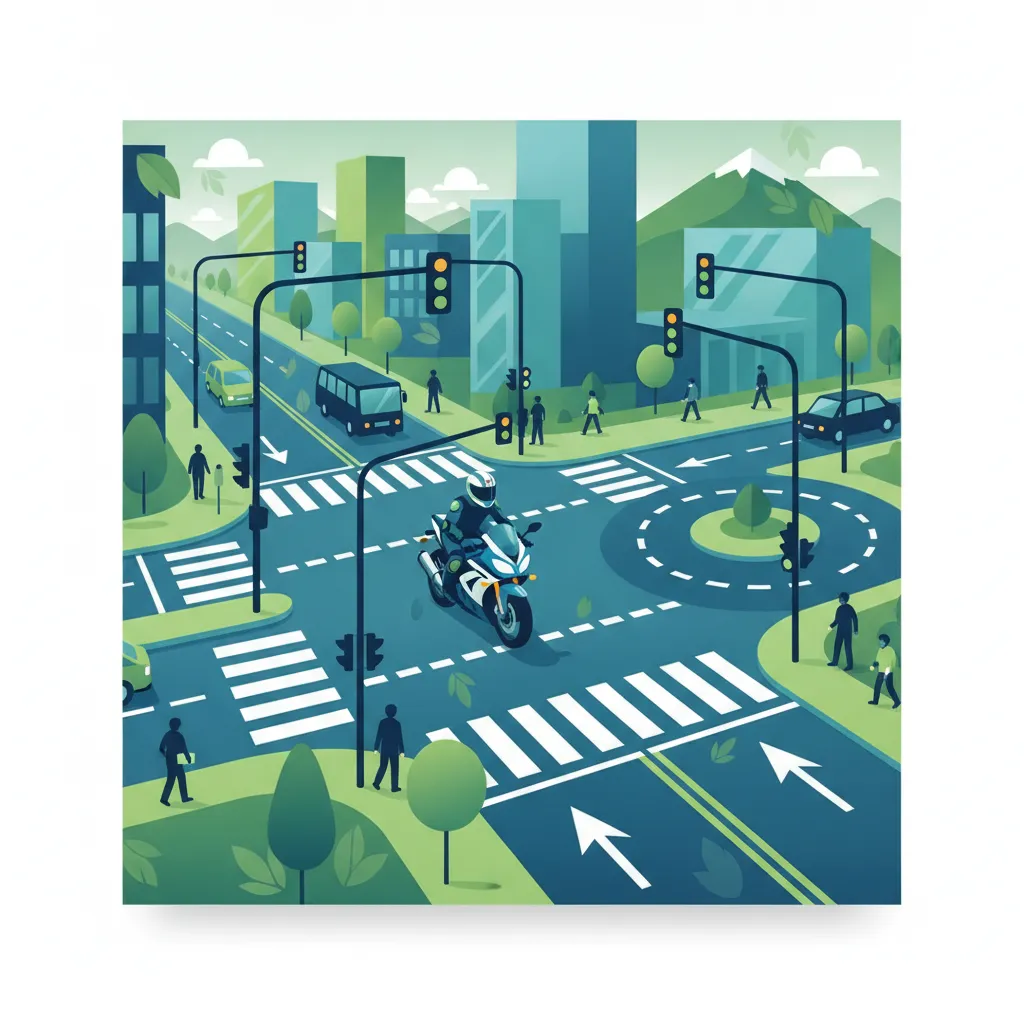
This lesson provides guidance on safely negotiating intersections and roundabouts on a motorcycle. It details the correct procedures for approach, lane selection, and yielding according to Swiss traffic regulations. Emphasis is placed on heightened awareness of other vehicles, cyclists, and pedestrians in these complex traffic environments.
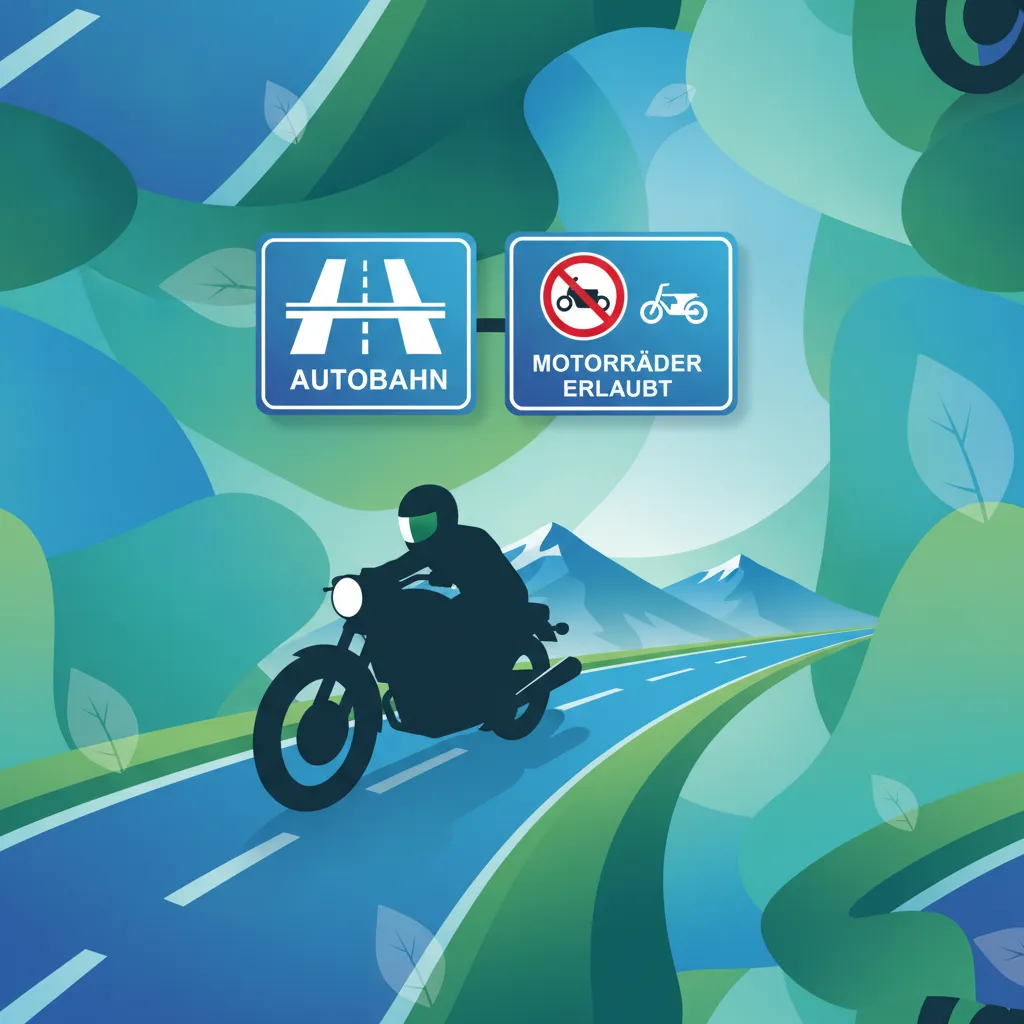
This lesson outlines the specific rules and skills required for riding on high-speed Swiss motorways. It covers the correct procedures for entering and exiting, merging with traffic, maintaining appropriate speed, and conducting safe overtaking maneuvers. Emphasis is placed on using mirrors and signals effectively to integrate safely into the flow of traffic.

This lesson focuses on mitigating the risk of collisions at intersections, particularly from vehicles turning across the rider's path. It teaches defensive strategies such as positioning for visibility, anticipating driver actions, and using head checks to be aware of surrounding traffic. Managing your own and others' blind spots is presented as a crucial survival skill.

This lesson outlines the principles of safe overtaking, emphasizing the importance of accurate judgment of speed and distance. It covers the necessary steps: checking mirrors, signaling, checking blind spots, executing the maneuver smoothly, and returning to the lane safely. The content is tailored to different road environments, from urban streets to rural roads.

This lesson provides guidance on safely navigating roundabouts and tram lanes, common features in Swiss cities. It covers the rules for yielding, lane positioning within the roundabout, and signaling intentions upon exiting. Special attention is given to the hazards of crossing slippery tram tracks and sharing the road with public transport.

This lesson explores the typical features of rural and alpine roads, such as narrow lanes, sharp bends, and significant elevation changes. It discusses the need for heightened awareness due to limited sight distances and the potential for unexpected hazards like wildlife or agricultural vehicles. Riders will learn to adapt their speed and positioning for these challenging conditions.
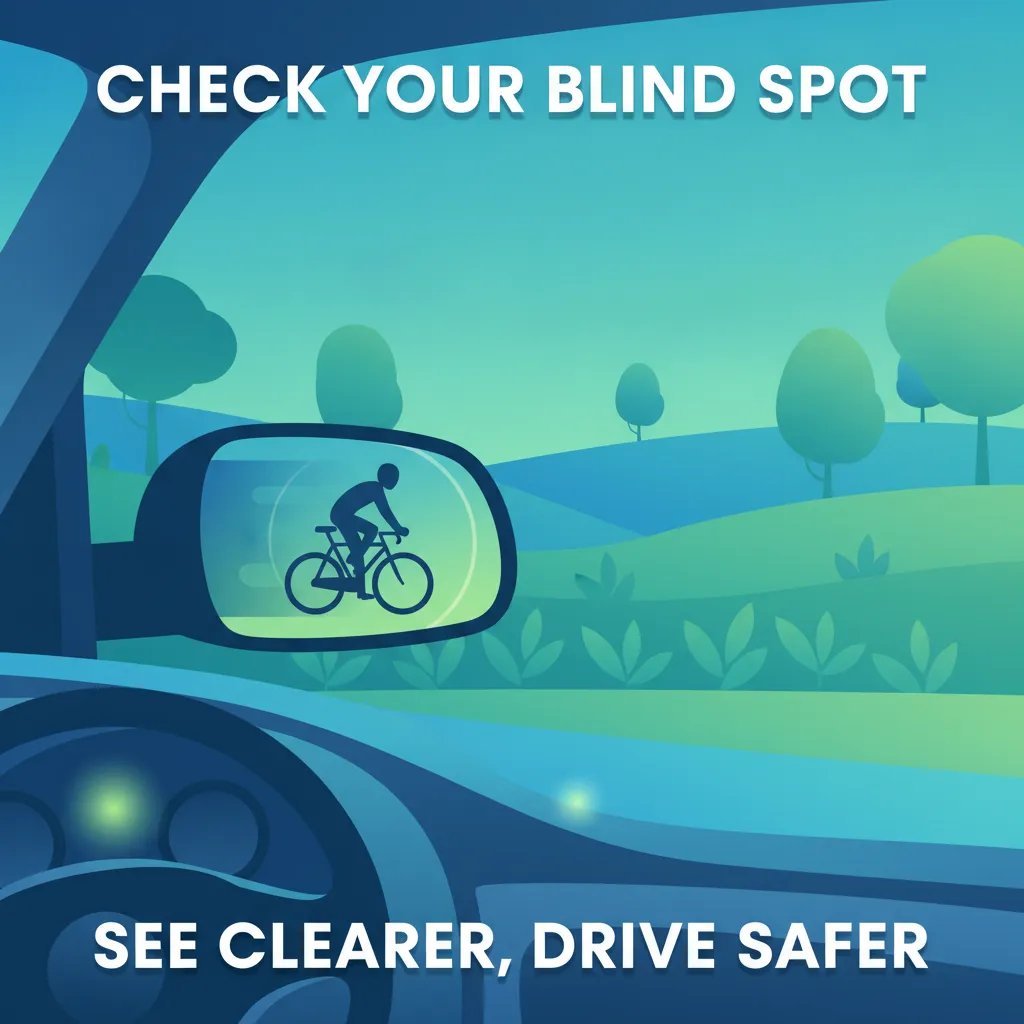
This lesson teaches the correct techniques for positioning and using mirrors to maintain situational awareness. It emphasizes that mirrors alone are insufficient and must be supplemented with physical shoulder and head checks to cover blind spots. Combining these observation methods is essential for making safe lane changes and maneuvers in traffic.

This lesson explores the complexities of riding in busy urban areas with a mix of traffic types. It covers strategies for safely navigating alongside buses, trams, cyclists, and pedestrians. Key topics include respecting designated lanes, anticipating the movements of vulnerable road users, and maintaining heightened situational awareness.
Identify frequent errors in motorcycle lane positioning and learn how to avoid them to enhance safety and visibility on Swiss roads. Understand the theory behind correct positioning choices to prevent accidents.
This lesson explains the strategic importance of road positioning. It details how to select a lane position that makes you most visible to drivers ahead and behind, and helps you avoid the blind spots of larger vehicles. Proper positioning also allows for an escape route and a better line of sight through turns.
This lesson focuses on maintaining proper vehicle positioning within the lane, aligning correctly, and respecting road markings. You will understand how correct positioning contributes to safe overtaking and smooth turning. The content also discusses adjustments required in different scenarios, such as narrow roads and multi-lane highways, to maintain optimal lane discipline.
This lesson focuses on mitigating the risk of collisions at intersections, particularly from vehicles turning across the rider's path. It teaches defensive strategies such as positioning for visibility, anticipating driver actions, and using head checks to be aware of surrounding traffic. Managing your own and others' blind spots is presented as a crucial survival skill.
This lesson provides guidance on safely negotiating intersections and roundabouts on a motorcycle. It details the correct procedures for approach, lane selection, and yielding according to Swiss traffic regulations. Emphasis is placed on heightened awareness of other vehicles, cyclists, and pedestrians in these complex traffic environments.
This lesson outlines the principles of safe overtaking, emphasizing the importance of accurate judgment of speed and distance. It covers the necessary steps: checking mirrors, signaling, checking blind spots, executing the maneuver smoothly, and returning to the lane safely. The content is tailored to different road environments, from urban streets to rural roads.
This lesson teaches the correct techniques for positioning and using mirrors to maintain situational awareness. It emphasizes that mirrors alone are insufficient and must be supplemented with physical shoulder and head checks to cover blind spots. Combining these observation methods is essential for making safe lane changes and maneuvers in traffic.
This lesson provides guidance on safely navigating roundabouts and tram lanes, common features in Swiss cities. It covers the rules for yielding, lane positioning within the roundabout, and signaling intentions upon exiting. Special attention is given to the hazards of crossing slippery tram tracks and sharing the road with public transport.
This lesson outlines the specific rules and skills required for riding on high-speed Swiss motorways. It covers the correct procedures for entering and exiting, merging with traffic, maintaining appropriate speed, and conducting safe overtaking maneuvers. Emphasis is placed on using mirrors and signals effectively to integrate safely into the flow of traffic.

This lesson focuses on the critical relationship between corner entry speed, line selection, and rider body position. It teaches the standard 'outside-in-outside' line for maximizing visibility and stability through a corner. Proper body positioning is explained as a way to assist the motorcycle in leaning and maintaining traction throughout the turn.
This lesson explores the complexities of riding in busy urban areas with a mix of traffic types. It covers strategies for safely navigating alongside buses, trams, cyclists, and pedestrians. Key topics include respecting designated lanes, anticipating the movements of vulnerable road users, and maintaining heightened situational awareness.
Find clear answers to common questions learners have about Road Positioning: Lane Placement and Visibility in Swiss Traffic. Learn how the lesson is structured, which driving theory objectives it supports, and how it fits into the overall learning path of units and curriculum progression in Switzerland. These explanations help you understand key concepts, lesson flow, and exam focused study goals.
Because motorcycles are smaller and less visible, strategic lane positioning is your primary tool for being seen. Unlike a car, you can adjust your position within the lane to peek around obstacles or avoid blind spots, which is a key requirement for the Swiss theory exam.
You should generally adopt a position that makes you clearly visible to entering traffic while maintaining stability. Avoid riding on the very edge of the lane where road debris or slippery surfaces might affect your grip, and ensure you are positioned to follow your intended path clearly.
Yes, group riding requires specific spacing and staggered positioning to maintain visibility and safety. While this lesson covers solo positioning, understanding these foundations is critical before advancing to group dynamics covered later in the course.
Correct positioning provides you with a better view of the road surface, allowing you to spot hazards like oil, tram rails, or gravel earlier. By choosing a path that avoids these hazards, you ensure that your emergency braking is performed on the highest possible traction surface.
Pinpoint specific Swiss traffic rules, road signs, or driving situations you need to master. Use the practice search to start a focused revision session now and build confidence for your official driving theory exam.