
This lesson teaches you how to identify and mitigate the risks posed by vehicles turning across your path at intersections. By mastering defensive positioning and observation techniques, you will significantly improve your safety and be better prepared for real-world Swiss traffic and your theory exam.

Lesson content overview
Motorcyclists face unique challenges at intersections, primarily due to their smaller size and the inherent blind spots of other vehicles. This lesson, part of your Swiss Motorcycle Licence Theory Course for Categories A and A1, delves into critical strategies for identifying and mitigating the risks posed by blind spots and vehicles turning across your path. Mastering these defensive techniques is paramount for enhancing your visibility, improving decision-making, and significantly reducing the risk of collisions.
A blind spot is an area around any vehicle that is not visible to the driver through mirrors or direct line of sight. For motorcyclists, these zones represent significant hazards, as being hidden from a driver's view can lead to unexpected and dangerous maneuvers by other road users. At intersections, where multiple vehicles converge and change direction, blind spots become particularly treacherous.
An area around a vehicle that cannot be observed by the driver through mirrors or direct line of sight due to vehicle structures or limitations of human vision.
Every vehicle, from a compact car to a large truck, has blind spots. These are inherent limitations of vehicle design and human perception. While mirrors provide a wide field of view, they cannot cover every angle. Pillars, rear structures, and even passengers can obstruct a driver's vision, creating zones where a motorcycle can become completely invisible.
Blind spots can be broadly categorized based on their location around a vehicle:
Motorcyclists are inherently more vulnerable to blind spot collisions due to their smaller profile and the common misperception by other drivers that "if I don't see it, it isn't there." When a motorcyclist occupies a blind spot, the driver of the larger vehicle may proceed with a turn or lane change, unaware of the motorcycle's presence. This can result in:
The consequences for a motorcyclist in such collisions are often severe, making proactive blind spot management a crucial survival skill.
Turn-across traffic refers to vehicles that execute a turning maneuver (left or right) across the path of a rider traveling straight through an intersection. These situations are a leading cause of motorcycle accidents and require heightened awareness and defensive riding techniques.
At any intersection, drivers may intend to turn. Your goal as a motorcyclist is to identify these intentions early and anticipate potential conflicts. Look for:
In Switzerland, where right-hand traffic prevails, specific turning scenarios present unique challenges:
Never assume other drivers see you or will adhere strictly to right-of-way rules. Develop a mindset of constant anticipation:
As a motorcyclist, you cannot control other drivers' observation habits, but you can significantly influence your own visibility. Proactive visibility is the practice of actively ensuring your presence is detectable by other road users, especially at critical points like intersections.
Your position within your lane is a powerful tool for increasing visibility and managing blind spots.
When approaching an intersection, actively scan for vehicles intending to turn. Adjust your lane position to maximize your visibility to these vehicles. Aim to be seen in their central or side mirrors, or ideally, directly by the driver.
In Switzerland, motorcycles are legally required to have their headlights on at all times, even during daylight hours. This is a crucial measure for proactive visibility.
Eye contact is the most direct form of communication on the road. If you can make eye contact with a driver at an intersection, it's a strong indicator that they have seen you.
Effective observation is the cornerstone of safe riding. A structured approach to scanning your surroundings, known as the observation hierarchy, ensures that you systematically check all critical areas, including potential blind spots and turn-across traffic.
Your mirrors are your primary tool for understanding what is happening behind and to the sides of your motorcycle.
A shoulder check, or head check, involves briefly turning your head to glance over your shoulder to cover the areas not visible in your mirrors. This is a non-negotiable step in many riding scenarios.
Scan forward first: Ensure the path ahead is clear and safe to momentarily shift your gaze. You don't want to run into an obstacle while looking over your shoulder.
Brief head turn: Quickly turn your head to glance over the appropriate shoulder (e.g., left shoulder for left blind spot, right shoulder for right blind spot). The movement should be swift and not compromise your balance or control.
Return focus forward: Immediately return your gaze to the road ahead.
Perform before every lane change or significant turn: Always perform a shoulder check before changing lanes, merging, or entering an intersection where there's a risk of turn-across traffic.
Never rely solely on your mirrors. A quick shoulder check is essential to confirm that no vehicle, especially another motorcycle or bicycle, is hidden in your blind spot before you commit to a maneuver, particularly at intersections.
At intersections, the observation hierarchy becomes even more critical. Your scanning routine should be comprehensive:
Speed management is a fundamental aspect of motorcycle safety, directly influencing your ability to react to hazards. At intersections, where risks are elevated due to turning traffic and blind spots, maintaining an adequate speed and reaction buffer is crucial.
The speed at which you approach an intersection dictates how much time and distance you have to perceive and react to a developing hazard.
Understanding stopping distance is vital for creating a reaction buffer. Stopping distance comprises two main components:
At higher speeds, both reaction distance and braking distance increase significantly. Therefore, reducing your speed at intersections directly shortens your overall stopping distance, giving you a greater margin for error if a vehicle unexpectedly turns across your path.
A safety margin is the extra time and space you create around yourself to react to unforeseen events. By actively managing your speed and observation at intersections, you are essentially building this safety margin.
Adhering to Swiss traffic laws is not just a legal obligation but a critical component of safe riding, especially at intersections. These regulations are designed to prevent conflicts and ensure a predictable flow of traffic.
Understanding right-of-way (Vortritt) is fundamental in Switzerland. While you might legally have the right-of-way, it is never an absolute guarantee of safety, particularly on a motorcycle.
Rechtsvortritt): At uncontrolled intersections (no signs or signals), traffic approaching from the right usually has priority. Be cautious, however, as many drivers may not fully respect this rule when encountering a motorcycle.A crucial rule for preventing turn-across collisions in right-hand traffic is:
As mentioned, Swiss law mandates that motorcycles must use headlights at all times, day or night. This significantly improves your conspicuity to other road users, helping to counteract blind spot risks.
Communicating your intentions and maintaining adequate space are vital for preventing collisions.
While you are legally entitled to right-of-way in certain situations, never assume other drivers will grant it. Always ride defensively, prepare for the worst, and prioritize your safety over asserting your right-of-way.
Understanding common errors can help you actively prevent them in your own riding. Many intersection-related incidents stem from predictable mistakes by either the motorcyclist or other drivers.
Riding conditions are rarely static. Your strategies for managing blind spots and turn-across traffic must adapt to various environmental factors and situational contexts.
To solidify your understanding, let's explore how these principles apply in typical riding situations you might encounter during your Swiss Motorcycle Licence Theory Course.
Setting: A busy urban intersection with traffic lights. You are approaching a green light, going straight. A car to your left is signaling a right turn. Challenge: The car turning right might cut across your path, especially if you are in its blind spot. Correct Action: As you approach, note the car's turn signal and its position. Adjust your lane position slightly to the left to maximize your visibility to the car's driver. Reduce your speed, cover your brakes, and perform a quick left shoulder check to ensure no other vehicles are hidden. Make eye contact with the driver if possible. If the car starts to turn, be prepared to stop. Outcome: The car driver sees you clearly due to your proactive positioning and waits for you to pass, or you are ready to react safely if they don't.
Setting: A rural four-way stop intersection. You arrive at the same time as a car on your left, which intends to turn right across your potential path.
Challenge: Both vehicles have stopped. The car's driver might assume they can proceed or might not see you.
Correct Action: Stop completely. Before proceeding, perform a left shoulder check to verify the car's blind spot is clear and to confirm its intention. Make eye contact with the driver. If the driver begins to turn without seeing you, be prepared to yield or stop, even if you technically arrived first or have priority (e.g., Rechtsvortritt if it were an uncontrolled intersection, but at a 4-way stop, the first to stop and proceed usually has priority).
Outcome: You identify the car's movement and either proceed safely or yield to avoid a collision.
Setting: A city intersection at night with streetlights and light rain. You are going straight, and a car from the opposite direction is signaling a left turn across your lane. Challenge: Reduced visibility due to night and rain, combined with a potentially impatient driver making a left turn. Correct Action: Ensure your low beam headlights are on and clean. Reduce your speed significantly, increasing your reaction buffer due to the wet conditions. Keep your lane position slightly to the right to increase your profile to the oncoming car. Perform extra vigorous observation (mirrors, shoulder checks, eye contact). Be prepared to brake or swerve if the car begins its turn. Outcome: Your enhanced visibility and readiness to react allow you to safely pass or stop before a potential collision.
Setting: You are on a multi-lane road approaching an intersection. A large semi-truck in the rightmost lane is signaling a right turn, but it needs to swing wide to the left to make the turn. You are in the lane to its left, going straight. Challenge: The truck has massive blind spots, and its wide turning radius means it will occupy more than one lane, potentially cutting into your path. Correct Action: Recognize the truck's turning intention early. Immediately increase your distance from the truck. Do not ride alongside it, especially on its right side. If you are in the lane to its left, ensure you are far enough back that the driver can see you, or slow down significantly to allow the truck to complete its turn. Anticipate that the truck will need your lane space to turn. Outcome: You avoid being caught in the truck's blind spot or crushed by its wide turning arc.
Navigating intersections safely as a motorcyclist requires a combination of vigilance, strategic positioning, and a defensive mindset. By consistently applying these principles, you significantly reduce your risk of collision.
Vortritt) and signaling requirements. However, always ride defensively, assuming other drivers might not see you or yield to you.Mastering these skills is essential not only for passing your Swiss Motorcycle Licence Theory exam but, more importantly, for ensuring your safety and confidence on the road.
This lesson addresses one of the most dangerous scenarios for motorcyclists: vehicles turning across their path at intersections. It explains that blind spots are inherent vehicle limitations where riders become invisible, making strategic lane positioning and proactive visibility essential. The lesson details a structured observation hierarchy combining mirror checks, shoulder checks, and eye contact to systematically eliminate blind spots before committing to any maneuver. Speed management is emphasized as critical—reducing approach speed creates reaction buffer and shorter stopping distances. Swiss-specific content covers mandatory headlight use, Rechtsvortritt right-of-way rules, and the particular dangers of left-turn-across-path collisions in right-hand traffic. Defensive riding principles stress that legal right-of-way never guarantees safety; riders must always anticipate driver errors and position themselves to be seen.
A short set of high-value points that capture the most important learning from this lesson.
Blind spots are inherent vehicle design limitations where motorcyclists become invisible to drivers, making avoidance through positioning essential for survival.
Proactive visibility through lane positioning, always-on low beam headlights (mandatory in Switzerland), and seeking eye contact significantly reduces turn-across collision risk.
A structured observation hierarchy combining mirror checks, shoulder checks, and direct eye contact is required before any intersection maneuver.
Reducing approach speed at intersections creates crucial reaction buffer, shortening stopping distance and providing more time to perceive and respond to hazards.
Swiss right-of-way rules (Vortritt) must be understood but never assumed—always ride defensively and prepare for other drivers to fail to yield.
Explore all units and lessons included in this driving theory course.
Never linger in another vehicle's blind spot; continuously adjust your lane position to remain visible in mirrors or the driver's direct line of sight.
Swiss law mandates low beam headlights for motorcycles at all times, even in daylight—this is your primary visibility tool.
The observation hierarchy for intersections: scan ahead, check mirrors, perform shoulder checks, attempt eye contact, then proceed while continuing to scan.
When a vehicle is turning left across your path (left-turn-across-path scenario), expect misjudgment—reduce speed and be prepared to stop even if you have priority.
Larger vehicles have larger blind spots and wider turning radii; never ride alongside trucks or buses and position yourself to be clearly visible.
Riding in a vehicle's blind spot for extended periods, assuming the driver will notice you or that you have the right-of-way.
Relying solely on mirrors without performing shoulder checks, leaving vehicles in the mirror's inherent blind zones undetected.
Approaching complex intersections at speed without reducing velocity, leaving insufficient time to react to unexpected turning maneuvers.
Assuming turning vehicles will yield properly and failing to prepare defensive braking or evasive action when proceeding through an intersection.
Positioning too close to the curb when going straight, which places the motorcycle in a turning vehicle's blind spot.
Lesson content overview
A short set of high-value points that capture the most important learning from this lesson.
Blind spots are inherent vehicle design limitations where motorcyclists become invisible to drivers, making avoidance through positioning essential for survival.
Proactive visibility through lane positioning, always-on low beam headlights (mandatory in Switzerland), and seeking eye contact significantly reduces turn-across collision risk.
A structured observation hierarchy combining mirror checks, shoulder checks, and direct eye contact is required before any intersection maneuver.
Reducing approach speed at intersections creates crucial reaction buffer, shortening stopping distance and providing more time to perceive and respond to hazards.
Swiss right-of-way rules (Vortritt) must be understood but never assumed—always ride defensively and prepare for other drivers to fail to yield.
Explore all units and lessons included in this driving theory course.
Never linger in another vehicle's blind spot; continuously adjust your lane position to remain visible in mirrors or the driver's direct line of sight.
Swiss law mandates low beam headlights for motorcycles at all times, even in daylight—this is your primary visibility tool.
The observation hierarchy for intersections: scan ahead, check mirrors, perform shoulder checks, attempt eye contact, then proceed while continuing to scan.
When a vehicle is turning left across your path (left-turn-across-path scenario), expect misjudgment—reduce speed and be prepared to stop even if you have priority.
Larger vehicles have larger blind spots and wider turning radii; never ride alongside trucks or buses and position yourself to be clearly visible.
Riding in a vehicle's blind spot for extended periods, assuming the driver will notice you or that you have the right-of-way.
Relying solely on mirrors without performing shoulder checks, leaving vehicles in the mirror's inherent blind zones undetected.
Approaching complex intersections at speed without reducing velocity, leaving insufficient time to react to unexpected turning maneuvers.
Assuming turning vehicles will yield properly and failing to prepare defensive braking or evasive action when proceeding through an intersection.
Positioning too close to the curb when going straight, which places the motorcycle in a turning vehicle's blind spot.
Explore search topics learners often look for when studying Managing Blind Spots and Turn-Across Traffic. These topics reflect common questions about road rules, driving situations, safety guidance, and lesson level theory preparation for learners in Switzerland.
Browse additional driving theory lessons that cover connected traffic rules, road signs, and common driving situations related to this topic. Improve your understanding of how different rules interact across everyday traffic scenarios.
Learn advanced defensive riding techniques to manage blind spots and anticipate turn-across traffic at Swiss intersections. Focus on proactive visibility and hazard perception for motorcycle safety and theory exam preparation.
This lesson provides guidance on safely negotiating intersections and roundabouts on a motorcycle. It details the correct procedures for approach, lane selection, and yielding according to Swiss traffic regulations. Emphasis is placed on heightened awareness of other vehicles, cyclists, and pedestrians in these complex traffic environments.

This lesson explains strategic lane positioning to enhance visibility and safety in traffic. It covers how to choose a lane position that helps you see and be seen by other drivers, avoiding their blind spots. The content emphasizes maintaining a space cushion around the motorcycle to allow for reaction time and potential escape routes.
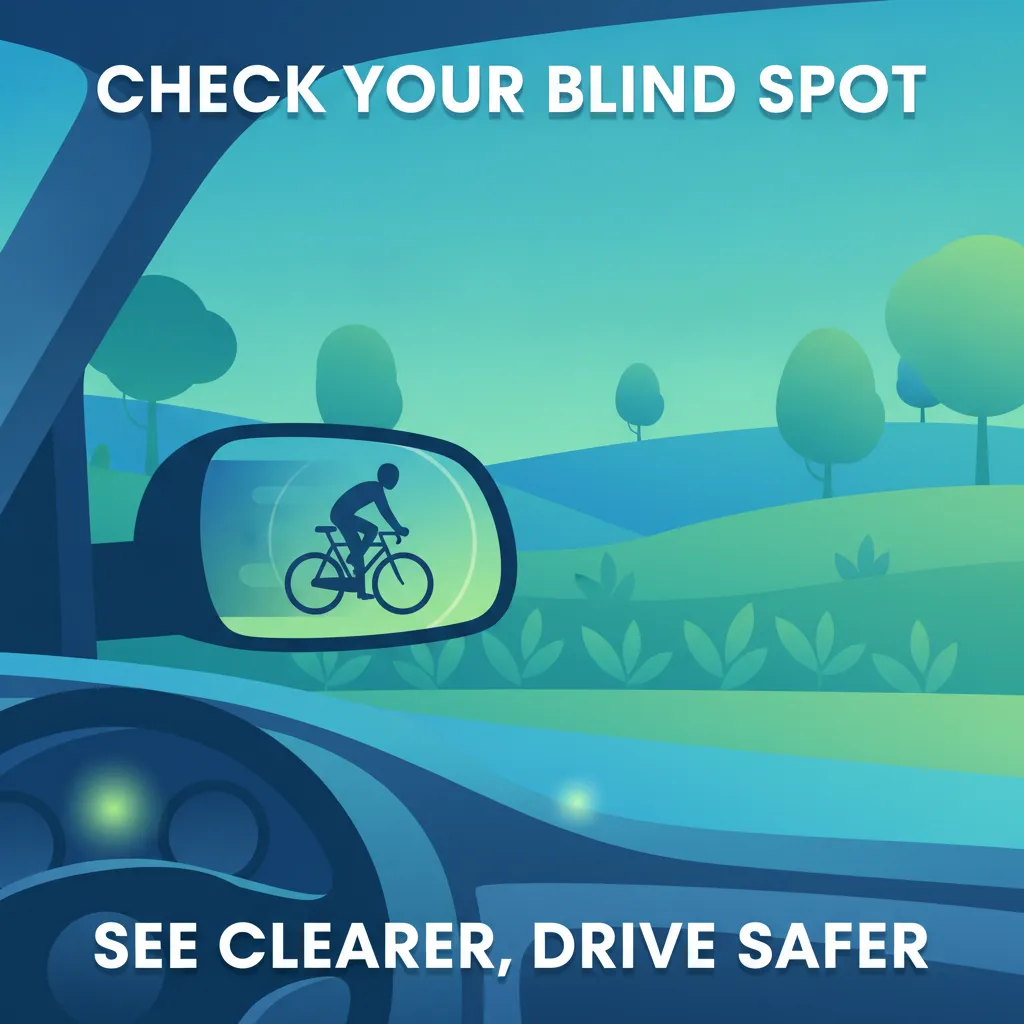
This lesson teaches the correct techniques for positioning and using mirrors to maintain situational awareness. It emphasizes that mirrors alone are insufficient and must be supplemented with physical shoulder and head checks to cover blind spots. Combining these observation methods is essential for making safe lane changes and maneuvers in traffic.

This lesson explains the strategic importance of road positioning. It details how to select a lane position that makes you most visible to drivers ahead and behind, and helps you avoid the blind spots of larger vehicles. Proper positioning also allows for an escape route and a better line of sight through turns.

This lesson outlines the principles of safe overtaking, emphasizing the importance of accurate judgment of speed and distance. It covers the necessary steps: checking mirrors, signaling, checking blind spots, executing the maneuver smoothly, and returning to the lane safely. The content is tailored to different road environments, from urban streets to rural roads.

This lesson focuses on identifying and managing specific road surface hazards that can compromise traction. It provides techniques for safely crossing slippery tram rails and painted markings, navigating uneven cobblestones, and maintaining control on loose gravel. The core skill is learning to scan the road ahead and adjust riding style proactively.

This lesson provides guidance on safely navigating roundabouts and tram lanes, common features in Swiss cities. It covers the rules for yielding, lane positioning within the roundabout, and signaling intentions upon exiting. Special attention is given to the hazards of crossing slippery tram tracks and sharing the road with public transport.
This lesson focuses on strategies for safely interacting with non-standard traffic common on rural roads. It covers how to anticipate the behaviour of slow-moving farm equipment and tourist vehicles, and the legal requirement to yield to emergency services. The importance of patience and safe passing opportunities is stressed.
Pedestrians, cyclists, motorcyclists, and e-scooter riders are extremely vulnerable in any interaction with a heavy vehicle. This lesson instills a defensive mindset, teaching drivers to be hyper-aware of VRUs, especially near junctions, crossings, and cycle lanes. It focuses on anticipation and giving VRUs extra space, as they can be unpredictable and are often hidden in blind spots.

This lesson explores the complexities of riding in busy urban areas with a mix of traffic types. It covers strategies for safely navigating alongside buses, trams, cyclists, and pedestrians. Key topics include respecting designated lanes, anticipating the movements of vulnerable road users, and maintaining heightened situational awareness.
Explore how to enhance your visibility and effectively communicate intentions at Swiss intersections to avoid conflicts with turn-across traffic. Essential theory for managing blind spots and ensuring safety on the road.
This lesson focuses on techniques and equipment designed to increase a motorcyclist's visibility to others. It explains the strategic use of reflective materials, high-visibility clothing, and the mandatory use of daytime running lights. Understanding how to enhance conspicuity is a critical component of proactive self-protection on the road.

This lesson covers the standard hand signals and the correct use of a motorcycle's lighting system to communicate intentions. It explains the importance of signaling clearly and in a timely manner before turning, changing lanes, or stopping. Effective communication is a key factor in preventing misunderstandings and potential conflicts with other road users.
This lesson provides guidance on safely negotiating intersections and roundabouts on a motorcycle. It details the correct procedures for approach, lane selection, and yielding according to Swiss traffic regulations. Emphasis is placed on heightened awareness of other vehicles, cyclists, and pedestrians in these complex traffic environments.

This lesson examines the different lighting systems on a vehicle, including headlamps, fog lights, and turn signals. It explains the appropriate use of low-beam and high-beam headlights and the conditions for activating fog lights. Understanding proper lighting usage improves visibility and safety, especially in low-light or adverse weather conditions.
This lesson explains strategic lane positioning to enhance visibility and safety in traffic. It covers how to choose a lane position that helps you see and be seen by other drivers, avoiding their blind spots. The content emphasizes maintaining a space cushion around the motorcycle to allow for reaction time and potential escape routes.
This lesson teaches the correct techniques for positioning and using mirrors to maintain situational awareness. It emphasizes that mirrors alone are insufficient and must be supplemented with physical shoulder and head checks to cover blind spots. Combining these observation methods is essential for making safe lane changes and maneuvers in traffic.
This lesson explains the strategic importance of road positioning. It details how to select a lane position that makes you most visible to drivers ahead and behind, and helps you avoid the blind spots of larger vehicles. Proper positioning also allows for an escape route and a better line of sight through turns.

This lesson focuses on the concept of conspicuity, or how easily a rider can be seen by others. It explains the legal requirements for vehicle lights and reflectors in Switzerland and the benefits of wearing bright or reflective clothing. Learners will understand how to maximize their visibility during the day, at night, and in poor weather conditions.

This lesson introduces the core behaviour rules governing safe communication, focusing on the use of signals, mirrors, and eye contact. It emphasizes the importance of timely indicator usage and the correct procedure for checking mirrors and blind spots. The content also covers non-verbal communication cues that help convey intent and foster predictable traffic flow.
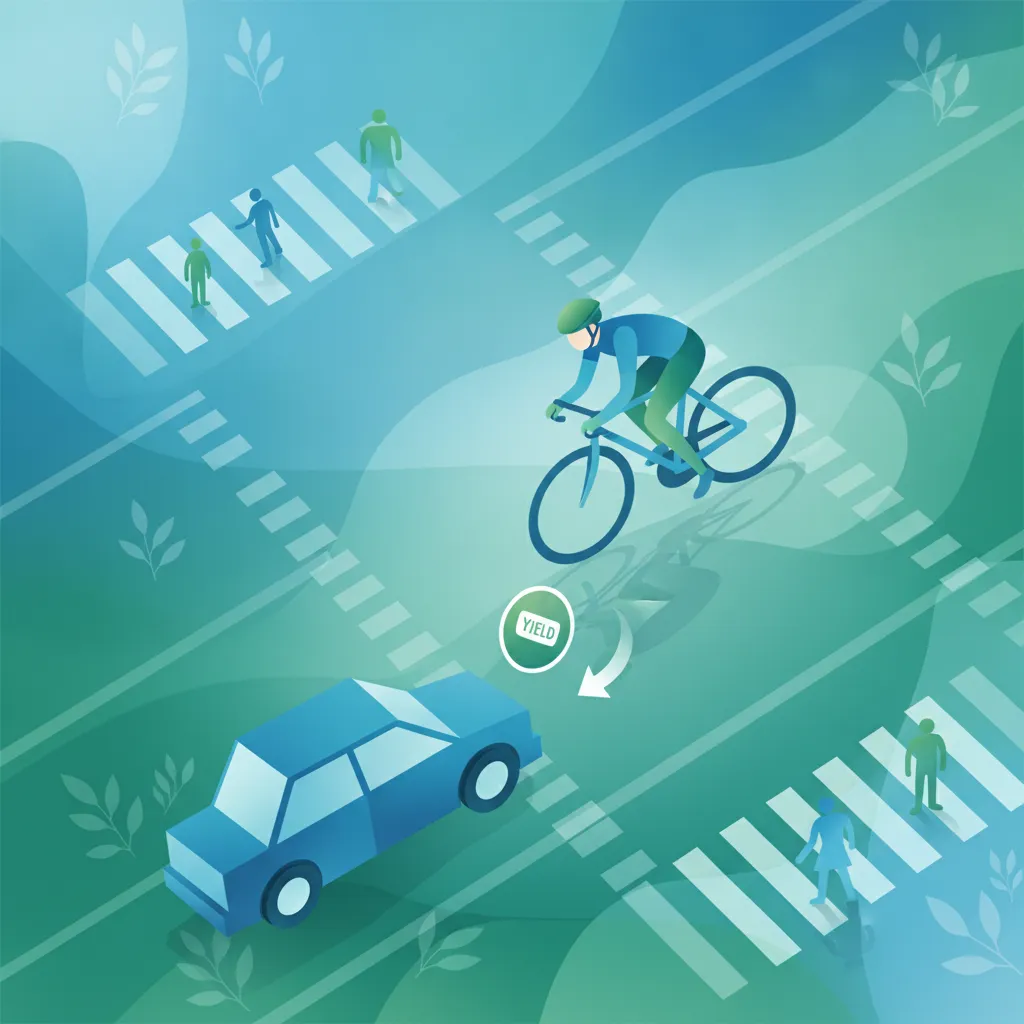
This lesson provides a step-by-step guide to navigating intersections. It reinforces the priority rules, such as 'Rechtsvortritt', and the meaning of yield and stop signs. The content emphasizes the importance of a thorough visual scan on approach and correct positioning to ensure visibility and a safe passage.
Find clear answers to common questions learners have about Managing Blind Spots and Turn-Across Traffic. Learn how the lesson is structured, which driving theory objectives it supports, and how it fits into the overall learning path of units and curriculum progression in Switzerland. These explanations help you understand key concepts, lesson flow, and exam focused study goals.
Because motorcycles are smaller than cars, they often disappear in the blind spots of larger vehicles. Regularly checking your own blind spots and assuming other drivers cannot see you is a core survival skill for riding safely on Swiss roads.
Always cover your brakes and be ready to slow down immediately. If you sense a driver is not looking, adjust your road position to be more visible, and if necessary, be prepared to take evasive action even if you technically have the right of way.
The general rules of 'Rechtsvortritt' apply, but as a motorcyclist, you are more vulnerable. The theory exam often tests your ability to adapt to situations where other drivers might violate your priority, emphasizing that being safe is more important than being right.
The theory exam includes hazard perception and situational judgment questions. By learning these defensive principles, you will be able to recognize dangerous patterns and select the correct, safe course of action in the scenarios presented in the test.
Pinpoint specific Swiss traffic rules, road signs, or driving situations you need to master. Use the practice search to start a focused revision session now and build confidence for your official driving theory exam.