
This lesson guides you through the complex rules of navigating intersections and roundabouts in Switzerland while riding a motorcycle. You will learn to correctly apply priority, manage your lane position, and anticipate the movements of other road users to ensure your safety in high-traffic areas. These skills are vital for both your practical riding and the theoretical exam.
Lesson content overview
Intersections and roundabouts are crucial traffic points, often presenting the highest risk of collisions due to converging traffic streams and complex right-of-way rules. For motorcyclists, navigating these areas safely requires a heightened level of awareness, precise road positioning, and a thorough understanding of Swiss traffic regulations. This lesson provides comprehensive guidance for riders taking the Swiss Motorcycle Licence Theory Course for Categories A and A1, focusing on the unique challenges and strategies for two-wheeled vehicles.
Understanding and correctly applying the principles discussed here will significantly reduce your risk and enhance your safety, contributing to a smooth and predictable flow of traffic.
Motorcycles, by their nature, are less visible than larger vehicles, making intersections and roundabouts particularly hazardous. These zones demand anticipatory action and clear communication of intent from riders. Reduced visibility and smaller physical presence mean that motorcyclists must actively work to be seen and understood by other road users. This proactive approach is fundamental to preventing accidents, especially at points where vehicles change direction, merge, or cross paths.
Successfully navigating these complex environments depends on mastering right-of-way rules, maintaining impeccable lane discipline, adapting speed, and consistently managing your visibility to others.
Right-of-way legally determines which road user has priority to proceed at a given point, preventing conflicts and ensuring an orderly flow of traffic. Misinterpreting or ignoring right-of-way rules is a leading cause of collisions at intersections.
In Switzerland, right-of-way is established by various means:
Practical Meaning for Motorcyclists: Always approach intersections with reduced speed, ready to react. Identify the right-of-way situation early. Never assume you have priority; confirm it. Swiss Road Traffic Regulations (VRV) Articles 36-38 detail these priority rules.
When approaching an intersection, make eye contact with other drivers if possible. This helps confirm that they have seen you and understand your intentions, especially crucial for motorcyclists.
Lane discipline is paramount for motorcyclists, not only for legal compliance but also for safety. It directly impacts your visibility and predictability to other road users.
Motorcyclists must occupy a lane completely, riding within its boundaries. Riding between lanes or "lane splitting" (filtering through stationary or slow-moving traffic between lanes) is strictly prohibited in Switzerland (VRV Article 40). This rule exists because riding between lanes:
Your riding position within the lane should aim for maximum visibility and predictability.
Practical Meaning for Motorcyclists: Maintain a consistent, predictable position within your chosen lane. Signal your intentions early and clearly for lane changes or turns. This not only complies with VRV Article 40 but also enhances your ability to be seen and understood, significantly reducing surprise conflicts.
Roundabouts are designed to improve traffic flow and reduce the severity of collisions compared to traditional intersections. However, they require specific behaviors from motorcyclists to be negotiated safely.
The fundamental rule for roundabouts in Switzerland is to yield to traffic already circulating within the roundabout (VRV Articles 54-56).
Vehicles within the roundabout always have priority. You must reduce your speed and, if necessary, stop before the yield line to wait for a safe gap in circulating traffic.
Some roundabouts have multiple lanes. Correct lane selection is crucial:
Common Mistake: Entering a roundabout too fast without yielding, assuming you have priority. This is a common cause of side-impact collisions.
Appropriate speed is fundamental to safety at any complex traffic point. For motorcyclists, adjusting your speed provides the necessary time to perceive, process, and react to rapidly changing conditions.
Practical Meaning for Motorcyclists: Always approach intersections and roundabouts anticipating the need to slow down or stop. Slowing down before entering the critical area gives you more time to assess the situation, select the correct lane, and react to unexpected events. VRV Article 61 mandates that speed must be adapted to road conditions and traffic.
Overtaking and lane changes are among the riskiest maneuvers, and their proximity to intersections further amplifies this danger. Swiss traffic regulations impose strict limitations to prevent collisions.
In Switzerland, overtaking another vehicle is generally prohibited:
Practical Meaning for Motorcyclists: Plan your overtaking maneuvers well in advance, ensuring they are completed safely and legally before you enter any zone prohibiting overtaking. If you are approaching an intersection, assume overtaking is prohibited and maintain your lane position.
When a lane change is necessary (e.g., to position for a turn):
Pedestrians, cyclists, and other motorcyclists are considered vulnerable road users (VRUs) because they have less protection in the event of a collision. As a motorcyclist, you are also a VRU in relation to cars and trucks, making it essential to extend extra caution to others.
Never assume a pedestrian or cyclist has seen you or will yield to you, even if you have the legal right-of-way. Always be prepared to react.
Traffic lights coordinate complex traffic flows, and understanding their phases is crucial for safety.
Practical Meaning for Motorcyclists: Due to your smaller size, positioning at traffic lights is critical. Avoid stopping directly behind a large vehicle where you might be unseen. Position yourself slightly to one side within your lane, ensuring you are visible in the rear-view mirror of the vehicle ahead and to cross-traffic. Be aware that some traffic light sensors may struggle to detect motorcycles; if the light doesn't change, move slightly within your lane to try and trigger the sensor.
The rules and regulations discussed are derived from the Swiss Road Traffic Regulations (VRV). Adherence to these laws is not merely about avoiding fines; it is about ensuring your safety and the safety of all road users.
| Rule | Statement | Applicability | Rationale |
|---|---|---|---|
| Right-of-Way (VRV Art. 36-38) | Priority road vehicles have priority; others must yield at signs/lights. | All intersections. | Prevents collisions by establishing clear priority. |
| Lane Occupancy (VRV Art. 40) | Motorcycles must occupy a full lane; lane splitting is prohibited. | All roads, especially intersections and roundabouts. | Improves predictability and visibility. |
| Yielding at Roundabouts (VRV Art. 54-56) | Vehicles entering must yield to traffic already circulating. | All roundabouts. | Ensures continuous flow and prevents internal collisions. |
| Overtaking Prohibited (VRV Art. 82-84) | Overtaking is generally prohibited within 100m before an intersection or traffic lights. | Intersections, traffic lights, roundabouts. | Reduces conflict points during critical maneuvers. |
| Speed Adaptation (VRV Art. 61) | Speed must be appropriate for road conditions, traffic, and visibility. | All roads, particularly at intersections and roundabouts. | Allows sufficient reaction time and safe maneuverability. |
| Visibility Requirement (VRV Art. 46) | Motorcyclists must be clearly visible (lights, clothing). | All road situations, especially at intersections. | Reduces the risk of "failure to see" collisions. |
| Traffic Light Compliance (VRV Art. 71-73) | Obey red (stop), amber (prepare to stop), green (go if clear) signals. | Intersections controlled by traffic lights. | Ensures coordinated traffic flow and safety. |
| Vulnerable Road Users (VRV Art. 64-68) | Yield to pedestrians at marked crossings; exercise extra caution around all VRUs. | All roads, especially crossings and pedestrian zones. | Protects less protected road users from serious injury. |
Understanding common mistakes can help you actively avoid them.
Riding conditions are rarely static. Your behavior at intersections and roundabouts must adapt to various circumstances.
The principles for safe riding at intersections and roundabouts are rooted in fundamental physics, human perception, and statistical safety data.
Navigating intersections and roundabouts safely on a motorcycle demands more than just basic driving skills; it requires a deep understanding of Swiss traffic laws, proactive hazard perception, and precise motorcycle handling. By consistently applying the principles of correct right-of-way, strict lane discipline, effective visibility management, and adaptive speed control, you will significantly reduce your risk of incidents. Remember to always anticipate the actions of other road users, especially vulnerable ones, and adjust your riding to prevailing conditions. These crucial skills are not just for passing your theory exam, but for a lifetime of safe and confident riding on Swiss roads.
This lesson covers the essential rules for motorcyclists navigating intersections and roundabouts in Switzerland, emphasizing right-of-way principles derived from VRV Articles 36-38, lane discipline requirements prohibiting lane splitting under VRV Article 40, and proper roundabout procedures outlined in VRV Articles 54-56. Key safety strategies include maintaining full lane occupancy, reducing speed before conflict zones, and ensuring visibility through positioning and lighting. The content highlights the importance of yielding to vulnerable road users and provides specific guidance on signaling, speed adaptation, and traffic light compliance to help riders pass their Category A/A1 theory exam and ride safely in Swiss urban traffic.
A short set of high-value points that capture the most important learning from this lesson.
At Swiss roundabouts, always yield to traffic already circulating inside the roundabout before entering
Lane splitting is strictly prohibited in Switzerland; motorcycles must occupy a full lane at all times
Rechtsvortritt (right-before-left) applies at unmarked urban intersections, giving priority to vehicles approaching from the right
Overtaking is prohibited within 100 metres before intersections or traffic lights in Switzerland
Reduce speed before entering any intersection or roundabout to allow time for hazard assessment and reaction
Explore all units and lessons included in this driving theory course.
Priority Road (Vorfahrtsstraße) signs grant priority at intersecting roads unless overridden by traffic lights
Signal right to exit a roundabout only after passing the exit before your intended one, not upon entry
At zebra crossings, pedestrians always have priority even without traffic lights present
Position yourself slightly offset in lane at traffic lights to remain visible and avoid blind spots
When road markings or signs are absent, apply Rechtsvortritt as the default priority rule in urban areas
Entering a roundabout too fast without adequately checking for circulating traffic and forcing others to brake
Attempting to filter or lane-split through stationary traffic at red lights, which is illegal in Switzerland
Failing to stop fully at stop signs, treating them as yield signs at intersections
Incorrect signaling at roundabouts, such as signaling right upon entry when going straight or continuing left
Proceeding on amber traffic lights when stopping safely would be possible, instead of preparing to stop
Lesson content overview
A short set of high-value points that capture the most important learning from this lesson.
At Swiss roundabouts, always yield to traffic already circulating inside the roundabout before entering
Lane splitting is strictly prohibited in Switzerland; motorcycles must occupy a full lane at all times
Rechtsvortritt (right-before-left) applies at unmarked urban intersections, giving priority to vehicles approaching from the right
Overtaking is prohibited within 100 metres before intersections or traffic lights in Switzerland
Reduce speed before entering any intersection or roundabout to allow time for hazard assessment and reaction
Explore all units and lessons included in this driving theory course.
Priority Road (Vorfahrtsstraße) signs grant priority at intersecting roads unless overridden by traffic lights
Signal right to exit a roundabout only after passing the exit before your intended one, not upon entry
At zebra crossings, pedestrians always have priority even without traffic lights present
Position yourself slightly offset in lane at traffic lights to remain visible and avoid blind spots
When road markings or signs are absent, apply Rechtsvortritt as the default priority rule in urban areas
Entering a roundabout too fast without adequately checking for circulating traffic and forcing others to brake
Attempting to filter or lane-split through stationary traffic at red lights, which is illegal in Switzerland
Failing to stop fully at stop signs, treating them as yield signs at intersections
Incorrect signaling at roundabouts, such as signaling right upon entry when going straight or continuing left
Proceeding on amber traffic lights when stopping safely would be possible, instead of preparing to stop
Explore search topics learners often look for when studying Riding on Two Wheels Through Intersections and Roundabouts. These topics reflect common questions about road rules, driving situations, safety guidance, and lesson level theory preparation for learners in Switzerland.
Browse additional driving theory lessons that cover connected traffic rules, road signs, and common driving situations related to this topic. Improve your understanding of how different rules interact across everyday traffic scenarios.
Explore complex and less common right-of-way scenarios at Swiss intersections and roundabouts. Understand nuanced situations beyond basic rules for safer motorcycle navigation and theory knowledge.
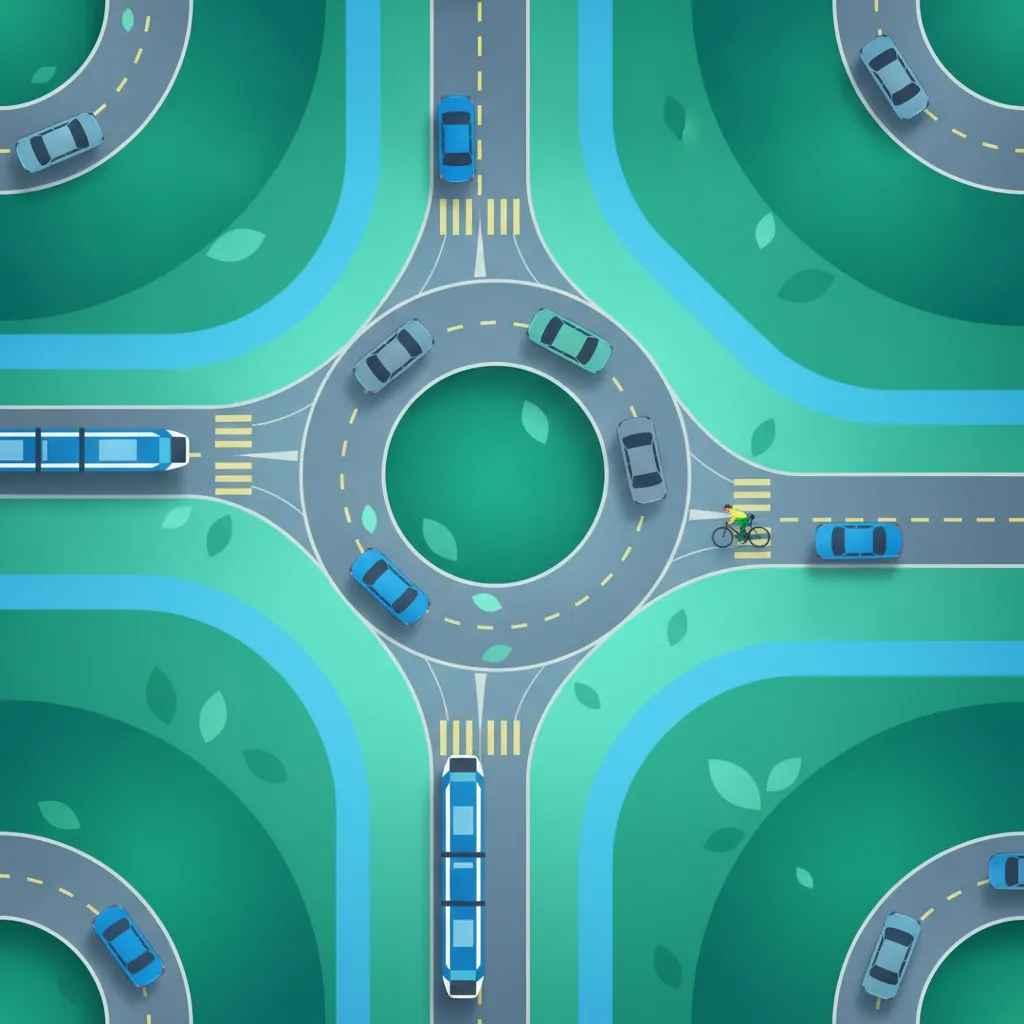
This lesson explains the fundamental rules of priority that govern traffic flow at Swiss intersections. It details the concept of 'Rechtsvortritt' at unmarked junctions and how priority signs alter this default rule. The specific procedures for entering, navigating, and exiting roundabouts are also covered to ensure predictable and safe maneuvers.
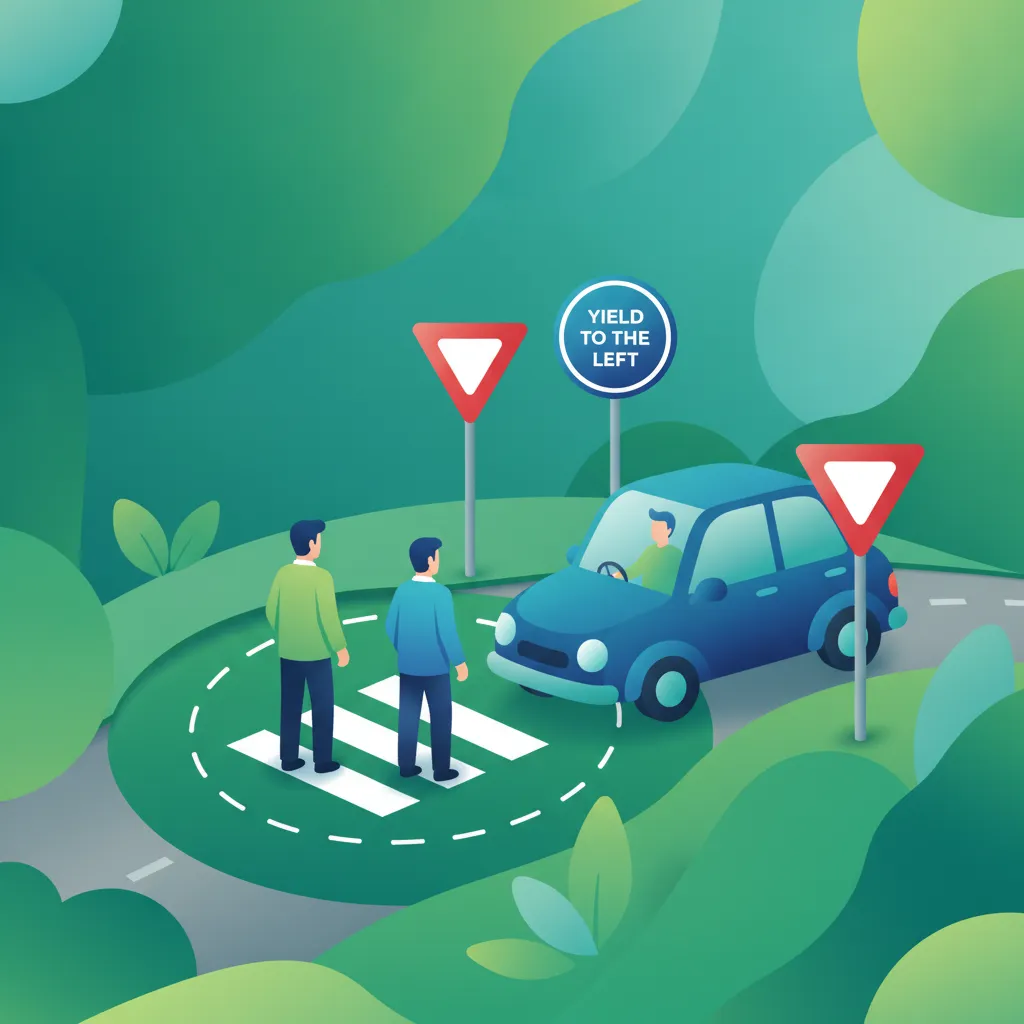
This lesson focuses specifically on the rules and techniques for navigating roundabouts. It clarifies that traffic already in the roundabout has priority and explains how to choose the correct lane on approach based on your intended exit. Proper signaling procedure for entering and, most importantly, exiting the roundabout is also detailed.

This lesson examines the concept of Vortritt (priority) and Rechtsvortritt, the right-hand rule used at uncontrolled intersections. It explains how these rules determine which vehicle has the right-of-way and the hierarchy of priority signs. You will learn to apply these rules in typical scenarios like four-way stops and T-intersections without traffic signals.
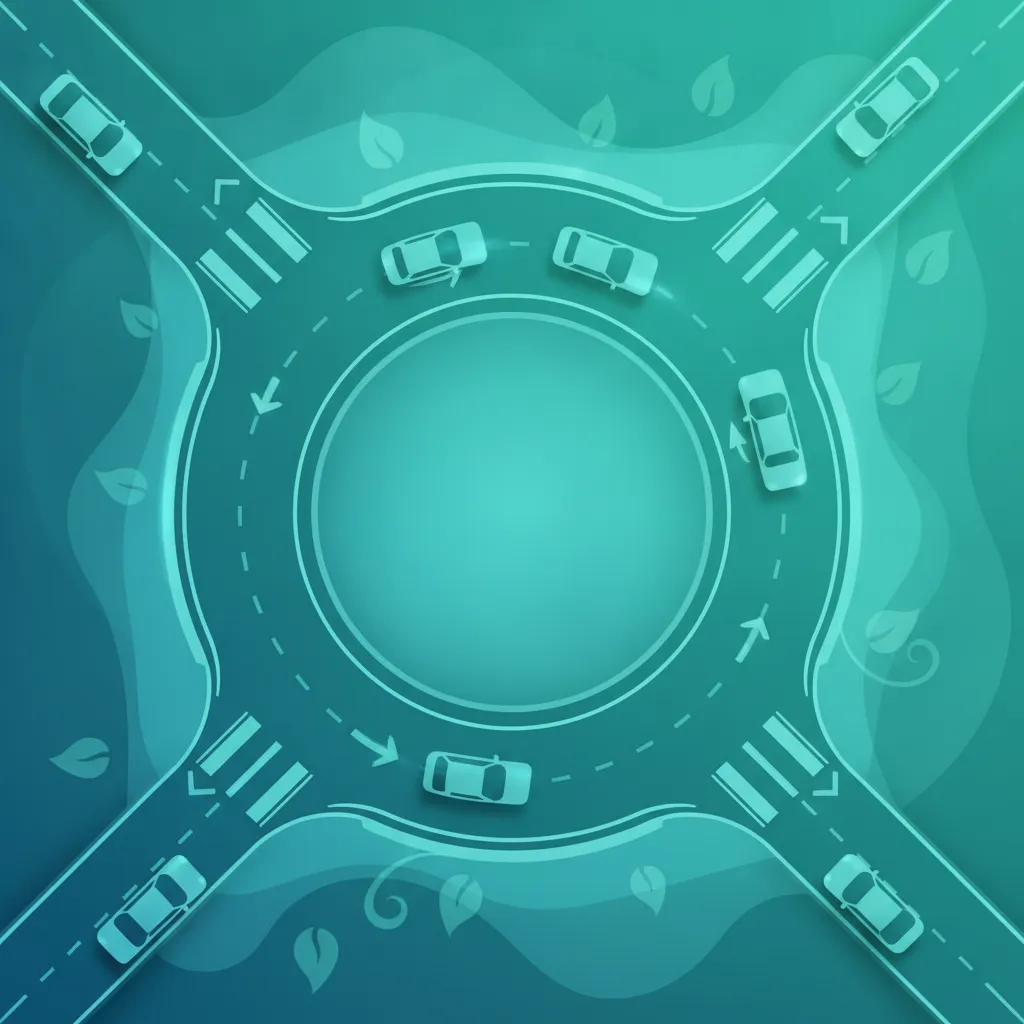
This lesson provides a detailed guide to navigating roundabouts, focusing on yielding to circulating traffic and correct lane usage. You will learn the priority principle that vehicles already in the roundabout have precedence over entering traffic. The content also covers multi-lane roundabout navigation and proper exit strategies for smooth, safe traversal.

This lesson details the specific priority rules governing Swiss intersections, including the concepts of 'Vortritt' and 'Rechtsvortritt'. It explains how to interpret road signs and markings to determine right-of-way in different situations. A clear understanding of these rules is essential for safe and legal navigation of intersections.

This lesson explores how traffic lights dictate priority at intersections, superseding general priority rules. It explains the meanings of red, amber, and green signals and the required actions for each. Emphasis is placed on understanding green light right-of-way and the cautionary role of the amber phase for navigating signal-controlled junctions safely.

This lesson focuses on the Kein Vortritt rule, which applies when a vehicle must yield to all other traffic. You will learn to recognize scenarios where this rule is in effect, such as at minor roads or when entering a main road. The content also discusses how priority signs and traffic signals override the default right-hand rule, clarifying when you must yield.
This lesson provides a step-by-step guide to navigating intersections. It reinforces the priority rules, such as 'Rechtsvortritt', and the meaning of yield and stop signs. The content emphasizes the importance of a thorough visual scan on approach and correct positioning to ensure visibility and a safe passage.
This lesson explores the correct procedures for turning at intersections and navigating roundabouts, focusing on lane selection and signaling. It covers the right-of-way rules for right and left turns and the importance of positioning the vehicle correctly before the turn. In roundabouts, the content emphasizes yielding to circulating traffic and selecting the correct exit lane.
This lesson provides guidance on safely navigating roundabouts and tram lanes, common features in Swiss cities. It covers the rules for yielding, lane positioning within the roundabout, and signaling intentions upon exiting. Special attention is given to the hazards of crossing slippery tram tracks and sharing the road with public transport.
Learn how to safely interact with pedestrians, cyclists, and other vulnerable road users at Swiss intersections and roundabouts. Focuses on visibility, yielding, and hazard perception for motorcycle riders.
This lesson provides guidance on safely navigating roundabouts and tram lanes, common features in Swiss cities. It covers the rules for yielding, lane positioning within the roundabout, and signaling intentions upon exiting. Special attention is given to the hazards of crossing slippery tram tracks and sharing the road with public transport.

This lesson focuses on mitigating the risk of collisions at intersections, particularly from vehicles turning across the rider's path. It teaches defensive strategies such as positioning for visibility, anticipating driver actions, and using head checks to be aware of surrounding traffic. Managing your own and others' blind spots is presented as a crucial survival skill.

This lesson explores the complexities of riding in busy urban areas with a mix of traffic types. It covers strategies for safely navigating alongside buses, trams, cyclists, and pedestrians. Key topics include respecting designated lanes, anticipating the movements of vulnerable road users, and maintaining heightened situational awareness.
This lesson focuses on strategies for safely interacting with non-standard traffic common on rural roads. It covers how to anticipate the behaviour of slow-moving farm equipment and tourist vehicles, and the legal requirement to yield to emergency services. The importance of patience and safe passing opportunities is stressed.
This lesson provides a step-by-step guide to navigating intersections. It reinforces the priority rules, such as 'Rechtsvortritt', and the meaning of yield and stop signs. The content emphasizes the importance of a thorough visual scan on approach and correct positioning to ensure visibility and a safe passage.
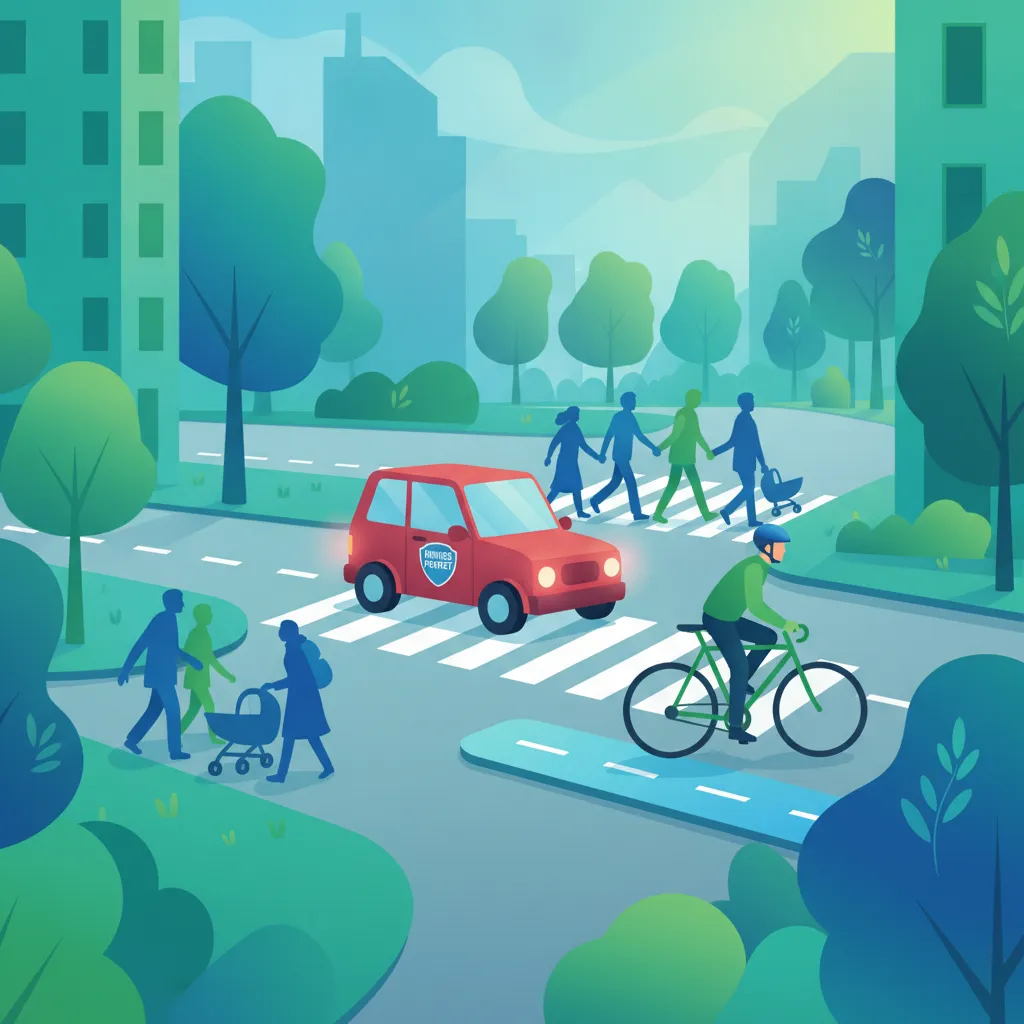
Pedestrians, cyclists, motorcyclists, and e-scooter riders are extremely vulnerable in any interaction with a heavy vehicle. This lesson instills a defensive mindset, teaching drivers to be hyper-aware of VRUs, especially near junctions, crossings, and cycle lanes. It focuses on anticipation and giving VRUs extra space, as they can be unpredictable and are often hidden in blind spots.
This lesson details the specific priority rules governing Swiss intersections, including the concepts of 'Vortritt' and 'Rechtsvortritt'. It explains how to interpret road signs and markings to determine right-of-way in different situations. A clear understanding of these rules is essential for safe and legal navigation of intersections.

This lesson explores the specific considerations for cyclists and pedestrians, who are among the most vulnerable road users. It covers the proper use of bicycle lanes, the minimum safe overtaking distance for cyclists, and the legal requirements for yielding at pedestrian crossings. The content reinforces the need for heightened vigilance around these users.

This lesson outlines the principles of safe overtaking, emphasizing the importance of accurate judgment of speed and distance. It covers the necessary steps: checking mirrors, signaling, checking blind spots, executing the maneuver smoothly, and returning to the lane safely. The content is tailored to different road environments, from urban streets to rural roads.
This lesson outlines the specific rules and skills required for riding on high-speed Swiss motorways. It covers the correct procedures for entering and exiting, merging with traffic, maintaining appropriate speed, and conducting safe overtaking maneuvers. Emphasis is placed on using mirrors and signals effectively to integrate safely into the flow of traffic.
Find clear answers to common questions learners have about Riding on Two Wheels Through Intersections and Roundabouts. Learn how the lesson is structured, which driving theory objectives it supports, and how it fits into the overall learning path of units and curriculum progression in Switzerland. These explanations help you understand key concepts, lesson flow, and exam focused study goals.
Unless signs indicate otherwise, the rule of 'Rechtsvortritt' (right-of-way to the right) applies. Motorcyclists must be prepared to yield to vehicles approaching from the right at unmarked junctions.
No, you do not signal when entering a roundabout, but you must signal your intention to exit by turning on your right indicator shortly after passing the exit before the one you intend to use.
The exam uses visual scenarios requiring you to identify which vehicle has priority based on road markings, traffic signs, and the Rechtsvortritt rule. You must interpret these images accurately to choose the correct sequence of movement.
Always scan for oncoming cyclists, pedestrians, and smaller vehicles that may be obscured by larger cars. Be aware of 'blind spots' and adjust your speed to ensure you have time to stop if someone else ignores the priority rules.
Pinpoint specific Swiss traffic rules, road signs, or driving situations you need to master. Use the practice search to start a focused revision session now and build confidence for your official driving theory exam.