
This lesson prepares you for the unique challenges of riding on Swiss rural roads and mountain passes. You will learn to adapt your speed, observation, and road position to safely handle blind corners, steep gradients, and potential road surface changes.

Lesson content overview
Rural and alpine roads present some of the most exhilarating yet challenging environments for motorcyclists. Unlike urban settings, these routes often feature dramatic terrain, limited infrastructure, and a different mix of road users. Mastering the unique characteristics of these roads is not just about enjoying the ride; it is fundamental to safe and responsible motorcycle operation, as mandated by the Swiss Motorcycle Licence Theory Course for Categories A, A1. This lesson delves into the distinctive features of rural and mountain passes, providing essential knowledge to navigate them with confidence and control.
Rural roads are those outside built-up areas, often connecting villages or providing access to natural landscapes. Alpine roads, a specific type of rural road, are found in mountainous regions and are characterized by extreme elevation changes and complex geometries. Both road types share common challenges that require a heightened level of awareness and specific riding techniques.
Understanding the unique characteristics of these roads is crucial because they directly impact vehicle dynamics, visibility, and the time available to react to hazards. The infrastructure may be less developed, with fewer guardrails, inconsistent road markings, and limited lighting, demanding proactive safety behaviours from the rider. This chapter builds upon foundational knowledge from earlier lessons concerning road positioning, speed management, braking, and hazard perception, applying them to these specialized environments.
The physical layout of rural and alpine roads, known as road geometry, dictates much of the safe riding behaviour required. This encompasses the specific characteristics of lane width, curvature, and gradient, all of which demand careful consideration.
Rural and especially alpine roads are renowned for their curves. These can range from sweeping bends to extremely tight hairpin bends, which are typically 180-degree turns designed to manage significant elevation changes in a short distance. The radius of these curves directly influences the safe speed a motorcyclist can maintain. A tighter curve, with a smaller radius, demands a significantly lower speed than a gentle bend.
Riding too fast into a curve can lead to several dangerous situations, including running wide, encroaching on the opposite lane, or losing traction. Proper cornering technique, involving appropriate entry speed, throttle control, and body positioning, is vital.
Gradient refers to the inclination angle or steepness of a road segment, typically expressed as a percentage. A 10% gradient means the road rises or falls 10 metres for every 100 metres travelled horizontally.
Rural and alpine lanes are often narrower than those in urban areas or on motorways. In some sections, particularly on older alpine passes, the road may be barely wide enough for two vehicles to pass each other safely. The absence of a hard shoulder or verge further limits options for manoeuvre.
These narrow lanes necessitate precise lane positioning and a heightened awareness of oncoming traffic and roadside hazards. It is critical not to assume that narrower roads imply less traffic or permit higher speeds; often, the opposite is true, and the margin for error is significantly reduced.
Sight distance is the unobstructed distance a rider can see ahead along the road. On rural and alpine roads, sight distance is frequently limited by curves, hills, vegetation, and tunnels. Managing sight distance is paramount for safety.
Riders must always maintain a speed that allows them to stop within their visible sight distance. This means reducing speed significantly when approaching blind curves, crests of hills, or areas with dense vegetation that obscure the road ahead. Relying on peripheral vision alone is insufficient; active head movements (head checks) are necessary to maximize visual range, especially through bends.
When approaching a blind curve or crest, reduce your speed to a point where you can stop safely if an obstacle or hazard is present immediately beyond your line of sight.
Any factor that reduces visibility, such as fog, heavy rain, snow, or nighttime conditions, further compounds the challenge of limited sight distance. In such conditions, the required speed reduction is even greater than what road geometry alone might suggest. Appropriate headlight usage, particularly knowing when to switch between high beam and low beam, becomes critical for both seeing and being seen.
Lane positioning refers to the lateral placement of the motorcycle within the travelled lane. On rural and alpine roads, strategic lane positioning is a dynamic skill that enhances visibility, creates safety margins, and prepares the rider for potential hazards.
Improper lane positioning can expose riders to roadside dangers like loose gravel, debris, or drop-offs, especially in the absence of guardrails. It can also reduce the time available to react to hazards, leading to increased collision risk.
Understanding how gradients affect your motorcycle's performance is vital for safe riding.
Riding uphill requires more engine power to overcome gravity. If your motorcycle is heavily loaded or if the gradient is very steep, you may need to downshift to a lower gear to prevent the engine from labouring. Maintaining adequate speed and momentum is important, but always within safe limits and sight distance. Be mindful that your acceleration will be reduced, which affects overtaking opportunities.
Downhill gradients are critical for brake management. Gravity constantly tries to accelerate the motorcycle, which can quickly lead to excessive speeds. Relying solely on the friction brakes (front and rear) on long, steep descents will cause them to overheat, leading to brake fade and significantly reduced stopping power.
Coasting downhill without engaging a gear or using engine braking is extremely dangerous and often illegal. It leaves you with reduced control and puts undue strain on your friction brakes.
The correct technique for downhill control involves:
Rural and alpine environments introduce specific hazards that require particular attention and anticipation.
Wild animals are a common and unpredictable hazard. Deer, chamois, marmots, and other creatures can suddenly appear on the road, especially at dawn, dusk, or during specific migration seasons.
Rural roads are often shared with agricultural vehicles such as tractors, combine harvesters, and other farm machinery. These vehicles are typically slow-moving, large, and can have unpredictable movements (e.g., turning into fields).
Popular rural and alpine routes attract tourists, often driving rental cars, campervans, or towing caravans. These drivers may be unfamiliar with the roads, drive slower, or make unexpected stops. Cyclists are also common, especially on scenic passes.
Rural and alpine roads are more susceptible to environmental hazards.
Constantly scan the road surface ahead for changes. Adjust your speed and control inputs (throttle, braking, steering) smoothly when encountering slippery or uneven patches.
Many rural and older alpine roads lack the sophisticated safety features found on motorways or main urban arteries.
These limitations demand proactive safety behaviours from the rider. Use audible warnings (horn) when visibility is severely restricted, maintain a safe distance from road edges, and rely more heavily on your own judgment and observation skills.
Adhering to specific Swiss traffic regulations is mandatory for safe and legal riding on rural and alpine roads.
Speed Limits and Sight Distance: You must always reduce your speed to ensure you can stop safely within your visible sight distance, especially on blind curves or crests. Speed limits are not a target but a maximum, and conditions often dictate a lower safe speed.
Yielding to Agricultural Machinery: On narrow rural and alpine roads, it is mandatory to yield to slow-moving agricultural vehicles, particularly when overtaking would be unsafe. This respects the practical challenges faced by these larger vehicles.
Engine Braking on Descents: While often a recommendation rather than a strict legal mandate, the use of engine braking on downhill gradients exceeding 5% is a critical best practice endorsed by Swiss guidelines. It prevents brake fade and maintains vehicle control.
Lane Discipline: Riders must remain within lane markings. Riding on the hard shoulder or verge is generally prohibited unless absolutely necessary to avoid an immediate hazard, as these areas are not designed for regular traffic flow and can be unstable.
Roadside Safety: Maintain a safe distance from the roadside edge, particularly where no guardrails are present. This minimises the risk of run-off accidents onto slopes or cliffs.
Headlight Usage: On dark rural and alpine roads at night, use high beam headlights to maximise visibility. However, you must switch to low beam immediately when oncoming traffic approaches or when following another vehicle closely, to avoid dazzling other drivers.
Understanding common mistakes on rural and alpine roads can help riders avoid dangerous situations.
Riding conditions on rural and alpine roads are rarely static. Riders must adapt their behaviour based on changing circumstances:
Riding on rural and alpine roads is an incredibly rewarding experience, offering stunning scenery and dynamic challenges. However, the unique characteristics of these environments – from their complex geometry and limited sight distances to their specific hazards and less developed infrastructure – demand a skilled, alert, and adaptable rider.
By deeply understanding how to manage speed according to sight distance, utilizing strategic lane positioning, mastering gradient dynamics with effective braking techniques, and anticipating specific hazards, motorcyclists can navigate these roads safely and responsibly. Adhering to Swiss traffic regulations and constantly adapting to changing conditions are key to ensuring an enjoyable and secure journey through Switzerland's breathtaking landscapes.
Rural and alpine roads challenge motorcyclists with complex geometry, limited sight distances, and specific hazards requiring heightened awareness. Key skills include matching speed to visibility, using engine braking on descents to prevent brake fade, and positioning strategically on curves for maximum sightlines. Riders must anticipate wildlife, agricultural vehicles, cyclists, and variable road surfaces while respecting narrow lanes and sparse infrastructure like missing guardrails. Adapting technique to weather, light conditions, and vehicle load ensures safer navigation through Switzerland's demanding mountain environments.
A short set of high-value points that capture the most important learning from this lesson.
Always adjust your speed so you can stop safely within your visible sight distance, especially on blind curves and hill crests.
Strategic lane positioning on curves—moving toward the inside edge—improves your sightline and lets you see further ahead.
Engine braking is essential on downhill gradients; downshifting prevents brake fade from overheating friction brakes.
Rural and alpine roads require constant scanning for wildlife, agricultural vehicles, and environmental hazards that are uncommon in urban settings.
Narrow lanes demand precise positioning with equal margins from both edges; never assume reduced traffic means reduced risk.
Explore all units and lessons included in this driving theory course.
Gradient is expressed as a percentage; a 10% gradient means the road rises or falls 10 metres per 100 metres horizontally.
Stopping Sight Distance (SSD) is the minimum distance to perceive a hazard, react, and come to a complete stop.
Hairpin bends are extremely tight 180-degree curves requiring significantly lower speeds than gentle bends.
On blind curves in right-hand traffic countries like Switzerland, positioning toward the centre line improves visibility through left-hand bends.
Mud, loose gravel, and ice from agricultural vehicles can appear suddenly on rural roads after dry spells or cooler periods.
Entering blind curves or crests at speeds that prevent stopping within visible sight distance, risking collisions with hidden hazards.
Coasting downhill without engine braking causes friction brake overheating, leading to brake fade and loss of braking power.
Attempting to overtake on winding two-lane alpine roads where visibility is limited, creating head-on collision risks.
Failing to switch from high beam to low beam on mountain passes, dazzling oncoming drivers who may emerge unexpectedly from bends.
Underestimating wildlife presence at dawn and dusk, or assuming one animal alone means no others are following.
Lesson content overview
A short set of high-value points that capture the most important learning from this lesson.
Always adjust your speed so you can stop safely within your visible sight distance, especially on blind curves and hill crests.
Strategic lane positioning on curves—moving toward the inside edge—improves your sightline and lets you see further ahead.
Engine braking is essential on downhill gradients; downshifting prevents brake fade from overheating friction brakes.
Rural and alpine roads require constant scanning for wildlife, agricultural vehicles, and environmental hazards that are uncommon in urban settings.
Narrow lanes demand precise positioning with equal margins from both edges; never assume reduced traffic means reduced risk.
Explore all units and lessons included in this driving theory course.
Gradient is expressed as a percentage; a 10% gradient means the road rises or falls 10 metres per 100 metres horizontally.
Stopping Sight Distance (SSD) is the minimum distance to perceive a hazard, react, and come to a complete stop.
Hairpin bends are extremely tight 180-degree curves requiring significantly lower speeds than gentle bends.
On blind curves in right-hand traffic countries like Switzerland, positioning toward the centre line improves visibility through left-hand bends.
Mud, loose gravel, and ice from agricultural vehicles can appear suddenly on rural roads after dry spells or cooler periods.
Entering blind curves or crests at speeds that prevent stopping within visible sight distance, risking collisions with hidden hazards.
Coasting downhill without engine braking causes friction brake overheating, leading to brake fade and loss of braking power.
Attempting to overtake on winding two-lane alpine roads where visibility is limited, creating head-on collision risks.
Failing to switch from high beam to low beam on mountain passes, dazzling oncoming drivers who may emerge unexpectedly from bends.
Underestimating wildlife presence at dawn and dusk, or assuming one animal alone means no others are following.
Explore search topics learners often look for when studying Characteristics of Rural and Alpine Roads. These topics reflect common questions about road rules, driving situations, safety guidance, and lesson level theory preparation for learners in Switzerland.
Browse additional driving theory lessons that cover connected traffic rules, road signs, and common driving situations related to this topic. Improve your understanding of how different rules interact across everyday traffic scenarios.
Understand the unique risks like wildlife, agricultural vehicles, and poor visibility on Swiss rural and mountain roads. Learn the specific traffic regulations and best practices for safe riding.
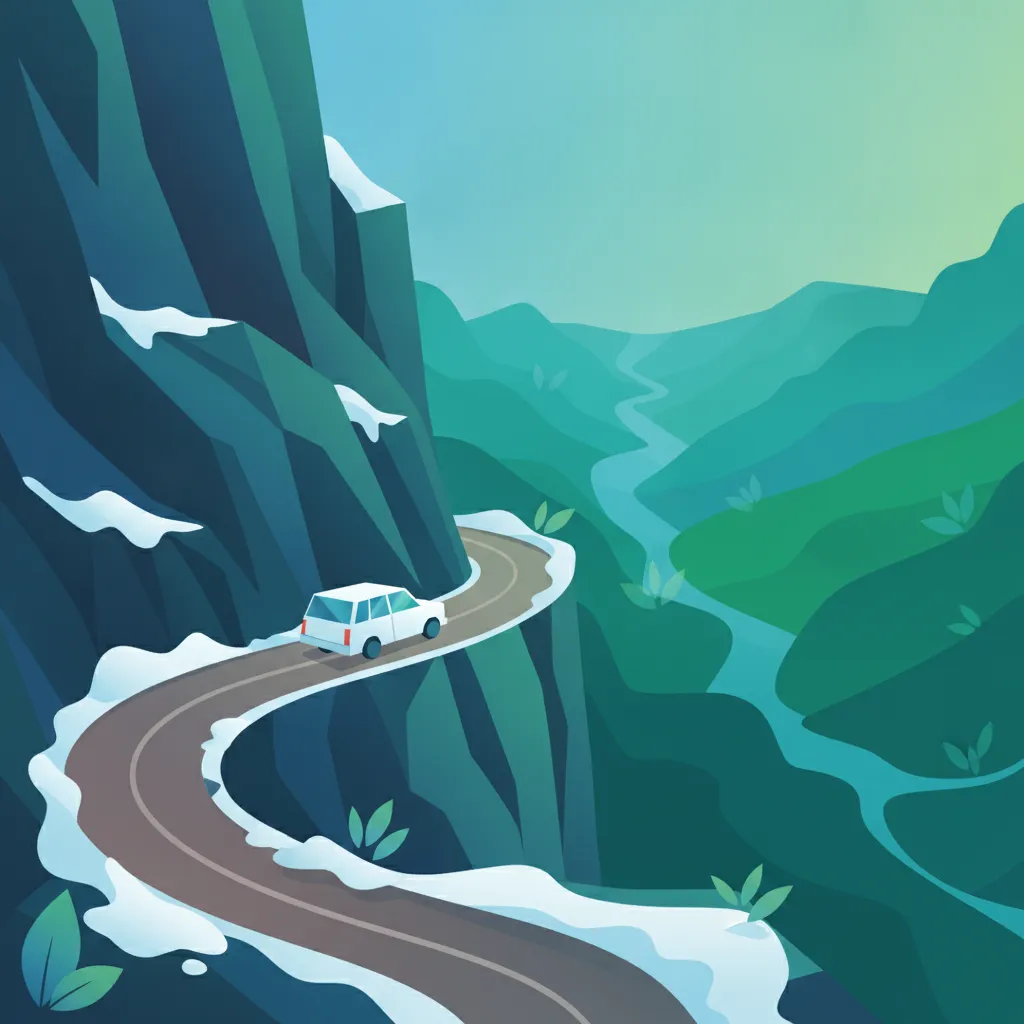
This lesson focuses on driving on mountain roads, addressing steep gradients, hairpin bends, and altitude-related challenges. You will learn proper techniques for climbing ascents and using engine braking on descents. The content also covers the use of snow chains, recognizing avalanche risks, and interpreting mountain road signs for safe alpine navigation.
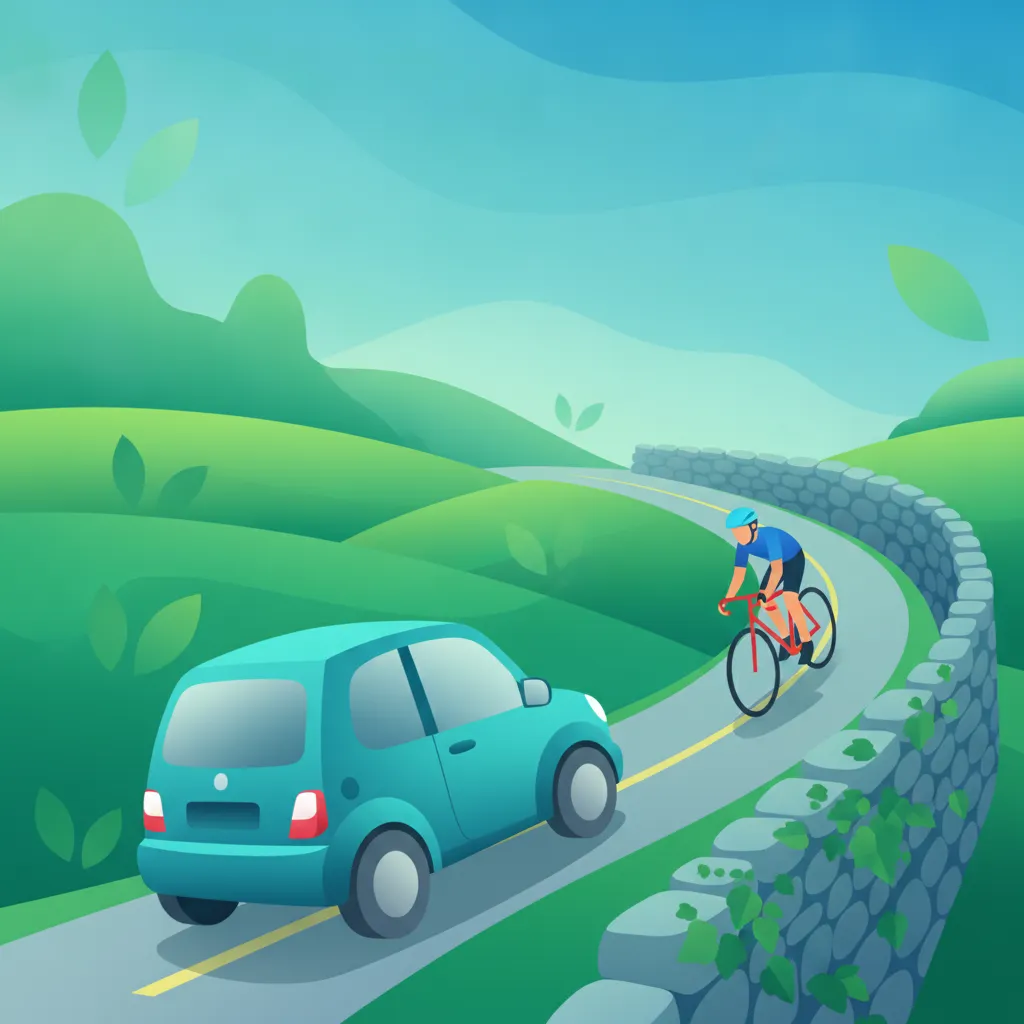
Rural roads present challenges like narrow lanes, poor surfaces, sharp bends, and limited visibility. This lesson teaches drivers how to position their large vehicle to maximize space and visibility, anticipate oncoming traffic at blind corners, and be aware of specific rural hazards. These hazards include slow-moving agricultural vehicles, animals on the road, and concealed farm entrances.
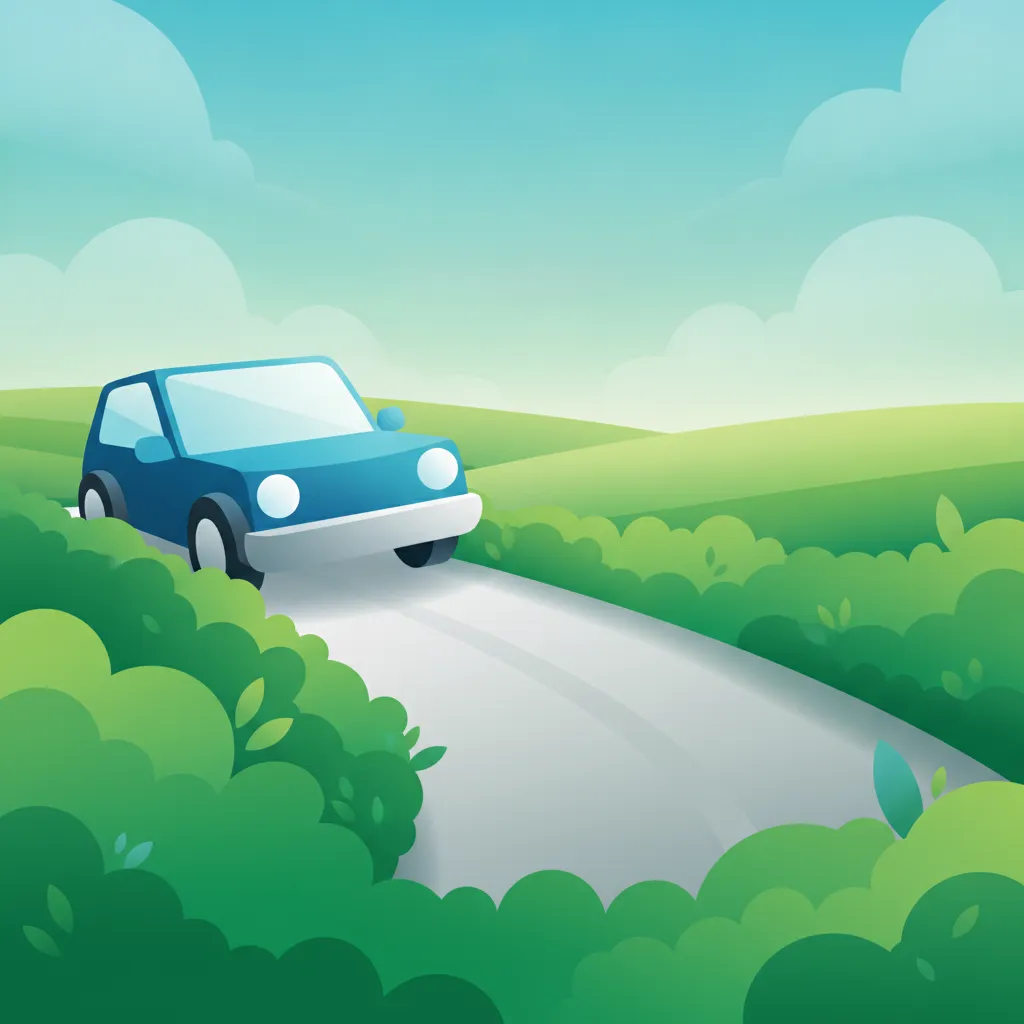
Rural driving requires a different mindset from urban driving. This lesson covers how to position your vehicle on narrow roads, how to use passing places effectively, and how to anticipate hazards like slow-moving farm machinery, animals, and concealed junctions. Managing vehicle width and height is a key focus.

This lesson focuses on general driving safety in areas with a high concentration of children. It stresses the importance of significantly reducing speed, being prepared for unexpected events, and scanning for children between parked cars. The driver must exhibit maximum vigilance in these high-risk environments at all times.

This lesson focuses on identifying and managing specific road surface hazards that can compromise traction. It provides techniques for safely crossing slippery tram rails and painted markings, navigating uneven cobblestones, and maintaining control on loose gravel. The core skill is learning to scan the road ahead and adjust riding style proactively.
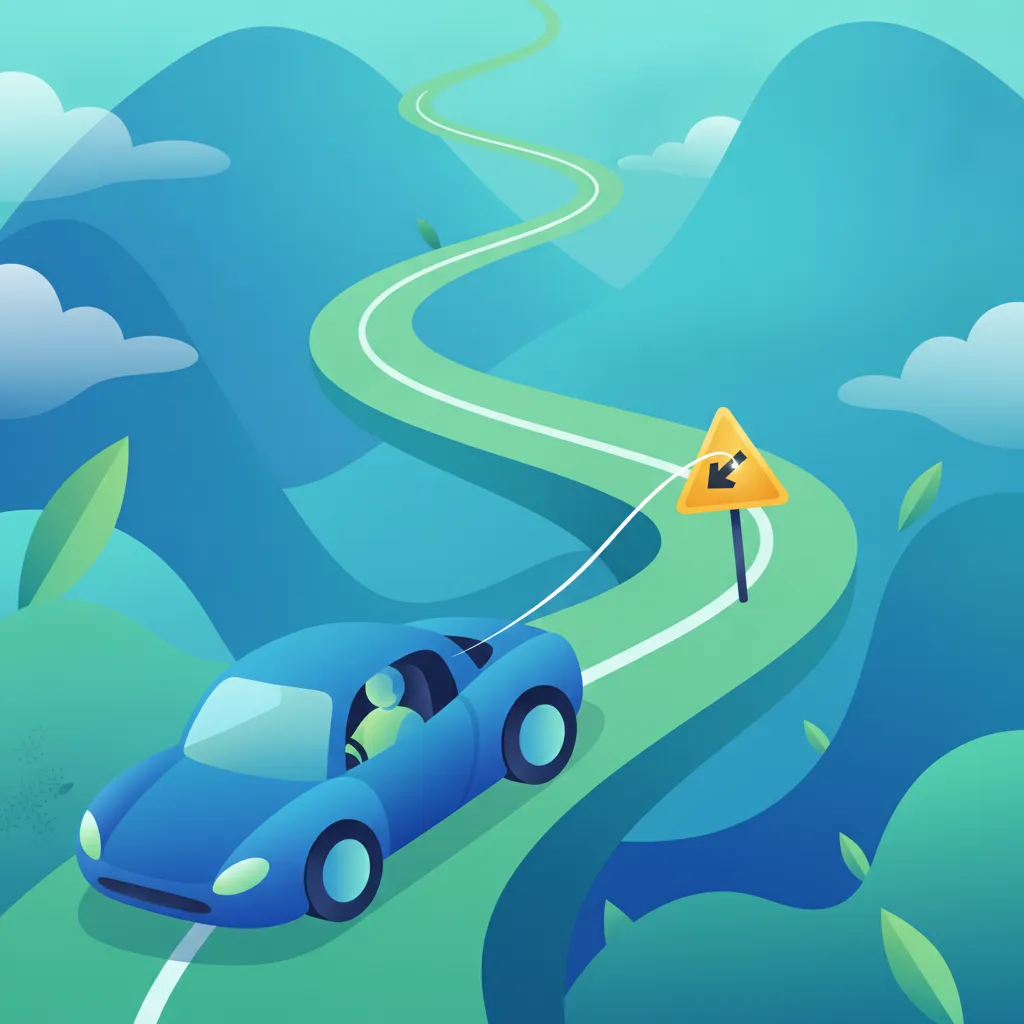
This lesson focuses on warning signs that alert drivers to potential hazards ahead, such as curves, steep descents, and roadwork zones. You will understand how these signs prompt anticipatory driving behavior, allowing for adjustments in speed and position. The content also discusses the typical placement of warning signs to help you react safely to changing conditions.
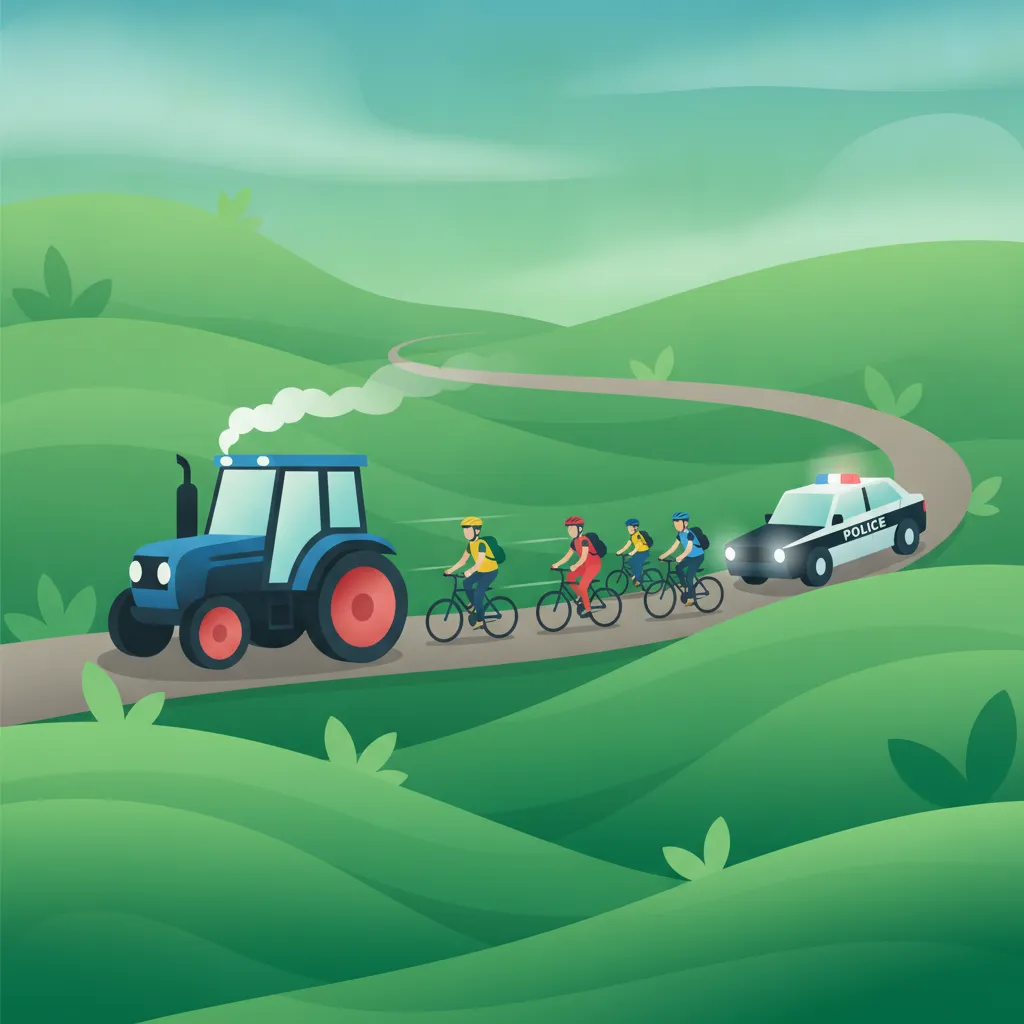
This lesson focuses on strategies for safely interacting with non-standard traffic common on rural roads. It covers how to anticipate the behaviour of slow-moving farm equipment and tourist vehicles, and the legal requirement to yield to emergency services. The importance of patience and safe passing opportunities is stressed.
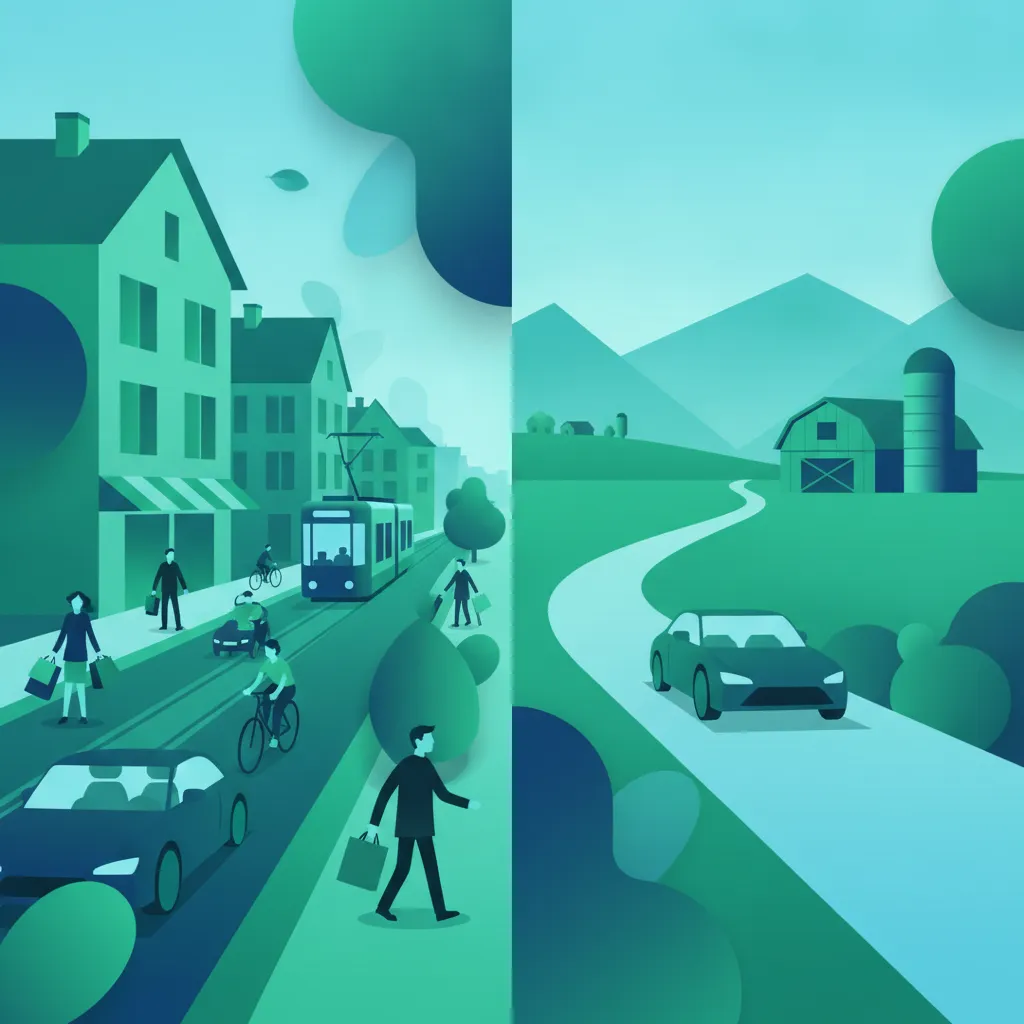
This lesson contrasts the interaction dynamics between road users in urban and rural environments, highlighting differing challenges. It discusses the higher density of pedestrians and cyclists in cities versus the presence of agricultural vehicles and wildlife in rural areas. You will learn how speed limits, visibility, and road layout impact safe interactions.

Driving a large vehicle on mountain passes is a demanding skill. This lesson covers selecting the correct gear for both ascents and descents to maintain control and avoid overheating the brakes. It also explains the specific priority rules that apply on mountain roads and the importance of being aware of sudden weather changes.
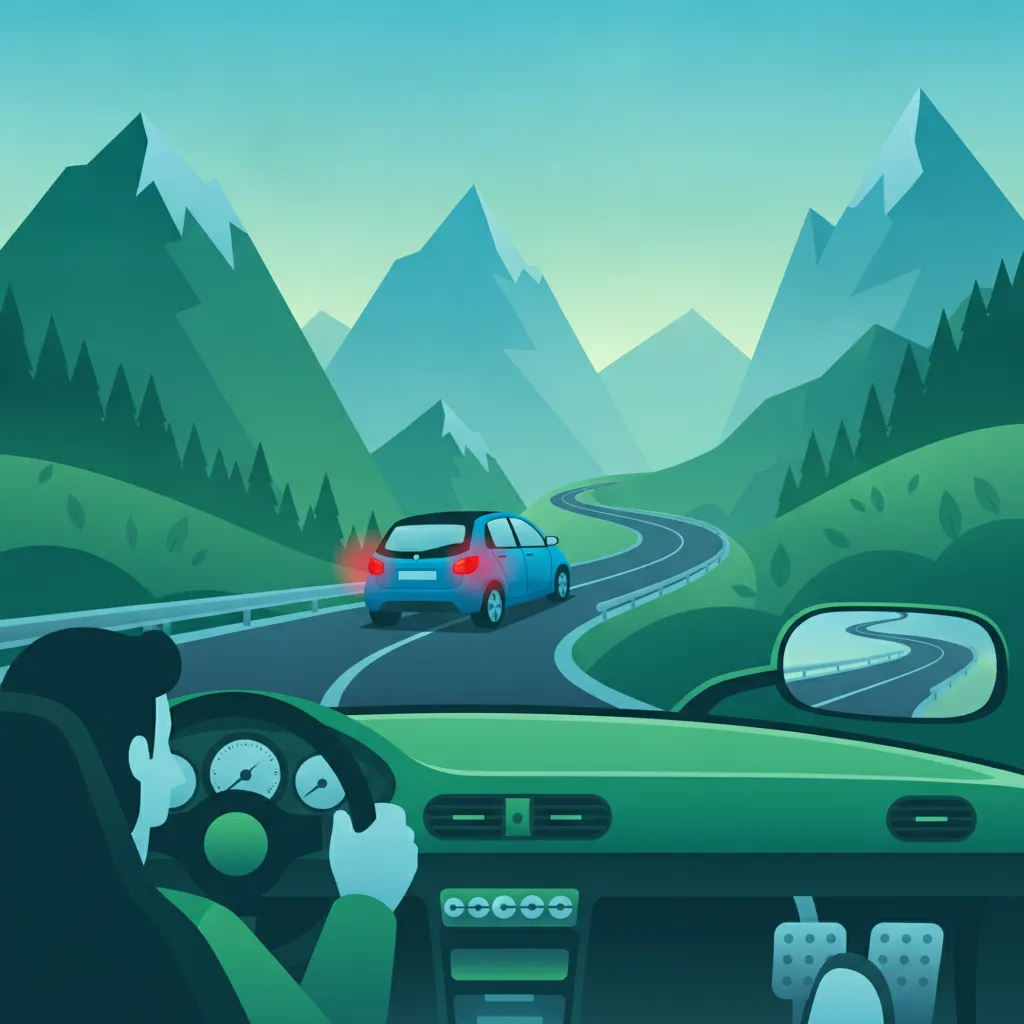
This lesson introduces defensive driving principles, focusing on hazard anticipation, continuous scanning, and proactive positioning. You will learn how to anticipate potential hazards by observing traffic patterns and maintaining situational awareness. Emphasis is placed on proactive speed management to avoid dangerous situations before they arise.
Master the challenges of sharp bends, steep gradients, and narrow lanes on Swiss rural and alpine roads. Learn essential techniques for speed management, braking, and precise vehicle control.

This lesson provides specialized techniques for safely handling hairpin turns and steep gradients. It teaches riders how to manage speed on approach, select the correct line through the bend, and use both brakes and engine braking on descents. Proper throttle control for maintaining momentum on uphill climbs is also covered.
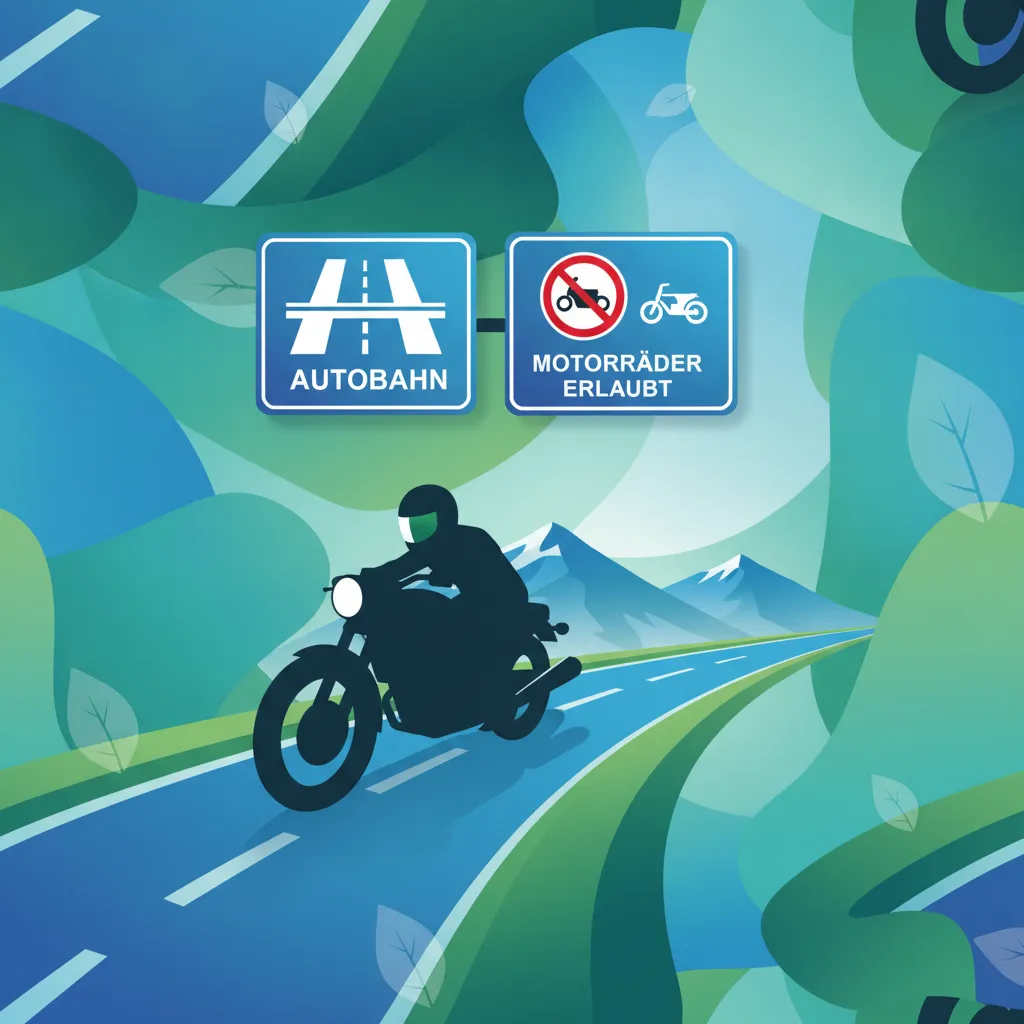
This lesson outlines the specific rules and skills required for riding on high-speed Swiss motorways. It covers the correct procedures for entering and exiting, merging with traffic, maintaining appropriate speed, and conducting safe overtaking maneuvers. Emphasis is placed on using mirrors and signals effectively to integrate safely into the flow of traffic.
Rural roads present challenges like narrow lanes, poor surfaces, sharp bends, and limited visibility. This lesson teaches drivers how to position their large vehicle to maximize space and visibility, anticipate oncoming traffic at blind corners, and be aware of specific rural hazards. These hazards include slow-moving agricultural vehicles, animals on the road, and concealed farm entrances.
This lesson focuses on identifying and managing specific road surface hazards that can compromise traction. It provides techniques for safely crossing slippery tram rails and painted markings, navigating uneven cobblestones, and maintaining control on loose gravel. The core skill is learning to scan the road ahead and adjust riding style proactively.
This lesson focuses on strategies for safely interacting with non-standard traffic common on rural roads. It covers how to anticipate the behaviour of slow-moving farm equipment and tourist vehicles, and the legal requirement to yield to emergency services. The importance of patience and safe passing opportunities is stressed.
This lesson focuses on driving on mountain roads, addressing steep gradients, hairpin bends, and altitude-related challenges. You will learn proper techniques for climbing ascents and using engine braking on descents. The content also covers the use of snow chains, recognizing avalanche risks, and interpreting mountain road signs for safe alpine navigation.
This lesson details how adverse weather conditions like rain, fog, and snow affect motorcycle safety. It explains how wet surfaces reduce tyre grip, requiring smoother control inputs and longer braking distances. Strategies for managing reduced visibility in fog and the extreme hazards of riding on snow and ice are also covered.

This lesson explains strategic lane positioning to enhance visibility and safety in traffic. It covers how to choose a lane position that helps you see and be seen by other drivers, avoiding their blind spots. The content emphasizes maintaining a space cushion around the motorcycle to allow for reaction time and potential escape routes.
This lesson provides guidance on safely negotiating intersections and roundabouts on a motorcycle. It details the correct procedures for approach, lane selection, and yielding according to Swiss traffic regulations. Emphasis is placed on heightened awareness of other vehicles, cyclists, and pedestrians in these complex traffic environments.
Rural driving requires a different mindset from urban driving. This lesson covers how to position your vehicle on narrow roads, how to use passing places effectively, and how to anticipate hazards like slow-moving farm machinery, animals, and concealed junctions. Managing vehicle width and height is a key focus.
Find clear answers to common questions learners have about Characteristics of Rural and Alpine Roads. Learn how the lesson is structured, which driving theory objectives it supports, and how it fits into the overall learning path of units and curriculum progression in Switzerland. These explanations help you understand key concepts, lesson flow, and exam focused study goals.
On narrow, winding mountain roads, your positioning is critical to maintaining a clear line of sight. By staying in the appropriate part of the lane, you can see further around bends, allowing you more time to react to oncoming traffic or unexpected obstacles while keeping your bike stable.
When riding downhill, your braking distance increases significantly. You should maintain a slower, more controlled speed before entering a corner, using engine braking where appropriate to avoid overheating your service brakes, and always ensuring you have a clear view of the road surface.
Yes, rural roads often feature hidden hazards like tractors pulling out from farm exits, loose gravel on road edges, and wildlife crossing. You should always scan further ahead than you would in urban traffic to anticipate these potential dangers.
The exam often uses situational images to test if you recognize high-risk areas, such as blind bends or steep gradients. You will be expected to demonstrate an understanding of how to adjust your speed and observation techniques to mitigate these risks.
Pinpoint specific Swiss traffic rules, road signs, or driving situations you need to master. Use the practice search to start a focused revision session now and build confidence for your official driving theory exam.