
This lesson focuses on the unique challenges of navigating Swiss urban environments as a motorcyclist. You will learn to manage interactions with trams, cyclists, and pedestrians, ensuring you apply the correct priority and defensive riding techniques required for categories A1 and A.
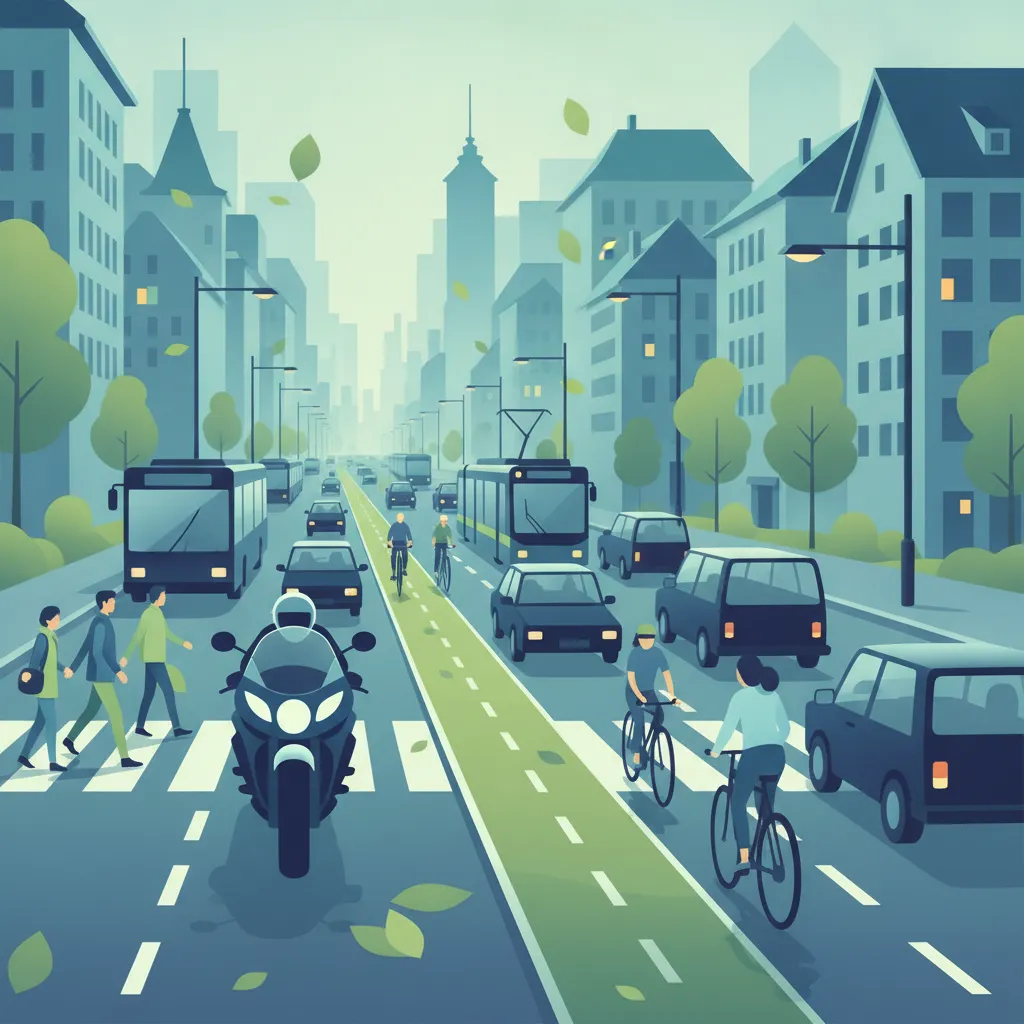
Lesson content overview
Riding a motorcycle in bustling urban environments presents a unique set of challenges, demanding heightened awareness, precise control, and an in-depth understanding of traffic dynamics. This lesson, part of the Swiss Motorcycle Licence Theory Course, delves into the complexities of navigating busy city streets where various forms of transport, pedestrians, and cyclists share the same road space. Mastering these strategies is crucial for ensuring your safety and the safety of all road users in dense urban settings.
The primary goal is to equip you with the knowledge to safely interact with buses, trams, cyclists, and pedestrians, while respecting designated lanes, anticipating unpredictable movements, and maintaining exceptional situational awareness.
Urban areas are characterized by a diverse mix of road users, frequent intersections, and varied infrastructure. For motorcyclists, this means constantly adapting to differing speeds, sizes, and maneuverability of traffic participants.
Mixed traffic refers to road environments where various types of vehicles (cars, motorcycles, buses, trams), cyclists, and pedestrians simultaneously occupy shared roadway spaces. This can range from main arteries with dedicated lanes to narrower streets where all users share the same path. Understanding these zones is critical because each type of user operates under slightly different physical constraints and often, different rules.
A road situation where multiple types of road users share the same physical space, including motor vehicles, public transport, cyclists, and pedestrians.
Urban landscapes often feature specific infrastructure like dedicated bus lanes, tram tracks, and bicycle lanes, alongside general traffic lanes. It is essential for motorcyclists to recognize these subcategories and understand the associated rules of usage. Common misunderstandings arise from assuming motor vehicles always have priority or that special lanes are merely suggestions, which can lead to dangerous situations.
One of the most significant aspects of urban riding is the high prevalence of vulnerable road users (VRUs). These include pedestrians, cyclists, and individuals with reduced mobility, all of whom have little to no physical protection in the event of a collision. Their movements can be less predictable, and they are often harder for vehicle occupants to spot.
Pedestrians, cyclists, and mobility-impaired individuals who have less physical protection compared to vehicle occupants in a collision, requiring special attention from drivers.
Motorcyclists must allocate extra space and significantly reduce speed when in the vicinity of VRUs. This proactive approach helps compensate for the VRUs' inherent vulnerability and the potential for sudden, unexpected actions. For instance, a child might dart into the road, or a cyclist might swerve to avoid an obstacle. Always anticipate such possibilities and adjust your riding accordingly.
Strategic road positioning is fundamental to safe motorcycle operation, particularly in complex urban mixed traffic. It enhances your visibility to other road users and helps you maintain clear sightlines while minimizing potential conflict points.
Selecting the correct lane and maintaining an optimal lateral position within that lane are vital safety measures. Proper road positioning can increase your conspicuity, provide an escape route, and reduce the risk of being trapped between larger vehicles. For example, riding in the leftmost portion of your lane (but not crossing into the next lane) can give you a better view of traffic ahead and make you more visible to vehicles behind.
When cyclists are present in shared lanes, it is often best to position yourself slightly further away from the curb than usual, creating a buffer zone. This gives cyclists enough space and prevents you from being forced into an unsafe position if they unexpectedly deviate. Avoid riding too close to parked cars, as doors can open suddenly, or pedestrians might emerge from between them.
Blind spots are areas around any vehicle where the driver or rider cannot see other road users, often due to vehicle design or obstructions. Large vehicles like buses and trucks have extensive blind spots, especially to their sides and directly behind them. As a motorcyclist, you must actively identify and avoid lingering in these zones.
An area around a vehicle that cannot be directly observed by the driver or rider using mirrors or peripheral vision, often leading to hidden road users.
To enhance your own visibility, position your motorcycle so that you are clearly visible in the mirrors of larger vehicles. This often means riding slightly ahead or behind their rear axles, rather than directly alongside. Additionally, continuous head checks and scanning the environment are essential to detect other road users, particularly VRUs, who might be in your own blind spots or about to enter your path. Using your headlights, even during daylight hours, significantly increases your conspicuity to other drivers, as does wearing reflective or brightly colored gear.
Urban riding necessitates tailored strategies for interacting with the various components of mixed traffic. Each type of road user presents unique challenges and demands specific responses from a motorcyclist.
Overtaking in urban areas requires careful judgment and adherence to specific rules, especially when passing vulnerable road users. When you need to overtake a cyclist on a road without a dedicated bike lane, you must maintain a minimum lateral distance of 1.5 meters. This clearance is crucial to prevent causing the cyclist to wobble or fall, and it provides a safety margin if they swerve unexpectedly.
Always signal your intention to overtake well in advance, check your mirrors and blind spots, and ensure there is sufficient space and time to complete the maneuver safely without exceeding the speed limit.
When overtaking buses or trams, exercise extreme caution. These large vehicles have significant blind spots, and they may stop suddenly to pick up or drop off passengers. Never overtake a tram in a tram lane unless specifically permitted by signage and only if it is completely safe and does not impede the tram. When a bus has pulled over at a bus stop, be prepared for passengers to disembark and cross the road. Reduce your speed and be ready to stop.
Buses and trams are integral to urban transport, and specific rules govern their interaction with other road users. Many cities have dedicated bus lanes and tram tracks, which are marked by specific road signs and markings.
A dedicated traffic lane reserved primarily for buses, which may also permit other vehicles like taxis or motorcycles during specific hours, as indicated by signage.
A specific lane or track reserved for trams, where motorcyclists must yield to trams at all times and may only use the lane if explicitly permitted by signage.
Motorcyclists may only use bus lanes when explicitly permitted by local signage, often during off-peak hours. It is crucial to check these signs carefully, as using a bus lane during restricted hours can result in fines and disrupt public transport flow. Trams always have priority in Switzerland, and motorcyclists must yield to them. Never attempt to overtake a tram in a tram lane if it is prohibited or unsafe, especially when it is stopped at a passenger platform. Maintaining a safe distance from trams is also important due to their limited maneuverability and sudden braking capabilities.
Pedestrians are the most vulnerable road users, and their presence requires motorcyclists to be acutely aware and prepared to yield. At marked zebra crossings (pedestrian crossings), you must stop and give way to pedestrians who are waiting to cross or are already on the crossing. Even at unmarked crossings, particularly in residential areas or near schools, you should be prepared to stop if a pedestrian has already begun crossing the road.
Always anticipate the unexpected from pedestrians. They may not always look before stepping into the road, or they might be distracted by phones or conversations. Therefore, maintaining a reduced speed in areas with high pedestrian traffic, such as shopping districts or near public transport stops, is paramount. Your vigilance can prevent serious accidents and ensure the safety of everyone sharing the urban space.
Adhering to specific Swiss traffic laws and adopting best practices are fundamental for safe and responsible urban motorcycle riding. These guidelines ensure compliance and minimize risks in complex traffic scenarios.
The Swiss road traffic regulations place a strong emphasis on the protection of vulnerable road users and the efficient flow of public transport. Key regulations for motorcyclists in mixed urban traffic include:
F2). If pedestrians have already entered an unmarked crossing, you must also yield to them.Urban riding conditions are dynamic and require constant adaptation.
Be especially wary of sudden lane changes by other vehicles in heavy traffic, as they might not be checking their blind spots adequately.
Understanding common pitfalls can help you proactively prevent incidents.
Motorcycle safety is not just about following rules; it's about understanding the underlying physics and psychology of driving, allowing you to ride defensively and predict potential hazards.
The average human reaction time is approximately 1.5 seconds. This delay includes the time it takes to perceive a hazard, process the information, decide on an action, and initiate that action (e.g., applying brakes). In mixed urban traffic, where events unfold rapidly, this 1.5-second window is critical.
Anticipatory riding is the cornerstone of urban motorcycle safety. It involves continuously scanning the environment, predicting potential hazards, and adjusting your speed and position before a dangerous situation fully develops.
Understanding these terms is crucial for mastering urban riding safety.
Applying theoretical knowledge to real-world situations is key. Consider these common urban scenarios:
You are riding on a two-lane urban road with moderate traffic and no dedicated bicycle lane. Ahead, a cyclist is moving slower than the traffic flow.
You are riding on an urban road that includes a tram lane, and a tram has stopped at a passenger platform to let passengers on and off.
You are approaching an intersection, and a large truck is signaling a right turn. You are behind and slightly to the right of the truck.
Navigating urban environments on a motorcycle demands a comprehensive understanding of traffic laws, a proactive approach to safety, and continuous situational awareness. By prioritizing the safety of vulnerable road users, mastering strategic road positioning, and meticulously adhering to specific interaction guidelines for buses, trams, cyclists, and pedestrians, you can significantly reduce risks. Always remember to adjust your speed and following distances according to changing conditions, avoid blind spots, and enhance your visibility to others. These practices are not just about passing your Swiss Motorcycle Licence Theory Course; they are essential for a lifetime of safe and enjoyable urban riding.
This lesson covers the essential skills for navigating Swiss urban environments as a motorcyclist in mixed traffic. Key regulations include maintaining a 1.5-meter lateral distance when overtaking cyclists and yielding to trams, which always have priority. Strategic road positioning enhances visibility and keeps riders out of blind spots created by large vehicles. Anticipatory riding—scanning ahead, reading cues like brake lights or pedestrians looking toward the road, and covering brakes—compensates for the 1.5-second human reaction time. The lesson also emphasizes protecting vulnerable road users through reduced speeds and extra space allocation, particularly in areas with high pedestrian and cyclist activity.
A short set of high-value points that capture the most important learning from this lesson.
Maintain a minimum 1.5-meter lateral clearance when overtaking cyclists on roads without dedicated bicycle lanes in Switzerland.
Trams always have priority in Switzerland, and motorcyclists must yield to them at all times in tram lanes.
Strategic road positioning—riding in the left portion of your lane or ahead/behind vehicle rear axles—keeps you visible in mirrors and out of blind spots.
Anticipatory riding by scanning beyond the vehicle ahead, watching for pedestrian cues, and covering brakes can shave critical milliseconds off reaction time.
Vulnerable road users (VRUs) including pedestrians and cyclists require extra space and reduced speed due to their unpredictability and lack of physical protection.
Explore all units and lessons included in this driving theory course.
Zebra crossings (F2 road sign) require motorcyclists to stop and yield to pedestrians waiting to cross or already on the crossing.
Bus lanes may only be used by motorcycles when explicitly permitted by local signage, typically during off-peak hours.
Wet tram tracks, manhole covers, and painted road markings are extremely slippery in rain and require reduced speed.
The average human reaction time is approximately 1.5 seconds; at 50 km/h your motorcycle travels about 14 meters in that time.
Headlights must always be on, even during daylight hours, to increase conspicuity to other road users.
Failing to maintain the required 1.5-meter lateral distance when overtaking cyclists, which is both dangerous and illegal.
Using bus lanes during restricted hours, disrupting public transport flow and risking fines.
Riding between parked cars, which creates severe blind spots for drivers merging or exiting parking spaces.
Lurking in the blind spots of large vehicles like buses and trucks, especially on their right side before turns.
Assuming other drivers see you or will yield even when you have right-of-way; always be prepared to react defensively.
Lesson content overview
A short set of high-value points that capture the most important learning from this lesson.
Maintain a minimum 1.5-meter lateral clearance when overtaking cyclists on roads without dedicated bicycle lanes in Switzerland.
Trams always have priority in Switzerland, and motorcyclists must yield to them at all times in tram lanes.
Strategic road positioning—riding in the left portion of your lane or ahead/behind vehicle rear axles—keeps you visible in mirrors and out of blind spots.
Anticipatory riding by scanning beyond the vehicle ahead, watching for pedestrian cues, and covering brakes can shave critical milliseconds off reaction time.
Vulnerable road users (VRUs) including pedestrians and cyclists require extra space and reduced speed due to their unpredictability and lack of physical protection.
Explore all units and lessons included in this driving theory course.
Zebra crossings (F2 road sign) require motorcyclists to stop and yield to pedestrians waiting to cross or already on the crossing.
Bus lanes may only be used by motorcycles when explicitly permitted by local signage, typically during off-peak hours.
Wet tram tracks, manhole covers, and painted road markings are extremely slippery in rain and require reduced speed.
The average human reaction time is approximately 1.5 seconds; at 50 km/h your motorcycle travels about 14 meters in that time.
Headlights must always be on, even during daylight hours, to increase conspicuity to other road users.
Failing to maintain the required 1.5-meter lateral distance when overtaking cyclists, which is both dangerous and illegal.
Using bus lanes during restricted hours, disrupting public transport flow and risking fines.
Riding between parked cars, which creates severe blind spots for drivers merging or exiting parking spaces.
Lurking in the blind spots of large vehicles like buses and trucks, especially on their right side before turns.
Assuming other drivers see you or will yield even when you have right-of-way; always be prepared to react defensively.
Explore search topics learners often look for when studying Urban Riding with Mixed Traffic, Pedestrians, and Bicycles. These topics reflect common questions about road rules, driving situations, safety guidance, and lesson level theory preparation for learners in Switzerland.
Browse additional driving theory lessons that cover connected traffic rules, road signs, and common driving situations related to this topic. Improve your understanding of how different rules interact across everyday traffic scenarios.
Learn crucial strategies for safely interacting with pedestrians, cyclists, and other vulnerable road users in busy Swiss urban environments. Understand Swiss regulations and defensive riding techniques to prevent accidents in mixed traffic situations.
Pedestrians, cyclists, motorcyclists, and e-scooter riders are extremely vulnerable in any interaction with a heavy vehicle. This lesson instills a defensive mindset, teaching drivers to be hyper-aware of VRUs, especially near junctions, crossings, and cycle lanes. It focuses on anticipation and giving VRUs extra space, as they can be unpredictable and are often hidden in blind spots.
This lesson explores the specific considerations for cyclists and pedestrians, who are among the most vulnerable road users. It covers the proper use of bicycle lanes, the minimum safe overtaking distance for cyclists, and the legal requirements for yielding at pedestrian crossings. The content reinforces the need for heightened vigilance around these users.
This lesson provides guidance on safely negotiating intersections and roundabouts on a motorcycle. It details the correct procedures for approach, lane selection, and yielding according to Swiss traffic regulations. Emphasis is placed on heightened awareness of other vehicles, cyclists, and pedestrians in these complex traffic environments.
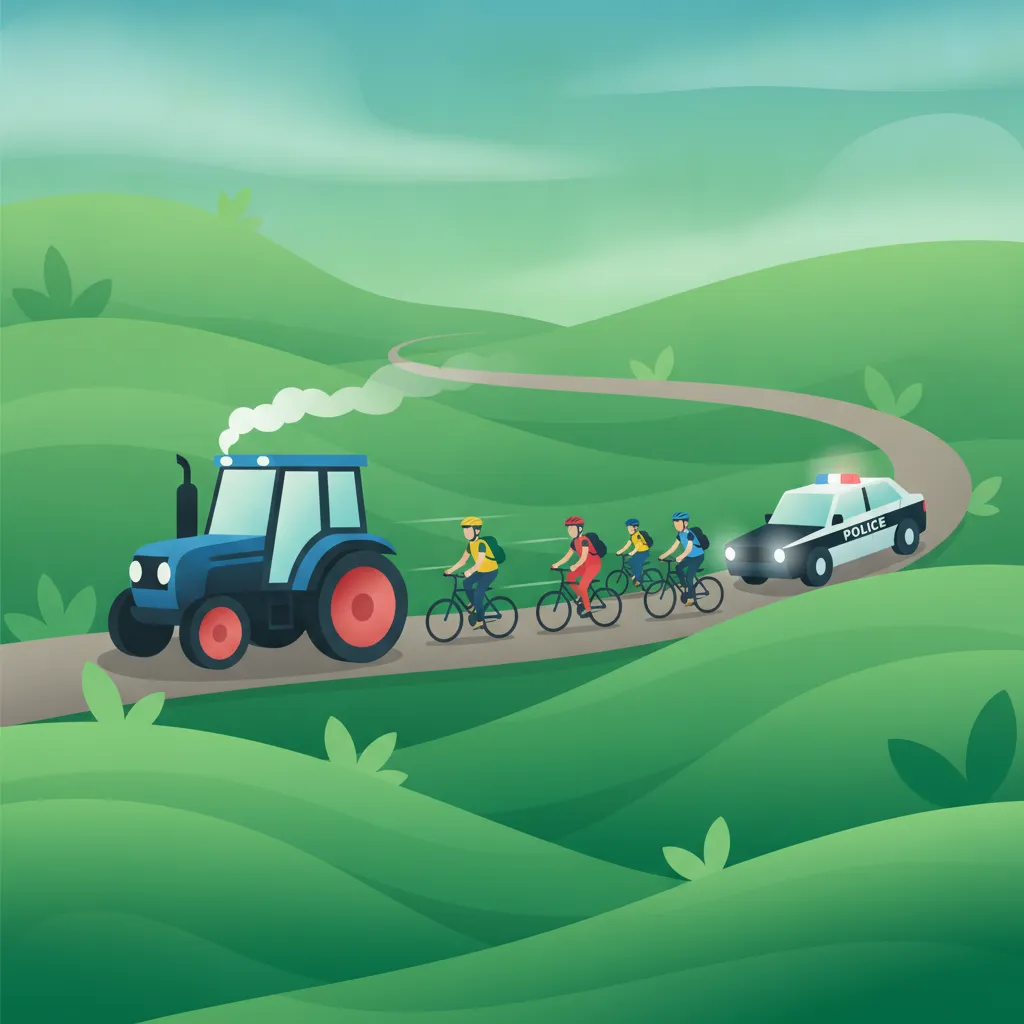
This lesson focuses on strategies for safely interacting with non-standard traffic common on rural roads. It covers how to anticipate the behaviour of slow-moving farm equipment and tourist vehicles, and the legal requirement to yield to emergency services. The importance of patience and safe passing opportunities is stressed.
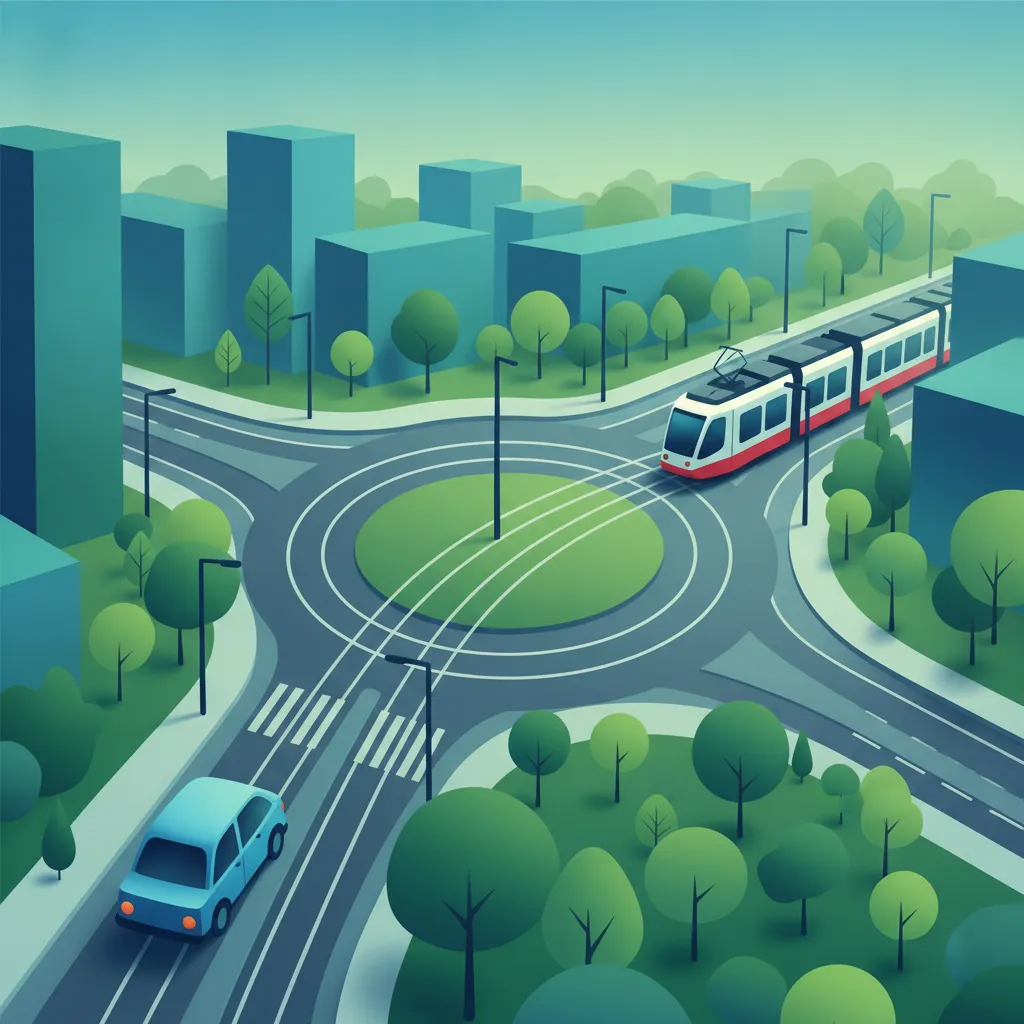
This lesson provides guidance on safely navigating roundabouts and tram lanes, common features in Swiss cities. It covers the rules for yielding, lane positioning within the roundabout, and signaling intentions upon exiting. Special attention is given to the hazards of crossing slippery tram tracks and sharing the road with public transport.

This lesson explains strategic lane positioning to enhance visibility and safety in traffic. It covers how to choose a lane position that helps you see and be seen by other drivers, avoiding their blind spots. The content emphasizes maintaining a space cushion around the motorcycle to allow for reaction time and potential escape routes.

This lesson outlines the principles of safe overtaking, emphasizing the importance of accurate judgment of speed and distance. It covers the necessary steps: checking mirrors, signaling, checking blind spots, executing the maneuver smoothly, and returning to the lane safely. The content is tailored to different road environments, from urban streets to rural roads.

This lesson focuses on mitigating the risk of collisions at intersections, particularly from vehicles turning across the rider's path. It teaches defensive strategies such as positioning for visibility, anticipating driver actions, and using head checks to be aware of surrounding traffic. Managing your own and others' blind spots is presented as a crucial survival skill.
This lesson focuses on techniques and equipment designed to increase a motorcyclist's visibility to others. It explains the strategic use of reflective materials, high-visibility clothing, and the mandatory use of daytime running lights. Understanding how to enhance conspicuity is a critical component of proactive self-protection on the road.

This lesson explores the typical features of rural and alpine roads, such as narrow lanes, sharp bends, and significant elevation changes. It discusses the need for heightened awareness due to limited sight distances and the potential for unexpected hazards like wildlife or agricultural vehicles. Riders will learn to adapt their speed and positioning for these challenging conditions.
Explore common hazards and complex interactions in dense Swiss urban traffic, including buses, trams, and cyclists. Develop strategies for safe road positioning, overtaking, and navigating intersections with diverse road users.
This lesson provides guidance on safely negotiating intersections and roundabouts on a motorcycle. It details the correct procedures for approach, lane selection, and yielding according to Swiss traffic regulations. Emphasis is placed on heightened awareness of other vehicles, cyclists, and pedestrians in these complex traffic environments.
This lesson focuses on strategies for safely interacting with non-standard traffic common on rural roads. It covers how to anticipate the behaviour of slow-moving farm equipment and tourist vehicles, and the legal requirement to yield to emergency services. The importance of patience and safe passing opportunities is stressed.
This lesson focuses on mitigating the risk of collisions at intersections, particularly from vehicles turning across the rider's path. It teaches defensive strategies such as positioning for visibility, anticipating driver actions, and using head checks to be aware of surrounding traffic. Managing your own and others' blind spots is presented as a crucial survival skill.
This lesson provides guidance on safely navigating roundabouts and tram lanes, common features in Swiss cities. It covers the rules for yielding, lane positioning within the roundabout, and signaling intentions upon exiting. Special attention is given to the hazards of crossing slippery tram tracks and sharing the road with public transport.

This lesson focuses on identifying and managing specific road surface hazards that can compromise traction. It provides techniques for safely crossing slippery tram rails and painted markings, navigating uneven cobblestones, and maintaining control on loose gravel. The core skill is learning to scan the road ahead and adjust riding style proactively.
This lesson explores the typical features of rural and alpine roads, such as narrow lanes, sharp bends, and significant elevation changes. It discusses the need for heightened awareness due to limited sight distances and the potential for unexpected hazards like wildlife or agricultural vehicles. Riders will learn to adapt their speed and positioning for these challenging conditions.
This lesson explains strategic lane positioning to enhance visibility and safety in traffic. It covers how to choose a lane position that helps you see and be seen by other drivers, avoiding their blind spots. The content emphasizes maintaining a space cushion around the motorcycle to allow for reaction time and potential escape routes.
This lesson outlines the principles of safe overtaking, emphasizing the importance of accurate judgment of speed and distance. It covers the necessary steps: checking mirrors, signaling, checking blind spots, executing the maneuver smoothly, and returning to the lane safely. The content is tailored to different road environments, from urban streets to rural roads.
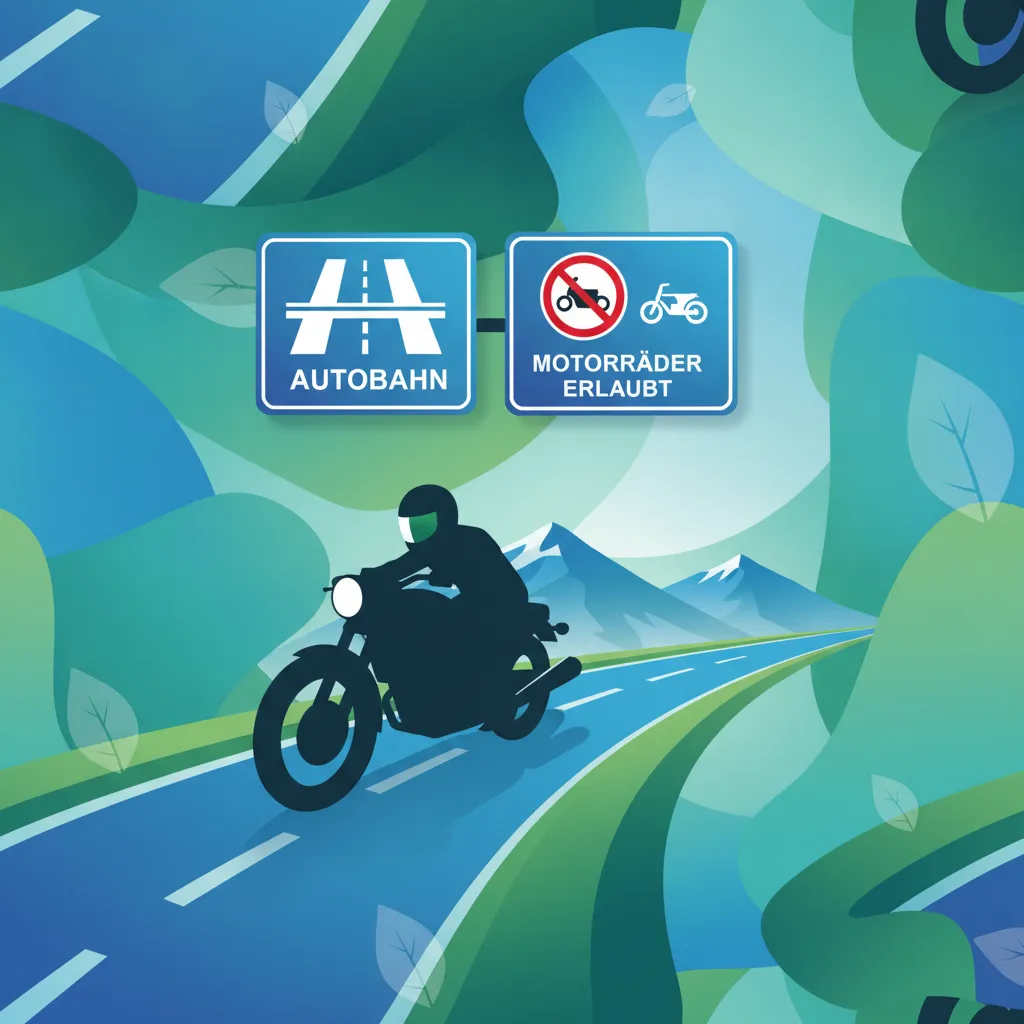
This lesson outlines the specific rules and skills required for riding on high-speed Swiss motorways. It covers the correct procedures for entering and exiting, merging with traffic, maintaining appropriate speed, and conducting safe overtaking maneuvers. Emphasis is placed on using mirrors and signals effectively to integrate safely into the flow of traffic.
This lesson focuses on safe interaction with large vehicles. It highlights the significant blind spots (or 'no-zones') around trucks and buses and teaches riders how to position themselves to remain visible. The content also provides guidance on overtaking large vehicles safely and anticipating their wide turning radius at intersections.
Find clear answers to common questions learners have about Urban Riding with Mixed Traffic, Pedestrians, and Bicycles. Learn how the lesson is structured, which driving theory objectives it supports, and how it fits into the overall learning path of units and curriculum progression in Switzerland. These explanations help you understand key concepts, lesson flow, and exam focused study goals.
Always cross tram tracks at as close to a 90-degree angle as possible to prevent your tyres from getting caught in the grooves. Avoid braking or accelerating while your tyres are on the metal rails, as they offer significantly lower grip than tarmac, especially in wet weather.
Cyclists are vulnerable road users; always maintain a wide lateral distance when overtaking. Be aware that they may need to swerve to avoid potholes or debris, and always anticipate their presence at junctions, particularly when turning right, to avoid blind spot accidents.
In Switzerland, motorcycles are generally not permitted to use lanes designated for public transport (buses/trams) unless specifically indicated by signage. Always check the road markings and local signs before entering such lanes to avoid penalties and potential hazards.
Unless there are signs, markings, or traffic lights indicating otherwise, 'Rechtsvortritt' (right-of-way from the right) always applies. In urban areas, be hyper-aware at every junction as traffic density increases the risk of ignoring this fundamental priority rule.
Pinpoint specific Swiss traffic rules, road signs, or driving situations you need to master. Use the practice search to start a focused revision session now and build confidence for your official driving theory exam.