
Logo
Swiss Driving Theory Courses

Lesson 2 of the Intersections, Roundabouts, Overtaking, Tram Tracks and Urban Traffic unit

Swiss Motorcycle Theory (A): Navigating Roundabouts and Tram Lanes

This lesson teaches you how to handle roundabouts and tram intersections safely as a motorcycle rider in Switzerland. You will learn the correct priority, signalling, and lane positioning techniques to navigate these complex urban environments with confidence for your theory exam.
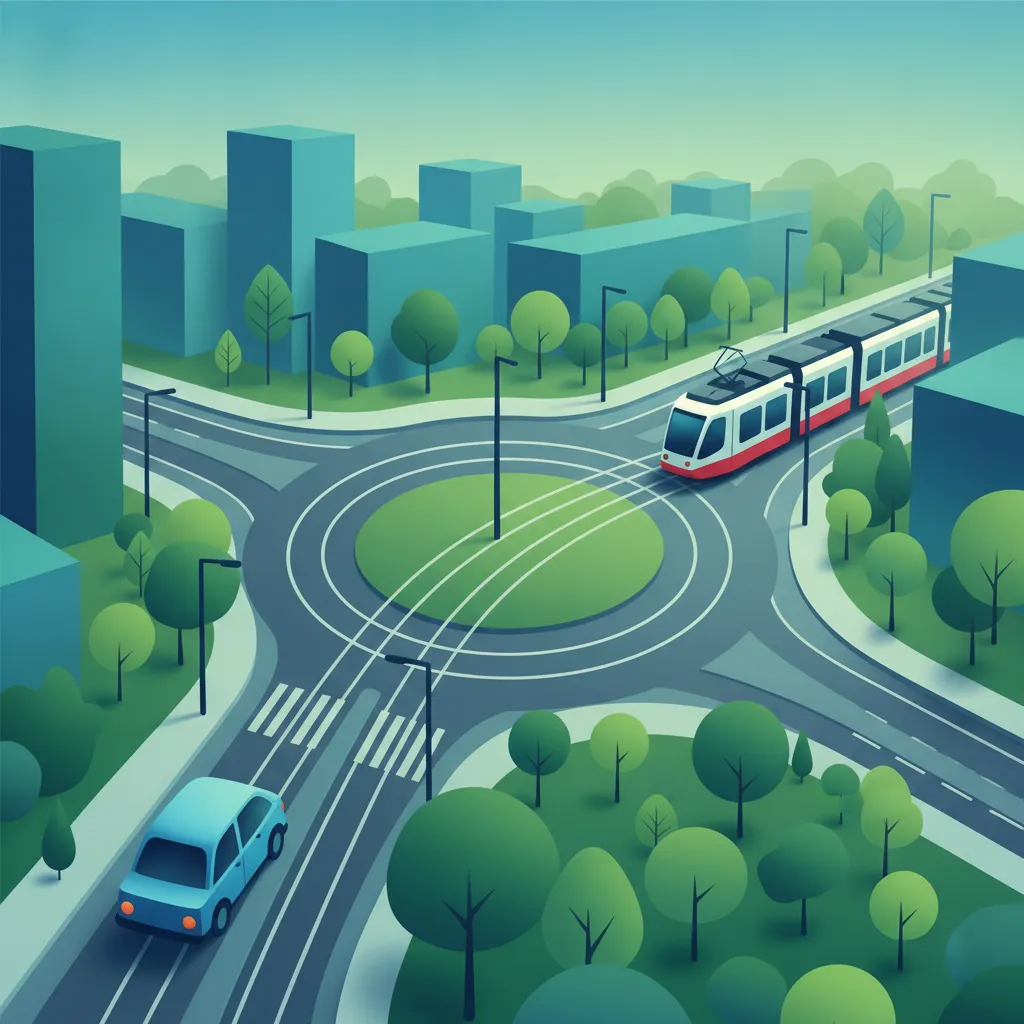
roundaboutstram trackspriority rulesSwiss theory exammotorcycle safety
Swiss Motorcycle Theory (A): Navigating Roundabouts and Tram Lanes

Lesson content overview

Swiss Motorcycle Theory (A)

Comprehensive Guide to Navigating Swiss Roundabouts and Tram Lanes for Motorcyclists

Navigating urban environments on a motorcycle requires precise attention to detail, especially when encountering roundabouts and tram lanes. These common features of Swiss cities, while designed to manage traffic flow efficiently, present unique challenges and demand a thorough understanding of right-of-way rules, lane positioning, and specific hazards. This lesson, part of your Swiss Motorcycle Licence Theory Course, will equip you with the knowledge to safely and confidently traverse these complex intersections, minimizing risk and ensuring smooth progress through traffic.

Our focus will extend beyond basic rules to motorcycle-specific considerations, such as the dangers of slippery tram tracks and the importance of clear communication with other road users. Mastering these elements is crucial not only for passing your theory exam but also for real-world riding safety.

Understanding Roundabouts in Switzerland

Roundabouts are a prevalent type of intersection designed to keep traffic moving continuously in one direction around a central island. They improve safety by reducing conflict points and typically encourage lower speeds compared to traditional intersections. For motorcyclists, understanding their structure and associated rules is paramount to safe navigation.

What is a Roundabout? Definition and Purpose

Definition

Roundabout

A circular intersection where traffic moves continuously in one direction around a central island, with entry and exit points at various arms. Vehicles entering the roundabout must yield to traffic already circulating.

The primary purpose of a roundabout is to streamline traffic flow and enhance safety. By converting potential head-on or right-angle collisions into glancing blows, and by making drivers yield before entering, roundabouts significantly reduce the severity and frequency of accidents. They also eliminate the need for traffic lights in many situations, leading to smoother, more consistent movement.

Types of Roundabouts: Single-Lane vs. Multi-Lane

Roundabouts come in different configurations, primarily distinguished by the number of circulating lanes:

  • Single-lane Roundabouts: These are the simplest form, featuring only one lane of traffic moving around the central island. Navigation is generally straightforward, but proper yielding and signaling remain critical.
  • Multi-lane Roundabouts: These have two or more lanes circulating around the central island. They are designed to handle higher traffic volumes and typically require riders to choose their lane before entering, based on their intended exit. Incorrect lane positioning in multi-lane roundabouts is a common cause of confusion and collisions.

Regardless of the type, the fundamental principle of yielding to circulating traffic remains consistent across all Swiss roundabouts.

Key Right-of-Way Rules at Swiss Roundabouts

The most important rule when approaching any roundabout is to yield to traffic already circulating within the roundabout. This means you must slow down, prepare to stop, and only enter when there is a safe and sufficient gap in traffic. Vehicles already in the roundabout have priority (Vortritt).

Warning

Always assume that traffic already inside the roundabout has the right-of-way unless explicitly directed otherwise by temporary signals or police. Misjudging this can lead to serious collisions.

While specific signs might indicate other priority rules at complex intersections, the standard yield rule for roundabouts is almost universal. Your understanding of general priority rules (as covered in Swiss Motorcycle Licence Theory Lesson 6.1) forms the basis for navigating these structures safely.

Mastering Lane Positioning and Signaling in Roundabouts

Proper lane positioning and clear signaling are critical skills for safe roundabout navigation, especially for motorcyclists who are smaller and can sometimes be less visible to other drivers. These practices prevent sudden maneuvers, improve predictability, and enhance safety for all road users.

Approaching a Roundabout: Choosing Your Lane

The process of choosing your lane begins well before you actually enter the roundabout. Your intended exit dictates which lane you should select on approach:

  • For the first or second exit (straight on or turning right): Position your motorcycle in the outer lane (the lane furthest from the central island) as you approach the roundabout.
  • For the third exit or beyond (turning left or making a U-turn): Position your motorcycle in the inner lane (the lane closest to the central island) as you approach the roundabout.

Procedure: Lane Selection for Multi-Lane Roundabouts

  1. Identify Your Exit: Determine which exit arm you intend to take before approaching the roundabout.

  2. Observe Road Markings and Signs: Look for arrows on the road surface or overhead signs that may further guide lane choice for specific exits.

  3. Select Approach Lane: Based on your exit and any specific markings, position your motorcycle in the appropriate lane early.

  4. Maintain Lane Discipline: Once in the roundabout, stay in your chosen lane. Do not change lanes within the roundabout unless absolutely necessary and safe, which is generally discouraged.

Correct lane selection minimizes the need for sudden lane changes within the roundabout, which are hazardous and confusing for other drivers.

Once inside a multi-lane roundabout, maintain your chosen lane and speed. The goal is to circulate smoothly until your intended exit.

  • If you are in the outer lane for the first or second exit, you will naturally follow the curve of the roundabout to your exit.
  • If you are in the inner lane for a later exit, you will circulate around the central island, passing earlier exits. As you approach your intended exit, you will typically need to transition to the outer lane. This transition should only occur after you have passed the exit before your intended one, and only when it is safe to do so, checking your mirrors and blind spots carefully.

Tip

Motorcyclists should always be mindful of other vehicles, especially larger ones, which may obscure their view or have larger blind spots. Assume you are unseen and ride defensively.

Correct Signaling for Exiting Roundabouts

Signaling your intentions clearly is a non-negotiable aspect of safe roundabout navigation. The rule for exiting a roundabout is specific:

  • When entering a roundabout: Do NOT signal your entry unless you are taking the very first exit (turning immediately right).
  • When circulating: Do NOT use your left turn signal to indicate you are continuing around the roundabout. This can confuse other drivers.
  • When exiting: Activate your right turn signal immediately after you have passed the exit before your intended exit. This alerts drivers waiting to enter and those behind you of your intention to leave the roundabout.

Precise signaling helps waiting vehicles anticipate your departure, allowing them to enter safely and maintain traffic flow. Failing to signal can lead to confusion, abrupt braking, or even collisions with vehicles attempting to enter.

Safe Interaction with Tram Lanes and Tracks

Tram lanes and tracks are distinctive features in many Swiss cities. While trams offer efficient public transport, their presence on the road requires specific awareness and caution from motorcyclists due to their size, limited maneuverability, and the inherent danger of their tracks.

What are Tram Lanes? Priority and Usage Rules

Definition

Tram Lane

A dedicated lane on the road reserved for tram operation, usually marked with tram symbols and sometimes physically separated from general traffic.

Trams operate on fixed tracks and have severely limited maneuverability. For this reason, trams have absolute priority over all other road users when they are on their dedicated tracks. This means motorcycles (and other vehicles) must always yield to trams, even if the tram appears stationary at a stop or if a priority sign is present that might otherwise give you precedence.

Motorcycles are generally not permitted to use tram lanes unless explicitly indicated by signage, or for specific purposes such as crossing the tracks or, in some cases, to overtake a stationary vehicle (but never a moving tram in its lane). Always look for specific road markings or signs that indicate whether a tram lane can be shared or crossed.

Overtaking Trams: When and How

Overtaking a tram, especially a moving one, is highly dangerous and generally prohibited in its dedicated lane. Trams cannot swerve or brake abruptly, making any close-quarter maneuvering risky.

  • Overtaking a moving tram in its lane: This is almost always prohibited and extremely unsafe. Trams cannot see motorcycles easily alongside them, and there's no room for error.
  • Overtaking a stationary tram: You may only overtake a tram that is stationary (e.g., at a stop or traffic light) if there is ample space, it is safe to do so, and you do not enter a dedicated tram lane to complete the maneuver, unless the lane is explicitly marked for shared use or overtaking is permitted. Always check for passengers boarding or alighting, as they may step directly into your path.
  • Passing trams on the right: Be extremely cautious if a tram is stopped and letting passengers on or off. You must pass on the right and at a very slow speed, ensuring no passengers are crossing the road in front or behind the tram.

Warning

Never assume a tram has seen you. Their drivers have restricted views, and their sheer size means they cannot react quickly to unexpected motorcycle movements.

Identifying and Crossing Slippery Tram Tracks Safely

Perhaps the most significant hazard associated with trams for motorcyclists are the tracks themselves, particularly when wet. Tram tracks, made of metal, offer significantly less friction than asphalt, and the grooves can trap a motorcycle wheel, causing a loss of control.

Definition

Slippery Tram Tracks

Tram tracks often become slick, especially when wet or covered in leaves, creating a reduced friction surface that can cause a motorcycle to lose traction or its wheels to get caught.

To cross tram tracks safely:

Procedure: Safely Crossing Tram Tracks

  1. Reduce Speed: Slow down considerably before you reach the tracks. This gives you more time to react and reduces the impact if your wheel does slip.

  2. Align Wheels Parallel: Approach the tracks at an angle that is as close to perpendicular (90 degrees) as possible to the rails. This means your wheels should be parallel to the direction of the tram tracks, so you cross them quickly and efficiently. Avoid crossing at a shallow angle, as this increases the chance of your wheel getting caught in the groove.

  3. Maintain Steady Throttle/Gentle Acceleration: A light, steady throttle can help maintain stability as you cross. Avoid sudden braking, accelerating, or steering while on the tracks.

  4. Look Ahead: Keep your gaze fixed on the road beyond the tracks, not directly at the tracks themselves. This helps maintain balance and direction.

  5. Beware of Conditions: Wet weather, fallen leaves, oil spills, or ice make tram tracks even more treacherous. Exercise extreme caution in such conditions.

Crossing tram tracks improperly is a frequent cause of motorcycle accidents in urban areas, leading to falls and potentially serious injuries. Your motorcycle's traction management (as discussed in Lesson 4) is particularly relevant here.

Advanced Scenarios and Common Hazards

Riding a motorcycle through urban areas with roundabouts and tram lanes involves more than just knowing the rules; it requires adapting to varying conditions and anticipating potential dangers.

Conditional Variations: Weather, Visibility, and Road Surfaces

Environmental factors significantly influence the difficulty and risk associated with navigating roundabouts and tram lanes:

  • Wet Weather: Rain dramatically reduces tire grip, making painted road markings and especially tram tracks exceptionally slippery. Reduce your speed much earlier and anticipate longer braking distances. The risk of wheel lock or slipping on tram tracks increases exponentially.
  • Low Light/Nighttime: Reduced visibility makes it harder to spot road markings, identify circulating traffic, and see tram tracks clearly. Ensure your headlights are on and correctly adjusted, and use reflective clothing to enhance your own visibility. Extra vigilance is needed to identify trams, which often operate without the typical engine noise of other vehicles.
  • Road Surface Conditions: Beyond wetness, debris, potholes, gravel, or even changes in road surface material (e.g., cobblestones near historic centers) can affect traction and stability, particularly in a turn or when crossing tracks.

Tip

Always scan the road surface ahead, looking for potential hazards. A proactive approach allows you more time to adjust your speed and riding line.

Recognizing and Avoiding Common Violations

Understanding common mistakes helps you avoid making them yourself:

  1. Entering a roundabout without yielding: This is a primary cause of collisions. Always confirm a safe gap exists before entering.
  2. Changing lanes within a multi-lane roundabout: This is dangerous and causes confusion. Choose your lane on approach and stick to it until you're ready to exit.
  3. Failing to signal exit: Creates uncertainty for other drivers, particularly those waiting to enter, leading to abrupt stops or near misses.
  4. Riding on tram tracks at high speed or at a shallow angle: This is a recipe for loss of control. Always slow down and cross perpendicularly.
  5. Overtaking a moving tram in its lane: Almost universally prohibited and highly dangerous due to the tram's fixed path and limited visibility.
  6. Misjudging lane positioning for late exits: Leads to last-minute, unsafe lane changes. Plan your exit early.
  7. Assuming right-of-way when approaching a roundabout: While some rare intersections might have priority signs, the default rule for roundabouts is to yield to circulating traffic.

Ensuring Safety with Vulnerable Road Users and Heavy Loads

Roundabouts and tram lanes are often in areas with mixed traffic, including vulnerable road users:

  • Pedestrians and Cyclists: Be especially vigilant for pedestrians crossing at or near roundabout exits, and cyclists who may behave less predictably. Always yield to pedestrians at marked crossings.
  • Heavy Loads: If your motorcycle is heavily loaded with luggage or a passenger, your braking performance and overall handling characteristics will be altered. This requires even earlier speed reduction when approaching roundabouts and increased caution when navigating turns or crossing tracks. Your motorcycle's braking (Lesson 5) and carrying passengers/luggage (Lesson 8) are relevant considerations.

Consolidating Knowledge for Urban Motorcycle Riding

Navigating roundabouts and tram lanes effectively is a cornerstone of safe urban motorcycle riding. It requires a synthesis of various skills and knowledge, from basic priority rules to advanced hazard perception and motorcycle control.

Putting it All Together: Integrated Navigation Strategies

When approaching any urban intersection involving roundabouts or tram lanes, adopt a systematic approach:

  1. Look Far Ahead: Identify the type of intersection (roundabout, tram crossing, etc.) and assess traffic flow.
  2. Scan for Hazards: Look for road markings, signs, trams, vulnerable road users, and poor road surfaces (especially tram tracks).
  3. Plan Your Route and Lane: Determine your exit, and choose your lane well in advance.
  4. Adjust Speed Appropriately: Reduce speed early, particularly if conditions are challenging (wet, night, heavy traffic).
  5. Execute Maneuver: Enter the roundabout only when safe, maintain your lane, signal your exit precisely, and cross tram tracks correctly.
  6. Be Prepared to React: Always have an escape route or an emergency braking plan in mind.

Note

This lesson builds upon your foundational knowledge from earlier units, particularly "Priority Rules at Intersections" (6.1) and general "Balance, Steering, Cornering" (4) and "Braking, Speed Choice" (5). A strong grasp of these basics is essential.

Connecting to Swiss Motorcycle Licence Theory

Mastering the intricacies of roundabouts and tram lanes is a critical component of your Swiss Motorcycle Licence Theory Course for Categories A and A1. The scenarios and rules discussed here frequently appear on theory exams. Beyond the test, these skills are indispensable for daily riding, especially in dense urban areas like Zurich, Geneva, or Bern, where trams and roundabouts are integral to the transport network. Your ability to navigate these elements safely and confidently will contribute significantly to your overall competence as a motorcyclist.

Learn more with these articles

Check out these practice sets

Lesson recap

Quick summary before you move on

Fast revision

This lesson covers the essential skills for navigating roundabouts and tram lanes safely in Swiss urban environments. The core principle for roundabouts is yielding to circulating traffic and selecting the correct lane on approach based on your intended exit. Signaling is precise: do not signal on entry or while circulating, but activate your right turn signal only after passing the exit before your intended one. Tram lanes require special awareness because trams have absolute priority and their tracks pose significant traction hazards, especially when wet — always cross tracks at a near-perpendicular angle and at reduced speed. The content also addresses environmental conditions and common violations to help riders avoid both exam errors and real-world accidents.


Core takeaways

Main ideas from this lesson

A short set of high-value points that capture the most important learning from this lesson.

Always yield to traffic already circulating in a roundabout — vehicles inside have priority (Vortritt) and you must slow or stop before entering.

Position yourself in the correct lane on approach: outer lane for first or second exits, inner lane for third exit or beyond.

Activate your right turn signal immediately after passing the exit before your intended exit to alert waiting traffic.

Tram tracks are extremely slippery, especially when wet — always cross them at a near-90° angle to prevent wheel trapping.

Trams have absolute priority over all other road users when on their tracks, and overtaking a moving tram is prohibited.

Remember this

Details worth keeping in mind

Point 1

On multi-lane roundabouts, choose your lane before entering and maintain it until you are ready to exit — changing lanes inside is dangerous and discouraged.

Point 2

Do not signal when entering a roundabout (except for immediate first exit) and do not signal left while circulating — only signal your exit.

Point 3

Wet weather dramatically increases the danger of tram tracks; reduce speed significantly and exercise extreme caution.

Point 4

Environmental factors like wet conditions, low light, poor road surfaces, and heavy loads all require earlier speed reduction when approaching roundabouts.

Point 5

When crossing tram tracks, keep wheels parallel to the rails, maintain steady throttle, and look beyond the tracks to maintain balance.

Watch for this

Frequent learner mistakes

Entering a roundabout without yielding to circulating traffic, misjudging gaps and causing potential collisions.

Changing lanes within a multi-lane roundabout instead of committing to the lane chosen on approach.

Failing to signal when exiting a roundabout, creating confusion for vehicles waiting to enter.

Crossing tram tracks at a shallow angle or at high speed, risking wheel slip or trapping in the grooves.

Attempting to overtake a moving tram in its dedicated lane, which is prohibited and extremely dangerous due to the tram's limited maneuverability.

Search topics related to Navigating Roundabouts and Tram Lanes

Explore search topics learners often look for when studying Navigating Roundabouts and Tram Lanes. These topics reflect common questions about road rules, driving situations, safety guidance, and lesson level theory preparation for learners in Switzerland.

Swiss motorcycle theory roundabout rulesHow to signal at roundabouts SwitzerlandDriving theory exam tram tracks rulesMotorcycle priority at roundabouts Swiss examCategory A theory lesson on intersectionsAre tram lanes dangerous for motorcyclesPassing Swiss motorcycle theory roundabouts

Related driving theory lessons for Navigating Roundabouts and Tram Lanes

Browse additional driving theory lessons that cover connected traffic rules, road signs, and common driving situations related to this topic. Improve your understanding of how different rules interact across everyday traffic scenarios.

Advanced Safety Strategies for Swiss Roundabouts and Tram Tracks

Explore complex hazards and advanced techniques for navigating Swiss roundabouts and tram lanes. Learn about managing slippery conditions, blind spots, and interactions with public transport for enhanced urban motorcycle safety.
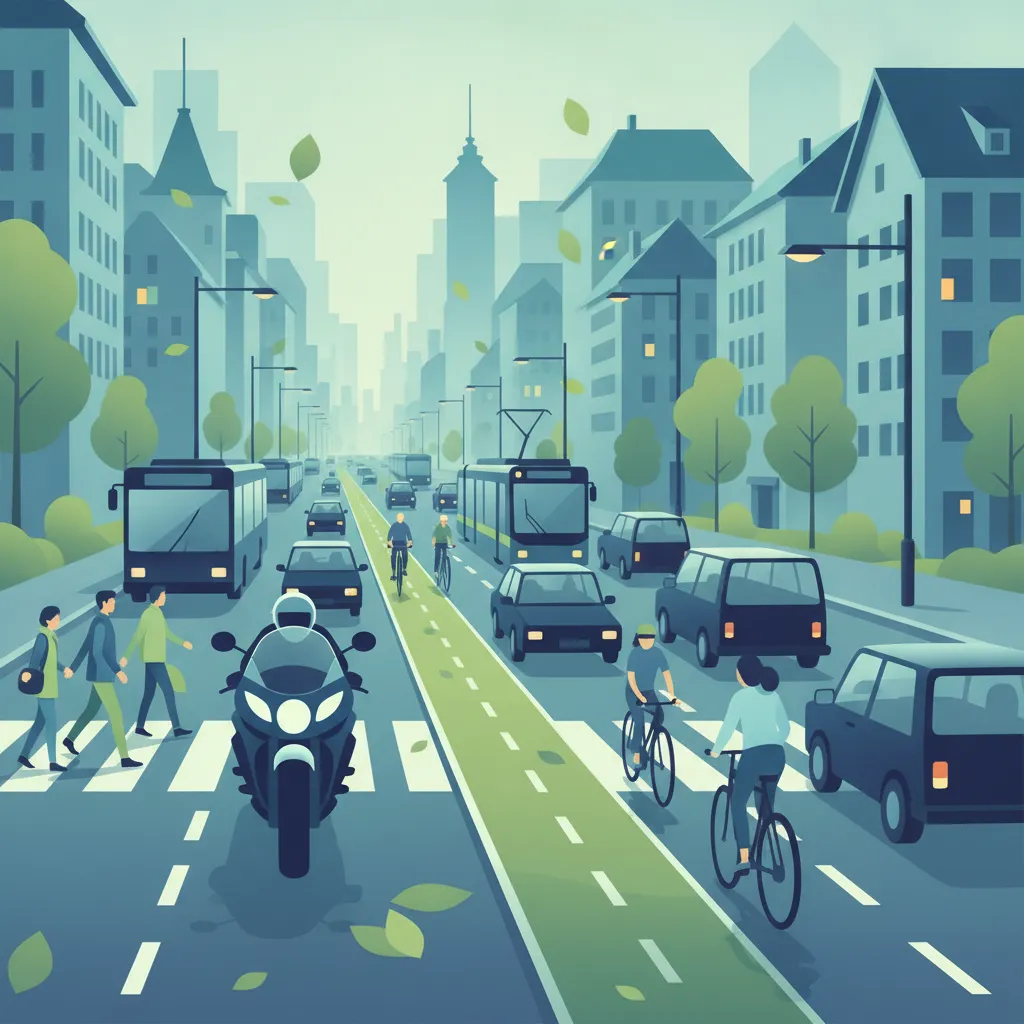
roundaboutstram tracksurban ridingmotorcycle safetyadvanced techniquesSwiss traffic
Urban Riding with Mixed Traffic, Pedestrians, and Bicycles lesson image

Urban Riding with Mixed Traffic, Pedestrians, and Bicycles

This lesson explores the complexities of riding in busy urban areas with a mix of traffic types. It covers strategies for safely navigating alongside buses, trams, cyclists, and pedestrians. Key topics include respecting designated lanes, anticipating the movements of vulnerable road users, and maintaining heightened situational awareness.
Swiss Motorcycle Theory (A)Intersections, Roundabouts, Overtaking, Tram Tracks and Urban Traffic
View lesson
Riding on Two Wheels Through Intersections and Roundabouts lesson image

Riding on Two Wheels Through Intersections and Roundabouts

This lesson provides guidance on safely negotiating intersections and roundabouts on a motorcycle. It details the correct procedures for approach, lane selection, and yielding according to Swiss traffic regulations. Emphasis is placed on heightened awareness of other vehicles, cyclists, and pedestrians in these complex traffic environments.
Swiss Motorcycle Theory (A)Balance, Steering, Cornering, Traction and Road Position
View lesson
Safe Interaction with Trams and Shared Road Spaces lesson image

Safe Interaction with Trams and Shared Road Spaces

Sharing road space with trams presents unique challenges, including different priority rules and physical hazards like tracks. This lesson covers the Swiss regulations regarding tram priority at junctions and stops. It also provides practical advice on crossing tram tracks safely and maintaining awareness of tram movements.
Swiss Driving Theory DNavigating Urban Traffic, Bus Priority, and Public Transport Systems
View lesson
Crossing Tram Tracks Safely lesson image

Crossing Tram Tracks Safely

This lesson addresses the unique challenges posed by tram tracks, especially for two-wheeled vehicles. It explains the importance of crossing tracks at as close to a right angle as possible to avoid tyres getting caught, particularly in wet conditions. The lesson also covers the priority rules that often favor trams and how to interpret tram-specific signals.

Swiss Driving Theory MNavigating Intersections, Roundabouts, Tram Tracks, and Mixed Traffic
View lesson
Specific Road Surface Hazards (Tram Rails, Cobblestones, Gravel) lesson image

Specific Road Surface Hazards (Tram Rails, Cobblestones, Gravel)

This lesson focuses on identifying and managing specific road surface hazards that can compromise traction. It provides techniques for safely crossing slippery tram rails and painted markings, navigating uneven cobblestones, and maintaining control on loose gravel. The core skill is learning to scan the road ahead and adjust riding style proactively.

Swiss Motorcycle Theory (A)Weather, Road Surfaces, Passengers, Luggage and Group Riding
View lesson
Managing Blind Spots and Turn-Across Traffic lesson image

Managing Blind Spots and Turn-Across Traffic

This lesson focuses on mitigating the risk of collisions at intersections, particularly from vehicles turning across the rider's path. It teaches defensive strategies such as positioning for visibility, anticipating driver actions, and using head checks to be aware of surrounding traffic. Managing your own and others' blind spots is presented as a crucial survival skill.
Swiss Motorcycle Theory (A)Intersections, Roundabouts, Overtaking, Tram Tracks and Urban Traffic
View lesson
Interaction with Agricultural Vehicles, Tourists, and Emergency Services lesson image

Interaction with Agricultural Vehicles, Tourists, and Emergency Services

This lesson focuses on strategies for safely interacting with non-standard traffic common on rural roads. It covers how to anticipate the behaviour of slow-moving farm equipment and tourist vehicles, and the legal requirement to yield to emergency services. The importance of patience and safe passing opportunities is stressed.
Swiss Motorcycle Theory (A)Rural Roads, Mountain Passes, Motorways, Tunnels and Complex Traffic
View lesson
Rules for Roundabouts and Yielding lesson image

Rules for Roundabouts and Yielding

This lesson focuses specifically on the rules and techniques for navigating roundabouts. It clarifies that traffic already in the roundabout has priority and explains how to choose the correct lane on approach based on your intended exit. Proper signaling procedure for entering and, most importantly, exiting the roundabout is also detailed.
Swiss Driving Theory MNavigating Intersections, Roundabouts, Tram Tracks, and Mixed Traffic
View lesson
Turning at Intersections and Roundabouts lesson image

Turning at Intersections and Roundabouts

This lesson explores the correct procedures for turning at intersections and navigating roundabouts, focusing on lane selection and signaling. It covers the right-of-way rules for right and left turns and the importance of positioning the vehicle correctly before the turn. In roundabouts, the content emphasizes yielding to circulating traffic and selecting the correct exit lane.
Swiss Driving Theory BObservation, Positioning, Turning, Lane Changes and Overtaking
View lesson
Interacting with Buses, Trams, and Larger Vehicles lesson image

Interacting with Buses, Trams, and Larger Vehicles

This lesson focuses on safe interaction with large vehicles. It highlights the significant blind spots (or 'no-zones') around trucks and buses and teaches riders how to position themselves to remain visible. The content also provides guidance on overtaking large vehicles safely and anticipating their wide turning radius at intersections.

Swiss Driving Theory MNavigating Intersections, Roundabouts, Tram Tracks, and Mixed Traffic
View lesson

Priority Rules Explained for Swiss Roundabouts and Tram Lanes

Understand the intricate priority rules for entering and navigating Swiss roundabouts, and learn the specific regulations for interacting with tram lanes and public transport. Essential theory for safe urban motorcycle riding.

roundaboutstram lanespriority rulesSwiss theory examurban trafficdriving theory
Rules for Roundabouts and Yielding lesson image

Rules for Roundabouts and Yielding

This lesson focuses specifically on the rules and techniques for navigating roundabouts. It clarifies that traffic already in the roundabout has priority and explains how to choose the correct lane on approach based on your intended exit. Proper signaling procedure for entering and, most importantly, exiting the roundabout is also detailed.
Swiss Driving Theory MNavigating Intersections, Roundabouts, Tram Tracks, and Mixed Traffic
View lesson
Public Transport Priority and Tram Interactions lesson image

Public Transport Priority and Tram Interactions

This lesson explores the priority given to public transport vehicles, especially trams and buses, in Swiss traffic. It explains how to recognize dedicated public transport lanes and the requirement to yield to trams at intersections. The content also covers procedures when a bus is stopping for passengers and how to ensure safe interactions.
Swiss Driving Theory BVulnerable Road Users, Public Transport, Trams and Special Traffic Situations
View lesson
Priority at Intersections, Roundabouts, and Forks lesson image

Priority at Intersections, Roundabouts, and Forks

This lesson explains the fundamental rules of priority that govern traffic flow at Swiss intersections. It details the concept of 'Rechtsvortritt' at unmarked junctions and how priority signs alter this default rule. The specific procedures for entering, navigating, and exiting roundabouts are also covered to ensure predictable and safe maneuvers.

Swiss Driving Theory MSwiss Signs, Signals, Markings, and Priority Rules
View lesson
Using Bus Lanes and Understanding Priority Rules lesson image

Using Bus Lanes and Understanding Priority Rules

Bus lanes are a key tool for improving service reliability, but they come with specific rules. This lesson covers how to correctly interpret bus lane signs and markings. It also explains the regulations for entering and leaving the lane to make turns or avoid obstructions, and the priority rules associated with them.
Swiss Driving Theory DNavigating Urban Traffic, Bus Priority, and Public Transport Systems
View lesson
Roundabouts: Navigation and Yielding Rules lesson image

Roundabouts: Navigation and Yielding Rules

This lesson provides a detailed guide to navigating roundabouts, focusing on yielding to circulating traffic and correct lane usage. You will learn the priority principle that vehicles already in the roundabout have precedence over entering traffic. The content also covers multi-lane roundabout navigation and proper exit strategies for smooth, safe traversal.
Swiss Driving Theory BPriority, Right of Way, Intersections, Roundabouts and Railway Crossings
View lesson
Vortritt (Priority) and Rechtsvortritt (Right-Hand Rule) lesson image

Vortritt (Priority) and Rechtsvortritt (Right-Hand Rule)

This lesson examines the concept of Vortritt (priority) and Rechtsvortritt, the right-hand rule used at uncontrolled intersections. It explains how these rules determine which vehicle has the right-of-way and the hierarchy of priority signs. You will learn to apply these rules in typical scenarios like four-way stops and T-intersections without traffic signals.

Swiss Driving Theory BPriority, Right of Way, Intersections, Roundabouts and Railway Crossings
View lesson
Interaction with Public Transport and Trams lesson image

Interaction with Public Transport and Trams

This lesson focuses on the rules governing interactions with public transport vehicles like buses and trams. It explains the priority given to these vehicles at stops and the use of dedicated lanes. Additionally, the content covers tram track crossing procedures and correct vehicle positioning near public transport stops to ensure safety.

Swiss Driving Theory BRoad Users, Core Behaviour Rules and Safe Communication
View lesson
Priority Rules at Intersections (Vortritt, Rechtsvortritt, Stop) lesson image

Priority Rules at Intersections (Vortritt, Rechtsvortritt, Stop)

This lesson details the specific priority rules governing Swiss intersections, including the concepts of 'Vortritt' and 'Rechtsvortritt'. It explains how to interpret road signs and markings to determine right-of-way in different situations. A clear understanding of these rules is essential for safe and legal navigation of intersections.

Swiss Motorcycle Theory (A)Intersections, Roundabouts, Overtaking, Tram Tracks and Urban Traffic
View lesson
Priority at Intersections with Traffic Lights lesson image

Priority at Intersections with Traffic Lights

This lesson explores how traffic lights dictate priority at intersections, superseding general priority rules. It explains the meanings of red, amber, and green signals and the required actions for each. Emphasis is placed on understanding green light right-of-way and the cautionary role of the amber phase for navigating signal-controlled junctions safely.

Swiss Driving Theory BPriority, Right of Way, Intersections, Roundabouts and Railway Crossings
View lesson
Safe Interaction with Trams and Shared Road Spaces lesson image

Safe Interaction with Trams and Shared Road Spaces

Sharing road space with trams presents unique challenges, including different priority rules and physical hazards like tracks. This lesson covers the Swiss regulations regarding tram priority at junctions and stops. It also provides practical advice on crossing tram tracks safely and maintaining awareness of tram movements.

Swiss Driving Theory DNavigating Urban Traffic, Bus Priority, and Public Transport Systems
View lesson

Frequently asked questions about Navigating Roundabouts and Tram Lanes

Find clear answers to common questions learners have about Navigating Roundabouts and Tram Lanes. Learn how the lesson is structured, which driving theory objectives it supports, and how it fits into the overall learning path of units and curriculum progression in Switzerland. These explanations help you understand key concepts, lesson flow, and exam focused study goals.

Do I always have to signal when leaving a roundabout in Switzerland?

Yes, you must signal your intention to exit the roundabout by using your indicator before reaching your exit. This is a critical requirement for both safe riding and your theory exam performance.

Are tram tracks considered a major hazard for motorcycles?

Absolutely. Tram tracks are made of steel and become extremely slippery when wet. Always try to cross them at a right angle (90 degrees) to prevent your wheels from slipping or getting caught in the rail groove.

Who has priority at a roundabout with no signs?

In Switzerland, if there are no 'Give Way' signs at a roundabout, the 'Rechtsvortritt' (right-of-way to the right) rule applies, meaning vehicles entering have priority over those already inside. However, most Swiss roundabouts are marked with 'Give Way' signs for those entering.

Can I overtake a tram while it is moving?

You should generally overtake a moving tram on the right side unless otherwise indicated. Be extremely cautious of passengers boarding or alighting if there is a safety island or stop, as the tram has priority in these scenarios.

Ready to Target Specific Weaknesses in Your Swiss Driving Theory Knowledge?

Pinpoint specific Swiss traffic rules, road signs, or driving situations you need to master. Use the practice search to start a focused revision session now and build confidence for your official driving theory exam.

Search Practice Theory Questions

Continue your Swiss driving theory learning journey

Swiss road signsSwiss article topicsSearch Swiss road signsSwiss driving theory homeSwiss road sign categoriesSwiss driving theory topicsSearch Swiss theory articlesSwiss driving theory coursesSwiss Driving Theory B courseSwiss Driving Theory M courseSwiss Driving Theory D courseSwiss driving theory articlesSwiss driving theory practiceSwiss practice set categoriesSwiss driving licence proceduresSwiss Motorcycle Theory (A) courseSearch Swiss driving theory practiceSwiss driving theory terminology A–ZSwiss driving theory terms and glossarySwiss Truck Driving Theory (C/C1) courseSwiss Signs, Signals, Markings, and Priority Rules unit in Swiss Driving Theory MSwiss Category M Context and First-Rider Responsibility unit in Swiss Driving Theory MRoad Users, Core Behaviour Rules and Safe Communication unit in Swiss Driving Theory BSwiss D, D1, D1E & DE Scope and Professional Responsibility unit in Swiss Driving Theory DSwiss C, C1, C1E & CE Scope and Professional Context unit in Swiss Truck Driving Theory (C/C1)Passenger Vehicle Construction, Controls, and Pre-Trip Inspections unit in Swiss Driving Theory DMotorcycle Construction, Controls, Equipment and Safety Checks unit in Swiss Motorcycle Theory (A)Swiss Category B, Learner Permit, Examination and Driver Responsibility unit in Swiss Driving Theory BSwiss Motorcycle Categories, Licence Scope and Rider Responsibility unit in Swiss Motorcycle Theory (A)Heavy-Vehicle Dimensions, Masses, Axle Loads and Operating Limits unit in Swiss Truck Driving Theory (C/C1)Navigating Roundabouts and Tram Lanes lesson in Intersections, Roundabouts, Overtaking, Tram Tracks and Urban TrafficSafe Overtaking Practices for Motorcyclists lesson in Intersections, Roundabouts, Overtaking, Tram Tracks and Urban TrafficManaging Blind Spots and Turn-Across Traffic lesson in Intersections, Roundabouts, Overtaking, Tram Tracks and Urban TrafficUrban Riding with Mixed Traffic, Pedestrians, and Bicycles lesson in Intersections, Roundabouts, Overtaking, Tram Tracks and Urban TrafficPriority Rules at Intersections (Vortritt, Rechtsvortritt, Stop) lesson in Intersections, Roundabouts, Overtaking, Tram Tracks and Urban Traffic