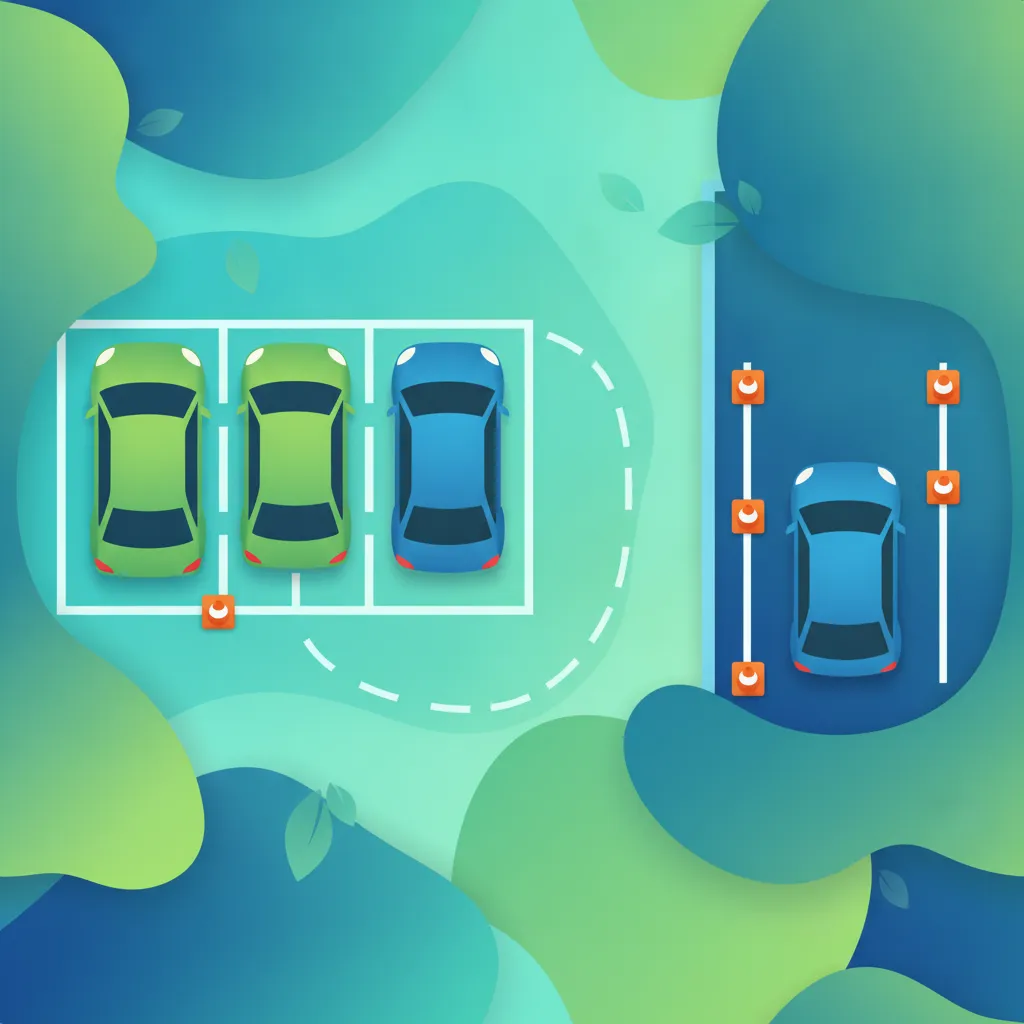
This lesson details the correct techniques and safety protocols for performing parallel and perpendicular parking manoeuvres. You will learn how to approach parking spaces, position your vehicle accurately, and manage distance effectively. Mastering these skills is essential for both your practical driving ability and your performance on the Turkish MTSK theory exam.
Lesson content overview
Mastering the art of parking is one of the most critical milestones in obtaining your Category B driving license in Turkey. Whether you are preparing for the official MTSK theory e-sınav or bracing yourself for the demanding practical driving test (direksiyon eğitimi sınavı), parallel and perpendicular parking are non-negotiable skills. In urban centers like Istanbul, Ankara, or Izmir, spatial constraints make precise parking essential for maintaining traffic flow and preventing collisions.
This lesson covers the technical, physical, and legal aspects of parallel and perpendicular parking. It explains the mechanics of steering, details step-by-step procedures, and highlights how these maneuvers are evaluated under Turkish traffic regulations.
To park safely and efficiently, a driver must master four core physical and cognitive skills. These principles bridge the gap between basic vehicle control and advanced spatial maneuvering.
Spatial awareness is the ability to judge the dimensions of your vehicle relative to surrounding objects, such as other cars, curbs, and traffic cones (dubalar). Because you cannot see the exact corners of your car from the driver's seat, you must rely on reference points—such as your side-view mirrors and window pillars—to construct an accurate mental map of your vehicle’s position in three-dimensional space.
When parking, steering inputs must be precise, deliberate, and often extreme. You will frequently transition from a "neutral" (straight) wheel position to "full lock" (turning the steering wheel as far as it will go in one direction). Understanding how your front wheels pivot and how the rear of your car acts as a hinge is key to navigating tight spots.
All parking maneuvers must be executed at walking speed. In manual transmission cars (which are highly common in the Turkish Category B curriculum), this requires precise clutch control, specifically utilizing the biting point (yarım debriyaj). In automatic vehicles, it involves "creeping" by gently modulating the brake pedal. Maintaining an extremely low speed gives you the time needed to make steering adjustments and react to sudden hazards.
Parking requires 360-degree observation. Drivers must continuously cycle their gaze between the rearview mirror, both side mirrors, and direct blind-spot checks (looking over the shoulder). This is particularly critical in busy areas where pedestrians, cyclists, or delivery scooters may suddenly appear behind your vehicle.
Parallel parking (paralel park) involves positioning your vehicle parallel to the curb, typically between two other parked vehicles. In the Turkish practical driving exam, candidates must park the vehicle within a designated space (marked by traffic cones) in a single continuous reverse movement, with a maximum of two steering adjustments allowed once inside the space.
Why do we reverse into a parallel parking space instead of driving in nose-first? The answer lies in vehicle steering mechanics. Because only the front wheels of a standard passenger car steer, the rear wheels act as a fixed pivot point. Reversing allows the front wheels to swing the nose of the car into the space at a much sharper angle, making it physically possible to enter a gap only slightly longer than the vehicle itself.
Select and Signal: Locate a safe, legal parking space. Activate your right turn signal (sağ sinyal) early to warn drivers behind you of your intention to stop and park.
Position Your Vehicle: Pull up parallel to the vehicle parked in front of the empty space. Maintain a lateral distance of approximately 50 to 80 centimetres (about arm's length) from that vehicle. Align your rear bumper with their rear bumper.
The 45-Degree Angle: Shift into reverse gear (geri vites). Turn your steering wheel fully to the right (full lock). Slowly release the clutch to the biting point, allowing the car to back into the space. Stop when your vehicle forms a 45-degree angle with the curb, or when you can see the entire front bumper of the rear vehicle in your left side mirror.
Straighten and Tuck: Straighten your steering wheel (usually 1.5 rotations) and reverse straight until your front bumper clears the rear bumper of the front car.
Full Left Lock: Turn the steering wheel fully to the left (full lock) while continuing to reverse slowly. This swings the front of your vehicle into the space, aligning it parallel to the curb.
Center the Vehicle: Once the car is parallel, straighten the steering wheel and move slightly forward or backward to ensure equal distance between the vehicles in front of and behind you.
Exam Tip (MTSK Sınav Kuralları): Hitting any of the boundary cones (dubalar) or touching the curb (kaldırım) during the parallel parking maneuver in the Turkish practical exam results in an immediate fail (red mistake / kırmızı hata). Take it slow and check your mirrors constantly.
Perpendicular parking, often referred to in Turkish driving schools as "L-Park," involves parking at a 90-degree angle to the curb or parking line. This layout is standard in shopping malls, parking garages, and marked public lots. There are two primary methods: head-in and reverse (back-in).
While driving nose-first into a perpendicular space seems simpler, it is actually more hazardous. When backing out of a space nose-first, your vision of oncoming traffic is severely blocked by adjacent vehicles, forcing you to blind-backup into the lane. Reversing into the space (back-in) requires more skill initially but provides an optimal field of view when exiting, making it the safer, professionally recommended technique.
Approach and Signal: Drive slowly down the parking aisle. Signal your intention to park by activating your indicator. Keep your vehicle approximately 1.5 metres away from the parked cars or the edge of the spaces.
Reference Point Alignment: Drive past the target parking space. Align your rear bumper with the far line (or the side bumper of the car parked just beyond your target space).
Angle and Reverse: Shift into reverse. Turn the steering wheel fully toward the parking space (full lock). Slowly ease off the brake/clutch to begin rolling backward.
Monitor Clearance: Watch your side-view mirrors closely. Ensure that the inner rear wheel of your vehicle clears the corner obstacle (cone, wall, or parked vehicle) without pinching the turn.
Straighten and Complete: As your vehicle becomes parallel to the painted lines of the parking stall, quickly straighten your wheels. Continue backing up straight until your front bumper is clear of the aisle. Ensure you do not strike the curb or wall behind you.
In Turkey, parking regulations are defined by the Highway Traffic Law (Karayolları Trafik Kanunu) and its accompanying regulations. Violating these rules can result in traffic fines (idari para cezası), penalty points on your license, or your vehicle being towed to a municipal impound lot.
According to Article 61 of the Turkish Highway Traffic Regulation, parking is strictly prohibited in the following locations:
Parking techniques must adapt dynamically to changes in weather, visibility, road gradient, and vehicle dynamics.
When parking on hills, gravity poses a rolling hazard. In addition to pulling the handbrake (el freni) firmly and engaging a low gear (1st gear for facing uphill, Reverse for facing downhill), you must position your front wheels relative to the curb to act as a mechanical block.
Rain, snow, and ice drastically reduce tire traction. When maneuvering in winter conditions, tire slippage can cause your vehicle to slide into curbs or adjacent cars. Always use extremely gentle throttle inputs and maintain even slower speeds.
In low-visibility environments like unlit streets or foggy underground parking garages, always turn on your dipped headlamps (yakın ışıklar) to make your vehicle visible to others. Avoid relying solely on daytime running lights, which do not illuminate your rear taillights.
Even experienced drivers occasionally miscalculate parking maneuvers. Recognizing errors early allows you to make safe corrections.
| Error | Consequence | Correction |
|---|---|---|
| Turning the wheel too early when parallel parking. | The rear of your car will pinch the space, causing you to hit the curb or the rear vehicle's corner. | Pull forward, reset your starting position, and wait until your rear bumper aligns with the front car's bumper before turning. |
| Turning the wheel too late when parallel parking. | The car will end up parked too far from the curb, leaving the front bumper protruding into the active traffic lane. | Straighten the wheels, reverse slightly further back, and initiate a sharper left turn to pull the front end in. |
| Failure to use turn signals (sinyal lambası). | Drivers behind you will not anticipate your stop, increasing the risk of a rear-end collision. | Always activate your signal at least 50 metres before stopping on urban roads. |
| Failing to check blind spots before reversing. | Colliding with low-profile obstacles, pedestrians, or small children who are not visible in the mirrors. | Physically turn your head (omuz üstü bakış) to verify your blind spots before moving the vehicle backward. |
Explore all units and lessons included in this driving theory course.
Lesson content overview
Explore all units and lessons included in this driving theory course.
Explore search topics learners often look for when studying Parallel and Perpendicular Parking. These topics reflect common questions about road rules, driving situations, safety guidance, and lesson level theory preparation for learners in Turkey.
Browse additional driving theory lessons that cover connected traffic rules, road signs, and common driving situations related to this topic. Improve your understanding of how different rules interact across everyday traffic scenarios.
Understand the official highway traffic laws regarding where parking is prohibited, including intersection distances, public transit stops, and pedestrian crossings. This guide clarifies the legal requirements for safe vehicle placement to avoid traffic fines and penalties according to Turkish traffic legislation.
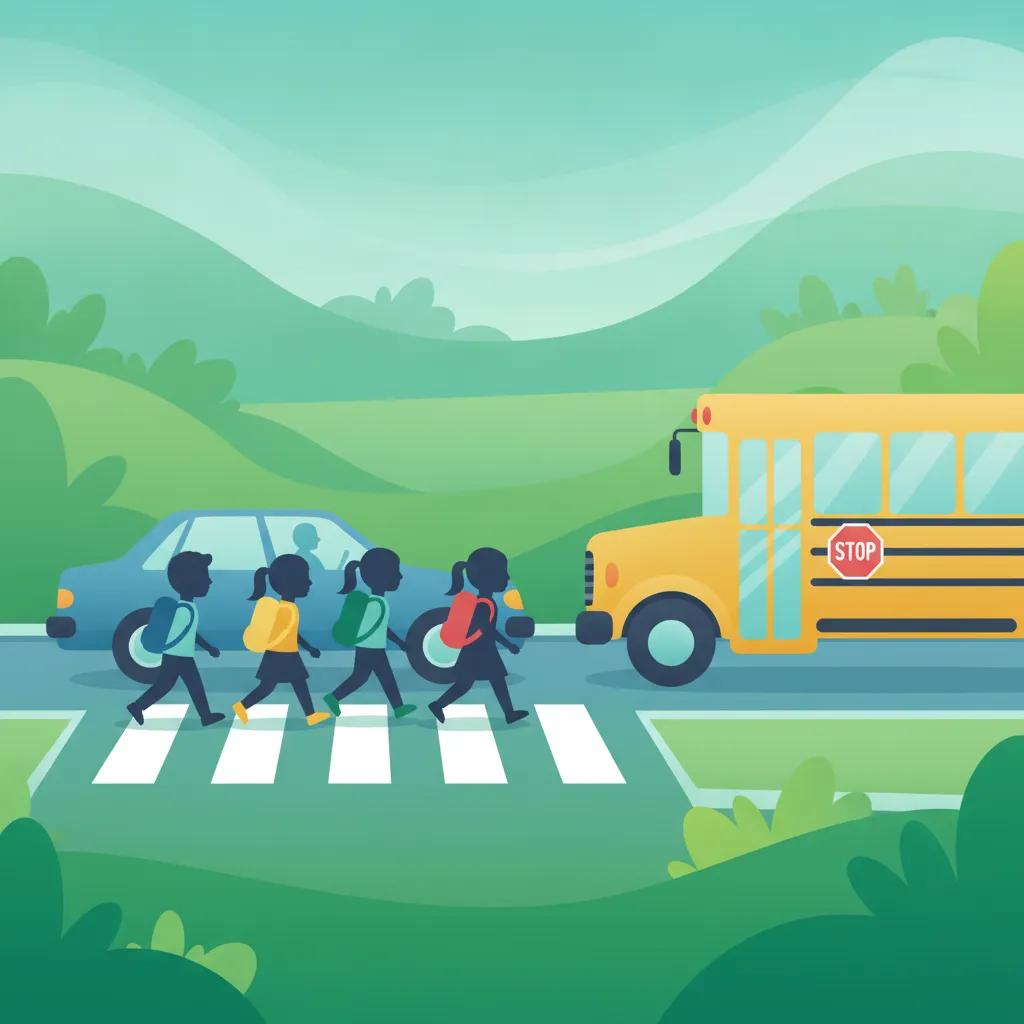
This lesson focuses on the specific considerations for ensuring the safety of pedestrians and schoolchildren around bus stops and terminals. Learners will explore strategies for slowing down, stopping at appropriate distances, and maintaining heightened vigilance. The lesson also covers effective communication with children and the importance of secure boarding and alighting processes to prevent accidents.
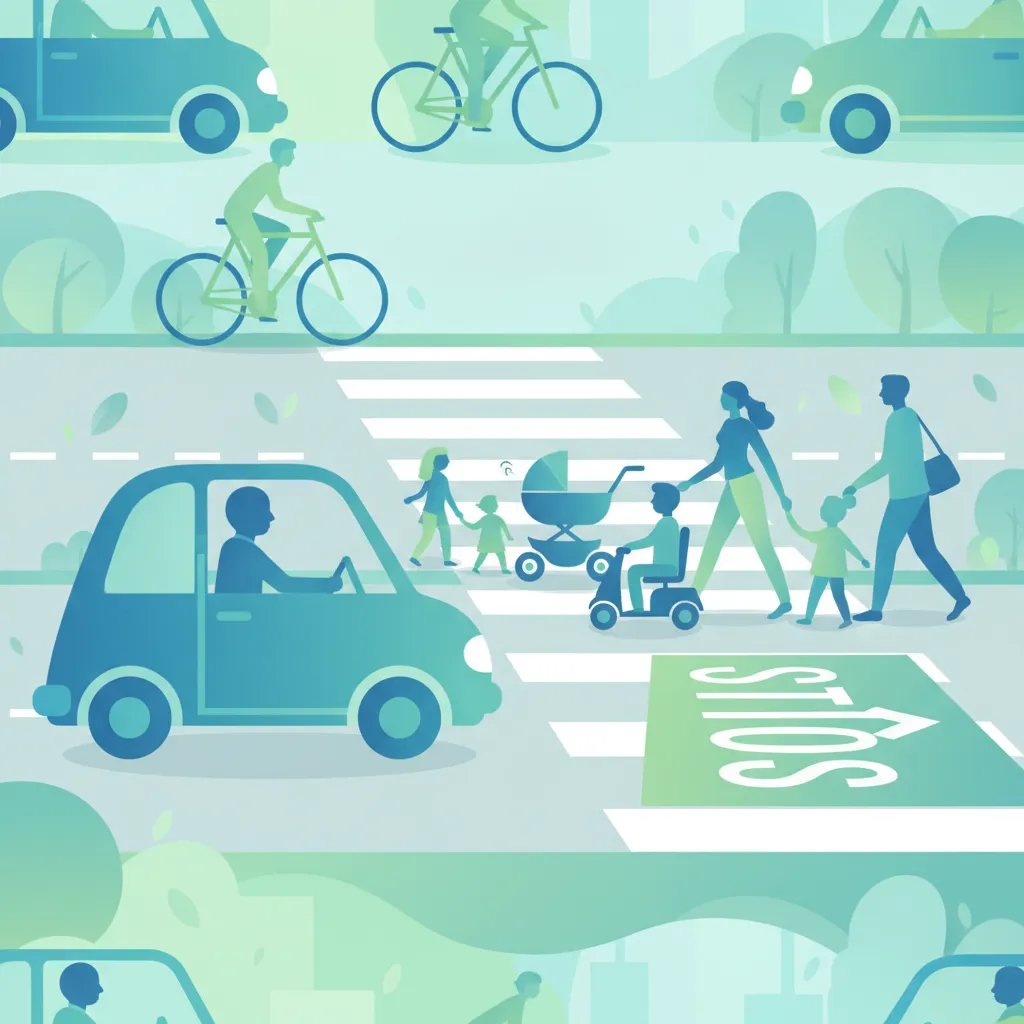
Learners will examine effective strategies for safely coordinating with pedestrians and other road users when approaching and departing bus stops. The lesson highlights right-of-way rules, the importance of yielding at crosswalks, and clear communication with both passengers and other drivers. These practices are vital for preventing accidents and ensuring a harmonious flow of traffic in busy urban areas.
This lesson focuses on the proper approach to bus stops and terminals within city traffic, emphasizing safe positioning, adherence to traffic signals, and maintaining smooth traffic flow. Learners will understand the importance of signaling intentions, checking blind spots, and ensuring the safety of boarding and alighting passengers. Effective stop management reduces the risk of accidents and traffic disruption.

This lesson covers the proper handling of bus stops and designated passenger boarding zones, emphasizing safety, efficiency, and compliance with regulations. Topics include the correct positioning of the vehicle, safe boarding and alighting procedures, and managing passenger flow during stops. Effective management of these zones reduces the risk of accidents and ensures a smooth passenger experience.
Regulatory traffic signs convey absolute legal commands that riders must obey to avoid heavy fines and ensure safe, orderly movement. This lesson walks through prohibitory indicators, mandatory speed limits, turn restrictions, and specific moped bans on motorways or designated high-speed corridors. You will learn to recognize the distinctive shapes and colors of these signs, enabling rapid, accurate decision-making while operating your lightweight vehicle under Turkish highway laws.

This lesson focuses on the safe interaction with other traffic participants at bus stops and traffic intersections. Learners will explore right-of-way rules, signal compliance, and techniques for maintaining safe distances while stopping and departing. Understanding these interactions is vital for preventing accidents in complex traffic environments.
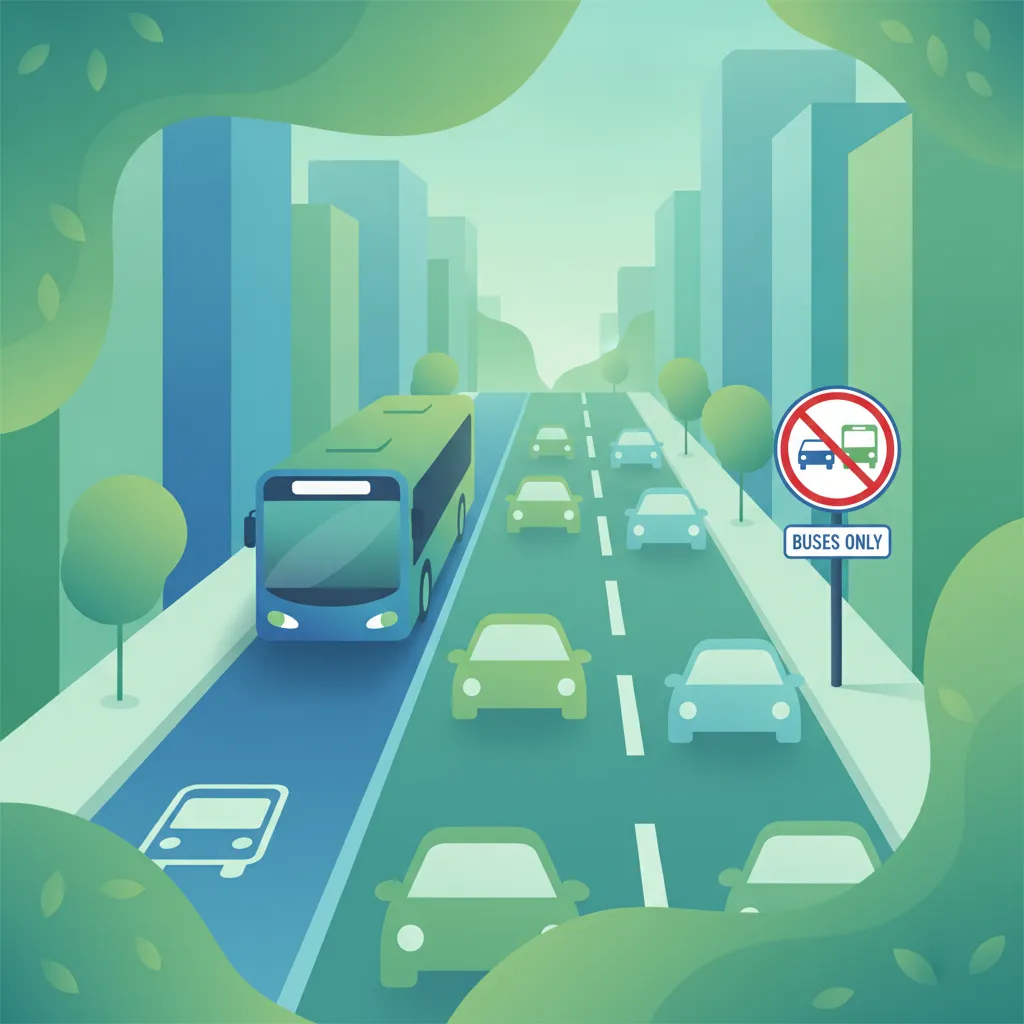
Learners will explore the specific regulations governing bus lanes, priority routes, and other legal restrictions applicable to passenger vehicles. The lesson covers the conditions under which buses may use dedicated lanes, how to navigate priority roadways, and the penalties associated with misuse. Understanding these rules is essential for efficient operation and avoiding violations in high-traffic areas.
Protecting vulnerable road users is a core legal and ethical responsibility for all motorized vehicle operators in Turkey. This lesson covers the absolute requirement to yield to pedestrians at marked crosswalks, zebra crossings, and designated school zones. You will learn how to identify these zones early, reduce your speed proactively, and maintain heightened situational awareness for children or distracted pedestrians who may step onto the road unexpectedly.

This lesson outlines the spectrum of penalties and legal consequences that goods vehicle drivers may face for violating traffic regulations. It details the types of infractions, ranging from minor violations to serious offenses, and explains the corresponding fines, points, and license suspensions. Learners will gain an understanding of the enforcement mechanisms and how repeat offenses can exacerbate penalties.
Violating Turkish traffic regulations results in serious legal and financial consequences designed to hold drivers accountable and ensure public safety. This lesson outlines the specific penalty points assigned to common infractions, the fine structure for speeding and illegal parking, and the conditions under which your moped or driving licence can be seized. Understanding these administrative penalties reinforces the importance of maintaining strict, daily compliance with national traffic laws.
Explore the necessary steering and braking techniques for parking on steep hills and inclines. Learn how to correctly position your vehicle wheels relative to the curb and manage your transmission or handbrake to prevent rolling and maintain control on varying road gradients.

This lesson addresses the techniques required for safely navigating grades and slopes with heavy goods vehicles. Learners will explore the use of engine braking, proper gear selection, and auxiliary retarders to manage speed on steep downhill sections. The lesson also covers strategies for starting on uphill grades without rollback, considering vehicle weight and load distribution.

Learners will explore techniques for adjusting driving styles based on different road surface conditions, such as gravel, potholes, and wet pavement. The lesson emphasizes the importance of adapting speed, braking, and steering inputs to maintain vehicle control and passenger comfort. Strategies for detecting and responding to road hazards are discussed to ensure safety across diverse driving environments.

This lesson delves into specific manoeuvring strategies required when navigating both tight urban environments and open rural roads with large passenger vehicles. Learners will explore techniques for handling narrow streets, tight turns, and intersections, while maintaining safety and efficiency. The content emphasizes planning and execution of manoeuvres based on road conditions and vehicle dimensions.

This lesson details defensive driving techniques for adverse weather conditions such as rain, snow, black ice, dense fog, and strong winds. It explains the physics of aquaplaning and how to regain vehicle control when losing traction on slippery surfaces. Drivers will learn how to adjust speed and increase safety gaps to prevent weather crashes.

This lesson explores the hazards characteristic of rural roads, including narrow paths, lack of lighting, slow agricultural vehicles, and sharp curves. It teaches drivers how to anticipate blind corners, adjust speed, and pass slow-moving tractors safely. Motorists will learn to remain highly alert for unexpected roadway obstructions.

Learners will explore methods for achieving smooth acceleration and deceleration, focusing on gradual throttle application and progressive brake pressure to maintain passenger comfort and vehicle stability. The lesson highlights the importance of anticipating road conditions and traffic flow to avoid abrupt speed changes, thereby enhancing safety and reducing fuel consumption.

In this lesson, learners explore fundamental vehicle control techniques essential for safe and comfortable driving. Topics include proper steering, acceleration, braking, and clutch usage, as well as basic gear shifting. The lesson emphasizes the importance of smooth and controlled inputs to maintain vehicle stability and comfort. Real-world examples illustrate mechanical basics.
This lesson explores the unique challenges encountered when driving goods vehicles on rural roads, including narrow widths, sharp curves, animal crossings, and varying road surface conditions. Learners will understand the importance of adjusting speed, maintaining vigilance, and respecting road markings. Emphasis is placed on safe navigation practices to mitigate risks associated with rural areas.
This lesson covers advanced cornering techniques for motorcyclists, focusing on maintaining optimal grip and stability while navigating bends. Topics include proper body positioning, throttle control, lean angle management, and the importance of entering a turn at the correct speed. Learners will also study how different road surfaces and weather conditions affect cornering dynamics.

In this lesson, learners will examine the key factors that affect a motorcycle's stability and overall control, including weight distribution, gyroscopic forces, and rider input. The lesson will cover techniques for maintaining balance during both straight and curved riding, as well as strategies for handling sudden maneuvers or adverse road conditions. Understanding these concepts is crucial for safety.
Find clear answers to common questions learners have about Parallel and Perpendicular Parking. Learn how the lesson is structured, which driving theory objectives it supports, and how it fits into the overall learning path of units and curriculum progression in Turkey. These explanations help you understand key concepts, lesson flow, and exam focused study goals.
Even though parking is a practical skill, the theory exam tests your understanding of the rules, such as signal timing, checking mirrors, and maintaining safe distances, which are critical for passing your driving test.
A common mistake is failing to check blind spots and surrounding traffic before initiating the turn. Always remember to use your signals and monitor all mirrors throughout the entire maneuver.
The theory exam focuses on the correct sequence of actions. In your practical exam, you are generally allowed a limited number of movements to correctly position the vehicle in the bay.
Yes, always signal your intention to park to inform other road users of your actions. This is a mandatory safety requirement that is heavily emphasized in Turkish traffic legislation.
Use our comprehensive practice search to find exactly the Turkish driving theory questions you need to master. Whether reviewing specific road signs, traffic rules, or first aid scenarios, select your perfect practice set and boost your confidence for the official ehliyet sınavı.