
This lesson details the critical protocols for responding to emergency vehicles while riding your moped or scooter in Austria. You will learn the legal requirements for yielding and how to perform safe maneuvers to ensure emergency services have a clear path. This knowledge is vital for both your Category AM theoretical exam and for staying safe on public roads.
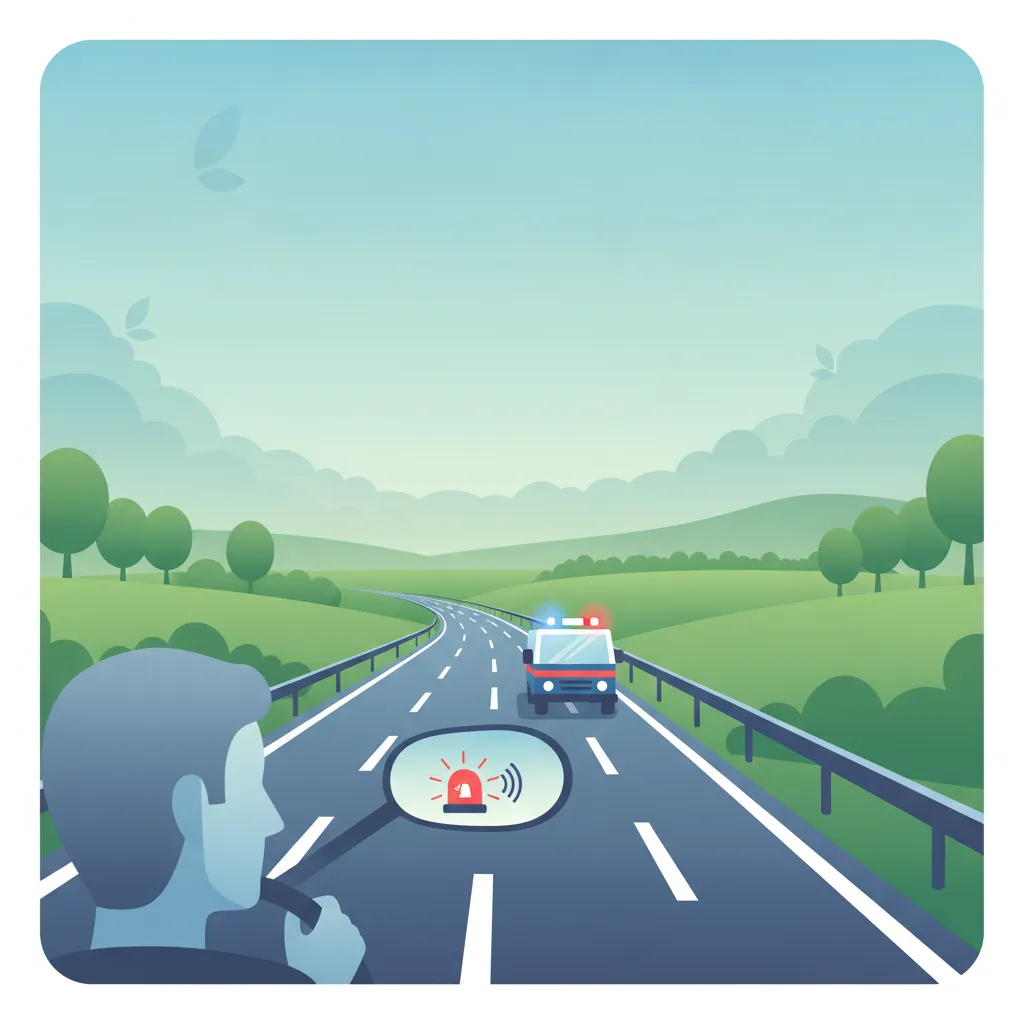
Lesson content overview
Understanding how to react to emergency vehicles is a fundamental aspect of safe riding, crucial for all participants in Austrian road traffic, especially for riders of AM category vehicles such as mopeds and small scooters. This lesson, part of your Austrian AM Driving Theory course, will explain the legal requirements and practical steps you must take when encountering vehicles with blue flashing lights and/or audible sirens. Proper interaction ensures emergency services can reach their destinations without delay, potentially saving lives, and keeps you safe on the road.
Emergency situations demand immediate and decisive action from all road users. When an emergency vehicle is on its way to an incident, every second counts. Your ability to correctly identify and yield to these vehicles is not merely a courtesy but a strict legal obligation under Austrian road traffic law (StVO). This behavior prevents collisions in high-stress situations and allows police, fire brigades, and ambulance services to perform their vital duties unimpeded.
The core principle is clear: emergency vehicles have the right-of-way when they are operating with visual and/or audible warning signals. This priority is granted because they are often responding to time-sensitive events where delays can have severe consequences. Your prompt and predictable actions are essential for creating a safe and clear path for them.
This topic builds upon your existing knowledge of right-of-way rules and general road safety. Mastering these procedures reinforces overall safe riding practices and ensures full compliance with Austrian regulations.
Navigating an encounter with an emergency vehicle requires adherence to several key principles designed to ensure safety and efficiency.
Prioritize Safety First Always ensure your actions are safe for yourself, your passenger, other road users, and pedestrians. Abrupt maneuvers or stops can be dangerous.
Upon detecting the audible siren or seeing the distinctive blue flashing lights of an emergency vehicle, you must take immediate steps to facilitate its passage. This is not optional; it is a mandatory requirement. The purpose is to ensure an unobstructed path for emergency responders, thereby reducing their response time and minimizing the risk of collisions. As a rider, this implies you must adjust your speed, road position, or even your route without endangering anyone else.
Your next step is to move your vehicle to a safe location and stop, allowing the emergency vehicle to pass. In most cases, this means pulling over to the right-hand side of the road or onto the hard shoulder if available. This provides a clear lane for the emergency vehicle while maintaining a safe distance. The action requires a quick assessment of your surroundings, including road width, traffic flow, and available stopping space, to execute the maneuver smoothly and safely.
While an emergency vehicle is approaching or passing, certain behaviors are strictly prohibited because they create unpredictable traffic patterns and increase the risk of accidents. These include overtaking the emergency vehicle, accelerating to "beat" it, making abrupt lane changes, or deliberately ignoring its warnings. Your primary responsibility is to yield, not to maintain your current progress.
Emergency vehicles have the right to advance through traffic, but only when it is safe for them to do so. This implies that while you must yield, you should also avoid creating new hazards. For instance, do not block intersections, narrow roads, or bridges while yielding, as this could impede the emergency vehicle's path or create a dangerous situation for them.
Maintaining a high level of situational awareness is paramount. Constantly scan your mirrors and use head checks to accurately locate the approaching emergency vehicle. This ensures you can safely maneuver your moped or scooter and avoid inadvertently blocking its path. Keep a safe distance from other vehicles while repositioning to prevent rear-end collisions.
Responding correctly to emergency vehicles involves understanding specific rules and scenarios.
In Austria, an emergency vehicle is clearly identifiable by its blue flashing lights (Blaulicht) and a distinctive siren (Folgetonhorn). These vehicles are used by authorized services such as the police, fire brigade, ambulance, and other rescue services.
A visual warning device, typically mounted on the roof, emitting a rotating or oscillating blue light pattern. It indicates a vehicle with priority.
An audible warning device producing a distinctive wailing, pulsing, or multi-tone sound. It is mandatory for enforcing right-of-way in combination with blue lights.
Riders must recognize these devices from any distance and treat any activation as a requirement to yield. According to StVO § 11, these signals grant emergency vehicles specific privileges and impose obligations on other road users. A common misunderstanding is believing that only a siren without lights, or vice versa, requires yielding; both are typically required for the strongest legal right-of-way, but blue lights alone still demand caution and often yielding.
The Austrian Road Traffic Regulation (StVO) grants a legal priority to emergency vehicles using their audible or visual warnings. This means all other road users, including moped and scooter riders, must facilitate their passage by moving to a safe position without hindrance. This rule applies uniformly across all road types—urban, rural, or motorways. There are no exceptions for minor roads or specific traffic conditions; the obligation to yield is compulsory everywhere. StVO § 11 (5) explicitly states this obligation.
Do Not Assume Never assume an emergency vehicle is not responding to a critical situation. Always give way promptly.
Withdrawing from the path of an emergency vehicle means taking methodical steps to move your vehicle safely out of the way.
Assess your surroundings: Quickly check mirrors and use head checks to understand the traffic situation, road width, and available space.
Signal your intention: Use your turn signal to indicate you are moving to the side.
Pull over to the right: On roads with a hard shoulder or multiple lanes, this is the preferred method. Move your moped or scooter as far to the right as safely possible, or onto the hard shoulder, and come to a complete stop.
Reposition to the left (in specific situations): In very narrow city streets where the right side is completely blocked or unsafe (e.g., parked cars, construction), and if it’s the only way to create a clear path, you might have to temporarily move slightly to the left. However, this is rare and only when explicitly safe and necessary. The general rule from StVO § 11 (4) is to move "as far as possible onto the shoulder or right-hand side of the road, if possible."
Maintain distance: Once stopped, ensure you are not blocking any potential paths for the emergency vehicle or creating a hazard for other road users. Wait until the emergency vehicle has completely passed before rejoining traffic.
A common mistake is failing to check rear and side mirrors before pulling over, which can lead to collisions with vehicles behind or beside you.
Adjusting your speed appropriately is vital when an emergency vehicle approaches. This involves controlled deceleration and, if necessary, braking.
Accelerating to "beat" the emergency vehicle is not only dangerous but also illegal. Always prioritize yielding over maintaining progress.
Intersections are critical points where yielding responsibilities are particularly strict:
Never assume you can quickly clear an intersection. The emergency vehicle may change its path or speed, creating a dangerous conflict.
The environment you're riding in influences how you yield:
When yielding, you must always consider the presence of Vulnerable Road Users (VRUs), which include pedestrians, cyclists, and other motorcyclists. Your yielding actions must not endanger them.
Road users who are at higher risk of injury in a collision, such as pedestrians, cyclists, and motorcyclists.
Failing to yield to an emergency vehicle is a serious offense under Austrian law, carrying significant legal and safety repercussions:
For example, failing to yield can result in a significant fine (e.g., around €70) and potentially 1-2 penalty points. Beyond the legal consequences, delaying emergency responders can have critical implications for those needing urgent help.
Understanding the specific sections of the Austrian Road Traffic Regulation (StVO) is essential for compliance.
Rule: Drivers must move their vehicle as far as possible onto the shoulder or right-hand side of the road when an emergency vehicle approaches, unless circumstances make this impossible. Applicability: This rule is mandatory on all road types. Rationale: To provide a clear and unobstructed lane for emergency vehicles, thus reducing response times and preventing collisions. Correct Example: A scooter rider on a main road sees an ambulance approaching from behind with blue lights and siren. The rider checks their mirrors, signals right, and carefully pulls onto the hard shoulder, coming to a complete stop until the ambulance has passed. Incorrect Example: The rider continues in their lane at normal speed, forcing the ambulance to slow down and weave around them.
Rule: If an emergency vehicle is approaching from the opposite direction, the driver must give way before entering the intersection. Applicability: Mandatory at all intersections and junctions. Rationale: To prevent blocking emergency vehicle passage at critical conflict points, where maneuvers are more complex and collision risk is higher. Correct Example: A moped rider approaches a crossroads with a green light, intending to go straight. They hear a fire engine siren approaching from the left. Despite having the green light, the rider stops safely before the white stop line, allowing the fire engine to clear the intersection. Incorrect Example: The rider assumes their green light takes precedence and enters the intersection, causing the fire engine to brake sharply or alter its path.
Rule: All traffic participants must obey the audible and visible warnings of emergency vehicles. Applicability: Nationwide, to all road users. Rationale: To ensure that emergency vehicles can travel at high speeds safely and efficiently, overriding normal traffic rules when necessary.
Rule: Drivers may not use audible warnings (such as a horn) to oppose or try to influence an emergency vehicle's approach. Applicability: All traffic participants. Legal Status: Prohibited. Rationale: To prevent confusion and ensure that emergency vehicle operators can concentrate on their task without additional distractions or conflicting signals.
Awareness of common errors can help you avoid them.
Overtaking an Emergency Vehicle with Siren:
Failure to Pull Over on Narrow Roads:
Pulling onto a Pedestrian Sidewalk:
Ignoring Sirens in Low Visibility:
Abrupt Braking and Wheel Lock-Up:
Your yielding strategy must adapt to different situations.
As reiterated, always avoid pulling onto sidewalks, pedestrian paths, or dedicated bike lanes. These are not alternatives for yielding; they are areas with priority for VRUs, and you would be creating a new hazard and committing an offense.
Your actions when an emergency vehicle approaches have direct and significant consequences.
The average human reaction time is around 1.5 seconds. This highlights why early detection of sirens and blue lights is critical. As a rider, you must anticipate the space and time needed to safely pull over, especially given the dynamic environment of road traffic. Your small size on a moped or scooter can make you less visible, emphasizing the need for proactive and clear yielding.
Sirens are designed to trigger a heightened alert response. This auditory cue helps riders prioritize the detection of emergency vehicles even amidst other distractions. However, riders must not rely solely on sound, as modern vehicles are well-insulated, and some individuals may have hearing impairments. Visual scanning is equally important.
On a scooter or moped, abrupt braking can easily lead to front or rear-wheel lock-up and loss of traction, especially on wet or uneven surfaces. Smooth, progressive brake application, using both front and rear brakes in a controlled manner, reduces this risk and allows you to maintain balance and control.
Many riders underestimate the time and distance required to safely clear a lane for an emergency vehicle. Education on appropriate stopping distances and the need for ample space (e.g., ensuring at least 30 meters for the emergency vehicle to maneuver) can help mitigate this. Overconfidence or panic can lead to dangerous errors.
The penalties for non-yielding are not just punitive; they are designed to enforce compliance and protect the vital societal function of emergency services. These laws underscore the serious responsibility every road user has to contribute to public safety.
To ensure you are fully prepared for emergency situations, remember these key points:
This lesson covers the mandatory protocols for Austrian moped riders when encountering emergency vehicles. Under StVO § 11, all road users must yield immediately to vehicles with active blue lights and/or sirens by pulling to the right or stopping safely. Critical rules include never entering an intersection when an emergency vehicle approaches, avoiding sidewalks or bike lanes while yielding, and decelerating smoothly to maintain control. The lesson also addresses contextual variations for urban and rural roads, weather conditions, and intersection-specific obligations, emphasizing that legal penalties apply for non-compliance.
A short set of high-value points that capture the most important learning from this lesson.
Emergency vehicles with active blue lights (Blaulicht) and/or siren (Folgetonhorn) have legal priority, and yielding is mandatory under StVO § 11 (5) on all road types
Pull over safely to the right-hand side or hard shoulder; if unavailable, stop behind a safe stationary object to create a clear path
Never enter an intersection if an emergency vehicle is approaching from any conflicting direction, even with a green light or existing right-of-way
Do not pull onto sidewalks, bike lanes, or pedestrian areas when yielding—this endangers vulnerable road users and is illegal
Apply brakes smoothly and progressively; abrupt braking on a moped can cause wheel lock-up and loss of control
Explore all units and lessons included in this driving theory course.
Blue lights alone (without siren) still require attention and generally yielding, though blue lights + siren indicates the highest priority
StVO § 13 (3) explicitly requires giving way before entering an intersection when an emergency vehicle approaches from any conflicting direction
On narrow rural roads without a hard shoulder, move as far right as possible on the roadway itself or stop behind a safe object
After stopping to yield, wait until the emergency vehicle has completely passed before rejoining traffic
In adverse weather (rain, fog, snow, ice), increase auditory vigilance and allow longer stopping distances when yielding
Assuming a green traffic light or existing right-of-way takes precedence over an approaching emergency vehicle at an intersection
Failing to check mirrors and perform head checks before pulling over, risking collision with vehicles behind or beside you
Accelerating to 'beat' an emergency vehicle or attempting to overtake it, which is both dangerous and illegal
Panic-braking abruptly, which can cause wheel lock-up on a moped and lead to loss of traction or a fall
Remaining in the lane on a narrow road because there is no hard shoulder, thereby blocking the emergency vehicle's path
Lesson content overview
A short set of high-value points that capture the most important learning from this lesson.
Emergency vehicles with active blue lights (Blaulicht) and/or siren (Folgetonhorn) have legal priority, and yielding is mandatory under StVO § 11 (5) on all road types
Pull over safely to the right-hand side or hard shoulder; if unavailable, stop behind a safe stationary object to create a clear path
Never enter an intersection if an emergency vehicle is approaching from any conflicting direction, even with a green light or existing right-of-way
Do not pull onto sidewalks, bike lanes, or pedestrian areas when yielding—this endangers vulnerable road users and is illegal
Apply brakes smoothly and progressively; abrupt braking on a moped can cause wheel lock-up and loss of control
Explore all units and lessons included in this driving theory course.
Blue lights alone (without siren) still require attention and generally yielding, though blue lights + siren indicates the highest priority
StVO § 13 (3) explicitly requires giving way before entering an intersection when an emergency vehicle approaches from any conflicting direction
On narrow rural roads without a hard shoulder, move as far right as possible on the roadway itself or stop behind a safe object
After stopping to yield, wait until the emergency vehicle has completely passed before rejoining traffic
In adverse weather (rain, fog, snow, ice), increase auditory vigilance and allow longer stopping distances when yielding
Assuming a green traffic light or existing right-of-way takes precedence over an approaching emergency vehicle at an intersection
Failing to check mirrors and perform head checks before pulling over, risking collision with vehicles behind or beside you
Accelerating to 'beat' an emergency vehicle or attempting to overtake it, which is both dangerous and illegal
Panic-braking abruptly, which can cause wheel lock-up on a moped and lead to loss of traction or a fall
Remaining in the lane on a narrow road because there is no hard shoulder, thereby blocking the emergency vehicle's path
Explore search topics learners often look for when studying Emergency Situations and Interaction with Emergency Vehicles. These topics reflect common questions about road rules, driving situations, safety guidance, and lesson level theory preparation for learners in Austria.
Browse additional driving theory lessons that cover connected traffic rules, road signs, and common driving situations related to this topic. Improve your understanding of how different rules interact across everyday traffic scenarios.
Explore real-world scenarios and common mistakes when encountering emergency vehicles in Austria. Learn how to correctly yield the right-of-way and create safe paths for responders, reinforcing StVO compliance for AM riders.
This lesson addresses advanced manoeuvres that require precise timing and judgment, such as merging onto a motorway from an acceleration lane. It explains the importance of matching the speed of the traffic flow and finding a safe gap before moving over. The content also covers procedures for navigating lane drops and the 'zipper merge' (Reißverschlusssystem) principle in congested situations, promoting efficient and cooperative driving.
This lesson provides a comprehensive explanation of Austria's right-of-way laws, which are fundamental to intersection safety. It covers the meaning of different priority signs and clarifies the 'Rechts vor Links' (priority to the right) rule that applies at unmarked junctions. A clear understanding of these rules is essential to prevent conflicts and collisions in urban and rural settings.
This lesson equips drivers with the essential knowledge for responding to a traffic accident. It outlines the critical first steps: securing the scene to prevent further incidents, assessing the situation, and contacting the correct emergency services (112). The content provides an overview of basic first aid principles applicable at an accident scene and explains the driver's legal obligations regarding incident reporting and cooperation with authorities.
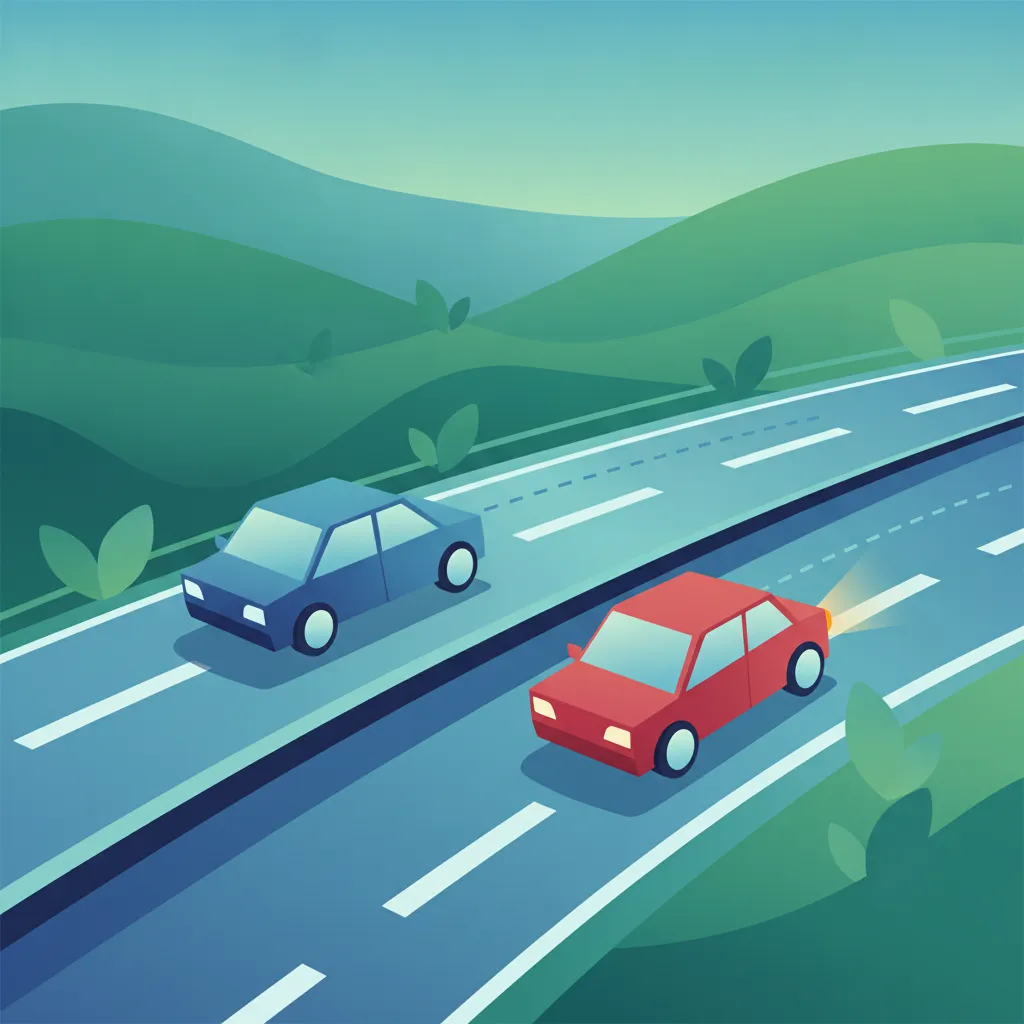
This lesson covers the principles of proper lane discipline, including maintaining a correct and steady position within a lane and adhering to the 'keep right' rule on multi-lane roads. It details the safe and systematic protocol for changing lanes, which involves checking mirrors, signaling intention, performing a blind spot check, and then smoothly executing the manoeuvre. Correct lane usage is essential for maintaining predictable and safe traffic flow.
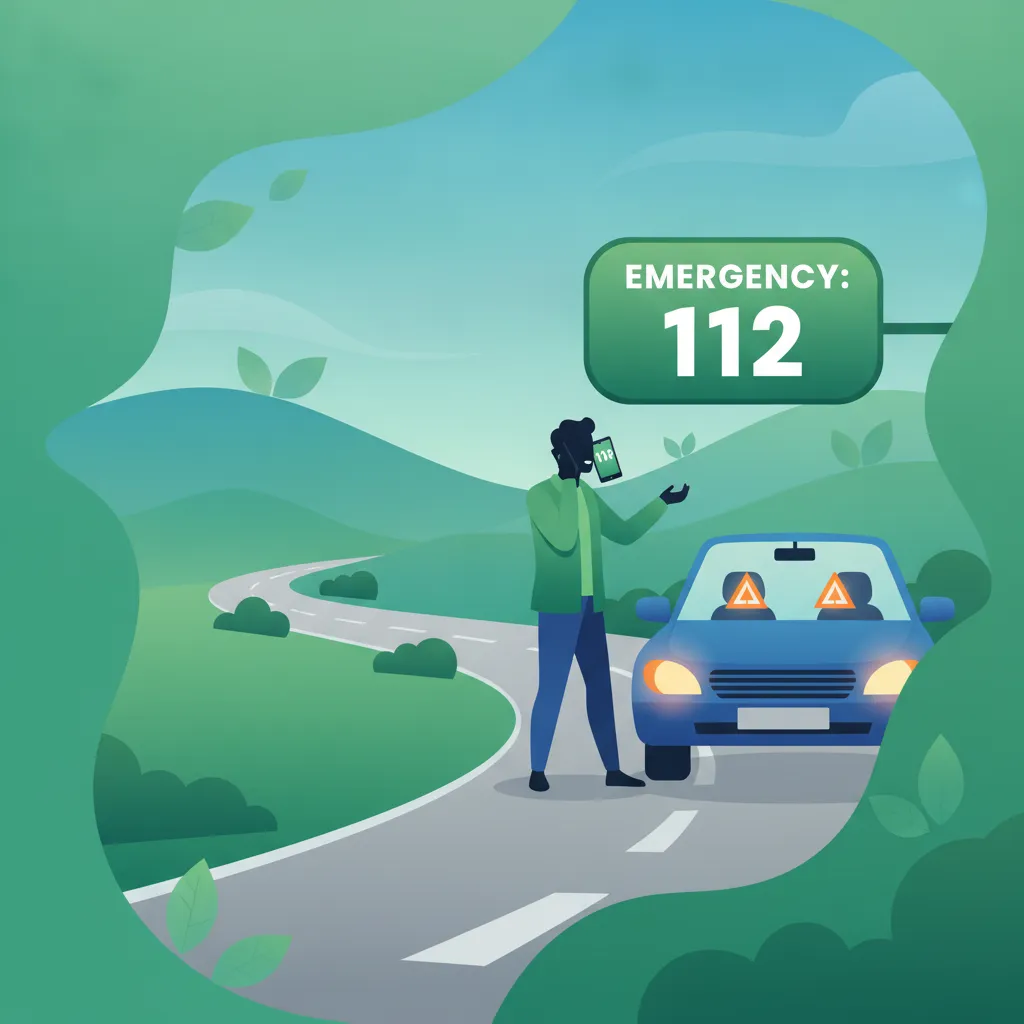
This final lesson summarizes the core principles of responding to any on-road emergency, from a breakdown to an accident. It reinforces the priorities of personal safety, securing the scene to protect others, and providing clear, concise information when calling the pan-European emergency number, 112. This knowledge is essential for managing any unforeseen incident effectively.
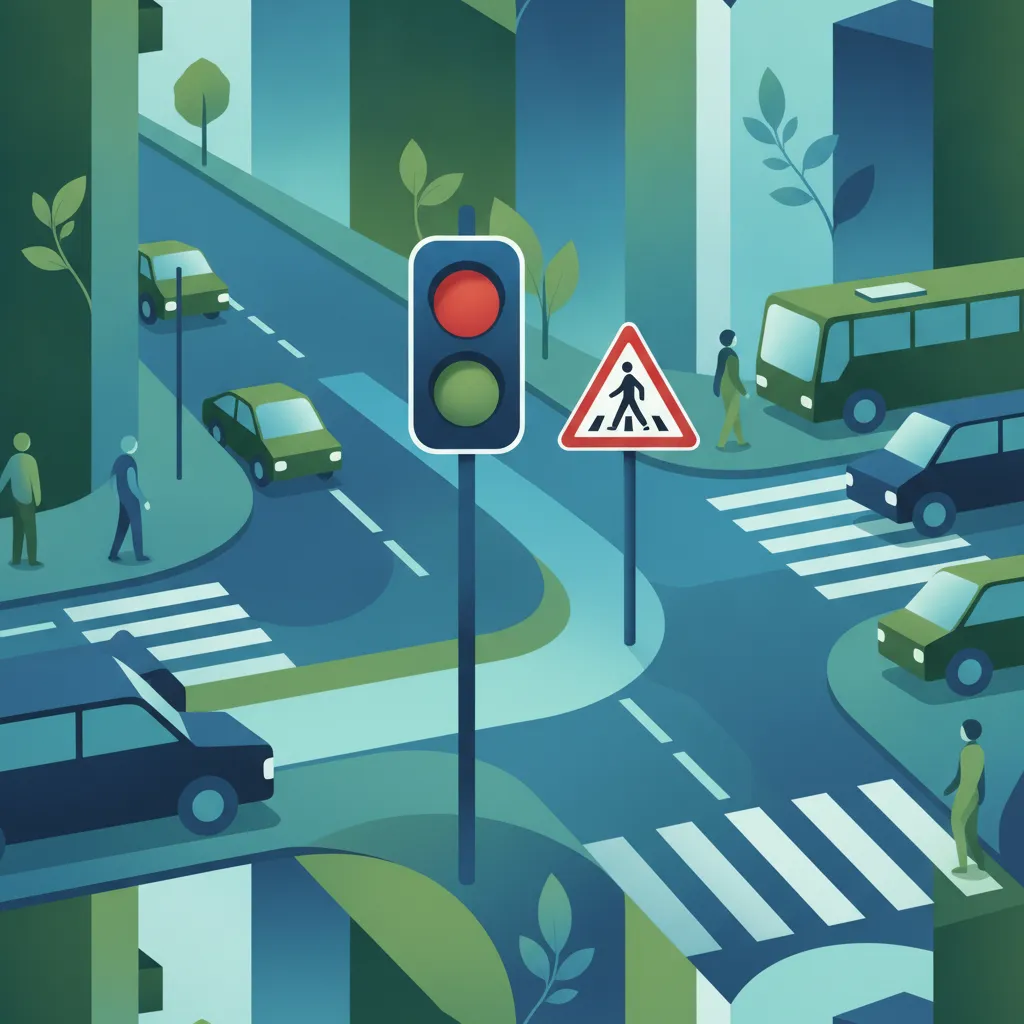
This lesson explains the operation and meaning of traffic light signals in Austria, including the standard red, yellow, and green phases, as well as flashing signals and arrows. It also covers other priority control devices, such as stop signs and yield signs, which are used to manage right-of-way at intersections. Understanding the hierarchy between these signals and signs is crucial for navigating junctions safely and in compliance with the law.

This lesson provides a detailed guide to executing turning manoeuvres safely and correctly at both intersections and roundabouts. It explains the importance of proper lane positioning well in advance of the turn, the correct timing for signaling, and the necessity of checking for pedestrians and cyclists. The content also reinforces priority rules that apply when turning, particularly when crossing the path of oncoming traffic during a left turn.
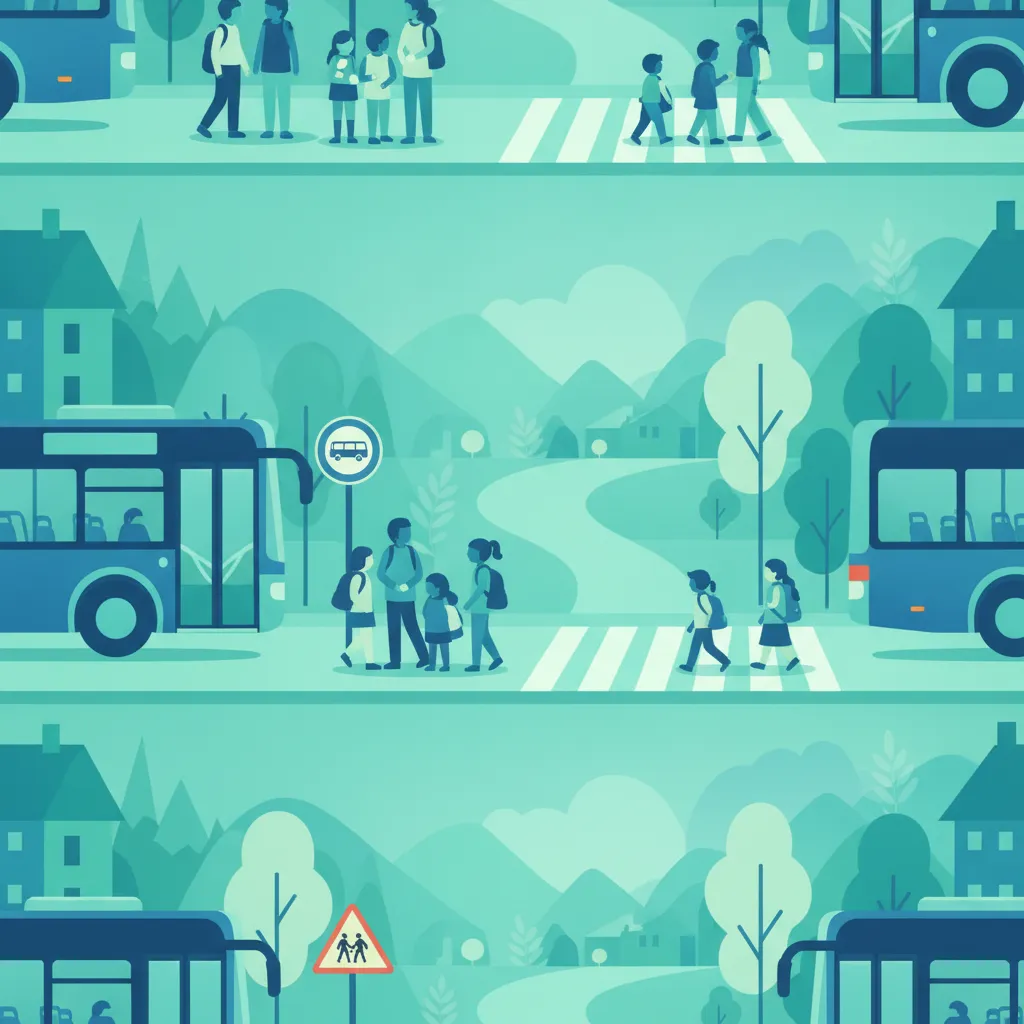
This lesson details the specific regulations and best practices for driving in areas with high pedestrian activity, such as bus stops and school zones. It explains the driver's obligation to stop for school buses with flashing lights and to yield to public buses pulling out from a stop. The content emphasizes the requirement to significantly reduce speed in marked school zones to ensure the safety of children.
This lesson focuses on the rules for navigating roundabouts (Kreisverkehr) in Austria. It highlights the fundamental give-way rule, where traffic entering the roundabout must yield to traffic already circulating within it. Learners will understand the correct procedures for lane selection, signaling intent to exit, and maintaining safe traffic flow, supported by explanations of specific Austrian roundabout signage.
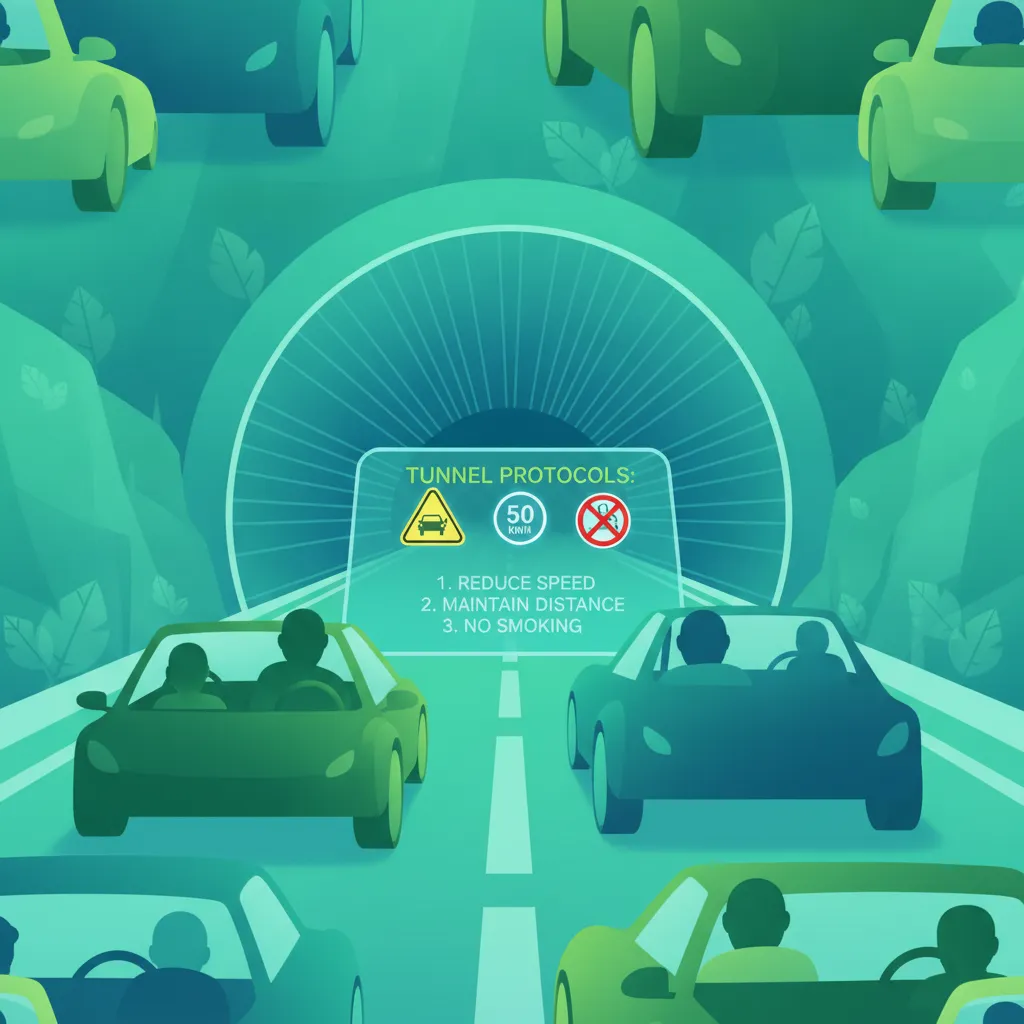
Austria's mountainous terrain means drivers will frequently encounter long tunnels. This lesson details the specific regulations, such as turning on lights and maintaining distance, as well as how to react to tunnel-specific warning signs and signals. Crucially, it covers the correct emergency procedures to follow in the event of a fire, accident, or breakdown inside a tunnel.
Understand the specific Austrian StVO articles and legal requirements governing your actions when encountering emergency vehicles. This lesson details drivers' rights and responsibilities, focusing on mandatory yielding and safe passage principles.
This lesson provides a comprehensive explanation of Austria's right-of-way laws, which are fundamental to intersection safety. It covers the meaning of different priority signs and clarifies the 'Rechts vor Links' (priority to the right) rule that applies at unmarked junctions. A clear understanding of these rules is essential to prevent conflicts and collisions in urban and rural settings.
This lesson provides an overview of the legal framework governing heavy vehicle drivers in Austria. It details the potential penalties for violations, including fines, penalty points, and the risk of licence suspension. A clear understanding of these consequences reinforces the importance of compliant and responsible driving.

This lesson delves into the specific Austrian laws and regulations that professional passenger drivers must adhere to. It provides an overview of rules concerning driving and rest times, the use of the digital tachograph, and the essential documents that must be carried at all times. Understanding these legal obligations is crucial for compliance and avoiding penalties during roadside checks.
This lesson equips drivers with the essential knowledge for responding to a traffic accident. It outlines the critical first steps: securing the scene to prevent further incidents, assessing the situation, and contacting the correct emergency services (112). The content provides an overview of basic first aid principles applicable at an accident scene and explains the driver's legal obligations regarding incident reporting and cooperation with authorities.
This lesson details the essential legal and administrative requirements for operating an AM vehicle in Austria. It covers the processes for vehicle registration, the obligation for licence plates, and the necessity of third-party liability insurance. Furthermore, it explains the importance of regular technical inspections to ensure the vehicle remains roadworthy and compliant with national standards.
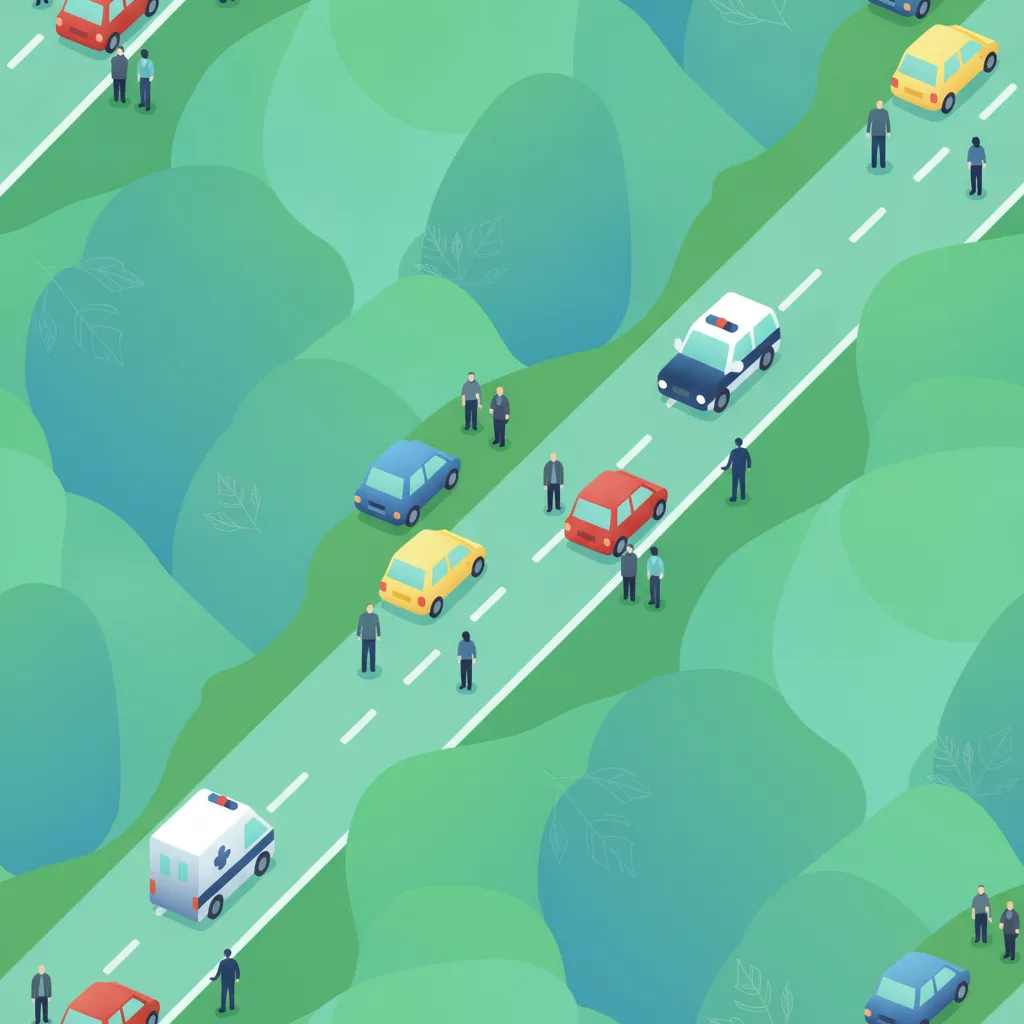
As the driver involved or first on the scene, you have specific duties. This lesson covers the initial steps: securing your own vehicle, warning approaching traffic, and making the emergency call. It reinforces the legal requirement in Austria for all drivers to form an emergency corridor ('Rettungsgasse') in standing traffic to allow clear access for emergency vehicles.

This lesson explores the strict regulations governing pedestrian crossings in Austria, particularly marked zebra crossings known as Schutzweg. It emphasizes the absolute priority of pedestrians on these crossings and the driver's legal obligation to stop and allow them to cross safely. The content covers how to approach these areas with caution, the importance of visibility, and the rules at crossings controlled by traffic lights.
This lesson explains the system of penalties and enforcement for heavy vehicle operations in Austria. It covers the fines and penalty points associated with common traffic violations, such as overloading or insecure loads. Learners will understand the role of authorities in conducting roadside checks and inspections to ensure regulatory compliance.

This lesson outlines the standardized procedure for handling a vehicle breakdown safely. It covers pulling over to a safe location, activating hazard lights, deploying the warning triangle, and wearing a high-visibility vest. It also explains when and how to contact roadside assistance or emergency services.

This lesson provides a comprehensive overview of a driver's legal responsibilities and the potential consequences of failing to adhere to traffic laws. Learners will explore the concept of liability in the event of an accident and the structure of the official penalty catalogue. The material covers the impact of fines, demerit points, and potential driving bans (Fahrverbot) on one's license, as well as the effects on insurance premiums.
Find clear answers to common questions learners have about Emergency Situations and Interaction with Emergency Vehicles. Learn how the lesson is structured, which driving theory objectives it supports, and how it fits into the overall learning path of units and curriculum progression in Austria. These explanations help you understand key concepts, lesson flow, and exam focused study goals.
Yes, if they use both blue lights and the siren, they have absolute priority in Austrian traffic. Even if you have a green light, you must stop or maneuver safely to allow them to pass immediately.
Do not enter the intersection if it would block the path. If already inside, clear it quickly and safely, then pull over to the side as soon as it is possible without risking a fall or collision.
In extreme cases to avoid a collision or strictly to clear a path for emergency services, safety takes precedence. However, always prioritize your own stability and the safety of other road users, especially as a moped rider.
The exam often uses diagrams of intersections or straight road segments. You will be asked to identify the correct behavior, such as moving to the right edge of the road or stopping before a junction to let the vehicle pass.
Refine your study plan by searching for specific Austrian driving theory practice sets. Pinpoint questions related to particular road rules, signs, or challenge levels, and begin practicing immediately to reinforce your knowledge and excel in your official exam with confidence. Get started with focused revision today.