This lesson explores the essential regulatory signs that dictate mandatory actions and prohibitions on Danish roads. By understanding these signs, you will be able to navigate traffic lawfully and safely, ensuring you are fully prepared for the Category B theory exam.
Lesson content overview
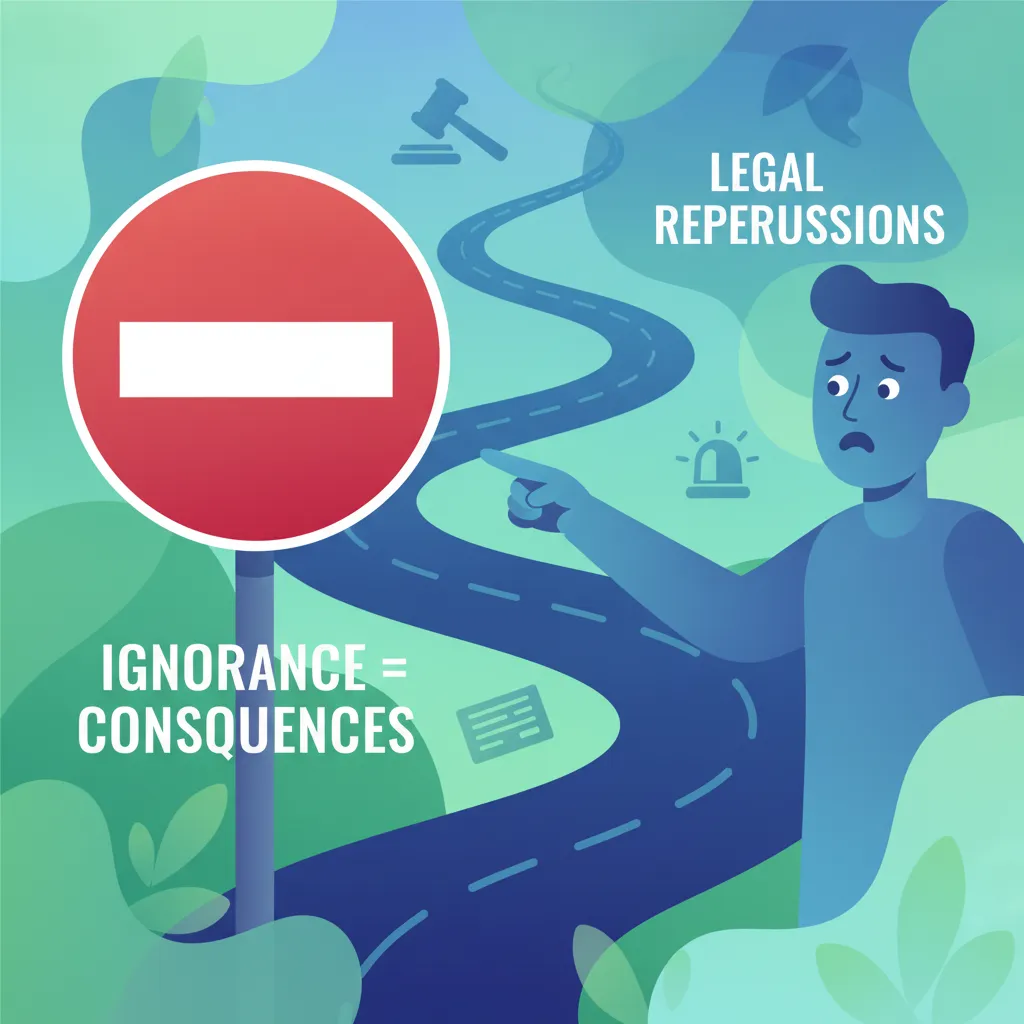
Welcome to this lesson within the Danish Driving License Theory Course: Category B Preparation. As a future driver in Denmark, a deep understanding of regulatory signs is not just beneficial—it's legally mandatory. These signs form the backbone of traffic law, dictating specific actions and prohibitions to ensure safety, order, and predictable behavior among all road users. Ignoring them carries significant legal consequences.
Regulatory signs are a fundamental category of traffic signs designed to enforce traffic laws and rules. Unlike warning signs, which alert you to potential hazards, or informative signs, which provide guidance, regulatory signs issue direct commands. Compliance with these signs is not optional; it is a legal requirement with serious implications for non-adherence.
Regulatory signs explicitly state what road users must or must not do. They dictate speed limits, mandatory stops, specific turns, entry prohibitions, and parking rules, among other things. Recognizable by their distinct shapes and colors—often circular with a red border for prohibitions, or blue for mandatory actions, and some unique shapes like the octagonal stop sign—they provide immediate, unambiguous instructions to drivers.
The most critical aspect of regulatory signs is their legally binding nature. Every instruction given by a regulatory sign carries the force of law. This means that failing to comply is a direct violation of Danish traffic regulations. The system of regulatory signs is a cornerstone of traffic management, ensuring that all drivers understand and follow a common set of rules, thereby minimizing chaos and reducing the risk of accidents.
To ensure consistency and clarity, regulatory signs in Denmark, like in most European countries, adhere to international standards for design, color, and symbolism. This standardization means that a speed limit sign or a no-entry sign looks largely the same whether you encounter it in Copenhagen or a rural village. Non-compliance with regulatory signs can lead to a range of penalties. These typically include fines, points on your driver's license (which can accumulate and lead to license suspension), or in more severe cases, immediate license revocation and even criminal charges. The severity of the penalty usually correlates with the danger posed by the violation.
Always assume regulatory signs are active and legally binding unless explicitly indicated otherwise by supplementary signs or temporary traffic control.
Understanding the specific types of regulatory signs is essential for safe and lawful driving. This section breaks down the most common categories you will encounter in Denmark.
Speed limit signs are among the most frequently encountered regulatory signs. They inform drivers of the maximum permissible speed on a particular stretch of road. Adhering to these limits is crucial for road safety, as speed significantly impacts stopping distances and the severity of accidents.
Speed limits can be permanent, applying consistently to an area (e.g., 50 km/h in urban areas or 80 km/h on secondary roads). They can also be temporary, often indicated by orange signs or electronic displays, put in place for roadworks, special events, or other transient conditions. Additionally, some major roads and motorways might use variable speed limit signs, which are electronic displays that can change the limit based on real-time traffic flow, weather conditions, or other factors. Drivers must always comply with the most restrictive speed limit in effect.
Exceeding the posted speed limit is a common and serious offense. Danish law imposes strict penalties for speeding, which escalate significantly with the degree of excess speed. These penalties can range from substantial fines to points on your license, conditional license revocation, or even immediate, unconditional license revocation for very high speeds, especially in urban areas or zones near schools. Even a slight exceedance can result in a fine.
These two signs are critical for managing priority at intersections, preventing collisions by clearly defining which driver has the right to proceed first.
A stop sign (often octagonal, red with a white border and the word "STOP") demands a complete halt of the vehicle before the stop line, or if no line is present, before entering the intersection. It's not enough to simply slow down; the vehicle must come to a standstill, even if there appears to be no cross-traffic. After stopping, drivers must ensure the way is clear and safe before proceeding. Failing to perform a full stop is a serious violation.
The give way sign (an inverted triangle with a red border) indicates that drivers must yield to traffic on the intersecting road. This means slowing down and, if necessary, stopping to allow vehicles on the main road to pass before entering or crossing. Unlike a stop sign, a full stop is not always required if the intersection is clear and it's safe to proceed without impeding others. However, the obligation to yield remains absolute.
At both stop and give way signs, always scan the intersection thoroughly for pedestrians, cyclists, and other vehicles before proceeding, even if you believe you have the right of way.
The no entry sign is crucial for safety, especially in urban environments, by preventing vehicles from entering restricted areas or traveling against the flow of one-way traffic.
A "No Entry" sign (a red circle with a white horizontal bar) explicitly forbids entry from the direction in which you are traveling. This sign is typically found at the exit of one-way streets, at the entrance to pedestrian zones, or where specific traffic flow patterns are enforced. Entering a road against a no entry sign is extremely dangerous, risking head-on collisions, and is considered a severe violation with substantial penalties. Drivers must be vigilant for these signs, especially when navigating unfamiliar urban areas.
Overtaking (overhaling) is a maneuver that carries inherent risks, and regulatory signs are used to prohibit it in situations where visibility, road conditions, or traffic patterns make it unsafe.
Signs prohibiting overtaking (a red circle with two cars, one red and one black, side-by-side) indicate stretches of road where passing other vehicles is forbidden. These zones are usually established on curves, hill crests, narrow roads, or in areas with high pedestrian activity where visibility is limited or sudden hazards might appear. Road markings, such as a double solid white line, often accompany these signs, reinforcing the prohibition. Violating an overtaking prohibition is a serious offense due to the high risk of head-on collisions.
Overtaking in a prohibited zone is considered a dangerous driving offense in Denmark. Penalties typically include a significant fine and points on your driver's license. If an accident occurs as a result of illegal overtaking, the consequences can be much more severe, potentially leading to criminal charges and long-term license suspension or revocation. Drivers must always assess the safety of an overtaking maneuver, even where not explicitly prohibited, but must never overtake where restricted by signs or markings.
Parking regulations are essential for maintaining traffic flow, ensuring access for emergency services, protecting vulnerable road users, and fairly distributing limited parking space.
Parking signs come in various forms, each with specific rules:
Many urban areas in Denmark have resident permit zones, marked by signs indicating that only vehicles with a valid resident parking permit are allowed to park. Parking in such a zone without the appropriate permit will result in a fine. Additionally, vehicles illegally parked, especially if they obstruct traffic, block entrances, or pose a safety hazard, are at risk of being towed at the owner's expense. Understanding and obeying parking restrictions is crucial to avoid fines and inconvenience.
Even experienced drivers can sometimes make mistakes regarding regulatory signs. Being aware of common pitfalls can help new drivers avoid violations.
The context in which you encounter regulatory signs significantly impacts how you should interpret and apply them.
Regulatory signs are more than just rules; they are carefully designed tools that contribute to overall road safety and shape responsible driver behavior.
By providing clear and universal instructions, regulatory signs ensure that all road users can anticipate each other's actions. When drivers consistently obey speed limits, stop at stop signs, and yield where required, traffic flow becomes predictable. This predictability significantly reduces uncertainty and the likelihood of sudden, unexpected maneuvers, which are common precursors to accidents. Without these clear directives, traffic would be chaotic and incredibly dangerous.
The direct enforceability of regulatory signs means that drivers are legally accountable for their actions. This accountability, reinforced by the system of fines and license points, acts as a powerful deterrent against non-compliance. Accumulating points on a Danish driver's license, known as a "klip i kørekortet," can lead to consequences such as mandatory re-tests or even license suspension, motivating drivers to adhere strictly to the rules.
The system of "klip i kørekortet" (points on the driving license) is designed to penalize repeated or serious traffic offenses. Accumulating a certain number of points within a specified period can lead to serious consequences, including losing your driving privileges.
Understanding regulatory signs theoretically is one thing; applying that knowledge correctly in real-world driving situations is another. Here are some practical scenarios to illustrate correct behavior.
Setting: You are driving through a residential area in a Danish town. You see a circular sign with a red border and the number '50' inside. Rule: The sign indicates a maximum speed limit of 50 km/h for the entire built-up area unless otherwise specified. Correct behavior: You reduce your speed to 50 km/h or below, being mindful of potential pedestrians and children. You maintain this speed until you see a sign indicating a different limit, or the end of the urban area. Incorrect behavior: You continue at 60 km/h, assuming the limit is only for the immediate intersection, or you accelerate once past the initial sign. This could result in a speeding fine or, more importantly, put vulnerable road users at risk.
Setting: You are approaching an intersection on a rural road, and there is an octagonal red "STOP" sign (B11) with a white line painted across your lane. Rule: A full and complete stop is required before the white stop line, followed by yielding to all traffic on the intersecting road. Correct behavior: You begin braking early, smoothly coming to a complete stop with the front of your vehicle just before the stop line. You then look left, right, and left again, ensuring no traffic is approaching from the main road or entering the intersection from other directions before slowly proceeding when safe. Incorrect behavior: You slow down but don't stop completely (a "rolling stop"), or you stop but fail to check thoroughly for cross-traffic, pulling out in front of an oncoming vehicle.
Setting: You are looking for a parking spot in a busy city center and see a narrow street with what appears to be an open entrance, but a circular red sign with a white horizontal bar (C11) is prominently displayed. Rule: The "No Entry" sign prohibits entry from your direction, indicating that this is a one-way street flowing in the opposite direction. Correct behavior: You immediately recognize the sign and understand you cannot enter the street. You find an alternative route or continue searching for parking elsewhere. Incorrect behavior: You ignore the sign, thinking it might apply to a different lane, or mistakenly believe it means "no parking." Entering the street would put you directly in the path of oncoming traffic, creating a severe head-on collision risk.
Setting: You are driving on a two-lane rural road behind a slow-moving tractor. The road ahead is winding, and you see a sign (C51) prohibiting overtaking. The road also has a double solid white line marking the center. Rule: Overtaking is strictly prohibited due to the sign and the road markings. Correct behavior: Despite the tractor's slow speed, you remain patiently behind it, maintaining a safe following distance. You wait for a section of road where the "No Overtaking" sign is superseded by an "End of Overtaking Prohibition" sign, or where road markings change to broken lines, and visibility is clear and safe for overtaking. Incorrect behavior: You become impatient and attempt to overtake the tractor, crossing the double solid line or ignoring the sign. This is highly dangerous on a winding road with limited visibility and would result in a severe traffic violation.
Setting: You arrive in a new urban area and find a blue 'P' sign with supplementary text indicating "Max 2 timer" (Max 2 hours) and "8-18" (8 AM - 6 PM). Below it, another sign states "Parkeringsskive påkrævet" (Parking disc required). Rule: Parking is allowed for a maximum of 2 hours, but only between 8 AM and 6 PM, and you must display a parking disc set to your arrival time. Correct behavior: You find a parking spot, place your parking disc inside your car, setting it to the next quarter or half hour (e.g., if you arrive at 10:05, set it to 10:15). You ensure your car is parked for no longer than two hours within the specified time frame. Incorrect behavior: You park without a parking disc, or stay longer than two hours, or misinterpret the "8-18" as only applying to the two-hour limit, assuming you can park indefinitely outside these hours without clarification. This would lead to a parking fine.
Mastering regulatory signs is not just about memorizing symbols; it's about understanding the legal framework, the safety implications, and the underlying logic that governs Danish traffic. As you prepare for your Danish Category B driving license, dedicate ample time to internalizing the meaning and authority of each regulatory sign. Consistent compliance ensures your safety, the safety of others, and your ability to navigate Danish roads lawfully and confidently. Your thorough understanding of these signs is a testament to your readiness to become a responsible and skilled driver.
This lesson covers Danish regulatory signs, which enforce mandatory actions and prohibitions with legal consequences. Key sign types include speed limits (permanent, temporary, and variable), stop signs requiring full stops, yield signs, no-entry signs, overtaking prohibitions, and parking restrictions ranging from timed parking to no-stopping zones. The lesson emphasizes that compliance is legally mandatory and explains the penalty system including the klip i kørekortet points system. Practical scenarios demonstrate correct versus incorrect behavior at intersections, while the content highlights common mistakes such as rolling stops, ignoring temporary limits, and misinterpreting parking signs.
A short set of high-value points that capture the most important learning from this lesson.
Regulatory signs carry legal force in Denmark and must be obeyed; non-compliance can result in fines, license points, or revocation.
Stop signs require a complete halt with wheels stopped, while yield signs require slowing and giving priority but not necessarily stopping.
No Entry signs prohibit entry from the direction they face, typically found at exits of one-way streets and pedestrian zones.
Overtaking prohibitions exist where visibility is limited (curves, hill crests) and must be respected even when impatient.
Distinguish between No Parking (brief stops allowed) and No Stopping (no stopping for any reason except emergencies).
Explore all units and lessons included in this driving theory course.
Speed limits can be permanent (white numbers), temporary (orange signs), or variable (electronic displays); always obey the most restrictive.
The octagonal red-and-white STOP sign demands a full, complete stop before the stop line or intersection.
The red circle with white horizontal bar means No Entry—do not enter from that direction under any circumstances.
Parking disc (parkeringsskive) is required in timed parking zones; set it to the next quarter hour after arrival.
Klip i kørekortet is the Danish points system where accumulated points lead to license suspension.
Performing a 'rolling stop' instead of a complete halt at stop signs, which is a serious violation.
Ignoring temporary speed limit reductions for roadworks or failing to notice variable speed limits on motorways.
Misinterpreting No Parking as allowing brief stops, when No Stopping is the stricter prohibition requiring constant movement.
Attempting to overtake where double solid lines or No Overtaking signs are present, especially on curves with limited visibility.
Parking without a disc or exceeding the time limit in timed parking zones.
Lesson content overview
A short set of high-value points that capture the most important learning from this lesson.
Regulatory signs carry legal force in Denmark and must be obeyed; non-compliance can result in fines, license points, or revocation.
Stop signs require a complete halt with wheels stopped, while yield signs require slowing and giving priority but not necessarily stopping.
No Entry signs prohibit entry from the direction they face, typically found at exits of one-way streets and pedestrian zones.
Overtaking prohibitions exist where visibility is limited (curves, hill crests) and must be respected even when impatient.
Distinguish between No Parking (brief stops allowed) and No Stopping (no stopping for any reason except emergencies).
Explore all units and lessons included in this driving theory course.
Speed limits can be permanent (white numbers), temporary (orange signs), or variable (electronic displays); always obey the most restrictive.
The octagonal red-and-white STOP sign demands a full, complete stop before the stop line or intersection.
The red circle with white horizontal bar means No Entry—do not enter from that direction under any circumstances.
Parking disc (parkeringsskive) is required in timed parking zones; set it to the next quarter hour after arrival.
Klip i kørekortet is the Danish points system where accumulated points lead to license suspension.
Performing a 'rolling stop' instead of a complete halt at stop signs, which is a serious violation.
Ignoring temporary speed limit reductions for roadworks or failing to notice variable speed limits on motorways.
Misinterpreting No Parking as allowing brief stops, when No Stopping is the stricter prohibition requiring constant movement.
Attempting to overtake where double solid lines or No Overtaking signs are present, especially on curves with limited visibility.
Parking without a disc or exceeding the time limit in timed parking zones.
Explore search topics learners often look for when studying Regulatory Signs and Their Legal Significance. These topics reflect common questions about road rules, driving situations, safety guidance, and lesson level theory preparation for learners in Denmark.
Browse additional driving theory lessons that cover connected traffic rules, road signs, and common driving situations related to this topic. Improve your understanding of how different rules interact across everyday traffic scenarios.
Explore complex Danish regulatory signs beyond the basics. Understand advanced interpretations of mandatory actions, prohibitions, and their legal significance, crucial for passing your theory exam and driving legally.
This lesson introduces the primary categories of Danish road signs and their legal implications. It covers regulatory signs that dictate mandatory actions or prohibitions, and warning signs that indicate upcoming hazards. Correct interpretation of these signs is fundamental for lawful and safe riding on Danish roads.
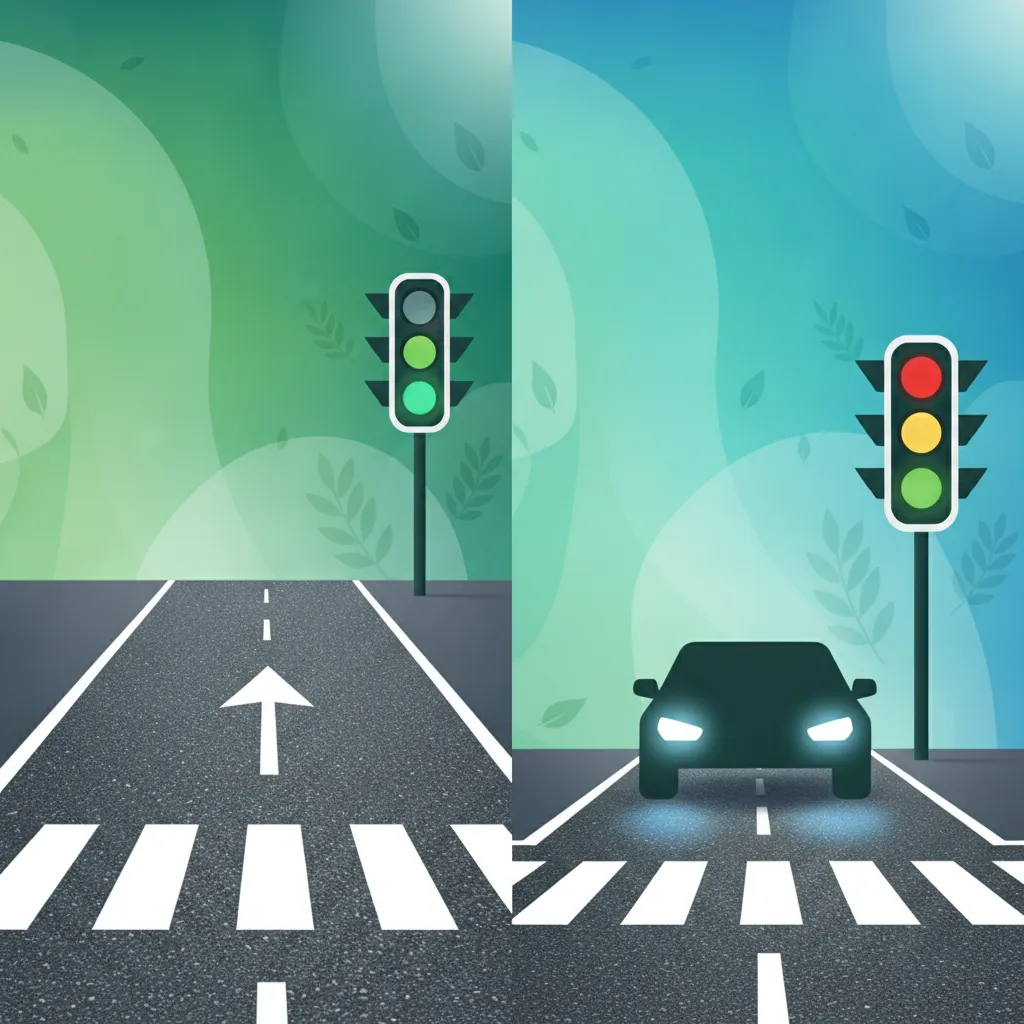
This lesson details the meaning and application of various road surface markings, including lane dividers, solid and broken lines, and directional arrows. You will also learn to interpret the full sequence of traffic light signals, including the specific rules for the amber (yellow) light phase. A proper understanding of these systems is vital for maintaining correct lane discipline and adhering to traffic controls.
This lesson focuses on interpreting the various markings painted on Danish road surfaces. It explains the rules associated with solid and broken lane lines, directional arrows, and special-purpose lanes for buses and cyclists. Understanding these markings is crucial for maintaining correct lane discipline and safely navigating complex road layouts.

This lesson details the function and meaning of traffic light signals in Denmark. It covers the standard red, amber, and green sequences, as well as special signals like flashing amber lights and green arrows for turning. The content also explains signals specific to cyclists and pedestrians that moped riders must observe at intersections.

This lesson teaches you to identify warning signs that alert drivers to upcoming hazards and changing road conditions. It covers common signs such as sharp curves, school zones, animal crossings, and temporary conditions like roadworks or slippery surfaces. Understanding these signs is crucial for anticipating risks and adjusting your driving to ensure safety on all types of Danish roads.

This lesson covers the proper methods for signalling intentions to other road users. It details the legal requirements for using turn indicators before turning or changing lanes. The content also explains how to use legally recognized hand signals as a backup or for added clarity.

Properly functioning lighting and signaling systems are fundamental for safe communication on the road. This lesson details the purpose and correct use of all exterior lights, including headlights, brake lights, turn signals, and hazard lights, according to Danish law. It emphasizes the driver's responsibility to ensure these systems are clean and operational to maintain visibility and clearly signal maneuvers to other road users.

This lesson provides an in-depth explanation of Denmark's priority rules, known as 'vigepligt.' It differentiates between unconditional priority ('ubetinget vigepligt'), often indicated by signs, and the default right-hand priority rule ('højre vigepligt'). Applying these rules correctly is essential for preventing collisions at junctions without traffic signals.

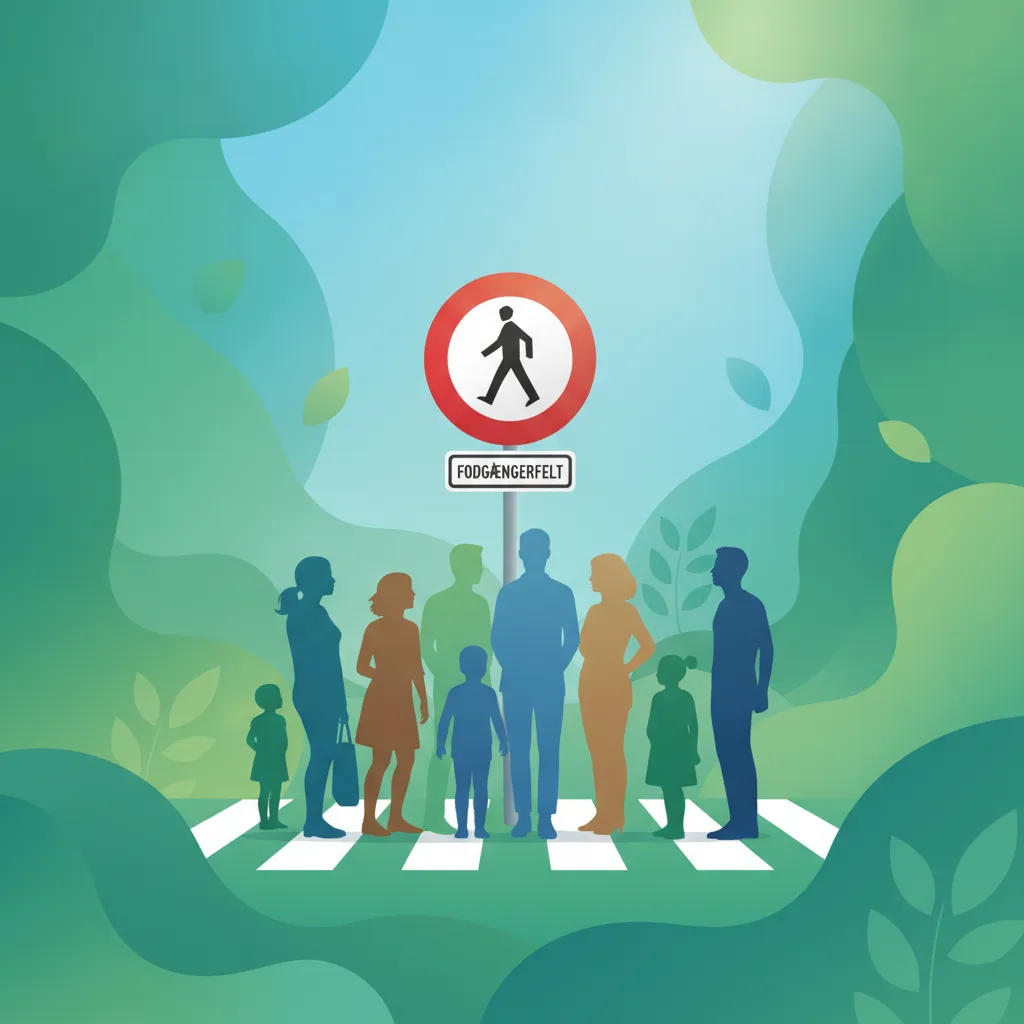
This lesson provides detailed guidance on navigating pedestrian crossings (fodgængerfelter) and areas with high cyclist traffic. It clarifies your legal obligation to stop for pedestrians at zebra crossings and the proper speed to approach these zones. A central theme is understanding the rights of vulnerable road users and how to yield safely to them in accordance with Danish traffic law.
Learn about frequent errors drivers make when interpreting Danish regulatory signs. This lesson focuses on typical misunderstandings of traffic law and mandatory rules to help you avoid violations.
This lesson introduces the primary categories of Danish road signs and their legal implications. It covers regulatory signs that dictate mandatory actions or prohibitions, and warning signs that indicate upcoming hazards. Correct interpretation of these signs is fundamental for lawful and safe riding on Danish roads.
This lesson details the meaning and application of various road surface markings, including lane dividers, solid and broken lines, and directional arrows. You will also learn to interpret the full sequence of traffic light signals, including the specific rules for the amber (yellow) light phase. A proper understanding of these systems is vital for maintaining correct lane discipline and adhering to traffic controls.
This lesson teaches you to identify warning signs that alert drivers to upcoming hazards and changing road conditions. It covers common signs such as sharp curves, school zones, animal crossings, and temporary conditions like roadworks or slippery surfaces. Understanding these signs is crucial for anticipating risks and adjusting your driving to ensure safety on all types of Danish roads.
This lesson focuses on interpreting the various markings painted on Danish road surfaces. It explains the rules associated with solid and broken lane lines, directional arrows, and special-purpose lanes for buses and cyclists. Understanding these markings is crucial for maintaining correct lane discipline and safely navigating complex road layouts.
This lesson details the function and meaning of traffic light signals in Denmark. It covers the standard red, amber, and green sequences, as well as special signals like flashing amber lights and green arrows for turning. The content also explains signals specific to cyclists and pedestrians that moped riders must observe at intersections.
This lesson covers the proper methods for signalling intentions to other road users. It details the legal requirements for using turn indicators before turning or changing lanes. The content also explains how to use legally recognized hand signals as a backup or for added clarity.

This lesson introduces cooperative driving as a fundamental element of road safety in Denmark. It highlights the social responsibility of drivers to act predictably, anticipate the actions of others, and maintain courteous interactions with all road users. By fostering mutual respect and cooperation, you will learn how to reduce the potential for conflict and enhance overall traffic safety.
Properly functioning lighting and signaling systems are fundamental for safe communication on the road. This lesson details the purpose and correct use of all exterior lights, including headlights, brake lights, turn signals, and hazard lights, according to Danish law. It emphasizes the driver's responsibility to ensure these systems are clean and operational to maintain visibility and clearly signal maneuvers to other road users.

This lesson explores non-verbal communication techniques for safer road sharing. It discusses the importance of making eye contact with other drivers and pedestrians to confirm they have seen you. The content also explains the appropriate and legal use of the horn to alert others of your presence.
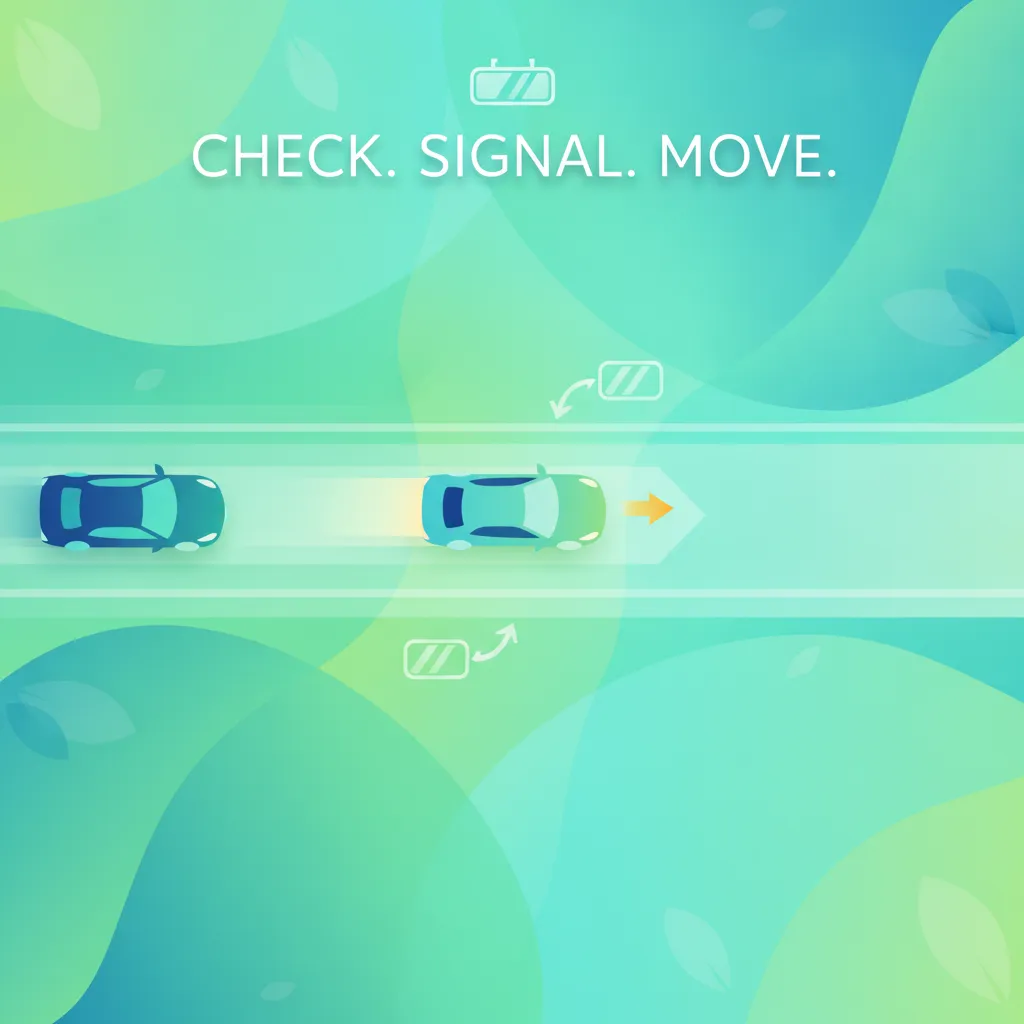
This lesson explains the principles of correct lane discipline, including proper positioning within your lane and adherence to road markings. It provides a clear, safe procedure for changing lanes, which includes signalling your intentions early, checking mirrors, and performing a final shoulder check for the blind spot. Mastering this process is essential for smooth and safe navigation in multi-lane traffic.
Find clear answers to common questions learners have about Regulatory Signs and Their Legal Significance. Learn how the lesson is structured, which driving theory objectives it supports, and how it fits into the overall learning path of units and curriculum progression in Denmark. These explanations help you understand key concepts, lesson flow, and exam focused study goals.
Warning signs are typically triangular and designed to alert you to a potential hazard ahead. Regulatory signs, often circular or distinct in shape, provide legally binding instructions, prohibitions, or commands that you must follow, such as a maximum speed limit or a mandatory turn.
Yes, failing to obey a regulatory sign, such as a Stop sign or a No Entry sign, is a serious traffic violation and will almost certainly lead to an immediate failure during your practical driving test, as it demonstrates a fundamental lack of compliance with traffic law.
Yes, some regulatory signs specifically apply to certain categories of road users. You must learn to recognize signs that are directed at cyclists, such as mandatory cycle paths, versus those that apply to all motor vehicles or specifically to Category B cars.
The best way is to group them into categories—prohibitory, mandatory, and priority. Instead of rote memorization, focus on the visual cues like color coding and shapes, which are consistent across all Danish roads.
Use our powerful search tool to pinpoint specific Danish driving theory topics, road signs, or traffic situations you need to review. Start exploring relevant practice sets now to reinforce your knowledge and build confidence for your upcoming driving licence exam.