
This lesson guides you through the complexities of sharing the road with large vehicles and public transport, a critical aspect of safe Danish driving. Building on your knowledge of traffic culture, you will learn to interpret signals from buses and understand the inherent risks of driving near heavy goods vehicles.
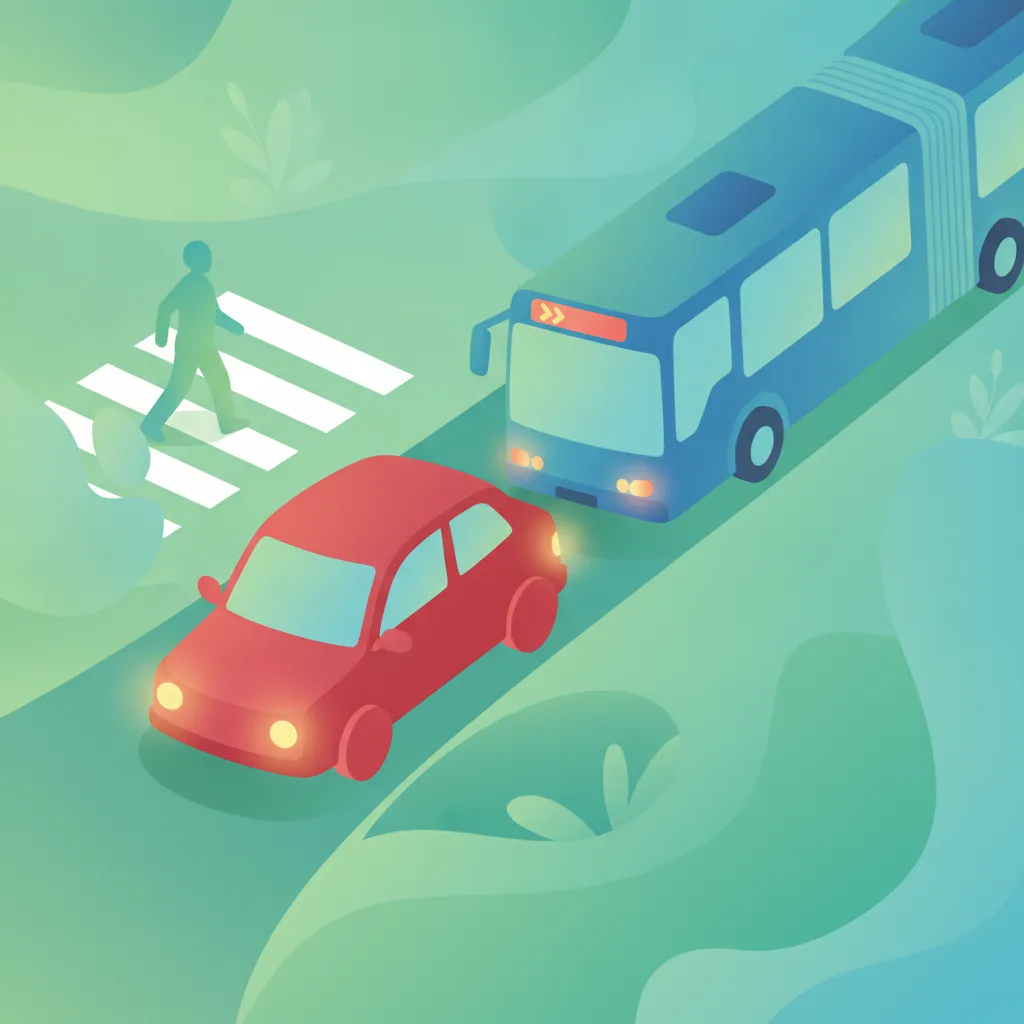
Lesson content overview
For aspiring drivers in the Danish Driving License Theory Course: Category B Preparation, mastering the art of sharing the road with larger vehicles is paramount. Public transport, such as buses and trams, along with heavy goods vehicles (HGVs), presents unique challenges and demands specific knowledge of traffic regulations and defensive driving techniques. Their sheer size, weight, and operational characteristics necessitate a different approach from interacting with smaller passenger cars.
This lesson delves into the critical skills required to navigate around these formidable road users safely. You will learn about the specific rules governing bus lanes, recognize when public transport vehicles have priority, and understand the distinct challenges posed by large vehicles, including their wider turning circles and significantly larger blind spots. By mastering these principles, you will be better equipped to prevent accidents and contribute to smoother traffic flow across Denmark.
Public transport vehicles and heavy goods vehicles (HGVs) operate under a different set of physical laws and operational constraints compared to passenger cars. Their substantial weight and dimensions impact their acceleration, braking capabilities, and maneuverability. Consequently, they require more space for turning, longer distances to stop, and have larger areas around them that are invisible to their drivers.
Understanding these inherent characteristics is not just about adhering to rules; it's about anticipating their movements and making informed decisions to ensure everyone's safety. This proactive approach is a cornerstone of responsible driving, particularly when sharing the road with professional drivers of these larger vehicles who often adhere to strict schedules and operational guidelines.
Effective interaction with public transport and HGVs hinges on constant awareness and proactive driving. This means not just reacting to immediate situations but actively looking ahead, anticipating potential scenarios, and giving these vehicles the space they need. A moment of inattention or a misjudgment of their capabilities can lead to serious consequences.
Drivers must integrate legal obligations, traffic safety principles, and practical driving considerations to enable safe and cooperative road sharing. This lesson integrates these elements to provide a comprehensive understanding for your Danish driving license journey.
Public transport plays a crucial role in urban mobility, and special rules are in place to ensure its efficiency and the safety of its passengers. As a driver, it is essential to understand and respect these regulations to avoid disrupting services and to prevent dangerous situations.
A bus lane is a designated lane on the road primarily reserved for the use of buses, trolleybuses, and sometimes taxis or cyclists. These lanes are established to give public transport vehicles a clear path, allowing them to maintain schedules and transport passengers efficiently without being hindered by general traffic congestion.
Bus lanes are typically marked by specific road markings, such as a continuous white line, the word "BUS" painted on the road, or a specific symbol. They are often accompanied by overhead or roadside signs indicating their usage rules and operational times.
The core rule for bus lanes is that unauthorized vehicles must not enter or exit them improperly. This means:
Unauthorized entry or exit into a bus lane is a traffic violation in Denmark and can result in fines. The rationale is clear: ensuring public transport operates smoothly, reducing delays, and enhancing passenger experience.
New drivers often make certain assumptions about bus lanes that can lead to violations:
The principle of priority for public transport at stops is a fundamental aspect of safe urban driving in Denmark. This rule dictates that buses and trams have the right of way when they are stationary at a designated stop and preparing to move off. This priority is essential for allowing safe boarding and alighting of passengers and for maintaining the public transport schedule.
When a bus or tram is stopped at a designated stop, especially when it signals its intention to depart (e.g., indicating with its turn signal), other vehicles approaching from behind must yield.
When a bus signals to re-enter traffic from a stop, it has priority. Drivers in the lane next to the bus stop must be prepared to slow down or stop to allow the bus to merge safely. This helps prevent delays and ensures the bus can continue its route without undue obstruction. Always observe the bus's indicators and be ready to adjust your speed and position.
Heavy goods vehicles (HGVs), or lorries/trucks, are an indispensable part of commerce but demand extra respect and caution from other road users due to their immense size, weight, and operational characteristics. Interacting with HGVs requires a heightened sense of awareness regarding their limitations and potential hazards.
One of the most critical aspects of safe interaction with HGVs is understanding their blind spots. These are areas around the vehicle that are not visible to the driver, even with their array of mirrors. Due to the sheer size and design of HGVs, these blind spots are considerably larger and more numerous than those on a passenger car.
There are typically three main categories of blind spots for HGV drivers:
To minimize risk, always strive to remain visible to the HGV driver. If you can see the driver's face in their side mirrors, they can most likely see you. If you cannot, assume you are in a blind spot.
Heavy vehicles, especially those with trailers, have a significantly larger turning circle than passenger cars. This means they need a much wider radius to complete a turn, often swinging out into adjacent lanes or across multiple lanes before or during the turn.
When you see an HGV signaling a turn, particularly a right turn in countries that drive on the right (like Denmark), be aware that the front of the vehicle will often swing wide to the left before the trailer follows.
Overtaking an HGV requires careful consideration and adherence to specific safety protocols. Their length means that the overtaking maneuver will take longer, and their potential to obscure your view necessitates extra vigilance.
When overtaking any vehicle, but especially a bus or HGV, a safe overtaking distance or lateral clearance must be maintained. This refers to the minimum side-to-side space between your vehicle and the vehicle you are passing.
The process of overtaking an HGV should only be undertaken when absolutely safe, ensuring maximum visibility for both drivers.
Observe and Plan: Before initiating the overtake, carefully assess the road ahead, traffic conditions, and the HGV's speed. Ensure there's ample space to complete the maneuver and return to your lane without cutting off the HGV.
Check Mirrors and Signal: Check your mirrors, including your blind spots, and signal your intention to overtake well in advance.
Position for Visibility: Move into the overtaking lane, ensuring that you can see the HGV driver in their mirrors and that they can see you.
Accelerate Smoothly: Increase your speed to pass the HGV swiftly and smoothly. Avoid lingering alongside the HGV.
Maintain Clearance: Keep a safe lateral distance from the HGV throughout the overtaking process.
Return Safely: Once you can see the entire front of the HGV in your rearview mirror, signal your intention to return to your original lane.
Confirm and Continue: Complete the lane change and maintain your speed, ensuring you don't slow down immediately after passing.
Overtaking must be avoided if the HGV driver’s view is obstructed or if you cannot guarantee that they can see your vehicle. Never attempt to overtake in a single lane if the road ahead is not clearly visible and safe.
Adherence to specific traffic regulations is not just a recommendation but a legal requirement for all drivers in Denmark. These rules are designed to prevent accidents, maintain traffic flow, and ensure the safety of all road users, particularly when interacting with public transport and heavy vehicles.
The core principles discussed earlier are enshrined in Danish traffic law. Compliance is mandatory for all drivers.
Rule: Authorized vehicles may only use dedicated bus lanes during signposted times; other vehicles must not enter these lanes. Rationale: This rule ensures efficient public transport operation and minimizes delays, contributing to a reliable public transport network. Violations disrupt service and can lead to dangerous situations.
Rule: Buses and trams have the right of way when stopped at a designated stop and preparing to move off. Other traffic must not overtake them. Rationale: This regulation is crucial for allowing the safe boarding and alighting of passengers and enables buses to smoothly re-enter traffic without being impeded. Disregarding this rule can endanger pedestrians and cause sudden braking by bus drivers.
Rule: Overtaking heavy goods vehicles must be performed only when the HGV driver can clearly see the overtaking vehicle in their mirrors. Rationale: This rule directly addresses the danger of blind spots. It prevents other vehicles from lingering unseen alongside large trucks, significantly reducing the risk of side collisions during lane changes or turns.
Rule: When overtaking any vehicle, a driver must leave sufficient lateral clearance from the vehicle being overtaken. Rationale: This fundamental safety rule provides a buffer zone, allowing for safe maneuvering and accounting for potential vehicle width differences, wind gusts, or slight deviations in steering, especially with large vehicles.
Safe driving is highly contextual. The rules and principles discussed must be adapted based on prevailing conditions:
Understanding the rules is the first step; applying them correctly in dynamic traffic situations is the next. Many accidents involving public transport and heavy vehicles stem from common misunderstandings or intentional violations of traffic laws.
Violations of traffic laws pertaining to public transport and heavy vehicles carry legal consequences, including fines and points on your driving license, as per Danish traffic law. More importantly, these violations significantly increase the risk of serious accidents, leading to injuries, fatalities, and property damage. Responsible driving is about avoiding these risks, not just the penalties.
To solidify your understanding, consider these common scenarios and how to apply the principles learned in this Danish Driving License Theory Course: Category B Preparation lesson:
Scenario 1: Urban Bus Stop Encounter You are driving in a city. Ahead, a bus pulls over and stops at a designated bus stop to let passengers board and alight. It then activates its left turn signal.
Scenario 2: HGV Blind Spot on the Motorway You are driving on a motorway and find yourself alongside a large HGV. You notice you can't see the HGV driver in their side mirrors, indicating you are in their blind spot. The HGV suddenly signals to change lanes towards you.
Scenario 3: HGV Wide Turn at an Intersection You are approaching an intersection, and an HGV in the lane to your right signals a right turn. As it begins to turn, the front of the HGV swings wide to the left, momentarily encroaching into your lane.
Mastering the interaction with public transport and heavy goods vehicles is a cornerstone of becoming a responsible and safe driver in Denmark. The principles covered—prioritizing buses at stops, respecting bus lanes, identifying and avoiding HGV blind spots, maintaining safe overtaking distances, and anticipating wide turning circles—are not merely theoretical rules. They are practical guidelines that, when applied consistently, drastically reduce the risk of accidents and contribute to a more efficient and harmonious traffic environment.
By adhering to these principles and understanding the unique characteristics of larger vehicles, you will enhance your own safety and the safety of all road users, preparing you thoroughly for your Danish Category B driving license.
This lesson covers the rules for safely interacting with public transport and heavy goods vehicles in Danish traffic, including bus lane regulations, priority rules at bus stops, and the unique hazards posed by large vehicles. Learners will understand that HGVs have significantly larger blind spots and require wider turning circles than passenger cars, requiring extra caution and space from other road users. The lesson emphasizes proactive driving habits such as ensuring visibility to HGV drivers, maintaining safe overtaking distances, and anticipating the movements of buses and trucks. Practical scenarios demonstrate correct responses to common situations involving buses at stops and HGVs on motorways and at intersections. These principles are essential for both passing the Danish Category B theory exam and safe real-world driving.
A short set of high-value points that capture the most important learning from this lesson.
Bus lanes in Denmark are reserved for buses (and sometimes taxis or cyclists) and often have time-based restrictions - always check accompanying signage before entering
Buses and trams have priority when departing from designated stops; other vehicles must not overtake or obstruct them
HGVs have significantly larger blind spots than passenger cars - if you cannot see the driver's face in their side mirrors, they cannot see you
Heavy vehicles require much wider turning circles and their front swings wide before the trailer follows during turns
When overtaking any heavy vehicle, complete the maneuver quickly and efficiently to minimize time spent in blind spots
Explore all units and lessons included in this driving theory course.
Conditional bus lanes only restrict other traffic during signposted times - check the signs carefully before assuming access is allowed
Never attempt to pass a bus stopped at a designated stop unless there is a specific marked overtaking lane available
When an HGV signals a turn, never try to pass it on the side it is turning towards - you risk being crushed between the vehicle and the curb
Air turbulence from large vehicles can affect the stability of smaller cars - maintain extra lateral clearance when overtaking at speed
Always verify visibility to HGV drivers before initiating lane changes or overtaking maneuvers - position yourself where you can see their mirrors
Entering a bus lane without checking time restrictions, assuming entry is acceptable if no bus is immediately visible
Attempting to overtake a bus at a stop or failing to yield when a bus signals to re-enter traffic from a stop
Driving in an HGV's blind spot without realizing the driver cannot see your vehicle
Misjudging the wide turning circle of heavy vehicles by attempting to pass between the vehicle and the curb during turns
Passing heavy vehicles with insufficient lateral clearance, especially in adverse weather conditions
Lesson content overview
A short set of high-value points that capture the most important learning from this lesson.
Bus lanes in Denmark are reserved for buses (and sometimes taxis or cyclists) and often have time-based restrictions - always check accompanying signage before entering
Buses and trams have priority when departing from designated stops; other vehicles must not overtake or obstruct them
HGVs have significantly larger blind spots than passenger cars - if you cannot see the driver's face in their side mirrors, they cannot see you
Heavy vehicles require much wider turning circles and their front swings wide before the trailer follows during turns
When overtaking any heavy vehicle, complete the maneuver quickly and efficiently to minimize time spent in blind spots
Explore all units and lessons included in this driving theory course.
Conditional bus lanes only restrict other traffic during signposted times - check the signs carefully before assuming access is allowed
Never attempt to pass a bus stopped at a designated stop unless there is a specific marked overtaking lane available
When an HGV signals a turn, never try to pass it on the side it is turning towards - you risk being crushed between the vehicle and the curb
Air turbulence from large vehicles can affect the stability of smaller cars - maintain extra lateral clearance when overtaking at speed
Always verify visibility to HGV drivers before initiating lane changes or overtaking maneuvers - position yourself where you can see their mirrors
Entering a bus lane without checking time restrictions, assuming entry is acceptable if no bus is immediately visible
Attempting to overtake a bus at a stop or failing to yield when a bus signals to re-enter traffic from a stop
Driving in an HGV's blind spot without realizing the driver cannot see your vehicle
Misjudging the wide turning circle of heavy vehicles by attempting to pass between the vehicle and the curb during turns
Passing heavy vehicles with insufficient lateral clearance, especially in adverse weather conditions
Explore search topics learners often look for when studying Interaction with Public Transport and Heavy Vehicles. These topics reflect common questions about road rules, driving situations, safety guidance, and lesson level theory preparation for learners in Denmark.
Browse additional driving theory lessons that cover connected traffic rules, road signs, and common driving situations related to this topic. Improve your understanding of how different rules interact across everyday traffic scenarios.
Understand advanced Danish traffic laws and defensive driving techniques for safely navigating around public transport and heavy goods vehicles. Covers bus lanes, priority rules, HGV blind spots, and wide turning maneuvers.
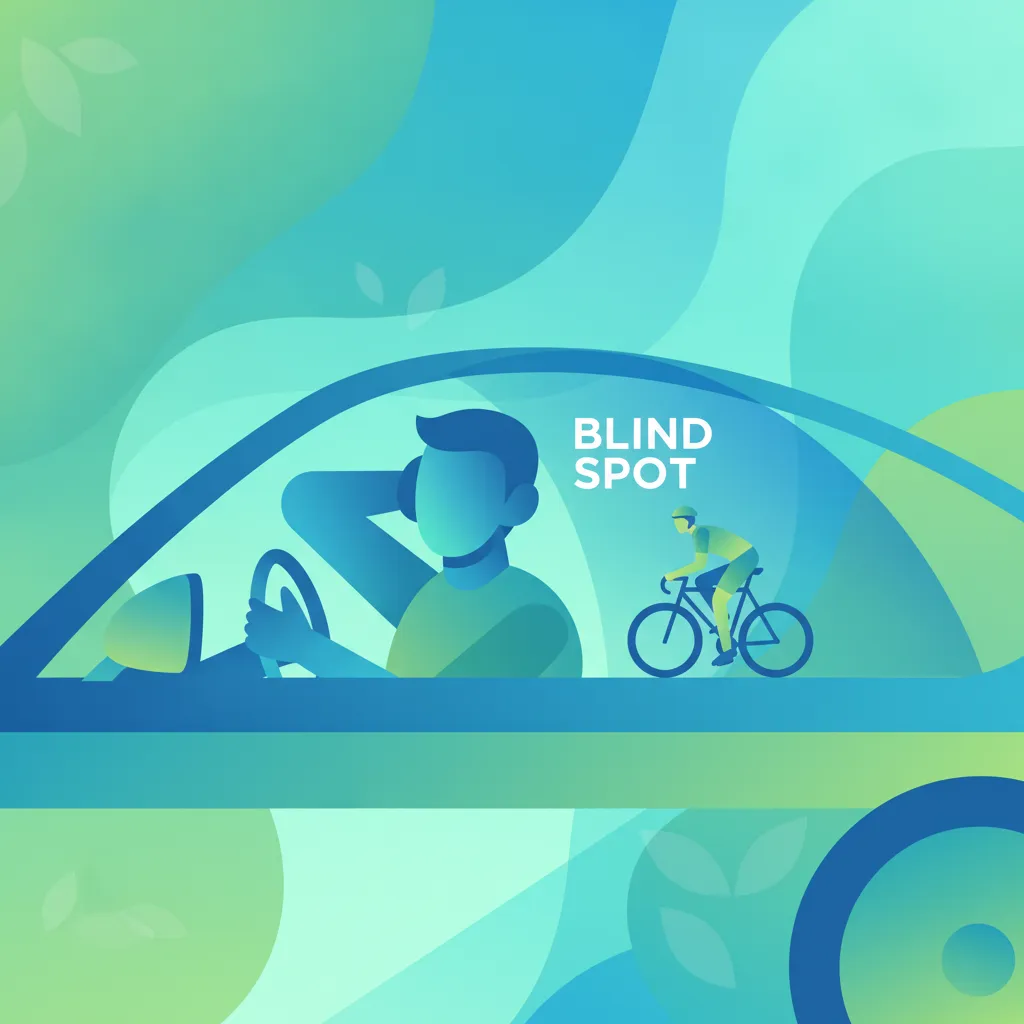
This lesson provides an in-depth analysis of the size and location of blind spots around a typical passenger bus. It teaches systematic scanning patterns that incorporate all mirrors, cameras, and direct head checks to maintain situational awareness. The content highlights high-risk areas where cyclists, pedestrians, or small vehicles can become hidden from view, especially during turns.
This lesson explains the relationship between a bus's dimensions—length, width, and height—and its maneuverability. It covers key concepts such as turning radius, rear overhang, and swept path, which are critical for navigating turns and tight spaces safely. Learners will also understand how these physical characteristics create significant blind spots that require specific observation techniques to manage.
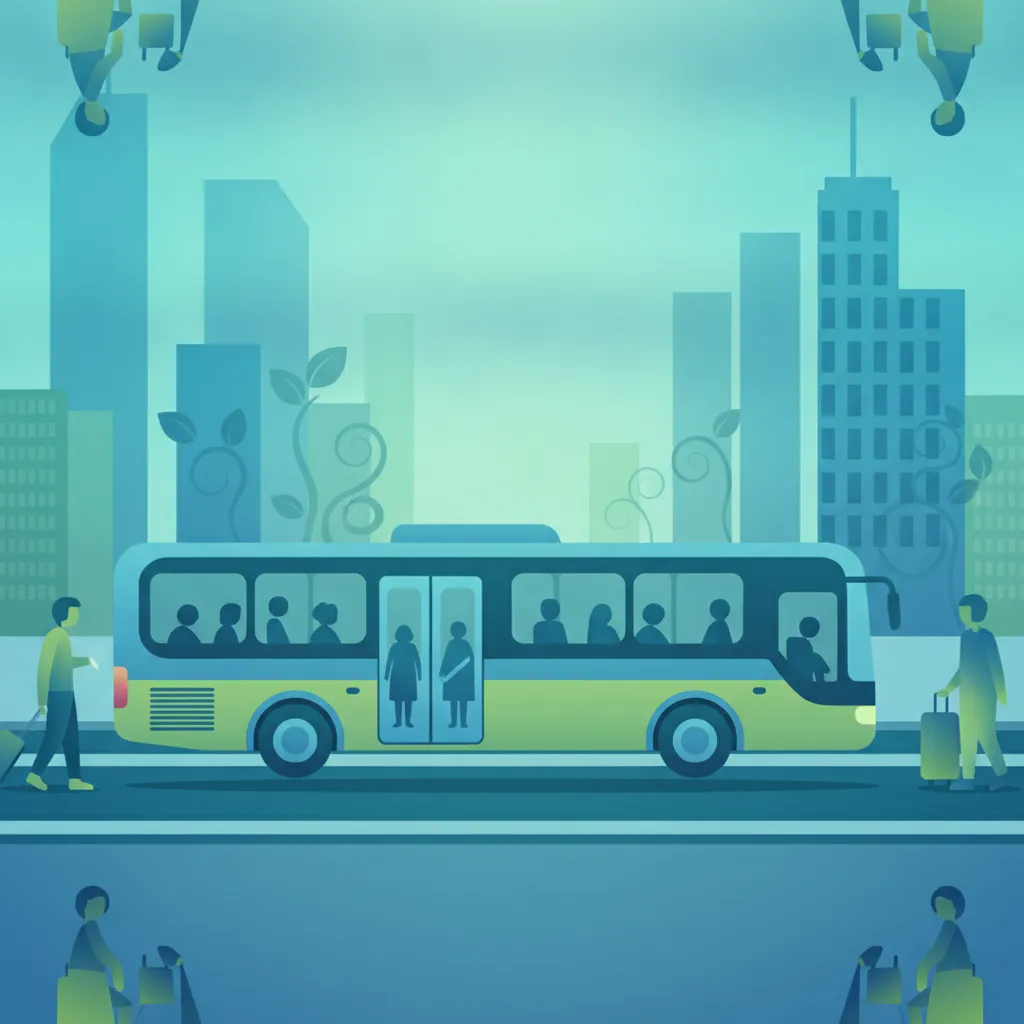
This lesson details the specific rules related to bus lanes and bus stops. It clarifies when other vehicles may use bus lanes, the legal requirement to yield to buses pulling away from a stop, and the importance of being cautious around embarking or disembarking passengers. Adherence to these rules is vital for the efficient and safe operation of public transportation.
This lesson focuses on the precise maneuvers required for approaching and stopping at bus stops. It covers how to manage vehicle speed, align the bus parallel to the curb for safe access, and correctly position it relative to stop lines and shelters. The content also explains how to interpret Danish road signs and markings specific to public transport stops.

This lesson explains the concept of off-tracking, where the rear wheels follow a tighter path than the front wheels during a turn. It provides techniques for positioning the bus correctly before a turn to avoid striking curbs or obstacles. The content also outlines the systematic safety checks and procedures for reversing, including the proper use of mirrors, cameras, and a guide.
This lesson explains the regulations governing the use of dedicated bus lanes in Denmark. It covers when it is permissible to enter and exit these lanes, how to merge safely with general traffic, and the meaning of specific road markings. The content also details how public transport priority systems at traffic lights work and how drivers should respond to them.
This lesson covers the core principles of defensive driving in an urban context. It teaches drivers how to anticipate the actions of other road users, maintain safe following distances in dense traffic, and navigate complex intersections with multiple signals. The content emphasizes heightened awareness of pedestrians, cyclists, and unexpected events common in Danish city environments.

This lesson addresses the unique environment of bus terminals, focusing on safe, low-speed maneuvering around other vehicles and pedestrians. It also introduces the theory for combination vehicles (Category DE), including the principles of coupling and uncoupling trailers. The content emphasizes the different handling characteristics and increased turning radius associated with articulated buses or buses with trailers.
This lesson teaches the effective use of mirrors and on-board camera systems for comprehensive spatial awareness. It explains how to correctly adjust all mirrors to minimize blind spots and how to integrate camera views into a regular scanning routine. The content emphasizes the importance of combining mirror checks with direct observation to detect vulnerable road users hidden in blind zones.
This lesson provides critical guidance for driving in environments with heavy cycle traffic, typical of Danish cities. It focuses on identifying and yielding to cyclists in dedicated bike lanes, especially when turning right across their path. The content emphasizes advanced observation skills to detect cyclists in blind spots and the importance of giving adequate space.
Detailed explanation of specific Danish traffic regulations concerning bus lanes and priority for public transport at designated stops. Learn how to interact safely and legally with buses in urban traffic.
This lesson details the specific rules related to bus lanes and bus stops. It clarifies when other vehicles may use bus lanes, the legal requirement to yield to buses pulling away from a stop, and the importance of being cautious around embarking or disembarking passengers. Adherence to these rules is vital for the efficient and safe operation of public transportation.
This lesson explains the regulations governing the use of dedicated bus lanes in Denmark. It covers when it is permissible to enter and exit these lanes, how to merge safely with general traffic, and the meaning of specific road markings. The content also details how public transport priority systems at traffic lights work and how drivers should respond to them.
This lesson focuses on the precise maneuvers required for approaching and stopping at bus stops. It covers how to manage vehicle speed, align the bus parallel to the curb for safe access, and correctly position it relative to stop lines and shelters. The content also explains how to interpret Danish road signs and markings specific to public transport stops.
This lesson covers strategies for safely managing passenger movement at bus stops. It provides guidance on directing passenger flow, encouraging the use of handrails, and providing assistance to those who need it. The content emphasizes the driver's observational role in preventing slips, trips, and falls, particularly during peak hours or in adverse weather.
This lesson details the legal requirements and safety protocols for operating a bus near schools and pedestrian crossings. It covers mandatory speed reductions, the rules for yielding to pedestrians, and techniques for anticipating the sudden movements of children. The content emphasizes the importance of constant visual scanning and maintaining a high state of alert in these sensitive areas.
This lesson explains the relationship between a bus's dimensions—length, width, and height—and its maneuverability. It covers key concepts such as turning radius, rear overhang, and swept path, which are critical for navigating turns and tight spaces safely. Learners will also understand how these physical characteristics create significant blind spots that require specific observation techniques to manage.
This lesson addresses the specific challenges of school and tourist transport. It outlines heightened safety protocols for stops near schools, including monitoring child behavior and working with school patrols. The content also covers techniques for managing large groups of tourists, dealing with luggage, and providing clear information at popular destinations.
This lesson trains drivers to perform a risk assessment of bus stops along their route. It explains how to identify hazards such as poor visibility, proximity to busy intersections, or obstructed pedestrian access. The content provides proactive strategies for positioning the bus and managing passenger boarding and alighting to mitigate the identified risks effectively.
This lesson addresses the unique environment of bus terminals, focusing on safe, low-speed maneuvering around other vehicles and pedestrians. It also introduces the theory for combination vehicles (Category DE), including the principles of coupling and uncoupling trailers. The content emphasizes the different handling characteristics and increased turning radius associated with articulated buses or buses with trailers.
This lesson details the procedures for safe door operation during passenger boarding. It explains the driver's responsibility to visually clear the doorway and surrounding area before opening or closing doors. The content covers the function of safety features like sensors and interlock systems, ensuring compliance with Danish vehicle regulations to prevent passenger injuries.
Find clear answers to common questions learners have about Interaction with Public Transport and Heavy Vehicles. Learn how the lesson is structured, which driving theory objectives it supports, and how it fits into the overall learning path of units and curriculum progression in Denmark. These explanations help you understand key concepts, lesson flow, and exam focused study goals.
You are only required to give way if the bus is inside a built-up area and signals its intention to pull out, provided your speed and distance allow for a safe and smooth deceleration.
The primary risks are their significantly larger blind spots and the wide turning radius of the trailer, which may occupy more than one lane during turns.
Bus lanes are typically reserved for buses and sometimes taxis or cyclists. You must check the specific road signs, as unauthorized driving in these lanes is a common theory exam trap.
You should maintain a larger gap than with a passenger car to ensure you can see the road ahead, as this improves your anticipation of hazards and your own visibility.
Use our powerful search tool to pinpoint specific Danish driving theory topics, road signs, or traffic situations you need to review. Start exploring relevant practice sets now to reinforce your knowledge and build confidence for your upcoming driving licence exam.