
This lesson guides you through the fundamental principles of lane discipline and the systematic process for changing lanes safely. As part of our Category B preparation, you will learn how to maintain correct lane positioning and manage blind spots to navigate multi-lane roads in Denmark effectively.
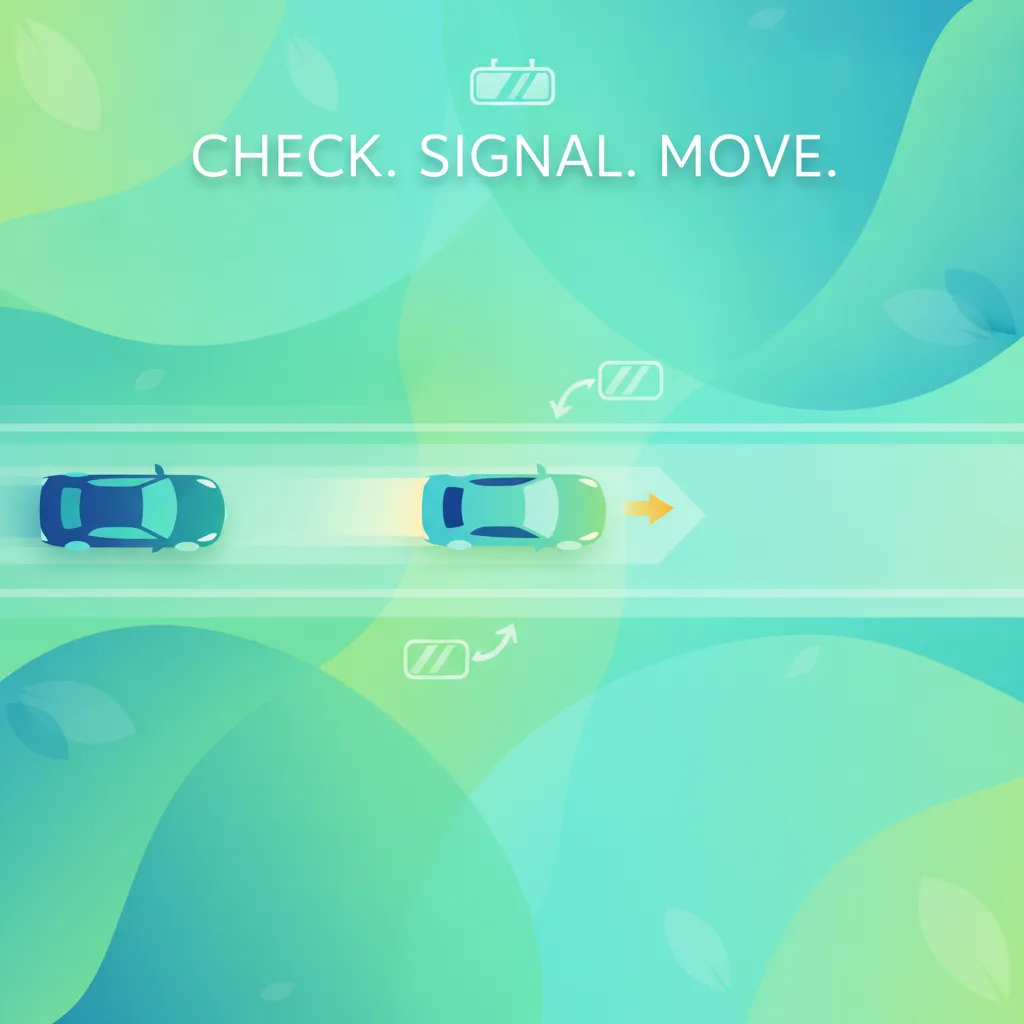
Lesson content overview
Navigating multi-lane roads and making safe lane changes is a fundamental skill for every driver in Denmark. This lesson, part of your Danish Driving License Theory Course: Category B Preparation, will delve into the essential principles of lane discipline and provide a step-by-step guide to executing lane changes safely and legally. Mastering these techniques ensures smooth traffic flow, prevents collisions, and fosters predictable driving behavior among all road users.
Lane discipline refers to the practice of systematically and lawfully occupying road lanes. It means staying within your designated path, respecting all road markings, and signaling your intentions clearly before altering your vehicle's position. This principle is paramount for maintaining order and safety, especially in multi-lane environments, significantly reducing the risk of side-swipe collisions and improving overall traffic efficiency.
The practice of maintaining a vehicle within its designated lane, adhering to road markings, and following traffic regulations concerning lane usage.
Correct lane positioning means occupying the appropriate lane as indicated by road markings, directional signs, and your intended path of travel. It's crucial to stay centered within your chosen lane to avoid encroaching on adjacent lanes, which can confuse other drivers or lead to accidents.
Adhering to lane-specific regulations is vital. For example, some lanes may be designated for buses during operational hours, and private vehicles are prohibited from using them. Drivers must not cross solid lane lines except when absolutely necessary and permitted, such as when turning at an intersection or overtaking where explicitly allowed by dashed lines.
Common Mistakes in Lane Positioning: Drivers often make mistakes such as drifting within their lane, sometimes called "lane wiggling," which can be unsettling for other drivers and less safe. Using the wrong lane for an intended turn or driving partially in an adjacent lane are also frequent errors that compromise safety and traffic flow.
Changing lanes requires a methodical approach to ensure it is performed safely and without disrupting other traffic. Each step is critical and builds upon the previous one.
Signal Early (Minimum 3 Seconds): Activate your indicator lights to inform other road users of your intention to change lanes. This must be done sufficiently in advance to allow surrounding drivers to react.
Check Mirrors: Use your rear-view mirror to assess traffic behind you and your side-view mirror to check the adjacent lane for approaching vehicles.
Perform a Blind Spot Check (Shoulder Check): Turn your head quickly to look over your shoulder towards the target lane. This vital step covers areas not visible in your mirrors.
Identify a Safe Gap: Determine if there is sufficient space and time in the target lane to complete your maneuver without endangering other vehicles or forcing them to react suddenly.
Execute the Lane Change Smoothly: Steer gently into the new lane, maintaining your speed or adjusting it as necessary to merge seamlessly with traffic.
Cancel Signal: Once fully in the new lane, promptly turn off your indicator lights.
Signaling early is a courtesy and a legal requirement. It means activating your turn signal well before you begin to move your vehicle laterally. In Denmark, the Road Traffic Act specifies that you must signal for at least three seconds before initiating a lane change. This duration gives other drivers ample time to register your intention and adjust their speed or position accordingly, significantly reducing the risk of a collision.
Always activate your indicator lights before you start any lateral movement of your vehicle. A good rule of thumb is to signal for the duration it takes to count "one-thousand-one, one-thousand-two, one-thousand-three."
Using the correct direction indicator is also crucial. Forgetting to cancel your signal after the maneuver or using incorrect hand signals (if applicable and visible) can create confusion and danger.
Before initiating any lane change, you must review your rear-view and side-view mirrors. This quick assessment provides critical information about the speed and distance of vehicles behind and beside you. Properly adjusted mirrors are essential: your rear-view mirror should show the traffic directly behind, and your side mirrors should provide a clear view of the lane beside and slightly behind your vehicle.
An internal mirror that provides a view of the road and traffic directly behind the vehicle.
External mirrors located on both sides of the vehicle, offering a view of traffic beside and to the rear of the vehicle.
Common Mistakes with Mirror Checks: Neglecting to use mirrors, over-reliance on a single mirror, or misinterpreting the distance of vehicles (objects in convex side mirrors are closer than they appear) are common errors. Always use both mirrors in conjunction to get a comprehensive view.
Mirrors, no matter how well-adjusted, cannot show every area around your vehicle. There are specific "blind spots" where other vehicles can become invisible. To cover these areas, a physical head turn, known as a shoulder check, is mandatory just before you start to move into the new lane. This quick glance over your shoulder ensures that the intended lane is completely free of any unseen vehicles, especially motorcycles or bicycles that can easily hide in these areas.
An area around a vehicle that cannot be seen directly through the windows or by using the mirrors, requiring a physical head turn (shoulder check) to verify.
Performing a Shoulder Check: After checking your mirrors, perform a swift but thorough glance over your left or right shoulder, depending on the direction of your lane change. Ensure your head turn is brief enough not to lose sight of the road ahead, but comprehensive enough to confirm the target lane is clear. Skipping this step or performing it too early are dangerous errors.
A lane change must only be executed if there is a safe gap in the target lane. This "safe gap" is a combination of distance and speed: there must be enough space between your vehicle and any vehicles in the target lane, both ahead and behind you, to complete your maneuver without forcing anyone to brake or swerve. You must be able to merge smoothly without cutting off the vehicle behind you.
A sufficient distance and speed condition in the target lane that allows a driver to change lanes without creating a hazard or forcing other road users to take evasive action.
Criteria for a Safe Gap:
If the gap is too small, you must wait for a larger, safer opportunity. This might involve adjusting your speed, either by gently slowing down to allow a vehicle to pass or by accelerating slightly to merge ahead of a trailing vehicle. Never force a lane change into an unsafe gap, especially in heavy traffic.
Specific regulations within the Danish Road Traffic Act govern lane discipline and changing lanes to ensure safety and order on the roads. Adherence to these laws is mandatory.
Ignoring proper lane discipline and safe lane change procedures can lead to serious consequences. Some common violations and edge cases include:
The principles of lane discipline and safe lane changes remain constant, but their application must adapt to various conditions:
Understanding why lane discipline is so important helps reinforce safe driving habits.
Mastering lane discipline and the process of safe lane changing is fundamental to becoming a responsible and confident driver in Denmark.
Consistently applying these steps will ensure your lane changes are safe, predictable, and compliant with Danish traffic law, contributing to a safer and more efficient road network for everyone.
This lesson covers the essential principles of lane discipline and the systematic six-step procedure for executing safe lane changes in Danish traffic. The procedure requires signaling for at least three seconds before initiating any lane change, followed by comprehensive mirror checks, a mandatory shoulder check to cover blind spots, identification of a safe gap with appropriate speed and distance, smooth execution, and prompt signal cancellation. Danish law (Færdselsloven) specifically governs lane marking regulations, indicator usage, blind spot checks, and safe distance requirements. Drivers must adapt their technique based on road type, weather, light conditions, and the presence of vulnerable road users, as conditions like heavy traffic, motorways, or night driving demand larger safety gaps and longer observation periods.
A short set of high-value points that capture the most important learning from this lesson.
Lane discipline means staying centered within your lane, respecting all road markings, and signaling before any lateral movement.
The safe lane change procedure follows a strict sequence: signal for at least 3 seconds, check mirrors, perform a shoulder check, identify a safe gap, execute smoothly, then cancel the signal.
Correct lane positioning varies by road scenario—through lanes for straight travel, turn lanes for direction changes, and acceleration/deceleration lanes for motorway merges and exits.
Blind spots exist where mirrors cannot see; a physical shoulder check is mandatory to verify the target lane is clear before moving.
Lane changes must only occur when a safe gap exists, with speed matching and adequate distance to merge without forcing other drivers to react.
Explore all units and lessons included in this driving theory course.
The Danish Road Traffic Act (Færdselsloven) requires signaling for at least 3 seconds before any lane change (count: one-thousand-one, one-thousand-two, one-thousand-three).
Objects in convex side mirrors appear farther away than they actually are—always use both mirrors together and never rely on one alone.
Never cross solid white lane lines; dashed lines indicate that lane changes are permitted when safe.
Changing lanes while turning at an intersection is prohibited—complete your turn in the correct lane before considering any lane change.
Vulnerable road users like cyclists and motorcyclists can easily hide in blind spots; always assume they may be there and perform a shoulder check.
Changing lanes without signaling, which surprises other drivers and significantly increases the risk of side-swipe collisions.
Failing to perform a shoulder check, moving into a lane occupied by a vehicle in the blind spot that mirrors cannot show.
Waiting too long to signal or canceling the indicator before completing the lane change, reducing reaction time for other road users.
Over-relying on side mirrors and neglecting the blind spot check, or misjudging distances due to convex mirror optics.
Forcing a lane change into a gap that is too small, causing the vehicle behind to brake abruptly or swerve.
Lesson content overview
A short set of high-value points that capture the most important learning from this lesson.
Lane discipline means staying centered within your lane, respecting all road markings, and signaling before any lateral movement.
The safe lane change procedure follows a strict sequence: signal for at least 3 seconds, check mirrors, perform a shoulder check, identify a safe gap, execute smoothly, then cancel the signal.
Correct lane positioning varies by road scenario—through lanes for straight travel, turn lanes for direction changes, and acceleration/deceleration lanes for motorway merges and exits.
Blind spots exist where mirrors cannot see; a physical shoulder check is mandatory to verify the target lane is clear before moving.
Lane changes must only occur when a safe gap exists, with speed matching and adequate distance to merge without forcing other drivers to react.
Explore all units and lessons included in this driving theory course.
The Danish Road Traffic Act (Færdselsloven) requires signaling for at least 3 seconds before any lane change (count: one-thousand-one, one-thousand-two, one-thousand-three).
Objects in convex side mirrors appear farther away than they actually are—always use both mirrors together and never rely on one alone.
Never cross solid white lane lines; dashed lines indicate that lane changes are permitted when safe.
Changing lanes while turning at an intersection is prohibited—complete your turn in the correct lane before considering any lane change.
Vulnerable road users like cyclists and motorcyclists can easily hide in blind spots; always assume they may be there and perform a shoulder check.
Changing lanes without signaling, which surprises other drivers and significantly increases the risk of side-swipe collisions.
Failing to perform a shoulder check, moving into a lane occupied by a vehicle in the blind spot that mirrors cannot show.
Waiting too long to signal or canceling the indicator before completing the lane change, reducing reaction time for other road users.
Over-relying on side mirrors and neglecting the blind spot check, or misjudging distances due to convex mirror optics.
Forcing a lane change into a gap that is too small, causing the vehicle behind to brake abruptly or swerve.
Explore search topics learners often look for when studying Lane Discipline and Changing Lanes. These topics reflect common questions about road rules, driving situations, safety guidance, and lesson level theory preparation for learners in Denmark.
Browse additional driving theory lessons that cover connected traffic rules, road signs, and common driving situations related to this topic. Improve your understanding of how different rules interact across everyday traffic scenarios.
Explore advanced lane changing techniques specifically for Danish motorways and busy urban roads. Understand how to adapt your approach for higher speeds, more traffic, and vulnerable road users, ensuring safety and compliance.

This lesson provides essential training for driving on motorways. It details the correct procedure for using acceleration lanes to merge safely into fast-moving traffic, maintaining proper lane discipline, and executing safe overtaking manoeuvres. You will also learn the importance of keeping a safe following distance and planning for your exit well in advance.

This lesson covers the core principles of defensive driving in an urban context. It teaches drivers how to anticipate the actions of other road users, maintain safe following distances in dense traffic, and navigate complex intersections with multiple signals. The content emphasizes heightened awareness of pedestrians, cyclists, and unexpected events common in Danish city environments.

This lesson contrasts the driving techniques required for rural roads and motorways. It covers managing speed on narrow, winding lanes with potential hazards like farm machinery or animals. The content also explains the principles of safe motorway driving, including maintaining lane discipline, managing high-speed stability, and executing safe overtaking maneuvers.

This lesson covers the correct techniques for various turning manoeuvres, including how to signal, position your vehicle, and judge gaps in traffic. It also details the legal and safety protocols for overtaking, emphasizing the importance of assessing speed, distance, and oncoming traffic. A thorough understanding of these procedures is crucial for navigating intersections and two-lane roads safely.

This lesson focuses on the rules and best practices for operating heavy vehicles on motorways and interchanges. It details Danish regulations regarding lane usage and speed limits for lorries, and explains safe techniques for merging into and exiting high-speed traffic. Maintaining a safe and appropriate following distance to allow for longer stopping distances is a key focus of the content.

This lesson provides a guide to motorway riding, a high-speed and demanding environment. It details the process for using acceleration lanes to merge smoothly, maintaining proper lane discipline, and preparing for exits well in advance. Key safety principles like the two-second rule are reinforced for this context.

This lesson provides critical guidance for driving in environments with heavy cycle traffic, typical of Danish cities. It focuses on identifying and yielding to cyclists in dedicated bike lanes, especially when turning right across their path. The content emphasizes advanced observation skills to detect cyclists in blind spots and the importance of giving adequate space.

This lesson addresses the unique challenges of streets with dedicated cycle lanes and numerous bus stops. It teaches riders how to anticipate pedestrians moving to and from buses and how to position themselves to avoid conflict with cyclists. The goal is to navigate these complex environments smoothly and safely.

This lesson addresses the specific skills required to navigate around public transport and heavy goods vehicles safely. You will learn the rules for bus lanes, recognize when buses have priority at stops, and understand the unique challenges posed by large vehicles, such as wider turning circles and larger blind spots. The material also provides clear protocols for overtaking these vehicles while maintaining adequate safety margins.

This lesson introduces cooperative driving as a fundamental element of road safety in Denmark. It highlights the social responsibility of drivers to act predictably, anticipate the actions of others, and maintain courteous interactions with all road users. By fostering mutual respect and cooperation, you will learn how to reduce the potential for conflict and enhance overall traffic safety.
Identify and understand frequent errors drivers make regarding lane discipline and lane changes in Denmark. Learn to recognize and avoid dangerous situations, including issues with signaling, mirror checks, and blind spots.

This lesson focuses on interpreting the various markings painted on Danish road surfaces. It explains the rules associated with solid and broken lane lines, directional arrows, and special-purpose lanes for buses and cyclists. Understanding these markings is crucial for maintaining correct lane discipline and safely navigating complex road layouts.
This lesson provides essential training for driving on motorways. It details the correct procedure for using acceleration lanes to merge safely into fast-moving traffic, maintaining proper lane discipline, and executing safe overtaking manoeuvres. You will also learn the importance of keeping a safe following distance and planning for your exit well in advance.
This lesson introduces cooperative driving as a fundamental element of road safety in Denmark. It highlights the social responsibility of drivers to act predictably, anticipate the actions of others, and maintain courteous interactions with all road users. By fostering mutual respect and cooperation, you will learn how to reduce the potential for conflict and enhance overall traffic safety.
This lesson provides critical guidance for driving in environments with heavy cycle traffic, typical of Danish cities. It focuses on identifying and yielding to cyclists in dedicated bike lanes, especially when turning right across their path. The content emphasizes advanced observation skills to detect cyclists in blind spots and the importance of giving adequate space.

This lesson details the specific rules related to bus lanes and bus stops. It clarifies when other vehicles may use bus lanes, the legal requirement to yield to buses pulling away from a stop, and the importance of being cautious around embarking or disembarking passengers. Adherence to these rules is vital for the efficient and safe operation of public transportation.
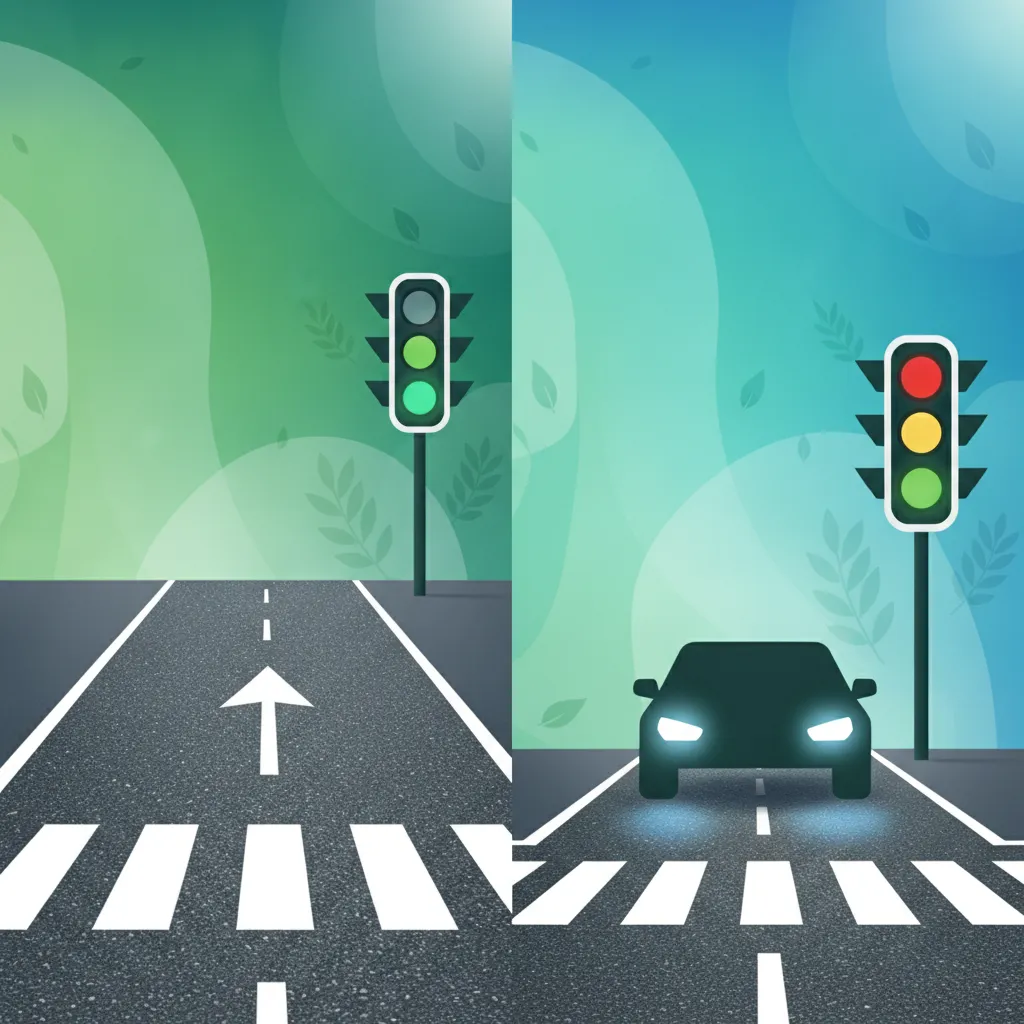
This lesson details the meaning and application of various road surface markings, including lane dividers, solid and broken lines, and directional arrows. You will also learn to interpret the full sequence of traffic light signals, including the specific rules for the amber (yellow) light phase. A proper understanding of these systems is vital for maintaining correct lane discipline and adhering to traffic controls.
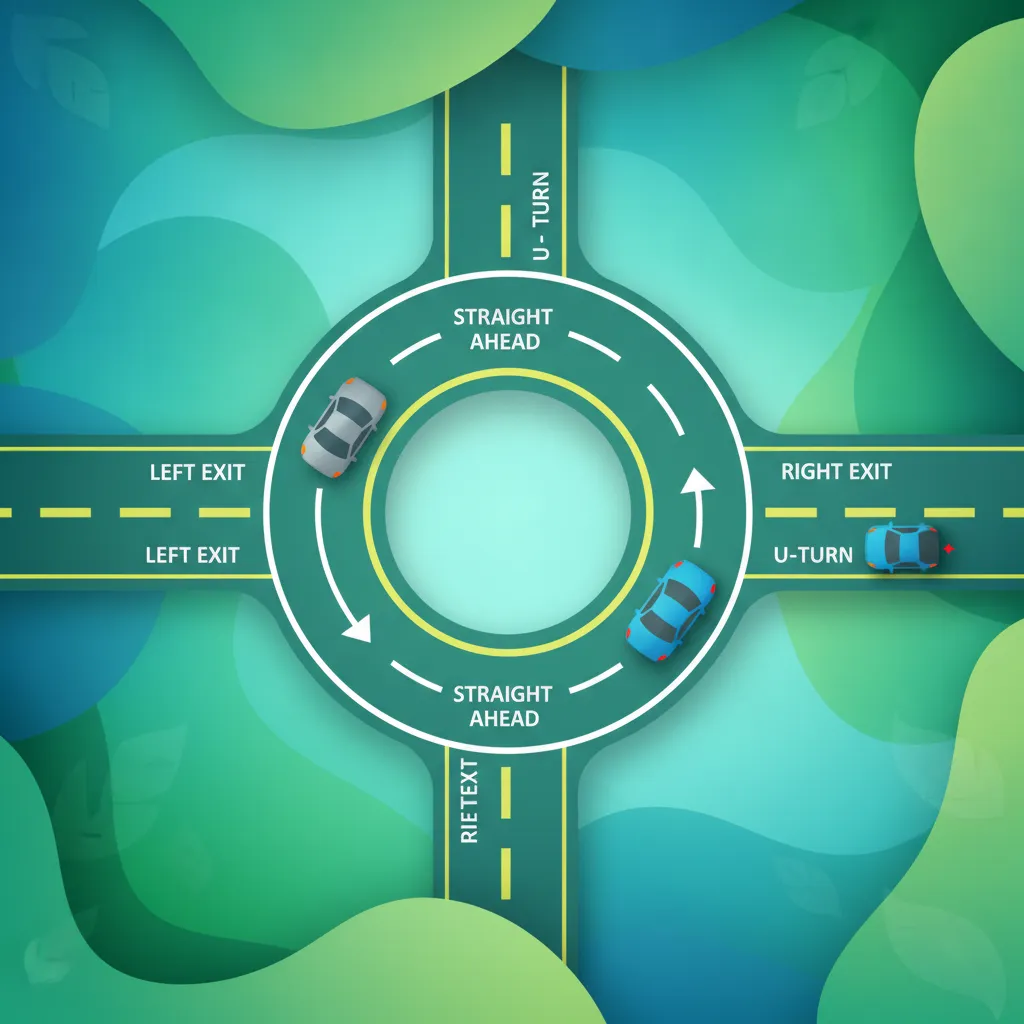
This lesson offers a step-by-step guide to navigating roundabouts in Denmark. You will learn how to approach and enter a roundabout, the requirement to yield to circulating traffic, and how to select the appropriate lane for your intended exit. Special attention is given to safely managing interactions with cyclists and pedestrians who may be present at roundabout entrances and exits.
This lesson provides a guide to motorway riding, a high-speed and demanding environment. It details the process for using acceleration lanes to merge smoothly, maintaining proper lane discipline, and preparing for exits well in advance. Key safety principles like the two-second rule are reinforced for this context.
This lesson covers the correct techniques for various turning manoeuvres, including how to signal, position your vehicle, and judge gaps in traffic. It also details the legal and safety protocols for overtaking, emphasizing the importance of assessing speed, distance, and oncoming traffic. A thorough understanding of these procedures is crucial for navigating intersections and two-lane roads safely.

This lesson explains the strategic importance of lane positioning for a motorcyclist. It teaches how to select a position within the lane that makes you most visible to other road users and provides an escape route from potential hazards. The content covers how to adjust your position based on traffic, road conditions, and to avoid being in another vehicle's blind spot.
Find clear answers to common questions learners have about Lane Discipline and Changing Lanes. Learn how the lesson is structured, which driving theory objectives it supports, and how it fits into the overall learning path of units and curriculum progression in Denmark. These explanations help you understand key concepts, lesson flow, and exam focused study goals.
Mirrors cannot show the entire area beside your vehicle. A shoulder check covers your blind spot, ensuring no cyclists or other vehicles are positioned where they cannot be seen, which is critical in Denmark's cyclist-friendly infrastructure.
You must signal in good time before starting your maneuver to allow other road users to adjust. In the theory exam, always look for the option that indicates clear, early communication of your intentions to others.
Yes. Whether you are on a motorway or an urban street, staying within your lane is essential for traffic flow and safety. Improper lane position can lead to confusion and is a common source of errors in the theory test.
Never force a lane change or make sudden, dangerous movements. If it is too late to change lanes safely, continue to the next junction or exit and re-route. Safety always takes priority over convenience.
Use our powerful search tool to pinpoint specific Danish driving theory topics, road signs, or traffic situations you need to review. Start exploring relevant practice sets now to reinforce your knowledge and build confidence for your upcoming driving licence exam.