
This lesson guides you through the critical rules for navigating pedestrian crossings and high-traffic cyclist zones in Denmark. You will learn your legal obligations when approaching these areas to ensure the safety of vulnerable road users, a key component of your Category B theory test preparation. By mastering these interactions, you will gain the confidence needed for both your theoretical and practical driving assessments.
Lesson content overview
Welcome to this comprehensive lesson on understanding and safely navigating pedestrian crossings and designated cyclist zones within the Danish traffic system. As you prepare for your Danish Category B driving license, mastering these interactions is crucial not only for passing your theory test but also for becoming a responsible and safe driver on shared roads. This chapter delves into the legal requirements, practical considerations, and defensive driving techniques necessary to protect vulnerable road users such as pedestrians and cyclists.
Road safety in Denmark places a strong emphasis on protecting vulnerable road users – those who are not encased in a vehicle and are therefore at a higher risk of injury in the event of a collision. This group primarily includes pedestrians and cyclists. Danish traffic law is designed to create a hierarchy of responsibility, where the user with the greatest potential to cause harm (the driver of a vehicle) holds the greatest responsibility to prevent it.
Yielding is not merely a courtesy; it is a fundamental legal obligation that underpins road safety, especially at designated crossings and zones. A driver's ability to anticipate, react, and safely yield to pedestrians and cyclists can prevent serious accidents, reduce traffic congestion, and foster a more harmonious traffic environment. Understanding when and how to yield ensures the smooth flow of traffic while prioritizing the safety of those most at risk.
The Danish Road Traffic Act (Færdselsloven) clearly outlines the rights of pedestrians and cyclists and the corresponding duties of vehicle drivers. These regulations are designed to minimize risks and ensure that all road users can navigate the public space safely. Compliance with these laws is not optional; it is a core component of defensive driving and a prerequisite for maintaining your driving license. Ignoring these rules can lead to severe penalties, including fines, penalty points, and even license suspension, in addition to the moral and legal consequences of causing harm.
Pedestrian crossings are critical points on the road network where pedestrians are granted specific rights to cross. In Denmark, these are primarily known as fodgængerfelter, which translates directly to "pedestrian fields."
A fodgængerfelt, commonly referred to as a zebra crossing, is a designated area on the roadway specifically marked for pedestrians to cross. It is typically identified by distinct parallel white lines painted across the road surface, often accompanied by a zig-zag pattern on the approach to warn drivers. These markings clearly signal a location where drivers must be prepared to stop.
At a fodgængerfelt, pedestrians have unconditional priority over all vehicular traffic. This means that if a pedestrian is on the crossing, or clearly intends to step onto it (e.g., waiting at the curb and looking to cross), you, as a driver, are legally obligated to stop and allow them to cross safely. This rule applies regardless of your direction of travel, and even if a cyclist is crossing within the path of the fodgængerfelt on their designated lane, they are also granted this priority.
It is a common misconception that one only needs to stop if a pedestrian is already halfway across. The obligation to stop begins the moment a pedestrian shows clear intent to cross or is already on any part of the crossing. Failing to yield to a pedestrian at a zebra crossing is a serious traffic offense.
Approaching a fodgængerfelt requires a significant reduction in speed and heightened awareness. You must adjust your speed to ensure that you can stop safely before the crossing if a pedestrian is present or approaches it with the intention to cross. This involves scanning the area well in advance, observing both sides of the road for potential pedestrians, and being prepared to brake smoothly.
When approaching a zebra crossing, always assume there might be a pedestrian you haven't seen yet. Covering your brake pedal (hovering your foot over it without pressing) can help reduce your reaction time if you need to stop suddenly.
Maintaining an appropriate distance from the vehicle in front of you is also crucial. If the car ahead stops for a pedestrian, you must also be able to stop without posing a risk of rear-ending them. Furthermore, never overtake a vehicle that has stopped at a fodgængerfelt, as this could obscure a pedestrian from your view and lead to a collision.
Drivers frequently make several errors at fodgængerfelter. One common mistake is failing to stop due to impatience or misjudging a pedestrian's speed or intention. Another is approaching the crossing at a speed too high to allow for a safe stop, especially in adverse weather conditions or low light. Drivers might also overlook pedestrians, particularly children or elderly individuals, who may move less predictably or be less visible. It is vital to make eye contact with pedestrians whenever possible to confirm their intentions.
At intersections, fodgængerfelter can sometimes intersect with traffic lights or other priority rules. Even at signalized intersections, if a pedestrian-activated signal is green for pedestrians, drivers must respect it and stop, regardless of the vehicle traffic light. When turning at an intersection, you must always be particularly vigilant for pedestrians who may be crossing the street you are turning into, even if there isn't a marked fodgængerfelt. The principle of yielding to vulnerable road users often overrides other priority rules in such contexts.
Cyclists are highly prevalent in Danish traffic, and specific zones and lanes are designed to give them priority and ensure their safety. Understanding these cykelzoner and related markings is essential for safe driving.
A cykelzone, or cyclist zone, is a specific area of the road network where cyclists are granted priority over other vehicular traffic. These zones are typically found in areas with high cyclist traffic, such as certain residential streets, urban centers, or dedicated paths that intersect with vehicle roads. The purpose is to facilitate the flow and safety of cyclists, requiring drivers to exercise extra caution and yield.
A marked area where cyclists have priority, often indicated by a blue circular sign with a white bicycle symbol, sometimes accompanied by dedicated lanes or road markings.
When approaching or entering a cykelzone or an area with dedicated bike lanes, your primary obligation as a driver is to reduce your speed significantly and be prepared to yield to cyclists. You must ensure that you do not impede their movement or force them to take evasive action. This means waiting for cyclists to pass before proceeding into or across their designated path.
This sign indicates a mandatory cycle path. While not explicitly a "cykelzone" sign, it signals a strong presence of cyclists with their own dedicated infrastructure where they have priority.
Cykelzoner and bike lanes are clearly marked to alert drivers. Common indicators include:
It is crucial to recognize these markings and signs instantly and adjust your driving behavior accordingly.
Safe interaction with cyclists goes beyond simply yielding. It also includes:
skulderblik) before making any lateral movement.Never assume a cyclist has seen you or will yield to you. Always drive defensively and be prepared for them to exercise their right-of-way.
Intersections are complex environments where multiple road users converge. Understanding priority rules specifically for pedestrians and cyclists at these points is vital for preventing collisions.
At intersections controlled by traffic lights, special signals are often in place for pedestrians and cyclists.
It is common for pedestrians and cyclists to have a green signal concurrently with vehicle turns. In such scenarios, the turning vehicle must always yield to the pedestrians and cyclists proceeding straight or crossing.
At unsignalized intersections, the general priority rules still apply, but with an added layer of responsibility towards vulnerable road users. Even if you have priority based on road markings (e.g., you are on a priority road), you must still be prepared to yield to pedestrians or cyclists who are already crossing or clearly intending to cross, especially when making turns.
Failing to yield to pedestrians or cyclists where required is not only dangerous but also carries significant legal ramifications in Denmark. Danish traffic law takes violations concerning vulnerable road users very seriously.
Violations of priority rules at fodgængerfelter or cykelzoner can result in substantial fines. In addition to monetary penalties, drivers may receive points on their driving license. Accumulating a certain number of points within a specific period can lead to a conditional or unconditional suspension of the driving license. These consequences are designed to deter dangerous driving behaviors and reinforce the importance of protecting vulnerable road users.
In the unfortunate event of an accident involving a vehicle and a pedestrian or cyclist, the driver of the vehicle typically bears a higher degree of liability, especially if the accident occurs in a fodgængerfelt or cykelzone where the vulnerable user had priority. This "strict liability" principle reflects the legal and ethical responsibility of drivers to operate their vehicles safely and prevent harm to those less protected. An accident can lead to criminal charges, civil lawsuits for damages, and significantly increased insurance premiums, in addition to the tragic human cost.
Beyond the basic rules, a truly safe driver adapts their approach to various conditions and specific situations.
Adverse weather conditions significantly impact visibility and stopping distances.
The physical characteristics of your vehicle play a crucial role in safety, especially regarding stopping distance.
While all pedestrians and cyclists are vulnerable, certain groups require even greater care and anticipation from drivers.
Always give these groups extra space and patience, and be prepared for slower reactions or unexpected behavior.
Successfully navigating pedestrian crossings and cyclist zones is a cornerstone of safe driving in Denmark. As a driver, you bear a significant responsibility for the safety of pedestrians and cyclists due to their inherent vulnerability. This involves not only understanding and obeying the specific rules for fodgængerfelter and cykelzoner but also applying defensive driving principles, such as maintaining appropriate speed, constantly scanning for hazards, and adapting your driving to changing conditions. By consistently applying the knowledge gained in this lesson, you will contribute to a safer, more efficient, and more respectful traffic environment for everyone. Always remember that yielding is a legal obligation and a crucial act of consideration that protects lives and prevents accidents.
This lesson covers the critical Danish rules for navigating pedestrian crossings and cyclist zones, emphasizing that pedestrians at zebra crossings (fodgængerfelter) have unconditional priority and that drivers must stop even if a pedestrian only shows intent to cross. Cyclist zones (cykelzoner) designate areas where cyclists have priority, requiring drivers to reduce speed, check blind spots, and yield before turning across bike lanes. The content highlights defensive driving techniques such as performing shoulder checks, maintaining safe distances, and anticipating unpredictable movements from vulnerable road users including children and elderly pedestrians. Violations carry serious consequences including fines, penalty points, and increased liability in accidents. Understanding these rules is essential for both passing the Danish Category B theory test and developing safe driving habits on Denmark's cyclist-heavy roads.
A short set of high-value points that capture the most important learning from this lesson.
Pedestrians at zebra crossings (fodgængerfelter) have unconditional priority; you must stop if a pedestrian shows intent to cross, not just when they are halfway across
A cykelzone is a marked area where cyclists have priority over other vehicles, typically indicated by blue signs with a white bicycle symbol
When turning right, you must always yield to cyclists traveling straight in a bike lane on your right, even if they appear to be far away
At signalized intersections, pedestrians and cyclists may have a green light concurrently with your turn—you must still yield to them
Vulnerable road users include pedestrians, cyclists, and especially children, elderly, and disabled individuals who may move unpredictably
Explore all units and lessons included in this driving theory course.
The obligation to stop at a fogdængerfelt begins when a pedestrian shows clear intent to cross, not only when they are on the crossing
Never overtake a vehicle that has stopped at a zebra crossing; the stopped car may be concealing a pedestrian
Always perform a shoulder check (skulderblik) before lateral movements to detect cyclists in your blind spot
In accidents involving vulnerable road users at priority zones, drivers typically bear higher liability under strict liability principles
Adverse weather increases stopping distances significantly—reduce speed and increase following distance near crossings and cyclist zones
Failing to reduce speed early enough when approaching a zebra crossing, leaving insufficient distance to stop safely
Assuming cyclists will yield or have seen you; always drive defensively and be prepared for them to exercise their right-of-way
Overtaking another vehicle at a zebra crossing because the lead vehicle is stopped, which can hide pedestrians from view
Misjudging pedestrian speed or intention, particularly with children or elderly individuals who may move less predictably
Neglecting to check bike lanes before opening car doors after parking ('dooring'), risking collision with passing cyclists
Lesson content overview
A short set of high-value points that capture the most important learning from this lesson.
Pedestrians at zebra crossings (fodgængerfelter) have unconditional priority; you must stop if a pedestrian shows intent to cross, not just when they are halfway across
A cykelzone is a marked area where cyclists have priority over other vehicles, typically indicated by blue signs with a white bicycle symbol
When turning right, you must always yield to cyclists traveling straight in a bike lane on your right, even if they appear to be far away
At signalized intersections, pedestrians and cyclists may have a green light concurrently with your turn—you must still yield to them
Vulnerable road users include pedestrians, cyclists, and especially children, elderly, and disabled individuals who may move unpredictably
Explore all units and lessons included in this driving theory course.
The obligation to stop at a fogdængerfelt begins when a pedestrian shows clear intent to cross, not only when they are on the crossing
Never overtake a vehicle that has stopped at a zebra crossing; the stopped car may be concealing a pedestrian
Always perform a shoulder check (skulderblik) before lateral movements to detect cyclists in your blind spot
In accidents involving vulnerable road users at priority zones, drivers typically bear higher liability under strict liability principles
Adverse weather increases stopping distances significantly—reduce speed and increase following distance near crossings and cyclist zones
Failing to reduce speed early enough when approaching a zebra crossing, leaving insufficient distance to stop safely
Assuming cyclists will yield or have seen you; always drive defensively and be prepared for them to exercise their right-of-way
Overtaking another vehicle at a zebra crossing because the lead vehicle is stopped, which can hide pedestrians from view
Misjudging pedestrian speed or intention, particularly with children or elderly individuals who may move less predictably
Neglecting to check bike lanes before opening car doors after parking ('dooring'), risking collision with passing cyclists
Explore search topics learners often look for when studying Pedestrian Crossings and Cyclist Zones. These topics reflect common questions about road rules, driving situations, safety guidance, and lesson level theory preparation for learners in Denmark.
Browse additional driving theory lessons that cover connected traffic rules, road signs, and common driving situations related to this topic. Improve your understanding of how different rules interact across everyday traffic scenarios.
Explore advanced Danish traffic law for navigating pedestrian crossings and cyclist zones. Understand complex right-of-way scenarios and priority rules involving vulnerable road users in varied urban environments, crucial for your driving theory.
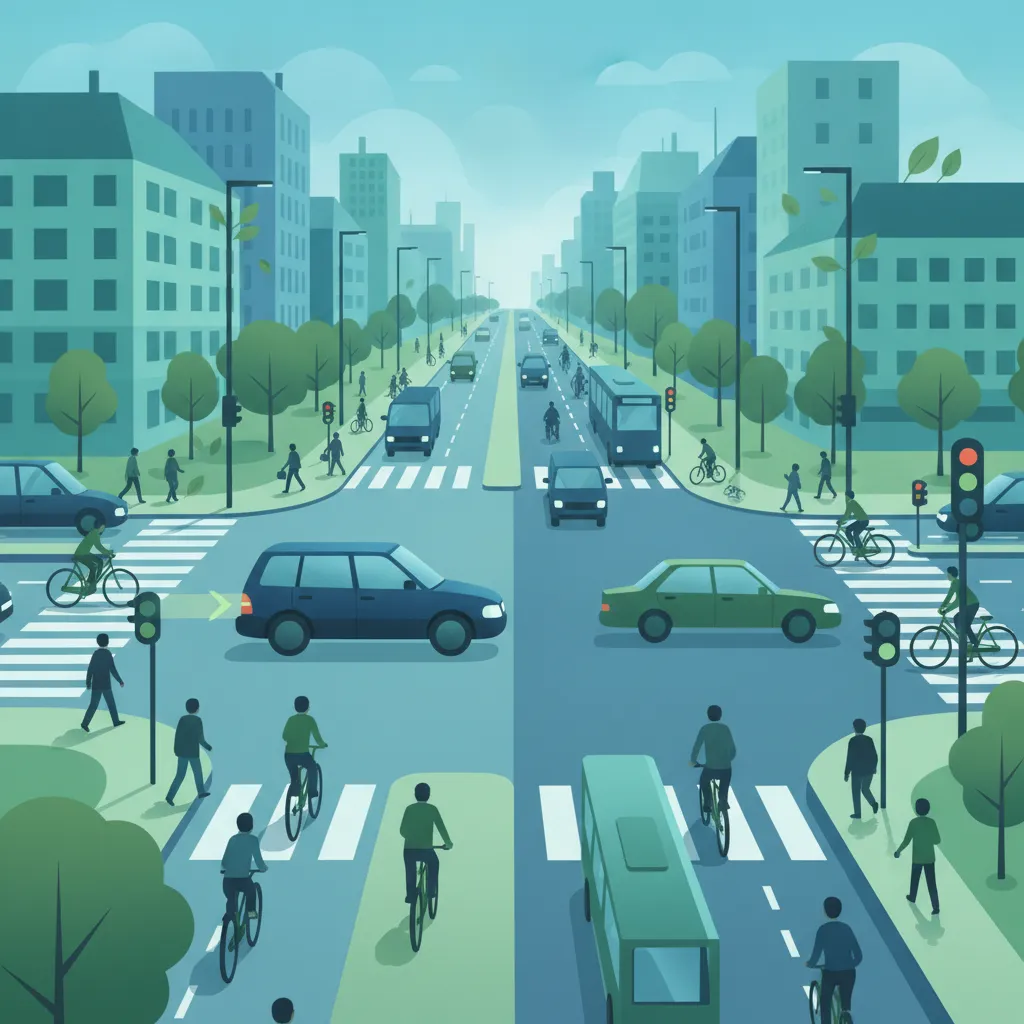
This lesson provides a structured method for approaching and crossing intersections safely. It reinforces the application of priority rules, the interpretation of signs and signals, and the importance of thorough observation. Specific attention is given to looking for cyclists and pedestrians who may be crossing the rider's path.
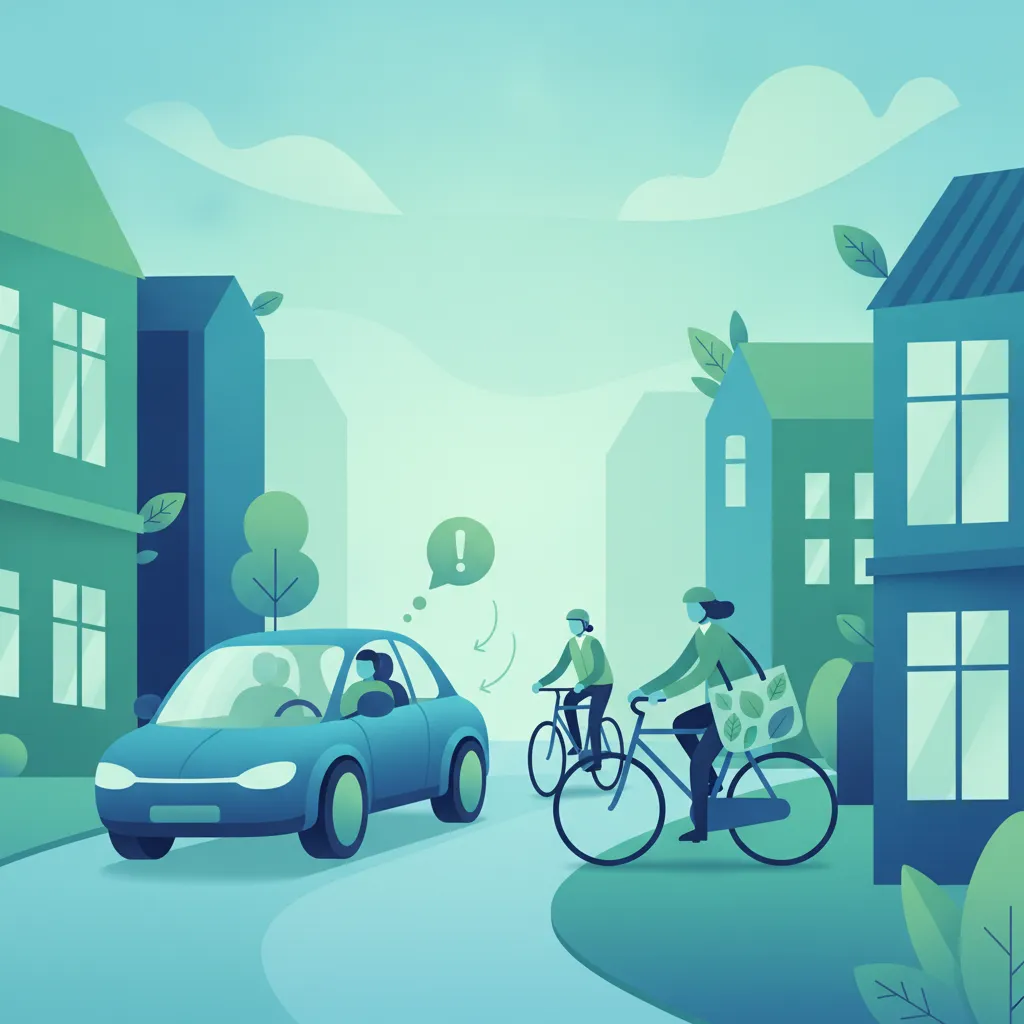
This lesson focuses on safe interactions with Denmark's large population of cyclists and other vulnerable road users. It covers the rules for passing cyclists, yielding at pedestrian crossings, and the specific hazard of turning across a bike lane. Developing heightened awareness for these interactions is critical for urban riding.
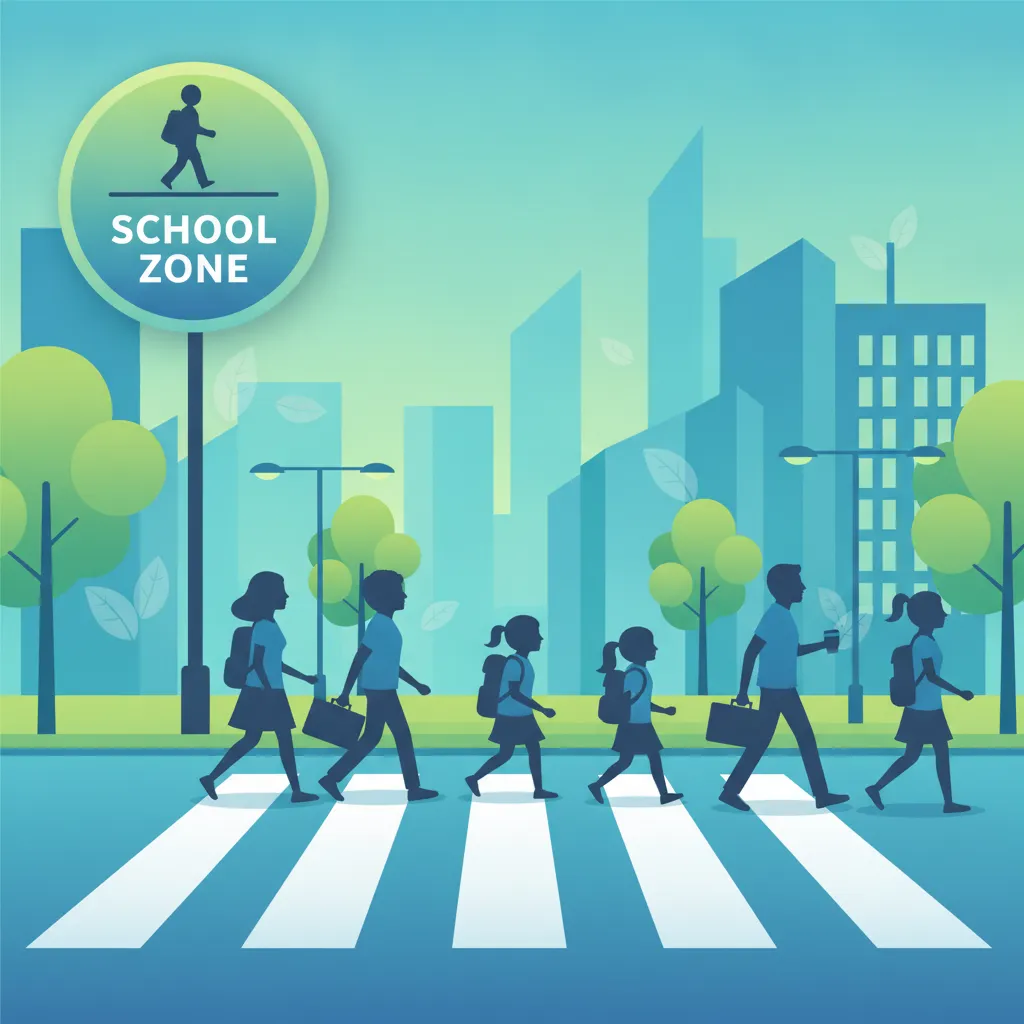
This lesson reinforces the driver's responsibility to protect pedestrians, particularly in busy urban areas and near schools. It details the procedures for approaching pedestrian crossings, the legal requirement to reduce speed significantly in marked school zones, and how to anticipate the unpredictable actions of pedestrians. The content covers traffic calming measures and the legal rights of pedestrians in various settings.

This lesson addresses the critical skill of safely coexisting with cyclists and cargo bikes, which are prevalent in Denmark. It explains how to maintain a safe distance, overtake properly, and be vigilant for cyclists, especially when turning right. Understanding the infrastructure of cycle lanes and predicting cyclist behavior is a key focus.
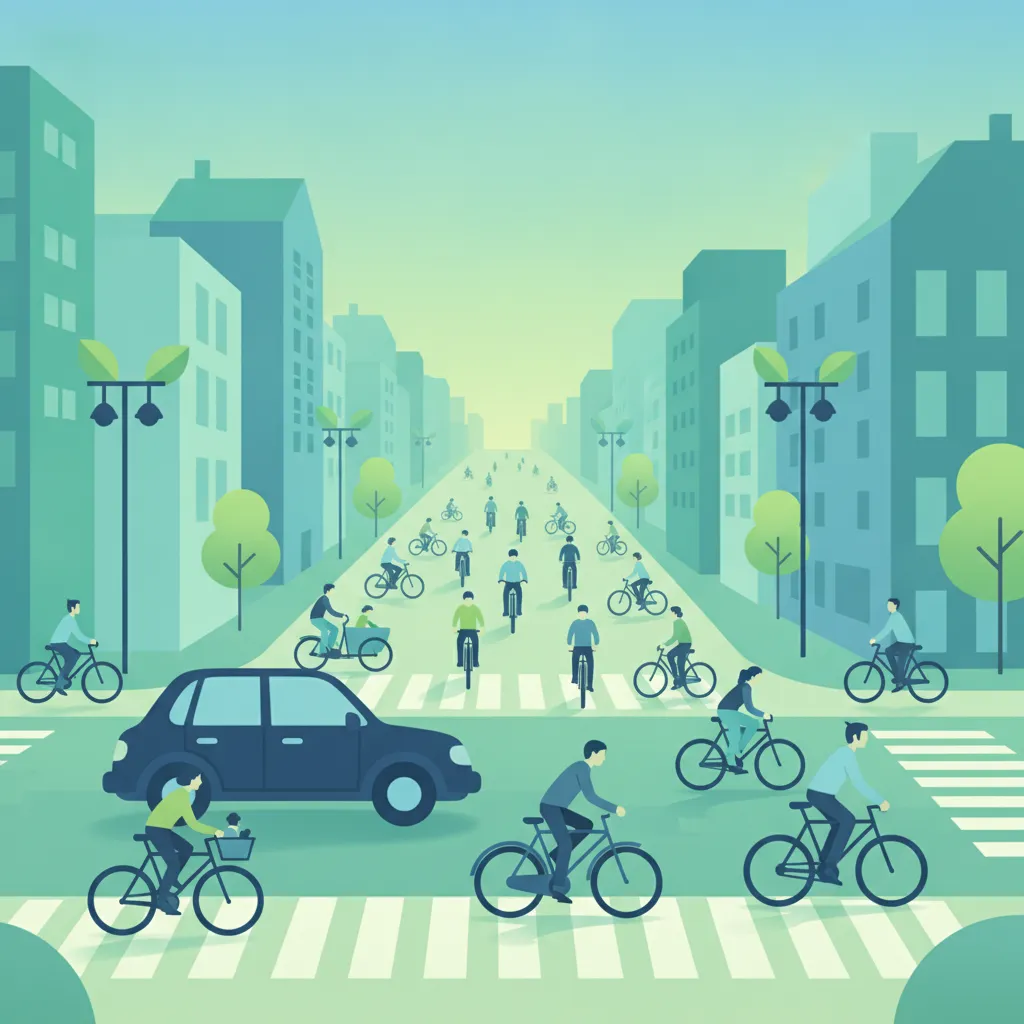
This lesson provides critical guidance for driving in environments with heavy cycle traffic, typical of Danish cities. It focuses on identifying and yielding to cyclists in dedicated bike lanes, especially when turning right across their path. The content emphasizes advanced observation skills to detect cyclists in blind spots and the importance of giving adequate space.
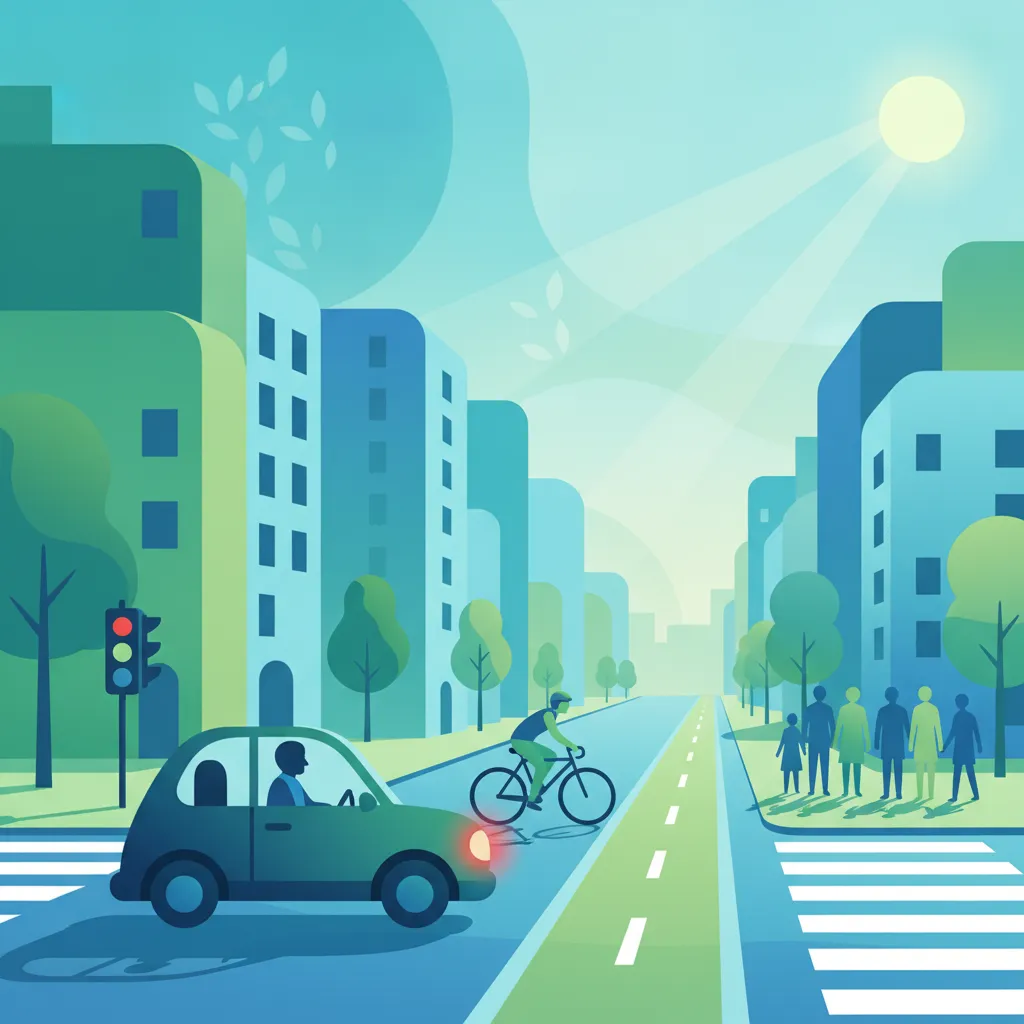
This lesson focuses on the safe integration of cyclists and pedestrians within the traffic system, a key feature of Danish roads. It covers the specific rights and common behaviors of cyclists, including those on e-bikes and cargo bikes, and explains procedures for yielding to pedestrians. The content emphasizes maintaining safe distances and heightened awareness to prevent accidents and promote harmonious road sharing.
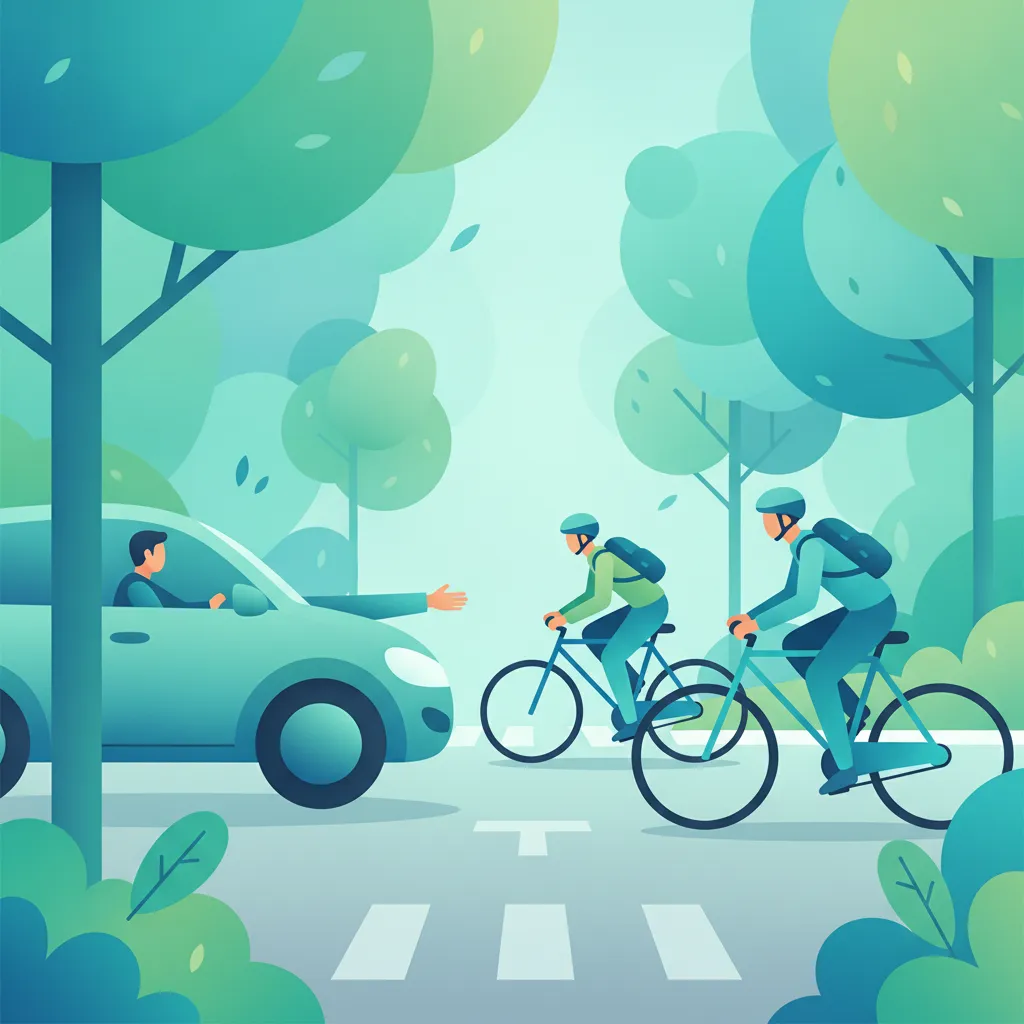
This lesson provides in-depth guidance on safely interacting with cyclists and e-bike riders, a daily reality in Danish cities. It explains how to provide adequate space when overtaking, how to anticipate their movements at intersections, and how to respect their right-of-way in designated lanes. Understanding these dynamics is essential for preventing common accidents and ensuring a safe urban driving experience for everyone.
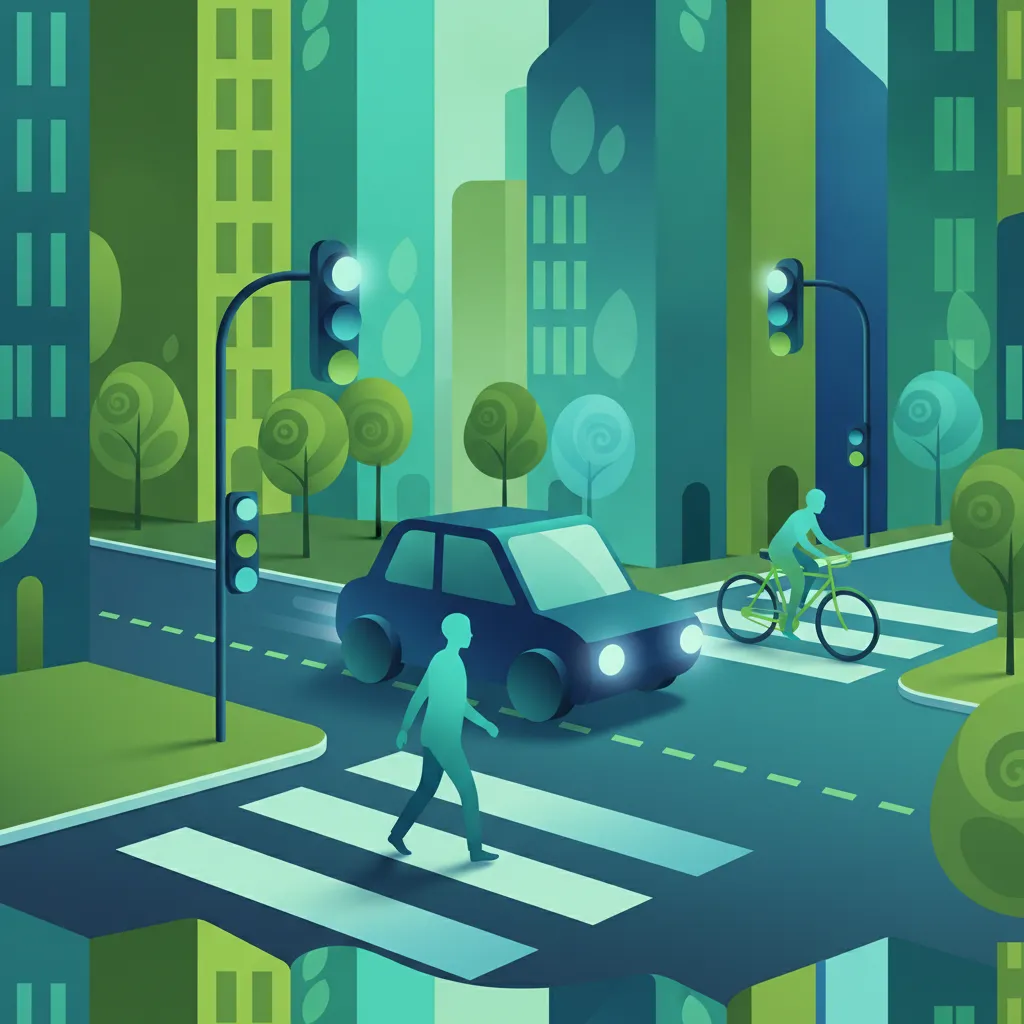
This lesson emphasizes the professional driver's heightened responsibility to protect vulnerable road users. It revisits Danish regulations concerning cyclist priority, particularly during right turns, and details the correct procedures for maintaining safe overtaking distances. The content focuses on developing advanced situational awareness, using mirrors and cameras effectively, and anticipating the behavior of pedestrians and cyclists in urban environments.
This lesson addresses the unique challenges of streets with dedicated cycle lanes and numerous bus stops. It teaches riders how to anticipate pedestrians moving to and from buses and how to position themselves to avoid conflict with cyclists. The goal is to navigate these complex environments smoothly and safely.
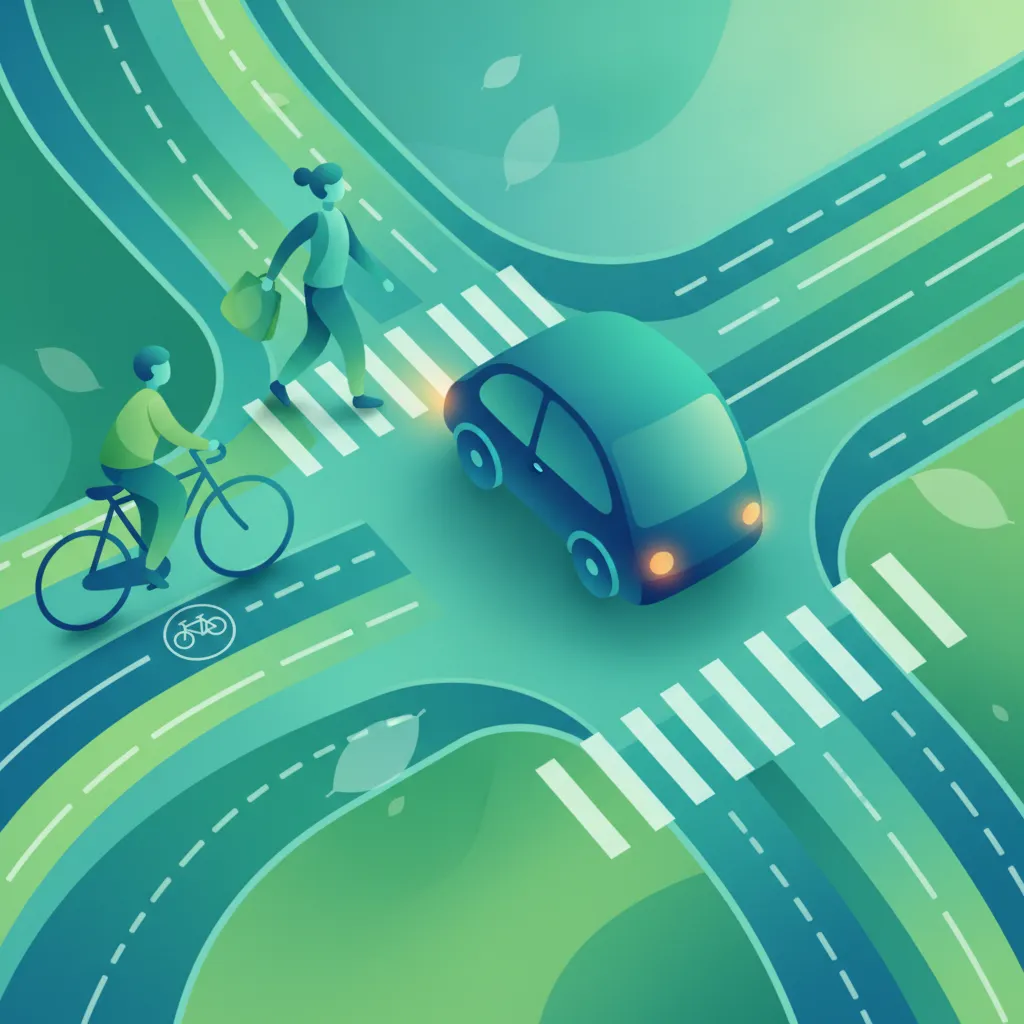
This lesson provides a systematic approach to safely navigating intersections. It covers how to interpret priority signs and traffic signals, establish right-of-way, and scan for potential conflicts from all directions. The importance of clear sightlines and anticipating the movements of other vehicles is a key focus.
Learn to identify and manage risks associated with pedestrians and cyclists in Danish traffic. This lesson focuses on defensive driving techniques, understanding common driver errors at crossings, and ensuring the safety of vulnerable road users.
This lesson emphasizes the professional driver's heightened responsibility to protect vulnerable road users. It revisits Danish regulations concerning cyclist priority, particularly during right turns, and details the correct procedures for maintaining safe overtaking distances. The content focuses on developing advanced situational awareness, using mirrors and cameras effectively, and anticipating the behavior of pedestrians and cyclists in urban environments.
This lesson provides critical guidance for driving in environments with heavy cycle traffic, typical of Danish cities. It focuses on identifying and yielding to cyclists in dedicated bike lanes, especially when turning right across their path. The content emphasizes advanced observation skills to detect cyclists in blind spots and the importance of giving adequate space.
This lesson reinforces the driver's responsibility to protect pedestrians, particularly in busy urban areas and near schools. It details the procedures for approaching pedestrian crossings, the legal requirement to reduce speed significantly in marked school zones, and how to anticipate the unpredictable actions of pedestrians. The content covers traffic calming measures and the legal rights of pedestrians in various settings.
This lesson focuses on safe interactions with Denmark's large population of cyclists and other vulnerable road users. It covers the rules for passing cyclists, yielding at pedestrian crossings, and the specific hazard of turning across a bike lane. Developing heightened awareness for these interactions is critical for urban riding.
This lesson focuses on the safe integration of cyclists and pedestrians within the traffic system, a key feature of Danish roads. It covers the specific rights and common behaviors of cyclists, including those on e-bikes and cargo bikes, and explains procedures for yielding to pedestrians. The content emphasizes maintaining safe distances and heightened awareness to prevent accidents and promote harmonious road sharing.
This lesson introduces cooperative driving as a fundamental element of road safety in Denmark. It highlights the social responsibility of drivers to act predictably, anticipate the actions of others, and maintain courteous interactions with all road users. By fostering mutual respect and cooperation, you will learn how to reduce the potential for conflict and enhance overall traffic safety.
This lesson introduces the essential principles of defensive driving, shifting the focus from reacting to hazards to proactively anticipating them. You will learn techniques for systematic scanning of the driving environment, maintaining a safety cushion around your vehicle, and identifying potential risks before they develop. These proactive strategies are fundamental to becoming a safer, more confident driver.

This lesson addresses the unique challenges of driving in tourist-heavy urban centers alongside cyclists. It teaches drivers to anticipate the behavior of individuals who may be distracted or unfamiliar with local traffic rules. The content provides strategies for communicating intentions clearly and navigating safely around large groups, luggage, and cyclists.

This lesson covers the core principles of defensive driving in an urban context. It teaches drivers how to anticipate the actions of other road users, maintain safe following distances in dense traffic, and navigate complex intersections with multiple signals. The content emphasizes heightened awareness of pedestrians, cyclists, and unexpected events common in Danish city environments.

This lesson explores non-verbal communication techniques for safer road sharing. It discusses the importance of making eye contact with other drivers and pedestrians to confirm they have seen you. The content also explains the appropriate and legal use of the horn to alert others of your presence.
Find clear answers to common questions learners have about Pedestrian Crossings and Cyclist Zones. Learn how the lesson is structured, which driving theory objectives it supports, and how it fits into the overall learning path of units and curriculum progression in Denmark. These explanations help you understand key concepts, lesson flow, and exam focused study goals.
You are legally required to yield if a pedestrian is already on the crossing or clearly waiting to step onto it. You must reduce speed well in advance to signal your intent to stop.
It depends on the signage. If a cycle path crosses a road, look for markings. Often, if the path continues across the road, the cyclist may have priority, but always check for yield signs (ubetinget vigepligt) which dictate the exact legal obligation.
Many learners fail to check for pedestrians on both sides of the crossing before moving off. If one pedestrian clears the road, always ensure another is not about to enter from the other side.
Always maintain a safe lateral distance. Even if you have the right of way, the Danish theory test emphasizes the duty of care towards vulnerable road users, so patience and observation are key.
Use our powerful search tool to pinpoint specific Danish driving theory topics, road signs, or traffic situations you need to review. Start exploring relevant practice sets now to reinforce your knowledge and build confidence for your upcoming driving licence exam.