
Understanding when to activate your hazard lights—or 'alarmlichten'—is a critical component of Belgian traffic law and your preparation for the official theory exam. This guide explains the specific circumstances under which these lights are required, debunks the myth that they grant permission to park illegally, and outlines the unique conventions regarding funeral processions.
Article content overview
Mastering the use of hazard warning lights—commonly referred to in Belgium as alarmlichten or feux de détresse—is a fundamental requirement for every driver. While these lights are a vital tool for communicating danger to other road users, their misuse is a frequent source of confusion and potential traffic violations. Understanding the exact requirements of the Belgian Highway Code, specifically Article 46, is essential not only for your daily driving but also for successfully navigating the trickier questions on your official theory exam.
In Belgium, the primary purpose of hazard warning lights is to signal a situation of danger or an obstruction to other road users. You are legally required to use these lights in specific scenarios to prevent accidents and ensure the safety of everyone on the road.
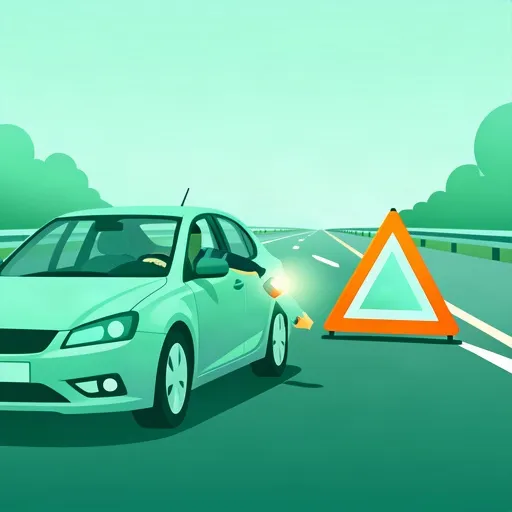
The most common mandatory scenario occurs when your vehicle is stationary on the road due to a mechanical breakdown, a flat tire, or an accident. If your vehicle is forced to stop in a position that creates a hazard for other drivers, you must immediately activate your hazard lights. In these instances, you are also legally obligated to place a danger triangle at a safe distance from your vehicle—typically at least 100 meters on motorways and at least 30 meters on other roads—to provide adequate warning to approaching traffic.
Furthermore, you must use your hazard warning lights if your vehicle becomes stationary inside a tunnel for any reason. Because tunnels present unique hazards regarding visibility and space for emergency maneuvers, the requirement to signal your stationary status is absolute. Additionally, on motorways, if you encounter a sudden traffic queue or reach the tail end of a traffic jam, activating your hazard lights is a critical safety measure to alert drivers behind you to slow down in time, preventing rear-end collisions.
A common misconception among Belgian drivers is that hazard warning lights serve as a "permission" to park illegally. You have likely seen vehicles stopped on double yellow lines, in bus lanes, or double-parked with their hazard lights flashing. It is crucial to understand that hazard lights do not grant you any legal right to park or stop in a restricted area.
Activating your alarmlichten while parking illegally on a sidewalk or a prohibited zone will not protect you from a fine. Traffic enforcement officers view the parking violation independently of your lights; in fact, using them might draw extra attention to your illegal maneuver.
Another common error is the use of hazard lights while driving in poor weather, such as heavy rain or dense fog. Belgian law restricts the use of hazard lights while the vehicle is in motion. When you are driving, your rear fog lights or dipped headlights are the appropriate tools for visibility. Activating hazard lights while driving can actually be dangerous, as the flashing lights can mask your brake lights, making it impossible for the driver behind you to determine when you are actually slowing down or stopping.
There is one notable exception to the rules regarding moving vehicles: the lijkstoet or funeral procession. In Belgium, vehicles within a funeral convoy are permitted to use their hazard warning lights while the procession is in motion. This serves as a vital visual signal to other road users that the vehicles are linked and should not be separated by traffic merging into the line.
When you encounter a funeral procession, it is a matter of courtesy and road etiquette to respect the cohesion of the convoy. By using hazard lights, the drivers in the procession signal their intent to maintain a unified group, which helps prevent confusion at intersections and roundabouts.
| Situation | Mandatory? | Permitted? |
|---|---|---|
| Broken down on the road | Yes | Yes |
| Stationary in a tunnel | Yes | Yes |
| Tail end of a motorway traffic jam | Yes | Yes |
| Funeral procession | No | Yes |
| Parking illegally "for a minute" | No | Prohibited |
| Driving in heavy rain/fog | No | Prohibited |
In Belgium, hazard warning lights must be activated when your vehicle is stationary due to a breakdown, accident, or flat tire—and you must place a danger triangle at least 100 meters (motorways) or 30 meters (other roads) behind your vehicle. They are also mandatory when stationary in any tunnel and at the tail end of a motorway traffic jam. Critically, hazard lights do NOT permit illegal parking, and using them while driving is prohibited; in poor visibility, use rear fog lights or dipped headlights instead. A notable exception allows vehicles in a funeral procession (lijkstoet) to use hazard lights while moving to maintain convoy cohesion.
A short set of high-value points that capture the most important ideas from this article.
Hazard warning lights are mandatory when stationary on the road due to breakdown, accident, or flat tire to warn other road users of danger.
When broken down, you must place a danger triangle at least 100 meters behind on motorways and at least 30 meters on other roads.
Hazard lights are mandatory when stationary inside any tunnel, regardless of the reason.
On motorways, activate hazard lights at the tail end of a traffic queue to prevent rear-end collisions.
Hazard lights are permitted (but not mandatory) for vehicles in a funeral procession while moving to maintain convoy unity.
Article 46 of the Belgian Highway Code strictly governs hazard light use; they signal danger, not convenience.
Hazard lights do NOT grant any legal right to park or stop in restricted areas like double yellow lines or bus lanes.
Using hazard lights while driving is prohibited in Belgium, even in heavy rain or fog—use rear fog lights instead.
A danger triangle is a legally required safety item that must accompany activated hazard lights when broken down.
The Dutch term is 'alarmlichten' and the French term is 'feux de détresse'; both refer to the same hazard warning system.
Believing hazard lights give permission to park illegally—traffic officers issue fines regardless of whether lights are flashing.
Using hazard lights while driving in poor weather, which masks brake lights and creates confusion for drivers behind.
Assuming hazard lights can be used to wave 'thank you' after merging; this is not a legal use and may cause misunderstanding.
Forgetting to place the danger triangle when broken down, which is a separate legal requirement from activating hazard lights.
Confusing rear fog lights with hazard lights; only rear fog lights are appropriate for visibility in rain or fog while driving.
Article content overview
A short set of high-value points that capture the most important ideas from this article.
Hazard warning lights are mandatory when stationary on the road due to breakdown, accident, or flat tire to warn other road users of danger.
When broken down, you must place a danger triangle at least 100 meters behind on motorways and at least 30 meters on other roads.
Hazard lights are mandatory when stationary inside any tunnel, regardless of the reason.
On motorways, activate hazard lights at the tail end of a traffic queue to prevent rear-end collisions.
Hazard lights are permitted (but not mandatory) for vehicles in a funeral procession while moving to maintain convoy unity.
Article 46 of the Belgian Highway Code strictly governs hazard light use; they signal danger, not convenience.
Hazard lights do NOT grant any legal right to park or stop in restricted areas like double yellow lines or bus lanes.
Using hazard lights while driving is prohibited in Belgium, even in heavy rain or fog—use rear fog lights instead.
A danger triangle is a legally required safety item that must accompany activated hazard lights when broken down.
The Dutch term is 'alarmlichten' and the French term is 'feux de détresse'; both refer to the same hazard warning system.
Believing hazard lights give permission to park illegally—traffic officers issue fines regardless of whether lights are flashing.
Using hazard lights while driving in poor weather, which masks brake lights and creates confusion for drivers behind.
Assuming hazard lights can be used to wave 'thank you' after merging; this is not a legal use and may cause misunderstanding.
Forgetting to place the danger triangle when broken down, which is a separate legal requirement from activating hazard lights.
Confusing rear fog lights with hazard lights; only rear fog lights are appropriate for visibility in rain or fog while driving.
Explore related topics, search based questions, and concepts that learners often look up when studying Belgian Hazard Light Rules. These themes reflect real search intent and help you understand how this topic connects to wider driving theory knowledge in Belgium.
Find clear and practical answers to common questions learners often have about Belgian Hazard Light Rules. This section helps explain difficult points, remove confusion, and reinforce the key driving theory concepts that matter for learners in Belgium.
No, it is prohibited to use hazard lights while driving normally. Doing so can confuse other drivers and mask your brake lights, which are more important for safety.
No. Using hazard lights does not grant any legal exemption for parking in prohibited areas, such as on double yellow lines or in a bus stop. You remain fully liable for any parking violations.
You must use them when your vehicle is stationary on the road due to a breakdown or forced stop in a dangerous position, when stationary in a tunnel, or to warn following traffic of an unexpected queue or immediate danger.
Yes, it is common and acceptable for members of a funeral convoy to use hazard lights to signify they are traveling together and to help maintain the cohesion of the procession.
Continue your learning journey by exploring related articles and guides on specific Belgian traffic situations, advanced road signs, or vehicle safety topics. Use our search to pinpoint what you need to review next, deepening your understanding for your driving license theory exam.