
Learning how to interact with cyclists is a core component of the Belgian theory exam, as vulnerable road users receive high legal protection. This guide explains the specific distance requirements you must maintain, how to correctly handle cycle streets, and the precautions necessary when turning or parking to avoid accidents.
Article content overview
In Belgium, the integration of cyclists into urban and rural traffic is governed by strict regulations designed to protect these vulnerable road users. Understanding these laws is not only crucial for ensuring public safety but is also a cornerstone of the Belgian driving theory exam. As a driver, you are expected to anticipate the presence of cyclists and adapt your behavior to prevent accidents, particularly in high-cycling regions like Flanders, Brussels, and Wallonia.
One of the most frequent topics in the Belgian theory test concerns the minimum lateral distance required when overtaking cyclists, scooters, or pedestrians. Belgian law distinguishes between built-up areas—typically identified by urban density—and non-built-up areas, where speeds are generally higher.
When overtaking a cyclist, you must maintain a lateral clearance of at least 1 meter in built-up areas and at least 1.5 meters outside of built-up areas. If you cannot maintain this distance, you are legally required to wait behind the cyclist until it is safe to pass.
Failure to respect these distances is not just a breach of the Highway Code; it is a major cause of traffic incidents. On rural roads, the 1.5-meter rule is essential because the turbulence created by your vehicle at higher speeds can easily destabilize a cyclist, leading to a loss of control. If a road is too narrow to allow for this legal clearance, you must exercise patience, slow down, and stay behind the cyclist until a wider section of the road is reached.
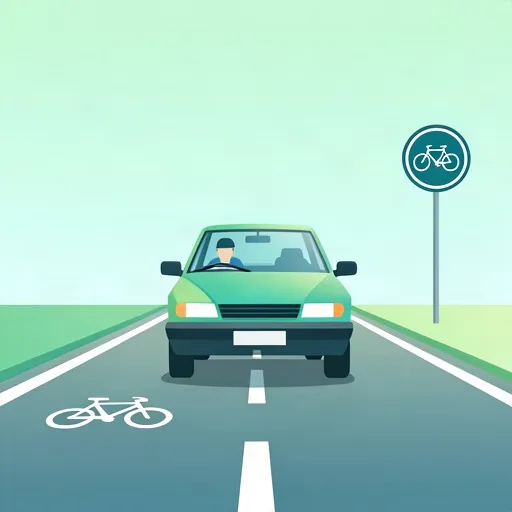
The Belgian road network features specialized infrastructure such as cycle streets (fietsstraat / rue cyclable). These zones are marked with specific signage and often feature red-colored road surfaces. In these streets, the legal hierarchy of road users changes significantly to favor the cyclist.
In a cycle street, motorized vehicles are permitted to enter but must strictly adhere to the pace of the cyclists. You are strictly forbidden from overtaking any cyclist within these zones. Furthermore, in residential zones or areas with speed limits of 30 km/h or lower, cyclists are legally permitted to occupy the middle of the lane when the road is too narrow for safe passing, and they may ride two abreast provided they do not hinder other traffic excessively.
A common trap in the Belgian theory exam involves turning right across a cycle path. Drivers often fail to realize that they must yield to cyclists traveling in the same direction, even if those cyclists are behind the vehicle as it prepares to turn. Always check your right-hand mirror and blind spot before initiating any turn.
The "Dutch Reach" is a vital safety habit. Always open your car door with your right hand when parked on the right side of the road. This naturally forces your torso to rotate, allowing you to check the rearview mirror and blind spot for approaching cyclists, significantly reducing the risk of a "dooring" accident.
To succeed in your theory exam, it is helpful to contrast how different infrastructure types impose different obligations on the driver.
| Infrastructure | Overtaking Allowed | Priority for Cyclists |
|---|---|---|
| Cycle Street | No | Full priority |
| Marked Cycle Path | N/A (separated) | Must yield when crossing |
| General Road (30km/h) | Yes (with 1m gap) | Cyclists may take the center |
Belgium imposes strict legal distance requirements when overtaking cyclists: at least 1 meter in built-up areas and 1.5 meters outside them, with the obligation to wait if clearance cannot be maintained. Cycle streets (fietsstraat) represent zones where cyclists have full priority and overtaking is forbidden entirely. Safe turning practice requires checking mirrors and the blind spot to yield to cyclists before crossing a cycle path. The Dutch Reach—a technique of opening car doors with the opposite hand—is an essential habit to avoid dooring accidents. These regulations reflect Belgium's commitment to protecting vulnerable road users and are frequently tested in the Belgian driving theory exam.
A short set of high-value points that capture the most important ideas from this article.
Belgian law requires a minimum 1-meter lateral distance when overtaking cyclists in built-up areas and 1.5 meters outside built-up areas; if you cannot maintain this distance, you must wait.
In cycle streets (fietsstraat), cyclists have full priority and motorized vehicles are forbidden from overtaking any cyclist.
Before turning right, always check your right-hand mirror and blind spot—cyclists traveling alongside your vehicle have priority even if they are behind you as you prepare to turn.
The Dutch Reach technique (opening car doors with the opposite hand) prevents dooring accidents by naturally forcing you to check for approaching cyclists.
Cyclists may legally occupy the center of the lane on narrow roads with 30 km/h limits when safe passing is impossible.
Built-up areas = 50 km/h or less, requiring 1m gap; non-built-up areas require 1.5m gap.
Cycle streets prohibit overtaking and impose a 30 km/h speed limit—motorized vehicles are guests only.
The Dutch Reach means opening a car door with your right hand when parked on the right side of the road.
Drivers must yield to cyclists when crossing a marked cycle path to enter or exit a road.
If a road is too narrow to maintain legal clearance, patience is mandatory—slow down and stay behind the cyclist.
Assuming cyclists must move aside for motorized vehicles in cycle streets, when in fact overtaking is strictly prohibited.
Failing to check the right-hand blind spot before turning right, missing cyclists traveling alongside the vehicle.
Opening a car door without looking first, risking a dooring accident with an approaching cyclist.
Believing the 1-meter rule applies everywhere, when the stricter 1.5-meter rule applies on roads outside built-up areas.
Attempting to pass a cyclist in a narrow section of road instead of waiting for a wider area where legal clearance can be maintained.
Article content overview
A short set of high-value points that capture the most important ideas from this article.
Belgian law requires a minimum 1-meter lateral distance when overtaking cyclists in built-up areas and 1.5 meters outside built-up areas; if you cannot maintain this distance, you must wait.
In cycle streets (fietsstraat), cyclists have full priority and motorized vehicles are forbidden from overtaking any cyclist.
Before turning right, always check your right-hand mirror and blind spot—cyclists traveling alongside your vehicle have priority even if they are behind you as you prepare to turn.
The Dutch Reach technique (opening car doors with the opposite hand) prevents dooring accidents by naturally forcing you to check for approaching cyclists.
Cyclists may legally occupy the center of the lane on narrow roads with 30 km/h limits when safe passing is impossible.
Built-up areas = 50 km/h or less, requiring 1m gap; non-built-up areas require 1.5m gap.
Cycle streets prohibit overtaking and impose a 30 km/h speed limit—motorized vehicles are guests only.
The Dutch Reach means opening a car door with your right hand when parked on the right side of the road.
Drivers must yield to cyclists when crossing a marked cycle path to enter or exit a road.
If a road is too narrow to maintain legal clearance, patience is mandatory—slow down and stay behind the cyclist.
Assuming cyclists must move aside for motorized vehicles in cycle streets, when in fact overtaking is strictly prohibited.
Failing to check the right-hand blind spot before turning right, missing cyclists traveling alongside the vehicle.
Opening a car door without looking first, risking a dooring accident with an approaching cyclist.
Believing the 1-meter rule applies everywhere, when the stricter 1.5-meter rule applies on roads outside built-up areas.
Attempting to pass a cyclist in a narrow section of road instead of waiting for a wider area where legal clearance can be maintained.
Explore related topics, search based questions, and concepts that learners often look up when studying Overtaking Cyclists and Road Safety. These themes reflect real search intent and help you understand how this topic connects to wider driving theory knowledge in Belgium.
Find clear and practical answers to common questions learners often have about Overtaking Cyclists and Road Safety. This section helps explain difficult points, remove confusion, and reinforce the key driving theory concepts that matter for learners in Belgium.
You must maintain at least 1 meter distance in built-up areas and at least 1.5 meters outside of built-up areas.
No, you are not permitted to overtake cyclists or speed pedelecs within a designated cycle street.
The Dutch Reach is the technique of opening your car door with the hand furthest from the handle. This forces your body to rotate, allowing you to check your blind spot for approaching cyclists and preventing 'dooring' accidents.
Yes, you must yield to cyclists and moped riders who are on a cycle path you are crossing, even if they are behind your vehicle when you initiate the turn.
Continue your learning journey by exploring related articles and guides on specific Belgian traffic situations, advanced road signs, or vehicle safety topics. Use our search to pinpoint what you need to review next, deepening your understanding for your driving license theory exam.