
Mastering motorway regulations is essential for passing the Belgian driving theory exam and driving safely on high-speed roads. This guide explains how the Belgian Highway Code defines minimum speed requirements and why drivers must prioritize safety and flexibility over strict speed targets in varying conditions. You will learn the legal distinction between fixed limits and the obligation to adapt your driving to the surrounding traffic environment.
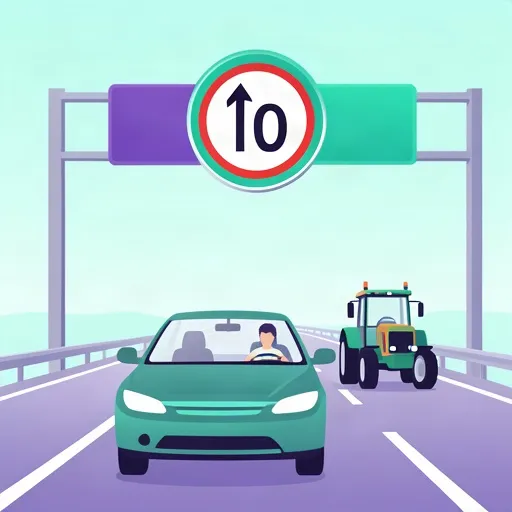
Article content overview
Driving on Belgian motorways requires more than just the ability to operate a vehicle at high speeds; it requires a deep understanding of the legal requirements and safety conventions established by the Belgian Highway Code. For many learner drivers, the concept of a minimum speed limit is often overshadowed by the focus on maximum limits. However, mastering the rules regarding minimum speed is essential not only for passing your theory exam but for ensuring the safety of all road users by preventing congestion and minimizing the risk of rear-end collisions.
In Belgium, the general rule of thumb for motorway driving is that a vehicle must be capable of reaching and maintaining a speed of at least 70 km/h under normal driving conditions. This requirement exists to ensure that the flow of traffic remains efficient and predictable. If a vehicle cannot achieve this speed due to technical limitations or physical constraints, it is legally prohibited from entering a motorway. This ensures that high-speed lanes do not become obstructed by slow-moving traffic, which could cause hazardous braking maneuvers for other drivers.
The legal obligation for every driver to adjust their speed based on the presence of other road users, weather conditions, traffic density, visibility, and the state of the road. On motorways, your adapted speed might be significantly lower than the legal maximum or the standard minimum if conditions are poor.
The prohibition of certain vehicles from motorways is directly linked to the inability to meet the 70 km/h minimum speed requirement. If a vehicle’s engine or construction prevents it from sustaining a speed that aligns with the flow of motorway traffic, it poses an inherent danger. Consequently, mopeds, agricultural tractors, and certain types of quadricycles are strictly forbidden from these roads. Understanding this exclusion is a common subject in theory exam questions, as it tests your knowledge of vehicle classification and motorway access regulations.
While the 70 km/h minimum is a standard benchmark, it is critical to distinguish between this and the concept of "adapted speed." The Belgian Highway Code emphasizes that a driver must always modulate their speed based on environmental factors. If you are driving on a motorway during heavy rain, thick fog, or dense traffic, you are not only allowed but expected to drive slower than 70 km/h if safety demands it.
Variable electronic signs often dictate speed limits based on real-time traffic flow or weather conditions. When these signs are active, they override the standard speed rules. If an overhead sign displays a speed limit of 50 km/h or 90 km/h, you must adhere to that signal regardless of the standard minimum speed rule. Ignoring these warnings is a frequent cause of accidents and is strictly penalized by law enforcement.
| Condition | Speed Expectation |
|---|---|
| Normal flow, clear weather | Maintain 70 km/h - 120 km/h |
| Heavy rain or low visibility | Adapt speed downwards, even below 70 km/h |
| Traffic congestion | Follow the flow, maintain safe distance |
| Variable speed signs active | Comply with the indicated speed limit |
A frequent trap in the Belgian theory exam involves scenarios where a student must decide whether they are allowed to drive slower than 70 km/h. Remember that the "minimum" speed is a general rule for capability, not an absolute requirement to drive at 70 km/h if the situation is dangerous. If you are faced with a question about driving in a traffic jam, the correct answer is always to adapt your speed to the surrounding vehicles, even if your speed drops well below the minimum threshold.
Always remember that you must never provoke or encourage another driver to exceed speed limits or drive dangerously. On a motorway, your primary responsibility is to maintain a safe following distance and adjust your speed to the flow of traffic, ensuring you are never an obstacle to other drivers while remaining within the limits of safety.
This article explains Belgium's 70 km/h minimum speed rule for motorways, which sets a capability threshold rather than a mandatory driving speed. The Belgian Highway Code requires drivers to use an 'Adapted Speed' based on weather, traffic, and visibility conditions, meaning you may legally drive slower than 70 km/h during heavy rain, fog, or congestion. Variable electronic signs displaying temporary limits always take precedence over standard speed rules. Vehicles incapable of reaching 70 km/h—such as mopeds, agricultural tractors, and certain quadricycles—are prohibited from motorways entirely. The key exam takeaway is understanding that minimum speed rules establish access requirements and capability standards, not fixed driving speeds.
A short set of high-value points that capture the most important ideas from this article.
The 70 km/h minimum speed on Belgian motorways refers to a vehicle's capability requirement, not an absolute driving speed you must maintain
Adapted Speed is a legal obligation to adjust your speed based on weather, traffic density, visibility, and road conditions
Variable electronic speed signs always override standard speed limits when displayed on overhead gantries
Vehicles that cannot reach 70 km/h, such as mopeds, agricultural tractors, and some quadricycles, are legally prohibited from motorways
Safety and traffic flow always take priority over maintaining any specific speed on Belgian motorways
The 70 km/h rule is a capability threshold for motorway access, not a mandatory cruising speed
When variable signs display reduced limits, you must comply regardless of standard minimum speed rules
You may legally drive well below 70 km/h if conditions such as heavy rain, fog, or congestion require it
Prohibited vehicles include mopeds, agricultural tractors, and certain quadricycles that cannot sustain motorway speeds
The F5 road sign marks the start of a motorway where only vehicles capable of at least 70 km/h may enter
Assuming 70 km/h is always the minimum speed you must drive, even in dangerous conditions
Ignoring variable electronic signs when they display lower or higher speed limits than standard
Believing the minimum speed rule applies equally to all vehicles regardless of type or technical limitations
Forgetting that adapting your speed to poor conditions is a legal requirement, not just a recommendation
Confusing the concept of minimum speed capability with an obligation to obstruct faster traffic
Article content overview
A short set of high-value points that capture the most important ideas from this article.
The 70 km/h minimum speed on Belgian motorways refers to a vehicle's capability requirement, not an absolute driving speed you must maintain
Adapted Speed is a legal obligation to adjust your speed based on weather, traffic density, visibility, and road conditions
Variable electronic speed signs always override standard speed limits when displayed on overhead gantries
Vehicles that cannot reach 70 km/h, such as mopeds, agricultural tractors, and some quadricycles, are legally prohibited from motorways
Safety and traffic flow always take priority over maintaining any specific speed on Belgian motorways
The 70 km/h rule is a capability threshold for motorway access, not a mandatory cruising speed
When variable signs display reduced limits, you must comply regardless of standard minimum speed rules
You may legally drive well below 70 km/h if conditions such as heavy rain, fog, or congestion require it
Prohibited vehicles include mopeds, agricultural tractors, and certain quadricycles that cannot sustain motorway speeds
The F5 road sign marks the start of a motorway where only vehicles capable of at least 70 km/h may enter
Assuming 70 km/h is always the minimum speed you must drive, even in dangerous conditions
Ignoring variable electronic signs when they display lower or higher speed limits than standard
Believing the minimum speed rule applies equally to all vehicles regardless of type or technical limitations
Forgetting that adapting your speed to poor conditions is a legal requirement, not just a recommendation
Confusing the concept of minimum speed capability with an obligation to obstruct faster traffic
Explore related topics, search based questions, and concepts that learners often look up when studying Belgian Motorway Minimum Speed Rules. These themes reflect real search intent and help you understand how this topic connects to wider driving theory knowledge in Belgium.
Find clear and practical answers to common questions learners often have about Belgian Motorway Minimum Speed Rules. This section helps explain difficult points, remove confusion, and reinforce the key driving theory concepts that matter for learners in Belgium.
Under normal, clear conditions, the minimum speed on a Belgian motorway is 70 km/h.
No, you must always adapt your speed to the conditions. If traffic is congested, visibility is poor, or weather is hazardous, you are required to drive at a speed that ensures safety, even if this falls below the 70 km/h threshold.
Vehicles that cannot technically maintain a speed of at least 70 km/h are prohibited. This includes mopeds, agricultural tractors, and other slow-moving machinery.
Variable speed signs indicate a mandatory maximum speed. In such cases, you must comply with the sign, but you should still drive at an appropriate speed for the specific traffic conditions present at the time.
Continue your learning journey by exploring related articles and guides on specific Belgian traffic situations, advanced road signs, or vehicle safety topics. Use our search to pinpoint what you need to review next, deepening your understanding for your driving license theory exam.