
Navigating roundabouts requires precision and confidence as a motorcyclist. This lesson teaches you the correct entry and exit strategies to ensure you maintain your safety cushion and follow Belgian traffic laws perfectly.

Lesson content overview
Navigating roundabouts efficiently and safely is a crucial skill for every motorcyclist. In Belgium, roundabouts are designed to improve traffic flow and reduce the severity of collisions compared to traditional intersections. However, for motorcyclists, who have a smaller profile and a higher center of gravity, mastering roundabout entry and exit requires specific strategies and heightened awareness. This lesson, part of your Comprehensive Belgian Motorcycle Theory Course for Licence A, A1 & A2, delves into the essential techniques and rules to ensure you can confidently and safely maneuver through any Belgian roundabout.
Understanding the unique challenges and applying precise techniques will not only help you comply with Belgian traffic laws but also significantly enhance your safety and the predictability of your movements for other road users. We will cover everything from approaching a roundabout to choosing the correct lane, signaling clearly, and exiting safely, all within the context of Belgian regulations.
Roundabouts are circular intersections where traffic flows in one direction around a central island. They replace stop signs or traffic lights, aiming to keep traffic moving continuously. While beneficial for overall traffic management, they present distinct considerations for motorcyclists.
Motorcyclists experience roundabouts differently from car drivers due to several factors:
Success in roundabouts hinges on consistently applying core principles. For motorcyclists, these principles are even more critical, demanding vigilance and precise execution.
The fundamental rule for entering most Belgian roundabouts is to yield to all traffic already circulating within the roundabout. This means you must allow vehicles already on the roundabout to pass before you enter.
Giving way to traffic already on the road or roundabout, allowing them to pass before proceeding. In Belgium, this is mandatory at almost all roundabouts.
The purpose of yielding is to prevent collisions at the entry point and maintain the continuous flow of traffic. As a motorcyclist, correctly timing your entry requires a sharp eye for available gaps in traffic and an understanding of other drivers' potential movements. Never assume priority unless explicitly indicated by specific signage, which is rare in Belgium.
Choosing the correct lane before and within a multi-lane roundabout is paramount for safety and smooth traffic flow. Your lane choice should be determined by your intended exit. Poor lane discipline can lead to unnecessary and dangerous lane changes within the roundabout, causing confusion and increasing collision risk.
The practice of selecting and maintaining the correct lane for your intended direction of travel, especially important in multi-lane roundabouts to avoid conflicts.
Effective communication is a cornerstone of safe riding. Using your turn signals consistently and at the correct time is essential for informing other road users of your intentions. This reduces uncertainty and allows drivers to anticipate your maneuvers.
Maintaining an appropriate speed is critical for safely navigating roundabouts. You must reduce your speed significantly when approaching and circulating within a roundabout.
When approaching a roundabout, assess the traffic, road conditions, and your intended exit. Decelerate smoothly, shift down gears, and be ready to stop or proceed. Inside the roundabout, maintain a speed that allows you to react to sudden changes and maintain control over your motorcycle, especially when leaning.
This reduced speed provides:
The entry phase is often the most critical part of navigating a roundabout. It requires keen observation, accurate judgment, and precise control.
As you approach a roundabout, begin your observations early.
Once at the entry point, your primary task is to find a safe gap in the circulating traffic.
Approach with Caution: Reduce speed, downshift, cover brakes. Observe road signs and markings.
Identify Your Exit & Choose Lane: Determine your exit and position your motorcycle in the appropriate lane (outer for 1st exit, inner for 2nd/3rd/later exits).
Yield to Circulating Traffic: Stop if necessary at the yield line. Look left for oncoming traffic within the roundabout. Do not enter until a safe gap is available.
Quick Blind Spot Check: Before moving, quickly check your right blind spot for any immediate hazards like cyclists.
Smooth Entry: Once a safe gap is identified and the way is clear, accelerate smoothly into the chosen lane, maintaining your position.
The approach lane you choose before entering the roundabout directly affects your safety and flow within it. This choice is usually guided by road markings and signage.
Once you've entered the roundabout, maintaining correct lane discipline and heightened awareness is key.
Avoid unnecessary lane changes within the roundabout. Swerving between lanes creates unpredictable movements, significantly increasing the risk of collisions, especially for motorcyclists who are harder to spot.
Inside the roundabout, you are vulnerable.
Exiting a roundabout safely requires clear communication and awareness, just like entry.
In Belgium, you are legally required to signal your exit from a roundabout.
As you exit, your attention should remain high:
Adherence to specific Belgian traffic regulations is crucial for safe and legal roundabout navigation. These rules are part of the Royal Decree of 1 December 1975 bearing the general regulations on the police of road traffic and of the use of public roads (known as the RVV, or Reglement Général sur la Police de la Circulation Routière et de l'Usage de la Voie Publique).
Statement: Motorcyclists must yield to vehicles already circulating within the roundabout.
Statement: Motorcyclists must use their right turn signal (in right-hand traffic) for at least 30 meters before their intended exit from a roundabout.
Statement: Motorcyclists must follow lane markings and directional signage on approach to and within roundabouts, and avoid unnecessary lane changes.
Statement: Speed must be reduced to a safe and manageable level when approaching and circulating within a roundabout.
Even experienced riders can encounter difficulties in roundabouts. Being aware of common pitfalls can help you avoid them.
A frequent error is underestimating the speed of circulating traffic or overestimating the available gap. Forcing your way into a roundabout when a safe gap isn't present can lead to sudden braking by other drivers, near misses, or even collisions. Always err on the side of caution; waiting an extra few seconds for a larger, safer gap is always preferable.
Taking the inner lane when you intend to take the first exit, or trying to switch from an inner to an outer lane at the last minute, creates a high-risk situation. This forces you to cross paths with other vehicles, often at speed, and is a major cause of side-swipe accidents in roundabouts. Plan your lane choice early and stick to it.
Failing to signal your exit, or signaling too late (e.g., as you are already exiting), leaves other road users guessing your intentions. This is particularly dangerous for drivers waiting to enter the roundabout, as they might pull out in front of you, or for pedestrians attempting to cross the exit road.
Mastering roundabouts is a continuous process of observation, planning, and execution. For motorcyclists, the key takeaways include:
Navigating Belgian roundabouts as a motorcyclist requires mastering three critical phases: proper approach with early exit identification and lane selection, disciplined yielding to circulating traffic with accurate gap assessment, and mandatory exit signaling at least 30 meters before departure. Lane discipline is essential - choose correctly based on your exit (outer for 1st/2nd, inner for 3rd/later) and maintain that position without internal lane changes. Reduced speed throughout provides better control during lean angles and more reaction time for hazards. Constant vigilance for blind spots, cyclists, pedestrians, and large vehicles is essential for safety in these complex intersections.
A short set of high-value points that capture the most important learning from this lesson.
Always yield to all circulating traffic before entering a Belgian roundabout - this is the non-negotiable golden rule
Choose your approach lane based on your intended exit: use the outer lane for 1st and 2nd exits, inner lane for 3rd and later exits
Signal your exit with the right indicator at least 30 meters before leaving the roundabout - this is legally required
Reduce speed significantly when approaching and circulating to maintain lean angle control and reaction time
Stay in your chosen lane throughout the roundabout - avoid dangerous lane changes once inside
Explore all units and lessons included in this driving theory course.
Yielding to circulating traffic is mandatory at virtually all Belgian roundabouts under RVV regulations
Outer lane = exits 1 and 2 (straight/right); Inner lane = exits 3 and beyond (left/U-turn)
Signal mandatory exit at least 30 meters before departure - do not signal upon entering unless taking immediate first exit
Motorcyclists are less visible to car drivers - avoid blind spots of large vehicles and scan constantly
Environmental hazards are amplified: wet painted lines, drain covers, and gravel become very slippery when leaned
Forcing entry by misjudging gaps in circulating traffic - always wait for a clearly safe gap
Taking the wrong approach lane then attempting to cut across lanes to reach the intended exit
Failing to signal or signaling too late when exiting, leaving other road users unable to anticipate your departure
Making lane changes inside the roundabout when a better lane choice should have been made on approach
Neglecting to check blind spots before entry, especially for cyclists using the outer lane alongside you
Lesson content overview
A short set of high-value points that capture the most important learning from this lesson.
Always yield to all circulating traffic before entering a Belgian roundabout - this is the non-negotiable golden rule
Choose your approach lane based on your intended exit: use the outer lane for 1st and 2nd exits, inner lane for 3rd and later exits
Signal your exit with the right indicator at least 30 meters before leaving the roundabout - this is legally required
Reduce speed significantly when approaching and circulating to maintain lean angle control and reaction time
Stay in your chosen lane throughout the roundabout - avoid dangerous lane changes once inside
Explore all units and lessons included in this driving theory course.
Yielding to circulating traffic is mandatory at virtually all Belgian roundabouts under RVV regulations
Outer lane = exits 1 and 2 (straight/right); Inner lane = exits 3 and beyond (left/U-turn)
Signal mandatory exit at least 30 meters before departure - do not signal upon entering unless taking immediate first exit
Motorcyclists are less visible to car drivers - avoid blind spots of large vehicles and scan constantly
Environmental hazards are amplified: wet painted lines, drain covers, and gravel become very slippery when leaned
Forcing entry by misjudging gaps in circulating traffic - always wait for a clearly safe gap
Taking the wrong approach lane then attempting to cut across lanes to reach the intended exit
Failing to signal or signaling too late when exiting, leaving other road users unable to anticipate your departure
Making lane changes inside the roundabout when a better lane choice should have been made on approach
Neglecting to check blind spots before entry, especially for cyclists using the outer lane alongside you
Explore search topics learners often look for when studying Roundabout Entry and Exit Strategies for Motorcyclists. These topics reflect common questions about road rules, driving situations, safety guidance, and lesson level theory preparation for learners in Belgium.
Browse additional driving theory lessons that cover connected traffic rules, road signs, and common driving situations related to this topic. Improve your understanding of how different rules interact across everyday traffic scenarios.
Explore complex roundabout scenarios and advanced techniques for Belgian motorcyclists. Focuses on multi-lane strategies, dealing with heavy traffic, and anticipating other road users' actions beyond basic entry and exit rules.

Roundabouts are a key feature of Belgian traffic management. This lesson explains how to approach, enter, navigate, and exit a roundabout safely, with a focus on yielding priority to traffic already circulating. Learners will also study correct lane positioning on multi-lane roundabouts and the appropriate use of signals.

This lesson provides specific instructions for navigating roundabouts, a common feature on Belgian roads. It covers the rules of priority upon entry, the correct lane choice based on the intended exit, and the proper use of signals. Learners will understand how to safely circulate and exit, while being mindful of other vehicles, particularly larger ones with significant blind spots.
This lesson delves into the complex priority rules that govern Belgian roadways, with a strong focus on the default 'priority from the right' principle. It explains how to interpret priority signs, such as 'give way' and 'stop', and apply the correct right-of-way at various types of junctions. You will learn the hierarchy of road users and the specific rules for yielding in different traffic scenarios.
This lesson provides a systematic approach to navigating intersections, emphasizing the importance of observation, speed control, and correct positioning. It reinforces the application of priority-from-the-right and other right-of-way rules in real-world junction scenarios. You will learn effective visual scanning techniques to anticipate the actions of other road users and ensure a safe passage.

This lesson provides a comprehensive guide to motorway riding, starting with the procedure for safely merging into high-speed traffic from a slip road. It details the importance of strict lane discipline, including the rules for overtaking and the proper use of lanes. You will also learn the correct technique for planning and executing a safe exit from the motorway.

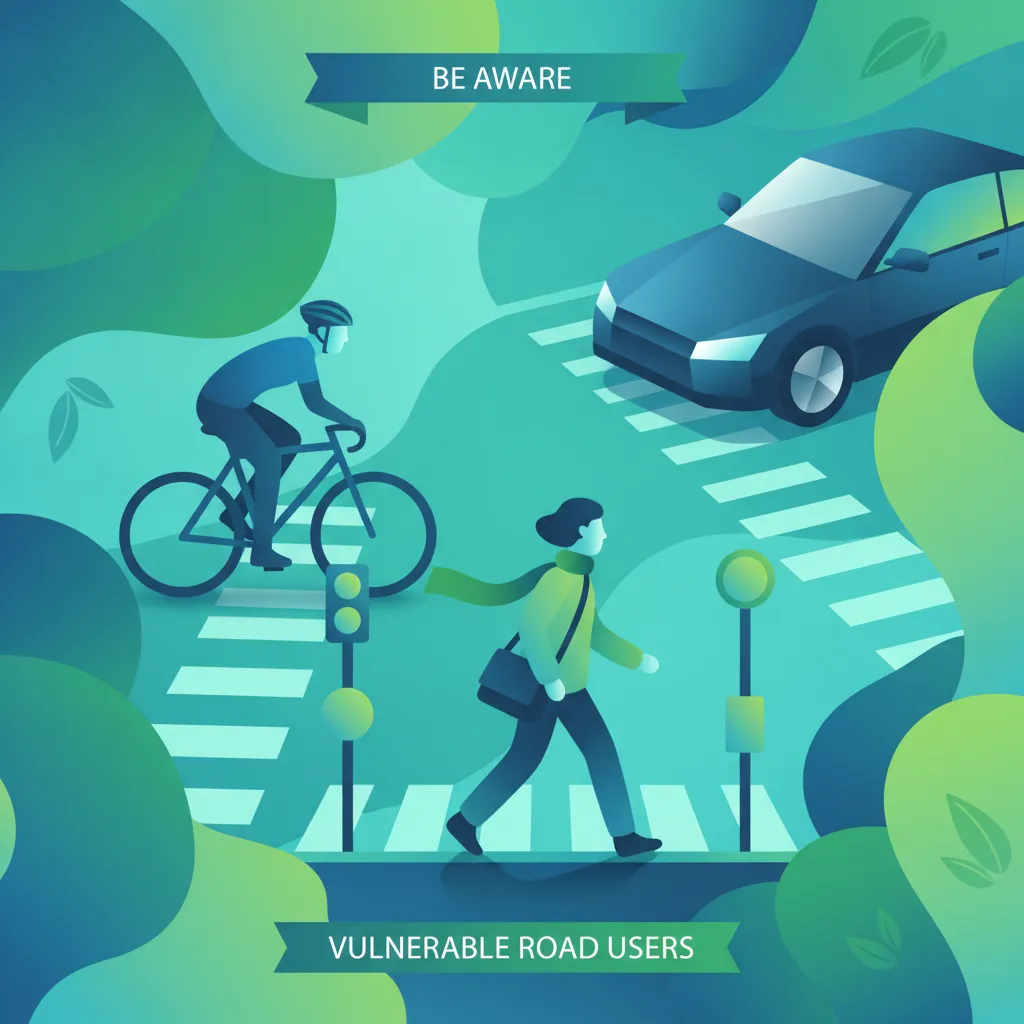
This lesson details a motorcyclist's obligations when approaching various types of crossings, including marked pedestrian and bicycle lanes. It emphasizes the legal requirement to yield to vulnerable road users and the importance of thorough visual checks before proceeding. You will learn how to maintain a safe distance and anticipate the movements of pedestrians and cyclists in urban areas.
This lesson covers the specific challenges of driving on motorways, rural roads, and navigating roadworks. Learners will review lane discipline on high-speed roads and identify hazards common to rural roads, such as sharp bends and wildlife. It also explains the importance of adjusting speed and following temporary signage in construction zones.

This lesson provides a step-by-step guide to executing turns and lane changes safely and efficiently. It covers the critical sequence of checking mirrors, signaling intent, and performing a head check for blind spots before any maneuver. Learners will also understand how to manage their speed and balance during cornering to maintain full control of the vehicle.
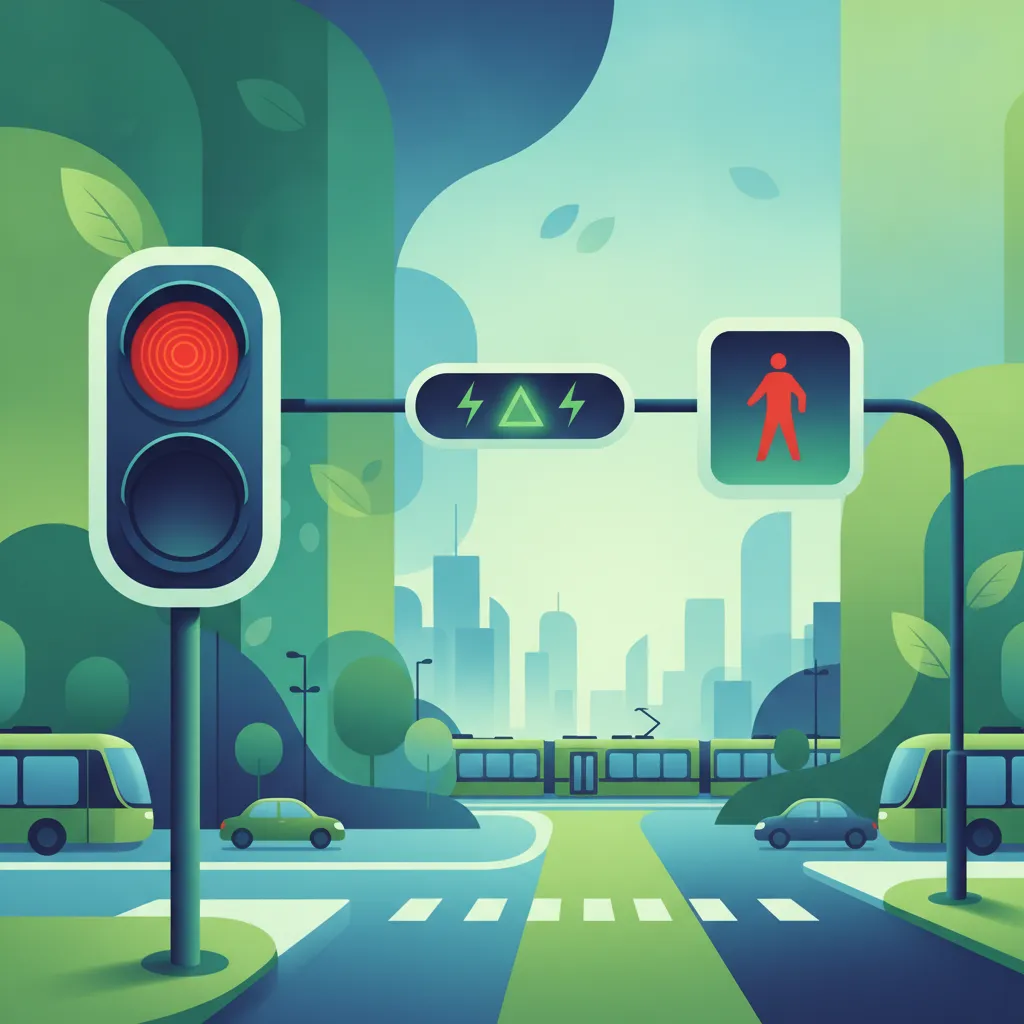
This lesson examines the operation of traffic light systems in Belgium, clarifying the meaning of red, amber, and green signals, including flashing lights and directional arrows. It details a motorcyclist's legal obligations when approaching and navigating signal-controlled intersections. The content also addresses specialized signals for pedestrians and trams that riders must recognize and respond to correctly.

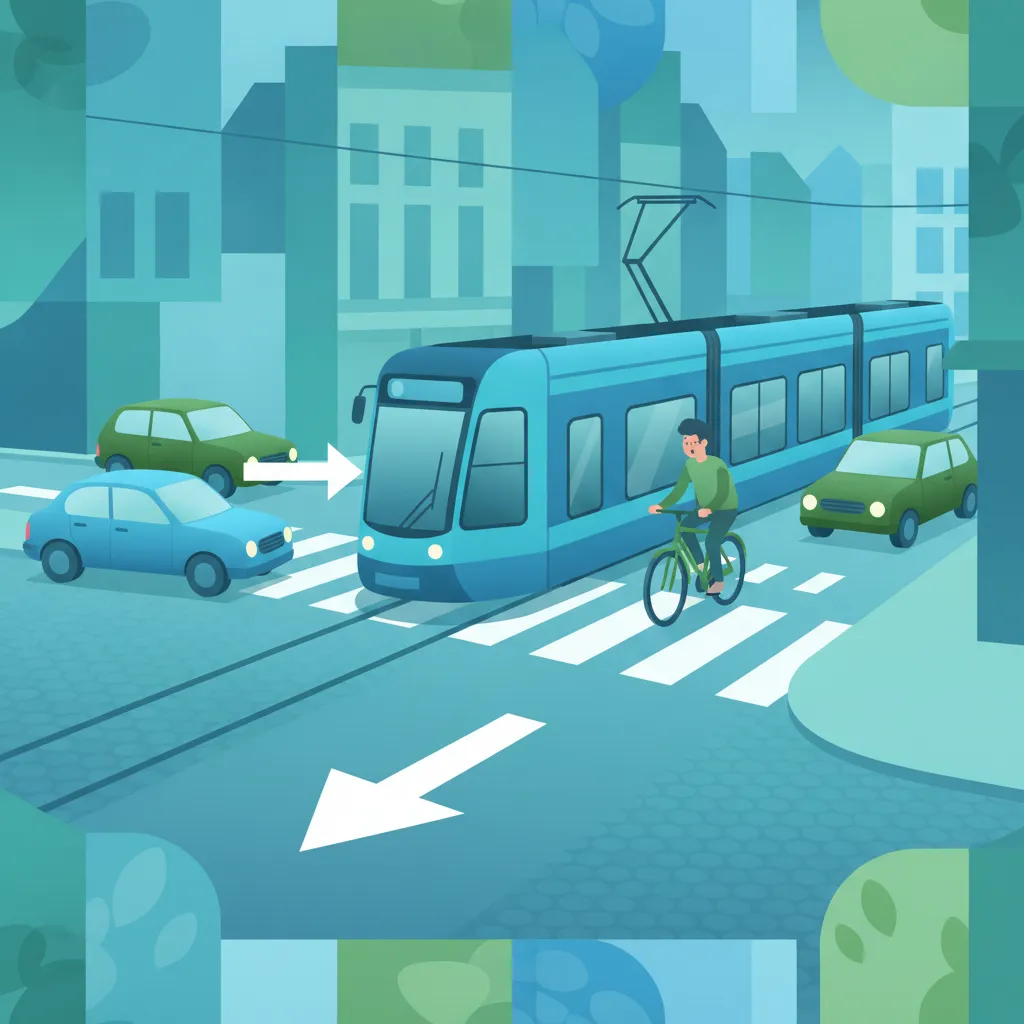
This lesson teaches motorcyclists how to safely navigate mixed traffic environments that include cars, buses, and trams. It highlights the significant blind spots of larger vehicles and explains the absolute priority of trams on their tracks. You will learn the rules for sharing space with public transport and how to maintain safe distances when following or overtaking buses.
Understand typical mistakes motorcyclists make in Belgian roundabouts and the specific hazards like slippery surfaces or blind spots. Learn theoretical approaches to proactively prevent collisions and ensure safer navigation.
This lesson provides specific instructions for navigating roundabouts, a common feature on Belgian roads. It covers the rules of priority upon entry, the correct lane choice based on the intended exit, and the proper use of signals. Learners will understand how to safely circulate and exit, while being mindful of other vehicles, particularly larger ones with significant blind spots.

This lesson provides a step-by-step guide to executing a safe overtaking maneuver in compliance with Belgian law. It covers the necessary pre-maneuver checks, proper signaling, and how to accurately judge the speed and distance of oncoming traffic. You will learn the correct procedure for passing a vehicle and safely returning to your original lane.
Roundabouts are a key feature of Belgian traffic management. This lesson explains how to approach, enter, navigate, and exit a roundabout safely, with a focus on yielding priority to traffic already circulating. Learners will also study correct lane positioning on multi-lane roundabouts and the appropriate use of signals.
This lesson details a motorcyclist's obligations when approaching various types of crossings, including marked pedestrian and bicycle lanes. It emphasizes the legal requirement to yield to vulnerable road users and the importance of thorough visual checks before proceeding. You will learn how to maintain a safe distance and anticipate the movements of pedestrians and cyclists in urban areas.

This lesson trains you to actively scan the road ahead for surface hazards that can compromise traction, such as oil spills, wet leaves, and loose gravel. It provides strategies for safely navigating these hazards, including avoidance maneuvers and gentle control inputs. You will also learn how to handle unexpected encounters with potholes and other road imperfections.
This lesson focuses on recognizing and staying out of the blind spots of other vehicles, especially large trucks and buses where 'no-zones' are significant. It provides practical strategies for managing your position on the road to ensure you remain visible to other drivers at all times. You will learn to anticipate lane changes and other maneuvers from vehicles that may not be aware of your presence.

This lesson explores the unique challenges presented by dense urban environments, including riding in heavy traffic and navigating narrow streets. It provides strategies for positioning your motorcycle to avoid the 'dooring zone' of parked cars and to maintain visibility. You will learn defensive riding techniques to anticipate sudden actions from other drivers in congested conditions.
This lesson provides a systematic approach to navigating intersections, emphasizing the importance of observation, speed control, and correct positioning. It reinforces the application of priority-from-the-right and other right-of-way rules in real-world junction scenarios. You will learn effective visual scanning techniques to anticipate the actions of other road users and ensure a safe passage.
This lesson provides a comprehensive guide to motorway riding, starting with the procedure for safely merging into high-speed traffic from a slip road. It details the importance of strict lane discipline, including the rules for overtaking and the proper use of lanes. You will also learn the correct technique for planning and executing a safe exit from the motorway.
This lesson focuses on the correct identification and interpretation of regulatory and informative road signs that are particularly relevant to motorcyclists. It covers signs that dictate speed limits, prohibit overtaking, and indicate compulsory routes or turns. You will learn to recognize different sign categories based on their distinct shapes and colors as defined by Belgian traffic law.
Find clear answers to common questions learners have about Roundabout Entry and Exit Strategies for Motorcyclists. Learn how the lesson is structured, which driving theory objectives it supports, and how it fits into the overall learning path of units and curriculum progression in Belgium. These explanations help you understand key concepts, lesson flow, and exam focused study goals.
Yes, you must signal your intention to exit the roundabout by using your right indicator before you reach your intended exit. This is a crucial communication tool for other road users and is heavily tested in the theory exam.
Generally, you should use the right-hand lane to take the first exit or go straight. If you intend to take an exit further around, you should use the left-hand lane and move to the right lane safely before exiting, while checking your blind spots.
In Belgium, you must always look out for cyclists. If there is a separate cycle lane around the roundabout, you must give priority to cyclists if the signage or road markings indicate they have the right of way, which is common in many Belgian municipalities.
A common mistake is failing to check blind spots before changing lanes or exiting. Another is not yielding correctly to traffic already on the roundabout, which can result in an immediate fail on a practical test and loss of points on the theory exam.
Ready to focus your Belgian driving theory revision? Utilize our powerful search tool to pinpoint exact topics, road signs, or difficulty levels. Engage with practice questions that directly address your learning needs and solidify your understanding of Belgian traffic laws for your upcoming exam.