
This lesson focuses on the complexities of navigating dense urban environments as a motorcyclist. You will learn how to handle congestion, avoid hazards like the dooring zone of parked cars, and maintain safe lane positioning in narrow streets. This knowledge is essential for both your Belgian theory exam and your practical safety when riding in urban areas.
Lesson content overview
Riding a motorcycle in a city environment presents a unique set of challenges compared to open roads or motorways. Dense urban areas are characterised by heavy traffic, numerous parked vehicles, complex intersections, and often narrow streets. Mastering these conditions is crucial for any motorcyclist seeking to ride safely and confidently in Belgian cities, whether holding an A, A1, or A2 licence. This lesson will equip you with the knowledge and strategies to navigate these specific urban hazards effectively.
The dynamic nature of city traffic demands heightened awareness and precise riding techniques. Limited visibility, the constant threat of unexpected actions from other road users, and the reduced margin for error all contribute to a high-risk environment. Understanding these challenges is not just about adhering to traffic laws; it's about developing a proactive, defensive riding mindset that prioritises your safety and the safety of others.
Successful urban motorcycling hinges on a few fundamental principles: maximising your visibility, positioning yourself defensively, managing your space effectively, and maintaining an anticipatory, patient approach. These principles work in synergy to reduce risks and enhance your control over potentially dangerous situations.
In the hustle and bustle of city traffic, being seen is paramount. Motorcycles, due to their smaller profile, can easily be overlooked by drivers of larger vehicles. Your primary goal should always be to place your motorcycle where you are most likely to be seen by other road users, especially those around you and those who might interact with your path. This involves active lane positioning and strategic awareness of potential blind spots. Defensive positioning extends beyond merely being visible; it means choosing a path that provides the greatest buffer against sudden hazards, such as an unexpected car door opening or another vehicle changing lanes without warning.
Space is a premium in urban environments. Navigating narrow streets, manoeuvring around parked vehicles, and dealing with congested traffic all require excellent space management skills. This involves more than just maintaining a safe following distance. It means understanding how to use the available lane width to your advantage, identifying escape routes, and ensuring you always have enough room to react to unforeseen events. In conditions where space is restricted, your speed and ability to adjust your position quickly become critical.
Urban congestion is often characterised by stop-and-go traffic, sudden braking, and unpredictable lane changes. A patient approach is vital; aggressive riding or attempting to gain a few metres can significantly increase your risk of an accident. Instead, focus on anticipating traffic flow, observing brake lights far ahead, and being prepared to adjust your speed and position smoothly. This proactive approach reduces the need for sudden manoeuvres and allows you more time to react to hazards as they develop.
One of the most significant and often underestimated hazards for motorcyclists in urban areas is the "dooring zone." This refers to the immediate area around a parked vehicle where a suddenly opened door can collide with a passing motorcyclist. Understanding this danger and adopting specific strategies to mitigate it is essential for urban riding safety.
The dooring zone extends approximately 1 to 1.5 metres from the side of a parked vehicle. A door can open at any time, whether a vehicle has just parked, is waiting for passengers, or is about to pull away. This hazard can manifest in two ways:
The impact of a door opening into your path can be catastrophic, leading to serious injury or even fatal accidents. It is critical to treat every parked vehicle as a potential hazard, especially those with occupants inside or those stopped near businesses, schools, or residential areas where people might exit quickly.
Always assume a door might open. Maintain a safe distance and be prepared to react instantly if a door suddenly swings open into your path.
To effectively avoid the dooring zone, your lane positioning is paramount. As a motorcyclist, you have the flexibility to adjust your position within your lane more precisely than a car.
The strategic placement of your motorcycle within the available lane to maximise visibility, create a buffer from hazards, and ensure safe passage.
When riding on a street with parked cars, you should ideally position yourself towards the centre of your lane, or even slightly towards the left, away from the curb. This creates a significant buffer between your motorcycle and the parked vehicles, moving you out of the immediate dooring zone. Riding too close to the parked cars, often referred to as 'riding on the far right' or 'hogging the curb', is a common and dangerous mistake. It not only puts you in the dooring zone but also reduces your visibility to vehicles potentially turning from side streets or driveways.
In Belgium, the Highway Code generally mandates motorcyclists to ride in the centre of their chosen lane. This regulation serves not only to enhance your visibility but also to provide a necessary safety margin from roadside hazards like parked cars.
When overtaking a string of parked cars, assess the situation carefully. If possible and safe, consider moving into an adjacent lane (if one exists and is clear) to create an even larger safety margin. If you must remain in the same lane, ensure you have sufficient space, reduce your speed, and scan for any signs of activity (e.g., brake lights, interior lights, movement within the vehicle) that might indicate a door is about to open.
Congested urban traffic demands a unique blend of vigilance, strategic positioning, and predictive riding skills. Unlike rural roads, city congestion means slower speeds, frequent stops, and a constantly changing environment where space is limited and reactions must be swift.
In heavy, slow-moving or stop-and-go traffic, your lane positioning is crucial for both visibility and safety.
Lane filtering (or lane splitting) refers to the practice of a motorcyclist moving between lanes of slow-moving or stationary traffic. In Belgium, specific rules govern this practice:
Belgian traffic law permits motorcyclists to filter between two rows of stationary or slow-moving traffic on multi-lane roads. However, strict conditions apply:
It is crucial to exercise extreme caution when filtering. Drivers may not anticipate a motorcycle appearing between lanes, and sudden lane changes by other vehicles pose a significant risk. Before filtering:
Filtering is a skill that requires practice and good judgment. When in doubt, it is always safer to remain in your lane and wait patiently with the flow of traffic.
Anticipating traffic flow is a cornerstone of defensive riding in congestion. It's not just about reacting to what's happening immediately around you, but predicting what might happen next.
Narrow streets, often found in older city centres or residential areas, present their own set of challenges. These streets may have limited lane markings, be lined with parked cars on both sides, or feature physical constraints like bollards or tight corners.
When entering a narrow street:
Attempting to overtake in a narrow street is generally ill-advised and often illegal if it requires crossing a solid line or entering an opposing lane unsafely.
Adhering to specific Belgian traffic regulations is crucial for safe and legal urban motorcycle riding. These rules are designed to enhance safety, especially given the increased risks associated with city environments.
The Belgian Highway Code (Code de la route / Wegcode) places specific requirements on motorcyclists regarding their position on the road:
Motorcyclists must ride in the centre of their chosen lane to avoid the door zone of parked vehicles and to maximise their visibility to other road users.
This rule is mandatory and applies universally in urban settings, particularly on streets with parked cars. Its rationale is twofold: to increase your presence and make it harder for other drivers to overlook you, and critically, to provide a safety buffer from potential hazards like opening car doors. Failure to maintain a central position and riding too close to the kerb or parked vehicles increases your risk significantly.
Beyond general safe riding practices, Belgian law reinforces the importance of maintaining a safe distance from parked vehicles. While there isn't a specific article titled "Dooring Prohibition," the principles of safe driving and maintaining control are implicitly violated by riding recklessly close to parked cars.
It is prohibited to ride in a manner that puts you at undue risk from a suddenly opening vehicle door. This means maintaining a safe lateral distance when passing or moving alongside parked vehicles.
This principle means that when you are overtaking or moving alongside a row of parked cars, you must ensure you have sufficient clearance. Riding in the same lane directly adjacent to a parked vehicle with occupants is considered a highly dangerous practice and could be interpreted as a violation of general safety provisions, potentially leading to liability in case of an incident. Always use an adjacent lane if possible and safe, or significantly increase your lateral distance within your lane.
Despite understanding the principles, motorcyclists often fall victim to common errors in urban settings. Recognising these and actively working to avoid them is a critical step towards safer riding.
Urban environments are dynamic, and conditions can change rapidly. Your riding strategy must adapt accordingly:
Developing a strong understanding of these core concepts is foundational for safe urban motorcycle riding.
This lesson covers essential urban motorcycle riding challenges specific to Belgian roads, focusing on the dangerous dooring zone created by parked vehicles, mandatory central lane positioning rules from the Belgian Highway Code, and regulated lane filtering with precise speed limits of 50 km/h maximum and 20 km/h differential. Defensive riding in urban congestion requires anticipating hazards through early brake light observation, maintaining central lane position for maximum visibility, and establishing escape routes before encountering hazards. In narrow streets, reduced speed and central positioning provide critical buffers from parked vehicles on both sides, and overtaking should be avoided unless visibility and space are clearly sufficient. The lesson emphasises that safe urban riding demands proactive hazard recognition, patient traffic management, and strict adherence to Belgian filtering regulations.
A short set of high-value points that capture the most important learning from this lesson.
The dooring zone extends approximately 1 to 1.5 metres from parked vehicles and poses two distinct hazards: static dooring when riding alongside a parked car with an opening door, and dynamic dooring when passing a vehicle that begins to move as you overtake.
Belgian traffic law requires motorcyclists to ride in the centre of their chosen lane to stay out of the dooring zone and maximise visibility to other road users.
Lane filtering in Belgium is permitted only under strict conditions: speed must not exceed 50 km/h, the speed difference with other vehicles must not exceed 20 km/h, and when traffic is completely stationary, filtering speed must not exceed 20 km/h.
Defensive positioning in congestion means riding centrally in your lane to be visible to vehicles ahead and behind while maintaining maximum space on both sides for evasive manoeuvres.
In narrow streets, reduce speed significantly, maintain central positioning to buffer from parked vehicles on both sides, and avoid overtaking unless there is ample space and clear visibility.
Explore all units and lessons included in this driving theory course.
In Belgium, motorcyclists must ride in the centre of their lane, not close to the kerb or parked cars—this is both a safety rule and a legal requirement.
Filtering rules in Belgium: 50 km/h maximum speed, 20 km/h maximum speed difference from surrounding traffic, and 20 km/h maximum when passing stationary vehicles.
The dooring zone is the area immediately adjacent to parked vehicles where an opening door can collide with a passing motorcyclist—treat every parked vehicle as a potential hazard.
When encountering oncoming traffic in a narrow street where passing is difficult, be prepared to slow, stop, or yield rather than force a tight passage.
Watch brake lights several cars ahead, not just the vehicle directly in front, to anticipate traffic flow and react smoothly in congestion.
Riding too close to parked cars, often called 'hogging the curb,' which places you directly in the dooring zone and reduces your visibility to vehicles turning from side streets.
Exceeding the speed limits when filtering between lanes, particularly the 50 km/h limit and the 20 km/h differential rule relative to surrounding traffic.
Attempting to overtake other vehicles in narrow streets where there is insufficient width, risking collision with oncoming traffic, parked cars, or pedestrians.
Following too closely in stop-and-go traffic, which reduces reaction time and eliminates escape options when vehicles ahead brake suddenly.
Making sudden lane changes without thorough checks and planning, which can surprise other drivers and lead to sideswipe collisions.
Lesson content overview
A short set of high-value points that capture the most important learning from this lesson.
The dooring zone extends approximately 1 to 1.5 metres from parked vehicles and poses two distinct hazards: static dooring when riding alongside a parked car with an opening door, and dynamic dooring when passing a vehicle that begins to move as you overtake.
Belgian traffic law requires motorcyclists to ride in the centre of their chosen lane to stay out of the dooring zone and maximise visibility to other road users.
Lane filtering in Belgium is permitted only under strict conditions: speed must not exceed 50 km/h, the speed difference with other vehicles must not exceed 20 km/h, and when traffic is completely stationary, filtering speed must not exceed 20 km/h.
Defensive positioning in congestion means riding centrally in your lane to be visible to vehicles ahead and behind while maintaining maximum space on both sides for evasive manoeuvres.
In narrow streets, reduce speed significantly, maintain central positioning to buffer from parked vehicles on both sides, and avoid overtaking unless there is ample space and clear visibility.
Explore all units and lessons included in this driving theory course.
In Belgium, motorcyclists must ride in the centre of their lane, not close to the kerb or parked cars—this is both a safety rule and a legal requirement.
Filtering rules in Belgium: 50 km/h maximum speed, 20 km/h maximum speed difference from surrounding traffic, and 20 km/h maximum when passing stationary vehicles.
The dooring zone is the area immediately adjacent to parked vehicles where an opening door can collide with a passing motorcyclist—treat every parked vehicle as a potential hazard.
When encountering oncoming traffic in a narrow street where passing is difficult, be prepared to slow, stop, or yield rather than force a tight passage.
Watch brake lights several cars ahead, not just the vehicle directly in front, to anticipate traffic flow and react smoothly in congestion.
Riding too close to parked cars, often called 'hogging the curb,' which places you directly in the dooring zone and reduces your visibility to vehicles turning from side streets.
Exceeding the speed limits when filtering between lanes, particularly the 50 km/h limit and the 20 km/h differential rule relative to surrounding traffic.
Attempting to overtake other vehicles in narrow streets where there is insufficient width, risking collision with oncoming traffic, parked cars, or pedestrians.
Following too closely in stop-and-go traffic, which reduces reaction time and eliminates escape options when vehicles ahead brake suddenly.
Making sudden lane changes without thorough checks and planning, which can surprise other drivers and lead to sideswipe collisions.
Explore search topics learners often look for when studying Urban Riding Challenges: Congestion, Parked Vehicles, and Narrow Streets. These topics reflect common questions about road rules, driving situations, safety guidance, and lesson level theory preparation for learners in Belgium.
Browse additional driving theory lessons that cover connected traffic rules, road signs, and common driving situations related to this topic. Improve your understanding of how different rules interact across everyday traffic scenarios.
Understand common urban motorcycle riding challenges like heavy traffic, parked vehicles, and narrow streets. Learn specific techniques for navigating these situations safely and anticipating potential dangers as per Belgian traffic law.
This lesson teaches motorcyclists how to safely navigate mixed traffic environments that include cars, buses, and trams. It highlights the significant blind spots of larger vehicles and explains the absolute priority of trams on their tracks. You will learn the rules for sharing space with public transport and how to maintain safe distances when following or overtaking buses.
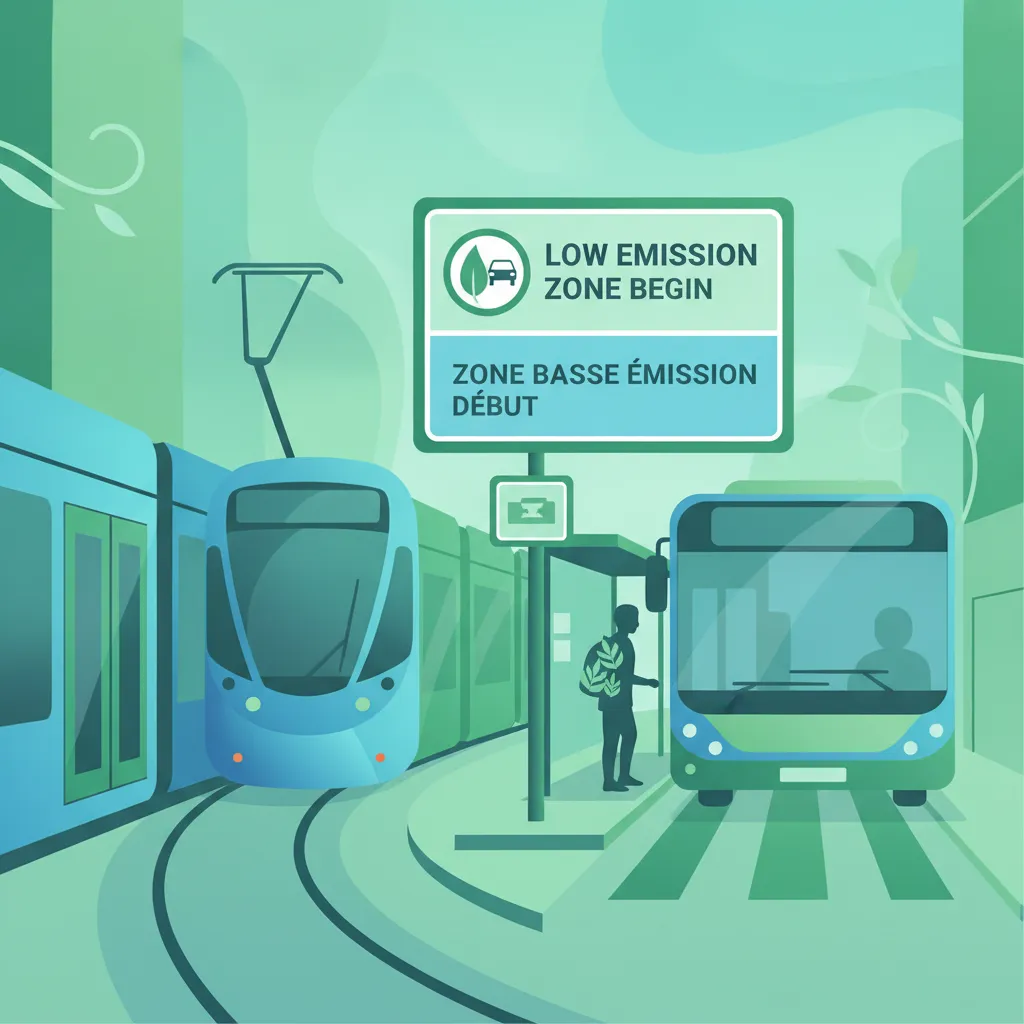
This lesson addresses unique traffic environments and special zones commonly found in Belgian urban areas. It clarifies the specific regulations concerning tramways, including where trams have absolute priority, and the conditions under which motorcycles may use bus lanes. The lesson also explains how to identify and comply with restrictions in low-emission zones.
This lesson covers the specific challenges of driving on motorways, rural roads, and navigating roadworks. Learners will review lane discipline on high-speed roads and identify hazards common to rural roads, such as sharp bends and wildlife. It also explains the importance of adjusting speed and following temporary signage in construction zones.
This lesson details a motorcyclist's obligations when approaching various types of crossings, including marked pedestrian and bicycle lanes. It emphasizes the legal requirement to yield to vulnerable road users and the importance of thorough visual checks before proceeding. You will learn how to maintain a safe distance and anticipate the movements of pedestrians and cyclists in urban areas.
This lesson examines the operation of traffic light systems in Belgium, clarifying the meaning of red, amber, and green signals, including flashing lights and directional arrows. It details a motorcyclist's legal obligations when approaching and navigating signal-controlled intersections. The content also addresses specialized signals for pedestrians and trams that riders must recognize and respond to correctly.
This lesson offers specific strategies for motorcyclists navigating roundabouts in Belgium. It covers the rules for entering the roundabout, including yielding to circulating traffic, and how to choose the correct lane for your intended exit. The content stresses the importance of clear signaling and maintaining awareness of other vehicles during entry and exit maneuvers.
This lesson focuses on recognizing and staying out of the blind spots of other vehicles, especially large trucks and buses where 'no-zones' are significant. It provides practical strategies for managing your position on the road to ensure you remain visible to other drivers at all times. You will learn to anticipate lane changes and other maneuvers from vehicles that may not be aware of your presence.
This lesson delves into the complex priority rules that govern Belgian roadways, with a strong focus on the default 'priority from the right' principle. It explains how to interpret priority signs, such as 'give way' and 'stop', and apply the correct right-of-way at various types of junctions. You will learn the hierarchy of road users and the specific rules for yielding in different traffic scenarios.
This lesson provides a systematic approach to navigating intersections, emphasizing the importance of observation, speed control, and correct positioning. It reinforces the application of priority-from-the-right and other right-of-way rules in real-world junction scenarios. You will learn effective visual scanning techniques to anticipate the actions of other road users and ensure a safe passage.
This lesson focuses on strategies for safely navigating situations where road space is limited, such as narrow lanes, road works, or between lines of traffic. It explains how to use assertive lane positioning to prevent other vehicles from crowding you. You will learn to anticipate and safely manage these 'squeeze points' to avoid being trapped or forced into a dangerous situation.
Learn crucial strategies for positioning your motorcycle in narrow urban streets and safely navigating around parked vehicles. Understand the 'dooring zone' and how to maintain visibility and space in congested Belgian city environments.
This lesson focuses on strategies for safely navigating situations where road space is limited, such as narrow lanes, road works, or between lines of traffic. It explains how to use assertive lane positioning to prevent other vehicles from crowding you. You will learn to anticipate and safely manage these 'squeeze points' to avoid being trapped or forced into a dangerous situation.
This lesson offers specific strategies for motorcyclists navigating roundabouts in Belgium. It covers the rules for entering the roundabout, including yielding to circulating traffic, and how to choose the correct lane for your intended exit. The content stresses the importance of clear signaling and maintaining awareness of other vehicles during entry and exit maneuvers.
This lesson addresses unique traffic environments and special zones commonly found in Belgian urban areas. It clarifies the specific regulations concerning tramways, including where trams have absolute priority, and the conditions under which motorcycles may use bus lanes. The lesson also explains how to identify and comply with restrictions in low-emission zones.
This lesson focuses on recognizing and staying out of the blind spots of other vehicles, especially large trucks and buses where 'no-zones' are significant. It provides practical strategies for managing your position on the road to ensure you remain visible to other drivers at all times. You will learn to anticipate lane changes and other maneuvers from vehicles that may not be aware of your presence.
This lesson details a motorcyclist's obligations when approaching various types of crossings, including marked pedestrian and bicycle lanes. It emphasizes the legal requirement to yield to vulnerable road users and the importance of thorough visual checks before proceeding. You will learn how to maintain a safe distance and anticipate the movements of pedestrians and cyclists in urban areas.

This lesson provides a step-by-step guide to executing a safe overtaking maneuver in compliance with Belgian law. It covers the necessary pre-maneuver checks, proper signaling, and how to accurately judge the speed and distance of oncoming traffic. You will learn the correct procedure for passing a vehicle and safely returning to your original lane.

This lesson trains you to actively scan the road ahead for surface hazards that can compromise traction, such as oil spills, wet leaves, and loose gravel. It provides strategies for safely navigating these hazards, including avoidance maneuvers and gentle control inputs. You will also learn how to handle unexpected encounters with potholes and other road imperfections.

This lesson explains the concept of strategic road positioning to enhance safety and visibility. It teaches riders how to select the best position within a lane to be seen by other drivers and to have a good view of the road ahead. A key focus is on identifying and staying out of the large blind spots of cars, vans, and trucks to prevent dangerous situations.
This lesson synthesizes key safety concepts into the practice of defensive riding, a proactive mindset focused on anticipation and risk reduction. It teaches you to continuously scan for potential hazards, predict the actions of other road users, and always maintain an escape path. By mastering these strategies, you learn to manage the space around you and take control of your own safety.
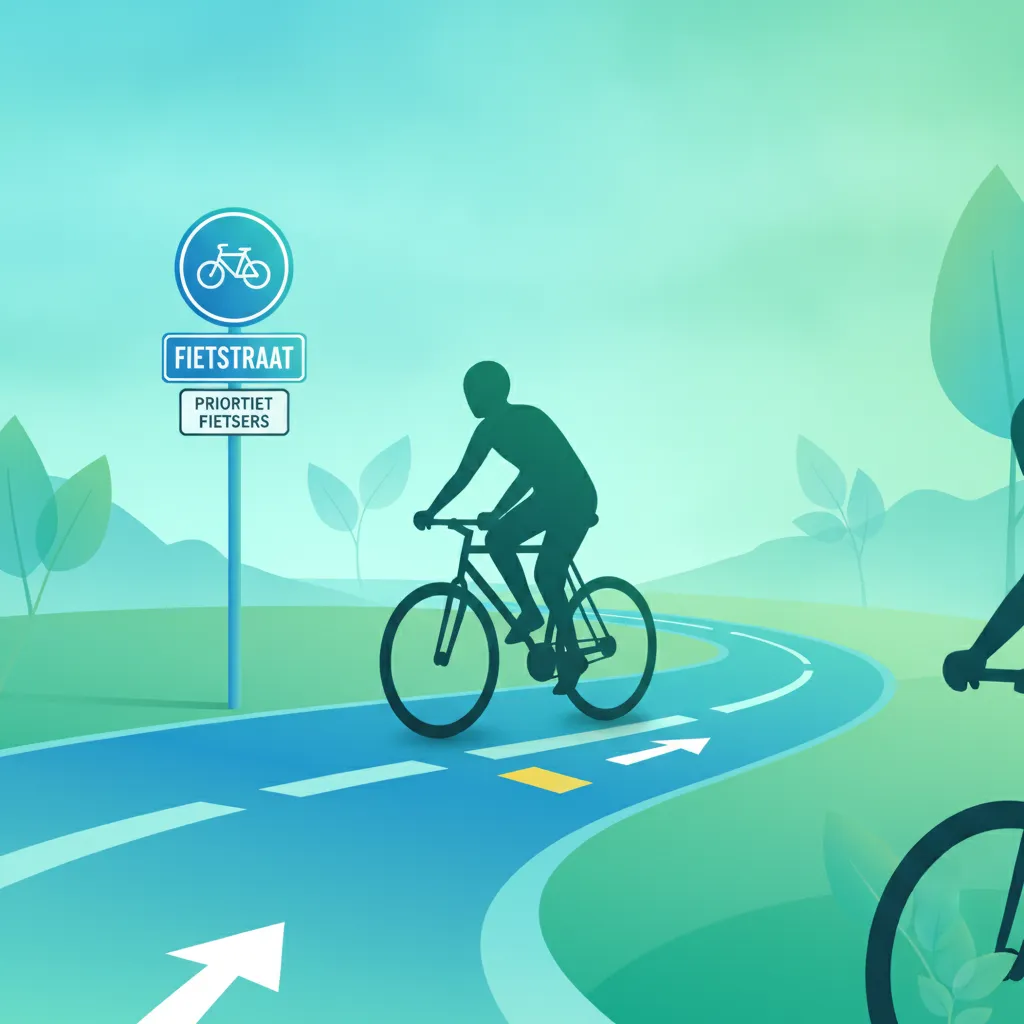
Cyclists are a significant part of Belgian traffic, and this lesson explores the rules and infrastructure that support safe cycling. Learners will study dedicated bicycle lanes, bicycle streets, and where cyclists have priority. The lesson also covers safe overtaking distances and the importance of anticipating cyclist movements.
Find clear answers to common questions learners have about Urban Riding Challenges: Congestion, Parked Vehicles, and Narrow Streets. Learn how the lesson is structured, which driving theory objectives it supports, and how it fits into the overall learning path of units and curriculum progression in Belgium. These explanations help you understand key concepts, lesson flow, and exam focused study goals.
The dooring zone is the space next to parked cars where a driver might suddenly open their door. Motorcyclists should always maintain a lateral distance of at least one meter from parked vehicles to ensure they have enough reaction time and space to avoid a collision.
In heavy traffic, always position your motorcycle in a way that maximizes your visibility to the vehicles ahead and behind. Avoid filtering between lanes if it puts you in a blind spot, and always leave an escape path in case the vehicle ahead stops suddenly.
While no single 'narrow street' rule exists, you must adapt your speed and positioning. Be aware of priority rules at intersections and always prioritize visibility, especially when approaching junctions where visibility might be blocked by parked vehicles.
The exam often tests your ability to spot hazards in images. This lesson trains your eye to recognize 'hidden' dangers in urban settings, such as car doors, pedestrians, or vehicles pulling out, which are common subjects in Belgian theory exam situational questions.
Ready to focus your Belgian driving theory revision? Utilize our powerful search tool to pinpoint exact topics, road signs, or difficulty levels. Engage with practice questions that directly address your learning needs and solidify your understanding of Belgian traffic laws for your upcoming exam.