
The following distance refers to the critical space drivers must maintain between their vehicle and the one ahead. In Belgium, the 'Wegcode' (Road Code) requires a sufficient safety distance, generally interpreted as at least two seconds for speeds above 50 km/h. This ensures you have enough time to react and stop safely, avoiding dangerous situations and potential penalties.
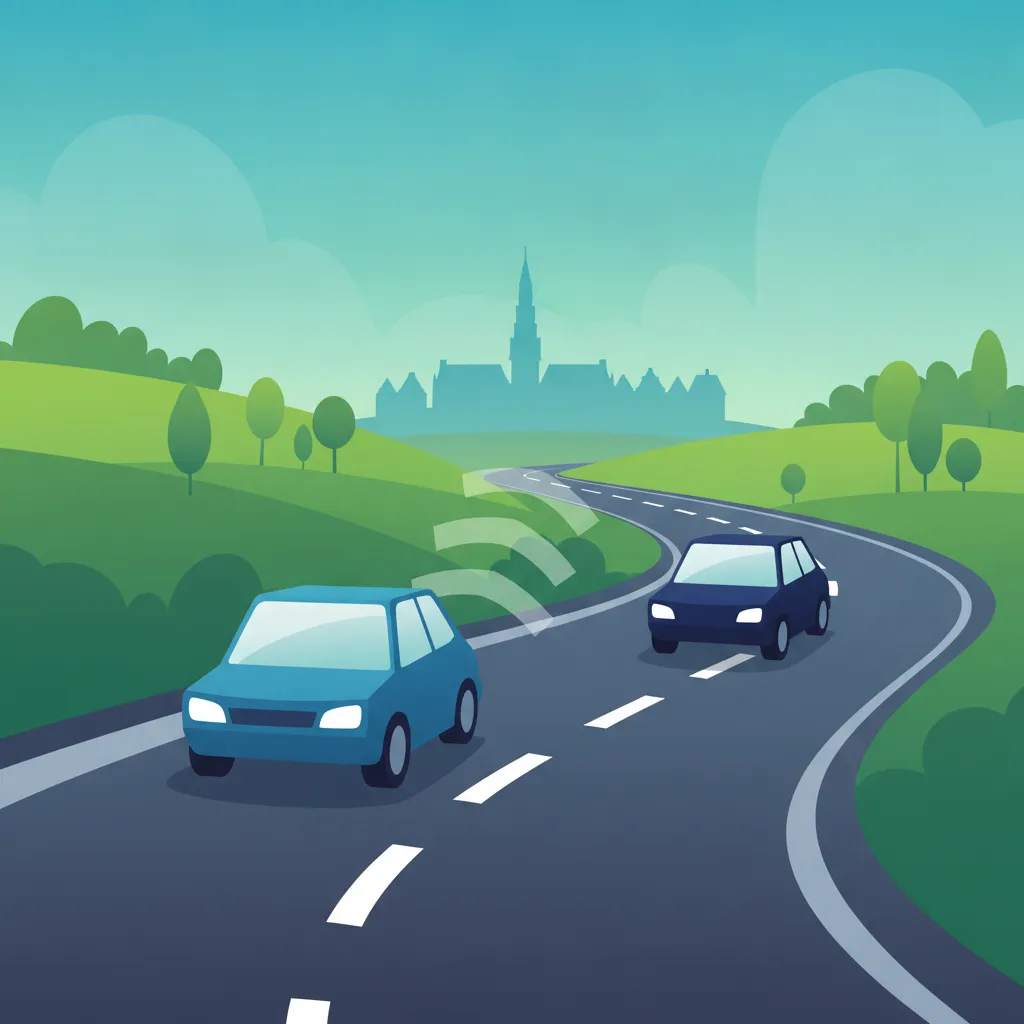
Theory topic content overview
Read the full theory topic guide for Safe Following Distance with structured, easy-to-scan content built for learners in Belgium. This detailed section explains the exact rule, meaning, traffic context, comparison points, and exam logic behind this Belgian driving theory topic so you can study faster, understand the concept more clearly, and avoid common interpretation mistakes on the theory test.
Following distance, known as veiligheidsafstand or safety margin in the Belgian Road Code (Wegcode), is the critical space a driver must maintain between their vehicle and the vehicle directly in front. This distance is vital for road safety, ensuring you have enough time and space to react to unexpected events and bring your vehicle to a complete stop without colliding.
In Belgium, the Wegcode specifies that every driver must, under all circumstances and taking into account their speed, maintain a sufficient safety distance from the vehicle ahead. Specifically, on public roads where the maximum speed limit exceeds 50 km/h, this distance corresponds to at least the distance covered by the vehicle during a period of two seconds. This "two-second rule" is a cornerstone of Belgian driving theory and practice.
Maintaining an adequate following distance is not just a recommendation; it's a fundamental requirement in Belgian traffic law and a key component of preventing collisions.
en tort) by insurance companies and the courts. This presumption can be difficult to overturn unless you can provide clear proof (e.g., dashcam footage, independent witnesses) that the preceding driver cut in abruptly (queue de poisson) or braked unexpectedly without reason. The legal framework strongly places the onus on the trailing driver to maintain a sufficient safety margin.The "two-second rule" is the most practical and widely taught method for judging safe following distance in Belgium, particularly for speeds above 50 km/h. It's a time-based measurement, which is more effective than estimating meters, as the actual distance in meters changes with speed.
To apply the two-second rule effectively:
Often taught in Belgian driving schools, the "two crocodiles" technique is a memorable way to apply the two-second rule. As the vehicle ahead passes a fixed point, you count "One crocodile, two crocodiles." If you pass the same point before finishing "two crocodiles," you're too close.
While the two-second rule is time-based, it's useful to understand the approximate physical distances involved:
These figures demonstrate how significantly the required physical distance increases with speed, even though the time-based gap remains two seconds.
The two-second rule is a minimum for ideal driving conditions (dry roads, good visibility). You must significantly increase your following distance when conditions are less than perfect.
It's crucial to understand how following distance relates to the overall stopping process. Stopping distance is the total distance your vehicle travels from the moment you perceive a hazard until your vehicle is completely stationary. It is composed of two main parts:
reactieafstand): The distance your vehicle travels from the moment you detect a hazard to the moment you physically apply the brakes. A typical reaction time is around 1 second, but this varies based on driver alertness, fatigue, and distraction.remanafstand or remsafstand): The distance your vehicle travels from the moment you apply the brakes until it comes to a complete stop. This is heavily influenced by speed, vehicle condition, road surface, and weather.Following distance is the buffer you create that contains your potential stopping distance. A sufficient following distance ensures that your entire stopping distance (reaction + braking) fits within the gap between your vehicle and the one ahead, even if they brake suddenly. If your following distance is less than your stopping distance, a collision is inevitable.
Learners and even experienced drivers often make mistakes regarding following distance, leading to dangerous situations:
kleven / coller au train): Following too closely. This is a common and extremely dangerous habit. Tailgating reduces your reaction time, increases the likelihood of a rear-end collision, creates stress for both drivers, and removes any margin for error. In Belgium, tailgating is a serious offence, and if it leads to an accident, the tailgating driver is almost always held responsible.Consider these common Belgian traffic scenarios:
N-weg (National Road) at 70 km/h: A two-second gap (around 39m) is insufficient. You should aim for at least 3-4 seconds, which could be 60-80 meters, to account for reduced grip and longer braking distances.agglomération: Even on a dry road, you must ensure at least 50 meters, and preferably more, especially if visibility is poor or the HGV is carrying a heavy load. Remember their blind spots are extensive.For your Belgian driving theory exam and safe driving in general, remember this core principle: Always maintain a following distance that allows you to stop safely within the space available, even if the vehicle in front brakes abruptly.
A safe following distance is your most effective buffer against unforeseen circumstances and is a mark of a responsible and aware driver in Belgian traffic.
The two-second rule is the cornerstone of Belgian following distance requirements, meaning you should maintain at least a two-second gap behind the vehicle ahead when traveling over 50 km/h in normal conditions. This time-based measurement translates to approximately 33 meters at 60 km/h, 50 meters at 90 km/h, and 67-70 meters at 120 km/h. The rule must be extended significantly in adverse conditions such as rain, fog, or snow, where braking distances increase substantially. In Belgium, the legal framework presumes the trailing driver responsible in rear-end collisions, making proper following distance both a safety and legal requirement. Always ensure your following distance exceeds your total stopping distance to account for unexpected braking of the vehicle ahead.
A short set of high-value points that capture the most important ideas from this theory explanation.
The two-second rule is the legal minimum following distance for speeds over 50 km/h in Belgium under normal conditions
Following distance must always be greater than your total stopping distance (reaction distance plus braking distance)
Doubling your speed quadruples your braking distance, making the two-second gap physically much shorter at higher speeds
In Belgium, if you collide with the vehicle ahead, you are presumed at fault unless proven otherwise
A safe following distance is your primary buffer against rear-end collisions and unforeseen hazards
Use the 'two crocodiles' counting method (One crocodile, two crocodiles) to judge your two-second gap against a fixed reference point
At 120 km/h on motorways, a two-second gap equals approximately 67-70 meters in physical distance
HGVs exceeding 7.5 tonnes must maintain a minimum 50-meter distance from other vehicles outside built-up areas in Belgium
Wet roads can more than double your braking distance, requiring at least 4 seconds of gap instead of two
In a rear-end collision, the burden of proof falls on the trailing driver in Belgian traffic law
Assuming the two-second rule means the same physical distance regardless of speed, when in fact it changes dramatically
Maintaining only a two-second gap in rain, fog, or icy conditions where braking distance is severely increased
Over-relying on modern ABS or braking systems to stop quickly on slippery surfaces
Allowing distractions to increase reaction time while maintaining the same following distance
Failing to give extra space when following motorcycles, which can stop much faster than cars
Start with a short, direct summary of Safe Following Distance before reading the full explanation below.
Following distance is the minimum safe space kept between your vehicle and the one in front, measured in time. In Belgium, the general rule is to maintain at least a two-second gap when driving over 50 km/h. This crucial distance allows drivers enough time to perceive a hazard, react, and brake safely to prevent collisions, especially when conditions are poor.
Review the most important terms, rule signals, and traffic concepts linked to Safe Following Distance.
Explore related theory topic pages connected to Safe Following Distance and continue with the next useful rule explanation.
See the common search queries learners use when trying to understand Safe Following Distance in Belgium.

Start your comprehensive preparation for the Belgian driving licence theory exam. Dive into our expertly curated topics, master the road rules and concepts, and build the confidence you need to pass your test and drive safely on Belgian roads. Begin mastering theory today.
Explore Belgian Theory TopicsTheory topic content overview
A short set of high-value points that capture the most important ideas from this theory explanation.
The two-second rule is the legal minimum following distance for speeds over 50 km/h in Belgium under normal conditions
Following distance must always be greater than your total stopping distance (reaction distance plus braking distance)
Doubling your speed quadruples your braking distance, making the two-second gap physically much shorter at higher speeds
In Belgium, if you collide with the vehicle ahead, you are presumed at fault unless proven otherwise
A safe following distance is your primary buffer against rear-end collisions and unforeseen hazards
Use the 'two crocodiles' counting method (One crocodile, two crocodiles) to judge your two-second gap against a fixed reference point
At 120 km/h on motorways, a two-second gap equals approximately 67-70 meters in physical distance
HGVs exceeding 7.5 tonnes must maintain a minimum 50-meter distance from other vehicles outside built-up areas in Belgium
Wet roads can more than double your braking distance, requiring at least 4 seconds of gap instead of two
In a rear-end collision, the burden of proof falls on the trailing driver in Belgian traffic law
Assuming the two-second rule means the same physical distance regardless of speed, when in fact it changes dramatically
Maintaining only a two-second gap in rain, fog, or icy conditions where braking distance is severely increased
Over-relying on modern ABS or braking systems to stop quickly on slippery surfaces
Allowing distractions to increase reaction time while maintaining the same following distance
Failing to give extra space when following motorcycles, which can stop much faster than cars
Start with a short, direct summary of Safe Following Distance before reading the full explanation below.
Following distance is the minimum safe space kept between your vehicle and the one in front, measured in time. In Belgium, the general rule is to maintain at least a two-second gap when driving over 50 km/h. This crucial distance allows drivers enough time to perceive a hazard, react, and brake safely to prevent collisions, especially when conditions are poor.
Review the most important terms, rule signals, and traffic concepts linked to Safe Following Distance.
Explore related theory topic pages connected to Safe Following Distance and continue with the next useful rule explanation.
See the common search queries learners use when trying to understand Safe Following Distance in Belgium.
Start your comprehensive preparation for the Belgian driving licence theory exam. Dive into our expertly curated topics, master the road rules and concepts, and build the confidence you need to pass your test and drive safely on Belgian roads. Begin mastering theory today.
Explore Belgian Theory TopicsUse this exam-focused revision tip to understand how Safe Following Distance is likely to appear in theory questions for learners in Belgium. This section helps you identify the most testable part of the rule, avoid common traps, and remember the concept more effectively during Belgian driving theory exam preparation.
The Belgian theory exam often tests your ability to adapt following distance based on changing conditions (e.g., wet roads, fog, higher speeds). Remember that the two-second rule is a minimum for good conditions; always increase it when visibility is poor, the road is slippery, or you are driving a heavier vehicle.
Read direct answers to the most common learner questions about Safe Following Distance in Belgium. This FAQ focuses on rule confusion, practical meaning, comparison with similar concepts, and the exact uncertainties that appear most often in Belgian driving theory revision and exam preparation.
The Belgian Road Code (Wegcode) stipulates that drivers must maintain a sufficient safety distance in all circumstances. On public roads where the maximum speed limit exceeds 50 km/h, this distance corresponds to at least two seconds of travel time behind the vehicle in front.
To apply the two-second rule, choose a fixed point along the road (e.g., a lamp post). As the vehicle in front passes this point, start counting 'one-thousand-one, one-thousand-two'. If your vehicle reaches the same point before you finish counting, you are following too closely and should increase your distance.
A safe following distance provides you with adequate time to react to unexpected events, such as the vehicle ahead braking suddenly, and enough space for your vehicle to come to a complete stop. This significantly reduces the risk of rear-end collisions and allows for safer driving in dynamic traffic conditions.
Speed is a critical factor. As your speed increases, both your reaction distance (distance traveled before you begin braking) and your braking distance increase significantly. Therefore, the physical distance required for a two-second gap is much longer at higher speeds.
Yes, absolutely. In adverse conditions such as rain, snow, ice, or fog, road grip is reduced, and reaction times may be slower due to impaired visibility. You should increase your following distance to at least three or four seconds, or even more, to compensate for the longer stopping distances required.
Yes, in Belgium, outside built-up areas, drivers of heavy goods vehicles (over 7.5 tonnes or longer than 7 meters) must maintain a minimum safety distance of at least 50 meters. This distance also generally corresponds to the two-second rule at typical speeds for these vehicles.
Ready to focus your Belgian driving theory revision? Utilize our powerful search tool to pinpoint exact topics, road signs, or difficulty levels. Engage with practice questions that directly address your learning needs and solidify your understanding of Belgian traffic laws for your upcoming exam.