Driving under the influence in Denmark is subject to strict enforcement under the Færdselsloven to ensure road safety. This guide covers the 0.5 promille legal limit, the differences between conditional and unconditional license suspensions, and the mandatory corrective measures like the ANT course. Mastering these concepts is vital for passing your theory exam and becoming a responsible, law-abiding driver.
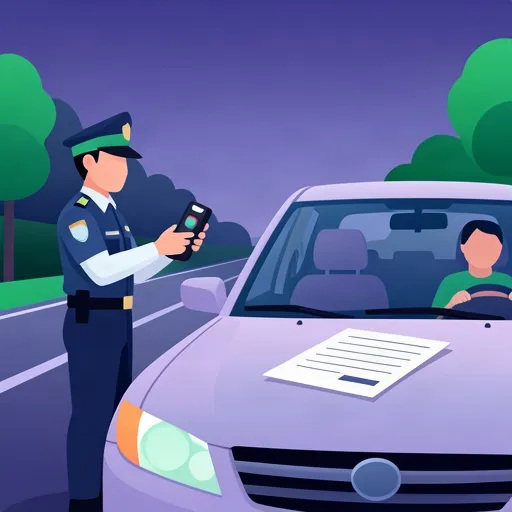
Article content overview
Driving under the influence of alcohol is one of the most serious safety violations in Denmark. The Danish Færdselslov (Road Traffic Act) sets strict legal thresholds for blood alcohol content (BAC) to ensure that every road user can navigate the streets safely. For learner drivers, understanding these limits is not only a requirement for the theory exam but a fundamental pillar of responsible driving. In Denmark, the law treats impaired driving with severe consequences to protect pedestrians, cyclists, and fellow motorists.
In Denmark, the legal limit for blood alcohol concentration (promille) is 0.5. This means that if your blood contains more than 0.5 grams of alcohol per liter, you are legally unfit to operate a motor vehicle. It is important to remember that this limit is not a target; it is a strict threshold. Even below this limit, if a police officer deems your driving ability to be impaired due to alcohol, you can still be penalized.
The theory exam often tests your knowledge of how alcohol influences judgment, reaction time, and risk assessment. Alcohol reduces your ability to process information from road signs and traffic signals, and it severely hinders your capacity to react to sudden hazards, such as a child running into the road or a cyclist changing direction.
The Danish penalty system for driving under the influence is tiered based on the severity of the offense. The consequences scale significantly as your blood alcohol level increases, reflecting the rising risk posed to the public.
A conditional suspension (betinget frakendelse) means you must pass a new theory and practical driving test within a set timeframe to keep your license. An unconditional suspension (ubetinget frakendelse) means you lose your license for a specific period and must re-apply for it after the time has elapsed, which often includes completing an ANT course.
If you are caught driving with a BAC between 0.5 and 1.2, you will face a conditional suspension of your license. You will typically be required to pass a "controlled" driving test—covering both theory and practice—within six months. Furthermore, you will receive a substantial fine, which is often calculated based on your monthly net salary multiplied by your recorded promille level.
At this level, the consequences become much more severe. You will face an unconditional license suspension for at least three years, a significant fine, and the mandatory completion of an ANT (Alcohol, Narko og Trafik) course. This course is designed to educate offenders on the risks of impaired driving and is a prerequisite for regaining the right to drive.
Exceeding 2.0 promille carries the most extreme legal penalties, including a long-term unconditional suspension, heavy fines, and potential imprisonment. In many cases, the law allows for the confiscation of your vehicle, meaning you lose the property you used to commit the offense. Repeat offenders or those who cause accidents while intoxicated face even harsher sentencing and longer bans.
Never assume that you can calculate your own promille based on the number of drinks consumed. Factors such as body weight, metabolism, and food intake vary widely. The only safe policy is to have zero alcohol if you intend to drive.
| BAC Level (Promille) | Typical Consequence | Mandatory Action |
|---|---|---|
| 0.5 – 1.2 | Conditional Suspension | Controlled Theory & Practical Test |
| 1.2 – 2.0 | Unconditional Suspension | ANT Course, Fine, Re-testing |
| Over 2.0 | Unconditional Suspension | Jail, Vehicle Confiscation, Fine |
The Danish driving theory exam includes questions on impaired driving to ensure you recognize that safe driving requires full cognitive clarity. You may be asked about the physiological effects of alcohol or the specific legal procedures following a violation. It is essential to recognize that alcohol, narcotics, and certain medicines can all lead to similar legal consequences if they impair your ability to drive safely.
This article covers Denmark's strict blood alcohol limit of 0.5 promille and the escalating penalty system for drink driving under the Færdselsloven. The three-tier penalty structure ranges from conditional license suspension requiring a controlled re-test (0.5–1.2 promille) to unconditional suspension with mandatory ANT course (1.2–2.0 promille) and potentially imprisonment with vehicle confiscation (over 2.0 promille). Understanding the distinction between conditional and unconditional suspension, the role of the ANT course, and the fact that even sub-limit impairment can be penalized is essential for both the theory exam and responsible driving. The glossary of Danish terms—including promille, betinget frakendelse, and ANT-kursus—provides necessary vocabulary for exam preparation.
A short set of high-value points that capture the most important ideas from this article.
Denmark's legal BAC limit is 0.5 promille—this is a strict threshold, not a target to aim for
Penalties escalate significantly across three BAC tiers: 0.5–1.2, 1.2–2.0, and above 2.0 promille
Conditional suspension requires passing both theory and practical tests within six months
Unconditional suspension at higher BAC levels requires completing an ANT course before license recovery
Even driving below the legal limit can result in penalties if a police officer determines your ability is impaired
BAC 0.5–1.2: conditional suspension with controlled theory and practical re-test
BAC 1.2–2.0: unconditional suspension of at least three years plus mandatory ANT course
BAC over 2.0: unconditional suspension, potential imprisonment, and possible vehicle confiscation
Promille is the Danish unit for measuring blood alcohol concentration (BAC)
ANT (Alcohol, Narko og Trafik) course is mandatory for high-level or repeat offenders to regain driving rights
Assuming the 0.5 promille limit is a safe target to drink up to rather than a strict legal maximum
Believing you can accurately calculate your own BAC based on drinks consumed—factors like metabolism and food intake vary
Confusing conditional (betinget) and unconditional (ubetinget) suspension—the conditions for regaining a license differ significantly
Thinking a first offense below 1.2 promille carries no serious consequences—fines are calculated based on salary and BAC level
Ignoring that police can penalize impaired driving even below the legal limit if driving ability is affected
Article content overview
A short set of high-value points that capture the most important ideas from this article.
Denmark's legal BAC limit is 0.5 promille—this is a strict threshold, not a target to aim for
Penalties escalate significantly across three BAC tiers: 0.5–1.2, 1.2–2.0, and above 2.0 promille
Conditional suspension requires passing both theory and practical tests within six months
Unconditional suspension at higher BAC levels requires completing an ANT course before license recovery
Even driving below the legal limit can result in penalties if a police officer determines your ability is impaired
BAC 0.5–1.2: conditional suspension with controlled theory and practical re-test
BAC 1.2–2.0: unconditional suspension of at least three years plus mandatory ANT course
BAC over 2.0: unconditional suspension, potential imprisonment, and possible vehicle confiscation
Promille is the Danish unit for measuring blood alcohol concentration (BAC)
ANT (Alcohol, Narko og Trafik) course is mandatory for high-level or repeat offenders to regain driving rights
Assuming the 0.5 promille limit is a safe target to drink up to rather than a strict legal maximum
Believing you can accurately calculate your own BAC based on drinks consumed—factors like metabolism and food intake vary
Confusing conditional (betinget) and unconditional (ubetinget) suspension—the conditions for regaining a license differ significantly
Thinking a first offense below 1.2 promille carries no serious consequences—fines are calculated based on salary and BAC level
Ignoring that police can penalize impaired driving even below the legal limit if driving ability is affected
Explore related topics, search based questions, and concepts that learners often look up when studying Denmark Drink Driving Laws. These themes reflect real search intent and help you understand how this topic connects to wider driving theory knowledge in Denmark.
Find clear and practical answers to common questions learners often have about Denmark Drink Driving Laws. This section helps explain difficult points, remove confusion, and reinforce the key driving theory concepts that matter for learners in Denmark.
The legal blood alcohol concentration (BAC) limit in Denmark is 0.5 promille.
For a first-time offense, you will typically receive a fine, a conditional license suspension, and be required to complete an ANT course and pass a new theory and practical driving test.
ANT stands for 'Alkohol, Narko og Trafik' (Alcohol, Drugs, and Traffic). It is a mandatory 12-hour educational course that must be completed by offenders to regain their driving privileges.
A conditional suspension allows you to keep your license provided you pass a new theory and driving test within a set timeframe. An unconditional suspension means you lose your driving rights entirely for a specific period and must wait until it expires before you can begin the process to regain your license.
Continue your learning journey by searching for additional articles or browsing our comprehensive topic categories. Deepen your knowledge of Danish road law, vehicle mechanics, and hazard perception to ensure complete preparation for your official theory exam.