Navigating urban environments requires a precise understanding of Danish traffic laws regarding pedestrian safety. This guide clarifies the mandates of Færdselsloven section 25 and why overtaking or passing a vehicle near a crossing is a serious legal violation. By learning these rules, you will be better prepared to avoid common theory exam traps and ensure you maintain high safety standards on the road.
Article content overview
Navigating urban environments in Denmark requires a precise understanding of pedestrian safety regulations. One of the most critical rules every learner driver must master is found in the Danish Traffic Act, known as Færdselsloven. Specifically, section 25 of the act provides explicit instructions on how to behave when approaching a pedestrian crossing. Understanding these laws is not just about passing your theory exam; it is a fundamental pillar of defensive driving that directly impacts the safety of vulnerable road users.
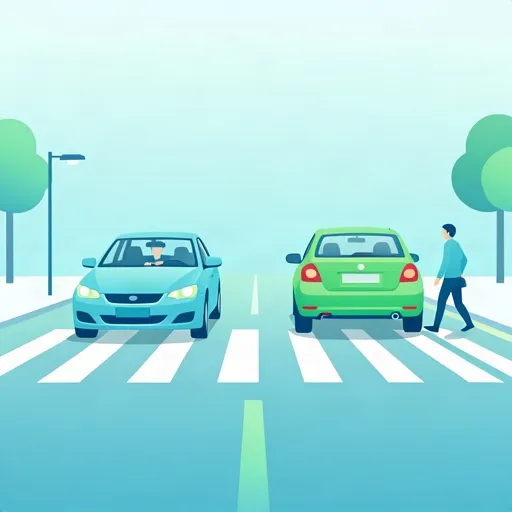
The core legal mandate regarding pedestrian crossings is designed to prevent accidents where a driver overtakes or passes another vehicle without realizing that a pedestrian is stepping onto the road. According to Færdselsloven § 25, if you are approaching a pedestrian crossing and the vehicle in front of you—or beside you in a multi-lane road—is slowing down or has stopped, you are strictly prohibited from overtaking or passing that vehicle if it obscures your view of the crossing.
The rationale behind this rule is simple but vital: if your view of the crossing is blocked by another vehicle, you cannot possibly know if a pedestrian is about to enter the road. By passing blindly, you risk a collision with someone who might believe the road is safe to cross because the first vehicle has already stopped or yielded.
In the Danish driving theory exam, you will likely encounter questions that test your situational awareness regarding this law. Examiners often present scenarios where a car in the right lane slows down near a pedestrian crossing. A common mistake among candidates is assuming that because the lane is "free," it is acceptable to maintain speed and pass the vehicle.
However, the theory test looks for your ability to identify the risk. If a vehicle obscures your view of the zebra crossing, you must anticipate that the driver is slowing down for a reason—typically to yield to a pedestrian. Therefore, the only correct legal and defensive action is to reduce your speed and prepare to stop, mirroring the behavior of the vehicle you are following.
Failing to adhere to the rules regarding pedestrian crossings carries significant weight in Danish traffic law. This violation is considered a serious breach of safety protocols, and the consequences reflect that severity:
Beyond the legal requirements, cultivating the right mindset is key to road safety. When approaching a crossing, you should always scan the area for pedestrians who may be preparing to cross. If you are in doubt about whether a pedestrian is waiting, or if your line of sight is compromised by a larger vehicle or a bus, the safest decision is always to exercise caution.
To help you navigate these rules during your theory preparation, familiarize yourself with these essential terms used in Danish traffic education.
Remember that even if you have the right of way, the law in Denmark places a heavy emphasis on the protection of vulnerable road users. Always prioritize safety over maintaining your speed, especially in urban areas where pedestrian activity is high.
This article covers the strict rules under Færdselsloven § 25 that prohibit overtaking or passing vehicles near pedestrian crossings when your view is blocked. The law exists because a vehicle blocking your line of sight could be stopped for a pedestrian you cannot see, and passing blindly creates serious collision risk. Violations carry a 2,000 DKK fine plus a 1,000 DKK victim fund contribution, plus one penalty point (klip). The key defensive driving habit is to always slow down and be prepared to stop whenever a vehicle in an adjacent lane slows near a crossing, treating it as an indicator that pedestrians may be present.
A short set of high-value points that capture the most important ideas from this article.
Under Færdselsloven § 25, you are prohibited from overtaking or passing any vehicle near a pedestrian crossing if that vehicle blocks your view of the crossing.
When a vehicle in an adjacent lane slows down or stops near a crossing, you must also slow down and be prepared to stop, regardless of whether your lane appears clear.
The rule applies whenever your line of sight (udsyn) is compromised, whether by a van, bus, or any larger vehicle.
Even if your lane is free, maintaining speed while passing a vehicle that obscures the crossing is both illegal and dangerous.
Pedestrian safety always takes priority over maintaining speed in urban areas near crossings.
The prohibition applies when the vehicle blocks your view of the crossing (udsyn) — not just when a pedestrian is visible.
The rule covers both overhaling (passing within the same lane) and forbikørsel (passing in an adjacent lane).
When visibility is uncertain, the safest decision is always to slow down or stop — exercise særlig forsigtighed.
A vehicle slowing near a crossing is a signal that a pedestrian may be about to cross; never assume otherwise.
For new drivers, two klip points during the three-year probation period triggers a mandatory re-test.
Assuming it is acceptable to pass another vehicle at a crossing because your lane is clear, even when the vehicle blocks your view of the crosswalk.
Failing to recognize that a vehicle slowing down near a crossing indicates a potential pedestrian and requires you to mirror that behavior.
Not scanning for pedestrians waiting at the curb when visibility is partially obscured by a larger vehicle.
Believing that having right of way means you can proceed without adjusting speed when a pedestrian may be crossing.
Article content overview
A short set of high-value points that capture the most important ideas from this article.
Under Færdselsloven § 25, you are prohibited from overtaking or passing any vehicle near a pedestrian crossing if that vehicle blocks your view of the crossing.
When a vehicle in an adjacent lane slows down or stops near a crossing, you must also slow down and be prepared to stop, regardless of whether your lane appears clear.
The rule applies whenever your line of sight (udsyn) is compromised, whether by a van, bus, or any larger vehicle.
Even if your lane is free, maintaining speed while passing a vehicle that obscures the crossing is both illegal and dangerous.
Pedestrian safety always takes priority over maintaining speed in urban areas near crossings.
The prohibition applies when the vehicle blocks your view of the crossing (udsyn) — not just when a pedestrian is visible.
The rule covers both overhaling (passing within the same lane) and forbikørsel (passing in an adjacent lane).
When visibility is uncertain, the safest decision is always to slow down or stop — exercise særlig forsigtighed.
A vehicle slowing near a crossing is a signal that a pedestrian may be about to cross; never assume otherwise.
For new drivers, two klip points during the three-year probation period triggers a mandatory re-test.
Assuming it is acceptable to pass another vehicle at a crossing because your lane is clear, even when the vehicle blocks your view of the crosswalk.
Failing to recognize that a vehicle slowing down near a crossing indicates a potential pedestrian and requires you to mirror that behavior.
Not scanning for pedestrians waiting at the curb when visibility is partially obscured by a larger vehicle.
Believing that having right of way means you can proceed without adjusting speed when a pedestrian may be crossing.
Explore related topics, search based questions, and concepts that learners often look up when studying Overtaking Rules at Pedestrian Crossings. These themes reflect real search intent and help you understand how this topic connects to wider driving theory knowledge in Denmark.
Find clear and practical answers to common questions learners often have about Overtaking Rules at Pedestrian Crossings. This section helps explain difficult points, remove confusion, and reinforce the key driving theory concepts that matter for learners in Denmark.
It states that you must not overtake or pass another vehicle approaching a pedestrian crossing if that vehicle obscures your view of the crossing and the potential presence of pedestrians.
A violation typically results in a fine of 2,000 DKK, a mandatory contribution to the victims' fund, and a 'klip' (penalty point) on your driving license, which is particularly significant for new drivers.
It is critical because poor visibility at crosswalks is a leading cause of accidents involving pedestrians; the law exists to prevent drivers from striking individuals they cannot see due to the position of other vehicles.
Yes, even more strictly. If a vehicle has stopped or slowed down for a pedestrian, overtaking it would inherently put a crossing pedestrian at extreme risk, which is a major traffic offense.
Continue your learning journey by searching for additional articles or browsing our comprehensive topic categories. Deepen your knowledge of Danish road law, vehicle mechanics, and hazard perception to ensure complete preparation for your official theory exam.