Understanding what items you are legally required to carry in your vehicle is a fundamental part of responsible driving and passing your theory exam. This guide clarifies the specific Danish regulations regarding safety gear, child restraint systems, and standard emergency equipment to help you avoid common pitfalls and potential fines. You will learn the difference between mandatory safety tools and recommended accessories to keep your vehicle fully compliant on Danish roads.
Article content overview
Preparing for the Danish driving theory test requires more than just mastering road signs and right-of-way rules; you must also understand the legal obligations concerning your vehicle's safety equipment. In Denmark, the regulations are designed to enhance road safety during emergencies and ensure that all vehicles on the road meet a baseline standard of functional integrity. Knowing exactly what you are required to carry—and what is merely recommended—is a common area of focus in the theory exam.
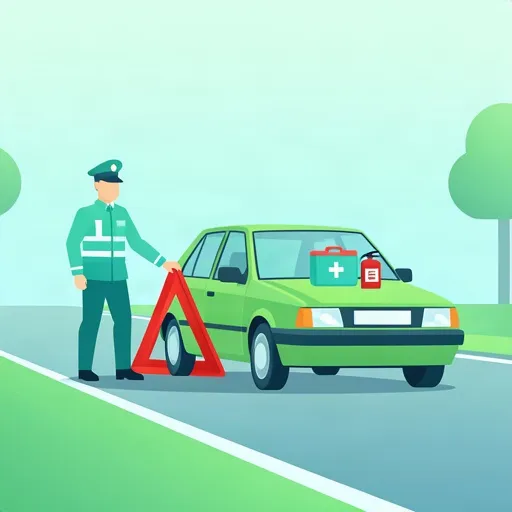
Under Danish traffic law, specifically within the context of vehicle requirements for private cars, the list of items you are strictly legally required to carry is relatively short but highly significant. The primary piece of equipment every driver must have is an approved warning triangle (advarselstrekant). This device must be kept in the vehicle at all times and must be readily accessible, as you are legally obligated to deploy it in specific breakdown or accident scenarios to alert other road users.
Another critical requirement relates to safety gear for the driver. While you are not required to have a high-visibility vest in your glove box for every trip, it becomes a mandatory piece of safety equipment the moment you need to exit your vehicle on a motorway or a high-speed road in an emergency. If you are forced to step out of your car in such conditions, you must be visible to other traffic; therefore, having a reflective vest (refleksvest) stored within reach of the driver's seat is considered an essential safety practice.
Unlike in some neighboring European countries, such as Germany or Austria, carrying a first aid kit or a fire extinguisher is not a legal requirement for private passenger cars in Denmark. However, both are strongly recommended by safety organizations like FDM as part of responsible vehicle maintenance.
Danish law is very strict regarding the protection of minors. If you are transporting children in your vehicle, you must ensure they are secured in an approved child restraint system (child seat, booster seat, or cushion) that is appropriate for their height and weight. The legal threshold is based on height: all children under 135 cm must use a child safety seat that is officially approved.
An approved child restraint is one that carries the ECE-approval mark (usually indicated by an "E" in a circle). This ensures the seat has passed rigorous European safety testing standards for impact protection.
It is a common pitfall in theory exams to confuse general guidelines with legal mandates. While health authorities strongly advocate for keeping children in rear-facing seats until they are at least four years old, the primary legal requirement for the test is the 135 cm height limit. Always ensure that the child seat is properly installed and that the seat belt mechanism is functional, as any defect in the safety equipment can lead to vehicle inspection failure or fines.
The theory test often presents scenarios where you must decide how to handle a breakdown. Danish law mandates that if your vehicle becomes a hazard to other traffic, you must warn others by placing a warning triangle.
To help you distinguish between what is required by law and what is simply good practice, the following table summarizes the essential gear for Danish drivers.
| Equipment | Legal Status in Denmark | Note |
|---|---|---|
| Warning Triangle | Mandatory | Must be accessible for deployment |
| High-Visibility Vest | Conditional | Mandatory when exiting on motorways |
| Child Safety Seat | Mandatory | For all children under 135 cm |
| First Aid Kit | Recommended | Not legally required |
| Fire Extinguisher | Recommended | Not legally required |
This article covers the essential legal equipment requirements for driving in Denmark, distinguishing between mandatory items (warning triangle, conditional high-visibility vest, child seats for children under 135 cm) and recommended items (first aid kit, fire extinguisher). It emphasizes that Denmark follows a height-based rather than age-based approach to child restraint laws, and provides specific deployment distances for warning triangles on different road types. Understanding these legal distinctions is crucial for both safe driving and passing the Danish theory exam.
A short set of high-value points that capture the most important ideas from this article.
The warning triangle (advarselstrekant) is the primary mandatory equipment every driver must carry and have readily accessible
High-visibility vests (refleksvest) become mandatory only when you exit the vehicle on motorways or high-speed roads
Child safety seats are legally required for all children under 135 cm in height, regardless of age
First aid kits and fire extinguishers are recommended but NOT legally required in Denmark for private cars
When deploying a warning triangle, distance requirements differ between regular roads (50m) and motorways (100m)
The legal child safety seat requirement is based on height (135 cm), not age or weight
ECE approval mark (E in a circle) is the official indicator that a child restraint meets European safety standards
Hazard lights must be activated before deploying the warning triangle in any breakdown scenario
A reflective vest must be worn before exiting the vehicle in emergency situations on high-speed roads
FDM recommendations (first aid kit, fire extinguisher) are good practice but carry no legal penalty if missing
Confusing health authority recommendations (rear-facing seats until age 4) with the actual legal height requirement of 135 cm
Assuming first aid kits or fire extinguishers are mandatory, when they are only recommended in Denmark
Forgetting to wear the reflective vest before exiting the vehicle on a motorway
Placing the warning triangle at incorrect distances depending on road type
Not keeping the warning triangle readily accessible within the vehicle at all times
Article content overview
A short set of high-value points that capture the most important ideas from this article.
The warning triangle (advarselstrekant) is the primary mandatory equipment every driver must carry and have readily accessible
High-visibility vests (refleksvest) become mandatory only when you exit the vehicle on motorways or high-speed roads
Child safety seats are legally required for all children under 135 cm in height, regardless of age
First aid kits and fire extinguishers are recommended but NOT legally required in Denmark for private cars
When deploying a warning triangle, distance requirements differ between regular roads (50m) and motorways (100m)
The legal child safety seat requirement is based on height (135 cm), not age or weight
ECE approval mark (E in a circle) is the official indicator that a child restraint meets European safety standards
Hazard lights must be activated before deploying the warning triangle in any breakdown scenario
A reflective vest must be worn before exiting the vehicle in emergency situations on high-speed roads
FDM recommendations (first aid kit, fire extinguisher) are good practice but carry no legal penalty if missing
Confusing health authority recommendations (rear-facing seats until age 4) with the actual legal height requirement of 135 cm
Assuming first aid kits or fire extinguishers are mandatory, when they are only recommended in Denmark
Forgetting to wear the reflective vest before exiting the vehicle on a motorway
Placing the warning triangle at incorrect distances depending on road type
Not keeping the warning triangle readily accessible within the vehicle at all times
Explore related topics, search based questions, and concepts that learners often look up when studying Mandatory Vehicle Equipment in Denmark. These themes reflect real search intent and help you understand how this topic connects to wider driving theory knowledge in Denmark.
Find clear and practical answers to common questions learners often have about Mandatory Vehicle Equipment in Denmark. This section helps explain difficult points, remove confusion, and reinforce the key driving theory concepts that matter for learners in Denmark.
Yes, carrying an approved warning triangle is mandatory for all passenger cars in Denmark. It must be used in the event of a breakdown or accident to alert other drivers.
No, they are not legally mandatory for private passenger cars in Denmark, although they are highly recommended by safety organizations like FDM.
Children must use an approved child restraint system if they are under 135 cm in height. The seat must be appropriate for the child's specific weight and height.
While not strictly required to be kept in the car, a high-visibility vest is mandatory for the driver to wear if they must exit the vehicle in a hazardous situation, such as a breakdown on a motorway.
Continue your learning journey by searching for additional articles or browsing our comprehensive topic categories. Deepen your knowledge of Danish road law, vehicle mechanics, and hazard perception to ensure complete preparation for your official theory exam.