Obtaining a driving license at 17 is a significant milestone that comes with specific legal obligations under the Danish Road Traffic Act. This article clarifies the criteria for the accompanying supervisor, the legal status of the young driver, and the geographical limitations placed on the license until the driver reaches 18. Mastering these regulations is essential for legal compliance and successful preparation for your driving theory assessment.
Article content overview
Obtaining a driving license at the age of 17 is a significant milestone for young drivers in Denmark. Under current Danish legislation, individuals can start their driving education at a certified school and sit for both the theory and practical tests before their 18th birthday. However, receiving your Category B license at 17 is not an invitation to full, unsupervised independence. It is part of a structured transition that requires strict adherence to specific legal conditions designed to improve road safety and build driving experience.
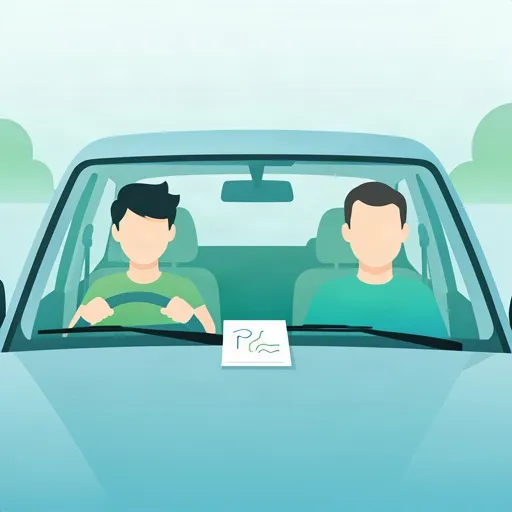
When you pass your practical driving test at 17, you are fully authorized to operate a Category B vehicle. However, the law imposes a mandatory condition: you must always be accompanied by an experienced driver, known as a ledsager. This requirement remains in effect until you turn 18. It is vital to understand that even while supervised, you are the legal driver and bear full responsibility for the vehicle and your actions on the road.
A ledsager is an experienced driver who occupies the front passenger seat and acts as a guide to help the 17-year-old maintain focus, navigate safely, and gain confidence behind the wheel. The ledsager is not a certified driving instructor, but must be in a position to guide the driver safely.
The role of a ledsager carries significant legal weight. Because the supervisor is expected to assist in ensuring road safety, the criteria to qualify for this role are rigorous. You cannot simply choose any adult to sit in the passenger seat; the individual must meet the following official requirements:
The ledsager must always be in a condition where they could legally operate the vehicle themselves. This means they cannot be under the influence of alcohol (the blood alcohol limit is 0.5 promille), drugs, or be so fatigued or ill that they would be unable to take control of the vehicle in an emergency.
A common trap in the theory exam involves questions regarding where a 17-year-old can drive. It is a strict legal requirement that driving under these conditions is only permitted within Danish borders. You are not authorized to drive in other countries with your 17-year-old license, regardless of whether you are accompanied by a qualified supervisor. Once you celebrate your 18th birthday, these restrictions are automatically lifted, and your license functions as a standard, full-privilege Category B license.
The primary goal of the 17-year-old driving program is to ensure that young drivers gain valuable "hours behind the wheel" in real-world traffic under the guidance of a steady, experienced adult. While the ledsager is not there to perform the physical act of driving, their presence is meant to help you stay calm and make better decisions in complex traffic situations. We highly recommend keeping a copy of the ledsagerblanket—a document that outlines these responsibilities—accessible in the vehicle to provide clarity during any traffic checks.
Driving at 17 in Denmark grants access to Category B vehicle operation but requires mandatory supervision by a qualified ledsager until the driver turns 18. The ledsager must meet strict criteria including being at least 24, holding a valid Danish Category B license for 5 continuous years, and having no recent suspensions. Critically, supervised driving is limited to Danish territory only, and the 17-year-old bears full legal responsibility as the driver. The supervisor must remain capable of taking control in an emergency and must not exceed the 0.5 promille blood alcohol limit. This supervised period is designed to build practical experience in real traffic conditions under the guidance of an experienced adult before full independent driving is permitted at 18.
A short set of high-value points that capture the most important ideas from this article.
A 17-year-old with a Category B license is fully authorized to drive but must always be accompanied by a qualified ledsager until turning 18.
The ledsager is not a certified driving instructor but an experienced guide occupying the front passenger seat to help with focus, navigation, and confidence.
The 17-year-old driver bears full legal responsibility for the vehicle and their actions on the road, even while supervised.
Supervised driving is strictly limited to Danish borders and cannot legally occur in other countries regardless of supervisor qualification.
The supervised driving period serves to build real-world experience under guidance before full independence at age 18.
The ledsager must be at least 24 years old, hold a valid Danish Category B license, have held it continuously for 5 years, and have no suspensions or revocations in the last 5 years.
Driving abroad with a 17-year-old license is illegal, even with a qualified supervisor present.
The ledsager must be capable of legally operating the vehicle themselves, meaning no alcohol (limit 0.5 promille), drugs, or severe fatigue or illness.
Parental or legal guardian consent is required for the license application before the 17-year-old can begin their driving education.
Once the driver turns 18, all supervised driving restrictions are automatically lifted and the license becomes a standard full-privilege Category B license.
Assuming any adult can serve as a supervisor without checking the strict ledsager qualification criteria.
Believing that supervised driving at 17 is permitted in neighboring countries or during travel—this is a common theory exam trap.
Confusing the ledsager's role with that of a certified driving instructor; the ledsager guides but does not teach formal techniques.
Overlooking that the 17-year-old is the legal driver with full responsibility, not the supervisor.
Forgetting to carry the ledsagerblanket (supervisor declaration document) in the vehicle during traffic checks.
Article content overview
A short set of high-value points that capture the most important ideas from this article.
A 17-year-old with a Category B license is fully authorized to drive but must always be accompanied by a qualified ledsager until turning 18.
The ledsager is not a certified driving instructor but an experienced guide occupying the front passenger seat to help with focus, navigation, and confidence.
The 17-year-old driver bears full legal responsibility for the vehicle and their actions on the road, even while supervised.
Supervised driving is strictly limited to Danish borders and cannot legally occur in other countries regardless of supervisor qualification.
The supervised driving period serves to build real-world experience under guidance before full independence at age 18.
The ledsager must be at least 24 years old, hold a valid Danish Category B license, have held it continuously for 5 years, and have no suspensions or revocations in the last 5 years.
Driving abroad with a 17-year-old license is illegal, even with a qualified supervisor present.
The ledsager must be capable of legally operating the vehicle themselves, meaning no alcohol (limit 0.5 promille), drugs, or severe fatigue or illness.
Parental or legal guardian consent is required for the license application before the 17-year-old can begin their driving education.
Once the driver turns 18, all supervised driving restrictions are automatically lifted and the license becomes a standard full-privilege Category B license.
Assuming any adult can serve as a supervisor without checking the strict ledsager qualification criteria.
Believing that supervised driving at 17 is permitted in neighboring countries or during travel—this is a common theory exam trap.
Confusing the ledsager's role with that of a certified driving instructor; the ledsager guides but does not teach formal techniques.
Overlooking that the 17-year-old is the legal driver with full responsibility, not the supervisor.
Forgetting to carry the ledsagerblanket (supervisor declaration document) in the vehicle during traffic checks.
Explore related topics, search based questions, and concepts that learners often look up when studying Driving Rules for 17-Year-Olds. These themes reflect real search intent and help you understand how this topic connects to wider driving theory knowledge in Denmark.
Find clear and practical answers to common questions learners often have about Driving Rules for 17-Year-Olds. This section helps explain difficult points, remove confusion, and reinforce the key driving theory concepts that matter for learners in Denmark.
A ledsager must be at least 24 years old, hold a valid Danish Category B license obtained at least 5 years ago, and must not have had their license revoked in the last 5 years.
No, a 17-year-old driver is strictly prohibited from driving outside of Denmark until they turn 18.
No, the ledsager acts as a guide to provide advice and help maintain an overview, but they are not an instructor and cannot replace the formal training process.
The 17-year-old is the legal driver in charge of the vehicle and holds full responsibility for the driving, even though a ledsager is required to be present.
Once the driver turns 18, the requirement for a ledsager is lifted, and they are permitted to drive independently both within and outside of Denmark.
Continue your learning journey by searching for additional articles or browsing our comprehensive topic categories. Deepen your knowledge of Danish road law, vehicle mechanics, and hazard perception to ensure complete preparation for your official theory exam.