
This lesson introduces the specific Danish driving license categories for heavy goods vehicles, including C1, C1E, C, and CE. You will learn the legal distinctions regarding vehicle mass and trailer combinations, which is essential for understanding your professional responsibilities as a driver. This foundational knowledge ensures you can correctly identify the license requirements for different types of heavy transport vehicles.
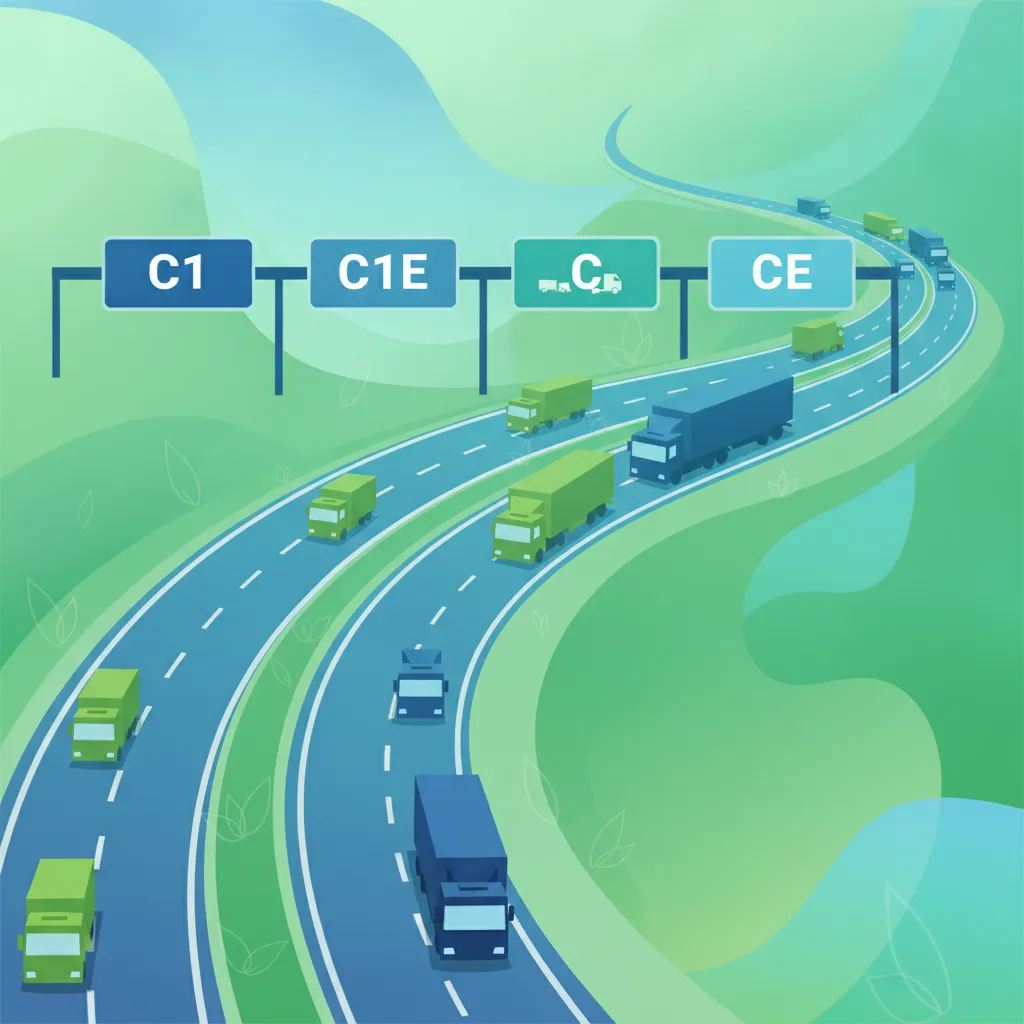
Lesson content overview
Navigating the world of professional driving requires a precise understanding of vehicle classifications and the corresponding driving licenses. In Denmark, as part of the broader European framework, heavy goods vehicles are categorized primarily by their Maximum Authorized Mass (MAM) and their capacity to tow trailers. This lesson, an essential part of the Complete Danish Heavy Vehicle Theory Course for Category C License, will provide a detailed breakdown of the C1, C1E, C, and CE license categories.
Understanding these distinctions is not merely an administrative formality; it is fundamental for identifying the correct license for various professional driving roles, ensuring legal compliance, and upholding road safety. Each category carries specific operational implications, influencing vehicle dynamics, load management, and braking performance, which are critical concepts explored in greater detail throughout this course.
The core principle behind heavy vehicle licensing revolves around the vehicle's design weight, known as its Maximum Authorized Mass (MAM), and the combined MAM when towing a trailer. This categorization ensures that drivers possess the necessary training and experience to safely operate vehicles of specific sizes and complexities. The "E" endorsement in categories like C1E and CE specifically indicates entitlement to tow heavier trailers.
The Maximum Authorized Mass (MAM) refers to the highest total weight a vehicle or vehicle combination is legally permitted to have when fully loaded. This includes the vehicle's own unladen weight, its payload (cargo), fuel, and any accessories. It is also often referred to as Gross Vehicle Weight (GVW) or Tilladt totalvægt in Danish.
The MAM is a critical figure, typically found on the vehicle's registration certificate and data plate. It sets the absolute upper limit for the vehicle's operational weight. Exceeding the MAM is a serious offense that compromises safety and can lead to severe penalties.
The Combined Maximum Authorized Mass is the sum of the individual Maximum Authorized Masses of the towing vehicle and any attached trailer(s). This total weight is crucial for determining if a specific vehicle combination requires an "E" endorsement (e.g., C1E or CE) and for ensuring the entire combination adheres to legal limits.
When a towing vehicle is coupled with a trailer, it is the combined MAM of the entire setup that often dictates the required license category. This is particularly important for C1E and CE categories, where the combined weight often exceeds the limits of the basic C1 or C license alone.
The C1 license category is designed for professional drivers operating light trucks or medium-weight goods vehicles. It bridges the gap between the standard B car license and the full heavy goods vehicle licenses.
A C1 license permits you to drive vehicles, excluding those in categories D1 and D, with a Maximum Authorized Mass (MAM) exceeding 3,500 kg but not exceeding 7,500 kg. With a C1 license, you may also tow a light trailer, provided its MAM does not exceed 750 kg.
This license is ideal for roles involving the operation of smaller delivery trucks, certain types of utility vehicles, or specialized vehicles like ambulances or some motorhomes that fall within the 3,500 kg to 7,500 kg range. It enables drivers to handle goods transport for local and regional deliveries where very heavy loads are not typically involved. The C1 category ensures drivers are trained to manage vehicles larger and heavier than standard cars, focusing on aspects like increased braking distances and wider turning circles.
A frequent mistake is confusing the C1 category with the B license. While a B license permits vehicles up to 3,500 kg MAM, C1 explicitly covers the range above this. Another misunderstanding is assuming that a C1 license allows towing any trailer size; remember, without the C1E endorsement, trailers are limited to a MAM of 750 kg.
The C1E license is an extension of the C1 category, specifically granting the entitlement to tow heavier trailers. This significantly expands the operational capabilities of a C1 truck.
To obtain a C1E license, you must first hold a C1 license. The C1E license allows you to drive C1 category vehicles (MAM ≤ 7,500 kg) combined with a trailer where the trailer's MAM exceeds 750 kg. Crucially, the MAM of the trailer must not exceed 12,000 kg, and the Combined MAM of the entire vehicle combination (truck + trailer) must also not exceed 12,000 kg.
The C1E license is invaluable for professional drivers who need to transport heavier or larger volumes of goods using a medium-sized truck. This could include tasks such as transporting construction equipment on a flatbed trailer, moving horseboxes, or specialized cargo that exceeds the basic 750 kg trailer limit. It offers flexibility for businesses that operate with varying load requirements without needing a full-sized heavy goods vehicle.
A common error is to focus only on the trailer's individual MAM and neglect the "Combined MAM" limit of 12,000 kg for the entire setup. It's also often assumed that C1E permits any trailer, regardless of its MAM, which is incorrect as the trailer itself cannot exceed 12,000 kg MAM. Always calculate both the individual trailer MAM and the combined MAM to ensure compliance.
The C license is the standard category for operating full-sized heavy goods vehicles, often referred to as lorries or trucks, designed for substantial freight transport.
A C license authorizes you to drive vehicles, excluding those in categories D1 and D, with a Maximum Authorized Mass (MAM) exceeding 3,500 kg. This category has no upper MAM limit for the towing vehicle itself, meaning it covers the vast majority of rigid heavy trucks on the road. Similar to the C1 category, with a C license, you may also tow a light trailer, provided its MAM does not exceed 750 kg.
This license is the backbone of professional freight transport. It enables drivers to operate large rigid trucks for a wide array of purposes, including long-distance haulage, general cargo transport, refuse collection, or specialized heavy vehicle operations that do not involve towing large trailers. Drivers with a C license are typically employed in roles that require moving significant volumes or weights of goods.
A common misconception is that a C license automatically allows you to tow any size trailer. This is incorrect. The C license, like C1, is restricted to trailers with a MAM of 750 kg or less. To tow heavier trailers, the specific CE endorsement is required. Confusion can arise between the C and CE categories, leading drivers to operate illegal combinations.
The CE license is the ultimate entitlement for heavy vehicle drivers, allowing the operation of the largest and heaviest truck and trailer combinations.
To obtain a CE license, you must first hold a C license. The CE license allows you to drive C category vehicles (MAM > 3,500 kg) combined with a trailer where the trailer's MAM exceeds 750 kg. Similar to C1E, the trailer's MAM must not exceed 12,000 kg, and the Combined MAM of the entire vehicle combination must also not exceed 12,000 kg if the vehicle is part of a combination where the truck's MAM is above 3500kg and the combined MAM goes over 7500kg. For CE, the emphasis is on any heavy truck with any heavy trailer.
The CE license is essential for professional drivers engaged in long-haul freight transport, operating articulated lorries (trucks with semi-trailers), or driving heavy trucks with drawbar trailers. This category provides the full entitlement for large freight movements, which are crucial for national and international logistics. It covers the most demanding driving tasks in the heavy transport sector.
While the CE license grants broad authority, it's a mistake to assume it allows for unlimited trailer mass. There are still legal maximums for trailer MAM and the combined MAM, even if the general rule for 'heavy truck with trailer' means the combined MAM exceeds 7,500 kg, and the trailer can be up to 12,000 kg. Always refer to the specific vehicle's coupling capacity and the legal limits for the route.
Obtaining and maintaining heavy vehicle licenses in Denmark involves strict adherence to national and EU regulations. These rules are designed to ensure drivers are competent and that vehicles are operated safely.
Typically, a driver must first obtain a basic B car license before progressing to heavy vehicle categories. To acquire a C1 or C license, applicants must pass a specific theory test and a practical driving test on a suitable vehicle. Adding an "E" endorsement (C1E or CE) for trailer combinations usually requires holding the respective basic category (C1 or C) first, followed by additional training and another practical test focusing on trailer handling.
Professional license applicants in Denmark must pass comprehensive theory tests that cover not only the specific vehicle categories but also broader topics relevant to heavy transport, such as mass limits, load securing, driver hours, and safety regulations. The practical driving test for C and CE categories is rigorous, assessing the driver's ability to maneuver, brake, reverse, and couple/uncouple trailers safely and efficiently.
Familiarity with Danish traffic laws, specifically the Færdselsloven (Road Traffic Act) and Bekendtgørelse om kørekort (Executive Order on Driving Licenses), is paramount. These documents outline the precise legal definitions, requirements, and penalties associated with heavy vehicle operation. Always consult the latest official versions to ensure compliance.
Understanding the license categories is the first step; applying this knowledge safely on the road is the next. Heavy vehicles and combinations present unique operational challenges that demand a high level of skill and awareness.
Strict adherence to MAM limits is not just a legal requirement but a fundamental safety principle. Overloading a vehicle or combination places excessive stress on its components:
Correctly coupling a trailer is critical for the stability and safety of the entire combination. An improperly coupled trailer can lead to:
Professional drivers must be thoroughly trained in pre-trip inspections, including checking all mechanical and electrical connections between the truck and trailer, to ensure secure coupling.
The behavior of heavy vehicles changes dramatically with external conditions. Professional drivers must adjust their operations based on:
Ignorance of the law is no excuse, especially for professional drivers. Understanding common pitfalls can help prevent serious legal consequences and enhance safety.
This occurs when a driver tows a trailer whose individual MAM or whose combined MAM with the towing vehicle exceeds the limits allowed by their license category (e.g., towing a 6,000 kg trailer with a C1 truck without a C1E endorsement, where the combined MAM would exceed 7,500 kg and the trailer itself is over 750 kg).
Consequence: Severe legal penalties, fines, points on license, potential suspension, and invalidation of insurance coverage. Critically, it poses a significant safety risk due to the vehicle's inability to brake effectively or maintain stability.
Driving a heavy vehicle with a license for a lower category (e.g., operating a 7,000 kg truck with only a B license).
Consequence: This is considered driving without a valid license, leading to substantial fines, confiscation of the vehicle, and severe insurance problems in case of an accident.
Loading a C1 or C category vehicle beyond its authorized payload capacity or distributing the load incorrectly, even if the overall MAM isn't exceeded.
Consequence: Compromised vehicle stability, uneven tire wear, reduced braking efficiency, and potential mechanical failure. This can be detected during roadside checks and lead to fines.
Failing to calculate the total Combined MAM when coupling a trailer, leading to an illegal total weight. This often happens when a driver focuses only on the individual truck's MAM or the trailer's MAM, rather than their sum. For example, a C1 truck (7,000 kg MAM) towing a 1,000 kg trailer without C1E results in an 8,000 kg combined MAM, exceeding the C1's solo 7,500 kg limit and requiring C1E.
Consequence: Fines for overloading, potential vehicle damage, and increased accident risk due to compromised handling.
Operating a C1E or CE combination (i.e., towing a heavy trailer) without holding the specific "E" endorsement for that category.
Consequence: This is treated as driving without the correct license, resulting in serious legal penalties, potentially invalidating insurance, and reflecting poorly on a professional driver's record.
To consolidate your understanding, remember these key distinctions for the Danish C-category licenses:
The underlying safety implications are clear: correct licensing ensures drivers are adequately trained for the specific demands of heavier vehicle operations, reducing the likelihood of accidents caused by inexperience or vehicle mishandling. Overloading or operating without the correct license compromises vehicle handling, braking efficiency, and overall road safety, leading to severe legal penalties and an increased risk of accidents.
This lesson explains the four Danish C-category licenses (C1, C1E, C, CE) for heavy goods vehicles, focusing on Maximum Authorized Mass (MAM) thresholds and trailer combination rules. C1 and C are base categories covering vehicles above 3,500 kg MAM, with C1 limited to 7,500 kg. The E endorsement extends these categories to allow towing trailers exceeding 750 kg MAM, with both trailer and Combined MAM capped at 12,000 kg. Understanding these specific weight limits and when the E endorsement is required is essential for legal compliance and passing theory exams. Common mistakes include neglecting Combined MAM calculations and assuming base C/C1 licenses permit heavy trailers without the E endorsement.
A short set of high-value points that capture the most important learning from this lesson.
C1 covers vehicles with MAM between 3,500 kg and 7,500 kg; C covers vehicles over 3,500 kg with no upper limit
The E endorsement (C1E, CE) is required to tow trailers exceeding 750 kg MAM
In C1E and CE categories, the trailer MAM must not exceed 12,000 kg and the Combined MAM must not exceed 12,000 kg
Both C1 and C licenses allow towing only light trailers with MAM up to 750 kg without additional endorsement
Understanding these distinctions is essential for identifying the correct license and avoiding illegal vehicle combinations
Explore all units and lessons included in this driving theory course.
MAM thresholds: 3,500 kg (B/C boundary), 7,500 kg (C1 upper limit), 12,000 kg (trailer and combined MAM limit for E categories)
Combined MAM = MAM of towing vehicle + MAM of trailer(s); always calculate this when hitching a trailer
E categories (C1E, CE) are extensions that require holding the base category (C1 or C) first
C1 = MAM 3,501–7,500 kg; C = MAM > 3,500 kg; both permit light trailers up to 750 kg MAM
The 750 kg trailer limit is critical: trailers exceeding this require the E endorsement regardless of vehicle category
Confusing C1 with B license by forgetting that C1 specifically covers the 3,500–7,500 kg range
Assuming C or C1 license permits towing any trailer size; both are restricted to trailers with MAM ≤ 750 kg
Focusing only on the truck's MAM or trailer's individual MAM and neglecting to calculate Combined MAM
Assuming C1E or CE allows unlimited trailer mass when the trailer is actually limited to 12,000 kg MAM
Operating with heavy trailer combinations without the required E endorsement, which constitutes driving without a valid license
Lesson content overview
A short set of high-value points that capture the most important learning from this lesson.
C1 covers vehicles with MAM between 3,500 kg and 7,500 kg; C covers vehicles over 3,500 kg with no upper limit
The E endorsement (C1E, CE) is required to tow trailers exceeding 750 kg MAM
In C1E and CE categories, the trailer MAM must not exceed 12,000 kg and the Combined MAM must not exceed 12,000 kg
Both C1 and C licenses allow towing only light trailers with MAM up to 750 kg without additional endorsement
Understanding these distinctions is essential for identifying the correct license and avoiding illegal vehicle combinations
Explore all units and lessons included in this driving theory course.
MAM thresholds: 3,500 kg (B/C boundary), 7,500 kg (C1 upper limit), 12,000 kg (trailer and combined MAM limit for E categories)
Combined MAM = MAM of towing vehicle + MAM of trailer(s); always calculate this when hitching a trailer
E categories (C1E, CE) are extensions that require holding the base category (C1 or C) first
C1 = MAM 3,501–7,500 kg; C = MAM > 3,500 kg; both permit light trailers up to 750 kg MAM
The 750 kg trailer limit is critical: trailers exceeding this require the E endorsement regardless of vehicle category
Confusing C1 with B license by forgetting that C1 specifically covers the 3,500–7,500 kg range
Assuming C or C1 license permits towing any trailer size; both are restricted to trailers with MAM ≤ 750 kg
Focusing only on the truck's MAM or trailer's individual MAM and neglecting to calculate Combined MAM
Assuming C1E or CE allows unlimited trailer mass when the trailer is actually limited to 12,000 kg MAM
Operating with heavy trailer combinations without the required E endorsement, which constitutes driving without a valid license
Explore search topics learners often look for when studying Overview of C1, C1E, C, and CE. These topics reflect common questions about road rules, driving situations, safety guidance, and lesson level theory preparation for learners in Denmark.
Browse additional driving theory lessons that cover connected traffic rules, road signs, and common driving situations related to this topic. Improve your understanding of how different rules interact across everyday traffic scenarios.
Compare the Danish C1, C1E, C, and CE driving license categories. Understand vehicle mass limits and trailer entitlements for heavy goods vehicles in Denmark to ensure correct licensing for professional driving.
This lesson details the legal framework governing the acquisition of a C-category driving license in Denmark. It covers the essential requirements, including medical fitness standards, the structure of the theoretical examination, and the scope of mandatory practical training. Furthermore, it explains the ongoing legal obligations of a license holder, such as renewal procedures and continuous compliance with evolving traffic laws and regulations.
This lesson introduces the fundamental concepts of vehicle mass, clarifying the legal distinctions between total weight, actual weight, and loaded weight under Danish law. It emphasizes the importance of strictly adhering to these limits to ensure safe vehicle operation and handling characteristics. The content also details the significant safety risks and legal penalties associated with exceeding weight limits, such as fines and vehicle impoundment.
This lesson provides a detailed explanation of the Category B license, specifying which vehicles you are permitted to drive. It covers crucial limitations such as maximum authorised mass, passenger capacity, and the regulations for towing a trailer. Furthermore, it clarifies the legal distinctions between holding a license for an automatic versus a manual transmission vehicle, grounding your knowledge in official Danish legislation.

This lesson provides a detailed breakdown of the Danish licence categories for passenger transport. It explains the differences between D1, D1E, D, and DE licences based on passenger capacity, vehicle size, and permitted combinations. The content clarifies the legal definitions and professional qualifications necessary for obtaining each licence, ensuring drivers operate within the correct regulatory framework.
This lesson focuses on the legal dimensional limits—length, width, and height—for heavy goods vehicles and their interaction with road infrastructure. It explains Danish regulations and the importance of planning routes to avoid constraints such as low bridges, narrow tunnels, and weight-restricted roads. Learners will understand how to interpret road signs indicating these limits and the procedures for obtaining permits for oversized loads.

This lesson focuses on the rules and best practices for operating heavy vehicles on motorways and interchanges. It details Danish regulations regarding lane usage and speed limits for lorries, and explains safe techniques for merging into and exiting high-speed traffic. Maintaining a safe and appropriate following distance to allow for longer stopping distances is a key focus of the content.
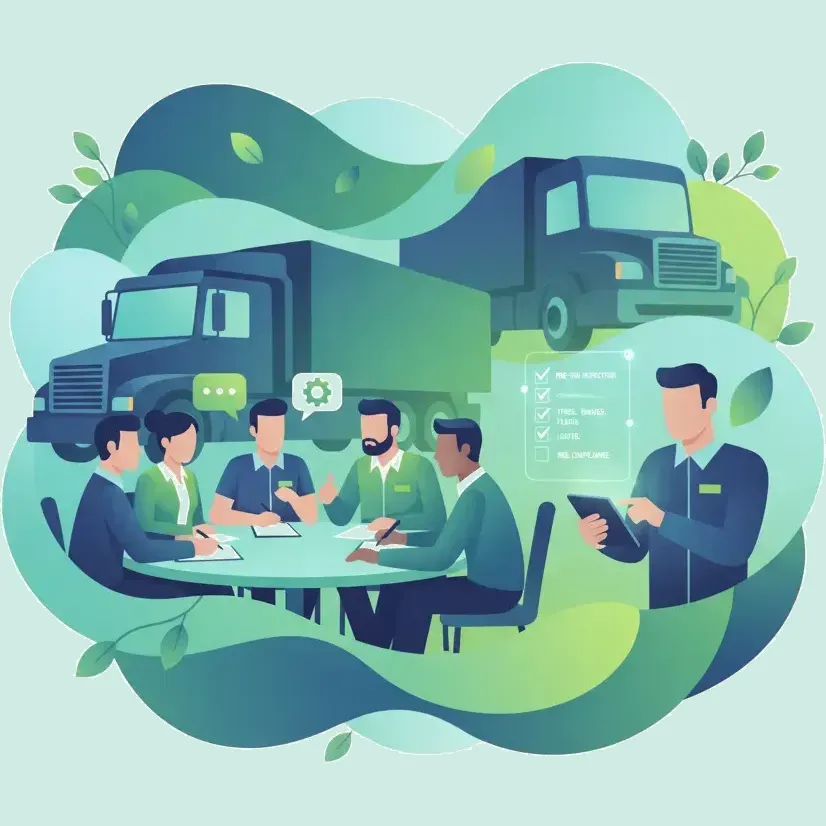
Operating a heavy goods vehicle comes with heightened professional and legal responsibilities. This lesson examines the driver's duties regarding pre-trip inspections, load security, and continuous vehicle maintenance. It emphasizes the ethical obligation to protect vulnerable road users like cyclists and pedestrians, and stresses the importance of maintaining professional conduct and adhering to all traffic regulations to ensure road safety.

This lesson introduces the various types of trailers and semitrailers used in commercial transport, from rigid drawbar trailers to articulated semitrailers. It explains their distinct characteristics, including legal dimensional limits, typical axle configurations, and maximum loading capacities as defined by Danish regulations. Understanding these differences is fundamental for selecting the right combination for a given load and ensuring legal operation.
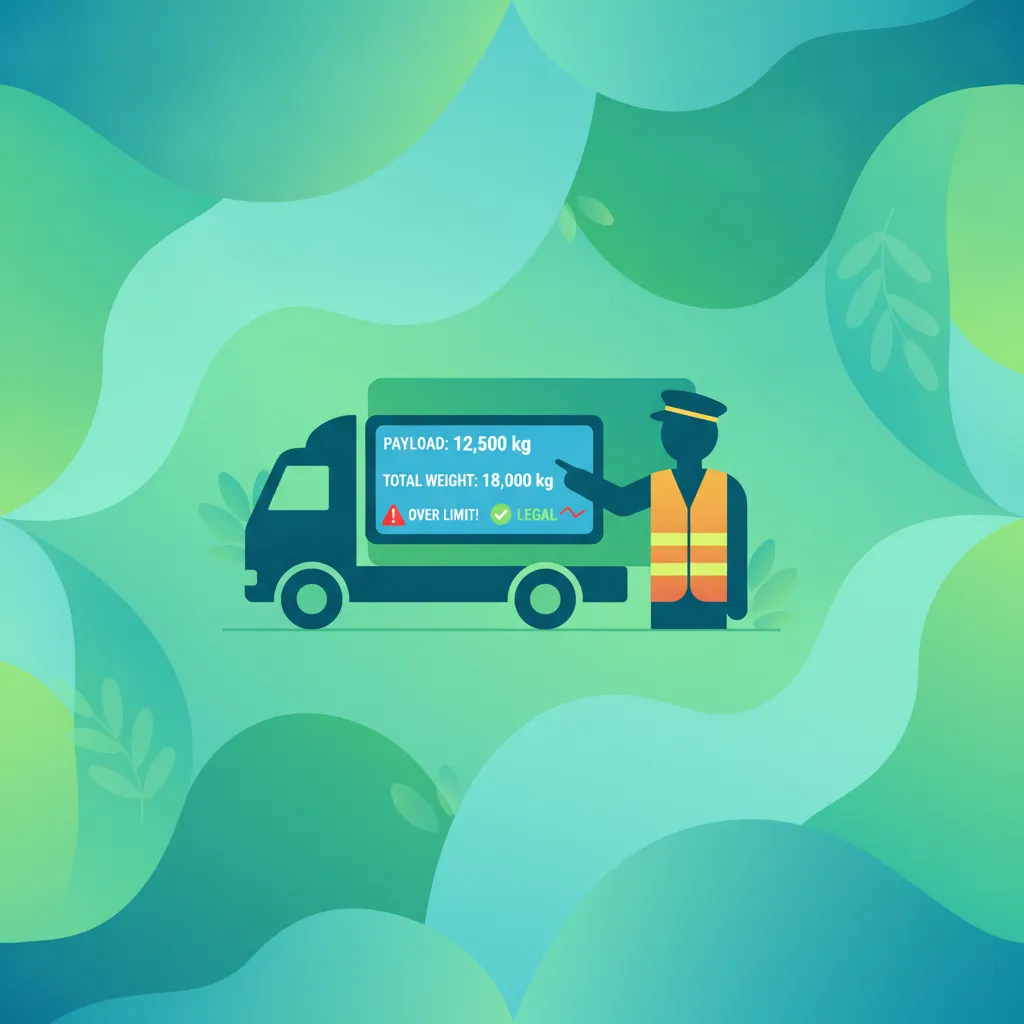
This lesson teaches the essential skill of calculating a heavy vehicle's payload capacity, taking into account both its design specifications and legal restrictions. It explains the relationship between unladen weight, gross vehicle mass, and the resulting legal payload. The content emphasizes the critical role of accurate load planning to prevent overloading, which poses significant safety risks and leads to legal penalties.

This lesson details the legal consequences for professional drivers who commit traffic infractions. It explains the Danish system of fines and penalty points for various offenses, from speeding to load security violations, and outlines the conditions that can lead to license suspension. The content underscores the professional and legal obligation to uphold traffic law at all times to maintain a clean driving record.
Explore the legal framework and official requirements for obtaining Danish C-category driving licenses. Understand the Danish Road Traffic Act and Executive Order on Driving Licenses for professional heavy vehicle operation.
This lesson details the legal framework governing the acquisition of a C-category driving license in Denmark. It covers the essential requirements, including medical fitness standards, the structure of the theoretical examination, and the scope of mandatory practical training. Furthermore, it explains the ongoing legal obligations of a license holder, such as renewal procedures and continuous compliance with evolving traffic laws and regulations.
This lesson introduces the fundamental concepts of vehicle mass, clarifying the legal distinctions between total weight, actual weight, and loaded weight under Danish law. It emphasizes the importance of strictly adhering to these limits to ensure safe vehicle operation and handling characteristics. The content also details the significant safety risks and legal penalties associated with exceeding weight limits, such as fines and vehicle impoundment.
This lesson provides a detailed explanation of the Category B license, specifying which vehicles you are permitted to drive. It covers crucial limitations such as maximum authorised mass, passenger capacity, and the regulations for towing a trailer. Furthermore, it clarifies the legal distinctions between holding a license for an automatic versus a manual transmission vehicle, grounding your knowledge in official Danish legislation.
This lesson focuses on the rules and best practices for operating heavy vehicles on motorways and interchanges. It details Danish regulations regarding lane usage and speed limits for lorries, and explains safe techniques for merging into and exiting high-speed traffic. Maintaining a safe and appropriate following distance to allow for longer stopping distances is a key focus of the content.
This lesson teaches the essential skill of calculating a heavy vehicle's payload capacity, taking into account both its design specifications and legal restrictions. It explains the relationship between unladen weight, gross vehicle mass, and the resulting legal payload. The content emphasizes the critical role of accurate load planning to prevent overloading, which poses significant safety risks and leads to legal penalties.
This lesson introduces the various types of trailers and semitrailers used in commercial transport, from rigid drawbar trailers to articulated semitrailers. It explains their distinct characteristics, including legal dimensional limits, typical axle configurations, and maximum loading capacities as defined by Danish regulations. Understanding these differences is fundamental for selecting the right combination for a given load and ensuring legal operation.
This lesson provides a detailed breakdown of the Danish licence categories for passenger transport. It explains the differences between D1, D1E, D, and DE licences based on passenger capacity, vehicle size, and permitted combinations. The content clarifies the legal definitions and professional qualifications necessary for obtaining each licence, ensuring drivers operate within the correct regulatory framework.
This lesson focuses on the legal dimensional limits—length, width, and height—for heavy goods vehicles and their interaction with road infrastructure. It explains Danish regulations and the importance of planning routes to avoid constraints such as low bridges, narrow tunnels, and weight-restricted roads. Learners will understand how to interpret road signs indicating these limits and the procedures for obtaining permits for oversized loads.

This lesson provides practical guidance for navigating the challenges of urban deliveries. It details Danish regulations for using loading zones, including time restrictions and parking rules, and offers strategies for effective route planning in dense traffic. The content emphasizes awareness of pedestrian-heavy areas and the importance of maneuvering with caution to ensure public safety during delivery operations.
Operating a heavy goods vehicle comes with heightened professional and legal responsibilities. This lesson examines the driver's duties regarding pre-trip inspections, load security, and continuous vehicle maintenance. It emphasizes the ethical obligation to protect vulnerable road users like cyclists and pedestrians, and stresses the importance of maintaining professional conduct and adhering to all traffic regulations to ensure road safety.
Find clear answers to common questions learners have about Overview of C1, C1E, C, and CE. Learn how the lesson is structured, which driving theory objectives it supports, and how it fits into the overall learning path of units and curriculum progression in Denmark. These explanations help you understand key concepts, lesson flow, and exam focused study goals.
The C1 category covers vehicles with a maximum authorized mass between 3,500 kg and 7,500 kg. A Category C license allows you to drive vehicles with a total mass exceeding 3,500 kg with no upper limit, making it the standard for heavy goods vehicles.
You need the 'E' suffix (C1E or CE) when you intend to operate a heavy vehicle combined with a trailer that exceeds the standard weight allowances permitted by a solo license. These categories are specifically for combination vehicles.
While the fundamental traffic rules apply to all drivers, heavy vehicle licenses involve additional legal requirements regarding vehicle mass, axle loads, and driver professional certifications that are not required for a standard B license.
Yes, the Danish theory exam for heavy vehicles often includes questions about mass thresholds and how they dictate which license category is legally required for a specific transport task.
Use our powerful search tool to pinpoint specific Danish driving theory topics, road signs, or traffic situations you need to review. Start exploring relevant practice sets now to reinforce your knowledge and build confidence for your upcoming driving licence exam.