
This lesson explores the vital concepts of vehicle mass and weight limits for heavy goods vehicles in Denmark. You will learn the distinctions between total, actual, and payload weight, which are essential for staying within legal limits and ensuring road safety. Understanding these principles is a core requirement for your Category C theory exam.
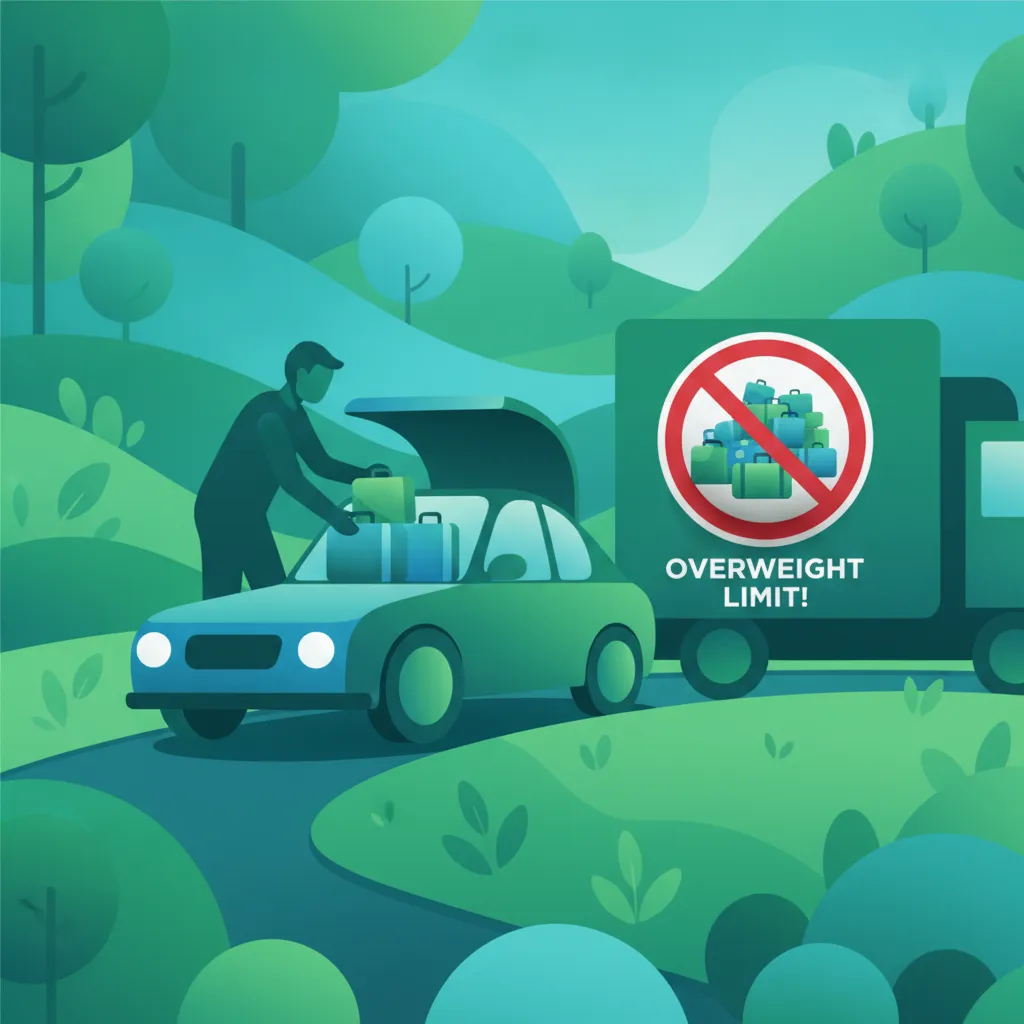
Lesson content overview
Operating heavy goods vehicles, especially under a Category C license in Denmark, demands a thorough understanding of vehicle mass and weight limits. These limits are not arbitrary; they are critical for ensuring road safety, preventing vehicle damage, and protecting vital road infrastructure such as bridges and highways. This comprehensive lesson introduces the fundamental concepts of vehicle mass and clarifies the legal distinctions between various weight terms under Danish law, emphasizing the severe safety risks and legal penalties associated with exceeding these limits.
For professional drivers operating heavy goods vehicles in Denmark, mastering the principles of vehicle weight management is paramount. Misjudging or ignoring weight limits can have dire consequences, ranging from compromised vehicle handling and increased accident risk to substantial legal penalties and damage to public infrastructure. This lesson forms a foundational element of the Complete Danish Heavy Vehicle Theory Course for Category C License, laying the groundwork for safe and compliant operation.
Understanding these concepts ensures that every journey is undertaken with maximum safety and adherence to Danish traffic regulations. It safeguards not only the driver and vehicle but also other road users and the long-term integrity of our road networks.
In Denmark, as in many other countries, specific terminology is used to define a vehicle's weight characteristics. It's crucial to distinguish between these terms as they carry distinct legal and operational implications for Category C heavy vehicles. We will explore the definitions and practical meanings of Permissible Total Weight, Actual Weight, and Loaded Weight.
The Permissible Total Weight, often referred to as Køretøjets Totalvægt or Fører I Alt in Danish, represents the absolute maximum weight that a vehicle is legally allowed to have when fully laden. This critical figure includes the vehicle itself, all its occupants, fuel, and cargo. It is a fundamental safety parameter specified by the vehicle manufacturer and officially documented in the vehicle's registration certificate.
This limit is established to guarantee the vehicle operates safely within its design capabilities. Exceeding the permissible total weight compromises the structural integrity of the chassis, axles, suspension, and braking system. It directly affects the vehicle's ability to steer effectively, brake efficiently, and maintain stability, especially during maneuvers or adverse weather conditions. For Category C heavy vehicles, strict adherence to this limit is non-negotiable, as even minor overloads can have significant impacts due to the sheer mass involved.
Always check the vehicle's registration certificate for the official Permissible Total Weight before loading any cargo. This document is your primary source of truth for legal weight limits.
The Actual Weight, known as Faktisk Vægt in Danish, refers to the real-time, measured weight of a vehicle at any given moment. This includes the weight of the vehicle itself, the driver, any passengers, a full or partial fuel tank, and all cargo currently on board. Unlike the permissible total weight, which is a static maximum limit, the actual weight is a dynamic value that changes as fuel is consumed or as cargo and passengers are added or removed.
The primary purpose of monitoring the actual weight is to ensure it never exceeds the permissible total weight. Before departing, especially with commercial loads, drivers are responsible for verifying that their vehicle's actual weight is within legal bounds. This often involves using weighbridges or other certified weighing equipment. Failure to accurately determine and manage the actual weight can easily lead to unintentional overloading, which carries significant legal and safety risks.
The Loaded Weight, also termed Maksimalt Last or Nyttelast (payload) in Danish, represents the maximum weight of cargo and passengers that a vehicle can legally and safely carry. This value is derived by subtracting the vehicle's Curb Weight from its Permissible Total Weight.
The curb weight is the vehicle's weight with all standard equipment, including a full tank of fuel, but without any passengers or cargo. Therefore, the formula for calculating the maximum loaded weight is:
Loaded Weight = Permissible Total Weight - Curb Weight
This calculation is essential for planning cargo loads and ensuring that the vehicle is not overloaded. It helps drivers and logistics planners determine how much freight can be transported without exceeding the vehicle's legal and safe carrying capacity. Miscalculating or ignoring the weight of passengers, the driver, or even special equipment can inadvertently reduce the available payload and lead to an overload situation.
The weight of a vehicle with all its standard equipment, including a full tank of fuel and all necessary fluids, but without any passengers or cargo.
Danish road traffic regulations are stringent when it comes to vehicle weight limits, especially for heavy goods vehicles. These rules are in place to ensure public safety, protect road infrastructure, and maintain fair competition within the transport industry. Drivers of Category C vehicles bear a significant responsibility to understand and comply with these regulations.
Every heavy goods vehicle has its permissible total weight clearly stated in its registration documents. This figure is the absolute maximum weight allowed. It is legally mandatory for drivers to ensure that the actual weight of their vehicle, at any point during its operation, does not surpass this specified limit. The rationale behind this strict rule is multi-faceted: it prevents undue stress on vehicle components, preserves the lifespan of roads and bridges, and minimizes accident risks associated with compromised vehicle performance.
Under Danish law, the driver of a commercial transport vehicle is primarily responsible for accurately calculating and verifying the vehicle's weight before commencing a journey. This isn't merely a recommendation; it's a legal obligation. Drivers must use available information, such as cargo manifests, and, when necessary, certified weighbridges to confirm that the actual weight, and by extension, the axle loads, remain within permissible limits. This proactive approach is fundamental to ensuring safety and compliance.
Danish police and traffic authorities regularly conduct roadside inspections and operate stationary checkpoints where heavy goods vehicles may be pulled over for weight checks. These inspections can be random or targeted, often focusing on routes known for heavy traffic or specific types of transport. During such checks, if a vehicle is found to be overloaded, immediate action will be taken. Compliance with these checks is mandatory, and drivers must cooperate fully with law enforcement.
The consequences of exceeding weight limits in Denmark are severe and serve as a strong deterrent. Overloaded vehicles face hefty fines, which can vary depending on the degree of overload. Beyond monetary penalties, authorities have the power to order the immediate unloading of the excess cargo at the driver's expense. In more serious cases, or for repeated offenses, the vehicle itself may be impounded, leading to significant operational disruption and further costs. These penalties underscore the critical importance of strict adherence to weight regulations.
Overloading a heavy goods vehicle is not just a legal infraction; it fundamentally undermines road safety. The physics of an overloaded vehicle change dramatically, impacting its dynamic performance and increasing the risk of accidents.
One of the most immediate and dangerous consequences of overloading is a significant increase in braking distance. The greater the mass, the more kinetic energy the brakes must dissipate to bring the vehicle to a stop. Overloaded brakes are forced to work beyond their designed capacity, leading to overheating, reduced friction, and premature wear. In an emergency situation, this extended stopping distance can be the difference between a safe stop and a severe collision.
An overloaded heavy vehicle experiences drastically altered handling characteristics. The suspension system is pushed beyond its limits, leading to reduced shock absorption and a softer, less responsive ride. This can result in excessive body roll during turns, making the vehicle more prone to overturning, especially on bends or during evasive maneuvers. Steering responsiveness also diminishes, making it harder for the driver to maintain control, particularly in high winds or on uneven road surfaces.
Tires on an overloaded vehicle are subjected to extreme pressure and heat. This excessive strain accelerates tire wear, leading to a shorter lifespan and an increased risk of tire failure, including dangerous blowouts. A tire blowout on a heavy goods vehicle, especially at speed, can cause a sudden loss of control, potentially leading to catastrophic accidents for both the truck and other road users.
Consistent overloading puts immense stress on virtually every component of a heavy vehicle. This includes the chassis, axles, suspension springs, shock absorbers, wheel bearings, and drivetrain. Such stress significantly reduces the lifespan of these components, leading to frequent breakdowns, costly repairs, and increased maintenance downtime. Furthermore, overloaded heavy vehicles inflict disproportionate damage on road surfaces, bridges, and other infrastructure elements, contributing to potholes, cracks, and accelerated deterioration of the transport network.
Even experienced heavy vehicle drivers can sometimes make errors regarding weight management. Understanding common pitfalls can help Category C drivers prevent costly and dangerous violations.
The most direct violation is simply loading more weight than the vehicle's permissible total weight allows. This can happen due to miscalculation of cargo weight, ignoring the vehicle's specifications, or deliberately attempting to transport more than legally allowed.
How to avoid: Always cross-reference the cargo manifest with the vehicle's registration certificate. Use a weighbridge before departure for confirmation, especially with varied or unknown cargo weights.
Sometimes, drivers focus solely on the cargo weight and forget to account for their own weight and the weight of any passengers. While seemingly small in comparison to the total load, these weights accumulate and can push a nearly full truck over its limit.
How to avoid: Always include an estimated weight for the driver and any occupants when calculating the available payload.
Using an incorrect curb weight for the vehicle can lead to an inaccurate payload calculation. Some might mistakenly use the vehicle's dry weight (without fuel and fluids) or an outdated curb weight.
How to avoid: Refer to the official vehicle registration documents or manufacturer specifications for the precise curb weight. Remember that modifications to the vehicle can alter its curb weight.
Fuel, especially diesel for heavy vehicles, is remarkably heavy. A full tank can add hundreds of kilograms to the vehicle's weight. Overlooking this when planning a load, particularly on long journeys requiring a full tank, can lead to an overload.
How to avoid: Account for the weight of a full fuel tank when calculating the available payload, or factor in the weight of the fuel expected to be on board at the heaviest point of the journey.
While the total actual weight might be within the permissible limit, improper load distribution can lead to one or more axles being overloaded. This is a separate, equally serious violation with its own set of safety risks, as discussed in detail in the "Axle Loads and Distribution" lesson.
How to avoid: Always distribute cargo evenly across the vehicle's load bed, ensuring that the weight is balanced and not concentrated over a single axle or group of axles. Use load securing techniques to prevent shifting.
Vehicle weight limits are not static concepts; their implications can vary significantly depending on external factors and specific driving conditions.
Adverse weather, such as heavy rain, snow, or ice, significantly reduces tire grip and braking effectiveness. In these conditions, the risks associated with an overloaded vehicle are amplified. Longer braking distances become even more dangerous, and the reduced stability makes the vehicle harder to control on slippery surfaces. Stricter adherence to weight limits and reduced speeds are crucial in poor weather.
Specific road types and infrastructure elements have their own weight restrictions. Bridges, for instance, often have signs indicating maximum permissible weights for single vehicles or combinations. Exceeding these limits can cause severe structural damage to the bridge and put lives at risk. Similarly, unpaved roads or those with weaker foundations may not be able to support heavy vehicles at their maximum permissible weight.
When a heavy goods vehicle operates with a trailer or semi-trailer, the situation becomes more complex. There are not only individual weight limits for the towing vehicle and the trailer but also a maximum Gross Combination Weight (GCW) that applies to the entire vehicle combination. This combined limit must be carefully respected, and the distribution of weight across all axles of both the truck and trailer becomes critical.
Overloaded heavy vehicles pose a particular threat to vulnerable road users like pedestrians and cyclists. The extended braking distances mean less reaction time for the driver to avoid a collision. Reduced maneuverability and stability also make it harder for an overloaded truck to react safely in urban environments or areas with high pedestrian traffic, increasing the risk of severe incidents.
A deep understanding of vehicle mass and weight limits is fundamental for any professional driver obtaining a Danish Category C license. The distinctions between permissible total weight, actual weight, and loaded weight are not just theoretical concepts; they are daily operational parameters that directly impact safety, compliance, and efficiency.
By accurately calculating and verifying vehicle weights, drivers uphold their legal responsibilities, prevent dangerous overloading, and contribute to the safety of all road users and the integrity of Danish infrastructure. Ignoring these limits leads to severe legal penalties and significantly elevated risks of accidents and mechanical failures. Mastering these principles is a cornerstone of responsible heavy vehicle operation and essential for passing your official theoretical examination.
This lesson establishes the essential distinction between Permissible Total Weight (the legal maximum from the registration certificate), Actual Weight (the real-time measured weight), and Loaded Weight or payload (what can be carried after subtracting curb weight). Danish law places full responsibility on the driver to verify weight compliance before any journey using official documents and certified weighbridges. The safety consequences of overloading are severe: extended braking distances, reduced stability, increased risk of tire blowouts, and accelerated damage to vehicle components and road infrastructure. Penalties for violations include substantial fines, mandatory offloading at the driver's expense, and potential vehicle impoundment. These principles are foundational for both the Category C theory exam and safe professional driving practice.
A short set of high-value points that capture the most important learning from this lesson.
Permissible Total Weight (Fører I Alt) is the maximum legal weight including vehicle, occupants, fuel, and cargo as shown on the registration certificate.
Actual Weight (Faktisk Vægt) is the real-time measured weight that changes as fuel is consumed or cargo is loaded/unloaded.
Loaded Weight (Maksimalt Last) equals Permissible Total Weight minus Curb Weight, representing the maximum cargo payload.
Drivers bear primary legal responsibility for verifying vehicle weight before departure using manifests or weighbridges.
Overloading compromises braking distance, vehicle stability, tire integrity, and road infrastructure.
Explore all units and lessons included in this driving theory course.
The formula: Loaded Weight = Permissible Total Weight - Curb Weight
The driver must account for their own weight and passengers when calculating available payload, not just cargo.
Fuel weight matters—a full tank of diesel adds hundreds of kilograms that can push a vehicle over its limit.
Axle load violations can occur even when total weight is within limits if cargo distribution is uneven.
Bridge and tunnel restrictions may impose additional weight limits independent of the vehicle's registration figures.
Assuming only cargo weight matters and forgetting to include the driver, passengers, and full fuel tank in calculations.
Using an incorrect or outdated curb weight, such as confusing it with dry weight or unladen weight without fluids.
Loading cargo without first checking the vehicle's registration certificate for the official permissible total weight.
Assuming the total weight being under the limit means all individual axle loads are within their limits.
Neglecting to use a weighbridge when cargo weights are unknown or variable, relying only on manifest estimates.
Lesson content overview
A short set of high-value points that capture the most important learning from this lesson.
Permissible Total Weight (Fører I Alt) is the maximum legal weight including vehicle, occupants, fuel, and cargo as shown on the registration certificate.
Actual Weight (Faktisk Vægt) is the real-time measured weight that changes as fuel is consumed or cargo is loaded/unloaded.
Loaded Weight (Maksimalt Last) equals Permissible Total Weight minus Curb Weight, representing the maximum cargo payload.
Drivers bear primary legal responsibility for verifying vehicle weight before departure using manifests or weighbridges.
Overloading compromises braking distance, vehicle stability, tire integrity, and road infrastructure.
Explore all units and lessons included in this driving theory course.
The formula: Loaded Weight = Permissible Total Weight - Curb Weight
The driver must account for their own weight and passengers when calculating available payload, not just cargo.
Fuel weight matters—a full tank of diesel adds hundreds of kilograms that can push a vehicle over its limit.
Axle load violations can occur even when total weight is within limits if cargo distribution is uneven.
Bridge and tunnel restrictions may impose additional weight limits independent of the vehicle's registration figures.
Assuming only cargo weight matters and forgetting to include the driver, passengers, and full fuel tank in calculations.
Using an incorrect or outdated curb weight, such as confusing it with dry weight or unladen weight without fluids.
Loading cargo without first checking the vehicle's registration certificate for the official permissible total weight.
Assuming the total weight being under the limit means all individual axle loads are within their limits.
Neglecting to use a weighbridge when cargo weights are unknown or variable, relying only on manifest estimates.
Explore search topics learners often look for when studying Understanding Vehicle Mass and Weight Limits. These topics reflect common questions about road rules, driving situations, safety guidance, and lesson level theory preparation for learners in Denmark.
Browse additional driving theory lessons that cover connected traffic rules, road signs, and common driving situations related to this topic. Improve your understanding of how different rules interact across everyday traffic scenarios.
Understand Danish regulations for total weight, actual weight, and loaded weight in heavy vehicles. Learn the critical safety implications and legal penalties for exceeding weight limits, ensuring compliance for Category C drivers.

This lesson teaches the essential skill of calculating a heavy vehicle's payload capacity, taking into account both its design specifications and legal restrictions. It explains the relationship between unladen weight, gross vehicle mass, and the resulting legal payload. The content emphasizes the critical role of accurate load planning to prevent overloading, which poses significant safety risks and leads to legal penalties.

This lesson focuses on the legal dimensional limits—length, width, and height—for heavy goods vehicles and their interaction with road infrastructure. It explains Danish regulations and the importance of planning routes to avoid constraints such as low bridges, narrow tunnels, and weight-restricted roads. Learners will understand how to interpret road signs indicating these limits and the procedures for obtaining permits for oversized loads.

Proper axle load distribution is crucial for the safety and legality of heavy vehicle operations. This lesson explains how axle pressure is defined and regulated, highlighting the importance of distributing weight correctly across all axles. It covers how imbalanced loads can negatively affect braking performance, steering control, and overall vehicle stability, while also explaining the Danish regulations for maximum axle loads.

Operating a heavy goods vehicle comes with heightened professional and legal responsibilities. This lesson examines the driver's duties regarding pre-trip inspections, load security, and continuous vehicle maintenance. It emphasizes the ethical obligation to protect vulnerable road users like cyclists and pedestrians, and stresses the importance of maintaining professional conduct and adhering to all traffic regulations to ensure road safety.

This lesson focuses on the rules and best practices for operating heavy vehicles on motorways and interchanges. It details Danish regulations regarding lane usage and speed limits for lorries, and explains safe techniques for merging into and exiting high-speed traffic. Maintaining a safe and appropriate following distance to allow for longer stopping distances is a key focus of the content.

This lesson introduces the various types of trailers and semitrailers used in commercial transport, from rigid drawbar trailers to articulated semitrailers. It explains their distinct characteristics, including legal dimensional limits, typical axle configurations, and maximum loading capacities as defined by Danish regulations. Understanding these differences is fundamental for selecting the right combination for a given load and ensuring legal operation.

Properly functioning lighting and signaling systems are fundamental for safe communication on the road. This lesson details the purpose and correct use of all exterior lights, including headlights, brake lights, turn signals, and hazard lights, according to Danish law. It emphasizes the driver's responsibility to ensure these systems are clean and operational to maintain visibility and clearly signal maneuvers to other road users.
Explore how load distribution affects heavy vehicle stability, handling, braking distance, and tire wear. Understand the physics and practical considerations for safe loading within Danish Category C theory.
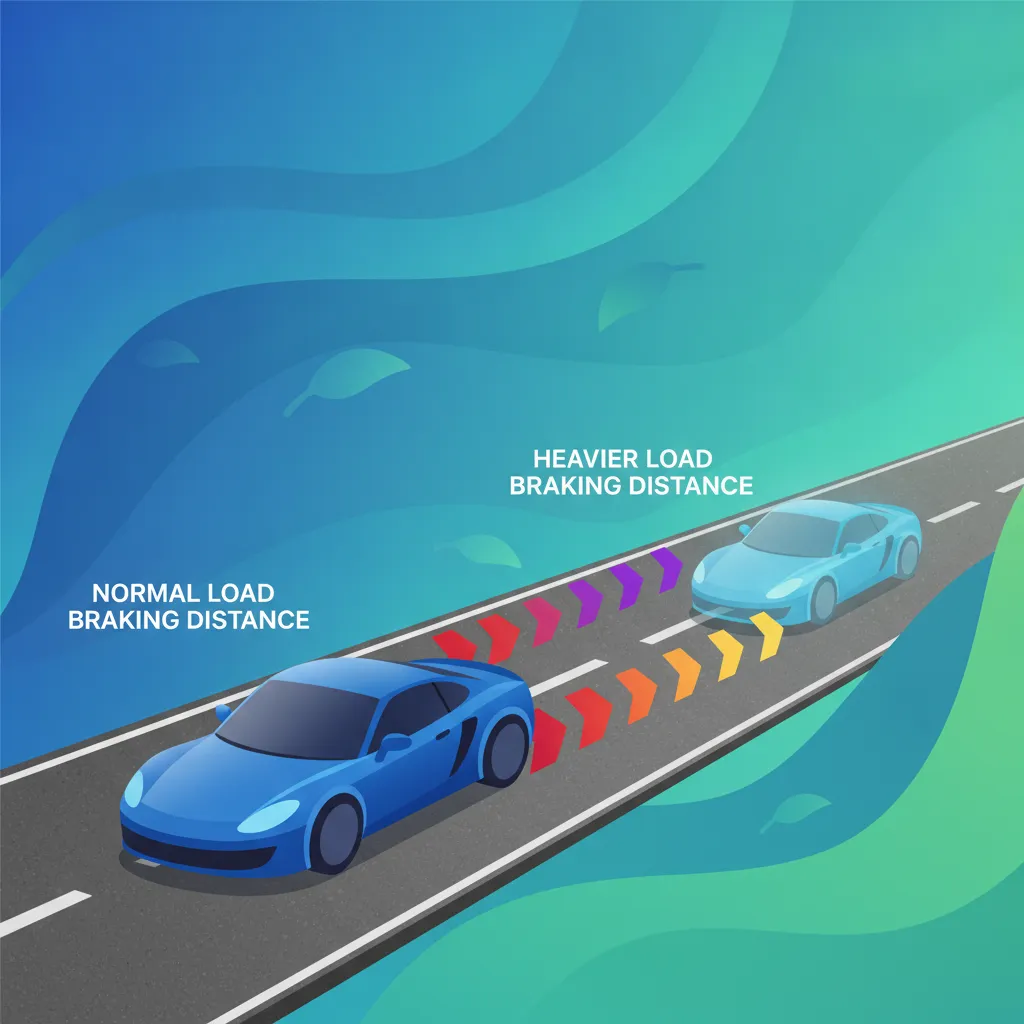
This lesson explores the direct relationship between a vehicle's mass, its speed, and the distance required to stop. It explains how increased load significantly lengthens the braking distance and details how road conditions like gradient and surface friction further affect this calculation. Learners will understand the importance of anticipating stops and maintaining a greater following distance to ensure safety.

This lesson explains the fundamental physics of load distribution and its direct impact on a heavy vehicle's centre of gravity. It details how the positioning of cargo—whether high, low, forward, or back—alters handling characteristics and overall stability. The content emphasizes the importance of achieving a balanced load to minimize rollover risk and comply with Danish regulations for safe weight distribution.
Proper axle load distribution is crucial for the safety and legality of heavy vehicle operations. This lesson explains how axle pressure is defined and regulated, highlighting the importance of distributing weight correctly across all axles. It covers how imbalanced loads can negatively affect braking performance, steering control, and overall vehicle stability, while also explaining the Danish regulations for maximum axle loads.

This lesson breaks down the concept of total stopping distance into its core components: perception, reaction, and braking distances. It explains how variables such as vehicle speed, tyre quality, and road friction significantly impact how quickly you can stop. By understanding these principles, you will be ableto maintain a safe following distance and avoid collisions.

This lesson teaches the proper application of auxiliary speed control devices, such as retarders and engine brakes. It focuses on their use for maintaining a safe, controlled speed on long downhill gradients, which helps prevent service brake overheating and fade. The content also covers Danish regulations related to these systems and their benefits for reducing brake wear and improving overall safety.

This lesson introduces the primary components of heavy vehicle braking systems, distinguishing between service, parking, and auxiliary brakes like retarders. It explains the mechanical and pneumatic principles behind how these systems operate to safely slow and stop a large vehicle. Understanding the function of each component is essential for proper use, maintenance, and compliance with Danish braking regulations.

This lesson examines the primary factors that contribute to heavy vehicle instability and the risk of rollover. It explains how high-speed cornering, sudden maneuvers, and improperly secured loads can create dangerous lateral forces that compromise vehicle stability. Learners will understand how to identify high-risk situations and apply preventive driving techniques to maintain control and adhere to Danish safety guidelines.

This lesson provides a clear, safety-oriented protocol for handling a vehicle breakdown or tyre failure. It covers how to safely maneuver the vehicle to the roadside, the correct use of hazard lights and warning triangles to alert other traffic, and procedures for contacting assistance. Adhering to these steps, as required by Danish law, is critical for protecting yourself and other road users from further incident.

This lesson addresses how to safely carry luggage or a passenger on a motorcycle. It explains the effects of added weight on the vehicle's balance, steering, and braking performance. Learners will understand correct procedures for securing loads and adjusting their riding technique to maintain control and stability.

This lesson explains the components of total stopping distance: reaction distance and braking distance. It provides instruction on how to use both front and rear brakes effectively for a controlled and efficient stop. The content also highlights how factors like speed, road condition, and tyre quality influence how quickly you can stop.
Find clear answers to common questions learners have about Understanding Vehicle Mass and Weight Limits. Learn how the lesson is structured, which driving theory objectives it supports, and how it fits into the overall learning path of units and curriculum progression in Denmark. These explanations help you understand key concepts, lesson flow, and exam focused study goals.
Total weight is the maximum weight the vehicle is allowed to have according to its registration, while actual weight is the weight of the vehicle including its current load at a specific moment. You must ensure your actual weight never exceeds the maximum permissible total weight for your Category C vehicle.
Exceeding weight limits negatively impacts your braking distance, handling, and stability. It increases the risk of mechanical failure, such as brake fade, and makes the vehicle prone to rollovers or difficulty in navigating turns.
Yes, understanding weight limits is a fundamental part of the professional driver curriculum. You can expect questions regarding how to find these limits in your vehicle documentation and the consequences of exceeding them.
Overloading can result in significant fines and, in serious cases, the temporary impoundment of the vehicle until the load is corrected. It is the driver's responsibility to ensure the vehicle is within its legal limits before setting off.
Use our powerful search tool to pinpoint specific Danish driving theory topics, road signs, or traffic situations you need to review. Start exploring relevant practice sets now to reinforce your knowledge and build confidence for your upcoming driving licence exam.