
This lesson provides the foundational knowledge required for your professional journey as a heavy vehicle driver in Denmark. It explores the essential legal framework for obtaining and maintaining a Category C license, ensuring you understand your administrative and professional responsibilities from the start.
Lesson content overview
Obtaining and maintaining a Category C driving license in Denmark involves a precise legal framework designed to ensure the highest standards of safety and competence for professional heavy vehicle drivers. This comprehensive lesson details the essential requirements, from medical fitness and rigorous examination structures to ongoing legal obligations, all critical for anyone aspiring to operate heavy goods vehicles (HGVs) in Denmark. Understanding these regulations is not merely about passing a test; it is about embracing the significant responsibility that comes with controlling a large and powerful vehicle on public roads.
The legal provisions for a Danish Category C license are meticulously crafted to ensure that every driver is medically sound, thoroughly knowledgeable about vehicle dynamics and traffic laws, and continuously compliant with evolving regulations. This foundation safeguards not only the driver but also other road users, cargo, and the vehicle itself. A strong grasp of this framework is the first step towards a successful and safe career as a heavy vehicle driver in Denmark.
Before you can legally operate a heavy goods vehicle in Denmark, you must fulfill several core requirements. These prerequisites are designed to establish your fundamental capability, both physically and intellectually, to handle the unique challenges associated with heavy vehicle operation.
Medical fitness is a cornerstone of heavy vehicle licensing. Drivers must meet specific physical and mental health criteria to obtain and retain a Category C license. This ensures that you are capable of reacting appropriately to complex driving situations, maintaining concentration over long periods, and safely maneuvering a large vehicle.
What Does Medical Fitness Entail? A comprehensive medical examination, conducted by a certified medical practitioner, is mandatory for all applicants. This examination assesses several critical health categories:
Do not assume a general health check is sufficient. The medical examination for a Category C license is specific and includes detailed tests tailored to the demands of heavy vehicle driving, such as specific visual field requirements and reaction time assessments.
These certifications are not a one-time requirement; they are integral to both your initial application and every subsequent license renewal. The rationale is clear: ensuring drivers remain physically capable of handling heavy vehicles safely throughout their driving career.
The theoretical examination for a Danish Category C license is a rigorous assessment of your knowledge regarding traffic laws, heavy vehicle dynamics, and safety procedures. It is structured to cover both foundational and specialized understanding essential for professional heavy vehicle operation.
Examination Structure and Content The Danish C license theory test consists of 120 multiple-choice questions. These questions are divided into two main categories:
Pass Criteria To successfully pass the Danish C license theory test, you must meet two distinct criteria:
The structure ensures that drivers not only possess a broad understanding of traffic regulations but also demonstrate proficiency in the specialized knowledge required for safe heavy vehicle operation. Overlooking the importance of the optional sections is a common misunderstanding that can lead to failure despite strong performance on mandatory topics.
Before you are permitted to attempt the theoretical examination for a Category C license, Danish law mandates the completion of specific practical training hours. This training ensures that candidates acquire foundational practical knowledge that directly supports their theoretical learning, bridging the gap between classroom understanding and real-world application.
Minimum Training Duration and Content A minimum of 5 hours of mandatory practical training is required. This instruction is not merely a formality; it covers vital topics that directly relate to the safe and legal operation of heavy vehicles. Key content areas typically include:
This mandatory training ensures that drivers enter the theoretical exam with a practical context, understanding the real-world implications of the rules and concepts they are being tested on. It is a common misunderstanding to assume that practical driving experience can entirely substitute for this structured theoretical training; both are essential.
Obtaining your Category C license is the first step; maintaining it requires ongoing commitment to safety, health, and legal compliance. The Danish legal framework includes provisions for regular renewal and continuous adherence to traffic laws to ensure drivers remain competent and fit throughout their professional careers.
Unlike standard passenger car licenses, Category C licenses require regular renewal to ensure that heavy vehicle drivers consistently meet the required standards. This periodic assessment is a critical component of maintaining high safety levels on Danish roads.
Renewal Interval and Requirements Category C licenses must be renewed every 5 years. This process is not automatic and necessitates proactive engagement from the license holder. The primary requirement for renewal is submitting an updated medical fitness certification.
Schedule a Medical Examination: Approximately 2-3 months before your license expiry date, arrange a comprehensive medical examination with a certified medical practitioner. This examination will assess your current visual acuity, hearing, cardiovascular health, musculoskeletal condition, and neurological status, confirming you still meet the specific health criteria for heavy vehicle drivers.
Obtain Medical Certificate: Upon successful completion of the medical examination, the practitioner will issue a medical fitness certificate.
Submit Documentation: Present your medical certificate and any other required documentation (e.g., current license, identification) to the relevant licensing authority in Denmark.
Receive New License: Once processed and approved, your renewed Category C license will be issued, valid for another five years.
It is a common misunderstanding to assume that professional refresher driving courses are mandatory for Category C license renewal in Denmark. While highly recommended for continuous professional development, they are not a legal requirement for renewal of the C license itself. The primary focus for renewal is medical fitness.
This regular renewal process, centered on medical reassessment, is vital for maintaining the ongoing health standards of professional drivers, reducing the risk of health-related incidents on the road.
Beyond the initial licensing and periodic renewal, Category C license holders in Denmark are subject to a continuous set of legal responsibilities. These obligations extend to every aspect of heavy vehicle operation, ensuring maximum safety and compliance with the Danish Road Traffic Act (Færdselsloven).
Key Areas of Responsibility Professional heavy vehicle drivers must consistently adhere to specific regulations, including but not limited to:
Drivers must ensure their vehicles are not only roadworthy but also operated within all legal parameters at all times. It is a grave misunderstanding to believe that professional drivers are exempt from general traffic laws or that their professional status grants them any special leeway; in fact, the expectations and penalties for heavy vehicle drivers are often more stringent due to the inherent risks involved.
The specific rules governing Category C licenses and heavy vehicle operation in Denmark are designed to minimize risks and ensure public safety. Understanding these regulations, their rationale, and the consequences of non-compliance is essential for every driver.
The legal framework is built upon several foundational regulations:
Non-compliance with these regulations and other traffic laws for heavy vehicles can lead to significant legal penalties, including fines, license suspension, and even imprisonment, depending on the severity of the offense.
The application of legal responsibilities can be influenced by various contextual factors:
The legal framework and licensing requirements for a Danish Category C driving license are robust, ensuring that only qualified and medically fit individuals operate heavy goods vehicles. Adhering to these regulations is paramount for safety and legal compliance.
The Danish Category C license legal framework establishes comprehensive requirements for heavy goods vehicle operators, including mandatory medical fitness certification, a structured 120-question theoretical examination with specific pass criteria (70% overall with max 25% errors on optional questions), and at least 5 hours of practical training before exam eligibility. License holders must renew every 5 years with updated medical certification and maintain continuous compliance with heavy vehicle regulations covering load securing, speed limits, driving and rest times, and vehicle roadworthiness. Understanding the distinction between mandatory and optional exam sections is critical, as is recognizing that medical standards are specifically designed for heavy vehicle operation.
A short set of high-value points that capture the most important learning from this lesson.
Medical fitness certification covering vision, hearing, cardiovascular, musculoskeletal, and neurological health is mandatory for obtaining and renewing a Category C license
The theory test comprises 120 questions split into 70 mandatory and 50 optional questions, requiring 70% overall pass (84 correct) and no more than 25% incorrect on optional questions (max 12 wrong)
A minimum of 5 hours of specific practical training must be completed before attempting the theoretical examination
Category C licenses must be renewed every 5 years by submitting an updated medical fitness certificate to the Danish licensing authority
Heavy vehicle drivers must continuously comply with load securing, speed limits, driving and rest times, and vehicle roadworthiness regulations under Færdselsloven
Explore all units and lessons included in this driving theory course.
The optional section of the theory test has a strict limit: no more than 25% of the 50 optional questions can be answered incorrectly
Schedule medical examinations 2-3 months before license expiry to allow time for certificate processing
Professional refresher driving courses are not legally required for license renewal in Denmark; medical certification is the primary requirement
Heavy vehicle drivers face stricter penalties and expectations than passenger car drivers due to the inherent risks of operating large vehicles
The medical examination for Category C is more comprehensive than a standard health check and includes specific visual field requirements and reaction time assessments
Assuming optional exam questions are truly optional for passing and neglecting to study them thoroughly, leading to failure despite strong mandatory section performance
Believing practical driving experience alone can substitute for the mandatory 5 hours of structured theoretical training
Thinking a general health check satisfies medical fitness requirements; the Category C medical examination is specifically tailored to heavy vehicle driving demands
Assuming professional drivers are exempt from general traffic laws or receive special leeway, when in fact penalties are often more stringent for heavy vehicles
Neglecting to account for the 5-year renewal cycle and letting medical certification lapse, which invalidates the license
Lesson content overview
A short set of high-value points that capture the most important learning from this lesson.
Medical fitness certification covering vision, hearing, cardiovascular, musculoskeletal, and neurological health is mandatory for obtaining and renewing a Category C license
The theory test comprises 120 questions split into 70 mandatory and 50 optional questions, requiring 70% overall pass (84 correct) and no more than 25% incorrect on optional questions (max 12 wrong)
A minimum of 5 hours of specific practical training must be completed before attempting the theoretical examination
Category C licenses must be renewed every 5 years by submitting an updated medical fitness certificate to the Danish licensing authority
Heavy vehicle drivers must continuously comply with load securing, speed limits, driving and rest times, and vehicle roadworthiness regulations under Færdselsloven
Explore all units and lessons included in this driving theory course.
The optional section of the theory test has a strict limit: no more than 25% of the 50 optional questions can be answered incorrectly
Schedule medical examinations 2-3 months before license expiry to allow time for certificate processing
Professional refresher driving courses are not legally required for license renewal in Denmark; medical certification is the primary requirement
Heavy vehicle drivers face stricter penalties and expectations than passenger car drivers due to the inherent risks of operating large vehicles
The medical examination for Category C is more comprehensive than a standard health check and includes specific visual field requirements and reaction time assessments
Assuming optional exam questions are truly optional for passing and neglecting to study them thoroughly, leading to failure despite strong mandatory section performance
Believing practical driving experience alone can substitute for the mandatory 5 hours of structured theoretical training
Thinking a general health check satisfies medical fitness requirements; the Category C medical examination is specifically tailored to heavy vehicle driving demands
Assuming professional drivers are exempt from general traffic laws or receive special leeway, when in fact penalties are often more stringent for heavy vehicles
Neglecting to account for the 5-year renewal cycle and letting medical certification lapse, which invalidates the license
Explore search topics learners often look for when studying Legal Framework and Licensing Requirements. These topics reflect common questions about road rules, driving situations, safety guidance, and lesson level theory preparation for learners in Denmark.
Browse additional driving theory lessons that cover connected traffic rules, road signs, and common driving situations related to this topic. Improve your understanding of how different rules interact across everyday traffic scenarios.
Understand the crucial process of renewing your Danish Category C license every five years, including medical fitness requirements. Learn about the continuous legal responsibilities professional drivers must uphold to ensure road safety and compliance with Danish traffic law.

Operating a heavy goods vehicle comes with heightened professional and legal responsibilities. This lesson examines the driver's duties regarding pre-trip inspections, load security, and continuous vehicle maintenance. It emphasizes the ethical obligation to protect vulnerable road users like cyclists and pedestrians, and stresses the importance of maintaining professional conduct and adhering to all traffic regulations to ensure road safety.
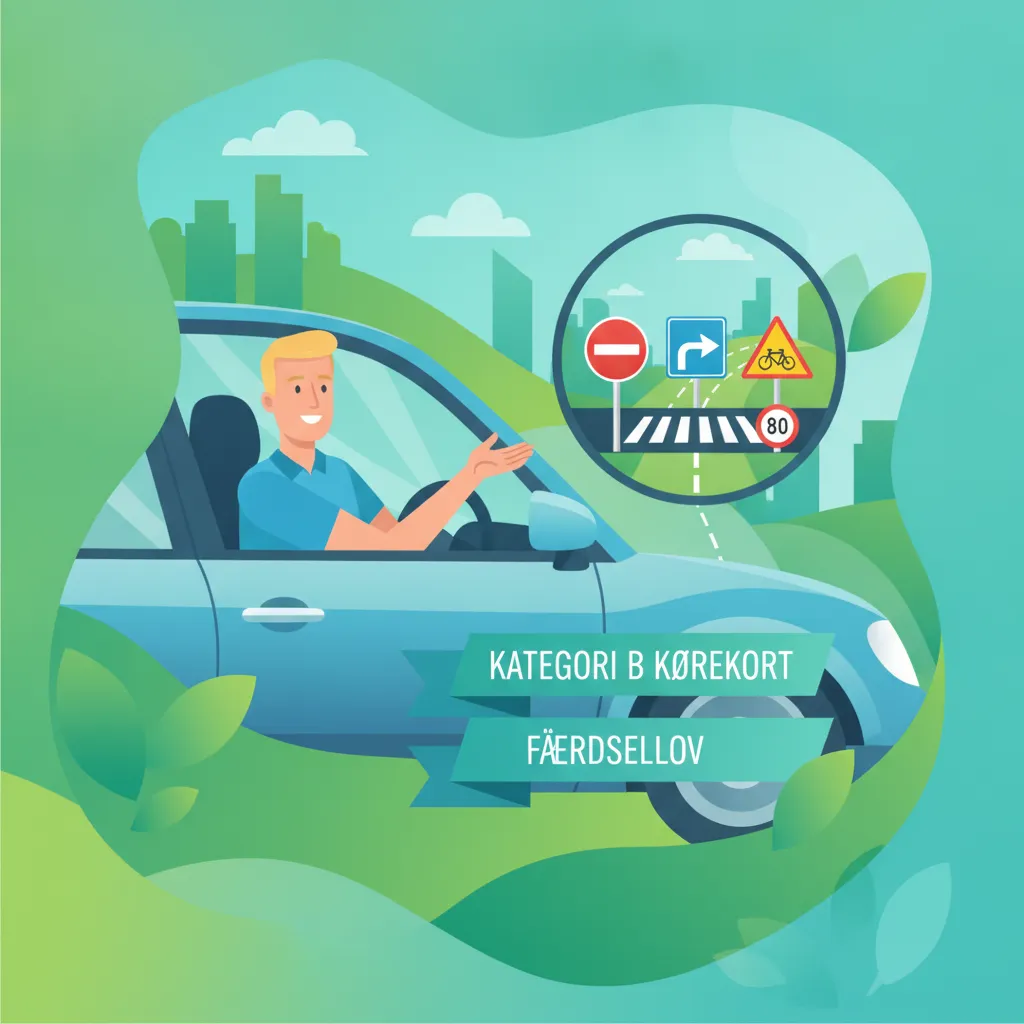
This lesson provides a detailed explanation of the Category B license, specifying which vehicles you are permitted to drive. It covers crucial limitations such as maximum authorised mass, passenger capacity, and the regulations for towing a trailer. Furthermore, it clarifies the legal distinctions between holding a license for an automatic versus a manual transmission vehicle, grounding your knowledge in official Danish legislation.

This lesson details the legal consequences for professional drivers who commit traffic infractions. It explains the Danish system of fines and penalty points for various offenses, from speeding to load security violations, and outlines the conditions that can lead to license suspension. The content underscores the professional and legal obligation to uphold traffic law at all times to maintain a clean driving record.
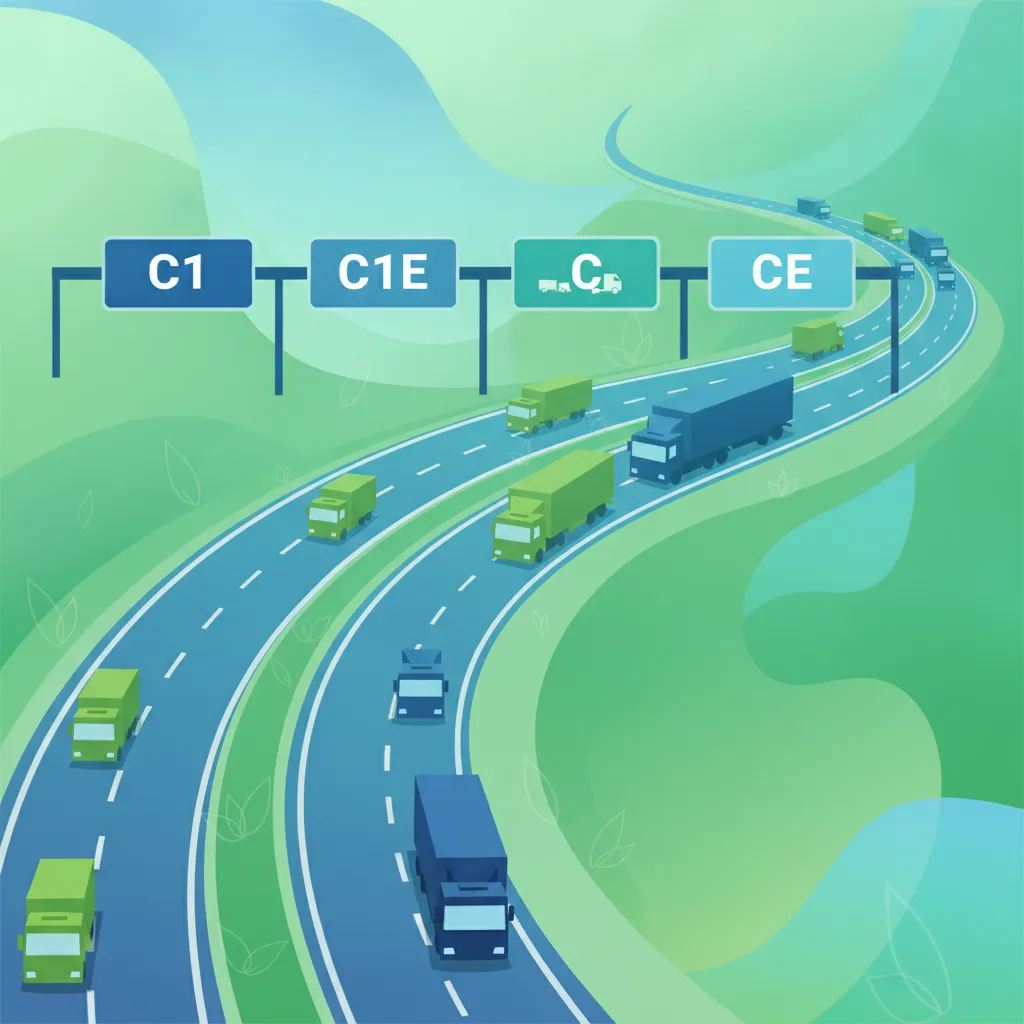
This lesson provides a detailed breakdown of the Danish C-category licenses, explaining the specific vehicle types and combinations allowed under each classification. It clarifies the legal definitions of mass limits for C1 and C vehicles, and how the addition of trailers creates the C1E and CE categories. The content focuses on the operational implications of these distinctions, helping you identify the correct license for different professional driving roles.

This lesson focuses on the rules and best practices for operating heavy vehicles on motorways and interchanges. It details Danish regulations regarding lane usage and speed limits for lorries, and explains safe techniques for merging into and exiting high-speed traffic. Maintaining a safe and appropriate following distance to allow for longer stopping distances is a key focus of the content.

This lesson focuses on the legal dimensional limits—length, width, and height—for heavy goods vehicles and their interaction with road infrastructure. It explains Danish regulations and the importance of planning routes to avoid constraints such as low bridges, narrow tunnels, and weight-restricted roads. Learners will understand how to interpret road signs indicating these limits and the procedures for obtaining permits for oversized loads.

This lesson emphasizes the professional driver's heightened responsibility to protect vulnerable road users. It revisits Danish regulations concerning cyclist priority, particularly during right turns, and details the correct procedures for maintaining safe overtaking distances. The content focuses on developing advanced situational awareness, using mirrors and cameras effectively, and anticipating the behavior of pedestrians and cyclists in urban environments.

Properly functioning lighting and signaling systems are fundamental for safe communication on the road. This lesson details the purpose and correct use of all exterior lights, including headlights, brake lights, turn signals, and hazard lights, according to Danish law. It emphasizes the driver's responsibility to ensure these systems are clean and operational to maintain visibility and clearly signal maneuvers to other road users.

This lesson provides a detailed breakdown of the Danish licence categories for passenger transport. It explains the differences between D1, D1E, D, and DE licences based on passenger capacity, vehicle size, and permitted combinations. The content clarifies the legal definitions and professional qualifications necessary for obtaining each licence, ensuring drivers operate within the correct regulatory framework.

This lesson details the specific procedures for safely transporting a heavy vehicle via ferry. It covers the process of boarding and maneuvering on the ferry deck, the correct methods for securing the vehicle and trailer for sea transit, and the relevant Danish regulations. The content also explains the safety protocols to follow during the crossing and the correct procedure for disembarking upon arrival.
Explore the essential prerequisites for the Danish Category C theory exam, including mandatory training hours and specific medical standards. Understand the detailed structure of the exam, including the mandatory and optional question categories and their pass criteria.
This lesson focuses on the rules and best practices for operating heavy vehicles on motorways and interchanges. It details Danish regulations regarding lane usage and speed limits for lorries, and explains safe techniques for merging into and exiting high-speed traffic. Maintaining a safe and appropriate following distance to allow for longer stopping distances is a key focus of the content.
Operating a heavy goods vehicle comes with heightened professional and legal responsibilities. This lesson examines the driver's duties regarding pre-trip inspections, load security, and continuous vehicle maintenance. It emphasizes the ethical obligation to protect vulnerable road users like cyclists and pedestrians, and stresses the importance of maintaining professional conduct and adhering to all traffic regulations to ensure road safety.
This lesson provides a detailed breakdown of the Danish C-category licenses, explaining the specific vehicle types and combinations allowed under each classification. It clarifies the legal definitions of mass limits for C1 and C vehicles, and how the addition of trailers creates the C1E and CE categories. The content focuses on the operational implications of these distinctions, helping you identify the correct license for different professional driving roles.
This lesson focuses on the legal dimensional limits—length, width, and height—for heavy goods vehicles and their interaction with road infrastructure. It explains Danish regulations and the importance of planning routes to avoid constraints such as low bridges, narrow tunnels, and weight-restricted roads. Learners will understand how to interpret road signs indicating these limits and the procedures for obtaining permits for oversized loads.
This lesson provides a detailed explanation of the Category B license, specifying which vehicles you are permitted to drive. It covers crucial limitations such as maximum authorised mass, passenger capacity, and the regulations for towing a trailer. Furthermore, it clarifies the legal distinctions between holding a license for an automatic versus a manual transmission vehicle, grounding your knowledge in official Danish legislation.
This lesson provides a detailed breakdown of the Danish licence categories for passenger transport. It explains the differences between D1, D1E, D, and DE licences based on passenger capacity, vehicle size, and permitted combinations. The content clarifies the legal definitions and professional qualifications necessary for obtaining each licence, ensuring drivers operate within the correct regulatory framework.
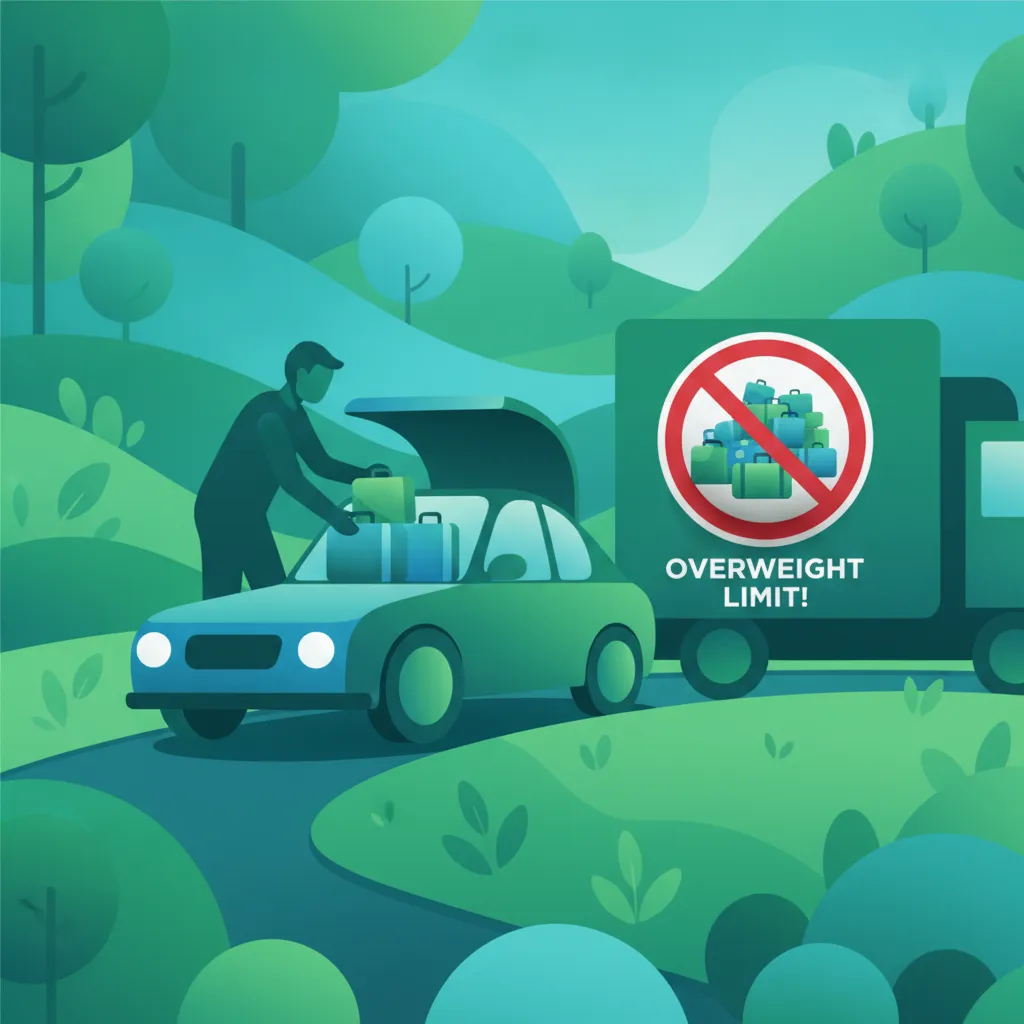
This lesson introduces the fundamental concepts of vehicle mass, clarifying the legal distinctions between total weight, actual weight, and loaded weight under Danish law. It emphasizes the importance of strictly adhering to these limits to ensure safe vehicle operation and handling characteristics. The content also details the significant safety risks and legal penalties associated with exceeding weight limits, such as fines and vehicle impoundment.

This lesson prepares drivers for the unique operational environment of ports and large industrial sites. It explains the specific traffic rules, signage, and safety protocols that govern these areas, which often differ from public roads. Learners will understand how to safely navigate around loading docks, container yards, and other industrial traffic to ensure efficient and incident-free operations.
This lesson details the specific procedures for safely transporting a heavy vehicle via ferry. It covers the process of boarding and maneuvering on the ferry deck, the correct methods for securing the vehicle and trailer for sea transit, and the relevant Danish regulations. The content also explains the safety protocols to follow during the crossing and the correct procedure for disembarking upon arrival.

This lesson introduces the various types of trailers and semitrailers used in commercial transport, from rigid drawbar trailers to articulated semitrailers. It explains their distinct characteristics, including legal dimensional limits, typical axle configurations, and maximum loading capacities as defined by Danish regulations. Understanding these differences is fundamental for selecting the right combination for a given load and ensuring legal operation.
Find clear answers to common questions learners have about Legal Framework and Licensing Requirements. Learn how the lesson is structured, which driving theory objectives it supports, and how it fits into the overall learning path of units and curriculum progression in Denmark. These explanations help you understand key concepts, lesson flow, and exam focused study goals.
Professional drivers must meet specific physical health standards, including vision and hearing criteria. You are required to undergo a medical examination by a doctor to confirm your fitness to drive heavy vehicles, which must be repeated periodically as your age increases.
The Category C theory exam is more specialized, focusing heavily on heavy-vehicle dynamics, load management, professional ethics, and specific regulations like driving and rest time rules. You must demonstrate a deeper understanding of vehicle dimensions and safety systems.
Yes, professional licenses like Category C require more frequent renewals, typically involving a new medical certificate each time to ensure that you remain medically fit to operate heavy machinery safely on Danish roads.
You generally need to hold a standard Category B license first. Once you have acquired the necessary training and passed the specific theory and practical tests for the heavy vehicle category, you can upgrade your license to include C or C1.
Use our powerful search tool to pinpoint specific Danish driving theory topics, road signs, or traffic situations you need to review. Start exploring relevant practice sets now to reinforce your knowledge and build confidence for your upcoming driving licence exam.