
This lesson guides you through the technical and legal requirements for calculating payload and understanding weight limits for heavy goods vehicles. By mastering these calculations, you will ensure your vehicle remains roadworthy and compliant with Danish transport regulations. This is a vital step in your professional training for the Category C driving theory examination.

Lesson content overview
Operating a heavy goods vehicle (HGV) effectively and safely requires a comprehensive understanding of its weight capabilities and legal restrictions. One of the most critical aspects for any professional driver holding a Category C license in Denmark is the accurate calculation of payload. This lesson delves into the intricacies of determining how much cargo your vehicle can legally and safely carry, ensuring compliance with regulations and preventing dangerous overloading situations. By mastering these principles, you will safeguard yourself, your vehicle, other road users, and the road infrastructure itself.
Payload management is fundamental to the responsible operation of heavy vehicles. It involves carefully balancing the vehicle's design specifications, the weight of the cargo, and stringent legal limits imposed to ensure road safety and protect infrastructure like bridges and roads. For Category C drivers, failing to accurately calculate payload can lead to severe consequences, ranging from vehicle instability and increased braking distances to significant legal penalties and the premature wear of vehicle components. This lesson provides the essential knowledge to perform these calculations correctly, keeping you and your load safe and compliant.
Before delving into payload calculations, it is crucial to understand the foundational terminology related to vehicle mass. These terms form the basis of all weight-related regulations and calculations for heavy goods vehicles in Denmark. Accurate interpretation of these definitions is the first step towards safe and legal operations.
The Unladen Weight (Tørlast) of a heavy vehicle refers to its mass without any cargo or passengers. This definition typically includes the vehicle itself with all its standard equipment, essential fluids such as fuel, oil, and coolant, and importantly, the weight of a driver. This baseline weight is the starting point for all payload calculations. It represents the vehicle's mass when it is ready for operation but has not yet picked up any goods. Errors in determining the unladen weight can ripple through subsequent calculations, leading to incorrect payload assessments.
Always ensure you have an accurate figure for your vehicle's unladen weight, as it is foundational for all subsequent payload calculations. Remember to include the weight of the driver.
The Gross Vehicle Mass (KGV), often referred to in Danish as 'Tilladt Totalvægt' (Permissible Total Weight), is the maximum permissible total weight of the vehicle and its entire load, as specified by the manufacturer. This critical value is determined by the vehicle's design, considering factors such as chassis strength, axle capacities, tire ratings, and braking system capabilities. The KGV is typically stamped on a plate affixed to the vehicle (e.g., in the door frame or engine bay) and serves as an absolute upper limit for the vehicle's total operational weight. Exceeding the KGV means operating the vehicle beyond its engineered safety limits, which severely compromises its structural integrity, handling, and braking performance.
Payload represents the maximum weight of cargo, passengers, and any additional equipment that a heavy vehicle can carry while remaining within its specified Gross Vehicle Mass. It is not an arbitrary figure but a calculated value derived from the vehicle's design and unladen weight. In essence, payload is the carrying capacity available for goods once the vehicle itself, including the driver and necessary fluids, has been accounted for. It is important to note that this is the design payload; the legal payload might be lower due to national regulations.
Accurately calculating your heavy vehicle's payload capacity is an essential skill for every Category C driver. This calculation ensures that you load your vehicle within its design limits and, equally importantly, within the legal boundaries set by Danish road traffic regulations.
The fundamental formula for determining a vehicle's payload capacity is straightforward:
Payload = Gross Vehicle Mass (KGV) - Unladen Weight (Tørlast)
For example, if a lorry has a KGV of 26,000 kg and an unladen weight (including the driver) of 15,000 kg, its payload capacity would be 11,000 kg (26,000 kg - 15,000 kg). This 11,000 kg represents the maximum weight of cargo that the vehicle can theoretically carry without exceeding the manufacturer's design limits. This calculation is the first step in responsible load planning.
Identify Gross Vehicle Mass (KGV): Locate this value on your vehicle's manufacturer plate.
Determine Unladen Weight (Tørlast): This includes the vehicle's base weight, full tanks of necessary fluids, and the driver's weight.
Subtract Unladen Weight from KGV: The result is the vehicle's maximum design payload capacity.
While the basic formula is simple, several factors must be considered to ensure the payload calculation is accurate and accounts for all operational weights:
Common mistakes include forgetting to account for the driver's weight or a full fuel tank. These oversights can easily lead to accidental overloading, even if cargo appears to be within limits.
The payload calculated based on the manufacturer's KGV is a theoretical maximum. In practice, heavy vehicles must also adhere to specific legal limits imposed by national regulations, which may be stricter than the manufacturer's design limits. For Category C drivers in Denmark, understanding these legal nuances is paramount.
The Legal Payload is the maximum payload allowed by law, which may be lower than the payload calculated using the vehicle's KGV. National regulations, such as those found in the Danish Road Traffic Act (Færdselsloven), often impose stricter limits on the total weight of vehicles and their components to protect road infrastructure and ensure public safety. These limits consider factors like road surface quality, bridge load capacities, and the general wear and tear heavy vehicles inflict on the road network. Therefore, even if your vehicle is technically designed to carry more, you legally cannot exceed the national limit.
A critical factor influencing legal payload is the Axle Load Limit. These are maximum permissible weights that can be carried by a single axle or a group of axles (e.g., tandem or tridem axles) as defined by law. These limits are in place to prevent excessive stress on specific points of roads and bridges.
Even if the vehicle's total payload is within the legal maximum, individual axle loads can be exceeded if the cargo is not distributed correctly. For instance, concentrating a heavy load towards the rear can overload the rear axle(s) while the front axle remains underloaded. This scenario is illegal and highly dangerous, as it can compromise steering, braking, and stability. Therefore, the legal payload is not just about the total weight, but also how that weight is distributed across the vehicle's axles.
Load Distribution is the strategic arrangement of cargo within the vehicle to ensure that the weight is evenly spread and that no single axle or set of axles exceeds its legal load limit. Proper load distribution is vital for several reasons:
Operating a heavy vehicle with an overloaded payload carries significant risks and severe legal ramifications. Both the driver and the company are responsible for ensuring compliance with all weight regulations.
Overloading a heavy vehicle significantly impairs its performance and safety characteristics:
In Denmark, exceeding legal weight limits is a serious offense under the Road Traffic Act (Færdselsloven). Enforcement is rigorous, with roadside checks and weigh stations frequently monitoring heavy vehicle compliance.
Penalties for overloading can include:
Operating a vehicle with a total weight (vehicle + load + driver + fuel) that exceeds either the manufacturer's Gross Vehicle Mass (KGV) or the legal payload limit set by national regulations, or exceeding individual axle load limits.
Even experienced Category C drivers can sometimes make errors that lead to overloading. Being aware of these common pitfalls can help you prevent costly and dangerous mistakes.
Before every journey, perform a thorough pre-trip inspection that includes verifying your load against all weight limits. When in doubt, always weigh your vehicle or components of your load.
While payload calculation is primarily about fixed numbers, dynamic factors can influence how safely a given payload can be managed. Category C drivers must consider these conditions:
Understanding payload calculation is best reinforced through practical scenarios.
A Category C driver is preparing to transport a load of steel beams. The lorry has a Gross Vehicle Mass (KGV) of 28,000 kg and an Unladen Weight (Tørlast) of 16,500 kg (including the driver and a full tank of fuel). The legal payload limit for this vehicle type in Denmark is 11,000 kg, even though the manufacturer's design payload is higher. The steel beams weigh 10,800 kg.
Correct Behavior:
Incorrect Behavior:
A driver is halfway through a journey with a legally loaded truck carrying furniture. At a stop, a customer asks if the driver can pick up an additional, heavy antique cabinet (weighing 250 kg) to deliver nearby. The driver's current payload is 9,500 kg, and the vehicle's legal payload limit is 10,000 kg.
Correct Behavior:
Incorrect Behavior:
Payload calculation and adherence to legal limits are not merely administrative tasks; they are critical safety practices for every Category C driver. By consistently applying the principles outlined in this lesson – accurately determining unladen weight and KGV, calculating payload, understanding legal and axle load limits, and practicing proper load distribution – you contribute significantly to road safety, protect your vehicle and cargo, and avoid severe legal consequences. Responsible load planning is a hallmark of professional heavy vehicle operation, ensuring every journey is as safe and compliant as possible on Danish roads.
This lesson teaches Category C drivers how to accurately calculate a heavy vehicle's maximum legal payload by understanding the relationship between unladen weight (including driver and fuel) and the manufacturer's gross vehicle mass (KGV). The fundamental formula is Payload = KGV minus Unladen Weight, but drivers must always apply the stricter of either the manufacturer's design limit or the legal payload limit set by Danish regulations under Færdselsloven. Beyond total weight, axle load limits require careful load distribution to prevent individual axles from exceeding their maximum permissible weight, which can occur even when total payload is within limits. Overloading carries serious safety risks including increased braking distances, reduced stability, tire failure, and component damage, alongside substantial legal penalties including fines, vehicle impoundment, and license points.
A short set of high-value points that capture the most important learning from this lesson.
Payload is calculated as Gross Vehicle Mass (KGV) minus Unladen Weight (Tørlast), which includes the vehicle, equipment, fluids, and driver weight
The legal payload set by Danish regulations may be lower than the manufacturer's design payload, so you must always adhere to the stricter limit
Axle load limits apply independently from total vehicle weight limits; uneven load distribution can cause axle overloading even when total weight is compliant
Overloading a heavy vehicle reduces braking efficiency, compromises stability, increases stopping distances, and risks rollover
Responsible load planning requires verifying all limits before every journey, not just at the start of a trip
Explore all units and lessons included in this driving theory course.
KGV (Gross Vehicle Mass) stamped on the vehicle plate is the manufacturer's absolute maximum total weight limit
Unladen weight (Tørlast) must always include the driver's weight, typically estimated at 75-80 kg
Fuel weight can add hundreds of kilograms and must be accounted for in unladen weight calculations
Axle load limits restrict how much weight can压在 individual axles or axle groups, regardless of total payload compliance
When operating combination vehicles, the trailer has its own separate weight limits distinct from the towing vehicle
Forgetting to include the driver's weight when calculating unladen weight, leading to accidental overloading
Assuming the manufacturer's KGV payload is the only applicable limit and ignoring stricter national legal limits
Concentrating cargo weight unevenly, which overloads specific axles while the total weight appears compliant
Misreading the manufacturer plate by confusing gross vehicle mass with unladen weight figures
Accepting additional cargo without recalculating remaining legal payload capacity and checking axle distribution
Lesson content overview
A short set of high-value points that capture the most important learning from this lesson.
Payload is calculated as Gross Vehicle Mass (KGV) minus Unladen Weight (Tørlast), which includes the vehicle, equipment, fluids, and driver weight
The legal payload set by Danish regulations may be lower than the manufacturer's design payload, so you must always adhere to the stricter limit
Axle load limits apply independently from total vehicle weight limits; uneven load distribution can cause axle overloading even when total weight is compliant
Overloading a heavy vehicle reduces braking efficiency, compromises stability, increases stopping distances, and risks rollover
Responsible load planning requires verifying all limits before every journey, not just at the start of a trip
Explore all units and lessons included in this driving theory course.
KGV (Gross Vehicle Mass) stamped on the vehicle plate is the manufacturer's absolute maximum total weight limit
Unladen weight (Tørlast) must always include the driver's weight, typically estimated at 75-80 kg
Fuel weight can add hundreds of kilograms and must be accounted for in unladen weight calculations
Axle load limits restrict how much weight can压在 individual axles or axle groups, regardless of total payload compliance
When operating combination vehicles, the trailer has its own separate weight limits distinct from the towing vehicle
Forgetting to include the driver's weight when calculating unladen weight, leading to accidental overloading
Assuming the manufacturer's KGV payload is the only applicable limit and ignoring stricter national legal limits
Concentrating cargo weight unevenly, which overloads specific axles while the total weight appears compliant
Misreading the manufacturer plate by confusing gross vehicle mass with unladen weight figures
Accepting additional cargo without recalculating remaining legal payload capacity and checking axle distribution
Explore search topics learners often look for when studying Payload Calculation and Legal Limits. These topics reflect common questions about road rules, driving situations, safety guidance, and lesson level theory preparation for learners in Denmark.
Browse additional driving theory lessons that cover connected traffic rules, road signs, and common driving situations related to this topic. Improve your understanding of how different rules interact across everyday traffic scenarios.
Understand the critical difference between a heavy vehicle's designed payload and legal payload limits in Denmark. This lesson details axle load restrictions and their impact on safe, compliant cargo transport for Category C drivers.
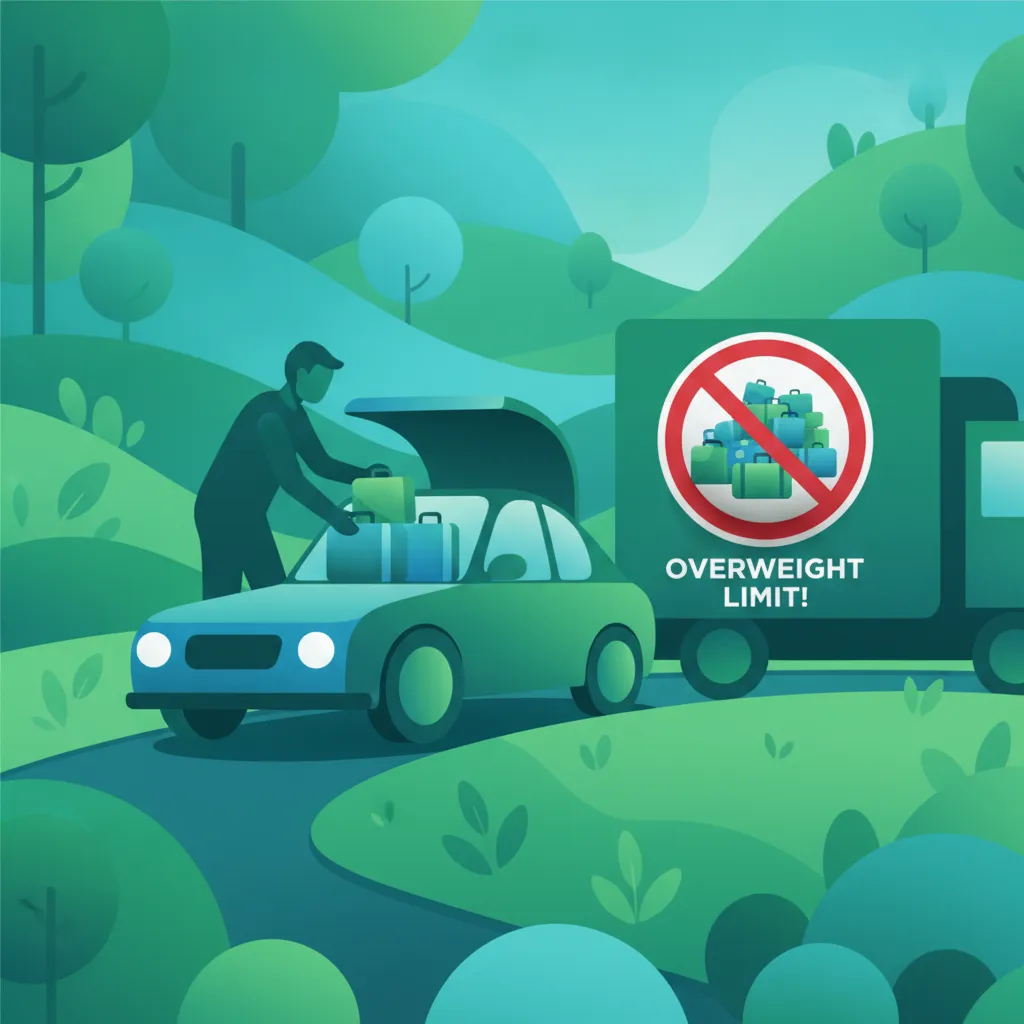
This lesson introduces the fundamental concepts of vehicle mass, clarifying the legal distinctions between total weight, actual weight, and loaded weight under Danish law. It emphasizes the importance of strictly adhering to these limits to ensure safe vehicle operation and handling characteristics. The content also details the significant safety risks and legal penalties associated with exceeding weight limits, such as fines and vehicle impoundment.

Proper axle load distribution is crucial for the safety and legality of heavy vehicle operations. This lesson explains how axle pressure is defined and regulated, highlighting the importance of distributing weight correctly across all axles. It covers how imbalanced loads can negatively affect braking performance, steering control, and overall vehicle stability, while also explaining the Danish regulations for maximum axle loads.

This lesson explains the fundamental physics of load distribution and its direct impact on a heavy vehicle's centre of gravity. It details how the positioning of cargo—whether high, low, forward, or back—alters handling characteristics and overall stability. The content emphasizes the importance of achieving a balanced load to minimize rollover risk and comply with Danish regulations for safe weight distribution.
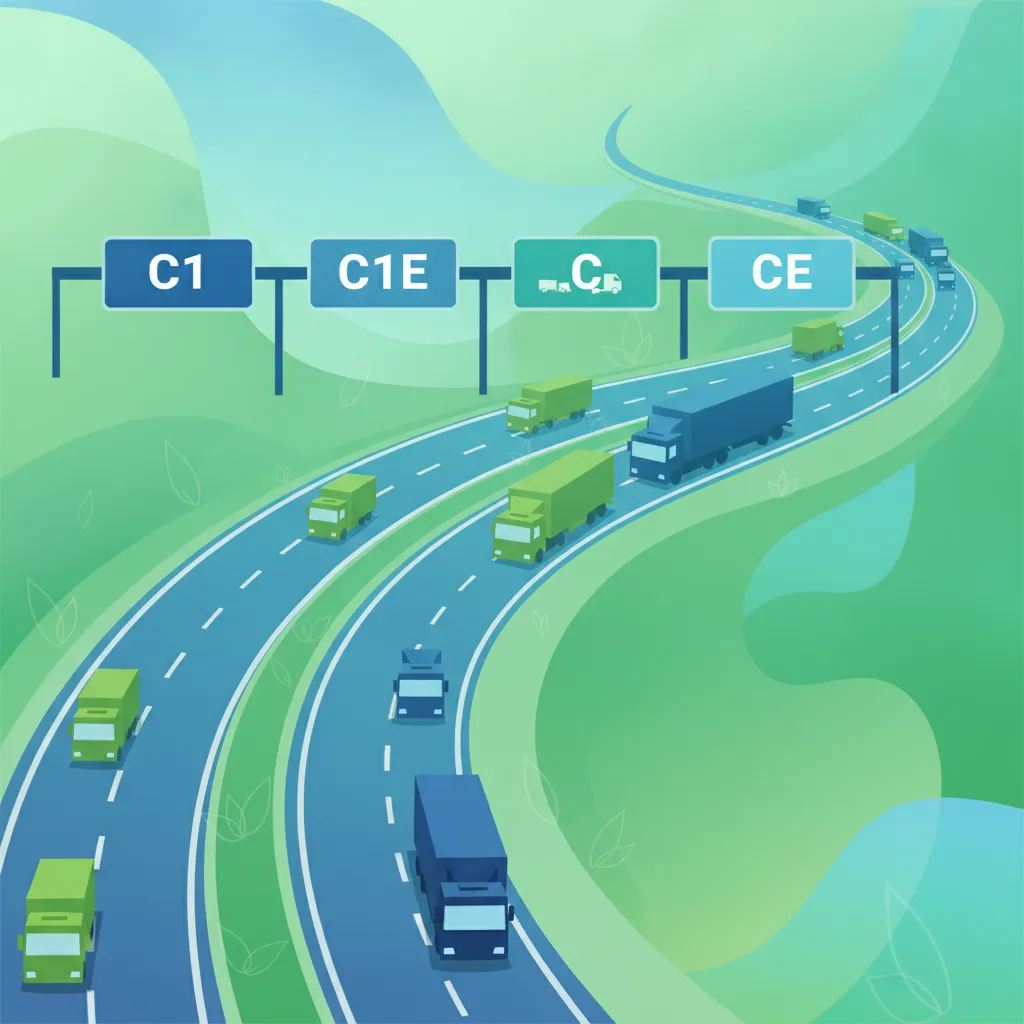
This lesson provides a detailed breakdown of the Danish C-category licenses, explaining the specific vehicle types and combinations allowed under each classification. It clarifies the legal definitions of mass limits for C1 and C vehicles, and how the addition of trailers creates the C1E and CE categories. The content focuses on the operational implications of these distinctions, helping you identify the correct license for different professional driving roles.

This lesson introduces the various types of trailers and semitrailers used in commercial transport, from rigid drawbar trailers to articulated semitrailers. It explains their distinct characteristics, including legal dimensional limits, typical axle configurations, and maximum loading capacities as defined by Danish regulations. Understanding these differences is fundamental for selecting the right combination for a given load and ensuring legal operation.

This lesson focuses on the legal dimensional limits—length, width, and height—for heavy goods vehicles and their interaction with road infrastructure. It explains Danish regulations and the importance of planning routes to avoid constraints such as low bridges, narrow tunnels, and weight-restricted roads. Learners will understand how to interpret road signs indicating these limits and the procedures for obtaining permits for oversized loads.

This lesson provides a detailed explanation of the Category B license, specifying which vehicles you are permitted to drive. It covers crucial limitations such as maximum authorised mass, passenger capacity, and the regulations for towing a trailer. Furthermore, it clarifies the legal distinctions between holding a license for an automatic versus a manual transmission vehicle, grounding your knowledge in official Danish legislation.
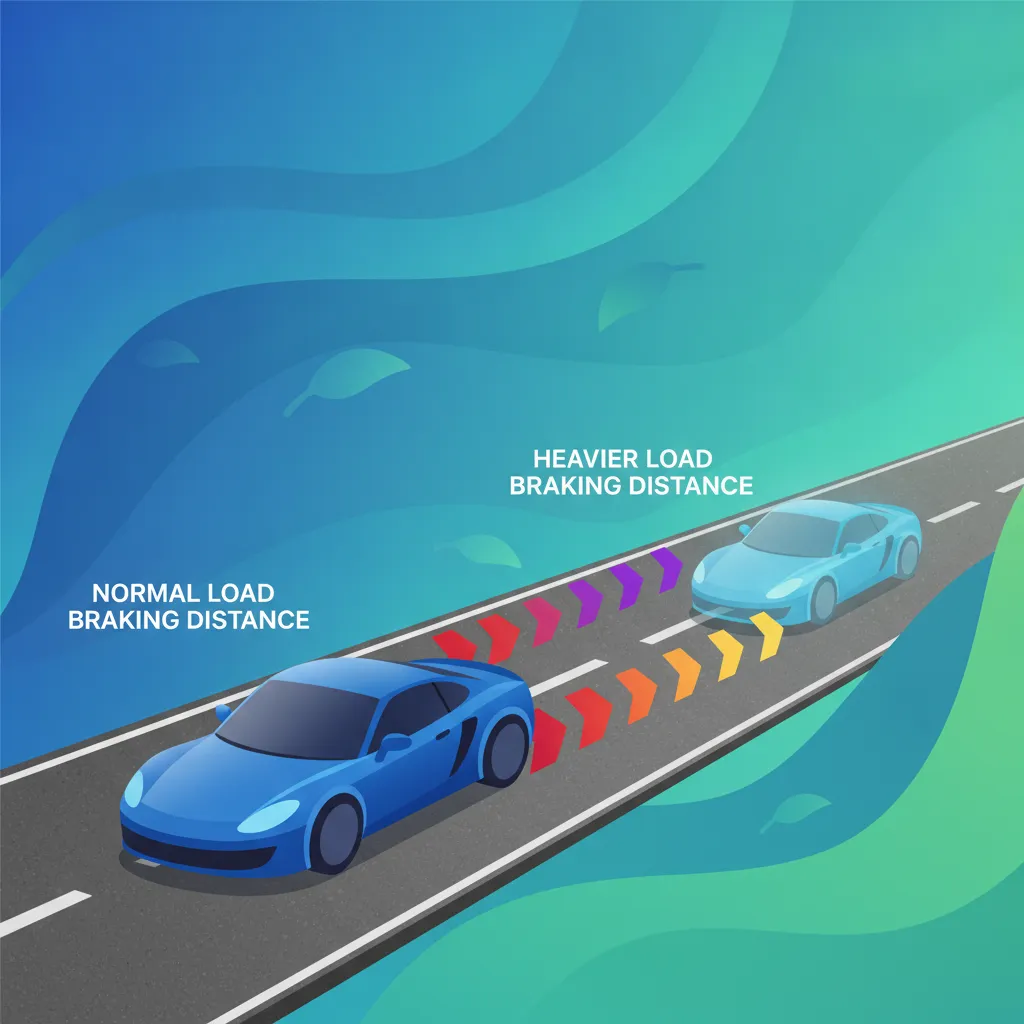
This lesson explores the direct relationship between a vehicle's mass, its speed, and the distance required to stop. It explains how increased load significantly lengthens the braking distance and details how road conditions like gradient and surface friction further affect this calculation. Learners will understand the importance of anticipating stops and maintaining a greater following distance to ensure safety.
Explore the severe safety risks and legal penalties associated with overloading heavy vehicles in Denmark. Learn from real-world scenarios and common driver errors to ensure compliance and safe operation.
This lesson introduces the fundamental concepts of vehicle mass, clarifying the legal distinctions between total weight, actual weight, and loaded weight under Danish law. It emphasizes the importance of strictly adhering to these limits to ensure safe vehicle operation and handling characteristics. The content also details the significant safety risks and legal penalties associated with exceeding weight limits, such as fines and vehicle impoundment.
This lesson explains the fundamental physics of load distribution and its direct impact on a heavy vehicle's centre of gravity. It details how the positioning of cargo—whether high, low, forward, or back—alters handling characteristics and overall stability. The content emphasizes the importance of achieving a balanced load to minimize rollover risk and comply with Danish regulations for safe weight distribution.
This lesson focuses on the legal dimensional limits—length, width, and height—for heavy goods vehicles and their interaction with road infrastructure. It explains Danish regulations and the importance of planning routes to avoid constraints such as low bridges, narrow tunnels, and weight-restricted roads. Learners will understand how to interpret road signs indicating these limits and the procedures for obtaining permits for oversized loads.
Proper axle load distribution is crucial for the safety and legality of heavy vehicle operations. This lesson explains how axle pressure is defined and regulated, highlighting the importance of distributing weight correctly across all axles. It covers how imbalanced loads can negatively affect braking performance, steering control, and overall vehicle stability, while also explaining the Danish regulations for maximum axle loads.

This lesson provides a step-by-step guide to safe loading and unloading practices. It covers the importance of ensuring proper weight distribution during the process, re-checking cargo securement, and adhering to safety protocols at loading docks. The content also includes ergonomic best practices to prevent driver injury and guidelines for the safe operation of equipment like tail lifts and pallet jacks.

Operating a heavy goods vehicle comes with heightened professional and legal responsibilities. This lesson examines the driver's duties regarding pre-trip inspections, load security, and continuous vehicle maintenance. It emphasizes the ethical obligation to protect vulnerable road users like cyclists and pedestrians, and stresses the importance of maintaining professional conduct and adhering to all traffic regulations to ensure road safety.
This lesson explores the direct relationship between a vehicle's mass, its speed, and the distance required to stop. It explains how increased load significantly lengthens the braking distance and details how road conditions like gradient and surface friction further affect this calculation. Learners will understand the importance of anticipating stops and maintaining a greater following distance to ensure safety.
Find clear answers to common questions learners have about Payload Calculation and Legal Limits. Learn how the lesson is structured, which driving theory objectives it supports, and how it fits into the overall learning path of units and curriculum progression in Denmark. These explanations help you understand key concepts, lesson flow, and exam focused study goals.
Gross vehicle mass is the total weight of the vehicle including cargo, while payload is the maximum weight of the load you are legally allowed to carry, calculated by subtracting the unladen weight from the total permitted mass.
The theory exam often features case studies where you must determine if a vehicle is safe and legal to drive based on its load; failing to calculate this correctly can lead to dangerous situations and legal infractions.
Overloading puts excessive stress on braking systems, tyres, and the suspension, significantly increasing your braking distance and the risk of mechanical failure or loss of vehicle control.
Yes, weight limits are specific to the license category and the individual vehicle's registration specifications. You must always refer to the vehicle's specific documentation to confirm the exact limits allowed for your category.
Use our powerful search tool to pinpoint specific Danish driving theory topics, road signs, or traffic situations you need to review. Start exploring relevant practice sets now to reinforce your knowledge and build confidence for your upcoming driving licence exam.