
This lesson explores the serious legal implications of failing to adhere to traffic regulations as a professional heavy vehicle driver in Denmark. You will gain a clear understanding of the penalty system, including how fines and points affect your licence, helping you maintain a professional and safe driving record for your Category C exam.

Lesson content overview
Operating heavy goods vehicles with a Category C license in Denmark comes with significant responsibilities, not least of which is a comprehensive understanding of traffic law and its associated legal consequences. This lesson provides an in-depth look into the Danish system of fines, penalty points, and license suspensions for professional drivers, ensuring you are equipped to maintain a clean driving record and uphold the highest standards of road safety.
Danish traffic legislation is designed to ensure safety and order on the roads. For professional drivers of heavy goods vehicles, compliance is paramount, as infractions can lead to severe penalties affecting both your finances and your driving career. The legal framework primarily stems from the Danish Road Traffic Act (Færdselsloven) and related regulations, which outline specific rules for vehicle operation, load management, and driver conduct.
Understanding these regulations is not merely about avoiding penalties; it is about recognizing the inherent risks associated with heavy vehicle operation and mitigating them proactively. A professional mindset involves adhering to all rules, even minor ones, to prevent incidents and protect all road users.
Familiarity with general traffic rules, vehicle categories (especially Category C), and common traffic offenses is a crucial prerequisite for fully grasping the nuances of legal consequences.
Traffic violations in Denmark typically result in administrative penalties, primarily in the form of fines (bøder). These monetary sanctions are imposed by authorities for specific infractions, with the amount often reflecting the severity of the offense. For heavy vehicle drivers, fines can be substantial due to the increased risk associated with their vehicle type.
Not all fines are calculated in the same way. It is a common misunderstanding to assume all fines are fixed amounts. While many minor offenses incur a standard, fixed fine, more serious violations, particularly those involving high-speed excesses, may result in an income-based fine. This means the amount you have to pay is calculated based on your disposable income, ensuring a more proportional deterrent effect.
A specific category of fines, known as exceedance fines, applies to speeding offenses. The fine amount increases progressively with the degree to to which the speed limit is exceeded. For professional drivers, exceeding speed limits, especially with a heavy vehicle, is viewed as a significant risk and is penalized accordingly.
When a driver receives a traffic ticket, it will specify the fine amount and the period within which it must be paid. Failure to pay within this period can lead to additional charges or further legal action.
Beyond monetary fines, many traffic infractions for Category C drivers in Denmark also result in the allocation of penalty points (klippekort). This system acts as a cumulative deterrent, tracking a driver's behavior over time. Accumulating too many points within a specified period can lead to serious repercussions, including mandatory training or the temporary loss of your driving privileges.
Points are assigned to a driver's record for various violations, with the number of points reflecting the gravity of the offense. Minor infractions might incur 1 point, while more serious ones can result in 2 or more points. For professional drivers, some offenses specific to heavy vehicles, such as certain load security violations, carry higher point values due to the enhanced risk they pose.
Points added to a driver's record for traffic infractions. Accumulation of these points over time can lead to a warning, mandatory training, or the suspension of driving privileges.
The Danish penalty point system operates with clear thresholds. Typically, accumulating 3 penalty points within a three-year period will trigger a warning and may lead to a conditional license suspension for new drivers. For experienced drivers, the threshold for a conditional license suspension is often 3 points within a two-year period. If a driver reaches 6 points within a three-year period, it typically results in an unconditional license suspension. These thresholds are critical for professional drivers, as exceeding them can directly impact their ability to work.
It is a common misunderstanding that points are automatically removed after a set period without any action. While points generally expire after a certain number of years (often three), any accumulation towards a suspension threshold resets the clock or triggers action before they expire.
License suspension (kørselsforbud eller frakendelse af kørekort) is the temporary withdrawal of your right to drive for a specified period. This is one of the most severe consequences for a professional driver, as it directly impacts their livelihood. Suspensions can be categorized as either conditional or unconditional, depending on the nature and severity of the offense or the accumulation of penalty points.
A conditional license suspension means you retain your driving license but are placed on probation for a defined period, usually three years. During this period, you must pass a new driving test (both theoretical and practical) within a specific timeframe, often six months. If you commit another traffic offense that would typically lead to a conditional suspension within this probation period, your license will be unconditionally revoked for a minimum of six months.
Conditional suspensions are often triggered by:
An unconditional license suspension means your driving license is immediately revoked for a specified period, during which you are absolutely forbidden to drive. This is often the result of:
After an unconditional suspension period, you must typically pass both a theoretical and practical retest to regain your driving privileges. For professional drivers, this retesting process can be lengthy and expensive, highlighting the importance of avoiding such penalties.
Do not assume license suspension only applies after a formal court case. Many suspensions are administrative decisions based on accumulated points or clear violations of the Road Traffic Act.
Operating a Category C vehicle involves specific risks and responsibilities that are reflected in targeted regulations and penalties. Certain offenses are particularly pertinent to heavy vehicle drivers, often carrying higher fines and more significant point allocations due to the potential for severe consequences.
One of the most critical areas for heavy vehicle drivers is load security. Improper securing or distribution of cargo can lead to load shifts, vehicle instability, and even lost loads, posing extreme hazards to other road users.
The proper securing, distribution, and containment of cargo within a vehicle to prevent shifting, falling, or becoming a hazard during transport.
Violations related to load security can include:
These infractions typically result in immediate fines and significant penalty points, reflecting the high risk of accidents due to load shifts or vehicle instability. For instance, an unsecured load causing a road hazard can incur several penalty points.
For professional drivers, compliance with driving and rest periods (køre- og hviletidsbestemmelser) is strictly enforced. These rules are in place to combat driver fatigue, which is a major contributor to heavy vehicle accidents. Violations are often detected through digital tachographs and can lead to substantial fines, though they may not always result in immediate penalty points. However, severe or repeated infringements can lead to license suspension or even criminal charges.
While not always accruing penalty points directly, non-compliance with rest periods can result in severe financial penalties and regulatory actions upon inspection, which can still impact a driver's professional standing.
Driving a heavy vehicle that exceeds its Maximum Authorized Mass (MZ) (tilladt totalvægt) is a serious offense. This not only puts undue strain on vehicle components like brakes and tires but also increases stopping distances and reduces maneuverability, significantly elevating accident risk. Even a small excess can lead to points and fines.
The maximum total weight (vehicle plus load) that a heavy vehicle is legally permitted to carry, as specified by its registration and type approval.
While load security and driving times are specific to heavy vehicles, professional drivers are also subject to the same general traffic laws as other road users. Certain common violations carry significant penalties regardless of vehicle type, underscoring the universal need for careful and compliant driving.
Speeding is one of the most frequent infractions. Penalties are graduated based on how much the speed limit is exceeded. For professional drivers, the consequences are often more severe.
Using a handheld mobile phone while driving is strictly prohibited in Denmark and carries both a fine and penalty points. This includes texting, talking without a hands-free device, or otherwise interacting with the phone in a way that distracts the driver. The risk of distraction for a heavy vehicle driver is particularly high, making this a critical violation to avoid.
Failure to stop at a red light or a stop sign (ikke overholde rødt lys/stopskilt) is a serious offense that significantly increases the risk of collisions. This violation typically results in a substantial fine and penalty points.
Failure to use seatbelts (manglende brug af sikkerhedssele) is not only a safety risk but also a traffic infraction. Professional drivers are legally obligated to wear seatbelts, and non-compliance results in a fine and penalty points. This applies to both the driver and any passengers.
Driving under the influence of alcohol or drugs (spirituskørsel/narkokørsel) is among the most serious traffic offenses. It carries severe penalties, including immediate and lengthy license suspension, substantial fines (often income-based), and potential imprisonment. For professional drivers, a DUI conviction will almost certainly lead to the termination of their employment and long-term career implications.
The severity of penalties can often be influenced by conditional logic and contextual variations. Certain circumstances can escalate the consequences of an infraction, reflecting an increased risk to road safety.
Understanding these conditional factors is crucial, as they underscore the need for constant vigilance and adaptive driving behavior.
For Category C drivers, maintaining a clean driving record is not just about personal responsibility; it is a professional imperative. A history of traffic infractions, especially those leading to license suspensions, can severely impact employment prospects and career longevity.
The legal consequences system in Denmark is built on clear cause-and-effect relationships:
The most effective preventive measure is thorough knowledge of traffic laws and consistent adherence to them. This includes:
Your understanding of speed limits, axle loads, and proper load distribution (covered in earlier lessons) directly impacts your ability to avoid legal consequences. This lesson reinforces the importance of applying that knowledge on the road.
The legal consequences for traffic infractions in Denmark are designed to deter unsafe behavior and ensure compliance with the law, particularly for professional drivers of heavy goods vehicles. The system of fines, penalty points, and license suspensions serves as a robust framework to promote road safety. By understanding these mechanisms and diligently adhering to all traffic regulations, Category C drivers can avoid severe penalties, protect their driving career, and contribute significantly to overall road safety. Your commitment to a clean driving record is a testament to your professionalism and responsibility to all road users.
This lesson covers the Danish legal penalty framework for Category C professional drivers, including the Klippekort penalty point system with specific thresholds (3 points triggers conditional suspension for experienced drivers within 2 years, 6 points within 3 years leads to unconditional suspension). It distinguishes between fixed fines, income-based fines, and exceedance fines for speeding, explaining how each is calculated. Heavy vehicle-specific violations like load security infractions, exceeding Maximum Authorized Mass, and tachograph manipulation carry higher penalties due to increased risk. The lesson also covers common violations (speeding, mobile phone use, seatbelt violations, DUI) with graduated consequences, and emphasizes that aggravating factors such as adverse weather, school zones, or endangering vulnerable road users can escalate penalties significantly.
A short set of high-value points that capture the most important learning from this lesson.
Accumulating 3 penalty points within 2 years triggers conditional license suspension for experienced drivers, while 6 points within 3 years leads to unconditional suspension.
Not all fines are fixed amounts—serious speeding offenses and DUI can result in income-based fines calculated from disposable income.
Load security violations (unsecured cargo, exceeded axle loads, improper weight distribution, exceeding Maximum Authorized Mass) carry significant penalty points for heavy vehicle drivers.
Conditional license suspension places drivers on probation for three years and requires passing both theory and practical tests within six months.
Contextual factors like adverse weather, school zones, or endangering cyclists can escalate penalties beyond standard rates for the same offense.
Explore all units and lessons included in this driving theory course.
Penalty points (Klippekort) do not automatically reset without consequences—accumulation towards thresholds triggers action before expiry.
Driving and rest period violations may not always add points directly but can result in substantial fines and regulatory action upon inspection.
A single DUI conviction typically results in lengthy unconditional suspension, substantial income-based fines, and almost certain employment termination for professional drivers.
Repeat offenses during a conditional suspension period automatically escalate to unconditional revocation of at least six months.
Professional drivers face higher penalties for identical offenses due to the increased risk associated with operating heavy goods vehicles.
Assuming all traffic fines are fixed amounts rather than recognizing that serious violations use income-based calculations.
Believing that penalty points simply expire after three years without understanding that accumulation towards thresholds resets the clock.
Underestimating load security violations as minor issues when they actually carry significant penalty points and fines due to the extreme hazards they create.
Assuming license suspension only follows formal court cases, when many suspensions are administrative decisions based on accumulated points.
Thinking that driving/rest period violations only matter for point accumulation, when they can result in severe financial penalties and professional consequences independently.
Lesson content overview
A short set of high-value points that capture the most important learning from this lesson.
Accumulating 3 penalty points within 2 years triggers conditional license suspension for experienced drivers, while 6 points within 3 years leads to unconditional suspension.
Not all fines are fixed amounts—serious speeding offenses and DUI can result in income-based fines calculated from disposable income.
Load security violations (unsecured cargo, exceeded axle loads, improper weight distribution, exceeding Maximum Authorized Mass) carry significant penalty points for heavy vehicle drivers.
Conditional license suspension places drivers on probation for three years and requires passing both theory and practical tests within six months.
Contextual factors like adverse weather, school zones, or endangering cyclists can escalate penalties beyond standard rates for the same offense.
Explore all units and lessons included in this driving theory course.
Penalty points (Klippekort) do not automatically reset without consequences—accumulation towards thresholds triggers action before expiry.
Driving and rest period violations may not always add points directly but can result in substantial fines and regulatory action upon inspection.
A single DUI conviction typically results in lengthy unconditional suspension, substantial income-based fines, and almost certain employment termination for professional drivers.
Repeat offenses during a conditional suspension period automatically escalate to unconditional revocation of at least six months.
Professional drivers face higher penalties for identical offenses due to the increased risk associated with operating heavy goods vehicles.
Assuming all traffic fines are fixed amounts rather than recognizing that serious violations use income-based calculations.
Believing that penalty points simply expire after three years without understanding that accumulation towards thresholds resets the clock.
Underestimating load security violations as minor issues when they actually carry significant penalty points and fines due to the extreme hazards they create.
Assuming license suspension only follows formal court cases, when many suspensions are administrative decisions based on accumulated points.
Thinking that driving/rest period violations only matter for point accumulation, when they can result in severe financial penalties and professional consequences independently.
Explore search topics learners often look for when studying Legal Consequences of Infractions. These topics reflect common questions about road rules, driving situations, safety guidance, and lesson level theory preparation for learners in Denmark.
Browse additional driving theory lessons that cover connected traffic rules, road signs, and common driving situations related to this topic. Improve your understanding of how different rules interact across everyday traffic scenarios.
Understand Danish traffic law's impact on professional drivers. This lesson details fines, penalty points, and license suspension rules for category C license holders to ensure legal compliance and a clean driving record.
This lesson details the legal framework governing the acquisition of a C-category driving license in Denmark. It covers the essential requirements, including medical fitness standards, the structure of the theoretical examination, and the scope of mandatory practical training. Furthermore, it explains the ongoing legal obligations of a license holder, such as renewal procedures and continuous compliance with evolving traffic laws and regulations.

Operating a heavy goods vehicle comes with heightened professional and legal responsibilities. This lesson examines the driver's duties regarding pre-trip inspections, load security, and continuous vehicle maintenance. It emphasizes the ethical obligation to protect vulnerable road users like cyclists and pedestrians, and stresses the importance of maintaining professional conduct and adhering to all traffic regulations to ensure road safety.

This lesson focuses on the rules and best practices for operating heavy vehicles on motorways and interchanges. It details Danish regulations regarding lane usage and speed limits for lorries, and explains safe techniques for merging into and exiting high-speed traffic. Maintaining a safe and appropriate following distance to allow for longer stopping distances is a key focus of the content.
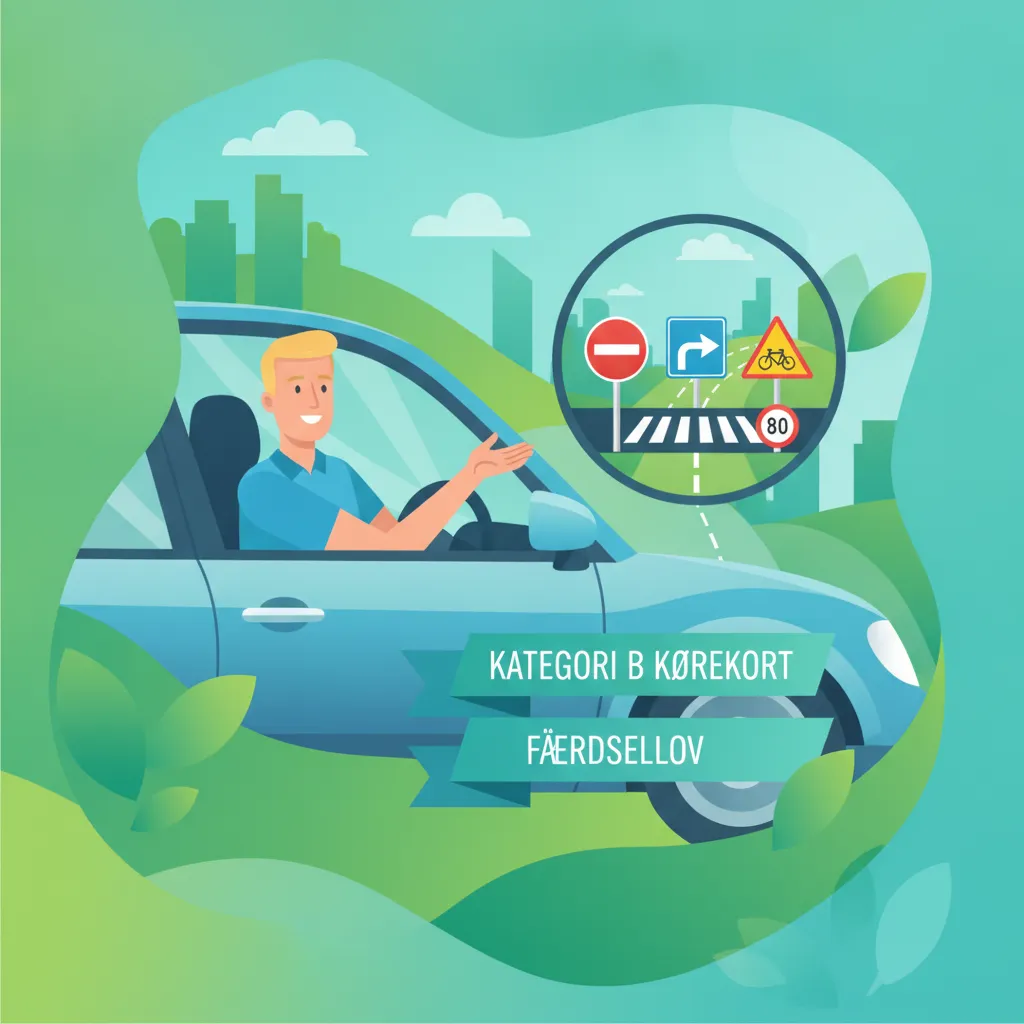
This lesson provides a detailed explanation of the Category B license, specifying which vehicles you are permitted to drive. It covers crucial limitations such as maximum authorised mass, passenger capacity, and the regulations for towing a trailer. Furthermore, it clarifies the legal distinctions between holding a license for an automatic versus a manual transmission vehicle, grounding your knowledge in official Danish legislation.
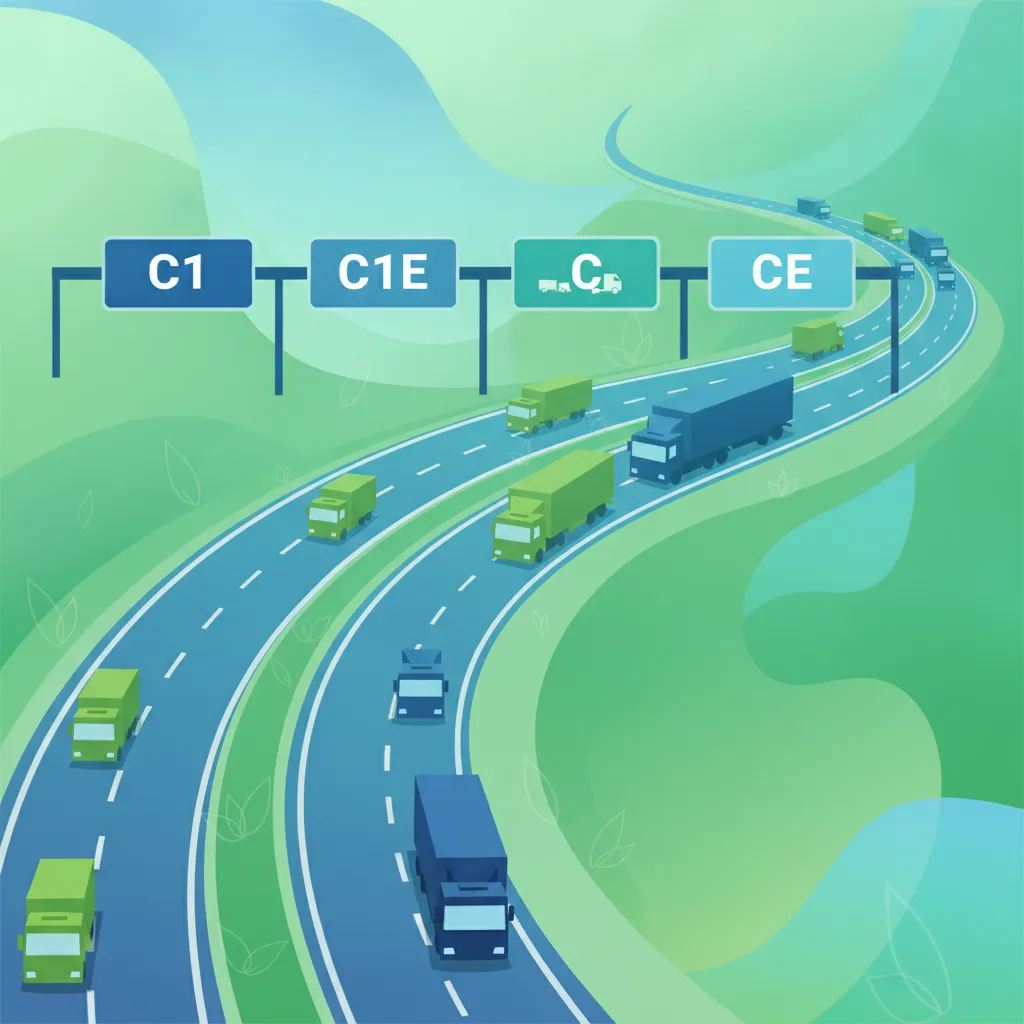
This lesson provides a detailed breakdown of the Danish C-category licenses, explaining the specific vehicle types and combinations allowed under each classification. It clarifies the legal definitions of mass limits for C1 and C vehicles, and how the addition of trailers creates the C1E and CE categories. The content focuses on the operational implications of these distinctions, helping you identify the correct license for different professional driving roles.
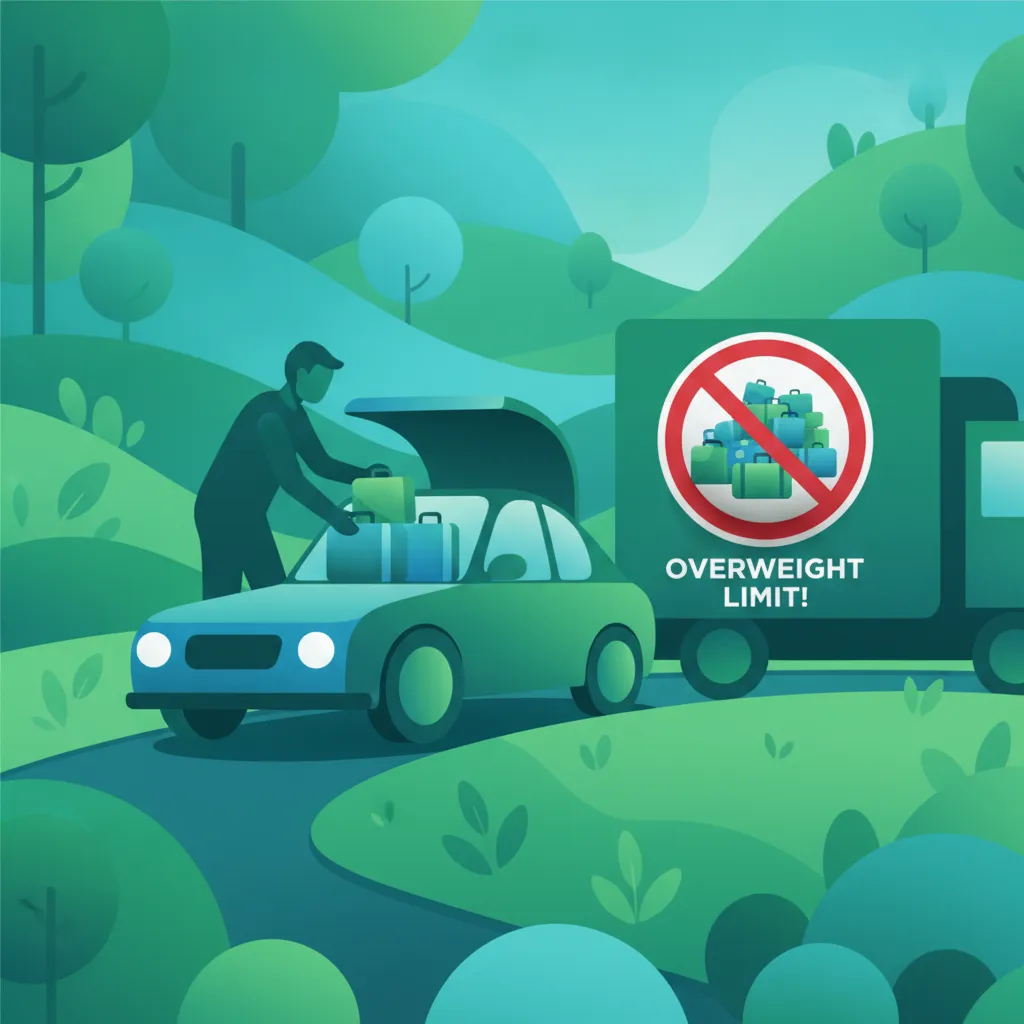
This lesson introduces the fundamental concepts of vehicle mass, clarifying the legal distinctions between total weight, actual weight, and loaded weight under Danish law. It emphasizes the importance of strictly adhering to these limits to ensure safe vehicle operation and handling characteristics. The content also details the significant safety risks and legal penalties associated with exceeding weight limits, such as fines and vehicle impoundment.

This lesson focuses on the legal dimensional limits—length, width, and height—for heavy goods vehicles and their interaction with road infrastructure. It explains Danish regulations and the importance of planning routes to avoid constraints such as low bridges, narrow tunnels, and weight-restricted roads. Learners will understand how to interpret road signs indicating these limits and the procedures for obtaining permits for oversized loads.
This lesson provides a clear overview of the penalties associated with breaking traffic laws as a motorcyclist. It details the Danish penalty point system ('klip i kørekortet') and the conditions that can lead to fines or licence revocation. Understanding these consequences reinforces the importance of lawful riding.

Beyond basic checks, this lesson covers the inspection of critical vehicle systems like brakes, steering, and suspension to ensure they are functioning correctly. It also details the importance of properly adjusted mirrors and the use of modern camera systems for monitoring blind spots and enhancing situational awareness. Understanding these systems is vital for safe maneuvering, compliance with Danish regulations, and overall vehicle roadworthiness.
Focus on violations unique to heavy vehicles in Denmark, such as load security, axle load limits, and driving/rest periods. Learn how these specific rules and their consequences affect category C professional drivers.
This lesson focuses on the rules and best practices for operating heavy vehicles on motorways and interchanges. It details Danish regulations regarding lane usage and speed limits for lorries, and explains safe techniques for merging into and exiting high-speed traffic. Maintaining a safe and appropriate following distance to allow for longer stopping distances is a key focus of the content.
This lesson focuses on the legal dimensional limits—length, width, and height—for heavy goods vehicles and their interaction with road infrastructure. It explains Danish regulations and the importance of planning routes to avoid constraints such as low bridges, narrow tunnels, and weight-restricted roads. Learners will understand how to interpret road signs indicating these limits and the procedures for obtaining permits for oversized loads.

This lesson provides practical instruction on various methods for securing cargo effectively. It covers the correct application of equipment such as straps, chains, and nets, as well as techniques like blocking and bracing to prevent load movement. The content is aligned with Danish and European standards for load securing, ensuring learners understand how to inspect and verify that their cargo is safe for transport.

Properly functioning lighting and signaling systems are fundamental for safe communication on the road. This lesson details the purpose and correct use of all exterior lights, including headlights, brake lights, turn signals, and hazard lights, according to Danish law. It emphasizes the driver's responsibility to ensure these systems are clean and operational to maintain visibility and clearly signal maneuvers to other road users.
This lesson introduces the fundamental concepts of vehicle mass, clarifying the legal distinctions between total weight, actual weight, and loaded weight under Danish law. It emphasizes the importance of strictly adhering to these limits to ensure safe vehicle operation and handling characteristics. The content also details the significant safety risks and legal penalties associated with exceeding weight limits, such as fines and vehicle impoundment.

Proper axle load distribution is crucial for the safety and legality of heavy vehicle operations. This lesson explains how axle pressure is defined and regulated, highlighting the importance of distributing weight correctly across all axles. It covers how imbalanced loads can negatively affect braking performance, steering control, and overall vehicle stability, while also explaining the Danish regulations for maximum axle loads.
Operating a heavy goods vehicle comes with heightened professional and legal responsibilities. This lesson examines the driver's duties regarding pre-trip inspections, load security, and continuous vehicle maintenance. It emphasizes the ethical obligation to protect vulnerable road users like cyclists and pedestrians, and stresses the importance of maintaining professional conduct and adhering to all traffic regulations to ensure road safety.

This lesson provides practical guidance for navigating the challenges of urban deliveries. It details Danish regulations for using loading zones, including time restrictions and parking rules, and offers strategies for effective route planning in dense traffic. The content emphasizes awareness of pedestrian-heavy areas and the importance of maneuvering with caution to ensure public safety during delivery operations.

This lesson prepares drivers for the unique operational environment of ports and large industrial sites. It explains the specific traffic rules, signage, and safety protocols that govern these areas, which often differ from public roads. Learners will understand how to safely navigate around loading docks, container yards, and other industrial traffic to ensure efficient and incident-free operations.

This lesson addresses the serious safety risk of driver fatigue. It teaches how to recognize early warning signs and explains the strict Danish and EU regulations on driving hours and mandatory rest periods. The content covers the correct use of the tachograph to log activity and details the legal penalties for non-compliance, emphasizing the importance of being well-rested before every journey.
Find clear answers to common questions learners have about Legal Consequences of Infractions. Learn how the lesson is structured, which driving theory objectives it supports, and how it fits into the overall learning path of units and curriculum progression in Denmark. These explanations help you understand key concepts, lesson flow, and exam focused study goals.
Accumulating penalty points for traffic violations in Denmark can eventually lead to a conditional or unconditional suspension of your driving licence. As a professional driver, maintaining a clean record is crucial, as multiple violations can jeopardize your ability to work in the transport sector.
Yes, for many violations such as speeding or load security issues, the potential danger posed by a heavy vehicle is considered greater. Consequently, the legal consequences and financial penalties can be significantly more severe for professional drivers.
Yes, any traffic infraction committed during your training can impact your eligibility for the license. It is vital to demonstrate a professional and safe attitude throughout your entire learning process, as the theory test covers these legal responsibilities extensively.
Failing to properly secure a load in Denmark can result in heavy fines and, if an accident occurs, serious legal charges. It is treated as a major safety infraction that reflects poorly on your professional competency and can lead to immediate license review.
Use our powerful search tool to pinpoint specific Danish driving theory topics, road signs, or traffic situations you need to review. Start exploring relevant practice sets now to reinforce your knowledge and build confidence for your upcoming driving licence exam.