
This lesson explores the technical and legal requirements for distributing weight across your heavy vehicle's axles. You will learn how proper load management impacts vehicle stability and braking efficiency, ensuring you meet the safety standards required for professional driving in Denmark.

Lesson content overview
Operating heavy goods vehicles (HGVs) under a Category C license in Denmark demands a thorough understanding of axle loads and their proper distribution. This lesson delves into the critical aspects of how weight is borne by a vehicle's axles, the profound impact of this distribution on safety and performance, and the specific Danish regulations governing these limits. Mastering axle load management is not just about compliance; it's fundamental to ensuring vehicle stability, optimal braking, steering control, and the longevity of both your vehicle and road infrastructure.
An axle load refers to the total vertical force exerted by a vehicle and its cargo onto the road surface through a specific axle or group of axles. This force is measured in kilograms (kg) or tonnes. For heavy vehicles, understanding and managing these loads is paramount because the total vehicle mass is distributed across multiple points of contact with the road.
It's important to distinguish between two key types of axle loads:
For drivers, the practical meaning of axle loads is that they must ensure each individual axle, and combinations of axles, never exceed their legal maximum limits, regardless of whether the vehicle is moving or stationary. Exceeding these limits compromises safety and can lead to severe legal penalties.
Load distribution is the process of arranging cargo within a heavy vehicle or combination (lorry with trailer) such that the total mass is appropriately spread across all axles. This balance is not merely a recommendation; it is a core principle influencing virtually every aspect of heavy vehicle operation.
Proper front-to-rear and side-to-side balance is essential for several reasons:
Always aim to position heavier items as close to the vehicle's center of gravity as possible and spread lighter items evenly around them to achieve optimal balance.
The Danish Road Traffic Act (Færdselsloven) sets specific legal maximum limits for axle loads on heavy vehicles. These regulations are designed to protect road infrastructure from damage, ensure vehicle safety, and prevent undue wear on components. Drivers operating under a Category C license must be intimately familiar with these limits, as violations can result in significant penalties.
The maximum permissible axle loads vary depending on the type of axle configuration and the distance between axles. Here are general examples of typical limits, though specific rules can vary with vehicle type and total weight:
It's crucial to remember that these are limits per axle or axle group, not overall vehicle limits. Even if the Gross Vehicle Weight (GVW) is within limits, individual axles can still be overloaded if the cargo is poorly distributed.
Danish regulations also include rules regarding the balance of load distribution. For example, there are often stipulations that:
Drivers must understand that the maximum permissible axle load for a vehicle can also be specified in the vehicle's registration papers (registreringsattest). The lower of the two values (either the general legal limit or the vehicle-specific limit) is the one that applies.
The consequences of improperly distributed axle loads extend beyond legal non-compliance. They directly undermine the safety and operational efficiency of a heavy vehicle.
When an axle is overloaded, its braking effectiveness is severely reduced. The brakes designed for a certain maximum load will struggle to dissipate the extra energy, leading to:
An insufficient load on the front steering axle is highly dangerous. If the weight is primarily concentrated towards the rear, the steering wheels may lose adequate traction with the road surface. This results in:
An underloaded steering axle is particularly hazardous on wet or icy roads, where the already reduced grip is further compromised, making it very easy to lose control.
Imbalanced loads directly compromise the overall stability of the heavy vehicle. This can manifest as:
Beyond immediate safety concerns, consistently operating with imbalanced or overloaded axles leads to:
Responsible heavy vehicle operation requires proactive measures to ensure correct load distribution before and during every journey.
Before loading any cargo, drivers or loading personnel should:
Distribute Weight Evenly: Spread the cargo's weight across the load area to utilize all axles effectively. Avoid concentrating heavy items at the extreme front or rear of the vehicle.
Balance Front and Rear: Ensure enough weight remains on the front steering axle for control, but do not overload it. Balance this with the load on the drive and trailer axles.
Maintain Side-to-Side Balance: Load heavy items in the center, or distribute them evenly across the width of the vehicle to prevent listing (leaning to one side).
Consider Center of Gravity: Place heavier items at the bottom and lighter items on top. This lowers the overall center of gravity, enhancing stability, especially when cornering.
Use Load Securing Properly: Even with perfect distribution, cargo must be securely fastened to prevent shifting during transit. A shifting load can instantly change axle loads and cause instability. Refer to lessons on load securing for detailed techniques.
After loading, especially with significant or unusual cargo, it is best practice to:
Operating a heavy vehicle with overloaded or improperly distributed axle loads is a serious offense under Danish law. The primary objective of enforcement is to ensure road safety and protect road infrastructure.
Roadside checks by the police and vehicle inspection authorities regularly monitor heavy vehicles for compliance with weight and dimension regulations.
Ignorance of the law or claiming unawareness of the load's weight is not an acceptable defense for axle load violations. Drivers are ultimately responsible for ensuring their vehicle is legally loaded and distributed.
Beyond safety, Danish regulations on axle loads are stringent to preserve the country's road network. Overloaded axles concentrate immense pressure on road surfaces and bridges, accelerating wear, creating potholes, and potentially damaging vital infrastructure. This leads to increased maintenance costs and can create hazardous driving conditions for all road users.
The effects of axle loads and distribution are not static; they can be amplified or altered by various external factors and driving conditions.
Proper management of axle loads and their distribution is a cornerstone of safe and legal heavy vehicle operation under a Danish Category C license.
By diligently applying these principles, heavy vehicle drivers contribute to their own safety, the safety of other road users, and the preservation of Denmark's valuable road infrastructure.
This lesson covers the critical concept of axle load distribution for heavy goods vehicles under Danish Category C licensing. Axle loads represent the vertical force transmitted through each axle or axle group, with static loads measured on weighbridges and dynamic loads varying during motion through weight transfer effects. Danish Road Traffic Act regulations establish specific maximum limits per axle type, where exceeding these limits even if gross vehicle weight is compliant constitutes a violation. Proper distribution across front-to-rear and side-to-side axes directly impacts steering control, braking performance, vehicle stability, and component wear, making load planning and verification essential for both exam success and professional safety.
A short set of high-value points that capture the most important learning from this lesson.
Axle load is the vertical force exerted by a vehicle and cargo on the road through a specific axle, measured in kilograms or tonnes.
Static axle load is measured when stationary on a weighbridge, while dynamic axle load varies during motion due to acceleration, braking, and turning forces.
Danish regulations set maximum permissible axle loads (e.g., 10 tonnes for a single axle) that must never be exceeded regardless of vehicle motion.
Proper load distribution is essential for steering control, braking efficiency, and overall vehicle stability.
Drivers must verify individual axle loads using a weighbridge, as total vehicle weight within limits does not guarantee axle compliance.
Explore all units and lessons included in this driving theory course.
Maximum single axle limit is typically 10 tonnes; tandem axle combined limits vary by spacing (16-19 tonnes depending on distance between 1.0-1.8m).
During braking, weight transfers forward increasing front axle load; during acceleration, weight transfers rearward.
Heavier cargo should be positioned low and close to the vehicle's center of gravity for optimal stability.
An underloaded steering axle causes light steering, poor traction, and delayed response, especially dangerous in wet or icy conditions.
The lower of the legal limit or vehicle-specific limit from registration papers always applies.
Assuming total vehicle weight within GVW limits means all axles are legally loaded, without checking individual axle weights.
Concentrating heavy cargo at the extreme rear of the vehicle, which lightens the steering axle and compromises control.
Failing to account for dynamic load shifts during driving, which can push overloaded axles beyond static measurements.
Not verifying load distribution after loading, leading to unexpected imbalances discovered during roadside checks.
Believing that a visually balanced load is sufficient without using a weighbridge to confirm individual axle compliance.
Lesson content overview
A short set of high-value points that capture the most important learning from this lesson.
Axle load is the vertical force exerted by a vehicle and cargo on the road through a specific axle, measured in kilograms or tonnes.
Static axle load is measured when stationary on a weighbridge, while dynamic axle load varies during motion due to acceleration, braking, and turning forces.
Danish regulations set maximum permissible axle loads (e.g., 10 tonnes for a single axle) that must never be exceeded regardless of vehicle motion.
Proper load distribution is essential for steering control, braking efficiency, and overall vehicle stability.
Drivers must verify individual axle loads using a weighbridge, as total vehicle weight within limits does not guarantee axle compliance.
Explore all units and lessons included in this driving theory course.
Maximum single axle limit is typically 10 tonnes; tandem axle combined limits vary by spacing (16-19 tonnes depending on distance between 1.0-1.8m).
During braking, weight transfers forward increasing front axle load; during acceleration, weight transfers rearward.
Heavier cargo should be positioned low and close to the vehicle's center of gravity for optimal stability.
An underloaded steering axle causes light steering, poor traction, and delayed response, especially dangerous in wet or icy conditions.
The lower of the legal limit or vehicle-specific limit from registration papers always applies.
Assuming total vehicle weight within GVW limits means all axles are legally loaded, without checking individual axle weights.
Concentrating heavy cargo at the extreme rear of the vehicle, which lightens the steering axle and compromises control.
Failing to account for dynamic load shifts during driving, which can push overloaded axles beyond static measurements.
Not verifying load distribution after loading, leading to unexpected imbalances discovered during roadside checks.
Believing that a visually balanced load is sufficient without using a weighbridge to confirm individual axle compliance.
Explore search topics learners often look for when studying Axle Loads and Distribution. These topics reflect common questions about road rules, driving situations, safety guidance, and lesson level theory preparation for learners in Denmark.
Browse additional driving theory lessons that cover connected traffic rules, road signs, and common driving situations related to this topic. Improve your understanding of how different rules interact across everyday traffic scenarios.
Understand the critical Danish regulations for axle loads and how proper weight distribution affects heavy vehicle stability, braking efficiency, and steering control. Essential theory for Category C drivers.
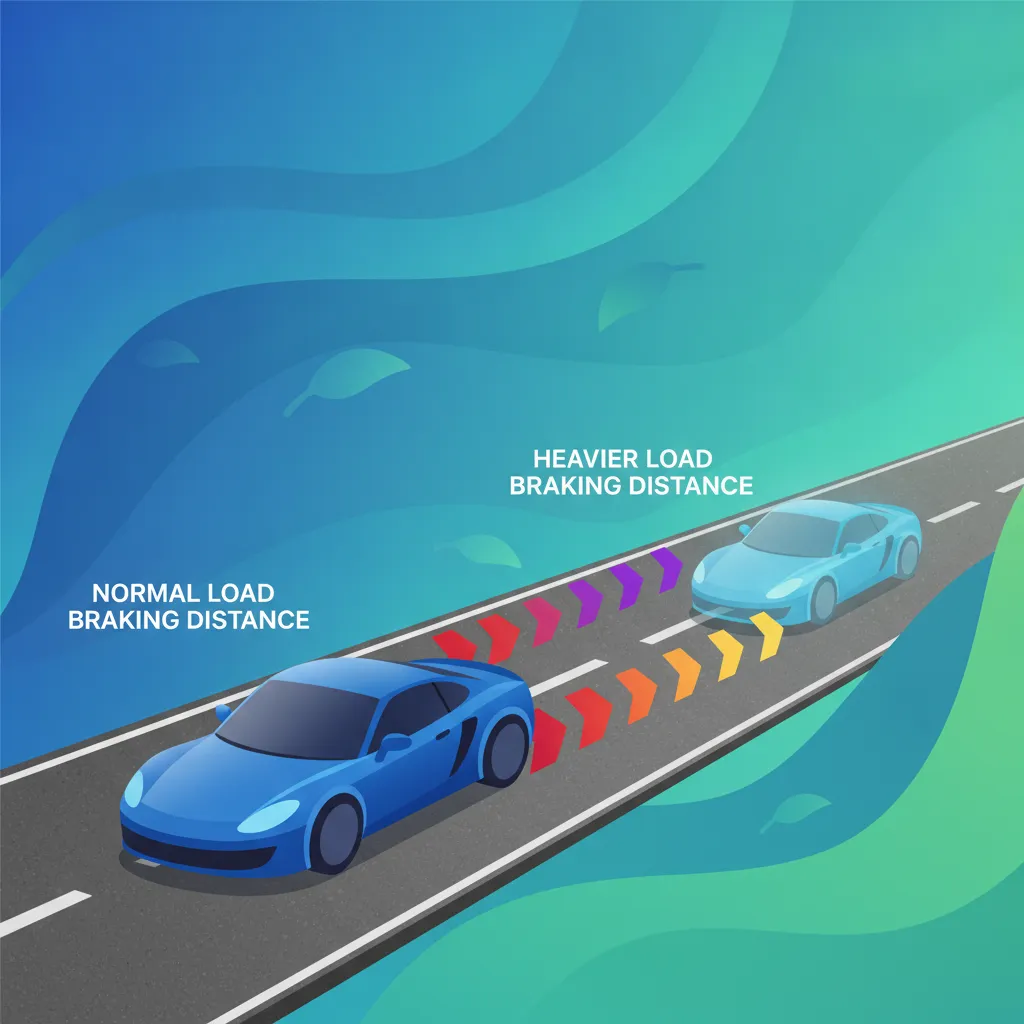
This lesson explores the direct relationship between a vehicle's mass, its speed, and the distance required to stop. It explains how increased load significantly lengthens the braking distance and details how road conditions like gradient and surface friction further affect this calculation. Learners will understand the importance of anticipating stops and maintaining a greater following distance to ensure safety.

This lesson examines the primary factors that contribute to heavy vehicle instability and the risk of rollover. It explains how high-speed cornering, sudden maneuvers, and improperly secured loads can create dangerous lateral forces that compromise vehicle stability. Learners will understand how to identify high-risk situations and apply preventive driving techniques to maintain control and adhere to Danish safety guidelines.
This lesson introduces the fundamental concepts of vehicle mass, clarifying the legal distinctions between total weight, actual weight, and loaded weight under Danish law. It emphasizes the importance of strictly adhering to these limits to ensure safe vehicle operation and handling characteristics. The content also details the significant safety risks and legal penalties associated with exceeding weight limits, such as fines and vehicle impoundment.

This lesson explains the fundamental physics of load distribution and its direct impact on a heavy vehicle's centre of gravity. It details how the positioning of cargo—whether high, low, forward, or back—alters handling characteristics and overall stability. The content emphasizes the importance of achieving a balanced load to minimize rollover risk and comply with Danish regulations for safe weight distribution.

This lesson delves into the unique dynamics of articulated vehicles, focusing on the behavior of the combination around its articulation point. It explains the concept of off-tracking, where the trailer's wheels follow a tighter path than the tractor's, and its implications for negotiating turns and corners. Understanding these dynamics is crucial for safe maneuvering in confined spaces and preventing collisions with curbs or other obstacles.

This lesson introduces the primary components of heavy vehicle braking systems, distinguishing between service, parking, and auxiliary brakes like retarders. It explains the mechanical and pneumatic principles behind how these systems operate to safely slow and stop a large vehicle. Understanding the function of each component is essential for proper use, maintenance, and compliance with Danish braking regulations.

This lesson teaches the essential skill of calculating a heavy vehicle's payload capacity, taking into account both its design specifications and legal restrictions. It explains the relationship between unladen weight, gross vehicle mass, and the resulting legal payload. The content emphasizes the critical role of accurate load planning to prevent overloading, which poses significant safety risks and leads to legal penalties.

This lesson focuses on the legal dimensional limits—length, width, and height—for heavy goods vehicles and their interaction with road infrastructure. It explains Danish regulations and the importance of planning routes to avoid constraints such as low bridges, narrow tunnels, and weight-restricted roads. Learners will understand how to interpret road signs indicating these limits and the procedures for obtaining permits for oversized loads.

Beyond basic checks, this lesson covers the inspection of critical vehicle systems like brakes, steering, and suspension to ensure they are functioning correctly. It also details the importance of properly adjusted mirrors and the use of modern camera systems for monitoring blind spots and enhancing situational awareness. Understanding these systems is vital for safe maneuvering, compliance with Danish regulations, and overall vehicle roadworthiness.

This lesson introduces the various types of trailers and semitrailers used in commercial transport, from rigid drawbar trailers to articulated semitrailers. It explains their distinct characteristics, including legal dimensional limits, typical axle configurations, and maximum loading capacities as defined by Danish regulations. Understanding these differences is fundamental for selecting the right combination for a given load and ensuring legal operation.
Learn practical strategies for arranging cargo to ensure correct axle load distribution, enhancing vehicle stability, optimizing braking performance, and avoiding legal penalties in Denmark. Key concepts for professional drivers.
This lesson explains the fundamental physics of load distribution and its direct impact on a heavy vehicle's centre of gravity. It details how the positioning of cargo—whether high, low, forward, or back—alters handling characteristics and overall stability. The content emphasizes the importance of achieving a balanced load to minimize rollover risk and comply with Danish regulations for safe weight distribution.
This lesson explores the direct relationship between a vehicle's mass, its speed, and the distance required to stop. It explains how increased load significantly lengthens the braking distance and details how road conditions like gradient and surface friction further affect this calculation. Learners will understand the importance of anticipating stops and maintaining a greater following distance to ensure safety.
This lesson introduces the fundamental concepts of vehicle mass, clarifying the legal distinctions between total weight, actual weight, and loaded weight under Danish law. It emphasizes the importance of strictly adhering to these limits to ensure safe vehicle operation and handling characteristics. The content also details the significant safety risks and legal penalties associated with exceeding weight limits, such as fines and vehicle impoundment.
This lesson examines the primary factors that contribute to heavy vehicle instability and the risk of rollover. It explains how high-speed cornering, sudden maneuvers, and improperly secured loads can create dangerous lateral forces that compromise vehicle stability. Learners will understand how to identify high-risk situations and apply preventive driving techniques to maintain control and adhere to Danish safety guidelines.

This lesson provides practical instruction on various methods for securing cargo effectively. It covers the correct application of equipment such as straps, chains, and nets, as well as techniques like blocking and bracing to prevent load movement. The content is aligned with Danish and European standards for load securing, ensuring learners understand how to inspect and verify that their cargo is safe for transport.
This lesson teaches the essential skill of calculating a heavy vehicle's payload capacity, taking into account both its design specifications and legal restrictions. It explains the relationship between unladen weight, gross vehicle mass, and the resulting legal payload. The content emphasizes the critical role of accurate load planning to prevent overloading, which poses significant safety risks and leads to legal penalties.

This lesson addresses how to safely carry luggage or a passenger on a motorcycle. It explains the effects of added weight on the vehicle's balance, steering, and braking performance. Learners will understand correct procedures for securing loads and adjusting their riding technique to maintain control and stability.

Properly functioning lighting and signaling systems are fundamental for safe communication on the road. This lesson details the purpose and correct use of all exterior lights, including headlights, brake lights, turn signals, and hazard lights, according to Danish law. It emphasizes the driver's responsibility to ensure these systems are clean and operational to maintain visibility and clearly signal maneuvers to other road users.
This lesson introduces the primary components of heavy vehicle braking systems, distinguishing between service, parking, and auxiliary brakes like retarders. It explains the mechanical and pneumatic principles behind how these systems operate to safely slow and stop a large vehicle. Understanding the function of each component is essential for proper use, maintenance, and compliance with Danish braking regulations.

This lesson provides a clear, safety-oriented protocol for handling a vehicle breakdown or tyre failure. It covers how to safely maneuver the vehicle to the roadside, the correct use of hazard lights and warning triangles to alert other traffic, and procedures for contacting assistance. Adhering to these steps, as required by Danish law, is critical for protecting yourself and other road users from further incident.
Find clear answers to common questions learners have about Axle Loads and Distribution. Learn how the lesson is structured, which driving theory objectives it supports, and how it fits into the overall learning path of units and curriculum progression in Denmark. These explanations help you understand key concepts, lesson flow, and exam focused study goals.
Even distribution ensures that individual tyres are not overloaded, which prevents premature wear and tyre failure. It also maintains optimal contact with the road for steering and braking, significantly reducing the risk of skidding or loss of control.
If too much weight is concentrated on one axle or the rear of the vehicle, it can cause the brake system to work unevenly, leading to reduced stopping power and an increased risk of jack-knifing or brake fade on long descents.
You must understand the maximum permissible axle loads set by the Danish Road Directorate. While you don't need to memorize every single road sign, you must know how to interpret vehicle registration documents to stay within the legal limits for your specific vehicle configuration.
Professional drivers use load weighing systems or weighbridge data to verify that the load is distributed within the limits specified in the vehicle's registration certificate. Always check that the weight distribution does not exceed the structural limits of the vehicle's suspension.
Use our powerful search tool to pinpoint specific Danish driving theory topics, road signs, or traffic situations you need to review. Start exploring relevant practice sets now to reinforce your knowledge and build confidence for your upcoming driving licence exam.