
This lesson explores the critical relationship between heavy vehicle mass, speed, and stopping distances. Understanding these factors is essential for any professional Category C driver to ensure vehicle control and safety on Danish roads.
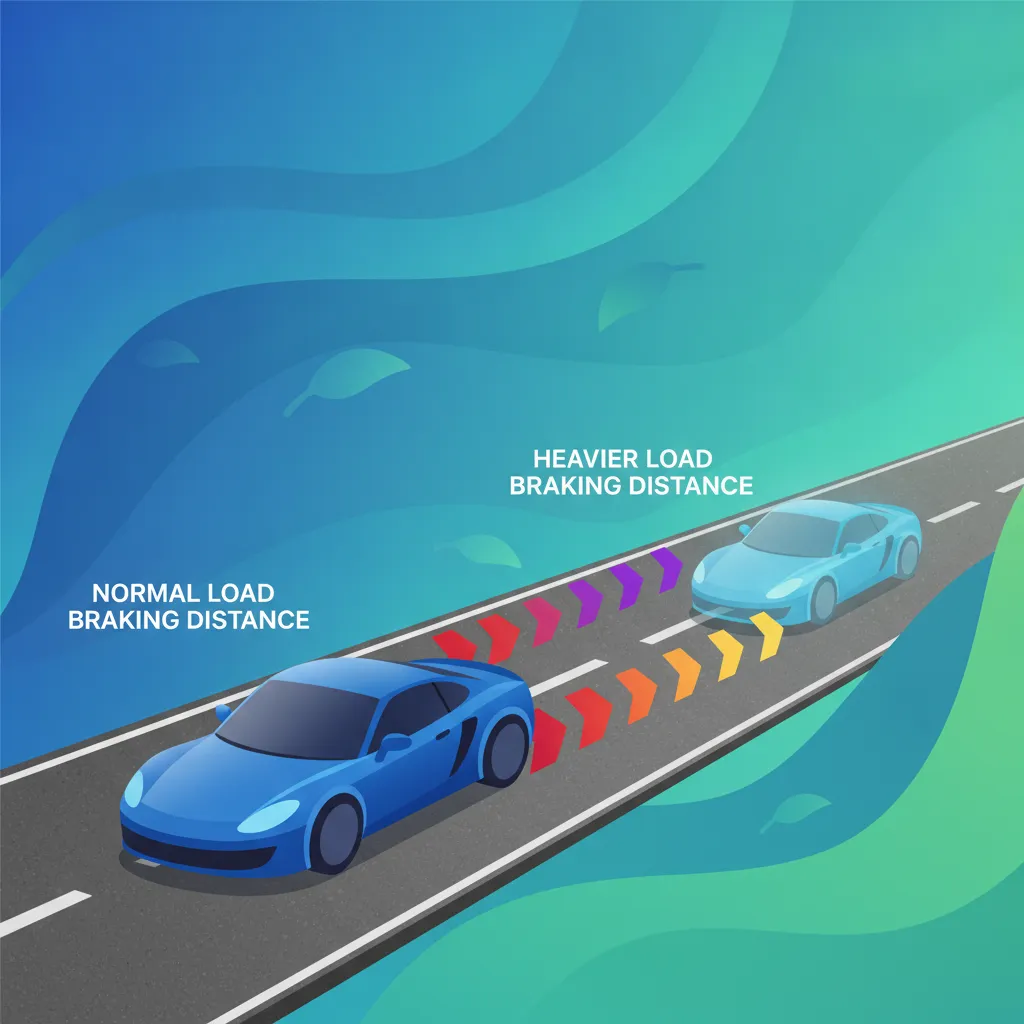
Lesson content overview
As a professional driver holding a Category C licence in Denmark, understanding the intricate relationship between your vehicle's load, its speed, and the distance required to stop safely is paramount. This knowledge is not merely theoretical; it directly influences your ability to prevent collisions, manage your vehicle effectively, and ensure the safety of yourself and other road users. Heavy goods vehicles (HGVs) possess significantly more kinetic energy than passenger cars, meaning their stopping distances are inherently longer and are profoundly affected by various factors.
This lesson delves into the core principles governing braking distance for heavy vehicles, highlighting how increased mass from cargo, higher speeds, road gradients, and surface conditions collectively dictate how far your vehicle will travel before coming to a complete stop. By grasping these dynamics, you can make informed decisions on the road, anticipate potential hazards, and maintain safe following distances under all circumstances.
At the heart of braking distance lies the concept of kinetic energy. Any object in motion possesses kinetic energy, which is the energy it has due to its movement. To bring a vehicle to a stop, all of this kinetic energy must be dissipated, primarily through the vehicle's braking system, converting it into heat and sound.
The formula for kinetic energy (KE) is KE = ½ * mass * velocity². This formula reveals two critical insights for heavy vehicle drivers. Firstly, kinetic energy is directly proportional to the vehicle's mass (weight). This means a heavier vehicle will have more kinetic energy at the same speed than a lighter one. Secondly, and even more significantly, kinetic energy is proportional to the square of the vehicle's velocity (speed). This quadratic relationship implies that even small increases in speed lead to substantial increases in kinetic energy, which in turn demands a disproportionately longer braking distance.
Example: A truck traveling at 80 km/h has four times the kinetic energy of the same truck traveling at 40 km/h, meaning it will require roughly four times the braking distance under ideal conditions.
Understanding this fundamental principle is crucial. A heavy vehicle, by its very nature, carries immense kinetic energy. Misjudging this energy—whether due to excess speed, an unexpected increase in load, or adverse road conditions—can severely compromise your ability to stop safely, leading to dangerous situations.
The total mass of your heavy vehicle is the sum of its own weight (tare weight or unladen weight) and the weight of its cargo, passengers, and fuel (payload). Every kilogram added to the vehicle contributes to its overall mass, and according to the kinetic energy principle, directly increases the energy that must be overcome during braking.
Mass refers to the total quantity of matter in the vehicle, encompassing the vehicle itself and everything it carries. Load or payload specifically refers to the weight of the cargo being transported. For heavy vehicles, the difference in mass between an empty vehicle and one carrying its maximum permissible load can be many tonnes.
The maximum weight of cargo, passengers, and other items that a vehicle is designed to carry, in addition to its own weight.
When a heavy vehicle's mass increases due to cargo, its kinetic energy at any given speed also increases proportionally. Consequently, the brakes must work harder and for a longer duration to dissipate this greater energy, resulting in a longer braking distance. This is a direct, linear relationship: if you double the mass of your vehicle, you roughly double the braking distance, assuming all other factors remain constant.
Practical Implications: Imagine driving an empty lorry versus the same lorry fully laden with goods. At 60 km/h on a dry road, the empty lorry might stop within a certain distance. The fully loaded lorry, however, will require a significantly greater distance to come to a complete halt, even if its braking system is in perfect condition. Professional drivers must always account for their current load when assessing safe speeds and following distances.
Common Misconception: Many drivers mistakenly believe that modern, powerful braking systems automatically compensate for increased load without affecting stopping distance. While modern brakes are highly efficient, they cannot defy the laws of physics. Increased mass always translates to increased kinetic energy, which requires a longer distance to dissipate.
Proper load distribution is also critical. An unevenly distributed load can shift during braking, affecting the vehicle's stability, balance, and the effective transfer of braking forces to the road surface. This can lead to reduced braking efficiency or even loss of control.
While load has a direct impact on braking distance, speed is by far the most influential factor, exerting an exponential effect on the distance required to stop. This is due to the velocity² term in the kinetic energy formula.
As established, kinetic energy increases with the square of speed. This means:
This exponential relationship makes speed control the single most critical aspect of managing braking distances for heavy vehicles. A heavy vehicle already has substantial mass; when combined with high speed, the kinetic energy becomes immense, requiring exceptionally long stopping distances.
Practical Examples: Consider a fully loaded Category C vehicle. If it's traveling at 50 km/h and needs to stop, it will travel a certain distance. If that same vehicle is traveling at 100 km/h, its kinetic energy is four times greater, and its braking distance will be approximately four times longer. This dramatic increase is why higher speeds are so dangerous for heavy vehicles, especially when loaded.
Driver's Insight: Even a slight reduction in speed can yield a significant decrease in required braking distance. This is why adherence to speed limits, and further reducing speed in adverse conditions, is a fundamental safety practice for heavy vehicle drivers.
The reaction distance – the distance traveled from the moment a driver perceives a hazard to the moment the brakes are applied – also increases linearly with speed. Therefore, the total stopping distance (reaction distance + braking distance) escalates sharply at higher speeds, making early hazard perception and timely braking crucial.
The gradient or slope of the road significantly influences the effectiveness of your vehicle's brakes and, consequently, its stopping distance. Gravity either assists or opposes your braking efforts depending on whether you are traveling uphill or downhill.
Gradient refers to the steepness of a road, typically expressed as a percentage. A 5% gradient means the road rises or falls 5 metres for every 100 metres of horizontal distance.
When driving uphill, the component of gravitational force acts against the vehicle's motion. This effectively aids the braking process. As you apply the brakes, gravity helps to slow the vehicle down, meaning a shorter braking distance is required compared to a level road, or less braking effort is needed to achieve the same deceleration.
However, relying solely on this effect is unwise. Drivers should still maintain vigilance and be prepared for unexpected stops, understanding that the assistance from gravity can vary with the steepness of the climb.
Driving downhill presents a greater challenge for braking. Here, the component of gravitational force assists the vehicle's motion, accelerating it downwards. This force works against your braking system, requiring considerably more braking effort and resulting in a longer braking distance compared to a level road or uphill.
Practical Implications for Heavy Vehicle Drivers:
Failure to Account for Gradient: A common violation for heavy vehicle drivers is underestimating the increased braking distance on downhill slopes, leading to short following distances and increased collision risk.
The road surface conditions play a crucial role in determining the friction coefficient between your tires and the road. This coefficient dictates how effectively your tires can grip the road, which is fundamental to the performance of your braking system and directly impacts stopping distance.
The friction coefficient is a dimensionless quantity that represents the ratio of the force of friction between two surfaces to the normal force pressing them together. A higher coefficient means more grip; a lower coefficient means less grip.
Practical Implications for Heavy Vehicle Drivers:
Heavy goods vehicles primarily use air brake systems, which rely on compressed air to activate the brakes. While highly effective, their performance, especially under varying loads, is critical to understand.
Air brake systems store compressed air in reservoirs. When the driver presses the brake pedal, air pressure is released from the reservoirs and directed to brake chambers at each wheel. This pressure pushes a diaphragm, which in turn actuates a slack adjuster, rotating the S-cam (or pushing a wedge) to force the brake shoes against the drum (or pads against the disc).
A braking system used on heavy vehicles that uses compressed air to transmit the force from the brake pedal to the wheel brakes.
A well-maintained air brake system is designed to provide consistent braking performance across different loads. However, the sheer increase in kinetic energy with a heavy load still extends braking distance, as discussed.
Critical aspects for heavy vehicle drivers:
Practical Meaning: If an air brake system is not properly maintained or adjusted, the negative effects of increased load on braking distance will be amplified, potentially leading to dangerous situations.
In Denmark, traffic regulations (Færdselsloven) require all drivers, especially those operating heavy vehicles, to drive in a manner that ensures safety and control, which directly implies the ability to stop within a foreseeable distance. While specific numerical braking distance requirements are not typically codified in law (as they vary dynamically with conditions), the overarching principle is clear: drivers must always be able to stop safely.
Correct Action: Before departure, a driver thoroughly checks that all straps, chains, and other securing devices are correctly applied and tensioned to prevent any movement of the cargo, especially anticipating emergency braking scenarios.
Understanding the theory is one thing; applying it correctly in real-world scenarios is another. Here are common violations and edge cases where misjudgments regarding braking distance can lead to serious consequences for heavy vehicle drivers.
Underestimating Load Impact: Assuming the same stopping distance as when the vehicle is empty, or not fully appreciating how a heavy load changes the vehicle's dynamics.
Incorrect Speed Adjustment: Maintaining maximum permissible speed despite a heavy load and challenging road or weather conditions (e.g., driving 80 km/h on a wet motorway with a full load).
Short Following Distance: Following passenger cars or other vehicles too closely, especially when approaching a downhill gradient or an intersection, leaving insufficient space for a loaded truck to stop.
Ignoring Road Surface: Failing to significantly increase following distance and reduce speed on wet, icy, or gravel roads, treating them as if they were dry.
Improper Brake Use on Descends: Relying solely on the service brake on long, steep descents, leading to overheating (brake fade) and reduced braking power, instead of primarily using engine braking or a retarder.
Neglecting Load Shift: Operating a vehicle with inadequately secured cargo that shifts during braking, causing instability, loss of control, or even damage to the vehicle or load.
Failing to Account for Gradient: Not anticipating the increased stopping distance required on downhill slopes, especially when entering blind curves or approaching junctions.
Safe driving of heavy goods vehicles is an exercise in continuous risk assessment and adaptation. The key takeaways from this lesson consolidate into a proactive and cautious approach to driving.
By diligently applying these principles, professional Category C drivers can master the complex art of managing braking distances, significantly enhancing safety for themselves and everyone on the road.
For Category C drivers in Denmark, understanding braking distance is essential because heavy goods vehicles carry significantly more kinetic energy than passenger cars, requiring longer stopping distances. The kinetic energy formula shows that while increased mass linearly extends braking distance, speed has an exponential effect—doubling speed quadruples the required stopping distance. Road gradients add complexity: uphill assists braking while downhill opposes it, and adverse surface conditions like rain or ice drastically reduce tire friction. Professional drivers must continuously assess their current load, speed, gradient, and road surface to maintain safe following distances and prevent dangerous situations.
A short set of high-value points that capture the most important learning from this lesson.
Kinetic energy (KE = ½ × mass × velocity²) means doubling speed quadruples braking distance, while doubling mass only doubles it
Heavy load increases braking distance linearly, but speed increases it exponentially, making speed control the most critical factor
Downhill gradients add gravitational force that works against braking, significantly extending stopping distance
Wet, icy, snowy, or gravel surfaces reduce tire friction and dramatically increase stopping distance
Use retarders and engine brakes on long descents to prevent brake fade and preserve service brakes for emergencies
Explore all units and lessons included in this driving theory course.
The total stopping distance equals reaction distance plus braking distance; both increase with speed
Payload refers to cargo weight only; total mass is tare weight plus payload
A 5% gradient means the road rises or falls 5 metres per 100 metres of horizontal distance
Air brake systems must be properly maintained and adjusted to handle heavy loads effectively
Load must be properly secured to prevent shifting that can destabilize the vehicle during braking
Assuming modern brakes compensate for heavy loads without affecting stopping distance—they cannot defy physics
Maintaining maximum speed on wet or slippery roads when heavily loaded
Following other vehicles too closely, especially when approaching downhill sections or intersections
Relying solely on service brakes during long, steep descents instead of using engine braking or retarders
Failing to significantly increase following distance on low-friction surfaces like wet asphalt or ice
Lesson content overview
A short set of high-value points that capture the most important learning from this lesson.
Kinetic energy (KE = ½ × mass × velocity²) means doubling speed quadruples braking distance, while doubling mass only doubles it
Heavy load increases braking distance linearly, but speed increases it exponentially, making speed control the most critical factor
Downhill gradients add gravitational force that works against braking, significantly extending stopping distance
Wet, icy, snowy, or gravel surfaces reduce tire friction and dramatically increase stopping distance
Use retarders and engine brakes on long descents to prevent brake fade and preserve service brakes for emergencies
Explore all units and lessons included in this driving theory course.
The total stopping distance equals reaction distance plus braking distance; both increase with speed
Payload refers to cargo weight only; total mass is tare weight plus payload
A 5% gradient means the road rises or falls 5 metres per 100 metres of horizontal distance
Air brake systems must be properly maintained and adjusted to handle heavy loads effectively
Load must be properly secured to prevent shifting that can destabilize the vehicle during braking
Assuming modern brakes compensate for heavy loads without affecting stopping distance—they cannot defy physics
Maintaining maximum speed on wet or slippery roads when heavily loaded
Following other vehicles too closely, especially when approaching downhill sections or intersections
Relying solely on service brakes during long, steep descents instead of using engine braking or retarders
Failing to significantly increase following distance on low-friction surfaces like wet asphalt or ice
Explore search topics learners often look for when studying Influence of Load on Braking Distance. These topics reflect common questions about road rules, driving situations, safety guidance, and lesson level theory preparation for learners in Denmark.
Browse additional driving theory lessons that cover connected traffic rules, road signs, and common driving situations related to this topic. Improve your understanding of how different rules interact across everyday traffic scenarios.
Understand the physics of kinetic energy and how a heavy vehicle's load and speed directly increase stopping distances. Learn essential safety practices for Category C drivers in Denmark to manage these factors on different road conditions and gradients.

This lesson teaches the proper application of auxiliary speed control devices, such as retarders and engine brakes. It focuses on their use for maintaining a safe, controlled speed on long downhill gradients, which helps prevent service brake overheating and fade. The content also covers Danish regulations related to these systems and their benefits for reducing brake wear and improving overall safety.

This lesson breaks down the concept of total stopping distance into its core components: perception, reaction, and braking distances. It explains how variables such as vehicle speed, tyre quality, and road friction significantly impact how quickly you can stop. By understanding these principles, you will be ableto maintain a safe following distance and avoid collisions.

This lesson introduces the primary components of heavy vehicle braking systems, distinguishing between service, parking, and auxiliary brakes like retarders. It explains the mechanical and pneumatic principles behind how these systems operate to safely slow and stop a large vehicle. Understanding the function of each component is essential for proper use, maintenance, and compliance with Danish braking regulations.
This lesson introduces the fundamental concepts of vehicle mass, clarifying the legal distinctions between total weight, actual weight, and loaded weight under Danish law. It emphasizes the importance of strictly adhering to these limits to ensure safe vehicle operation and handling characteristics. The content also details the significant safety risks and legal penalties associated with exceeding weight limits, such as fines and vehicle impoundment.

This lesson focuses on the rules and best practices for operating heavy vehicles on motorways and interchanges. It details Danish regulations regarding lane usage and speed limits for lorries, and explains safe techniques for merging into and exiting high-speed traffic. Maintaining a safe and appropriate following distance to allow for longer stopping distances is a key focus of the content.

This lesson explains the components of total stopping distance: reaction distance and braking distance. It provides instruction on how to use both front and rear brakes effectively for a controlled and efficient stop. The content also highlights how factors like speed, road condition, and tyre quality influence how quickly you can stop.

Proper axle load distribution is crucial for the safety and legality of heavy vehicle operations. This lesson explains how axle pressure is defined and regulated, highlighting the importance of distributing weight correctly across all axles. It covers how imbalanced loads can negatively affect braking performance, steering control, and overall vehicle stability, while also explaining the Danish regulations for maximum axle loads.

This lesson focuses on the legal dimensional limits—length, width, and height—for heavy goods vehicles and their interaction with road infrastructure. It explains Danish regulations and the importance of planning routes to avoid constraints such as low bridges, narrow tunnels, and weight-restricted roads. Learners will understand how to interpret road signs indicating these limits and the procedures for obtaining permits for oversized loads.

This lesson addresses the specific skills required to navigate around public transport and heavy goods vehicles safely. You will learn the rules for bus lanes, recognize when buses have priority at stops, and understand the unique challenges posed by large vehicles, such as wider turning circles and larger blind spots. The material also provides clear protocols for overtaking these vehicles while maintaining adequate safety margins.
This lesson addresses the combined challenges of navigating narrow rural roads and driving in adverse weather. It explains how to adapt speed and braking techniques for conditions like heavy rain, fog, or ice, which are common on rural routes. The content also integrates these factors into route planning, teaching drivers how to select the safest and most appropriate path while avoiding local weight or height restrictions.
Learn about typical errors drivers make regarding braking distance, load impact, speed, and road conditions for heavy vehicles. This lesson focuses on identifying and avoiding critical mistakes to ensure safe driving on Danish roads.
This lesson teaches the proper application of auxiliary speed control devices, such as retarders and engine brakes. It focuses on their use for maintaining a safe, controlled speed on long downhill gradients, which helps prevent service brake overheating and fade. The content also covers Danish regulations related to these systems and their benefits for reducing brake wear and improving overall safety.
This lesson breaks down the concept of total stopping distance into its core components: perception, reaction, and braking distances. It explains how variables such as vehicle speed, tyre quality, and road friction significantly impact how quickly you can stop. By understanding these principles, you will be ableto maintain a safe following distance and avoid collisions.
Proper axle load distribution is crucial for the safety and legality of heavy vehicle operations. This lesson explains how axle pressure is defined and regulated, highlighting the importance of distributing weight correctly across all axles. It covers how imbalanced loads can negatively affect braking performance, steering control, and overall vehicle stability, while also explaining the Danish regulations for maximum axle loads.
This lesson introduces the primary components of heavy vehicle braking systems, distinguishing between service, parking, and auxiliary brakes like retarders. It explains the mechanical and pneumatic principles behind how these systems operate to safely slow and stop a large vehicle. Understanding the function of each component is essential for proper use, maintenance, and compliance with Danish braking regulations.
This lesson introduces the fundamental concepts of vehicle mass, clarifying the legal distinctions between total weight, actual weight, and loaded weight under Danish law. It emphasizes the importance of strictly adhering to these limits to ensure safe vehicle operation and handling characteristics. The content also details the significant safety risks and legal penalties associated with exceeding weight limits, such as fines and vehicle impoundment.
This lesson focuses on the legal dimensional limits—length, width, and height—for heavy goods vehicles and their interaction with road infrastructure. It explains Danish regulations and the importance of planning routes to avoid constraints such as low bridges, narrow tunnels, and weight-restricted roads. Learners will understand how to interpret road signs indicating these limits and the procedures for obtaining permits for oversized loads.

This lesson explains the fundamental physics of load distribution and its direct impact on a heavy vehicle's centre of gravity. It details how the positioning of cargo—whether high, low, forward, or back—alters handling characteristics and overall stability. The content emphasizes the importance of achieving a balanced load to minimize rollover risk and comply with Danish regulations for safe weight distribution.
This lesson provides a clear, safety-oriented protocol for handling a vehicle breakdown or tyre failure. It covers how to safely maneuver the vehicle to the roadside, the correct use of hazard lights and warning triangles to alert other traffic, and procedures for contacting assistance. Adhering to these steps, as required by Danish law, is critical for protecting yourself and other road users from further incident.
This lesson explains the components of total stopping distance: reaction distance and braking distance. It provides instruction on how to use both front and rear brakes effectively for a controlled and efficient stop. The content also highlights how factors like speed, road condition, and tyre quality influence how quickly you can stop.
This lesson focuses on the rules and best practices for operating heavy vehicles on motorways and interchanges. It details Danish regulations regarding lane usage and speed limits for lorries, and explains safe techniques for merging into and exiting high-speed traffic. Maintaining a safe and appropriate following distance to allow for longer stopping distances is a key focus of the content.
Find clear answers to common questions learners have about Influence of Load on Braking Distance. Learn how the lesson is structured, which driving theory objectives it supports, and how it fits into the overall learning path of units and curriculum progression in Denmark. These explanations help you understand key concepts, lesson flow, and exam focused study goals.
A heavier vehicle possesses more kinetic energy at the same speed compared to a lighter one. The braking system must convert this higher energy into heat, which requires more time and distance to bring the vehicle to a full stop.
You must increase your following distance significantly when carrying a heavy load. Since your braking distance increases with mass, you need more room to react and decelerate safely without putting undue stress on the braking system.
Yes, braking distance increases substantially on downhill gradients. Gravity works against the brakes, and the vehicle's momentum is amplified, making it vital to use engine braking or auxiliary brakes to assist your service brakes.
Brake fade occurs when the braking system components become overheated and lose their effectiveness. This is a major risk for heavy vehicles on long descents, which is why proper use of retarders and engine brakes is required.
Use our powerful search tool to pinpoint specific Danish driving theory topics, road signs, or traffic situations you need to review. Start exploring relevant practice sets now to reinforce your knowledge and build confidence for your upcoming driving licence exam.