
This lesson explores how cargo positioning dictates vehicle handling and safety for heavy goods vehicles. Understanding these principles is crucial for preventing rollovers and ensuring compliance with Danish road regulations for Category C drivers.

Lesson content overview
Operating heavy goods vehicles (HGVs) in Denmark, especially those requiring a Category C licence, demands a profound understanding of how cargo affects vehicle dynamics. This lesson delves into the fundamental principles of load distribution and its direct impact on a vehicle's centre of gravity (CG). Mastering these concepts is not merely a technical skill but a critical safety imperative, directly influencing handling, stability, and compliance with Danish transport regulations.
Effective load distribution ensures that a heavy vehicle remains stable under various driving conditions, reducing the risk of accidents, particularly rollovers. It also prevents excessive wear and tear on vehicle components and helps maintain optimal braking and steering performance. For professional drivers, comprehending these principles is essential for safe operation and responsible road use.
The Centre of Gravity (CG) is perhaps the single most important factor determining a heavy vehicle's stability. It is defined as the theoretical point where the entire weight of the vehicle and its cargo is considered to act vertically downwards. Imagine balancing the entire lorry on a single pin – that pin would be directly beneath its centre of gravity.
The position of the CG directly dictates how stable a vehicle is, how it handles during manoeuvres, and its susceptibility to tipping over. A lower and more centrally located CG enhances stability significantly, making the vehicle less prone to rollover during cornering, braking, or when traversing uneven road surfaces. Conversely, a high or off-centre CG can dramatically increase these risks.
The physics of mass, gravity, and inertia are at play here. When a vehicle turns, centrifugal force acts outwards, attempting to push the vehicle away from the centre of the turn. If the CG is high, this outward force creates a larger lever arm, amplifying the tipping moment and increasing the likelihood of a rollover. Similarly, during braking, an improperly positioned CG can cause weight transfer that compromises braking efficiency or steering control.
Load distribution refers to the strategic arrangement of cargo within a vehicle, considering its weight, height, and longitudinal (fore/aft) placement relative to the axles, as well as its lateral (side-to-side) balance. The primary purpose of proper load distribution is to achieve a balanced CG that remains within safe operational limits and complies with legal requirements.
Achieving correct load distribution offers numerous benefits:
For heavy vehicle operations in Denmark, understanding and adhering to legal limits is paramount. The two core regulatory concepts related to load are Axle Load Limits and Payload Capacity.
These limits are set to prevent damage to roads, bridges, and the vehicle itself, and to ensure safe handling. Overloading an axle can lead to tyre failure, compromised braking, and structural damage to the vehicle's chassis or suspension.
Exceeding the payload capacity means the vehicle is operating beyond its structural and design limits. This can severely compromise safety, handling, and braking effectiveness, and constitutes a serious violation of traffic law, potentially leading to significant fines and penalties. It's crucial for drivers to always verify both the vehicle's payload capacity and the individual axle limits before loading.
The specific arrangement of cargo within a heavy vehicle has profound effects on its CG. Three primary factors must be considered: the height of the load, its longitudinal position (fore/aft), and its lateral balance (side-to-side).
The height of the load refers to the vertical distance of the cargo from the road surface. This is one of the most critical factors influencing a heavy vehicle's stability, particularly its rollover risk.
Practical Meaning: A higher load directly raises the vehicle's CG. As the CG moves upwards, the vehicle's stability decreases, making it more susceptible to overturning during turns, emergency braking, or when encountering side winds or uneven road surfaces. Even if the total weight is within limits, a high load can be extremely dangerous.
Associated Rules: Load should always be placed as low as practically possible within the cargo area. Drivers must avoid stacking cargo unnecessarily high.
Common Misunderstandings: Many drivers mistakenly believe that as long as the total weight is within the payload limit, the load is safe, often disregarding the critical impact of its height.
The longitudinal position of load refers to where the cargo is placed along the length of the vehicle, specifically relative to its front and rear axles.
Practical Meaning: Improper fore/aft placement can lead to severe axle overloading, drastically alter weight transfer during braking and acceleration, and negatively impact steering and traction. For instance, too much weight over the front axle can make steering heavy and compromise braking effectiveness if the front tyres lose grip. Conversely, too much weight on the rear can lighten the steering axle, making the steering feel vague and less responsive, potentially leading to fishtailing or loss of control, especially under braking.
Associated Rules: Load must be positioned to ensure that both front and rear axle loads remain within their legal limits. A common guideline, often required by regulations for stability and handling, is that a significant portion of the total load (e.g., approximately 60% for a rigid lorry) should be placed over the steering axle(s) to maintain effective steering and braking. However, this varies significantly with vehicle type (e.g., tractor-trailer combinations).
Common Misunderstandings: Believing that equal distribution across all axles is always optimal. While balance is good, the specific requirements for steering and braking dictate that the front axle needs sufficient load.
Lateral load distribution refers to the balance of weight from left to right across the width of the vehicle.
Practical Meaning: An asymmetrical load, where significantly more weight is on one side of the vehicle than the other, can cause the vehicle to consistently pull or drift to the heavier side. This requires constant steering correction from the driver, leading to fatigue and potentially dangerous situations if sudden manoeuvres are required. It can also cause uneven tyre wear and put undue stress on one side of the suspension system.
Associated Rules: Cargo should be distributed as evenly as possible from left to right within the vehicle's cargo area.
Common Misunderstandings: Drivers sometimes underestimate the impact of lateral imbalance, thinking it's negligible. However, even a relatively small imbalance can significantly affect the vehicle's handling characteristics, particularly during cornering or on cambered roads.
It is crucial to understand that these three factors—load height, longitudinal position, and lateral balance—do not act in isolation. They interact in complex ways to determine the overall position of the vehicle's CG.
For example, a load that is both high and placed towards the rear of the vehicle will significantly raise the CG and shift it rearwards. This combined effect drastically increases rollover risk and reduces weight on the front steering axle, negatively impacting both stability and braking performance. Similarly, a heavy load that is high and distributed unevenly laterally creates an even greater instability challenge.
Complex loading scenarios, such as carrying mixed cargo with varying densities and shapes, require careful planning and calculation to ensure the overall CG remains within safe and legal limits. Drivers must consider how each piece of cargo contributes to the vehicle's overall balance.
Vehicle stability is its inherent ability to resist tipping or losing control. Rollover risk is the probability of the vehicle overturning, a consequence of instability primarily caused by an elevated or improperly placed CG.
Key factors that increase rollover risk include:
A high CG drastically reduces the vehicle's critical roll angle. This means it takes less steering input or a smaller road irregularity to initiate a rollover, especially at speed.
Safety Measures:
The physics dictates that the higher the CG, the smaller the angle of tilt or the lower the speed required for the vehicle to tip over due to centrifugal force in a turn. Drivers often underestimate this effect, leading to tragic consequences.
Danish legislation, enforced by authorities like Færdselsstyrelsen (Danish Road Directorate) and Politi (Police), sets strict rules for heavy vehicle load distribution to ensure public safety and road integrity. Compliance is mandatory for all Category C license holders.
Non-compliance with these regulations can lead to significant fines, points on the driver's license, and even vehicle immobilization. Regular checks and correct loading procedures are essential.
Despite clear regulations and safety implications, certain errors in load distribution are regrettably common. Professional drivers must be acutely aware of these to avoid dangerous situations and legal penalties.
The effects of load distribution are not static; they interact with external conditions and the vehicle's state. Drivers must consider these contextual variations:
Understanding the fundamental cause-and-effect relationships is key to safe heavy vehicle operation:
To illustrate the practical application of these principles, consider the following scenarios:
Setting: A driver is operating a heavy urban delivery van (Category C1 or C if over 3.5t) through congested city streets, making frequent stops and turns, on a dry day.
Load: The van is carrying a mixed load of parcels and a few heavy appliances. The driver mistakenly stacks all the heavy parcels on the right side of the van and places the appliances on top of some lighter boxes at the back, creating a high and uneven load.
Incorrect Behavior: Due to the high and right-sided load, the van feels unbalanced. When the driver takes a left turn, the high CG causes excessive body roll, making the van feel unstable. The uneven lateral distribution causes the steering to pull slightly to the right, forcing constant corrections. During a sudden stop, the high, rear-heavy load causes significant weight transfer to the front, but the overall high CG amplifies the tipping moment, making the vehicle feel like it might pitch forward or sway.
Correct Behavior: A responsible driver would ensure the heavy appliances are placed directly on the floor of the van, centered or slightly biased to the left to counteract driver weight. Lighter parcels would be stacked evenly around the heavier items, ensuring no side is significantly heavier than the other and that the overall load height is kept as low as possible. This would result in predictable handling, stable cornering, and effective braking.
Setting: A Category C lorry is travelling at 80 km/h on a Danish motorway, making occasional lane changes and passing other vehicles. The weather is windy.
Load: The lorry is carrying a full load of lightweight but bulky insulation material, stacked high to maximize volume utilization. A few heavier spare parts are loaded carelessly at the very rear of the trailer, on top of the insulation.
Incorrect Behavior: The high-stacked insulation material significantly raises the lorry's overall CG. The additional heavier parts at the rear amplify this effect, making the vehicle rear-heavy. When the driver attempts a lane change, the high CG makes the vehicle sway excessively, feeling unstable in the crosswinds. During overtaking, the truck feels less responsive and more prone to "porpoising" (bouncing). In a strong gust of wind, the combination of high load and elevated CG creates a dangerous tipping moment, making the driver struggle to maintain a straight line and risking a rollover.
Correct Behavior: The driver should prioritize stability over pure volume. While lightweight insulation might allow high stacking within weight limits, the driver should be aware of the increased CG. Heavy items like spare parts must always be placed on the floor, ideally secured towards the front or middle of the trailer to contribute to proper axle loading and a lower CG. Recognizing the high load, the driver would reduce speed, especially when cornering or in strong winds, and execute all manoeuvres smoothly to minimize lateral forces.
The principles of load distribution and centre of gravity are foundational to the safe and efficient operation of heavy vehicles. For Category C license holders, this knowledge is non-negotiable. Every decision regarding cargo placement—its height, its position along the length of the vehicle, and its balance across the width—directly influences vehicle stability, handling, and overall safety.
A stable Centre of Gravity, achieved through careful and compliant load distribution, ensures that the vehicle responds predictably to driver inputs, maintains optimal braking and steering capabilities, and significantly reduces the risk of dangerous incidents like rollovers. Drivers must internalize these concepts, always prioritizing safety and legal compliance over convenience or perceived efficiency. Regular training, adherence to regulations, and a meticulous approach to loading are the hallmarks of a professional heavy vehicle driver in Denmark.
This lesson explains how cargo placement directly affects a heavy vehicle's Centre of Gravity (CG) and stability. The key principle is that a lower, more central CG improves handling and reduces rollover risk during turns, braking, and adverse conditions. Load height has the greatest impact on stability, followed by longitudinal and lateral distribution. Danish regulations (KBU) mandate specific axle load limits and maximum load heights to ensure safety. Professional drivers must balance cargo strategically to keep the CG low and within legal limits while maintaining sufficient weight on the steering axle for control.
A short set of high-value points that capture the most important learning from this lesson.
The Centre of Gravity (CG) is the single most important factor determining a heavy vehicle's stability and rollover risk
A lower and more centrally located CG significantly enhances stability during cornering, braking, and on uneven surfaces
Load height is the most critical factor influencing rollover risk, as higher loads create a larger tipping moment
Three factors interact to determine overall CG: load height, longitudinal (fore/aft) placement, and lateral (side-to-side) balance
Danish regulations set strict limits on axle loads, payload capacity, and load height that must never be exceeded
Explore all units and lessons included in this driving theory course.
A higher CG means less steering input or smaller road irregularities are needed to trigger a rollover
Front axle typically needs approximately 60% of load for effective steering and braking on rigid lorries
Asymmetrical lateral load causes the vehicle to pull to the heavier side, requiring constant steering corrections
Payload capacity = Maximum GVW minus Tare Weight (empty vehicle weight)
Strong crosswinds and wet/icy roads amplify the instability caused by high or poorly distributed loads
Assuming that as long as total weight is within payload limits, the load is safe regardless of height
Believing equal distribution across all axles is always optimal, without considering steering axle requirements
Underestimating the impact of lateral imbalance, thinking it is negligible compared to vertical weight
Placing heavy items high in the cargo area to maximize space utilization
Loading rear-heavy without recognizing the effect on steering responsiveness and fishtailing risk
Lesson content overview
A short set of high-value points that capture the most important learning from this lesson.
The Centre of Gravity (CG) is the single most important factor determining a heavy vehicle's stability and rollover risk
A lower and more centrally located CG significantly enhances stability during cornering, braking, and on uneven surfaces
Load height is the most critical factor influencing rollover risk, as higher loads create a larger tipping moment
Three factors interact to determine overall CG: load height, longitudinal (fore/aft) placement, and lateral (side-to-side) balance
Danish regulations set strict limits on axle loads, payload capacity, and load height that must never be exceeded
Explore all units and lessons included in this driving theory course.
A higher CG means less steering input or smaller road irregularities are needed to trigger a rollover
Front axle typically needs approximately 60% of load for effective steering and braking on rigid lorries
Asymmetrical lateral load causes the vehicle to pull to the heavier side, requiring constant steering corrections
Payload capacity = Maximum GVW minus Tare Weight (empty vehicle weight)
Strong crosswinds and wet/icy roads amplify the instability caused by high or poorly distributed loads
Assuming that as long as total weight is within payload limits, the load is safe regardless of height
Believing equal distribution across all axles is always optimal, without considering steering axle requirements
Underestimating the impact of lateral imbalance, thinking it is negligible compared to vertical weight
Placing heavy items high in the cargo area to maximize space utilization
Loading rear-heavy without recognizing the effect on steering responsiveness and fishtailing risk
Explore search topics learners often look for when studying Principles of Load Distribution and Centre of Gravity. These topics reflect common questions about road rules, driving situations, safety guidance, and lesson level theory preparation for learners in Denmark.
Browse additional driving theory lessons that cover connected traffic rules, road signs, and common driving situations related to this topic. Improve your understanding of how different rules interact across everyday traffic scenarios.
Understand how cargo placement impacts a heavy vehicle's centre of gravity and overall stability. This lesson explores Danish regulations on load distribution to minimize rollover risk and ensure safe handling.

This lesson examines the primary factors that contribute to heavy vehicle instability and the risk of rollover. It explains how high-speed cornering, sudden maneuvers, and improperly secured loads can create dangerous lateral forces that compromise vehicle stability. Learners will understand how to identify high-risk situations and apply preventive driving techniques to maintain control and adhere to Danish safety guidelines.

Proper axle load distribution is crucial for the safety and legality of heavy vehicle operations. This lesson explains how axle pressure is defined and regulated, highlighting the importance of distributing weight correctly across all axles. It covers how imbalanced loads can negatively affect braking performance, steering control, and overall vehicle stability, while also explaining the Danish regulations for maximum axle loads.

This lesson delves into the unique dynamics of articulated vehicles, focusing on the behavior of the combination around its articulation point. It explains the concept of off-tracking, where the trailer's wheels follow a tighter path than the tractor's, and its implications for negotiating turns and corners. Understanding these dynamics is crucial for safe maneuvering in confined spaces and preventing collisions with curbs or other obstacles.

This lesson addresses the causes and prevention of trailer sway and jack-knifing, two critical loss-of-control events. It explains how factors like improper braking, high speeds, crosswinds, and poor load distribution can trigger these dangerous situations. Learners will study avoidance strategies, including proper speed management and smooth steering inputs, as well as corrective actions to regain control if sway begins.
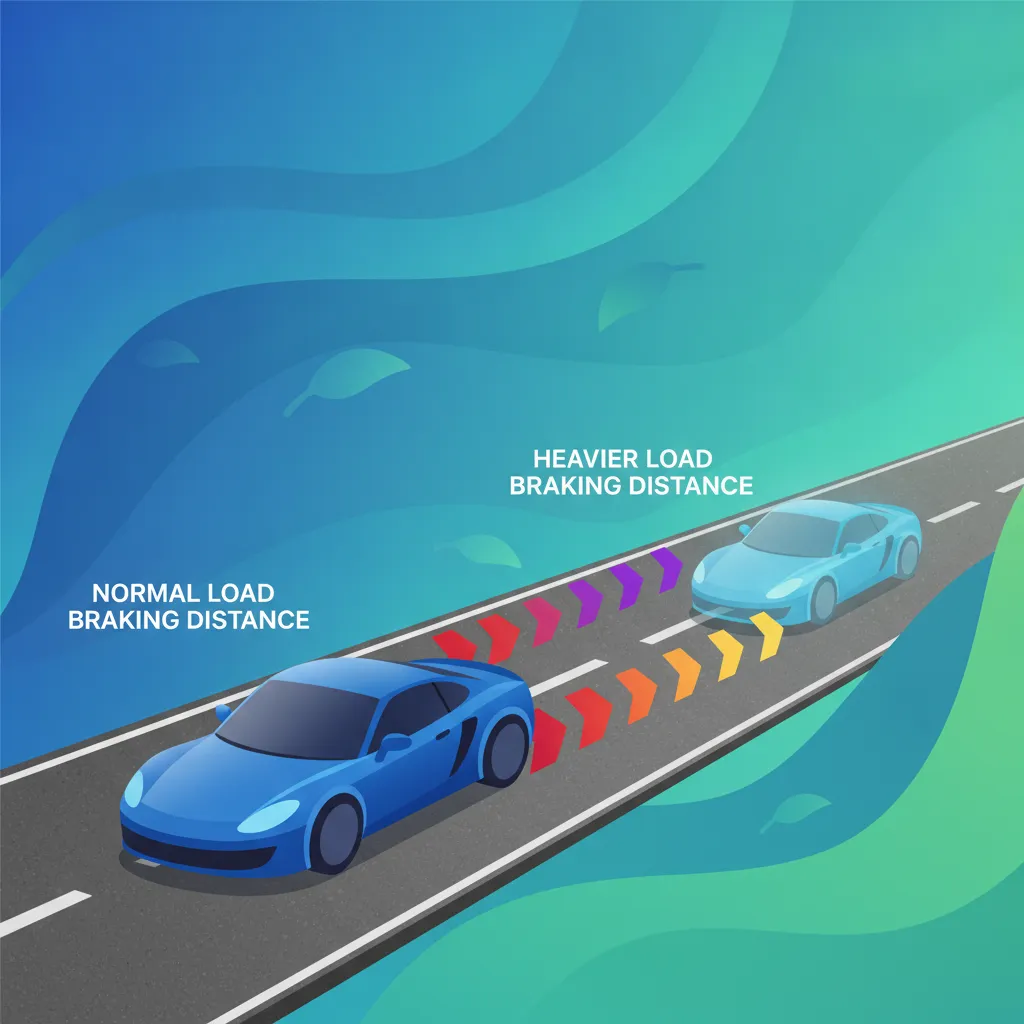
This lesson explores the direct relationship between a vehicle's mass, its speed, and the distance required to stop. It explains how increased load significantly lengthens the braking distance and details how road conditions like gradient and surface friction further affect this calculation. Learners will understand the importance of anticipating stops and maintaining a greater following distance to ensure safety.
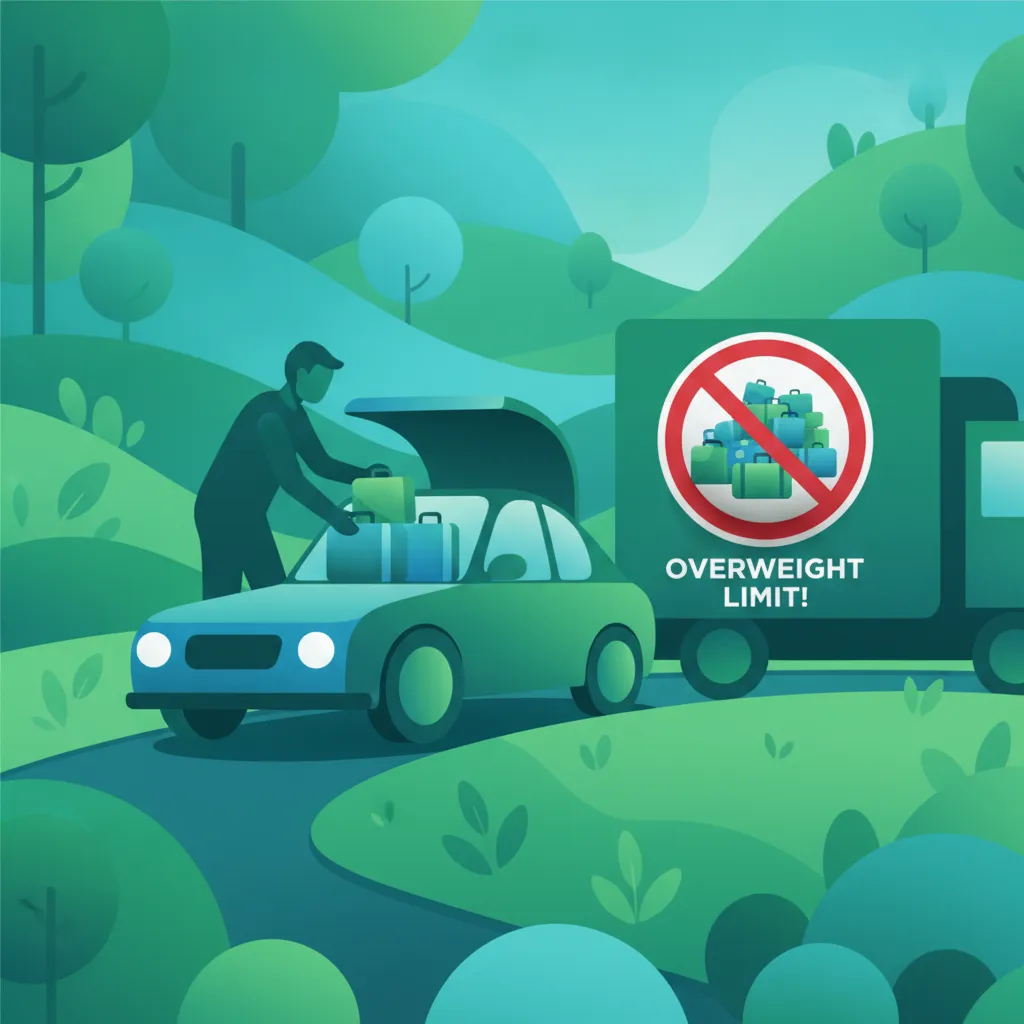
This lesson introduces the fundamental concepts of vehicle mass, clarifying the legal distinctions between total weight, actual weight, and loaded weight under Danish law. It emphasizes the importance of strictly adhering to these limits to ensure safe vehicle operation and handling characteristics. The content also details the significant safety risks and legal penalties associated with exceeding weight limits, such as fines and vehicle impoundment.

This lesson focuses on the fundamental skills of balance and steering. It explains how body position affects the vehicle's center of gravity and stability. The concept of counter-steering is introduced as the primary method for initiating turns at moderate to high speeds, a key skill for effective control.

This lesson focuses on the safe transportation of both passengers and cargo. It details the legal requirements for using seat belts and the mandatory use of appropriate child restraints for younger passengers. Additionally, it explains the principles of proper load distribution and securing methods to prevent cargo from shifting, which could dangerously affect the vehicle's stability and handling.

This lesson provides a step-by-step guide to safe loading and unloading practices. It covers the importance of ensuring proper weight distribution during the process, re-checking cargo securement, and adhering to safety protocols at loading docks. The content also includes ergonomic best practices to prevent driver injury and guidelines for the safe operation of equipment like tail lifts and pallet jacks.

This lesson addresses the specific skills required to navigate around public transport and heavy goods vehicles safely. You will learn the rules for bus lanes, recognize when buses have priority at stops, and understand the unique challenges posed by large vehicles, such as wider turning circles and larger blind spots. The material also provides clear protocols for overtaking these vehicles while maintaining adequate safety margins.
Learn about frequent errors in heavy vehicle load distribution, their direct impact on the centre of gravity, and the resulting safety risks and legal consequences under Danish traffic law.
Proper axle load distribution is crucial for the safety and legality of heavy vehicle operations. This lesson explains how axle pressure is defined and regulated, highlighting the importance of distributing weight correctly across all axles. It covers how imbalanced loads can negatively affect braking performance, steering control, and overall vehicle stability, while also explaining the Danish regulations for maximum axle loads.
This lesson introduces the fundamental concepts of vehicle mass, clarifying the legal distinctions between total weight, actual weight, and loaded weight under Danish law. It emphasizes the importance of strictly adhering to these limits to ensure safe vehicle operation and handling characteristics. The content also details the significant safety risks and legal penalties associated with exceeding weight limits, such as fines and vehicle impoundment.
This lesson provides a step-by-step guide to safe loading and unloading practices. It covers the importance of ensuring proper weight distribution during the process, re-checking cargo securement, and adhering to safety protocols at loading docks. The content also includes ergonomic best practices to prevent driver injury and guidelines for the safe operation of equipment like tail lifts and pallet jacks.

This lesson teaches the essential skill of calculating a heavy vehicle's payload capacity, taking into account both its design specifications and legal restrictions. It explains the relationship between unladen weight, gross vehicle mass, and the resulting legal payload. The content emphasizes the critical role of accurate load planning to prevent overloading, which poses significant safety risks and leads to legal penalties.
This lesson examines the primary factors that contribute to heavy vehicle instability and the risk of rollover. It explains how high-speed cornering, sudden maneuvers, and improperly secured loads can create dangerous lateral forces that compromise vehicle stability. Learners will understand how to identify high-risk situations and apply preventive driving techniques to maintain control and adhere to Danish safety guidelines.
This lesson explores the direct relationship between a vehicle's mass, its speed, and the distance required to stop. It explains how increased load significantly lengthens the braking distance and details how road conditions like gradient and surface friction further affect this calculation. Learners will understand the importance of anticipating stops and maintaining a greater following distance to ensure safety.
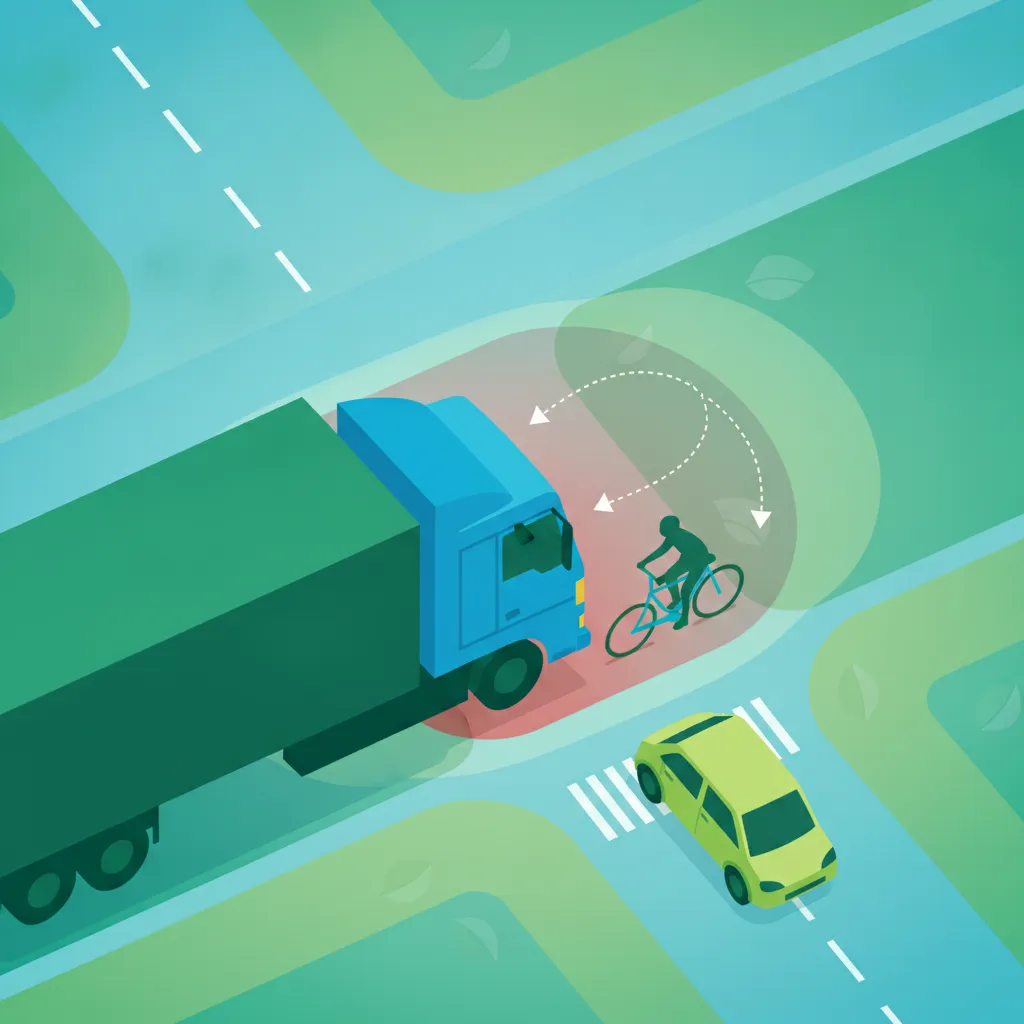
This lesson maps out the extensive blind spots, or 'no-zones,' that exist around a tractor-trailer combination, particularly to the sides and rear. It teaches the proper techniques for adjusting all mirrors to minimize these areas and explains how modern camera systems provide critical visibility. Understanding and compensating for these blind spots is a fundamental skill for preventing collisions, especially during lane changes and turns.

Operating a heavy goods vehicle comes with heightened professional and legal responsibilities. This lesson examines the driver's duties regarding pre-trip inspections, load security, and continuous vehicle maintenance. It emphasizes the ethical obligation to protect vulnerable road users like cyclists and pedestrians, and stresses the importance of maintaining professional conduct and adhering to all traffic regulations to ensure road safety.

This lesson focuses on the legal dimensional limits—length, width, and height—for heavy goods vehicles and their interaction with road infrastructure. It explains Danish regulations and the importance of planning routes to avoid constraints such as low bridges, narrow tunnels, and weight-restricted roads. Learners will understand how to interpret road signs indicating these limits and the procedures for obtaining permits for oversized loads.

This lesson provides practical instruction on various methods for securing cargo effectively. It covers the correct application of equipment such as straps, chains, and nets, as well as techniques like blocking and bracing to prevent load movement. The content is aligned with Danish and European standards for load securing, ensuring learners understand how to inspect and verify that their cargo is safe for transport.
Find clear answers to common questions learners have about Principles of Load Distribution and Centre of Gravity. Learn how the lesson is structured, which driving theory objectives it supports, and how it fits into the overall learning path of units and curriculum progression in Denmark. These explanations help you understand key concepts, lesson flow, and exam focused study goals.
A low centre of gravity significantly reduces the risk of the vehicle tipping over, especially during cornering or sudden evasive maneuvers. Keeping the heaviest items as low as possible and centered ensures the vehicle remains stable on the road.
If too much weight is concentrated too far back or off-centre, it can lighten the front axle, leading to understeer or decreased steering precision. Proper distribution ensures all axles bear the load as intended by the manufacturer.
The test often features scenarios requiring you to identify safe versus unsafe load configurations. You must understand how moving weight affects the vehicle's balance and stability to choose the correct answer.
Yes, Danish legislation requires that goods must be placed so that they do not endanger road safety, damage the road, or cause the vehicle to become unstable. This lesson helps you interpret these requirements in professional practice.
Use our powerful search tool to pinpoint specific Danish driving theory topics, road signs, or traffic situations you need to review. Start exploring relevant practice sets now to reinforce your knowledge and build confidence for your upcoming driving licence exam.