
This lesson guides you through the technical aspects of navigating bends, focusing on the three critical phases: entry, apex, and exit. It builds upon your basic motorcycle controls to ensure you can manage your speed and positioning safely on Danish roads. Mastering these techniques is essential for both your theory exam performance and real-world riding safety.

Lesson content overview
Mastering the art of cornering is fundamental to safe, controlled, and enjoyable motorcycle riding, especially on the varied roads of Denmark. This comprehensive guide will break down the crucial elements of navigating bends: establishing the correct entry speed, choosing the safest and most efficient line through the turn, and executing the apex technique with precision. By understanding and applying these principles, you will enhance your motorcycle handling skills, increase your safety margins, and cultivate a smoother, more confident riding style.
This lesson forms a vital part of your Danish Motorcycle Theory education, building upon foundational knowledge of basic motorcycle controls, effective braking strategies, and fundamental steering dynamics. Proper cornering technique is not just about speed; it's about anticipating hazards, maintaining optimal traction, and adhering to traffic regulations to ensure a safe journey for yourself and others.
Every turn on a motorcycle can be effectively broken down into three distinct phases: the entry, the apex, and the exit. Each phase demands specific actions and considerations to ensure stability, control, and safety throughout the manoeuvre. A cohesive understanding of these phases allows riders to approach corners systematically, reducing risk and maximizing riding pleasure.
The overarching goal in cornering is to manage your speed, adjust your trajectory, and control your throttle smoothly to navigate the bend. This technique is deeply rooted in physics, involving concepts such as centripetal force and friction, and is equally governed by Danish traffic legislation concerning safe speed and right-of-way. Effectively integrating these elements enables a rider to maintain stability and optimal tyre traction, preventing loss of control.
The entry speed is the speed at which you approach and begin to lean into a bend. This is arguably the most critical decision in cornering, as it dictates your options and safety margins for the rest of the turn. An appropriate entry speed ensures that you have ample grip for steering and, if necessary, for emergency braking, without overwhelming the motorcycle's capabilities or your own.
Entering a corner too fast significantly reduces your margin for error. It can force you into a tighter line than intended, demand excessive lean angles, or necessitate braking while already leaned over, which can compromise tyre traction and lead to a skid or fall. Conversely, entering too slowly might make the turn feel awkward but offers a safer buffer. Riders must adjust their speed well before the turn, considering the bend's curvature, current road conditions, and available visibility.
Line choice refers to the specific path a rider takes through a curve. The objective is to select a trajectory that provides the smoothest, safest, and most stable passage, utilizing the available road width to optimize grip and visibility. The most commonly taught and safest line is often described as the outside-inside-outside pattern.
This technique involves starting from the outer edge of your lane as you approach the turn, moving towards the inside edge (the apex) at the tightest part of the bend, and then gradually widening your path back towards the outer edge as you exit the turn. An incorrect line can lead to an excessive lean angle, reduced traction, or an unsafe trajectory that encroaches on other road users or obstacles. Proper line choice maximises your view through the bend, allowing you to react to unforeseen hazards.
The apex is the point in a bend where the rider is closest to the inside edge of the lane. This is typically the tightest part of the curve and serves as a pivotal point for transitioning from the entry phase to the exit phase. Proper apex technique is about positioning the motorcycle at this precise point to balance speed and stability, setting you up for a smooth and controlled exit.
Hitting the apex correctly allows for an earlier and smoother application of throttle on exit, stabilizing the motorcycle and preparing it for acceleration out of the turn. Missing the apex, either too early or too late, can lead to inefficient turning, requiring further adjustments mid-corner that could destabilize the motorcycle or push you wide, potentially into oncoming traffic or off the road.
The appropriate entry speed for any turn is not fixed; it is a dynamic calculation based on multiple factors. It demands careful observation and foresight from the rider.
Always aim to complete your major braking and gear changes before you enter the lean phase of the corner. This allows the tyres to dedicate their full grip to maintaining traction while cornering.
Riders must reduce speed appropriately before entering a turn, not within it. This process should ideally involve a smooth, progressive application of brakes (both front and rear) and downshifting to an appropriate gear that provides engine braking and power for the exit. Attempting to brake aggressively while leaned into a corner risks overloading the tyres, leading to a loss of traction and control.
The outside-inside-outside (O-I-O) line is universally recommended for road riding due to its safety and efficiency benefits.
Always stay within your own lane. Cutting across the centre line, even on blind bends with no visible oncoming traffic, is illegal and extremely dangerous. Similarly, do not ride too close to the edge of the road, where gravel, debris, or poor surfaces are more common.
The precise timing and positioning of the apex are crucial for optimal cornering. While the general principle is to hit the inside of the curve, there are nuances based on the situation.
A late apex is generally recommended for street riding, especially for tighter or blind corners. With a late apex, you position your motorcycle closest to the inside of the curve later in the turn than you might instinctively.
An early apex occurs when you position your motorcycle closest to the inside of the curve earlier than a late apex.
Once you've passed the apex and begun to un-lean the motorcycle, it's time to smoothly and progressively apply throttle. This helps to stabilize the motorcycle, transfers weight to the rear wheel for optimal traction, and propels you out of the turn. Abrupt acceleration can unsettle the motorcycle, potentially leading to a loss of traction or a high-side crash. The goal is a controlled, deliberate acceleration that matches the straightening of the motorcycle.
While Danish traffic law doesn't specify an exact "cornering technique," it mandates that riders operate their vehicles safely and under full control at all times.
Riders often make certain errors when cornering that can lead to hazardous situations. Awareness of these can help you develop safer habits.
Road conditions, weather, and traffic can significantly impact your cornering technique. Safe riders constantly adapt.
Effective motorcycle cornering is a refined skill that integrates speed management, strategic line choice, and precise throttle control. The three phases – entry, apex, and exit – require a systematic approach to ensure safety and stability.
Before entering a turn, establish an appropriate and safe entry speed that allows for flexibility and maintains tyre traction. Throughout the bend, select an outside-inside-outside line to maximize visibility, widen your turning radius, and enhance stability. Utilize the apex technique as the pivotal point in the turn, smoothly transitioning to a progressive throttle application on exit.
Always remain within your lane, make predictable movements, and be prepared to adjust your technique for varying weather, road conditions, and the presence of other road users. By consistently applying these principles, you will become a more skilled, safer, and confident rider on Danish roads.
This lesson teaches the three-phase system of motorcycle cornering—entry, apex, and exit—emphasizing that establishing the correct entry speed before leaning is the most critical decision. The outside-inside-outside line choice maximizes visibility and stability, while a late apex is recommended for street riding to maintain sightlines and enable smooth acceleration. Danish traffic law requires riders to adjust speed to conditions, maintain lane discipline, and ride predictably; crossing the centre line or excessive speed for the curve can result in penalties. The lesson also covers common mistakes including mid-corner braking, fixating on the foreground, and abrupt throttle application, along with adjustments needed for adverse weather, poor road surfaces, and additional load.
A short set of high-value points that capture the most important learning from this lesson.
Cornering consists of three phases—entry, apex, and exit—each requiring specific actions for safety and control
Entry speed is the most critical decision in cornering and must be established before leaning into the turn
The outside-inside-outside line maximizes visibility, widens the turning radius, and enhances tyre traction
A late apex is generally safer for street riding as it improves sightlines and allows earlier acceleration on exit
Smooth, progressive throttle application on exit transfers weight to the rear wheel and stabilizes the motorcycle
Explore all units and lessons included in this driving theory course.
Complete all major braking and gear changes before entering the lean phase—braking while leaned risks tyre traction loss
Stay within your lane at all times; crossing the centre line is illegal and extremely dangerous
Reduce entry speed significantly for wet, icy, or debris-covered surfaces as tyre grip is drastically reduced
Look through the turn to the exit point rather than at the road directly ahead—your motorcycle follows your line of sight
Passengers and luggage alter the motorcycle's centre of gravity, requiring lower cornering speeds and increased braking distances
Entering a corner too fast, which forces late braking while leaned over and can cause running wide or losing control
Fixating on the road surface directly in front of the motorcycle, which pulls the bike off its intended line toward the inside
Braking aggressively mid-corner while leaned, which overloads the front tyre and risks loss of traction
Cutting across the centre line on left-hand turns, inviting head-on collisions with oncoming traffic even on blind bends
Snapping the throttle open abruptly on exit, which can cause rear wheel spin or destabilize the motorcycle with a high-side crash
Lesson content overview
A short set of high-value points that capture the most important learning from this lesson.
Cornering consists of three phases—entry, apex, and exit—each requiring specific actions for safety and control
Entry speed is the most critical decision in cornering and must be established before leaning into the turn
The outside-inside-outside line maximizes visibility, widens the turning radius, and enhances tyre traction
A late apex is generally safer for street riding as it improves sightlines and allows earlier acceleration on exit
Smooth, progressive throttle application on exit transfers weight to the rear wheel and stabilizes the motorcycle
Explore all units and lessons included in this driving theory course.
Complete all major braking and gear changes before entering the lean phase—braking while leaned risks tyre traction loss
Stay within your lane at all times; crossing the centre line is illegal and extremely dangerous
Reduce entry speed significantly for wet, icy, or debris-covered surfaces as tyre grip is drastically reduced
Look through the turn to the exit point rather than at the road directly ahead—your motorcycle follows your line of sight
Passengers and luggage alter the motorcycle's centre of gravity, requiring lower cornering speeds and increased braking distances
Entering a corner too fast, which forces late braking while leaned over and can cause running wide or losing control
Fixating on the road surface directly in front of the motorcycle, which pulls the bike off its intended line toward the inside
Braking aggressively mid-corner while leaned, which overloads the front tyre and risks loss of traction
Cutting across the centre line on left-hand turns, inviting head-on collisions with oncoming traffic even on blind bends
Snapping the throttle open abruptly on exit, which can cause rear wheel spin or destabilize the motorcycle with a high-side crash
Explore search topics learners often look for when studying Cornering Speed, Line Choice, and Apex Technique. These topics reflect common questions about road rules, driving situations, safety guidance, and lesson level theory preparation for learners in Denmark.
Browse additional driving theory lessons that cover connected traffic rules, road signs, and common driving situations related to this topic. Improve your understanding of how different rules interact across everyday traffic scenarios.
Understand the frequent errors made during motorcycle cornering and the specific hazards encountered on Danish roads. Learn to identify and avoid risks related to speed, line choice, and road conditions for safer riding.

This lesson equips riders with the knowledge to handle imperfect road surfaces safely. It covers how to adjust speed, steering, and braking inputs when encountering loose gravel, slippery wet leaves, or other hazards. The focus is on smooth control inputs to avoid upsetting the motorcycle's stability.
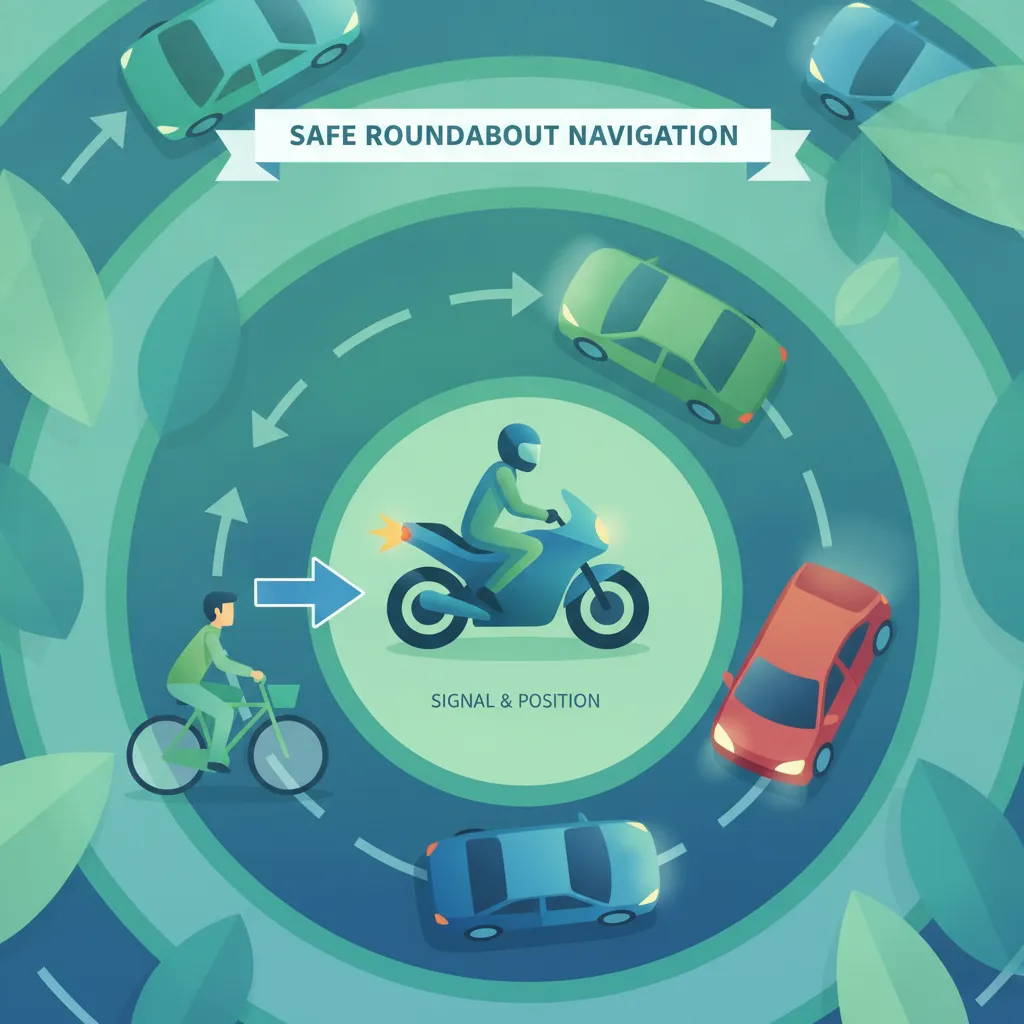
This lesson details the specific skills needed to navigate roundabouts on a motorcycle. It explains how to approach at a safe speed, select the correct lane based on your intended exit, and yield to circulating traffic. Proper use of signals to indicate intentions when entering and exiting is also covered.

This lesson focuses on techniques for riding when visibility and traction are compromised by weather. It explains how to adjust speed, increase following distance, and use lights to see and be seen in rain or fog. Understanding the risk of hydroplaning and making smooth control inputs are key takeaways.

This lesson provides a systematic approach to safely navigating intersections. It covers how to interpret priority signs and traffic signals, establish right-of-way, and scan for potential conflicts from all directions. The importance of clear sightlines and anticipating the movements of other vehicles is a key focus.

This lesson explains the strategic importance of lane positioning for a motorcyclist. It teaches how to select a position within the lane that makes you most visible to other road users and provides an escape route from potential hazards. The content covers how to adjust your position based on traffic, road conditions, and to avoid being in another vehicle's blind spot.

This lesson prepares riders for the specific hazards of rural roads, which often have less visibility and more unpredictable surfaces. It covers strategies for approaching blind curves, safely passing agricultural machinery, and being vigilant for animals on the road. Adjusting speed to match visibility is a core principle.

This lesson examines the specific risks inherent to motorcycling, emphasizing a rider's vulnerability due to reduced physical protection compared to other vehicles. It covers the heightened severity of injuries in accidents and the critical role of protective gear in mitigating harm. Learners will understand how to adopt defensive strategies, such as proper road positioning, to counteract these risks.

This lesson focuses on recognizing and navigating high-risk road surfaces that severely compromise traction. It provides practical advice on how to maintain control when riding over coarse gravel, slippery wet leaves, or frosted patches. The emphasis is on early detection, reducing speed, and making minimal control inputs to avoid skids.

This lesson addresses the specific hazards found on exposed structures like bridges and open coastal roads. It teaches techniques for managing strong crosswinds and sudden gusts that can affect stability. Additionally, it covers how to handle potentially slippery surfaces like metal expansion joints often found on bridges.

This lesson focuses on the challenges of braking in adverse conditions like rain or on icy patches. It teaches riders to increase their following distance and apply brakes smoothly and gently to prevent traction loss. The role of ABS in these scenarios and strategies for maintaining control are also explained.
Explore advanced strategies for motorcycle cornering, focusing on adapting techniques for varying road surfaces, weather conditions like rain and wind, and different types of turns. Essential theory for experienced riders.
This lesson equips riders with the knowledge to handle imperfect road surfaces safely. It covers how to adjust speed, steering, and braking inputs when encountering loose gravel, slippery wet leaves, or other hazards. The focus is on smooth control inputs to avoid upsetting the motorcycle's stability.
This lesson focuses on the challenges of braking in adverse conditions like rain or on icy patches. It teaches riders to increase their following distance and apply brakes smoothly and gently to prevent traction loss. The role of ABS in these scenarios and strategies for maintaining control are also explained.

This lesson teaches riders how to manage the destabilizing effects of wind. It covers how to anticipate gusts, adjust body position to counteract pressure, and choose a lane position that offers more stability. These skills are essential for safety on open highways, bridges, and coastal areas.
This lesson focuses on recognizing and navigating high-risk road surfaces that severely compromise traction. It provides practical advice on how to maintain control when riding over coarse gravel, slippery wet leaves, or frosted patches. The emphasis is on early detection, reducing speed, and making minimal control inputs to avoid skids.
This lesson addresses the specific hazards found on exposed structures like bridges and open coastal roads. It teaches techniques for managing strong crosswinds and sudden gusts that can affect stability. Additionally, it covers how to handle potentially slippery surfaces like metal expansion joints often found on bridges.
This lesson details the specific skills needed to navigate roundabouts on a motorcycle. It explains how to approach at a safe speed, select the correct lane based on your intended exit, and yield to circulating traffic. Proper use of signals to indicate intentions when entering and exiting is also covered.
This lesson focuses on techniques for riding when visibility and traction are compromised by weather. It explains how to adjust speed, increase following distance, and use lights to see and be seen in rain or fog. Understanding the risk of hydroplaning and making smooth control inputs are key takeaways.
This lesson prepares riders for the specific hazards of rural roads, which often have less visibility and more unpredictable surfaces. It covers strategies for approaching blind curves, safely passing agricultural machinery, and being vigilant for animals on the road. Adjusting speed to match visibility is a core principle.

This lesson details how to adapt riding techniques for rain and wind. It explains how wet surfaces reduce tyre grip and increase braking distances, requiring smoother control inputs and lower speeds. The content also provides strategies for managing the force of strong crosswinds on a small vehicle.

This lesson focuses on the unique environmental factors affecting bridges and coastal routes. It teaches riders how to anticipate and counteract the effects of strong crosswinds on stability. The content also addresses how to manage lane position and speed when transitioning between different road surfaces and structures.
Find clear answers to common questions learners have about Cornering Speed, Line Choice, and Apex Technique. Learn how the lesson is structured, which driving theory objectives it supports, and how it fits into the overall learning path of units and curriculum progression in Denmark. These explanations help you understand key concepts, lesson flow, and exam focused study goals.
The apex is the point in a corner where you are closest to the inside edge of your lane. Choosing the right apex allows you to straighten the curve, which maximizes your visibility and provides a smoother, more stable transition through the turn.
Yes, many theory test questions feature scenarios involving road hazards in curves. Understanding how to correctly adjust your line and speed helps you choose the safest response to these visual scenarios.
The most common mistake is entering a turn too fast, which often leads to target fixation or the instinct to panic-brake while leaned over. This lesson emphasizes setting your speed before entering the turn to avoid this.
The fundamental physics of cornering remain the same across all motorcycle categories. Whether riding an A1, A2, or full A motorcycle, the principles of slowing down before the turn and accelerating gently out of the apex are vital for safety.
Use our powerful search tool to pinpoint specific Danish driving theory topics, road signs, or traffic situations you need to review. Start exploring relevant practice sets now to reinforce your knowledge and build confidence for your upcoming driving licence exam.