
This lesson explores the inherent vulnerabilities motorcyclists face on Danish roads compared to other vehicles. It is a critical starting point in your training, helping you understand how to use defensive riding strategies to mitigate risks and prepare for the hazard perception elements of your theory exam.

Lesson content overview
Riding a motorcycle offers a unique sense of freedom and connection to the road, but it also comes with inherent risks. Unlike drivers of cars or trucks, motorcyclists lack the surrounding protective shell of a vehicle chassis. This fundamental difference means that in the event of a collision or fall, a rider is directly exposed to the environment and the forces of impact. This lesson delves into these specific risks, focusing on the motorcyclist's heightened vulnerability and the crucial strategies, protective gear, and defensive riding techniques necessary to mitigate these dangers within the context of Danish road rules.
Motorcyclists face a significantly higher risk of serious injury or fatality in an accident compared to occupants of other vehicles. This increased vulnerability is not merely a statistical anomaly but a direct consequence of the physical dynamics involved when a motorcycle and rider interact with other vehicles or the road itself. Understanding this fundamental aspect of motorcycling is the first step towards adopting a safe and responsible riding mindset.
The most critical factor contributing to rider vulnerability is the absence of a protective cage around the rider. A car's crumple zones, airbags, and reinforced passenger compartments are designed to absorb crash energy and shield occupants. A motorcycle, by its very nature, offers none of these structural protections. When a collision occurs, the rider is often ejected from the motorcycle, impacting the ground, other vehicles, or roadside objects with significant force.
This direct exposure means that the rider's body becomes the primary point of impact, without the benefit of vehicle-level energy absorption. Even minor incidents, like a low-speed fall, can result in serious abrasions, fractures, or head injuries if the rider is not adequately protected. This inherent lack of protection necessitates a heightened awareness of risks and proactive safety measures.
The direct exposure of a motorcyclist's body directly translates to a higher severity of injuries in crashes. While car occupants might suffer whiplash or minor bruises in certain types of collisions, a motorcyclist involved in the same incident could sustain life-altering injuries. These commonly include:
The severity of injuries in motorcycle accidents underscores why all protective measures, from gear to riding techniques, are not merely recommendations but vital necessities for survival and well-being.
Given the severe consequences of accidents, wearing appropriate protective gear is not just a recommendation but a critical component of safe motorcycling. In Denmark, certain items are legally mandatory, while others are strongly advised to provide comprehensive protection. This gear acts as a crucial barrier between your body and the hazards of the road.
The helmet is arguably the single most important piece of protective equipment. It is designed to protect your head from impact and abrasion, significantly reducing the risk of severe head injuries. In Denmark, wearing a helmet is mandatory for all motorcyclists and their passengers. It is not enough to simply wear any helmet; it must meet specific safety standards.
Helmets come in various types:
Regardless of the type, a helmet must fit snugly, be securely fastened, and meet the required safety certifications, such as ECE 22.05 or ECE 22.06, which are common standards in Europe, including Denmark.
While helmets protect the head, the rest of your body requires protection from abrasions, impacts, and the elements. Specialized motorcycle clothing is designed with materials and features far superior to everyday attire.
Beyond the integrated armour in jackets and trousers, dedicated body armour can provide an additional layer of impact protection. This can include:
The purpose of all protective gear is to absorb and distribute impact forces and to resist abrasion, thereby reducing the severity of injuries during an accident. Choosing high-quality gear that fits well and meets safety standards is an investment in your personal safety.
Even the best gear cannot protect you if it doesn't fit correctly or is poorly maintained.
Protective inserts for motorcycle clothing that have been tested and certified to meet European safety standards for impact absorption.
Protective gear mitigates injury, but defensive riding aims to prevent accidents from happening in the first place. Defensive riding is a proactive strategy that involves anticipating potential hazards, maximizing your visibility to other road users, and positioning yourself to minimize risk. For safe riding on Danish roads, mastering these techniques is paramount.
Your position within the traffic lane significantly impacts your ability to see and be seen, as well as your reaction time to hazards. There isn't a single "correct" lane position for all situations; rather, it's about making dynamic choices.
Speed management is not just about adhering to speed limits; it's about adjusting your speed to suit the conditions and your skill level. Given a motorcyclist's vulnerability, managing speed is even more critical.
Motorcycles are smaller than most other vehicles, making them harder to spot for other drivers. Active strategies to enhance your visibility are essential.
Defensive riding is largely about looking ahead and anticipating what might happen. This involves:
Danish traffic law includes specific regulations for motorcyclists, designed to enhance safety. Adhering to these rules is not only a legal obligation but also a fundamental aspect of responsible and defensive riding.
In Denmark, it is legally mandatory for both the motorcyclist and any passenger to wear an approved and properly fastened helmet while riding.
While specific protective clothing (beyond helmets) is not always strictly mandatory by law in Denmark, it is strongly recommended by traffic authorities and driving instructors.
Motorcycles in Denmark are subject to specific lighting requirements to ensure they are visible to other road users, especially given their smaller profile.
While not explicitly defined as a "rule" in the same way as helmet use, Danish traffic law implicitly expects riders to maintain a safe and responsible road presence, which includes intelligent lane positioning.
Understanding specific dangerous scenarios and common mistakes can help motorcyclists prevent accidents. Many incidents stem from a lapse in judgment or a failure to apply defensive riding principles consistently.
One of the most frequent errors is underestimating the importance of full protective gear, especially for short or seemingly low-risk trips.
Failing to use lights appropriately significantly reduces your visibility, especially during transitional light conditions or adverse weather.
Riding in an unsafe or sub-optimal lane position can compromise your safety by reducing your visibility or reaction time.
Misjudging your speed relative to conditions or maintaining an insufficient following distance are major contributors to accidents.
Neglecting to adjust your riding for environmental factors like weather, road surfaces, or blind spots of larger vehicles can lead to loss of control or collisions.
Safe motorcycling demands constant adaptation. Road conditions, traffic, weather, and the presence of passengers or luggage all necessitate adjustments to your riding style and strategies.
Different weather conditions and road surfaces significantly affect a motorcycle's grip, stability, and braking performance.
Visibility is crucial for motorcyclists, and varying light conditions require specific adjustments.
Carrying a passenger or heavy luggage changes the dynamics of your motorcycle, affecting handling, braking, and acceleration.
Motorcyclists themselves are vulnerable, but they also interact with even more vulnerable road users such as cyclists and pedestrians.
A deeper understanding of the physical forces at play during a crash and how human perception affects motorcycle visibility provides crucial context for safety strategies. This knowledge helps reinforce why protective gear and defensive riding are so important.
When a motorcycle collides with another object, the laws of physics dictate the outcome.
One of the most frustrating and dangerous aspects of motorcycling is the common phenomenon where other drivers claim they "looked but didn't see" a motorcycle.
Understanding these perceptual challenges highlights why motorcyclists must actively work to make themselves as visible as possible through their gear, lighting, and lane positioning, and always assume they have not been seen by other road users.
Riding a motorcycle in Denmark is an exhilarating experience that demands a strong commitment to safety. This lesson has underscored the unique vulnerabilities faced by motorcyclists and the critical importance of countermeasures. By consistently using certified protective gear, diligently applying defensive riding techniques, understanding and adhering to Danish traffic regulations, and adapting to ever-changing conditions, riders can significantly reduce their risk.
Remember that knowledge gained here forms the bedrock for further learning about advanced riding techniques such as braking, cornering, and detailed hazard perception. Embrace continuous learning and a proactive approach to safety to enjoy the roads responsibly and confidently.
This lesson explains why motorcyclists face heightened injury severity in crashes due to direct exposure without vehicle protection. It covers essential protective gear requirements, emphasizing that helmets meeting European ECE standards are legally mandatory in Denmark, while other protective clothing is strongly recommended. The lesson teaches defensive riding through optimal lane positioning, constant hazard scanning, and speed management adapted to conditions. Key Danish regulations include always-on dipped-beam headlights and proper helmet certification. Understanding the physics of collisions and human perception challenges reinforces why proactive visibility strategies and protective equipment are non-negotiable for rider safety.
A short set of high-value points that capture the most important learning from this lesson.
Motorcyclists are significantly more vulnerable than car occupants due to the absence of protective vehicle structures like crumple zones and airbags.
Certified protective gear, especially helmets meeting ECE 22.05 or 22.06 standards, is a legal requirement in Denmark and your primary defence against severe injury.
Defensive riding techniques such as optimal lane positioning and hazard anticipation can prevent accidents before they occur.
Always assume other drivers have not seen you; motorcycles are prone to the 'looked but didn't see' phenomenon due to their smaller size.
Speed management and appropriate following distances are even more critical for motorcyclists due to reduced reaction time and longer braking distances.
Explore all units and lessons included in this driving theory course.
In Denmark, motorcycles must use dipped-beam headlights at all times, day and night, for maximum visibility.
Protective gear includes CE-rated armour inserts at impact points like shoulders, elbows, hips, knees, and spine.
Wet roads, painted lines, manhole covers, and oil slicks become extremely slippery and require reduced speed and smoother inputs.
Lane position should maximize your visibility in mirrors and avoid blind spots of cars and trucks.
Replace helmets after any impact, even if no visible damage is apparent, as internal structure may be compromised.
Riding without full protective gear for short trips, underestimating that accidents can happen at any time or speed.
Failing to keep headlights on during daylight hours, significantly reducing visibility to other drivers.
Positioning too close to the centre line or curb, which limits escape routes and places you in blind spots or near debris.
Maintaining insufficient following distance, leaving inadequate time to react when vehicles ahead brake suddenly.
Not adjusting speed for weather conditions; wet roads, wind, and poor surfaces require significant speed reductions.
Lesson content overview
A short set of high-value points that capture the most important learning from this lesson.
Motorcyclists are significantly more vulnerable than car occupants due to the absence of protective vehicle structures like crumple zones and airbags.
Certified protective gear, especially helmets meeting ECE 22.05 or 22.06 standards, is a legal requirement in Denmark and your primary defence against severe injury.
Defensive riding techniques such as optimal lane positioning and hazard anticipation can prevent accidents before they occur.
Always assume other drivers have not seen you; motorcycles are prone to the 'looked but didn't see' phenomenon due to their smaller size.
Speed management and appropriate following distances are even more critical for motorcyclists due to reduced reaction time and longer braking distances.
Explore all units and lessons included in this driving theory course.
In Denmark, motorcycles must use dipped-beam headlights at all times, day and night, for maximum visibility.
Protective gear includes CE-rated armour inserts at impact points like shoulders, elbows, hips, knees, and spine.
Wet roads, painted lines, manhole covers, and oil slicks become extremely slippery and require reduced speed and smoother inputs.
Lane position should maximize your visibility in mirrors and avoid blind spots of cars and trucks.
Replace helmets after any impact, even if no visible damage is apparent, as internal structure may be compromised.
Riding without full protective gear for short trips, underestimating that accidents can happen at any time or speed.
Failing to keep headlights on during daylight hours, significantly reducing visibility to other drivers.
Positioning too close to the centre line or curb, which limits escape routes and places you in blind spots or near debris.
Maintaining insufficient following distance, leaving inadequate time to react when vehicles ahead brake suddenly.
Not adjusting speed for weather conditions; wet roads, wind, and poor surfaces require significant speed reductions.
Explore search topics learners often look for when studying Motorcycle Specific Risks and Vulnerability. These topics reflect common questions about road rules, driving situations, safety guidance, and lesson level theory preparation for learners in Denmark.
Browse additional driving theory lessons that cover connected traffic rules, road signs, and common driving situations related to this topic. Improve your understanding of how different rules interact across everyday traffic scenarios.
Understand the inherent risks and vulnerability of motorcyclists. Learn about essential protective gear, including helmets, jackets, and gloves, and their role in mitigating injuries on Danish roads. This lesson focuses on safety fundamentals.
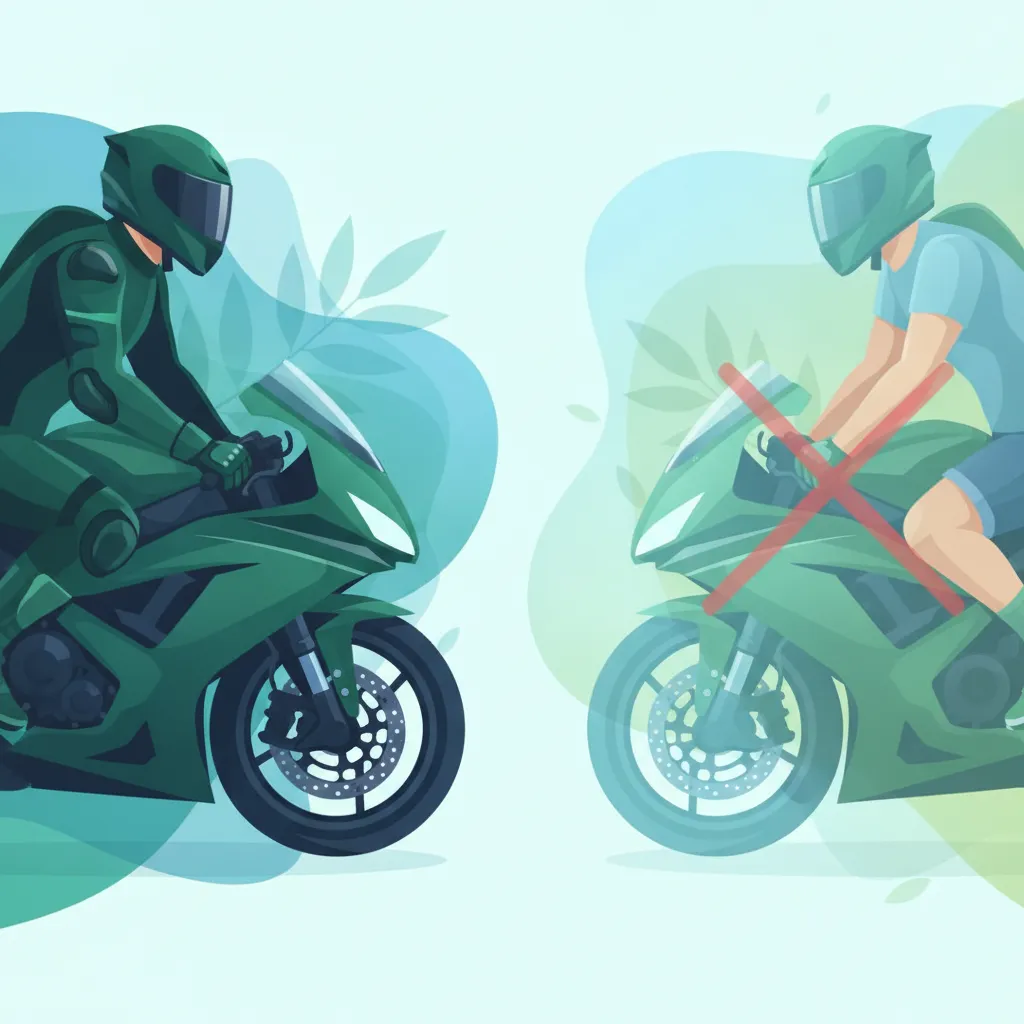
This lesson explains the critical role of specialized protective clothing in rider safety. It details the features of motorcycle jackets, pants, gloves, and boots, focusing on abrasion resistance and impact protection. Learners will understand how to identify gear that meets official CE certification standards for maximum safety.

This lesson focuses on the core safety duties of a stor knallert rider. It explains the legal requirement for wearing a helmet and the benefits of other protective gear. The content also covers essential pre-ride checks, including brakes, tyres, and lights, to ensure the vehicle is in safe operating condition.

This lesson prepares riders for the specific hazards of rural roads, which often have less visibility and more unpredictable surfaces. It covers strategies for approaching blind curves, safely passing agricultural machinery, and being vigilant for animals on the road. Adjusting speed to match visibility is a core principle.

This lesson defines the fundamental responsibilities of a motorcyclist, which extend beyond simple rule-following. It emphasizes the duty of care required to operate safely, including practicing defensive riding techniques and proactively identifying potential hazards. The content focuses on the importance of maintaining visibility and communicating intentions clearly to ensure safe interactions in traffic.

This lesson focuses on the single most important piece of safety equipment: the helmet. It provides guidance on selecting a helmet with the proper fit, fastening it securely, and understanding different types like full-face and modular. The content also covers maintenance and knowing when a helmet needs to be replaced to ensure its protective integrity.

This lesson details the systematic pre-ride inspection process that all motorcyclists must perform. It covers critical safety checks, including verifying correct tyre pressure, assessing brake pad wear, and ensuring all lights are functional. Regular completion of these checks is essential for preventing mechanical failures and ensuring rider safety.

This lesson emphasizes the professional driver's heightened responsibility to protect vulnerable road users. It revisits Danish regulations concerning cyclist priority, particularly during right turns, and details the correct procedures for maintaining safe overtaking distances. The content focuses on developing advanced situational awareness, using mirrors and cameras effectively, and anticipating the behavior of pedestrians and cyclists in urban environments.

This lesson explains the strategic importance of lane positioning for a motorcyclist. It teaches how to select a position within the lane that makes you most visible to other road users and provides an escape route from potential hazards. The content covers how to adjust your position based on traffic, road conditions, and to avoid being in another vehicle's blind spot.

This lesson addresses how to safely carry luggage or a passenger on a motorcycle. It explains the effects of added weight on the vehicle's balance, steering, and braking performance. Learners will understand correct procedures for securing loads and adjusting their riding technique to maintain control and stability.

This lesson provides an overview of the Danish legal system as it applies to motorcyclists. It details the consequences of traffic violations, including fines, penalty points, and potential licence suspension. Learners will also understand their legal responsibilities concerning insurance coverage and procedures to follow in the event of a collision.
Explore key defensive riding techniques to enhance your safety as a motorcyclist in Denmark. Learn how to maximize your visibility to other road users, manage speed and lane position effectively, and anticipate hazards.
This lesson explains the strategic importance of lane positioning for a motorcyclist. It teaches how to select a position within the lane that makes you most visible to other road users and provides an escape route from potential hazards. The content covers how to adjust your position based on traffic, road conditions, and to avoid being in another vehicle's blind spot.
This lesson prepares riders for the specific hazards of rural roads, which often have less visibility and more unpredictable surfaces. It covers strategies for approaching blind curves, safely passing agricultural machinery, and being vigilant for animals on the road. Adjusting speed to match visibility is a core principle.

This lesson provides an in-depth look at the blind spots of other vehicles and how to manage them. It teaches riders to recognize the large 'no-zones' around trucks and buses where they cannot be seen. Strategies include avoiding lingering in these areas and positioning the motorcycle for maximum visibility.

This lesson explains the critical importance of being visible to other road users. It details the proper use of headlights and daytime running lights as required by Danish law. The content also covers the effectiveness of wearing reflective clothing and ensuring the vehicle's reflectors are clean and functional.

This lesson focuses on techniques for riding when visibility and traction are compromised by weather. It explains how to adjust speed, increase following distance, and use lights to see and be seen in rain or fog. Understanding the risk of hydroplaning and making smooth control inputs are key takeaways.

This lesson provides strategies for safe riding after dark, when visibility is significantly reduced. It explains how to use high and low beams effectively, avoid being dazzled by other vehicles' lights, and look for road markings to guide your path. The importance of wearing reflective clothing to be seen is strongly emphasized.

This lesson introduces proactive visual scanning techniques essential for motorcyclist safety. It explains how to use a systematic search pattern to look far, near, and side-to-side to detect potential hazards before they become immediate threats. Mastering this skill allows riders to create more time and space to react to changing road conditions.
This lesson addresses the unique challenges of streets with dedicated cycle lanes and numerous bus stops. It teaches riders how to anticipate pedestrians moving to and from buses and how to position themselves to avoid conflict with cyclists. The goal is to navigate these complex environments smoothly and safely.

This lesson focuses on safe interactions with Denmark's large population of cyclists and other vulnerable road users. It covers the rules for passing cyclists, yielding at pedestrian crossings, and the specific hazard of turning across a bike lane. Developing heightened awareness for these interactions is critical for urban riding.
This lesson emphasizes the professional driver's heightened responsibility to protect vulnerable road users. It revisits Danish regulations concerning cyclist priority, particularly during right turns, and details the correct procedures for maintaining safe overtaking distances. The content focuses on developing advanced situational awareness, using mirrors and cameras effectively, and anticipating the behavior of pedestrians and cyclists in urban environments.
Find clear answers to common questions learners have about Motorcycle Specific Risks and Vulnerability. Learn how the lesson is structured, which driving theory objectives it supports, and how it fits into the overall learning path of units and curriculum progression in Denmark. These explanations help you understand key concepts, lesson flow, and exam focused study goals.
Unlike car drivers, motorcyclists lack a protective chassis, seatbelts, and airbags. This lack of physical protection means that even low-speed collisions can result in severe injuries, making constant vigilance and defensive riding mandatory for your safety.
Proper lane positioning increases your visibility to other drivers, particularly at intersections. By choosing a position that maximizes your line of sight and presence, you reduce the chance of being overlooked by drivers turning or pulling out, which is a major cause of accidents.
Yes, the theory exam often tests your understanding of why specific protective equipment is legally and practically required. You must understand how gear serves as your primary line of defense in the event of an incident.
While experience helps, you must actively unlearn habits that rely on the size and protection of a car. Motorcycling requires a much higher level of environmental scanning and the realization that other drivers may not see you as easily as they see a car.
Use our powerful search tool to pinpoint specific Danish driving theory topics, road signs, or traffic situations you need to review. Start exploring relevant practice sets now to reinforce your knowledge and build confidence for your upcoming driving licence exam.