
This lesson explores the physical forces acting on heavy vehicles, focusing on how center of gravity, speed, and cornering influence rollover risks. It provides essential knowledge for professional drivers to maintain vehicle stability, ensuring safety for both the cargo and the vehicle on German roads.

Lesson content overview
This lesson is a crucial part of your German Heavy Vehicle Driving License Theory – C1, C1E, C, CE course. It delves into the fundamental principles of vehicle stability, focusing specifically on the significant risks associated with vehicle rollover, known in German as Umkippen. For drivers of heavy goods vehicles, buses, and other high-centre-of-gravity vehicles, a deep understanding of these concepts is paramount for safe operation and preventing catastrophic accidents.
We will explore how factors such as the vehicle’s centre of gravity, the arrangement of its load, vehicle speed, and the forces encountered during cornering and braking all interact to influence stability. This lesson provides practical insights and countermeasures, building upon your knowledge from previous units concerning load distribution and securing.
Vehicle stability refers to a vehicle's inherent ability to maintain its intended path and upright orientation without unintended rolling or tipping. For heavy vehicles, which often carry substantial loads or have elevated passenger compartments, maintaining stability is a complex and dynamic challenge. Unlike passenger cars, trucks and buses are far more susceptible to rollover due to their often higher centre of gravity and the sheer inertia of their mass.
Understanding the dynamics of stability allows professional drivers to anticipate risks, especially during demanding driving conditions like sharp turns, sudden braking, or adverse weather. This foundational knowledge empowers drivers to employ appropriate techniques and leverages available technologies to ensure the safety of themselves, their cargo, and other road users.
The Centre of Gravity (CG) is a theoretical point where the entire mass of the vehicle and its load is considered to be concentrated. It acts as the balance point of the vehicle. Its precise location, both vertically and longitudinally, is the single most critical factor determining a vehicle's stability and its susceptibility to rollover.
A vehicle's design inherently positions its CG. However, the driver significantly influences the final CG by how they load the vehicle. The higher the CG, the less stable the vehicle becomes, and the greater its propensity to tip over, particularly when subjected to external forces. Conversely, a lower CG enhances stability, making the vehicle more resistant to rolling.
The specific location where cargo is positioned within the vehicle’s load space directly impacts the vehicle's centre of gravity. This impact can be broken down into three main categories:
The goal is always to keep the vehicle’s CG as low and as central as possible. This means that heavy loads should be placed directly on the floor of the load area and evenly distributed across the width and length.
Keep it Low and Centered: Always aim to position the heaviest parts of your load as low as possible and centered within the vehicle's load area to maintain optimal stability.
Many rollover incidents can be traced back to incorrect load placement, often due to a lack of understanding or negligence. Common mistakes include:
The maximum permissible height for cargo placement, often dictated by vehicle manufacturer specifications or legal regulations to ensure the vehicle's Centre of Gravity remains within safe limits.
While a vehicle's static stability is determined by its CG and load, its dynamic stability describes how it reacts to forces while in motion. Speed, braking, and cornering introduce dynamic forces that challenge a vehicle's stability and can precipitate rollover if not managed correctly.
Vehicle speed is a critical factor influencing rollover risk. As speed increases, the forces acting on the vehicle during maneuvers, particularly cornering, become significantly greater. Higher speeds:
Therefore, reducing speed before entering curves, especially with a high CG vehicle or a heavy load, is one of the most effective countermeasures against rollover. Adhering to speed limits and adjusting speed according to road conditions and the specific vehicle load are not just legal requirements but essential safety practices. For instance, a bus traveling at 80 km/h entering a tight urban turn without reducing speed faces an extremely high risk of Umkippen.
When a vehicle brakes, the sudden deceleration generates significant forward forces. These braking forces can cause the load to shift forward within the load space. If the load is not properly secured, this forward shift can have several detrimental effects on stability:
To counteract this, drivers must employ progressive braking, which involves a gradual application of the brakes, allowing the vehicle and its load to decelerate smoothly. This technique minimizes the sudden impact of braking forces on the load and helps maintain longitudinal stability.
Cornering introduces lateral forces that push the vehicle outwards from the centre of the curve. These forces are particularly dangerous for high-CG vehicles, as they create a rolling moment that attempts to lift the inner wheels off the ground.
Smooth, gradual steering inputs and a significantly reduced speed before entering a curve are essential to mitigate these lateral forces. A driver attempting a sharp turn at high speed with a loaded truck, for instance, is creating a recipe for disaster.
Mitigating rollover risks requires a multi-faceted approach, combining proper operational procedures, sound driving techniques, and the intelligent use of available vehicle technologies.
Effective load management is the primary defense against rollover. Adhering to fundamental principles ensures the vehicle's stability is not compromised before it even moves:
Unsecured Loads are Dangerous: An unsecured load is a moving target for forces like inertia and gravity, constantly threatening vehicle stability and significantly increasing rollover risk.
Even with a perfectly loaded vehicle, driver behavior remains paramount. Mastering safe driving techniques is essential:
Modern heavy vehicles are often equipped with advanced systems designed to enhance stability and mitigate rollover risk. While these technologies are highly beneficial, they are supplements to, not replacements for, safe driving practices.
An advanced computerised technology that automatically detects and reduces skids and rollover events in vehicles. When it detects a loss of steering control, ESC applies the brakes to help steer the vehicle in the intended direction.
It is crucial that drivers understand the capabilities and limitations of these devices. Regular maintenance and functionality checks of all anti-roll systems are essential to ensure they operate correctly when needed.
In Germany, strict regulations govern load securing and vehicle operation to ensure road safety, particularly for heavy vehicles. Adherence to these laws is not only mandatory but directly contributes to preventing rollover incidents.
German traffic law (StVZO - Straßenverkehrs-Zulassungs-Ordnung) and related regulations (e.g., VDI 2700 series) impose stringent requirements:
Safe driving extends beyond mere compliance with rules; it requires continuous adaptation to the dynamic driving environment:
Understanding common mistakes can help drivers avoid similar pitfalls in their professional careers.
Mastering vehicle stability is not just about passing an exam; it's about ensuring safety every day on the road. Remember these core principles:
This lesson explains how Centre of Gravity fundamentally determines heavy vehicle stability and rollover risk, with vertical load placement being the most dangerous factor. Dynamic forces from speed, braking, and cornering all challenge stability—speed is particularly critical because lateral forces increase exponentially with velocity. Effective countermeasures include keeping loads low and centered, using progressive braking and smooth steering, reducing speed before curves, and ensuring all cargo is properly secured. Modern vehicles benefit from anti-roll bars and ESC systems that actively intervene during dangerous situations, but these technologies require diligent maintenance and cannot replace responsible driving practices.
A short set of high-value points that capture the most important learning from this lesson.
The Centre of Gravity (CG) is the single most critical factor determining vehicle stability—the higher the CG, the greater the rollover risk during cornering or sudden maneuvers.
Centrifugal force during cornering increases exponentially with speed, making speed reduction before curves the most effective rollover countermeasure.
Load placement affects stability in three dimensions: vertical placement (highest risk), longitudinal placement (affects braking/acceleration), and lateral placement (causes uneven lean).
Electronic Stability Control (ESC) can automatically brake individual wheels or reduce engine power when it detects potential loss of control or rollover, but it supplements rather than replaces safe driving practices.
German regulations under StVZO and VDI 2700 require all loads to be properly secured to prevent movement during braking, acceleration, and cornering.
Explore all units and lessons included in this driving theory course.
Keep the CG as low and central as possible by placing the heaviest items directly on the load floor and distributing weight evenly across width and length.
Lateral forces generated during cornering push vehicles outward and create a rolling moment that attempts to lift inner wheels, especially dangerous for high-CG vehicles like trucks and buses.
Progressive braking minimizes forward load shift and vehicle pitch, maintaining longitudinal stability during deceleration.
Anti-roll bars (stabilizer bars) are torsion spring devices that resist body roll by applying opposite forces to opposite wheels during turns.
Drivers must adapt speed not only to posted limits but to road conditions, weather, vehicle load characteristics, and the presence of vulnerable road users.
Stacking cargo too high directly elevates the CG and drastically increases rollover risk during cornering or sudden maneuvers.
Entering curves at excessive speed with a high-CG vehicle generates centrifugal forces that can easily overcome stability, especially on tight turns.
Failing to properly secure loads allows cargo to shift during braking or cornering, suddenly altering the CG and potentially causing loss of control.
Assuming electronic safety systems like ESC make up for poor driving technique—these aids supplement but cannot replace careful speed management and smooth inputs.
Neglecting to verify load securing during long journeys, as cargo can shift over time due to vibrations and road conditions.
Lesson content overview
A short set of high-value points that capture the most important learning from this lesson.
The Centre of Gravity (CG) is the single most critical factor determining vehicle stability—the higher the CG, the greater the rollover risk during cornering or sudden maneuvers.
Centrifugal force during cornering increases exponentially with speed, making speed reduction before curves the most effective rollover countermeasure.
Load placement affects stability in three dimensions: vertical placement (highest risk), longitudinal placement (affects braking/acceleration), and lateral placement (causes uneven lean).
Electronic Stability Control (ESC) can automatically brake individual wheels or reduce engine power when it detects potential loss of control or rollover, but it supplements rather than replaces safe driving practices.
German regulations under StVZO and VDI 2700 require all loads to be properly secured to prevent movement during braking, acceleration, and cornering.
Explore all units and lessons included in this driving theory course.
Keep the CG as low and central as possible by placing the heaviest items directly on the load floor and distributing weight evenly across width and length.
Lateral forces generated during cornering push vehicles outward and create a rolling moment that attempts to lift inner wheels, especially dangerous for high-CG vehicles like trucks and buses.
Progressive braking minimizes forward load shift and vehicle pitch, maintaining longitudinal stability during deceleration.
Anti-roll bars (stabilizer bars) are torsion spring devices that resist body roll by applying opposite forces to opposite wheels during turns.
Drivers must adapt speed not only to posted limits but to road conditions, weather, vehicle load characteristics, and the presence of vulnerable road users.
Stacking cargo too high directly elevates the CG and drastically increases rollover risk during cornering or sudden maneuvers.
Entering curves at excessive speed with a high-CG vehicle generates centrifugal forces that can easily overcome stability, especially on tight turns.
Failing to properly secure loads allows cargo to shift during braking or cornering, suddenly altering the CG and potentially causing loss of control.
Assuming electronic safety systems like ESC make up for poor driving technique—these aids supplement but cannot replace careful speed management and smooth inputs.
Neglecting to verify load securing during long journeys, as cargo can shift over time due to vibrations and road conditions.
Explore search topics learners often look for when studying Stability, Rollover Risks and Countermeasures. These topics reflect common questions about road rules, driving situations, safety guidance, and lesson level theory preparation for learners in Germany.
Browse additional driving theory lessons that cover connected traffic rules, road signs, and common driving situations related to this topic. Improve your understanding of how different rules interact across everyday traffic scenarios.
Understand the physics behind heavy vehicle stability and the critical factors that contribute to rollover risks. Learn about centre of gravity, load placement, and cornering dynamics in German theory.

This lesson focuses on the critical relationship between load distribution, the center of gravity, and vehicle stability. It explains how the placement of passengers and luggage can raise the center of gravity, increasing the risk of rollover during turns or sudden maneuvers. Learners will understand how to manage loading within legal weight limits to maintain optimal handling, braking performance, and overall safety.
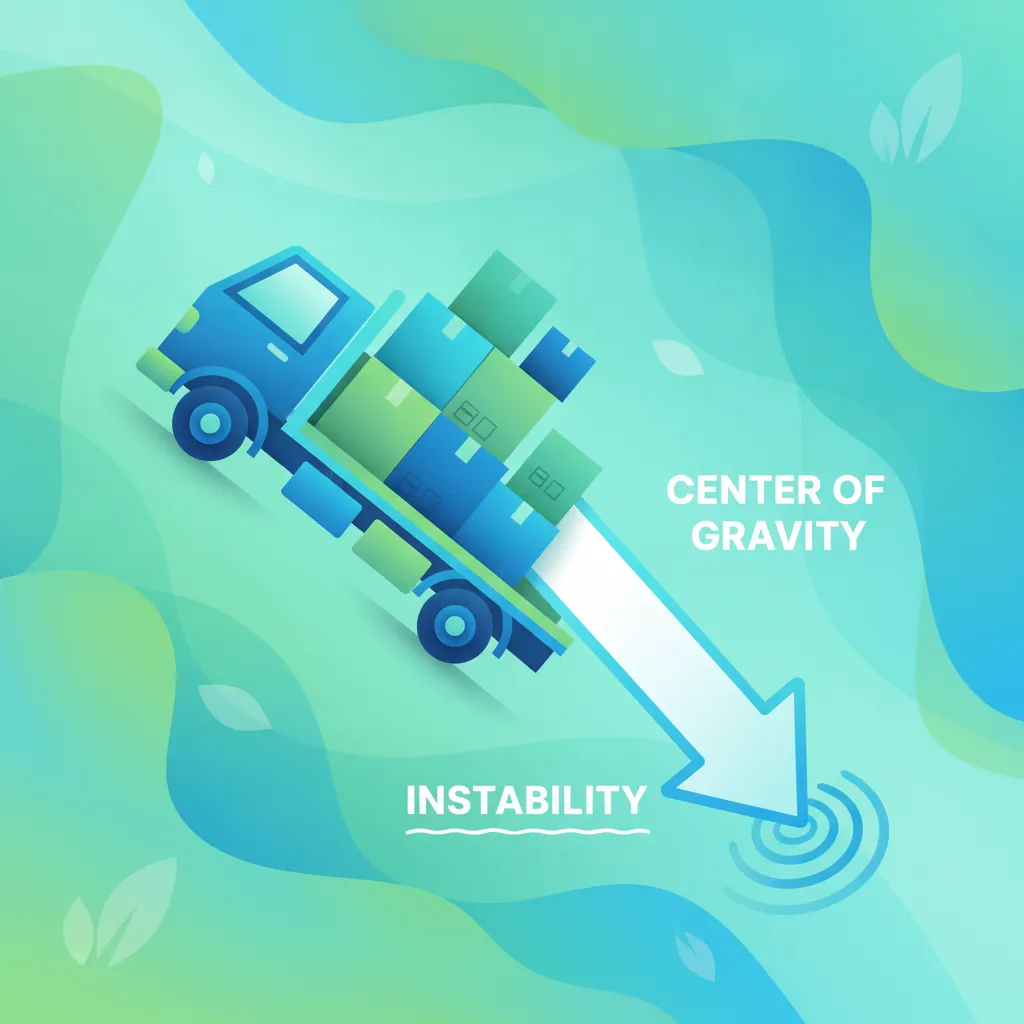
This lesson introduces the principles of load distribution and the impact of the centre of gravity on vehicle stability. It explains how cargo placement influences axle loads and the overall balance of the vehicle. The content emphasizes the importance of maintaining a low centre of gravity to reduce rollover risk.

This lesson examines the risks associated with load shifting during braking and cornering maneuvers. It explains how inertia and weight transfer can cause cargo to move, potentially leading to instability or loss of control. The content emphasizes the importance of proper load securing to mitigate these risks and maintain vehicle stability.

This lesson examines the concepts of turning radius and swept path, explaining how a heavy vehicle's size influences the space required for a turn. It highlights the importance of maintaining proper lane positioning to accommodate the vehicle's dimensions. The content provides guidance on planning maneuvers and accounting for off-tracking during cornering.

This lesson focuses on the risks of jackknifing and trailer swing, particularly during braking and on downhill descents. It provides recommendations for safe speed management, proper braking techniques, and maintaining vehicle stability. The content also addresses safe reversing practices and the importance of monitoring blind spots during maneuvers.

This lesson provides a method for calculating the braking distance of loaded vehicles, considering factors such as speed, load, and road conditions. It explains the formula for total stopping distance, including reaction time and braking distance components. The content highlights the importance of maintaining adequate safety margins for emergency braking.

This lesson focuses on the distribution of loads across axle groups and the legal limits for axle loads. It explains the importance of correct weight distribution to avoid axle overloading, which can lead to road damage and safety hazards. The content also covers methods for measuring axle loads and the legal requirements for maintaining proper axle load limits.

This lesson explains the specific regulations for operating heavy vehicles on Autobahnen, including speed limits, lane discipline, and overtaking rules. It discusses the use of dedicated truck lanes and the importance of maintaining appropriate following distances. The content also covers procedures for merging and exiting high-speed roads safely.

This lesson contrasts the dynamic and operational characteristics of heavy vehicles with those of passenger cars. It explains how greater mass and inertia influence braking distance, turning radius, and vehicle stability. The content also addresses visibility challenges, the impact of load on handling, and the necessity for different driving strategies.

This lesson explains the legal and safety requirements for transporting goods and cargo. It covers the importance of proper load distribution to maintain vehicle stability and the methods for securely fastening items to prevent them from shifting or falling. The regulations concerning maximum vehicle weight, roof loads, and the correct marking of loads that overhang the vehicle are also detailed.
Explore essential countermeasures to maintain heavy vehicle stability and prevent rollover incidents. This lesson covers speed management, load placement strategies, and the use of safety systems for C1, C, and CE categories.

This lesson addresses the challenges of maneuvering heavy vehicles in confined spaces such as loading bays and narrow streets. It provides strategies for planning the maneuver, accounting for vehicle dimensions, turning radius, and blind spots. The content emphasizes slow, controlled movements and the need for high situational awareness.
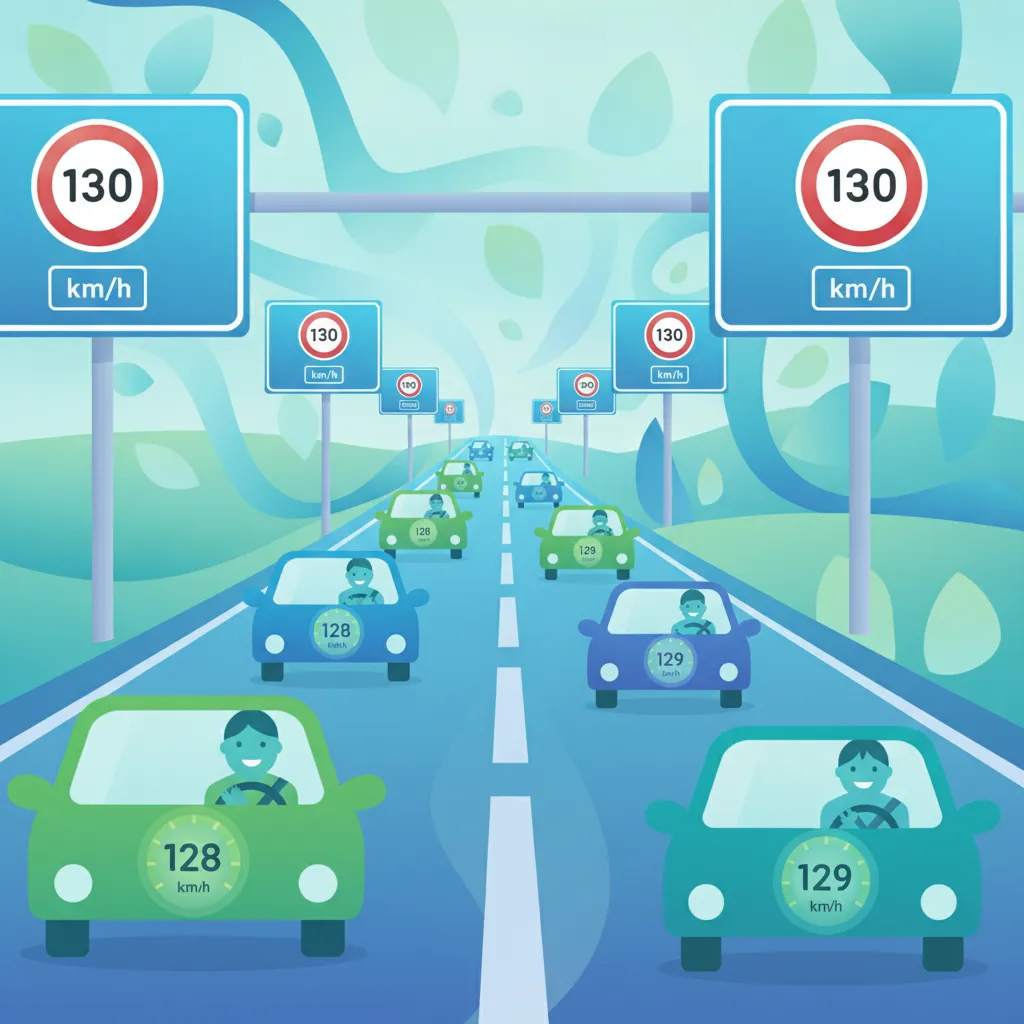
This lesson teaches the importance of adhering to speed limits and how to manage speed effectively, especially when hauling heavy loads. It covers the function of speed-limiters to ensure compliance with legal restrictions. The content also discusses the relationship between speed, fuel consumption, and its effect on braking distance.
This lesson explains the specific regulations for operating heavy vehicles on Autobahnen, including speed limits, lane discipline, and overtaking rules. It discusses the use of dedicated truck lanes and the importance of maintaining appropriate following distances. The content also covers procedures for merging and exiting high-speed roads safely.
This lesson examines the risks associated with load shifting during braking and cornering maneuvers. It explains how inertia and weight transfer can cause cargo to move, potentially leading to instability or loss of control. The content emphasizes the importance of proper load securing to mitigate these risks and maintain vehicle stability.

This lesson covers the various methods and equipment used to secure loads, including friction, blocking, and lashing techniques. It describes the proper use of tie-down straps, cargo nets, load bars, and other securing devices. The content also explains how to achieve sufficient tension and use secure fastening points.
This lesson focuses on the risks of jackknifing and trailer swing, particularly during braking and on downhill descents. It provides recommendations for safe speed management, proper braking techniques, and maintaining vehicle stability. The content also addresses safe reversing practices and the importance of monitoring blind spots during maneuvers.
This lesson examines the concepts of turning radius and swept path, explaining how a heavy vehicle's size influences the space required for a turn. It highlights the importance of maintaining proper lane positioning to accommodate the vehicle's dimensions. The content provides guidance on planning maneuvers and accounting for off-tracking during cornering.
This lesson explains the legal and safety requirements for transporting goods and cargo. It covers the importance of proper load distribution to maintain vehicle stability and the methods for securely fastening items to prevent them from shifting or falling. The regulations concerning maximum vehicle weight, roof loads, and the correct marking of loads that overhang the vehicle are also detailed.
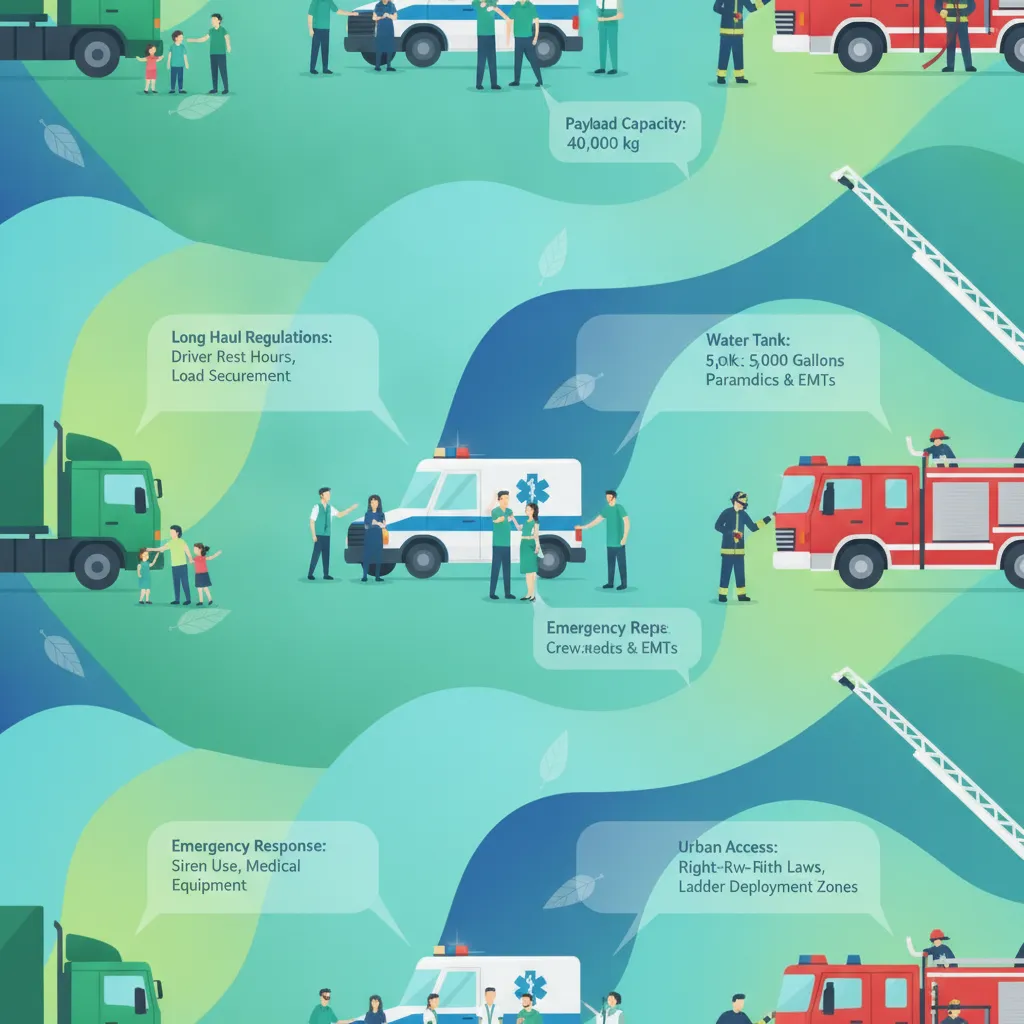
This lesson covers safe interaction with special vehicles. It details the challenges of driving near large trucks (LKW), including their extensive blind spots, longer stopping distances, and the effects of wind turbulence when overtaking them. A critical part of the lesson is explaining the correct procedure for reacting to emergency vehicles by creating an emergency corridor ('Rettungsgasse') on multi-lane roads.

This lesson covers the high-risk maneuver of reversing a large passenger vehicle. It details a systematic approach that includes using all available aids like mirrors, cameras, and audible alarms. The lesson stresses the need for slow, controlled movements, constant scanning of the surroundings, and conducting thorough clearance checks to prevent collisions with objects or people behind the vehicle, advocating for a spotter whenever possible.
Find clear answers to common questions learners have about Stability, Rollover Risks and Countermeasures. Learn how the lesson is structured, which driving theory objectives it supports, and how it fits into the overall learning path of units and curriculum progression in Germany. These explanations help you understand key concepts, lesson flow, and exam focused study goals.
A high center of gravity significantly increases the risk of the vehicle tipping over during cornering or sudden changes in direction. As a professional driver, you must ensure that heavy or dense loads are placed as low as possible to keep the center of gravity stable.
Centrifugal force increases with the square of the speed. Doubling your speed when entering a curve quadruples the lateral force acting on the vehicle, making a rollover much more likely even on surfaces that seem safe at lower speeds.
Look for keywords like 'high center of gravity', 'load shifting', and 'centrifugal force'. Questions often ask you to choose the safest action, such as reducing speed well before a curve rather than braking within the curve.
Yes, modern heavy vehicles are often equipped with Electronic Stability Control (ESC) or Roll Stability Support (RSS). While these systems help mitigate risks, they do not replace the necessity of proper driving technique and careful load management.
Begin your targeted revision now. Use our practice search to quickly find specific German driving theory questions. Filter by StVO rules, road signs, or hazard perception to create your focused study plan. Master challenging areas and prepare confidently for your theoretical driving test.