
This lesson provides a comprehensive overview of how to properly secure cargo in heavy vehicles to ensure safe transportation and legal compliance in Germany. Building on your knowledge of vehicle dimensions and weight distribution, you will explore the practical application of friction, blocking, and lashing techniques essential for your C1, C1E, C, or CE theory exam.

Lesson content overview
Driving heavy vehicles in Germany, especially under categories C1, C1E, C, and CE, demands a comprehensive understanding of load securing. This lesson delves into the fundamental methods and essential equipment used to safely transport goods, ensuring compliance with legal requirements and preventing dangerous load shifts. Proper load securing is not just a regulatory obligation; it is a critical safety measure that protects drivers, other road users, and the cargo itself.
The dynamic forces exerted on a moving heavy vehicle can easily dislodge an unsecured load. During acceleration, braking, or cornering, these forces can be substantial, potentially causing cargo to shift, slide, or even fall from the vehicle. Such incidents can lead to loss of vehicle control, increased stopping distances, severe accidents, and significant legal consequences for the driver and transport company.
This lesson is designed for those pursuing a German heavy vehicle driving license in categories C1, C1E, C, and CE. It integrates principles of physics—such as friction, inertia, and force distribution—with the legal obligations outlined in German road traffic regulations. A thorough grasp of load securing methods is essential for maintaining vehicle stability, optimizing braking performance, and ensuring overall road safety, forming a cornerstone of professional driving competence.
Effective load securing relies on a combination of techniques, often used in conjunction. The three primary principles are friction securing, blocking, and lashing. Each plays a distinct role in preventing cargo movement, and their combined application provides the most robust restraint.
Friction securing is the most basic method, relying on the natural resistance between the load and the vehicle's loading platform. When a load is placed directly on a surface, its weight pressing down creates static friction, which helps resist movement. The effectiveness of friction securing depends heavily on the coefficient of friction between the two surfaces and the weight of the load.
In practical terms, this means arranging cargo to maximize contact area and utilize non-slip materials. For instance, stacking pallets with non-slip liners or placing heavy items directly on a textured floor can significantly increase friction. However, friction alone is often insufficient, particularly for lighter loads, loads with a high center of gravity, or in adverse conditions like wet or icy roads. Overstacking or improper layering can compromise this method, leading to unstable loads that are prone to shifting despite apparent friction. Therefore, friction securing almost always needs to be supplemented by other methods.
Blocking, also known as mechanical restriction, involves using physical barriers to prevent cargo from shifting in any direction. This method is crucial when friction alone is inadequate or when specific directional movement needs to be absolutely prevented. Blocking essentially creates a physical cage or boundary around the load.
There are various types of blocking:
The proper use of blocking means placing barriers that are strong enough to withstand the forces exerted by the load during vehicle movement. Common mistakes include using barriers that are too weak, placing them incorrectly (e.g., leaving too much gap), or relying solely on blocking without applying tension from lashing. Blocking is particularly effective for large, heavy, or rigid items.
Lashing involves using tensioned straps, ropes, or chains to actively hold the load in place. This method applies a direct restraining force, pulling the cargo down onto the platform or securing it against a bulkhead, thereby counteracting inertial forces. Lashing is arguably the most common and versatile load securing method for heavy vehicles.
The main types of lashing include:
The effectiveness of lashing depends critically on the amount of tension applied and the integrity of the fastening points. Straps or chains must be tightened sufficiently to prevent movement during acceleration, braking, and cornering. Under-tensioning, using equipment with insufficient load rating, or attaching to non-designated points are common and dangerous mistakes.
Tension refers to the pulling force applied to straps or chains when lashing a load. It is a fundamental element of active load restraint. Without adequate tension, lashing equipment cannot effectively counteract the dynamic forces generated by a moving vehicle. This means that even if the correct number of straps are used, an under-tensioned strap provides minimal security.
The importance of tension is underscored by regulatory requirements that specify minimum tension values for different load types and vehicle classes. These values, often expressed in Newtons (N), are calculated to ensure the securing force is sufficient to withstand typical driving forces. Drivers must use tensioning devices, such as ratchets on tie-down straps, to achieve and maintain the prescribed force. Relying on visual assessment alone, without checking tension during and after the start of a journey, can lead to dangerous loosening of straps. It is good practice to re-check tension after a short period of driving, as the load may settle and straps can loosen slightly.
Fastening points are the designated structural anchors on a vehicle or trailer to which load securing equipment is attached. These points are engineered to withstand significant forces and are crucial for the effectiveness of any lashing method. Fastening points must be:
Drivers must be able to identify and use these certified fastening points. Using improper anchoring points, such as vehicle body parts not designed for load-bearing (e.g., door hinges, mudguards, or unsecured rails), is a common and extremely dangerous mistake. Such points can fail under stress, leading to immediate load shift and potential accidents. Always refer to the vehicle's or trailer's documentation for the location and load rating of its fastening points.
A variety of specialized equipment is available for load securing, each designed for specific purposes and load types. Understanding their correct application and limitations is vital for professional drivers.
Tie-down straps are among the most commonly used load securing devices due to their versatility and ease of use. They consist of a durable synthetic webbing strap, typically equipped with a ratchet mechanism for applying tension and a hook or end fitting for attachment to fastening points.
Cargo nets are designed to enclose and restrain loads that are irregularly shaped, consist of multiple small items, or are difficult to secure with individual straps. They provide a blanket of restraint over the entire load area.
Load bars and partitions serve as mechanical barriers to prevent cargo movement, particularly in enclosed trailers or containers.
Load Bars: These are adjustable, telescopic bars that fit into tracks or recesses along the interior walls of a trailer. They are used to brace cargo against bulkheads, prevent forward/backward movement, or divide the load space.
Partitions/Bulkheads: Permanent or semi-permanent structures within a vehicle designed to absorb impact from shifting loads, protecting the driver and preventing cargo from moving into the cab area.
Usage: Load bars are excellent for blocking specific sections of cargo or ensuring that a partial load remains stable. Partitions provide primary protection against major load shifts.
Requirements: Load bars must be securely locked into their tracks and positioned correctly, with minimal gaps between the bar and the cargo. They must also have sufficient strength (often indicated by an LC rating) to withstand the expected forces.
For extremely heavy, dense, or rigid cargo, chains and specialized ropes (e.g., steel wire ropes) offer superior strength and durability compared to synthetic straps.
In Germany, the legal framework for load securing is primarily governed by Section 22 of the Road Traffic Licensing Regulations (StVZO – Straßenverkehrs-Zulassungs-Ordnung) and other relevant directives. These regulations place a strict obligation on the driver to ensure that loads are properly secured.
According to German law, the load and all loading equipment must be stowed and secured in such a way that, even in the event of full braking or sudden evasive action, they cannot slip, fall over, roll, fall down, or generate avoidable noise. This broad requirement means drivers must consider all potential forces during transit and use appropriate methods and equipment to counteract them. The driver bears primary responsibility for the security of the load, even if loading was performed by others.
While the general principles apply, specific numerical values are often stipulated for common securing methods:
Failure to comply with load securing regulations carries serious legal implications in Germany. Penalties can range from significant fines to points on the driving license, vehicle detention, and even criminal charges in cases leading to accidents or severe danger.
Even with a theoretical understanding, practical application requires attention to detail and awareness of common pitfalls.
Visually check load stability and even distribution.
Verify all blocking elements (load bars, dunnage) are correctly positioned and secured.
Confirm all lashing straps/chains are attached to designated fastening points.
Ensure all straps/chains are tensioned to the required level, using ratchets or binders.
Check for any loose ends, sharp edges that could compromise securing, or signs of equipment damage.
Conduct a final walk-around to confirm overall load integrity.
The environment in which you drive and the type of road surface significantly influence the forces acting on your load and, therefore, your load securing strategy.
The relationship between load securing, vehicle dynamics, and overall road safety is profound. An improperly secured load can transform a stable heavy vehicle into an unpredictable and dangerous machine.
In conclusion, effective load securing is a cornerstone of responsible and professional heavy vehicle operation. It is a continuous process that requires knowledge, vigilance, and adherence to established best practices and legal regulations. By mastering these principles, heavy vehicle drivers contribute significantly to their own safety, the safety of other road users, and the efficient operation of commercial transport.
This lesson covers the essential methods and equipment for securing heavy vehicle loads in Germany, focusing on friction securing, mechanical blocking, and active lashing with straps, nets, chains, and bars. Drivers must understand that effective load restraint requires combining methods, applying correct tension (minimum 1,200 N baseline), and using only certified fastening points rated per DIN EN 12640. German StVZO Section 22 makes the driver fully responsible for load security, with compliance verified through specific tension and quantity requirements. Environmental conditions significantly affect securing strategy, as wet roads, wind, and rough terrain increase dynamic forces and reduce friction effectiveness.
A short set of high-value points that capture the most important learning from this lesson.
The three primary load securing methods are friction, blocking, and lashing, and they are most effective when used in combination.
Lashing tension must be adequate and regularly checked, as loose straps can fail even if correct in number.
Only certified fastening points (per DIN EN 12640) should be used for anchoring securing equipment; vehicle body parts are not acceptable anchor points.
German StVZO Section 22 places full responsibility on the driver for load security regardless of who performed the loading.
Environmental conditions like wet roads, wind, and rough terrain require stronger mechanical restraints due to reduced friction and increased forces.
Explore all units and lessons included in this driving theory course.
Minimum baseline tension for tie-down straps is typically 1,200 Newtons, with at least one strap per 500 kg of cargo as a general guideline.
Fastening points must be strong enough, correctly positioned, and clearly marked to the vehicle's documented load ratings.
Straps must be inspected for cuts, fraying, chemical damage, and proper ratchet function before each use.
Load bars and bulkheads create physical barriers for blocking, while cargo nets enclose irregular or multiple items.
A shifting load alters the vehicle's center of gravity, affecting stability, braking, and handling characteristics.
Overreliance on friction alone, assuming heavy cargo will not shift without supplementary blocking or lashing.
Using non-certified vehicle body parts (door hinges, mudguards) as anchoring points, which can fail under stress.
Failing to re-check tension after the first few kilometres, as loads settle and straps can loosen during initial driving.
Using securing equipment with a load rating (LC) that is insufficient for the cargo's actual weight.
Neglecting to account for reduced friction on wet, icy, or dusty surfaces, which drastically lowers friction coefficient.
Lesson content overview
A short set of high-value points that capture the most important learning from this lesson.
The three primary load securing methods are friction, blocking, and lashing, and they are most effective when used in combination.
Lashing tension must be adequate and regularly checked, as loose straps can fail even if correct in number.
Only certified fastening points (per DIN EN 12640) should be used for anchoring securing equipment; vehicle body parts are not acceptable anchor points.
German StVZO Section 22 places full responsibility on the driver for load security regardless of who performed the loading.
Environmental conditions like wet roads, wind, and rough terrain require stronger mechanical restraints due to reduced friction and increased forces.
Explore all units and lessons included in this driving theory course.
Minimum baseline tension for tie-down straps is typically 1,200 Newtons, with at least one strap per 500 kg of cargo as a general guideline.
Fastening points must be strong enough, correctly positioned, and clearly marked to the vehicle's documented load ratings.
Straps must be inspected for cuts, fraying, chemical damage, and proper ratchet function before each use.
Load bars and bulkheads create physical barriers for blocking, while cargo nets enclose irregular or multiple items.
A shifting load alters the vehicle's center of gravity, affecting stability, braking, and handling characteristics.
Overreliance on friction alone, assuming heavy cargo will not shift without supplementary blocking or lashing.
Using non-certified vehicle body parts (door hinges, mudguards) as anchoring points, which can fail under stress.
Failing to re-check tension after the first few kilometres, as loads settle and straps can loosen during initial driving.
Using securing equipment with a load rating (LC) that is insufficient for the cargo's actual weight.
Neglecting to account for reduced friction on wet, icy, or dusty surfaces, which drastically lowers friction coefficient.
Explore search topics learners often look for when studying Load Securing Methods and Equipment. These topics reflect common questions about road rules, driving situations, safety guidance, and lesson level theory preparation for learners in Germany.
Browse additional driving theory lessons that cover connected traffic rules, road signs, and common driving situations related to this topic. Improve your understanding of how different rules interact across everyday traffic scenarios.
Explore the legal framework and official requirements for securing loads on heavy vehicles in Germany. This lesson covers regulations regarding fastening points, securing methods, and consequences for non-compliance, essential for your C1, C, and CE licence theory.

This lesson outlines the legal requirements for load securing according to German traffic law (StVO) and other relevant regulations. It details the obligations for cargo safety, inspection, and documentation. The content also explains the penalties for non-compliance, emphasizing adherence to legal standards to ensure safety.

This lesson explains the legal and safety requirements for transporting goods and cargo. It covers the importance of proper load distribution to maintain vehicle stability and the methods for securely fastening items to prevent them from shifting or falling. The regulations concerning maximum vehicle weight, roof loads, and the correct marking of loads that overhang the vehicle are also detailed.

This lesson examines best practices for loading and unloading heavy vehicles at delivery points, including proper vehicle positioning and coordination with ground personnel. It emphasizes the importance of verifying load stability during unloading to prevent accidents. The content also discusses time-window management and safety protocols for loading docks.

This lesson explores the legal framework governing heavy vehicle operation in Germany, focusing on the Straßenverkehrs-Ordnung (StVO) and specific commercial transport regulations. It details the professional duty of care required from drivers, including responsibilities for vehicle inspection and documentation. You will understand the enforcement mechanisms and potential penalties for non-compliance.

This lesson provides a systematic approach to pre-drive inspection, outlining a comprehensive checklist to verify fluid levels, brake functionality, and tyre condition. It emphasizes the importance of checking lighting, mirror adjustments, and load securement before every journey. The content highlights safety protocols to ensure the vehicle is roadworthy.

This lesson covers the lighting and reflector requirements for heavy vehicles, including headlamps, side markers, and brake lights. It explains the function of these systems and the necessity of underrun protection to safeguard other road users. The content also discusses regulations governing lighting systems and their importance for safety in all conditions.

This lesson provides a detailed overview of the German licence categories C1, C1E, C, and CE, explaining the specific vehicle weight limits associated with each class. It clarifies the legal definitions that differentiate rigid trucks from vehicle combinations. You will also learn about the required driver qualifications and the theoretical knowledge necessary for each category.
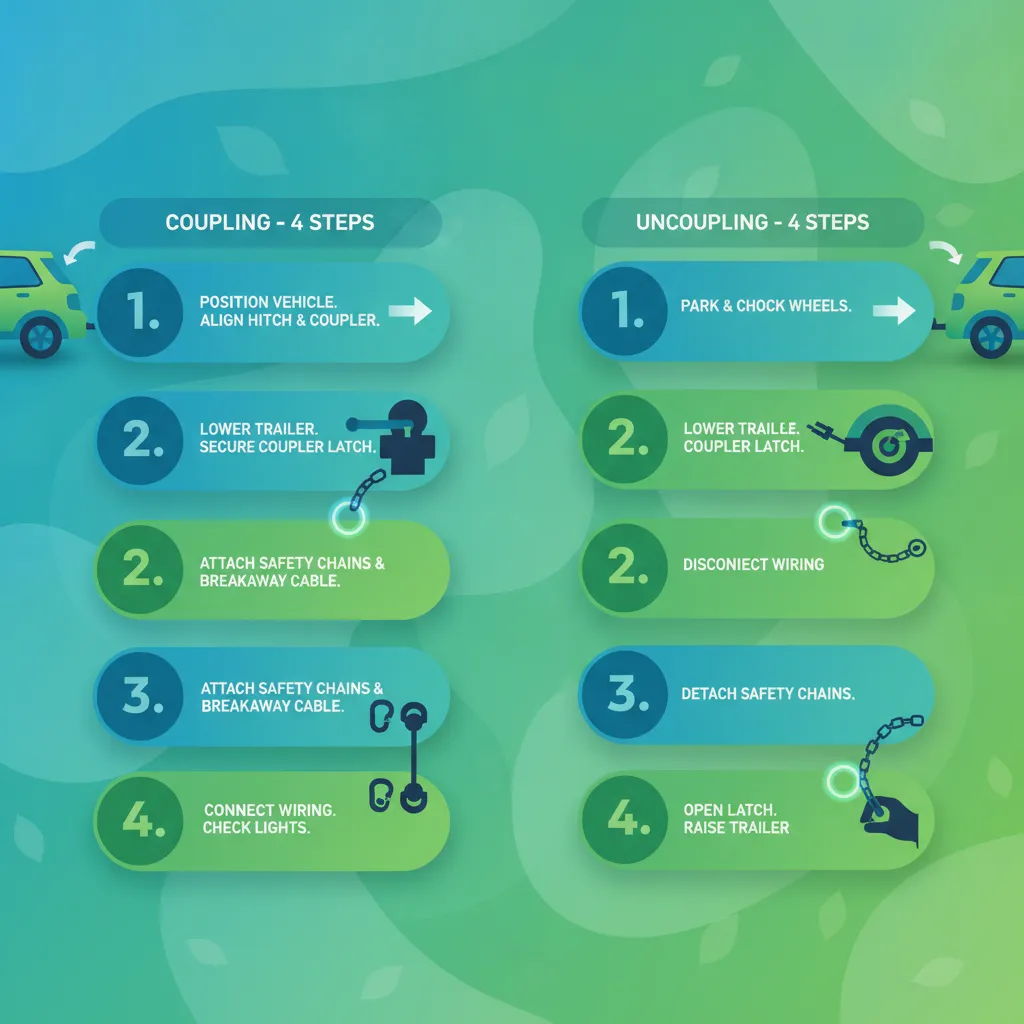
This lesson outlines the standard procedure for coupling and uncoupling trailers, emphasizing safety checks such as verifying the lock, hand brake, and brake connections. It discusses the importance of wheel chocks and correct alignment of the tow vehicle. The content includes a visual inspection checklist to ensure a secure connection.

This lesson focuses on the distribution of loads across axle groups and the legal limits for axle loads. It explains the importance of correct weight distribution to avoid axle overloading, which can lead to road damage and safety hazards. The content also covers methods for measuring axle loads and the legal requirements for maintaining proper axle load limits.

This lesson covers the proper management of items brought on board by passengers, including luggage, prams, and mobility aids. It teaches how to use designated storage areas and racks correctly to prevent items from becoming hazards. The procedures for securing wheelchairs and other mobility devices are detailed to ensure they are stable and do not move during transit, complying with safety and accessibility standards.
Understand the physics of load securing. Learn how cargo distribution affects the center of gravity and overall vehicle stability. Crucial theory for preventing rollovers and ensuring safe driving with heavy loads according to German regulations.
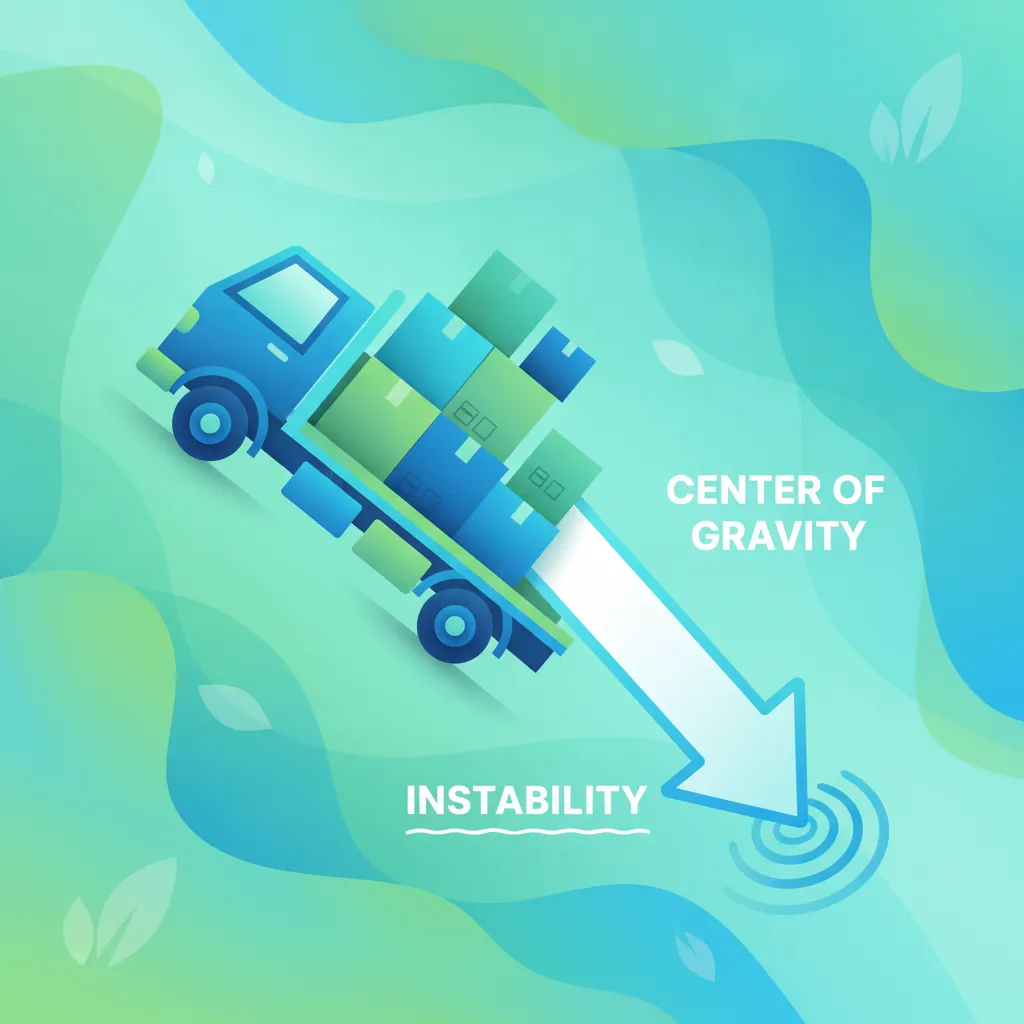
This lesson introduces the principles of load distribution and the impact of the centre of gravity on vehicle stability. It explains how cargo placement influences axle loads and the overall balance of the vehicle. The content emphasizes the importance of maintaining a low centre of gravity to reduce rollover risk.

This lesson focuses on the critical relationship between load distribution, the center of gravity, and vehicle stability. It explains how the placement of passengers and luggage can raise the center of gravity, increasing the risk of rollover during turns or sudden maneuvers. Learners will understand how to manage loading within legal weight limits to maintain optimal handling, braking performance, and overall safety.
This lesson focuses on the distribution of loads across axle groups and the legal limits for axle loads. It explains the importance of correct weight distribution to avoid axle overloading, which can lead to road damage and safety hazards. The content also covers methods for measuring axle loads and the legal requirements for maintaining proper axle load limits.

This lesson examines the risks associated with load shifting during braking and cornering maneuvers. It explains how inertia and weight transfer can cause cargo to move, potentially leading to instability or loss of control. The content emphasizes the importance of proper load securing to mitigate these risks and maintain vehicle stability.

This lesson focuses on vehicle stability and the risks of rollover, particularly for vehicles with a high centre of gravity. It discusses how load placement, speed, and cornering affect rollover risk. The content outlines countermeasures such as speed reduction, load lowering, and the use of anti-roll devices.
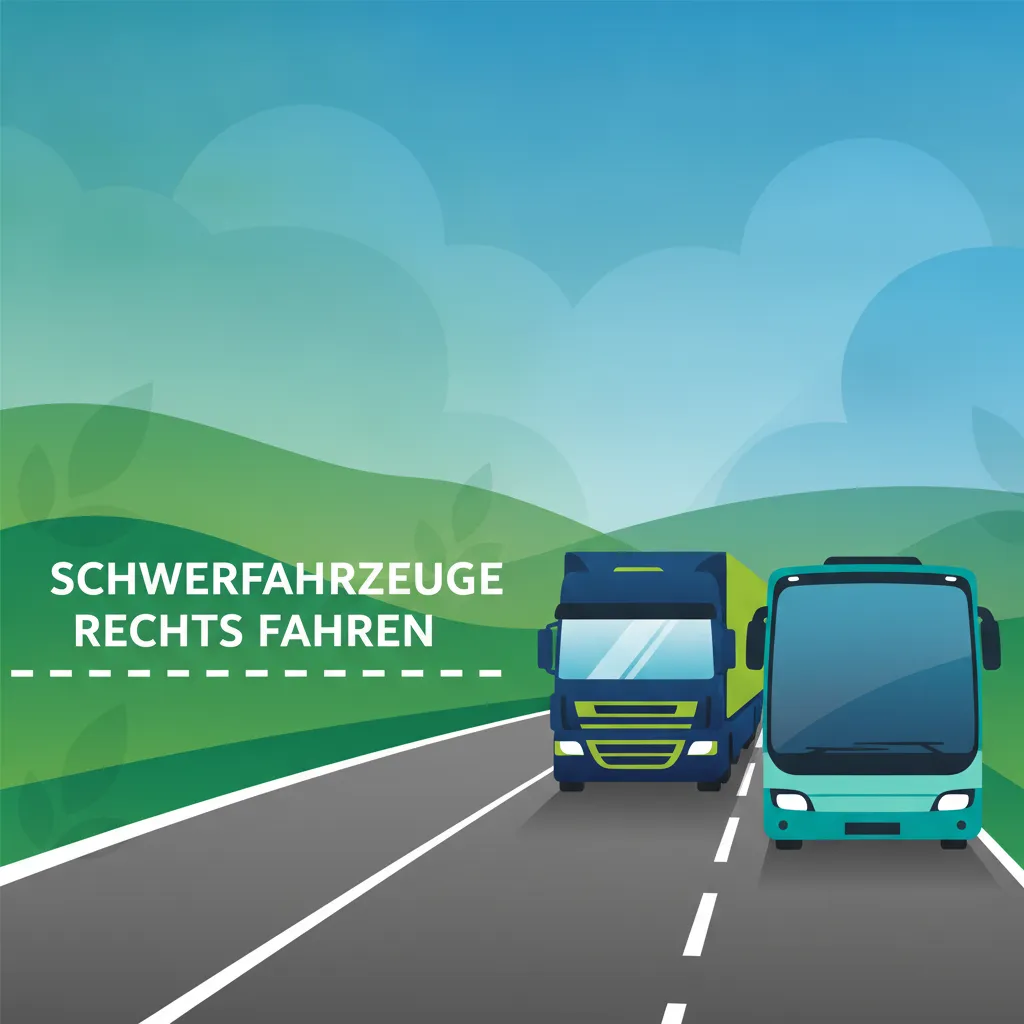
This lesson explains the specific regulations for operating heavy vehicles on Autobahnen, including speed limits, lane discipline, and overtaking rules. It discusses the use of dedicated truck lanes and the importance of maintaining appropriate following distances. The content also covers procedures for merging and exiting high-speed roads safely.

This lesson introduces the fundamental structural components of heavy vehicles, focusing on the frame and chassis design. It explains the role of different suspension types, such as leaf springs and air suspension, in load distribution and ride comfort. The content also discusses how chassis rigidity and material fatigue affect vehicle safety and longevity.

This lesson covers the dimensional limits for heavy vehicles, focusing on height, width, and length restrictions. It explains how to interpret clearance signage for bridges, tunnels, and overhead obstacles, and discusses the implications for route planning. The content also addresses the importance of understanding turning radii and swept paths to avoid collisions.
This lesson explains the legal and safety requirements for transporting goods and cargo. It covers the importance of proper load distribution to maintain vehicle stability and the methods for securely fastening items to prevent them from shifting or falling. The regulations concerning maximum vehicle weight, roof loads, and the correct marking of loads that overhang the vehicle are also detailed.

This lesson examines the concepts of turning radius and swept path, explaining how a heavy vehicle's size influences the space required for a turn. It highlights the importance of maintaining proper lane positioning to accommodate the vehicle's dimensions. The content provides guidance on planning maneuvers and accounting for off-tracking during cornering.
Find clear answers to common questions learners have about Load Securing Methods and Equipment. Learn how the lesson is structured, which driving theory objectives it supports, and how it fits into the overall learning path of units and curriculum progression in Germany. These explanations help you understand key concepts, lesson flow, and exam focused study goals.
Friction is the base resistance against sliding. Increasing friction between the load and the loading surface reduces the total lashing force required, which is a key concept in both exam questions and real-world loading safety.
Blocking involves physically restricting movement by using the vehicle structure or fixed barriers, whereas lashing uses external equipment like straps or chains to apply tension and increase downward force.
Yes, you must know that damaged, frayed, or uncertified straps are strictly forbidden. The theory test often asks about inspection criteria to ensure load securing equipment remains reliable.
While proper securing doesn't change the centre of gravity itself, failing to secure it properly can lead to a shift during movement, which changes the dynamic balance of the vehicle, increasing the risk of rollovers.
Begin your targeted revision now. Use our practice search to quickly find specific German driving theory questions. Filter by StVO rules, road signs, or hazard perception to create your focused study plan. Master challenging areas and prepare confidently for your theoretical driving test.