
This lesson teaches you the fundamental rules of vehicle positioning and lane discipline as required by the StVO. By mastering these techniques, you will ensure predictable, safe driving behavior that is essential for both your practical driving and the theoretical exam. This unit builds on your understanding of general road user behavior to prepare you for complex maneuvers on multi-lane roads.
Lesson content overview
Driving safely and predictably on German roads requires a thorough understanding of correct vehicle positioning and strict lane discipline. This lesson, part of your German Driving License Theory – Comprehensive Category B Course, delves into these crucial principles, which are fundamental for minimizing conflict, enhancing visibility, and ensuring a smooth flow of traffic for all road users. Mastering these concepts is not just about passing your theoretical exam; it's about becoming a responsible and safe driver.
Correct vehicle positioning is the art and science of placing your vehicle strategically on the road relative to lane markings, other vehicles, and road features. It dictates how you interact with your surroundings and communicate your intentions to other drivers, cyclists, and pedestrians. Adhering to proper lane discipline means consistently driving where you are expected to be, which vastly reduces uncertainty and the potential for dangerous situations.
This lesson builds upon your knowledge of observation and scanning techniques, as accurate positioning relies heavily on continuous assessment of your environment. It also serves as a critical prerequisite for understanding safe turning procedures, effective lane changes, and proper overtaking maneuvers.
The core principle governing lane usage in Germany and many other European countries is the Rechtsfahrgebot (right-hand driving rule). This fundamental rule dictates that drivers must always keep to the rightmost available lane, using left lanes primarily for overtaking or when preparing for a left turn.
The primary purpose of the Rechtsfahrgebot is to ensure a predictable and orderly flow of traffic. By standardizing lane use, it reduces ambiguity and minimizes potential conflict points, especially on multi-lane roads like motorways (Autobahnen).
In practice, this means:
A frequent violation of the Rechtsfahrgebot is "lane hogging" or continuously driving in the middle or left lane on multi-lane roads, even when the right lane is free. This practice is dangerous because:
Beyond staying in the correct lane, maintaining an adequate distance from other vehicles is paramount for safety. This is known as Mindestabstand (minimum distance) or Sicherheitsabstand (safety distance). It provides you with crucial reaction time to unexpected events and contributes to a vital "space cushion" around your vehicle.
Under normal driving conditions (dry roads, good visibility, moderate speed), the general guideline for Mindestabstand is the 2-second rule. This means there should be at least a two-second gap between your vehicle and the vehicle directly in front of you.
Choose a fixed point: As the vehicle ahead passes a fixed point on the road (e.g., a signpost, bridge, or tree).
Count "one thousand one, one thousand two": Begin counting immediately.
Your vehicle reaches the point: If you reach the fixed point before or as you finish counting, you are following too closely.
The 2-second rule is a minimum. This distance must be significantly increased under adverse conditions:
Maintaining a safety cushion isn't only about the vehicle in front. It also includes having adequate space to the sides and rear, especially when planning maneuvers. Before changing lanes, ensure there is sufficient space not only in front of you in the new lane but also behind you for the vehicle you are moving in front of. Inadequate spacing is a primary cause of collisions during lane changes and overtaking.
Road markings are vital visual cues that guide your vehicle positioning and dictate permissible maneuvers. Understanding their meaning is crucial for safe and legal driving in Germany.
A common error is to interpret dashed lines as an unrestricted permission to change lanes. Even with a dashed line, proper signaling, mirror checks, head checks for blind spots, and ensuring a safe gap are always mandatory. Neglecting these steps can lead to dangerous situations and collisions.
Correct vehicle positioning for turns is critical to avoid collisions with other vehicles, cyclists, and pedestrians. Your position clearly signals your intentions and helps other road users anticipate your maneuver.
When preparing to make a left turn at an intersection:
When preparing to make a right turn at an intersection:
As you approach any intersection, reduce your speed and carefully observe all signs and road markings that guide lane usage. Pay attention to arrows on the road surface indicating "straight ahead," "left turn," or "right turn" only.
Common errors to avoid:
The German Road Traffic Regulations (Straßenverkehrs-Ordnung – StVO) are the legal framework for all traffic rules. Several key paragraphs directly address vehicle positioning and lane discipline:
These paragraphs collectively ensure that drivers operate their vehicles in a predictable and safe manner, minimizing potential conflicts.
Failing to adhere to proper vehicle positioning and lane discipline is a leading cause of traffic incidents. Here are some common violations and how to avoid them:
Effective vehicle positioning is dynamic, requiring continuous adjustment based on prevailing conditions.
The rules of vehicle positioning and lane discipline are not arbitrary; they are rooted in principles of physics, human perception, and traffic psychology.
By understanding and applying these principles, you contribute not only to your own safety but also to the safety and efficiency of the entire road network.
This lesson covers the essential German road safety principles of vehicle positioning and lane discipline, centered on the Rechtsfahrgebot rule requiring drivers to keep right except when overtaking or turning left. It explains the 2-second following distance rule and its modifications for adverse weather and high-speed motorway driving. Learners must understand lane markings—solid lines prohibit crossing while dashed lines permit it with caution—and master correct lane positioning for turns at intersections, including safeguards for cyclists and pedestrians. The content references specific StVO paragraphs governing road use, overtaking, distance maintenance, lane changes, and turning, all critical for both safe driving and theory exam success.
A short set of high-value points that capture the most important learning from this lesson.
The Rechtsfahrgebot requires driving in the rightmost lane at all times, using left lanes only for overtaking or preparing to turn left.
The 2-second rule is the minimum following distance under normal conditions, but must be significantly increased in rain, fog, ice, or at high speeds.
Solid white lines (Durchgezogene Linie) prohibit crossing entirely, while dashed lines (Gestrichelte Linie) permit crossing only when safe to do so.
For left turns, position in the leftmost lane close to the center line; for right turns, position in the rightmost lane while leaving space for cyclists on your right.
Always signal, check mirrors, and perform head checks for blind spots before changing lanes or merging.
Explore all units and lessons included in this driving theory course.
Lane hogging (driving in the left lane without overtaking) is a traffic offense in Germany and can result in fines.
When turning right, position centrally in the right lane to prevent cyclists from passing on your right side into your blind spot.
On motorways at speeds above 100 km/h, a following distance of 'half your speed in meters' is recommended, which exceeds the basic 2-second rule.
At intersections, follow road surface arrows indicating permitted directions and position in the correct lane well before turning.
When merging onto a motorway, use the acceleration lane to match speed and merge smoothly; do not force your way in at the last moment.
Assuming dashed lane markings give an unrestricted right to change lanes, when proper signaling and blind spot checks are still mandatory.
Turning from the wrong lane at intersections, such as attempting a left turn from a right-only lane, creating dangerous crossing paths.
Failing to return to the right lane after overtaking, even when the right lane is clear, obstructing faster traffic.
Cutting corners during turns, which can endanger pedestrians on crossings or place the vehicle in the wrong lane on the cross street.
Not adjusting following distance for adverse conditions, leading to insufficient braking space when hazards occur.
Lesson content overview
A short set of high-value points that capture the most important learning from this lesson.
The Rechtsfahrgebot requires driving in the rightmost lane at all times, using left lanes only for overtaking or preparing to turn left.
The 2-second rule is the minimum following distance under normal conditions, but must be significantly increased in rain, fog, ice, or at high speeds.
Solid white lines (Durchgezogene Linie) prohibit crossing entirely, while dashed lines (Gestrichelte Linie) permit crossing only when safe to do so.
For left turns, position in the leftmost lane close to the center line; for right turns, position in the rightmost lane while leaving space for cyclists on your right.
Always signal, check mirrors, and perform head checks for blind spots before changing lanes or merging.
Explore all units and lessons included in this driving theory course.
Lane hogging (driving in the left lane without overtaking) is a traffic offense in Germany and can result in fines.
When turning right, position centrally in the right lane to prevent cyclists from passing on your right side into your blind spot.
On motorways at speeds above 100 km/h, a following distance of 'half your speed in meters' is recommended, which exceeds the basic 2-second rule.
At intersections, follow road surface arrows indicating permitted directions and position in the correct lane well before turning.
When merging onto a motorway, use the acceleration lane to match speed and merge smoothly; do not force your way in at the last moment.
Assuming dashed lane markings give an unrestricted right to change lanes, when proper signaling and blind spot checks are still mandatory.
Turning from the wrong lane at intersections, such as attempting a left turn from a right-only lane, creating dangerous crossing paths.
Failing to return to the right lane after overtaking, even when the right lane is clear, obstructing faster traffic.
Cutting corners during turns, which can endanger pedestrians on crossings or place the vehicle in the wrong lane on the cross street.
Not adjusting following distance for adverse conditions, leading to insufficient braking space when hazards occur.
Explore search topics learners often look for when studying Vehicle Positioning and Lane Discipline. These topics reflect common questions about road rules, driving situations, safety guidance, and lesson level theory preparation for learners in Germany.
Browse additional driving theory lessons that cover connected traffic rules, road signs, and common driving situations related to this topic. Improve your understanding of how different rules interact across everyday traffic scenarios.
Explore advanced vehicle positioning and lane discipline specifically for German Autobahns and multi-lane roads. Understand how to navigate complex traffic situations, including lane changes and maintaining safe distances at higher speeds, as part of your driving theory knowledge.

This lesson focuses on the importance of strategic road positioning for enhancing safety and visibility. Learners explore different lane positions and understand when to use them to see, be seen, and create a safety buffer. The content emphasizes maintaining a long visual focus down the road to anticipate hazards and avoid target fixation, particularly when cornering.

This lesson focuses on the critical maneuver of changing lanes ('Fahrstreifenwechsel'), a common cause of accidents if done incorrectly. It teaches a systematic, safe procedure based on thorough observation, clear signaling, and a final blind spot check. You will learn how to assess traffic speed and identify a safe gap before smoothly moving into the adjacent lane.

This lesson provides a complete guide to driving on the German Autobahn. It covers the correct procedure for entering and exiting via acceleration and deceleration lanes, the strict lane discipline rule of keeping right ('Rechtsfahrgebot'), and the principle of overtaking only on the left. It also explains the recommended speed limit and the critical procedure for forming an emergency corridor ('Rettungsgasse') in a traffic jam.

This lesson provides instruction on the rules and best practices for operating a large passenger vehicle on the Autobahn. It covers the principles of strict lane discipline, regulations for minimum speed, and correct procedures for overtaking and merging. The importance of maintaining significantly increased following distances at high speeds and planning for exits well in advance is a key focus.
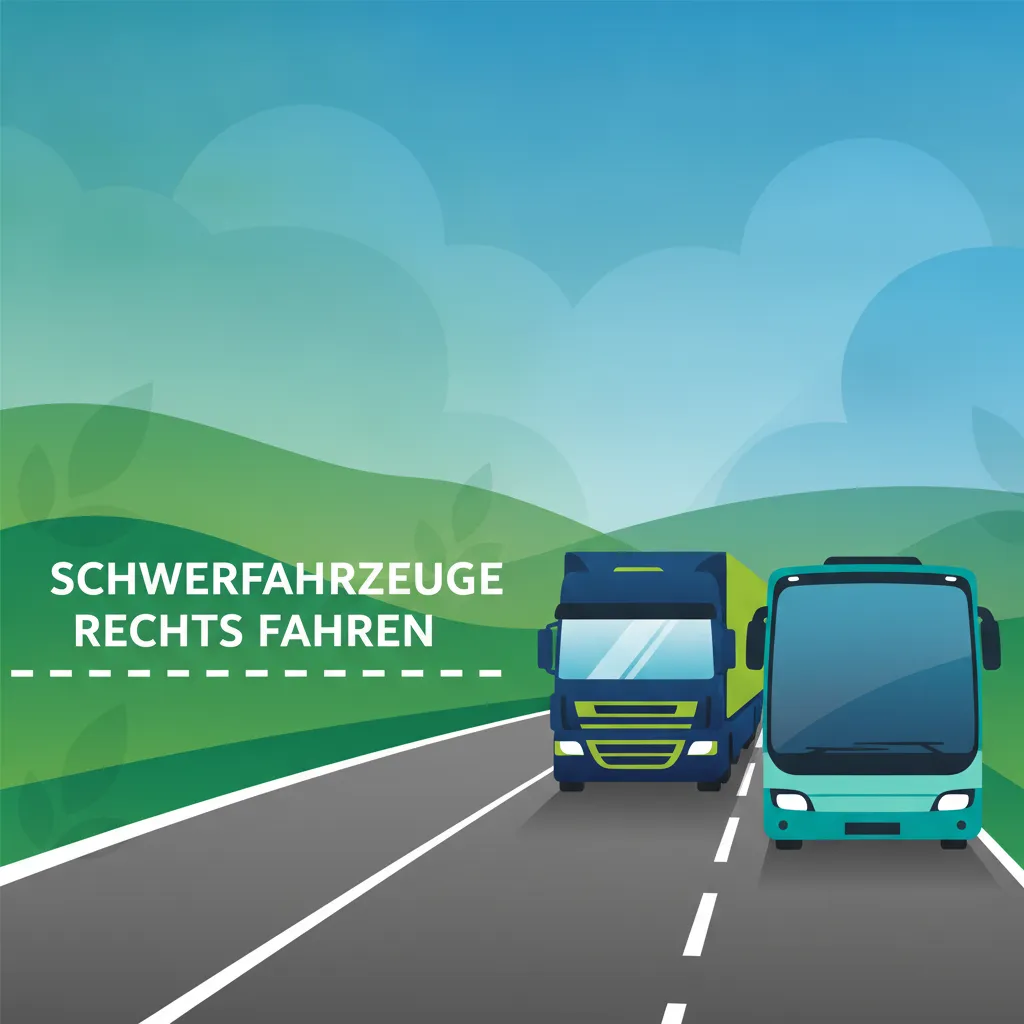
This lesson explains the specific regulations for operating heavy vehicles on Autobahnen, including speed limits, lane discipline, and overtaking rules. It discusses the use of dedicated truck lanes and the importance of maintaining appropriate following distances. The content also covers procedures for merging and exiting high-speed roads safely.

This lesson focuses on strategic road positioning to enhance safety and visibility. It explains where to ride within a lane under different circumstances, such as approaching intersections or riding alongside parked cars. A key skill covered is anticipating the potential actions of other drivers, cyclists, and pedestrians.

This lesson details the correct procedures for entering a motorway, using the acceleration lane to match traffic speed, and merging safely. It reinforces the strict lane discipline required, including keeping to the right lane except when overtaking. The content also provides guidance on maintaining increased following distances and performing safe lane changes at high speeds.
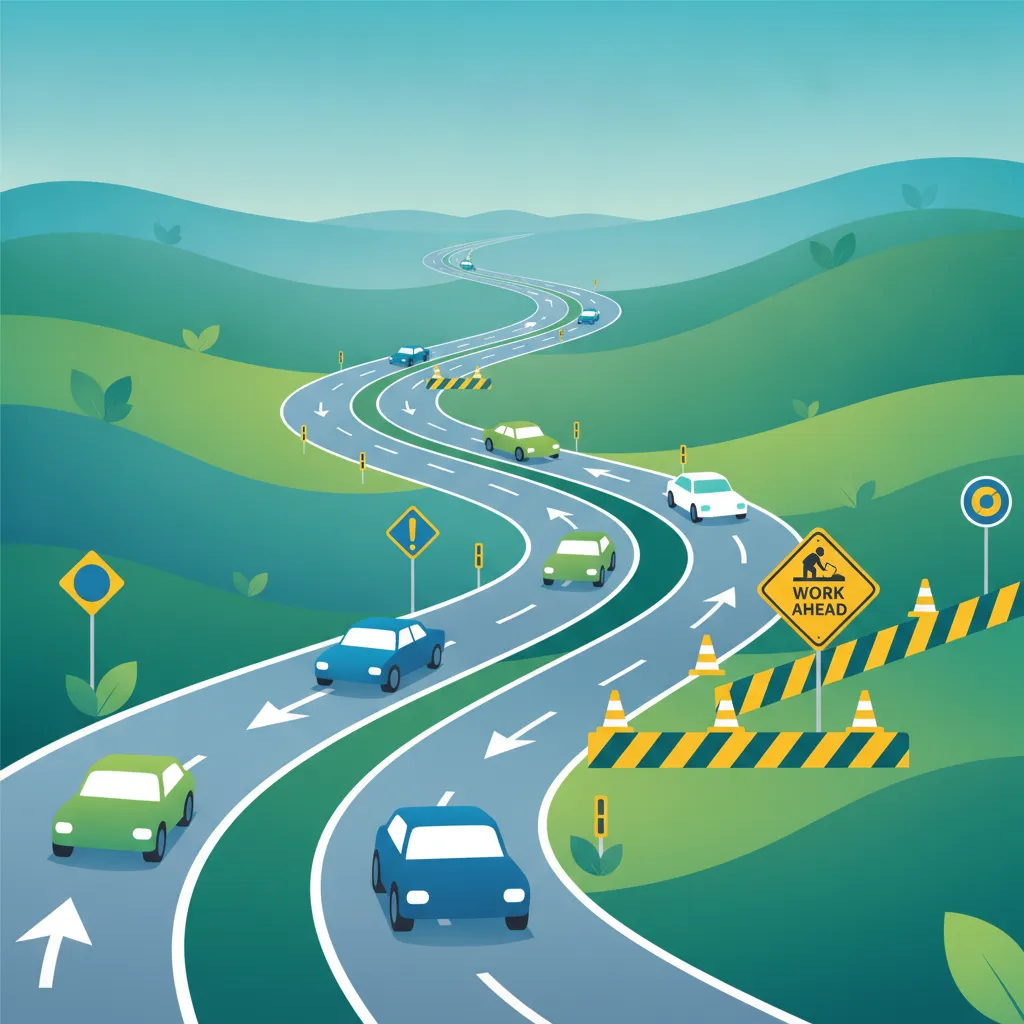
This lesson focuses on interpreting various road markings, from lane lines and directional arrows to stop lines and pedestrian crossings. It explains the rules associated with solid versus broken lines and how to navigate temporary markings found in construction zones. Correctly reading these markings is vital for proper lane discipline and safety.

This lesson focuses on complex traffic environments where different types of road users share the same space. It provides guidance on situations like driving on streets with integrated tram tracks or where bus and bicycle lanes are part of the roadway. The content emphasizes understanding the specific priority rules and being extra vigilant to anticipate potential conflicts in these busy, shared zones.
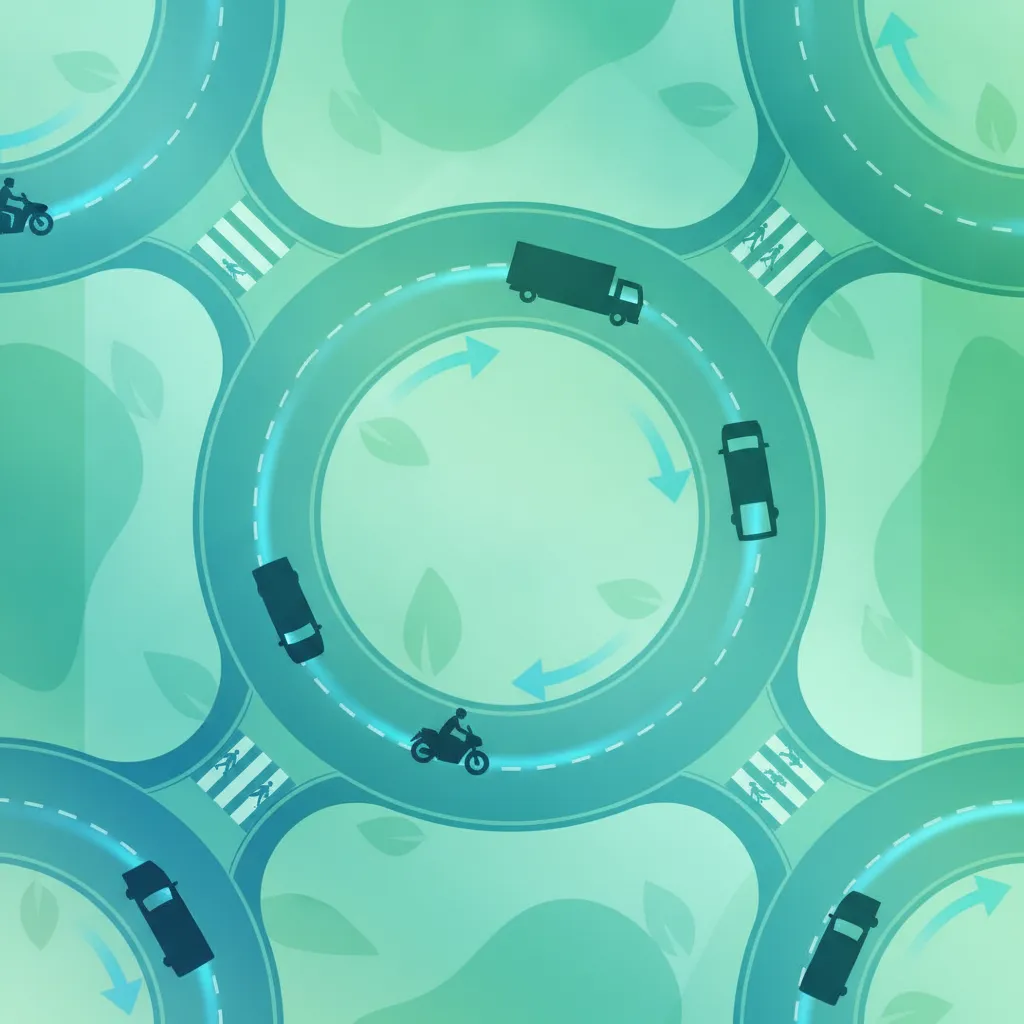
This lesson focuses on the specific techniques for safely navigating roundabouts, a common feature in urban traffic. Learners are taught the correct lane selection for their intended exit, the importance of proper signaling upon entry and exit, and maintaining an appropriate speed. The content highlights the need to yield to circulating traffic and to be aware of other vehicles changing lanes within the roundabout.
Understand the precise vehicle positioning required for safe turns, U-turns, and other maneuvers according to German traffic laws (StVO). This lesson details how to select the correct lane and position your vehicle in relation to traffic and road layout for predictable driving.

This lesson provides a step-by-step guide to executing turns safely at intersections and other locations. It details the full observation sequence (mirrors, signal, blind spot check) required before initiating a turn. The lesson covers correct lane positioning for both left and right turns and explains the rules for performing U-turns or three-point turns where permitted.

This lesson details the correct procedure for executing left turns, right turns, and U-turns. It emphasizes the importance of proper signaling, correct lane positioning before the turn, and managing speed throughout the maneuver. The content also covers fundamental cornering techniques to maintain stability and control.

This lesson teaches the fundamental techniques for safely turning a large passenger vehicle. It explains the concepts of turning radius, swept path, and off-tracking, where the rear wheels follow a tighter path than the front wheels. Learners will understand how to position the vehicle correctly before a turn and manage their speed to navigate corners without encroaching on other lanes or hitting curbs.

This lesson explains the specific rules for driving in roundabouts ('Kreisverkehr'), a common feature on German roads. It covers the correct procedure for approaching and entering, the rule that traffic already in the circle has priority, and the requirement to signal before exiting. The lesson also addresses the unique characteristics of mini-roundabouts and how to interact with cyclists and pedestrians around them.

This lesson examines the direct impact of a passenger vehicle's dimensions on its operation. It explains key concepts such as turning radius, swept path, and rear overhang, which are crucial for safe maneuvering in confined areas. Learners will understand how to account for these characteristics when positioning the vehicle in a lane, making turns, and navigating challenging urban environments to avoid collisions.
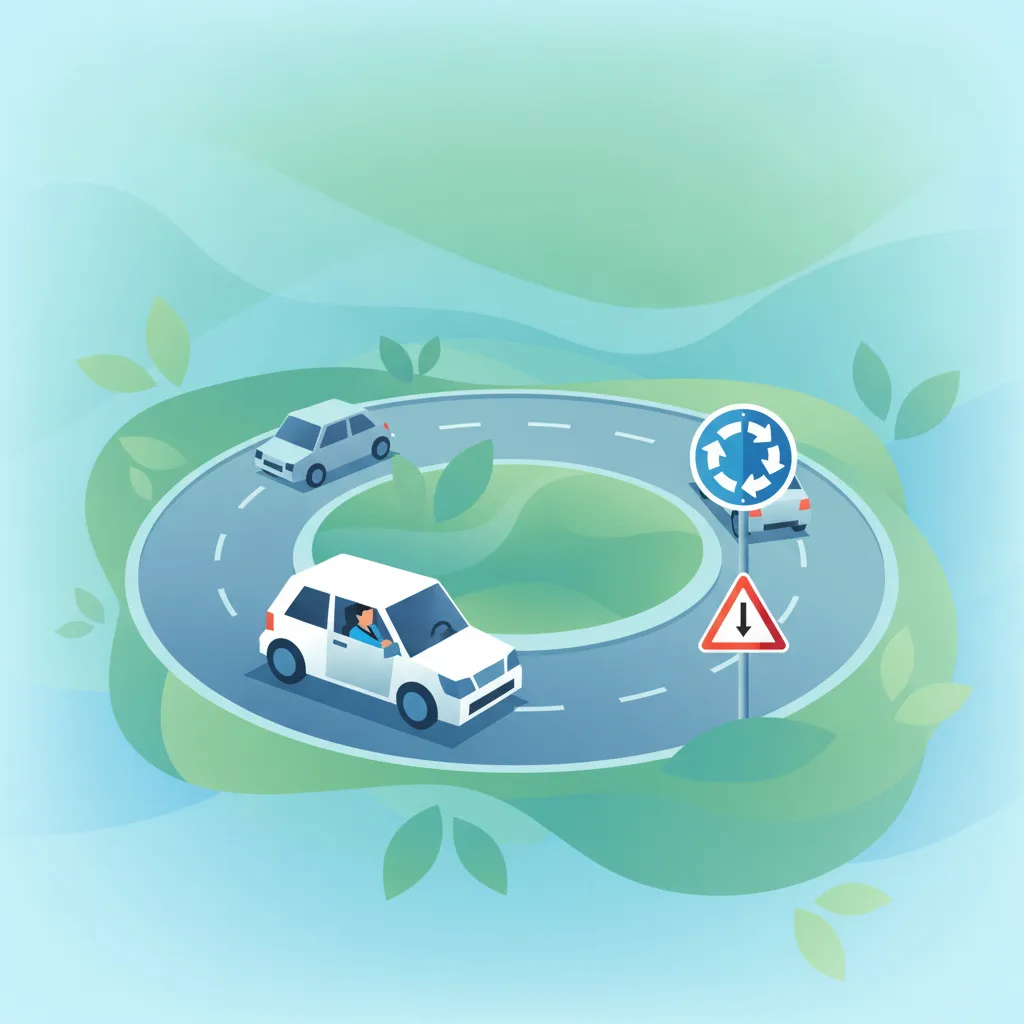
This lesson provides clear instructions on how to navigate roundabouts in Germany. It explains the crucial rule of yielding to traffic already inside the circle, proper lane choice for your intended exit, and the correct use of signals. Safe interaction with cyclists and pedestrians at roundabout exits is also covered.
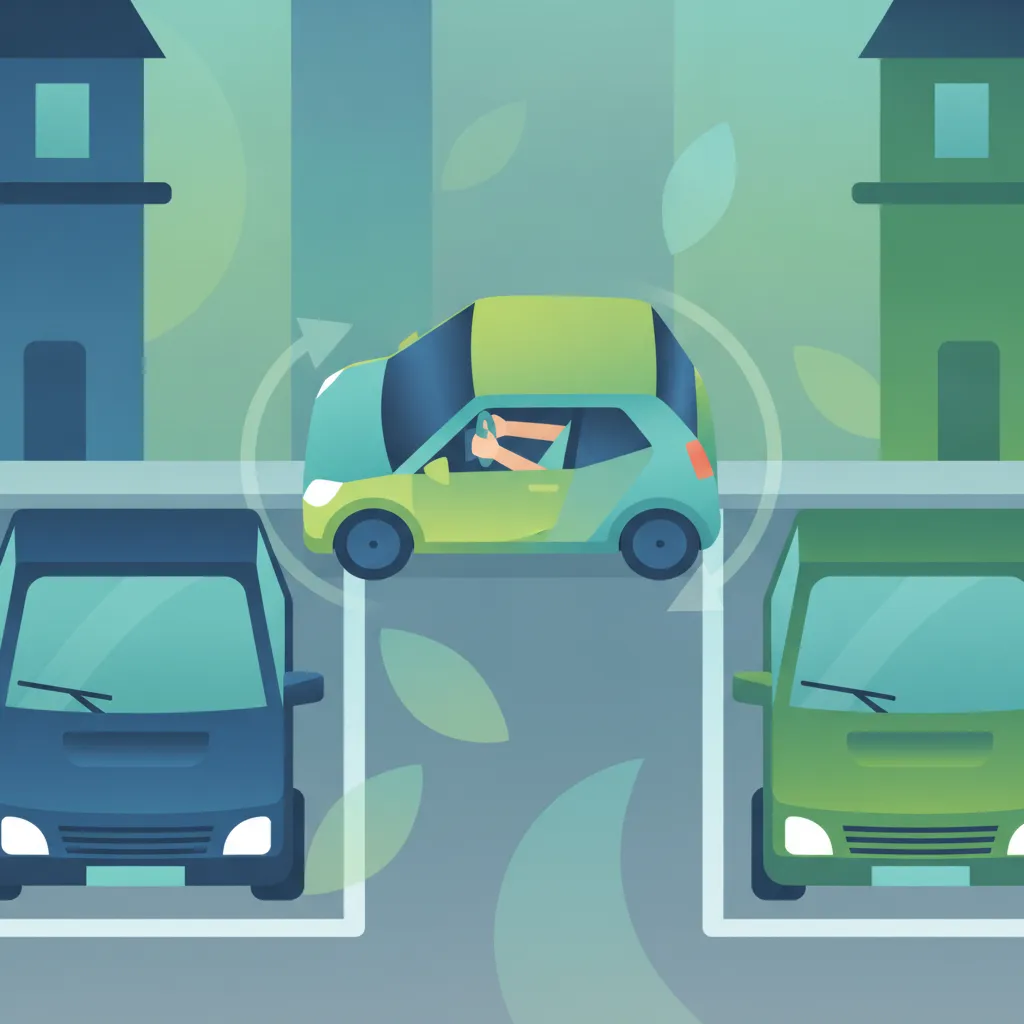
This lesson provides practical, step-by-step instructions for performing essential parking maneuvers. It breaks down the process of parallel parking and reverse (bay) parking into manageable steps, focusing on observation, steering control, and the use of reference points. The role of modern driver aids like parking sensors and reversing cameras is also discussed.

This lesson examines the concepts of turning radius and swept path, explaining how a heavy vehicle's size influences the space required for a turn. It highlights the importance of maintaining proper lane positioning to accommodate the vehicle's dimensions. The content provides guidance on planning maneuvers and accounting for off-tracking during cornering.
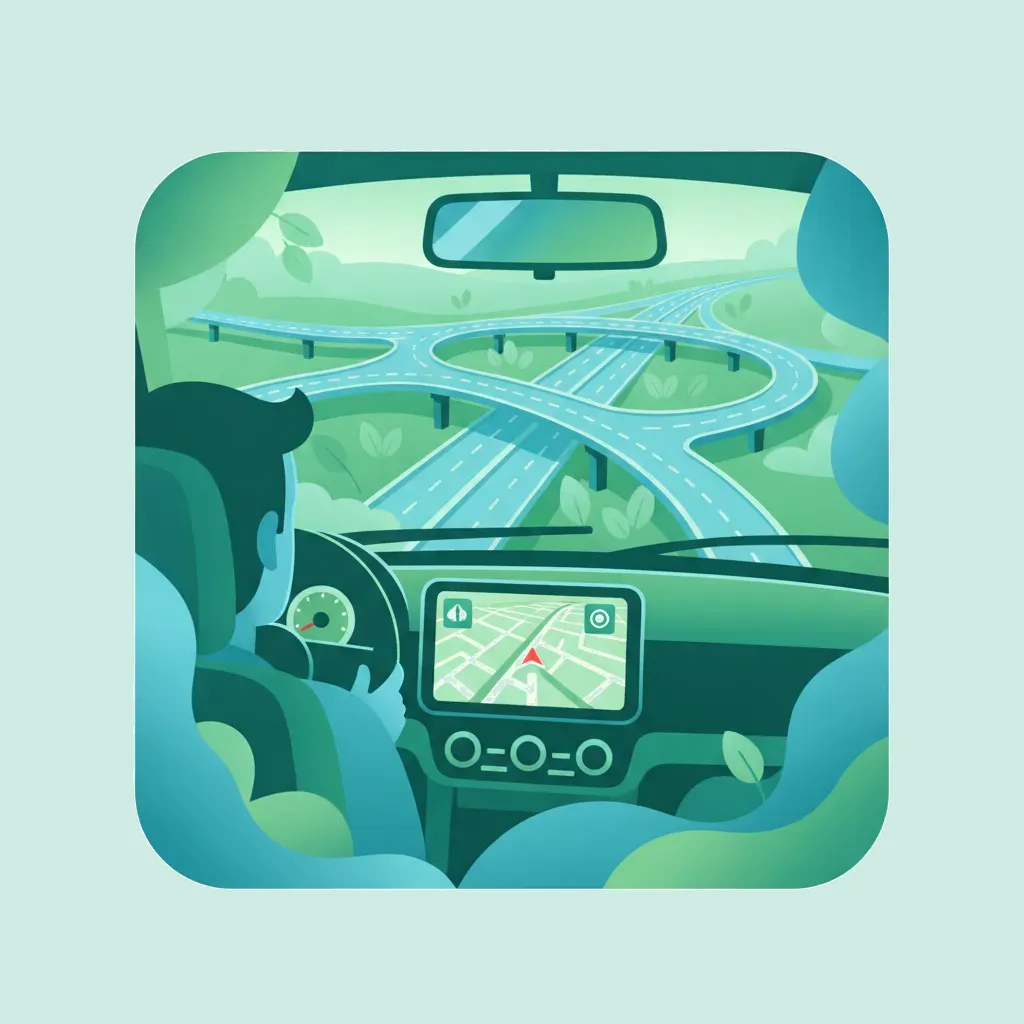
This lesson covers the principles of effective route planning and the practical skills for navigating different types of junctions. It provides guidance on using navigation aids and understanding the specific challenges large vehicles face at roundabouts and complex intersections. Emphasis is placed on correct lane selection and positioning well in advance of a turn to execute the maneuver safely and without impeding other traffic.

This lesson focuses on the high-risk maneuver of reversing, emphasizing the importance of all-around observation due to limited visibility. It teaches techniques for controlling the vehicle at very low speeds and using mirrors and direct observation to manage large blind spots behind the car. The priority is to ensure the path is clear of pedestrians and obstacles at all times.
Find clear answers to common questions learners have about Vehicle Positioning and Lane Discipline. Learn how the lesson is structured, which driving theory objectives it supports, and how it fits into the overall learning path of units and curriculum progression in Germany. These explanations help you understand key concepts, lesson flow, and exam focused study goals.
The Rechtsfahrgebot is the obligation to drive on the right side of the road. In the German theory exam, you must demonstrate that you understand this rule applies everywhere unless road markings or signs indicate otherwise, or when you are overtaking.
You must generally stay in the right-hand lane. You may only use the middle or left lanes if you are overtaking other vehicles or if there is a long queue of traffic that justifies using all available lanes.
You should position your vehicle as close to the center line of the road as possible without entering the oncoming traffic lane. Always check your mirrors and perform a shoulder check before shifting your position.
Yes, on multi-lane roads within towns, you generally drive on the right. However, if there are multiple marked lanes for different directions, you must select the lane that corresponds to your intended exit or turn.
Begin your targeted revision now. Use our practice search to quickly find specific German driving theory questions. Filter by StVO rules, road signs, or hazard perception to create your focused study plan. Master challenging areas and prepare confidently for your theoretical driving test.